科技成果转化

Search documents
为科技成果转化引入耐心资本
Jing Ji Ri Bao· 2025-08-07 23:04
增加耐心资本,要疏通,扩充资金实力。引入耐心资本只是第一步,还要关注投资机构自身的资金来源 与服务能力,即解决投资机构的募资难问题。如果投资机构自身缺乏融资渠道,它就难以发挥金融中介 机构的资金配置作用。今年以来,随着债券市场建立"科技板",股权投资机构有了更多机会发行低成 本、长期限的科创债券,并将募集资金投向科技型企业。应继续推进、共同建设好债券市场"科技板", 完善配套支持机制,持续提升耐心资本的服务实力与能力。 用好耐心资本,要提质,优化考核机制。解决了有没有,还要思考如何把耐心资本用好,让它充分、有 效发挥作用。目前亟待解决的问题是,如何推动投资机构的长周期考核机制落地。这涉及两个关键环 节,一是制度规划,二是落地执行。二者相互关联与制约,需要科学、统筹考量。在制度规划方面,投 资机构要坚持"算总账、算大账"的总体思路,注重考核投资工具的整体盈亏情况。在落地执行环节,投 资机构要充分考虑一线工作人员的责权、奖惩问题,尤其要明确哪些情形适用于尽职免责条款,明确风 险容忍度与容错率,让一线人员放开手脚、免除顾虑,推动耐心资本陪伴科技型企业完成长跑。 此外,为了确保相关工作的可持续性,还要做好风险分担工作 ...
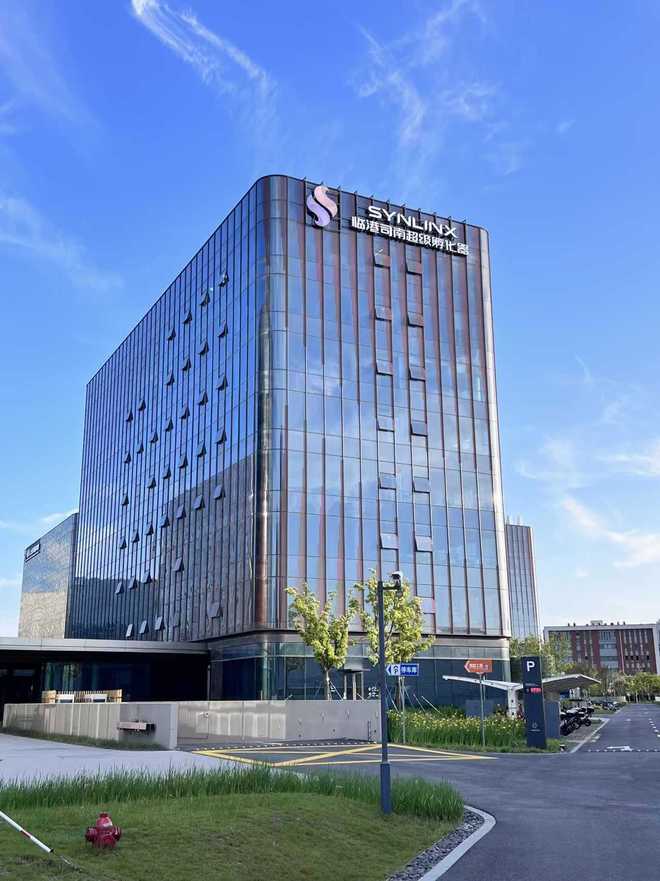
不只帮科技企业省出百万元,这些“中枢平台”如何“靶向”服务|上海高质量孵化器调研
Di Yi Cai Jing Zi Xun· 2025-08-07 13:13
Group 1 - The article emphasizes the importance of integrated service platforms in the commercialization of technological achievements, highlighting the need for comprehensive support throughout the process, including mid-term verification, resource matching, and investment incubation [1][3][12] - Companies like SiNan Semiconductor and Xinwei Chuangyuan are positioned as integrated service providers, offering specialized services to startups, such as access to expensive EDA software at reduced costs through shared services [1][5][11] - The concept verification centers established by these incubators play a crucial role in validating both technical and commercial aspects of innovations, serving as a "launchpad" for startups to attract early-stage investments [2][9][10] Group 2 - The Shanghai high-quality incubators have collectively established over 20 specialized technical platforms and deployed more than 450 sets of professional equipment, serving over 3,000 enterprises in the first five months of the year [2][3] - The integrated circuit industry is highlighted as the most significant sector in the Lingang New Area, with a comprehensive industrial chain that includes design, high-end manufacturing, and advanced packaging [3][6] - SiNan Semiconductor has developed a service model covering EDA design, wafer manufacturing, and packaging testing, significantly reducing the design cycle by 30% to 50% for startups [5][6][13] Group 3 - Xinwei Chuangyuan's Auto-Chip and Bio-IC concept verification centers have completed numerous validation services since their establishment, indicating a strong focus on advancing technology in automotive chips and biomedicine [2][9] - The article discusses the financial challenges faced by early-stage startups and the importance of effective project selection and funding mechanisms within incubators to support these companies [11][12] - SiNan Semiconductor has introduced a 500 million yuan angel fund to support high-potential projects, demonstrating a commitment to financial backing for innovative technologies [12][13]

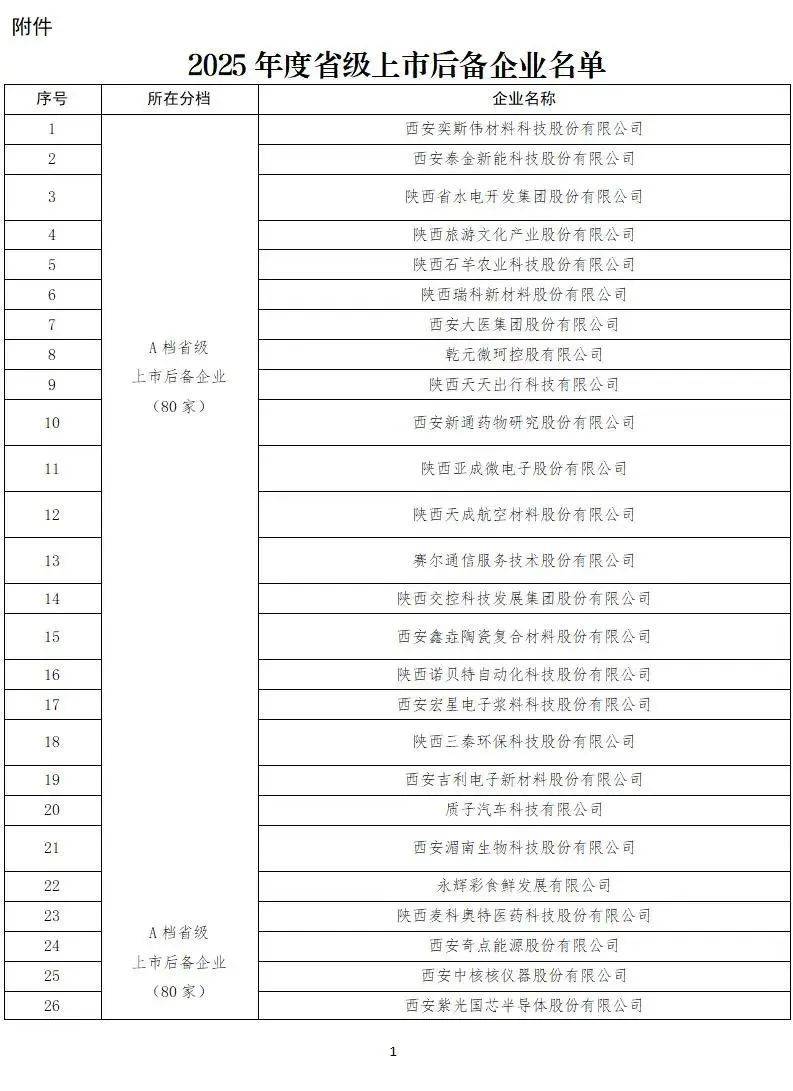
省级上市后备企业名单!汉中多家企业入围→
Sou Hu Cai Jing· 2025-08-07 09:54
Core Points - The Shaanxi Provincial Financial Office has released the list of 520 provincial-level listed reserve enterprises for 2025, an increase of 20 from the previous year [1][3] - Among the listed enterprises, 80 are classified as A-level, 120 as B-level, and 320 as C-level [2][3] - A significant majority of the enterprises, 502, are technology-based, accounting for 96.54% of the total, while 438 are from key manufacturing industry chains, representing 84.23% [2] Group 1 - The list includes 520 high-quality enterprises, with a focus on technology and manufacturing sectors [1][3] - The A-level enterprises include 80 companies, while B-level and C-level enterprises consist of 120 and 320 companies respectively [2][3] - The increase in the number of private enterprises to 428, which is 82.31% of the total, shows a rise of 7.71 percentage points compared to last year [2] Group 2 - The technology-based enterprises cover various sectors, including 16 in the photon industry, 26 in aerospace, 36 in aviation, and 14 in artificial intelligence [2] - The initiative aims to enhance the cultivation and service of provincial-level listed reserve enterprises, facilitating their entry into the capital market [3]
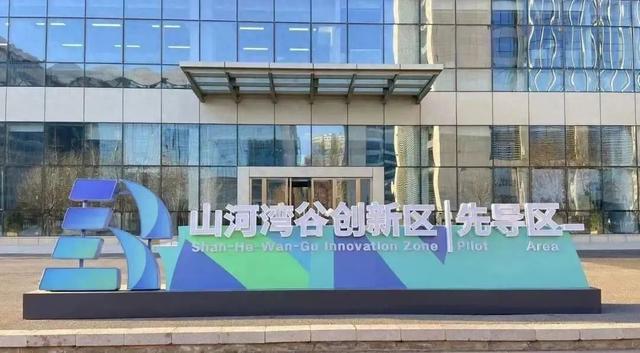
197家科技企业落户山河湾谷创新区!
Bei Jing Ri Bao Ke Hu Duan· 2025-08-07 05:15
Core Insights - The Shanhuwan Valley Innovation Zone has attracted 197 technology companies, showcasing a significant concentration of innovation resources with 3 academicians, 9 national-level talents, and over 260 graduate students contributing to technological advancements [1][3]. Group 1: Innovation Zone Development - The innovation zone is located in the southern part of Chaoyang District and is jointly built by the Chaoyang District government, Beijing University of Technology, and Beijing Enterprises Group [3]. - The zone features a spatial layout of "core area - pilot area - expansion area," leveraging the Beijing University of Technology's campus for original innovation and utilizing the Beikong Science and Technology Park for accelerating technology commercialization [3][4]. Group 2: Strategic Collaborations and Policies - In October 2023, Chaoyang District released support policies for the innovation zone, providing multi-dimensional guarantees in terms of space, funding, and services [4]. - A strategic cooperation agreement was signed among the Chaoyang Park Management Committee, Beijing University of Technology, and Beijing Enterprises Group to clarify the construction path of the pilot area [4]. Group 3: Technology Transfer and Support Services - The innovation zone is exploring a technology transfer model that integrates "three areas linkage" and "one academy one park," establishing a service chain for technology transfer from research teams to technology transfer centers and national university science parks [4]. - A professional "science and technology broker" team has been formed to provide 213 lifecycle services, including office space, resource matching, and policy application [5]. Group 4: Future Growth Projections - By 2025, the innovation zone is expected to add 4 high-tech enterprises and 1 specialized new enterprise, with a target of 15 new high-tech enterprises by 2026, focusing on artificial intelligence and intelligent equipment [6].
陕西加快推动科技产业金融深度融合
Shan Xi Ri Bao· 2025-08-07 00:01
Group 1 - The core viewpoint emphasizes the need for deep integration of technology, industry, and finance in Shaanxi province to enhance the transformation of scientific and technological achievements [1] - The province has established a management system for 108,000 items of job-related scientific and technological achievements, with 42,000 items successfully transferred and transformed [1] - A total of 2,597 enterprises have been established by researchers for the purpose of transforming scientific achievements, and 670 individuals have been promoted based on their contributions to achievement transformation [1] Group 2 - Shaanxi has built 21 innovation clusters focusing on emerging and characteristic industries, deploying 250 projects for the integration of the "four chains" [2] - The province is reforming its technology finance system, establishing a provincial technology innovation mother fund of 10 billion yuan, and creating a technology finance platform with a "one company, one fund" structure [2] - Over 1,000 achievements and financing needs from companies have been published, resulting in 5.82 billion yuan in financing for 164 high-quality enterprises under the "innovation points system" [2]
【铜川】老城科创竞速记
Shan Xi Ri Bao· 2025-08-06 23:54
Group 1: Industry Transformation and Innovation - Copper's focus on becoming a demonstration city for industrial transformation in the western region, emphasizing innovation and technology transfer [1] - The establishment of a pilot base for comprehensive resource utilization of coal gangue, addressing the challenges of low-value and single-product recycling technology [2] - The production of medical CT machine components aims to solve the domestic supply chain issues for high-end medical imaging equipment [3] Group 2: Technological Advancements - The development of indium phosphide products by Shaanxi Yinjie Semiconductor Co., which are crucial for 5G communication and aerospace applications, overcoming previous technological barriers [5] - The increase in the optical electronics industry value added by 47.4% year-on-year, indicating significant growth in this sector [5] - Implementation of key technology research projects in the optical electronics field, including 83 provincial and 212 municipal technology projects [6] Group 3: Talent Development and Ecosystem - The "Talent Strong City" strategy aims to attract and retain high-level talent, with 354 high-level talents recognized and provided with personalized services [7] - Establishment of expert workstations in key industries to enhance talent cultivation and technical problem-solving [8] - The creation of a one-stop service platform for talent, addressing various needs such as housing and education [7]
政策解读】金融支持新型工业化,七部门联合发文!划重点→
Sou Hu Cai Jing· 2025-08-06 03:05
Core Viewpoint - The recent joint issuance of the "Guiding Opinions on Financial Support for New-Type Industrialization" by seven Chinese government departments aims to enhance financial support for key industries, promote technological innovation, and facilitate the transformation and upgrading of traditional industries. Group 1: Key Technology Breakthroughs - Financial institutions are encouraged to provide medium- and long-term financing for key industries such as integrated circuits, industrial mother machines, and basic software [1] - Companies that achieve breakthroughs in core technologies can access "green channels" for listing, bond issuance, and mergers and acquisitions [1] - More financial support will be available for the promotion of first sets of equipment and first batches of materials [1] Group 2: Transformation of Technological Achievements - Initiatives like "monthly chain" investment roadshows and "thousand sails and hundred boats" listing cultivation will be implemented to optimize the evaluation system for hard technology attributes [2] - Social capital is encouraged to invest early, small, and long-term in hard technology [2] - High-level talent entrepreneurship will receive comprehensive services including credit and financial advisory [2] Group 3: Upgrading Traditional Industries - Banks will increase credit support for the high-end, intelligent, and green transformation of the manufacturing sector [3] - Companies can update intelligent and environmental protection equipment through financing leasing, and related debts can be securitized [3] - Listed companies can achieve industry consolidation and upgrading through overall listings and targeted placements [3] Group 4: Emerging Future Industries - New industries such as information technology, new energy, and biomedicine can access financing in multi-tiered capital markets [4] - Long-term funds from government investment funds and insurance funds will focus on future manufacturing and energy industries under controllable risks [4] - Financing will be made easier for technology companies through mechanisms like "innovation points system" and "intellectual property pledge loans" [4] Group 5: Financing for Small and Medium Enterprises - Financial institutions can provide accounts receivable, order, and warehouse receipt financing based on "data credit" and "object credit" [5] - Exploration of supply chain "de-nuclearization" models will allow loans without relying on core enterprise credit [5] - A national credit information platform for small and micro enterprises will be accelerated to facilitate credit for first-time borrowers [5] Group 6: Green Transformation - Financial institutions are encouraged to support projects in high-carbon industries that comply with green and low-carbon technological transformations [6] - Green credit and green bonds will be directed towards environmental protection, energy saving, and low-carbon fields [6] - A dedicated financial standard system will be established to enhance support for transformation funding [6] Group 7: Digital Integration - Digital infrastructure such as 5G and industrial internet can receive medium- and long-term loans, and financing leasing and asset securitization can be utilized [7] - Banks will build digital industrial platforms to provide "one-stop" services for financing and settlement [7] - Big data and AI technologies will simplify procedures and improve service efficiency for small and medium enterprises [7] Group 8: Risk Prevention - Financial institutions are required to monitor the use of funds to prevent misappropriation and "involution" competition [8] - Joint assessment of industrial and financial risks will be conducted, with timely sharing of high-risk information [8] - Non-performing loans in the manufacturing sector can be legally disposed of through restructuring and write-offs [8]

海洋二所专家入选浙江“科技副总”
Zhong Guo Zi Ran Zi Yuan Bao· 2025-08-06 02:15
据了解,本次选拔经单位推荐和专家评审,从全省1700余名申报人员中择优选拔,252名优秀科技 人才入选。 作为浙江省深化教育科技人才一体化改革的重要举措,"科技副总"制度通过柔性引才机制,选派高 校院所科研人员兼任企业技术管理职务,有效破解科技成果转化"最后一公里"难题。王迪峰、倪晓波将 分别派驻至杭州高新科创集团有限公司和浙江固微科技有限公司,重点协助企业突破关键技术瓶颈,推 动科技成果转化应用,为浙江省海洋产业高质量发展提供科技支撑。 近日,浙江省科技厅、浙江省教育厅联合公布了2025年度省派"科技副总"人选名单,自然资源部第 二海洋研究所研究员王迪峰、正高级工程师倪晓波入选。 ...
七部门出台金融支持新型工业化指导意见:引入长期资金发展耐心资本 加强上市预期引导和政策激励
Zhong Guo Zheng Quan Bao· 2025-08-05 23:42
Core Viewpoint - The People's Bank of China and several government departments have jointly issued guidelines to enhance financial support for new industrialization, focusing on integrating technology and finance to foster emerging industries and improve the resilience of supply chains [1][4]. Group 1: Financial Support Initiatives - The guidelines propose the implementation of a "Technology-Industry Financial Integration" initiative, which includes monthly investment roadshows and nurturing specialized small and medium-sized enterprises for public listing [1][4]. - Support will be provided for eligible enterprises in emerging sectors such as new-generation information technology, industrial software, smart vehicles, commercial aerospace, and biomedicine to access multi-tiered capital markets [1][4]. Group 2: Optimizing Financial Policy Tools - The guidelines emphasize optimizing financial policy tools to support key technological advancements and product development, particularly in critical manufacturing sectors like integrated circuits and medical equipment [2][6]. - A "green channel" will be established for technology companies that achieve breakthroughs in core technologies, facilitating their access to public financing, mergers and acquisitions, and bond issuance [2][6]. Group 3: Expanding Technology Loan Provision - The guidelines aim to enhance the quality and efficiency of technology finance, encouraging financial institutions to diversify their technology finance service models and increase technology loan issuance [3][7]. - There will be a focus on long-term investments in future industries, including manufacturing, information technology, materials, energy, space, and health, with an emphasis on risk control [3][7]. Group 4: Policy Coordination and Monitoring - The guidelines call for strengthened coordination between financial and industrial policies, implementing incentive and constraint mechanisms to support the development of key sectors and small enterprises [3][7]. - Continuous monitoring of manufacturing credit will be enforced to ensure compliance with policy requirements, fostering a favorable financial market environment [3][7].
“反内卷”背景下,各地招商引资有了新打法
母基金研究中心· 2025-08-05 09:15
Core Viewpoint - The article discusses the transformation of investment attraction strategies in China, emphasizing the shift from traditional tax incentives and subsidies to more regulated and innovative approaches such as government investment funds and merger acquisitions [1][2][6]. Group 1: Regulatory Changes - The implementation of the Fair Competition Review Regulations (Order 783) prohibits preferential tax treatments and selective financial rewards for specific operators without legal basis or government approval [1]. - The Central Committee's decision to further deepen reforms emphasizes the need to standardize local investment attraction regulations and prohibits illegal policy incentives [1][5]. - Many regions have begun to dissolve their investment promotion offices, replacing them with platform companies aimed at industrial development and economic growth [1][2]. Group 2: Emergence of New Investment Models - The traditional "tax incentive" and "reward-subsidy" models are being replaced by a "fund investment" model, where government investment funds are increasingly linked to investment and attraction efforts [2]. - The State Council issued guidelines to promote high-quality development of government investment funds, explicitly stating that these funds should not be established solely for investment attraction purposes [2][5]. - The "first investment, then equity" model is gaining traction, allowing fiscal funds to support R&D and later convert to equity based on pre-agreed conditions, enhancing the efficiency of fiscal fund usage [4][6]. Group 3: Investment Trends and Data - In Q2 2025, the total capital contribution from Limited Partners (LPs) reached 4270.2 million RMB, with state-owned capital contributing 2317.2 million RMB, accounting for 54.26% of the total [3]. - Government-guided funds accounted for 714.6 million RMB, representing 16.73% of the total contributions [3]. - The focus of investment attraction is shifting from external project recruitment to nurturing local industries, reflecting a more sustainable and localized approach to economic development [7]. Group 4: Mergers and Acquisitions as a New Strategy - The rise of "merger investment" is noted as a new strategy for state-owned enterprises to acquire listed companies, particularly in local specialty industries [8]. - This approach is seen as a way to discover new opportunities while ensuring more certainty in investment attraction [8]. - The emphasis on standardizing and increasing transparency in local investment attraction efforts is expected to continue [8].