世界模型

Search documents
本周精华总结:谷歌AI的进阶之路:从技术积累到发现新知的未来探索
老徐抓AI趋势· 2025-06-15 03:41
欢迎大家 点击【预约】 按钮 预约 我 下一场直播 本文重点 观点来自: 6 月 9 日本周一直播 谷歌未来的目标是实现通用人工智能(AGI),即让机器具备与人脑同等的通用智能能力。DeepMind 团队对AGI有清晰定义,认为通用智能即机器能像人脑一样处理各种任务。尽管现阶段AI在某些简单任 务仍有不足,但正在不断弥补"认知漏洞",逐步向真正的通用智能靠近。 【 强 烈建议直接看】 本段视频精华,逻辑更完整 谷歌与特斯拉被认为是最接近实现"世界模型"的两家公司,谷歌依托YouTube海量视频数据,特斯拉则 依靠车辆摄像头采集的现实世界数据。这些多维度的现实数据对训练通用智能极为关键,远超单一文本 数据的深度。 文字版速览 总的来说,谷歌的AI技术不仅扎实,更具备创新和超越的潜力。未来几年,谷歌AI有望在智能发现、 模型完善以及通用智能方向实现突破,继续保持其在AI领域的领先地位。作为关注AI发展的朋友,我 认为谷歌值得持续跟踪和关注。 谷歌作为AI领域的重要玩家,其发展历程和技术积累值得深入分析。谷歌母公司Alphabet的架构设计十 分巧妙,它将多个创新子公司独立运营,如Google、DeepMind、I ...



“多模态方法无法实现AGI”
AI前线· 2025-06-14 04:06
Core Viewpoint - The article argues that true Artificial General Intelligence (AGI) requires a physical understanding of the world, as many problems cannot be reduced to symbolic operations [2][4][21]. Group 1: Limitations of Current AI Models - Current large language models (LLMs) may give the illusion of understanding the world, but they primarily learn heuristic collections for predicting tokens rather than developing a genuine world model [4][5][7]. - The understanding of LLMs is superficial, leading to misconceptions about their intelligence levels, as they do not engage in physical simulations when processing language [8][12][20]. Group 2: The Need for Embodied Cognition - The pursuit of AGI should prioritize embodied intelligence and interaction with the environment rather than merely combining multiple modalities into a patchwork solution [1][15][23]. - A unified approach to processing different modalities, inspired by human cognition, is essential for developing AGI that can generalize across various tasks [19][23]. Group 3: Critique of Multimodal Approaches - Current multimodal models often artificially sever the connections between modalities, complicating the integration of concepts and hindering the development of a coherent understanding [17][18]. - The reliance on large-scale models to stitch together narrow-domain capabilities is unlikely to yield a fully cognitive AGI, as it does not address the fundamental nature of intelligence [21][22]. Group 4: Future Directions for AGI Development - The article suggests that future AGI development should focus on interactive and embodied processes, leveraging insights from human cognition and classical disciplines [23][24]. - The challenge lies in identifying the necessary functions for AGI and arranging them into a coherent whole, which is more of a conceptual issue than a mathematical one [23].

烧钱一年,李飞飞的「空间智能」愿景有变化吗?
机器之心· 2025-06-13 12:02
Group 1 - The core vision of World Labs, founded by Fei-Fei Li, emphasizes the importance of spatial intelligence and world models in AI development, aiming to create AI systems that can understand and generate 3D physical worlds [5][6][7] - World Labs has achieved significant milestones in its first year, including raising $230 million in funding and reaching a valuation of over $1 billion, positioning itself as a notable player in the AI sector [5][6] - The company has released technologies such as the "world generation" model and the Forge renderer, which facilitate the creation of interactive 3D environments from single images [6][7] Group 2 - Fei-Fei Li argues that current language models (LLMs) have limitations in describing and understanding 3D physical worlds, making spatial intelligence a crucial component for AI [5][6] - The success of LLMs has provided methodologies for spatial intelligence, but true breakthroughs require interdisciplinary integration, particularly between AI and computer graphics [7][8] - The advancements in computational power, data availability, and engineering capabilities have made the pursuit of "world models" a realistic goal [7]
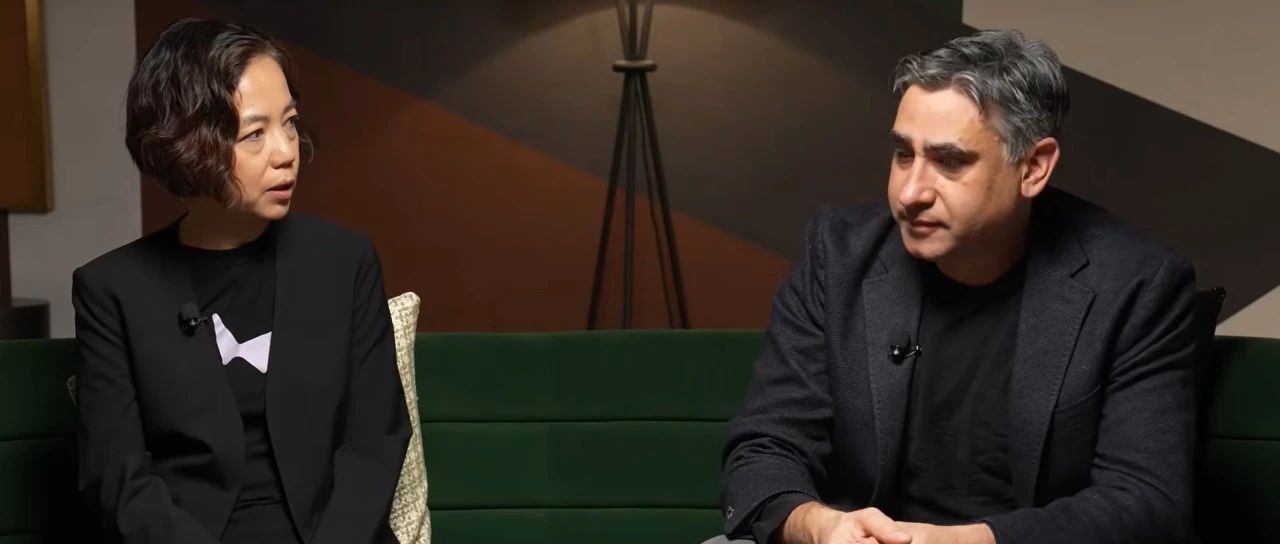
凭借RCE和AI两把利器,广汽丰田开启中国自研2.0时代
Zhong Guo Qi Che Bao Wang· 2025-06-13 02:47
Core Viewpoint - GAC Toyota aims to leverage AI technology and local resources to achieve 80% production and sales of smart electric vehicles by 2030 [1] Group 1: R&D and Development Strategy - GAC Toyota's new development model is led by local engineers under the Regional Chief Engineer (RCE) system, focusing on integrating local suppliers and AI technology [2][5] - The decision-making power for the development of smart electric products has been transferred from Japan to China, allowing RCE to lead all model developments, including new and updated versions of key models like Sienna, Highlander, and Camry [2][5] - GAC Toyota is entering a "self-research 2.0 era," emphasizing the importance of local engineers in defining product specifications and driving innovation [5] Group 2: Product Platforms and Innovations - GAC Toyota is developing two dedicated new energy platforms: a compact car platform for A and B class vehicles and a high-compatibility platform for C and D class vehicles [9] - The first model on the compact platform, the Platinum 3X, has seen high demand, while the first model on the high-compatibility platform, the Platinum 7, is set to launch in Q1 next year [9] Group 3: AI Integration and Manufacturing - AI is being utilized to enhance product capabilities, making vehicles more intelligent and responsive to user needs [10][12] - GAC Toyota is implementing AI in manufacturing processes, achieving a defect rate of 0.008 units per vehicle and improving supply chain quality to a record low of 0.26 PPM [16] - The company has integrated over 40 patents in AI logistics, achieving zero inventory through advanced automation technologies [16]

AGI真方向?谷歌证明:智能体在自研世界模型,世界模型is all You Need
机器之心· 2025-06-13 02:32
Core Insights - The article discusses the necessity of world models for general agents in achieving flexible, goal-directed behavior, emphasizing that any AI capable of generalizing to multi-step tasks must learn a predictive model of its environment [4][9][20]. Group 1: Importance of World Models - World models are essential for agents to generalize across complex, long-term tasks, as they allow for the prediction of future states based on current actions [4][5][9]. - Google DeepMind's research indicates that learning world models is not just beneficial but necessary for achieving human-level artificial intelligence [9][20]. Group 2: Theoretical Framework - The authors developed a mathematical framework consisting of four components: environment, goals, agents, and world models, to formalize the relationship between these elements [24][30]. - The framework posits that any agent capable of handling simple goal-directed tasks must learn a predictive model of its environment, which can be extracted from the agent's policy [20][30]. Group 3: Algorithm for World Model Recovery - The article outlines an algorithm that allows for the recovery of world models from bounded agents by querying them with carefully designed composite goals [37][39]. - Experiments demonstrated that even when agents deviated from theoretical assumptions, the algorithm successfully recovered accurate world models, confirming the link between agent capabilities and the quality of the world model [40][46]. Group 4: Implications for AI Development - The findings suggest that the race for superintelligent AI may actually be a competition to build more complex world models, transitioning from a "human data era" to an "experience era" [49][52]. - The development of foundational world models like Genie 2, which can generate diverse 3D environments from a single image, represents a significant advancement in training and evaluating embodied agents [51][52].

LeCun亲自官宣!Meta世界模型V-JEPA 2登场!仅用62小时机器人数据,就能实现零样本控制!
AI科技大本营· 2025-06-12 10:48
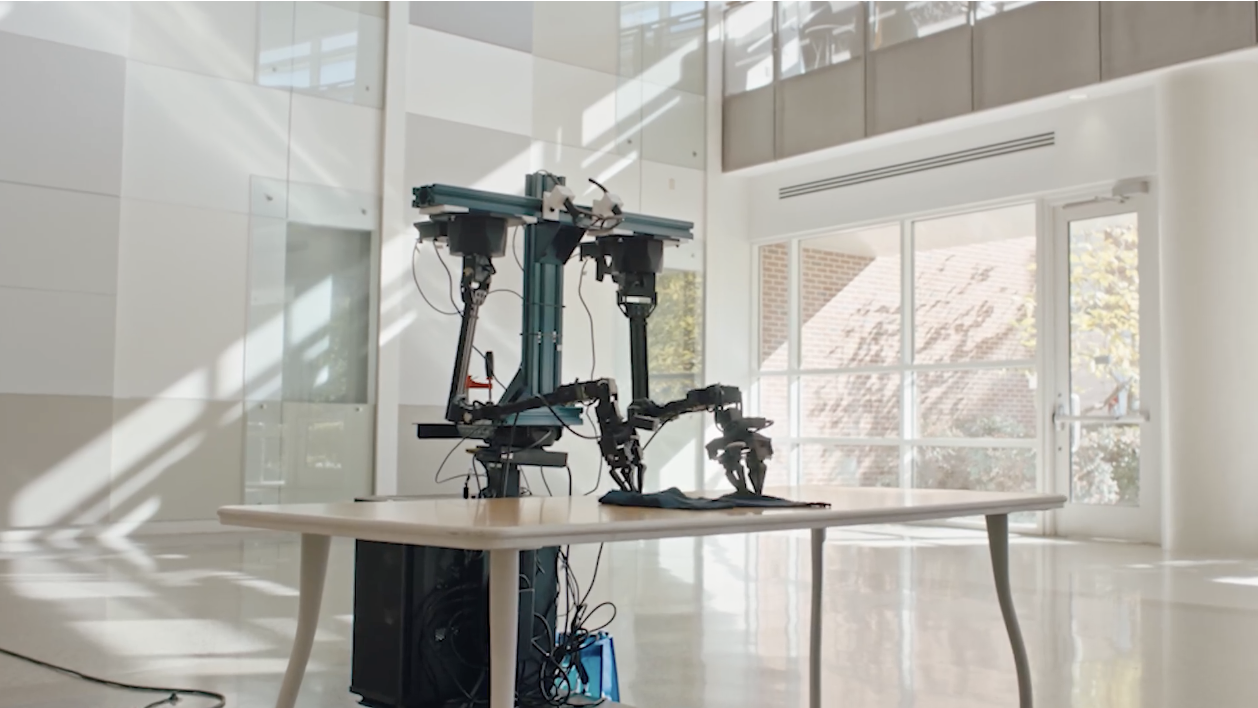
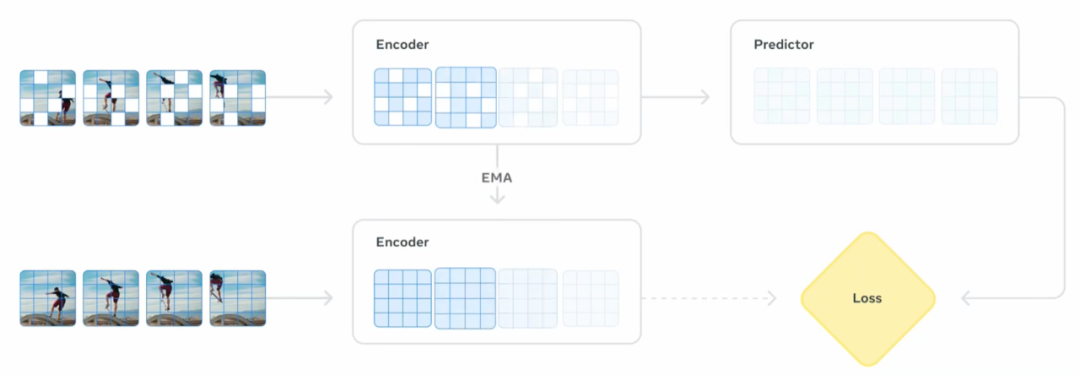
Core Viewpoint - Meta has launched V-JEPA 2, an advanced AI system designed to enhance machines' understanding, prediction, and interaction with the physical world, marking a significant step towards building more general AI agents [3][27]. Group 1: V-JEPA 2 Overview - V-JEPA 2 is based on video training and aims to provide deeper physical world understanding and predictive capabilities [3]. - The model has achieved the top ranking in the Hugging Face physical reasoning leaderboard, surpassing GPT-4o [6]. - The training process consists of two phases: unsupervised pre-training using over 1 million hours of video and 1 million images, followed by action-conditioned training [9][10]. Group 2: Model Performance - V-JEPA 2 has demonstrated excellent understanding and prediction capabilities, achieving state-of-the-art results in various action recognition and prediction tasks [12][14]. - The model can perform zero-shot task planning, successfully completing tasks in entirely new environments with a success rate of 65% to 80% for object manipulation [17]. Group 3: World Model Concept - The concept of a world model is introduced, which allows AI to predict the consequences of actions based on an internal simulation of the physical world [21]. - Meta emphasizes the importance of understanding, predicting, and planning as key capabilities for AI's world model [25]. Group 4: New Benchmark Tests - Meta has released three new benchmarks: IntPhys 2, MVPBench, and CausalVQA, to evaluate AI models' understanding of physical laws, causal relationships, and counterfactual reasoning [23]. - These benchmarks highlight the gap between human performance (85%-95% accuracy) and current AI models, including V-JEPA 2 [24]. Group 5: Future Directions - Future efforts will focus on developing hierarchical world models and enhancing multimodal modeling capabilities to improve AI's understanding and predictive abilities [30].


杨立昆的“反ChatGPT”实验,能救Meta吗?
Di Yi Cai Jing· 2025-06-12 09:20
Core Viewpoint - Meta is adopting a dual strategy to navigate the competitive landscape of AI, focusing on both a non-mainstream "world model" approach led by Yann LeCun and a mainstream "superintelligence" initiative spearheaded by Mark Zuckerberg [1][2][12] Group 1: Meta's AI Strategy - Meta's recent struggles with its Llama 4 model have prompted a reevaluation of its AI strategy, leading to the development of two distinct paths: the world model and superintelligence [1][10] - CEO Mark Zuckerberg has returned to a "founder mode," actively recruiting top AI talent and investing heavily in AI startups to bolster Meta's capabilities in the AGI space [2][11] - The company is reportedly planning to recruit around 50 top AI experts for its superintelligence team, offering substantial compensation packages [11] Group 2: Yann LeCun's World Model - Yann LeCun has been critical of the mainstream self-regressive LLM approach, advocating for a world model that allows AI to understand and predict real-world interactions [4][10] - The V-JEPA 2 model, a product of this world model approach, is designed to enhance AI's ability to interact with unfamiliar objects and environments, boasting 1.2 billion parameters [6][12] - LeCun's vision emphasizes the importance of a world model in enabling AI to plan actions based on predictions of how the world will respond [5][6] Group 3: Investment and Future Outlook - Meta has made significant investments, including a reported $15 billion in Scale AI, to enhance its data capabilities and support its AI initiatives [12] - The company anticipates total capital expenditures of $64-72 billion by 2025, reflecting its commitment to expanding data centers and infrastructure for AI [12] - The outcome of Meta's dual strategy could determine its position in the AI landscape and its ability to reclaim leadership in the field [12]
Meta发布世界模型,被群嘲的开源旧王要反击了
Hu Xiu· 2025-06-12 08:29
Core Viewpoint - Meta is doubling down on its commitment to AI development, particularly through the launch of its new model V-JEPA 2, which aims to enhance AI's understanding of the physical world and its ability to perform tasks autonomously [1][2][4]. Group 1: Investment and Team Formation - Founder Mark Zuckerberg is personally leading the formation of a "super-intelligent" team, investing heavily in AI and recruiting top scientists from Google and OpenAI with nine-figure sums [2][3]. - Meta's strategy includes open-sourcing its latest model, V-JEPA 2, to further its AI capabilities [3]. Group 2: V-JEPA 2 Model Features - V-JEPA 2 is designed to enable AI to understand the world and possess physical reasoning capabilities, allowing it to perform tasks in unfamiliar environments without extensive training [4][12]. - The model has 1.2 billion parameters and focuses on prediction rather than mere recognition, enabling it to anticipate future events based on observed data [12][13]. Group 3: Training and Capabilities - The training process for V-JEPA 2 consists of two phases: a pre-training phase using over 1 million hours of video and 1 million images, followed by a phase incorporating 62 hours of robot data for action execution [16][20]. - V-JEPA 2 has demonstrated strong capabilities in zero-shot robot planning, successfully executing tasks like grasping and transporting objects in new environments [21][22]. Group 4: Benchmarking and Testing - Meta has introduced three new benchmark tests: IntPhys 2, Minimal Video Pairs, and CausalVQA, to evaluate the model's understanding of physical concepts and causal relationships [25][30]. - The IntPhys 2 test assesses the model's ability to identify violations of physical laws in video sequences, while Minimal Video Pairs challenges the model to discern subtle differences in similar videos [26][33]. Group 5: Future Directions - Meta plans to develop a multi-time-scale hierarchical JEPA model to support complex tasks requiring step-by-step execution, as well as a multi-modal JEPA model that integrates various sensory inputs [40][41]. - The ultimate goal is to advance AI's understanding of causal relationships in the physical world, moving closer to achieving general action intelligence [42].
LeCun世界模型出2代了!62小时搞定机器人训练,开启物理推理新时代
量子位· 2025-06-12 08:17
闻乐 发自 凹非寺 量子位 | 公众号 QbitAI 物理学正在走向人工智能—— Meta开源发布 V-JEPA 2 世界模型:一个能像人类一样理解物理世界的AI模型。 图灵奖得主、Meta首席AI科学家 Yann LeCun 亲自出镜宣传,并称: 我们相信世界模型将为机器人技术带来一个新时代,使现实世界中的AI智能体能够在不需要大量机器人训练数据的情况下帮助完成家务 和体力任务。 那什么是世界模型呢? 简单说,就是能够对真实物理世界做出反应的AI模型。 它应该具备以下几种能力: V-JEPA 2 (Meta Video Joint Embedding Predictive Architecture 2 ) 是首个 基于视频训练 的世界模型 (视频是关于世界信息丰富且 易于获取的来源) 。 它提升了动作预测和物理世界建模能力,能够用于 在新环境中进行零样本规划 和 机器人控制 。 理解:世界模型应该能够理解世界的观察,包括识别视频中物体、动作和运动等事物。 预测:一个世界模型应该能够预测世界将如何演变,以及如果智能体采取行动,世界将如何变化。 规划:基于预测能力,世界模型应能用于规划实现给定目标的行动序列。 ...

LeCun世界模型出2代了!62小时搞定机器人训练,开启物理推理新时代
量子位· 2025-06-12 08:16
Meta开源发布 V-JEPA 2 世界模型:一个能像人类一样理解物理世界的AI模型。 闻乐 发自 凹非寺 量子位 | 公众号 QbitAI 物理学正在走向人工智能—— 图灵奖得主、Meta首席AI科学家 Yann LeCun 亲自出镜宣传,并称: 我们相信世界模型将为机器人技术带来一个新时代,使现实世界中的AI智能体能够在不需要大量机器人训练数据的情况下帮助完成家务 和体力任务。 那什么是世界模型呢? 简单说,就是能够对真实物理世界做出反应的AI模型。 它应该具备以下几种能力: V-JEPA 2 (Meta Video Joint Embedding Predictive Architecture 2 ) 是首个 基于视频训练 的世界模型 (视频是关于世界信息丰富且 易于获取的来源) 。 它提升了动作预测和物理世界建模能力,能够用于 在新环境中进行零样本规划 和 机器人控制 。 理解:世界模型应该能够理解世界的观察,包括识别视频中物体、动作和运动等事物。 预测:一个世界模型应该能够预测世界将如何演变,以及如果智能体采取行动,世界将如何变化。 规划:基于预测能力,世界模型应能用于规划实现给定目标的行动序列。 ...