
储能

Search documents
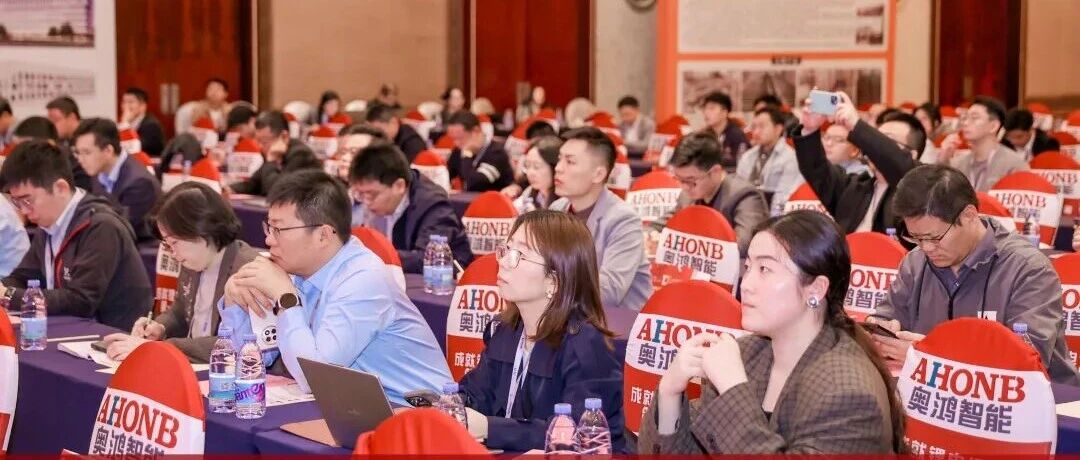
新周期 新技术 新生态——2025起点锂电年会暨用户侧储能论坛圆满举办!
起点锂电· 2025-12-19 12:17
Core Viewpoint - The lithium battery industry is entering a new cycle characterized by both opportunities and challenges, with significant growth potential in the energy storage market and increasing penetration of electric vehicles, while facing challenges such as rising raw material prices and supply chain management [3]. Group 1: Industry Overview - The scale of China's lithium battery industry has grown from less than 100 billion to over 1 trillion in value over the past decade, with the number of related listed companies increasing from dozens to hundreds [3]. - The domestic penetration rate of new energy passenger vehicles has exceeded 50%, with substantial growth potential in commercial vehicles and overseas markets [3]. - The energy storage market is expected to grow at a rate of 70%-80% this year, with continuous expansion across multiple scenarios [3]. Group 2: Technological Innovations - The cylindrical battery market is experiencing a shift towards small power and small storage applications, particularly in emerging markets such as low-altitude economies and intelligent robotics [7]. - The introduction of new standards is expected to create opportunities for responsible companies in the industry, particularly in the context of safety challenges [7]. - The development of all-tab cylindrical batteries is projected to see a shipment volume of 100 GWh globally by 2025, with a significant annual growth rate exceeding 400% for lithium iron phosphate cylindrical batteries [11]. Group 3: Market Trends - The market for small power batteries is vast, with the demand for electric two-wheelers in China reaching approximately 260 GWh annually [16]. - The industry is witnessing a trend towards larger capacity cells, with specifications evolving from early small capacities to larger ones like 314Ah and 587Ah [59][62]. - The introduction of mandatory national standards for energy storage lithium batteries is set to enhance safety regulations and market entry requirements [63][64]. Group 4: Company Strategies - Companies are focusing on technological innovation and differentiation to navigate the competitive landscape, with an emphasis on sustainable development and global expansion [28][29]. - The integration of AI in Battery Management Systems (BMS) is being prioritized to enhance safety and efficiency across the supply chain [39][40]. - Firms are exploring new materials and processes to improve battery safety and performance, with a focus on solid-state and high-voltage systems [48][50].



三房巷(600370.SH):目前公司未涉足储能领域
Ge Long Hui· 2025-12-19 10:50
格隆汇12月19日丨三房巷(600370.SH)在互动平台表示,目前公司未涉足储能领域。 ...

2026年铝品系期货行情展望:电解铝:需求“集腋成裘”,供给故事推涨弹性几何?氧化铝:基本面驱动VS估值的困境,何处是底?铝合金
Guo Tai Jun An Qi Huo· 2025-12-19 10:05
Report Industry Investment Rating - Not provided in the document Core Views of the Report - In 2026, the pricing logic of aluminum metals with imagination since the fourth quarter of this year will continue. Although the year - on - year growth rate of apparent demand for aluminum metals is expected to decline further, the report remains optimistic about the unilateral direction of aluminum prices, smelting profits of aluminum plants, and price volatility due to the likely low - growth global supply [1][54][315]. - For alumina, the market is likely to see over - supply. It is recommended to sell on rebounds. The profit - grabbing ability of alumina in the industrial chain will remain weak in 2026 [196][319]. - For recycled cast aluminum alloys, prices will generally follow aluminum prices and have a certain upward elasticity. The price - to - electrolytic aluminum ratio of ADC12 is expected to rise, and its price may exceed the 2025 high [7][324]. - In 2026, key structural strategies include cross - border arbitrage, calendar spread arbitrage, cross - variety arbitrage, and over - the - counter options [8][327]. Summary by Relevant Catalogs 1. Review of 2025 Market and Main Driving Logic of Three Aluminum Products 1.1 Electrolytic Aluminum (AL) - In 2025, the aluminum price showed a low - volatility and convergent pattern for most of the time, with the annual low higher than that in 2024 and the high failing to break through the 2024 high. By the end of 2025, the price increase was 11.0%, lower than that of copper and tin [11]. - The main reasons were the "double - weak" supply - demand pattern and the lack of a clear macro - trading theme. However, since October, with the positive impact of AI - driven power demand on the supply - demand pattern, combined with stock - futures linkage, the aluminum price broke through the convergent pattern [12][14]. 1.2 Alumina (AO) - In 2025, alumina prices fell by 41.1%. In the first half of the year, there was a unilateral decline, and in the second half, there were two "advance - to - retreat" style declines. The main reason was the over - supply and inventory accumulation [17]. 1.3 Recycled Cast Aluminum Alloy (AD) - In 2025, the price center of recycled cast aluminum alloy moved up, generally following the electrolytic aluminum price. The price was supported by the supply shortage of scrap aluminum, especially in the second half of the year after the futures listing [23][24]. 1.4 Strategy Review of Three Aluminum Products - Cross - border arbitrage: In 2025, the most profitable position was the long - LME aluminum and short - SHFE aluminum (positive arbitrage), with a maximum annualized return of over 20% [26][28]. - Cross - variety arbitrage: Copper - aluminum arbitrage, alumina - aluminum arbitrage, alumina - caustic soda arbitrage, and aluminum - aluminum alloy arbitrage provided many profitable strategies [31][34]. - Calendar spread arbitrage: The basis and calendar spread structure of aluminum were generally flat. The basis opportunities of alumina and aluminum alloy were stronger than the calendar spread opportunities [44][45]. 2. Electrolytic Aluminum: Can the "Gathering of Small Demands" and Supply Stories Boost Elasticity? 2.1 Resilience of Primary Aluminum Demand - AI - related industries such as computing centers, energy storage, the US power grid, and robots, as well as military applications and "aluminum replacing copper," are expected to contribute about 1.2 - 1.6 percentage points to China's primary aluminum demand growth rate in 2026 [56][156]. - "Light and vehicle" consumption growth contribution will decline to + 0.1 percentage points, mainly due to the decline in photovoltaic demand [107][114]. - Traditional "foundation, infrastructure, and electricity" and manufacturing industries are expected to contribute 0 - 1 percentage point to the demand growth rate [116][117]. - In 2026, China's exports of aluminum products and aluminum products are expected to increase slightly, contributing 0.5 - 1 percentage point to the demand growth rate [155][156]. 2.2 Key Risks for the Bullish View - China's electrolytic aluminum production capacity ceiling is approaching, and in 2026, the production growth rate is expected to be about + 1.7%. The main risk is the potential increase in production capacity if green - power smelting can break through the ceiling [157][158][163]. - Overseas supply, especially from Indonesia, is a major risk. Although the new production in 2026 is expected to be at a low - growth rate, the power supply conditions need to be closely monitored [165][173][179]. 2.3 Supply - Demand Balance of Primary Aluminum - In China, under the baseline and optimistic scenarios in 2026, the annual shortage is expected to be 12.4 - 25.8 tons, and the inventory accumulation pressure in the first quarter is controllable [2][316]. - Globally, the supply - demand balance is expected to be in a shortage range of 19 - 82 tons, with a median of about 50 tons. Considering the production cut of the Mozambique aluminum plant, the global shortage may exceed 50 tons [2][187][316]. 3. Alumina: Where is the Bottom in the Dilemma between Fundamental Drivers and Valuation? 3.1 Supply Rigidity Remains Unsolved, and the Over - Supply Pattern is Hard to Change - As of the end of 2025, the production of alumina remained rigid. Although high - cost producers have suffered losses for two months, the production has not decreased significantly. However, there may be large - scale production cuts or maintenance in January - February [197][198]. - In 2026, there is still a large - scale new investment in alumina production capacity. The annual average growth rate of alumina production is expected to be about 5.3%, and the production - demand gap will be large [204][205]. - Overseas alumina production capacity is also increasing. Although there is a risk of overseas supply impacting the Chinese market, the Chinese market's production increase is more certain, and exports may exceed 2025 [210][211]. - In 2026, the supply - demand balance of alumina in China and globally is expected to be in a serious over - supply situation, but there are uncertainties in the inventory accumulation in the second half of the year [228][229]. 3.2 Under the Over - Supply Pattern, the Cost - Based Pricing of AO Continues - In 2026, the supply of Guinea bauxite is expected to be abundant, with a potential increase of 3693 - 6300 tons. If the monthly arrival in China exceeds 1530 tons, the supply of bauxite in China will be stable [240][241]. - Alumina's profit - grabbing ability in the industrial chain is expected to remain weak in 2026, mainly due to the decline in bauxite prices and the optimization of production capacity structure [258]. 4. Recycled Cast Aluminum Alloy: The Contradiction at the Raw Material End is Prominent, and the Ratio Center Rises 4.1 The Ratio Center of Scrap Aluminum to Electrolytic Aluminum Tends to Rise - The actual shipment volume of scrap aluminum in 2025 was lower than expected. The increase in imports did not effectively alleviate the supply shortage. The main reason was the mismatch between the supply and demand growth rates of scrap aluminum [262][271]. - The cancellation of the tax rebate policy has increased the cost of recycled aluminum enterprises, and the EU's possible export tariff on scrap aluminum may exacerbate the global supply shortage [291][296]. 4.2 Assessment of Supply and Demand of Recycled Aluminum Alloys - In 2025, the expansion rate of recycled aluminum alloy production capacity slowed down, but the capacity utilization rate was still low. In 2026, the production capacity growth rate is expected to slow down, and some production capacity may exit [300][301]. - The demand for recycled aluminum alloys has certain resilience, but the industry is still in an over - capacity situation. ADC12 is a cost - based pricing product, and the cost - pricing logic will be more obvious [307]. 5. Trading Themes to Watch in 2026 5.1 Unilateral Judgment of Electrolytic Aluminum - In 2026, the pricing logic of aluminum with imagination will continue. Although the apparent demand growth rate is expected to decline, the report is optimistic about the price, smelting profit, and price volatility. The main risks are macro - economic recession and over - production in Indonesia [315][318]. 5.2 Unilateral Judgment of Alumina - It is recommended to sell on rebounds. The over - supply pattern is difficult to change in 2026. The profit - grabbing ability in the industrial chain will remain weak, and the main risks are the introduction of a "production capacity ceiling" policy and bauxite supply disruptions in Guinea [319][323]. 5.3 Unilateral Judgment of Recycled Cast Aluminum Alloy - The price will generally follow the electrolytic aluminum price and has a certain upward elasticity. The main risks are the continuous release of new production capacity and lower - than - expected automobile consumption growth [324][326]. 5.4 Structural Strategies - Cross - border arbitrage: Positive arbitrage in the first half of the year and possible reverse arbitrage in the second half [327]. - Calendar spread arbitrage: Selectively conduct positive arbitrage [327]. - Cross - variety arbitrage: Short caustic soda based on alumina production cuts; buy aluminum and short copper when the copper - aluminum ratio rises too fast; conduct spread arbitrage between electrolytic aluminum and recycled cast aluminum alloy [327]. - Over - the - counter options: Regularly implement the low - level buying strategy - enhanced accumulative purchase [327].
联域股份涨0.07%,成交额2560.23万元,今日主力净流入-141.16万
Xin Lang Cai Jing· 2025-12-19 07:59
Core Viewpoint - The company, Shenzhen Lianyu Optoelectronics Co., Ltd., is actively advancing in the smart lighting sector and has diversified into charging stations and energy storage, benefiting from the depreciation of the RMB and the Belt and Road Initiative. Group 1: Company Developments - The company is focusing on the development of new technologies in smart lighting, including self-adaptive plant control spectrum and wireless networking for intelligent control circuits [2][3] - The company has developed standardized interface technology for LED lamps and obtained a US invention patent, allowing for the integration of various smart sensors and enabling wireless networking and automated control [2][3] - The company has established a fully-owned subsidiary, Shenzhen Haibo, to actively engage in the charging station and energy storage business, with multiple research and development technology patents already formed [2] Group 2: Financial Performance - As of September 30, the company reported a revenue of 1.155 billion yuan, representing a year-on-year growth of 1.03%, while the net profit attributable to shareholders decreased by 79.23% to 19.5341 million yuan [10] - The company's overseas revenue accounted for 95.62% of total revenue, benefiting from the depreciation of the RMB [4] Group 3: Market Position and Stock Performance - The company's stock price increased by 0.07% on December 19, with a trading volume of 25.6023 million yuan and a turnover rate of 2.59%, leading to a total market capitalization of 2.992 billion yuan [1] - The average trading cost of the company's stock is 46.32 yuan, with recent trading showing a decrease in holdings but at a slowing rate [8]
昱能科技涨1.53%,成交额4777.21万元,后市是否有机会?
Xin Lang Cai Jing· 2025-12-19 07:56
Core Viewpoint - The company, YN Technology, focuses on the photovoltaic power generation sector, particularly in distributed photovoltaic systems and energy storage solutions, benefiting from the depreciation of the RMB and the push for common prosperity in demonstration zones [2][4]. Group 1: Company Overview - YN Technology specializes in the research, production, and sales of component-level power electronic devices for distributed photovoltaic power generation systems, including micro-inverters and energy communication systems [2][8]. - The company was established on March 24, 2010, and went public on June 8, 2022, with a total market capitalization of 7.967 billion yuan as of December 19 [1][8]. - The main revenue sources for the company include micro-inverters and energy communication products (54.95%), commercial energy storage systems (29.14%), intelligent control disconnectors (8.94%), and other products (3.89%) [8]. Group 2: Financial Performance - For the period from January to September 2025, YN Technology reported a revenue of 943 million yuan, a year-on-year decrease of 38.48%, and a net profit attributable to shareholders of 66.48 million yuan, down 55.52% year-on-year [9]. - The company has distributed a total of 349 million yuan in dividends since its A-share listing [9]. Group 3: Market Position and Trends - As of the end of September, the company had 12,800 shareholders, an increase of 10.86% from the previous period, with an average of 12,199 circulating shares per person, a decrease of 9.80% [9]. - The company’s overseas revenue accounted for 66.03% of total revenue, benefiting from the depreciation of the RMB [4]. Group 4: Product Development and Projects - YN Technology has completed product layouts in energy storage, including portable, household, and commercial energy storage systems, with its single-phase household energy storage series entering mass production and being sold in Europe and the U.S. [2][3]. - The company’s distributed photovoltaic power station business has achieved a grid-connected capacity of over 60 MW, including notable projects like the 25 MW photovoltaic power station at the Nanjing International Expo Center [3].

调整时间快“熬到头了”!下行趋势中的反弹,还有哪些投资机会?
Sou Hu Cai Jing· 2025-12-19 07:54
Group 1 - The A-share market has limited valuation upside after two consecutive years of growth, with future index increases expected to come from earnings and the continuation of "anti-involution" policies, which may support profit growth due to a low base in the first half of the year [1] - Key sectors for investment include technology growth and high dividend strategies, focusing on domestic support policies under the backdrop of US-China competition, internet technology companies with independent growth, and high dividend low volatility sectors such as telecommunications, utilities, and banking [1] - The top five sectors for net inflow include new energy vehicles, auto parts, military industry, non-ferrous metals, and pharmaceuticals, while the top five concepts are state-owned enterprise reform, Belt and Road Initiative, energy storage, and free trade zones [1] Group 2 - The panel industry is expected to see a positive long-term outlook due to improved competition dynamics, with profit release logic shifting from price increases to value creation, driven by large-size demand, cost reduction through domestic production, and recovery of minority shareholder rights [3] - The aviation sector is facing capacity constraints due to low new aircraft introductions and maintenance issues, but there is a recovery in business travel demand, with expectations for profitability to return by 2025 [4] - The Federal Reserve is anticipated to lower interest rates by 25 basis points, with mixed opinions among policymakers regarding the impact on inflation and the labor market, while the macro environment remains favorable for gold [6] Group 3 - The Shanghai Composite Index has been fluctuating around 3900 points for an extended period, indicating a transition phase rather than a clear bull or bear market, with a focus on domestic economic circulation and sustainable growth [10] - The communication equipment industry is seeing increased demand due to the launch of satellite IoT business trials and advancements in technology, although current valuations are high, requiring sustained industry performance [10]

锂电池迎来涨价 产业链高景气持续
鑫椤储能· 2025-12-19 06:19
关注公众号,点击公众号主页右上角" ··· ",设置星标 "⭐" ,关注 鑫椤储能 资讯~ 封面图 | 图虫创意 继锂电材料迎来涨价潮,随着市场需求持续扩大, 近期锂电池企业也开始陆续调价,部分产品 已涨价落地。 对于锂电产业链而言,未来两年锂电材料价格整体迎来底部向上的趋势较为确定。材料环节经历 三年亏损,铁锂、隔膜、铜箔等环节投资回报率低,行业整体处于亏损状态,未来盈利或将逐步 向合理水平修复。我们看好涨价预期低但估值合理的负极、铁锂环节,以及股价滞涨、未来涨价 弹性高的隔膜环节。在电池端,当前电池产能供应紧张,头部企业集体按下扩产"加速键"。随着 2026年产能释放,头部企业有望通过控价、长协等方式争取更多市场份额。 鑫椤报告预售: 2025-2029年中国三元材料运行趋势及竞争策略研究报告 2025-2029年中国磷酸铁锂运行趋势及竞争策略研究报告 2025-2029年中国钠离子电池运行趋势及竞争策略研究报告 2025-2029年全球负极材料运行趋势及竞争策略研究报告 2025-2029年全球电解液运行趋势及竞争策略研究报告 2025-2029年全球储能市场运行趋势及竞争策略研究报告 2025-202 ...

鼎胜新材涨2.02%,成交额1.27亿元,主力资金净流入96.32万元
Xin Lang Cai Jing· 2025-12-19 06:05
Group 1 - The core viewpoint of the news is that Ding Sheng New Materials has shown a significant increase in stock price and positive financial performance, indicating potential growth in the company [1][2]. - As of December 19, Ding Sheng New Materials' stock price increased by 2.02% to 12.63 CNY per share, with a total market capitalization of 11.737 billion CNY [1]. - The company has experienced a year-to-date stock price increase of 44.34%, with a recent slight decline of 0.71% over the last five trading days [1]. Group 2 - For the period from January to September 2025, Ding Sheng New Materials achieved a revenue of 19.604 billion CNY, representing a year-on-year growth of 11.29% [2]. - The net profit attributable to shareholders for the same period was 307 million CNY, reflecting a year-on-year increase of 36.61% [2]. - The company has distributed a total of 949 million CNY in dividends since its A-share listing, with 720 million CNY distributed over the last three years [3]. Group 3 - Ding Sheng New Materials specializes in the research, production, and sales of aluminum foil, with aluminum foil products accounting for 85.57% of its main business revenue [1]. - The company is classified under the non-ferrous metals industry, specifically in industrial metals and aluminum, and is involved in various concepts such as blade batteries, solid-state batteries, sodium batteries, energy storage, and lithium batteries [1]. - As of November 10, the number of shareholders increased to 51,500, with an average of 18,044 circulating shares per person [2].

金时科技涨2.14%,成交额1831.77万元,主力资金净流入53.28万元
Xin Lang Cai Jing· 2025-12-19 05:34
Group 1 - The core viewpoint of the news is that Jinshi Technology has shown significant stock performance and financial growth, with a notable increase in revenue and a strong market presence [1][2]. - As of December 19, Jinshi Technology's stock price increased by 2.14% to 13.38 CNY per share, with a total market capitalization of 5.419 billion CNY [1]. - The company has experienced a year-to-date stock price increase of 116.29%, with a recent 4.21% rise over the last five trading days [1]. Group 2 - Jinshi Technology's main business involves the research, production, and sales of packaging printing products, with a revenue composition of 75.96% from energy storage devices and 24.00% from lithium-ion battery thermal runaway detection and prevention devices [1]. - The company reported a revenue of 282 million CNY for the period from January to September 2025, reflecting a year-on-year growth of 355.89% [2]. - The number of shareholders decreased by 1.76% to 18,300, while the average circulating shares per person increased by 1.80% to 22,112 shares [2]. Group 3 - Since its A-share listing, Jinshi Technology has distributed a total of 744 million CNY in dividends, with 400 million CNY distributed over the past three years [3].

振华股份涨2.03%,成交额3.69亿元,主力资金净流出1986.77万元
Xin Lang Cai Jing· 2025-12-19 05:24
Core Viewpoint - Zhenhua Co., Ltd. has experienced significant stock price fluctuations, with a year-to-date increase of 204.52%, but a recent decline of 8.41% over the past five trading days [1] Group 1: Stock Performance - As of December 19, Zhenhua's stock price reached 27.13 CNY per share, with a market capitalization of 19.283 billion CNY [1] - The stock has seen a trading volume of 3.69 billion CNY, with a turnover rate of 1.94% [1] - The company has appeared on the daily trading leaderboard six times this year, with the latest instance on December 18, where it recorded a net buy of -1.08 billion CNY [1] Group 2: Financial Performance - For the period from January to September 2025, Zhenhua reported a revenue of 3.217 billion CNY, reflecting a year-on-year growth of 7.47%, and a net profit attributable to shareholders of 410 million CNY, up by 12.56% [2] - The company has distributed a total of 568 million CNY in dividends since its A-share listing, with 294 million CNY distributed over the past three years [3] Group 3: Shareholder Information - As of September 30, 2025, Zhenhua had 22,900 shareholders, an increase of 26.22% from the previous period, with an average of 31,051 circulating shares per shareholder, down by 20.77% [2] - Major shareholders include Hong Kong Central Clearing Limited, holding 13.287 million shares, and Penghua Optimal Value Stock A, holding 12.750 million shares, with notable changes in their holdings [3]
