智能制造

Search documents
中联重科智能制造成果亮相中国制造“十四五”成就展
Zhong Guo Jin Rong Xin Xi Wang· 2025-12-31 06:53
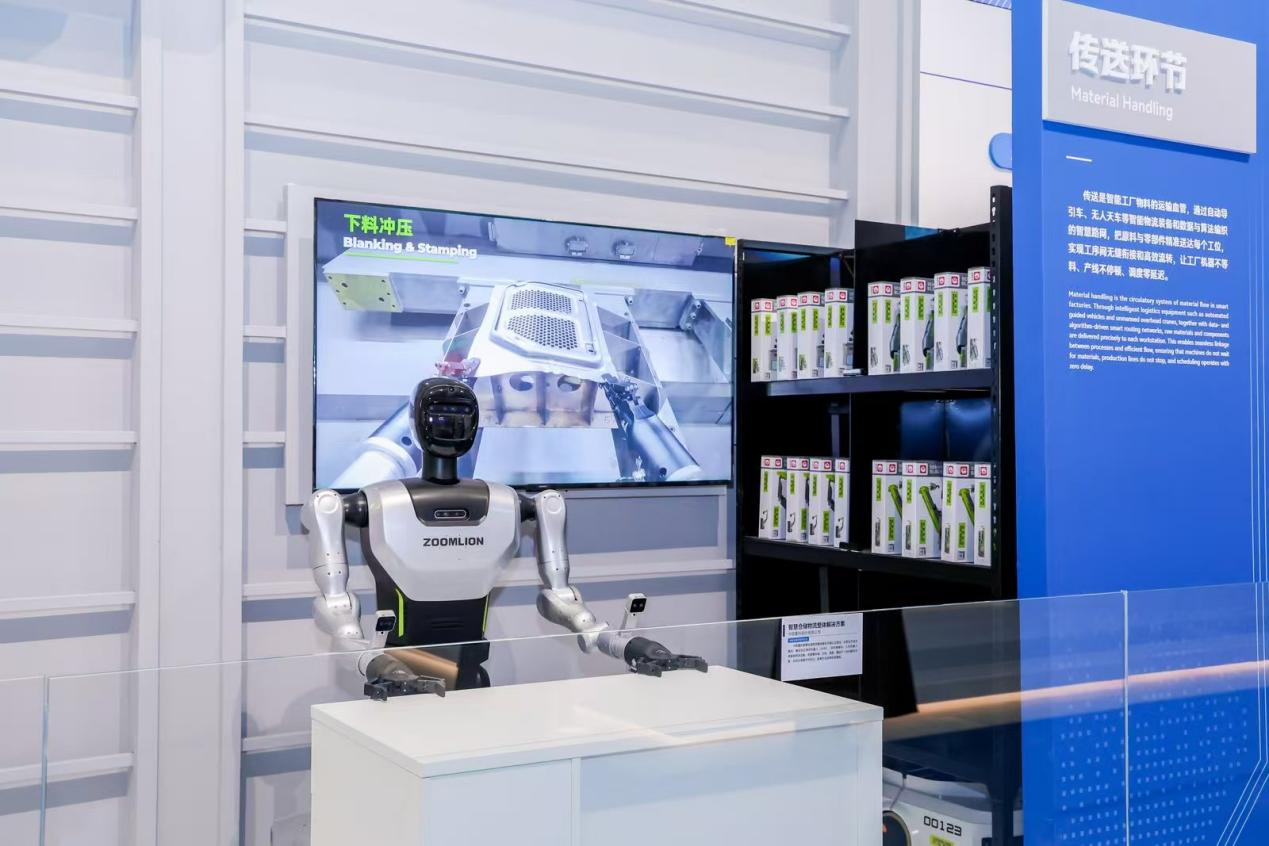
Core Viewpoint - The "Building a Strong Nation Road - Achievements Exhibition of China's Manufacturing during the 14th Five-Year Plan" showcases significant advancements in intelligent manufacturing, with Zoomlion's humanoid robot and smart warehousing logistics solution highlighted as a benchmark achievement in the sector [1][3]. Group 1: Exhibition Overview - The exhibition is co-hosted by the National Museum of China and the Ministry of Industry and Information Technology, featuring over 300 high-quality exhibits from more than 150 key units across the country [3]. - The exhibition is divided into six sections: high-end manufacturing, industrial foundation, intelligent manufacturing, green manufacturing, integrated development, and better life, presenting the robust development of China's manufacturing during the 14th Five-Year Plan [3]. Group 2: Zoomlion's Innovations - Zoomlion's humanoid robot integrates advanced technologies such as AI visual recognition, laser navigation, and flexible grasping, achieving a sorting accuracy rate of 99.9% for various goods [3][4]. - The robot's modular design allows for flexible expansion and, when paired with an intelligent scheduling system, enables fully automated operations, positioning it as a core benchmark for smart logistics and flexible production upgrades [3][4]. Group 3: Technological Integration and Future Prospects - Zoomlion has deeply integrated artificial intelligence, industrial internet, and smart manufacturing technologies, developing innovative control algorithms and digital systems to address the challenges of mixed-flow production in heavy equipment [4]. - The company aims to establish a unique collaborative smart factory cluster for engineering machinery, with its excavator sharing manufacturing smart factory recognized as one of the first national pilot-level smart factory projects by 2025 [4]. - The advancements in humanoid robots and other innovations signify that Chinese manufacturing has entered a new stage of high-quality development, with Zoomlion committed to continuing its technological innovation to support the construction of a manufacturing powerhouse [4].

“长沙造”人形机器人刷屏中国制造“十四五”成就展
Chang Sha Wan Bao· 2025-12-31 06:44
Core Viewpoint - The "Foundation for a Strong Nation - Achievements of China's Manufacturing during the 14th Five-Year Plan" exhibition showcases the high-quality development of China's manufacturing industry, highlighting the achievements of companies like Zoomlion Heavy Industry Science & Technology Co., Ltd. in intelligent manufacturing [1][5]. Group 1: Exhibition Overview - The exhibition is co-hosted by the National Museum of China and the Ministry of Industry and Information Technology, featuring over 300 high-quality exhibits from more than 150 key units across the country [3]. - The exhibition is divided into six sections: high-end manufacturing, industrial foundation, intelligent manufacturing, green manufacturing, integrated development, and better life, presenting the robust development of China's manufacturing during the 14th Five-Year Plan [3]. Group 2: Zoomlion's Innovations - Zoomlion's humanoid robot and smart warehousing logistics solution were selected as exemplary achievements in intelligent manufacturing after a rigorous 90-day evaluation by exhibition experts [3]. - The humanoid robot integrates advanced technologies such as AI visual recognition, laser navigation, and flexible grasping, achieving a sorting accuracy rate of 99.9% and is adaptable for various industries including e-commerce and fresh produce [3][4]. - The robot's modular design allows for flexible expansion and, when paired with an intelligent scheduling system, enables fully automated operations, marking it as a core benchmark for smart logistics and flexible production upgrades [3][4]. Group 3: Technological Integration - Zoomlion has deeply integrated artificial intelligence, industrial internet, and smart manufacturing technologies, developing innovative control algorithms and digital systems to address the challenges of mixed-flow production in heavy equipment [4]. - The company has established a unique collaborative smart factory cluster for engineering machinery, achieving full-process intelligent manufacturing from material feeding to debugging [4]. - Zoomlion's excavator sharing manufacturing smart factory has been recognized as one of the first batch of leading smart factory projects in the country, setting a new benchmark for intelligent manufacturing [4]. Group 4: Future Outlook - The exhibition demonstrates that China's manufacturing has entered a new stage of high-quality development, with Zoomlion committed to continuing technological innovation to support the construction of a manufacturing powerhouse [5].

东亚机械拟更名“鼎熔岩” 锚定智能制造开启品牌新征程
Zhong Zheng Wang· 2025-12-31 05:57
Core Viewpoint - The company East Asia Machinery is changing its name to Xiamen Dingrongyan Technology Co., Ltd., with the stock abbreviation also changing to "Dingrongyan" to better align with its business development and industry positioning [1] Group 1: Company Transformation - East Asia Machinery has been a leading enterprise in the compressor industry for over 30 years, focusing on its core business and transitioning from traditional manufacturing to intelligent manufacturing through automation upgrades and increased R&D investment [1] - The company’s products now cover cutting-edge fields such as new energy vehicles, photovoltaics, and semiconductors [1] Group 2: Branding and Market Positioning - The name change is intended to enhance brand image and market competitiveness, coinciding with the upcoming launch of a new factory [1] - The previous name "East Asia Machinery" lacked synergy with the "Jaguar" brand and was prone to confusion with similar companies, which posed challenges in trademark registration [1] - The new name "Dingrongyan" is a unique term that enhances brand recognition and provides greater imaginative space, overcoming limitations of the previous name [1] - The company has submitted a trademark registration application for "Dingrongyan," which is progressing smoothly [1]
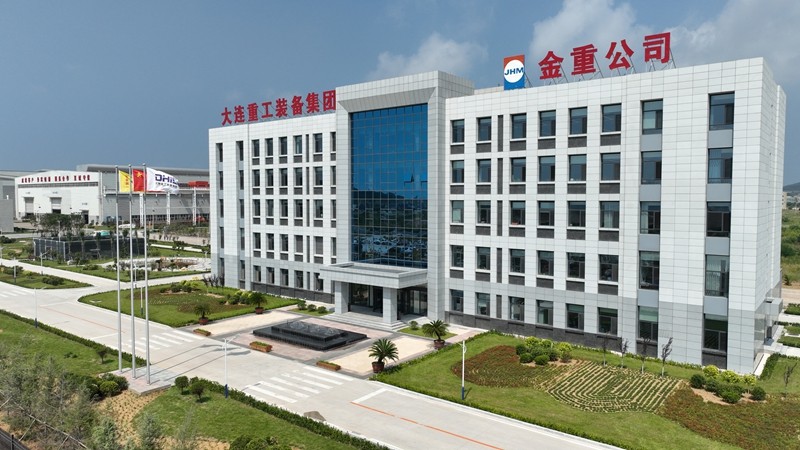
大连金重:重组焕新生 重器铸辉煌
Zhong Guo Hua Gong Bao· 2025-12-31 05:38
Core Viewpoint - During the "14th Five-Year Plan" period, Dalian Jinzhong Machinery Group Co., Ltd. has undergone a significant transformation and achieved remarkable growth, transitioning from traditional manufacturing to intelligent manufacturing and lean production, contributing to the high-end equipment development in China's petrochemical industry [1][9]. Group 1: Restructuring and Development - Dalian Jinzhong faced multiple challenges such as institutional rigidity and financial strain at the beginning of the "14th Five-Year Plan" [3]. - In May 2022, the Dalian Municipal Government restructured Dalian Jinzhong, injecting new development momentum into the company [3]. - The restructuring led to optimized asset structure, reduced financial risks, and improved operational efficiency through various management reforms [4]. Group 2: Production Capacity and Technological Advancements - The company upgraded its production capacity, with the new high-end petrochemical equipment intelligent manufacturing base starting operations in October 2023, increasing annual capacity from 40,000 tons to 100,000 tons [4]. - Dalian Jinzhong invested nearly 100 million yuan in automation equipment, achieving over 30% automation and an 80% manufacturing automation level [5]. - The production efficiency improved by over 30% compared to the end of the "13th Five-Year Plan," with a production line balance rate of 93% [5]. Group 3: Market Expansion and Business Model Transformation - The company expanded its market layout and optimized its business structure, maintaining a leading position in traditional sectors while entering high-end equipment markets [5][6]. - Dalian Jinzhong transitioned from a single "selling machines" model to providing integrated solutions and services, significantly enhancing customer satisfaction [6]. Group 4: Financial Performance and Growth Metrics - Since the restructuring, Dalian Jinzhong's revenue, new orders, and profit levels have significantly increased, with a cumulative revenue growth of 119% from 2022 to 2024 [9]. - The company achieved a profit increase of 240 million yuan, with a net profit growth of 167 million yuan, surpassing industry averages [9]. Group 5: Technological Innovation and R&D - Dalian Jinzhong has maintained a research and development investment intensity of 6% over the past three years, establishing a diversified innovation system [16]. - The company has developed 39 new technologies and products, including a million-ton methanol synthesis reactor and high-pressure hydrogen storage equipment, contributing to various high-end applications [17]. - Dalian Jinzhong's innovations have led to significant breakthroughs in manufacturing processes, enhancing product quality and production efficiency [17]. Group 6: Future Outlook - Looking ahead to the "15th Five-Year Plan," Dalian Jinzhong plans to continue leveraging group resources to implement innovation-driven strategies and enhance its position in the high-end equipment manufacturing sector [23].
1分钟,暴涨1128%!
天天基金网· 2025-12-31 05:34
Core Viewpoint - The recent surge in new stocks, particularly on the Beijing Stock Exchange, has attracted significant attention and investment interest, indicating a robust market environment for new listings [2][3]. Group 1: New Stock Performance - The new stock N Hengtong experienced a dramatic opening, rising over 1000% and reaching a peak increase of 1128% shortly after trading began, with potential profits exceeding 35,000 yuan per lot [2][3]. - Another new stock, N Xinguangyi, saw its price increase by 285% before hitting a trading halt, eventually surging over 330% with a transaction volume exceeding 1.2 billion yuan [2]. Group 2: Company Insights - N Hengtong specializes in passive optical devices for the optical communication sector and has been recognized as a "specialized and innovative" small giant enterprise in Guangdong [3]. - The company is projected to achieve revenues of approximately 1.315 billion yuan in 2024, with a net profit of 148 million yuan, and anticipates significant growth in 2025, with revenues expected to rise between 2.11 billion to 2.2 billion yuan, marking an increase of 60.45% to 67.30% year-on-year [3]. Group 3: Market Trends and Strategies - The macroeconomic environment is showing positive changes, supporting the development of the Beijing Stock Exchange, particularly for specialized and innovative enterprises [6]. - Analysts suggest a "steady layout, dual-line advancement" strategy for the upcoming spring market, focusing on high-dividend stocks and technology growth sectors, especially in AI applications and digital economy [6][7]. - The new stock issuance is expected to increase in 2026, providing more opportunities for investors, with the potential for significant returns as liquidity improves and new policies are implemented [7].

中国成功发射天绘七号卫星;特斯拉:全球第900万辆电动车在上海超级工厂下线丨智能制造日报
创业邦· 2025-12-31 03:54
Group 1 - Tesla announced that the global 9 millionth electric vehicle rolled off the production line at its Shanghai Gigafactory [2] - The domestically developed "Xiangyun" AS700 manned airship has received the first production license in China, marking its entry into mass production [2] - Samsung Electronics plans to achieve a monthly production capacity of 250,000 HBM wafers by the end of 2026, a 47% increase from the current capacity of 170,000 wafers [2] Group 2 - China successfully launched the Tianhui-7 satellite using the Long March 4B rocket, which is primarily used for geographic information surveying and scientific research [2]


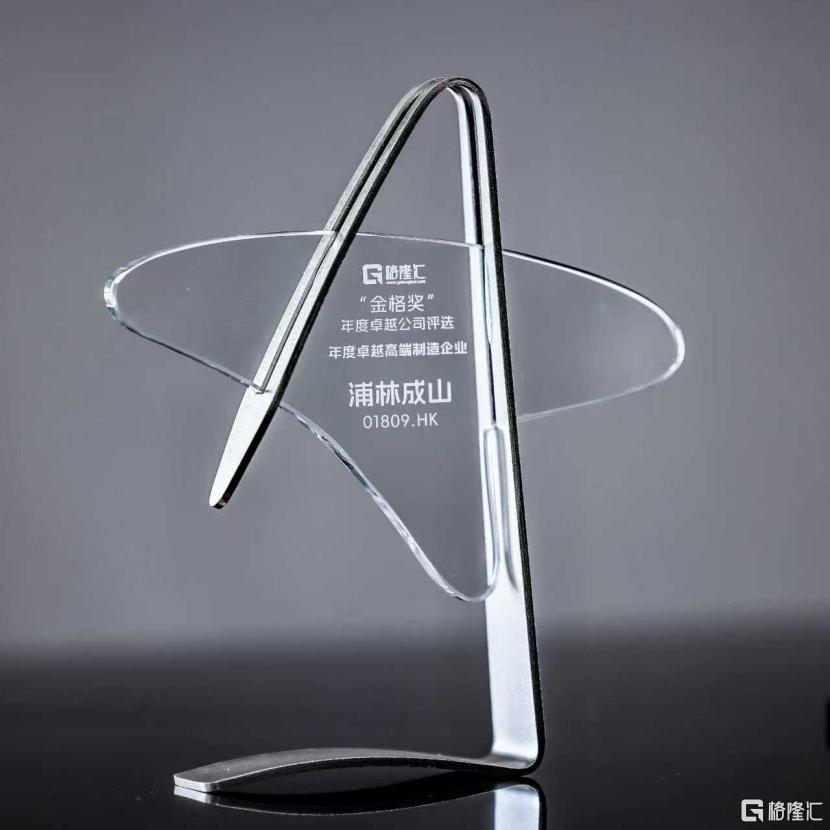
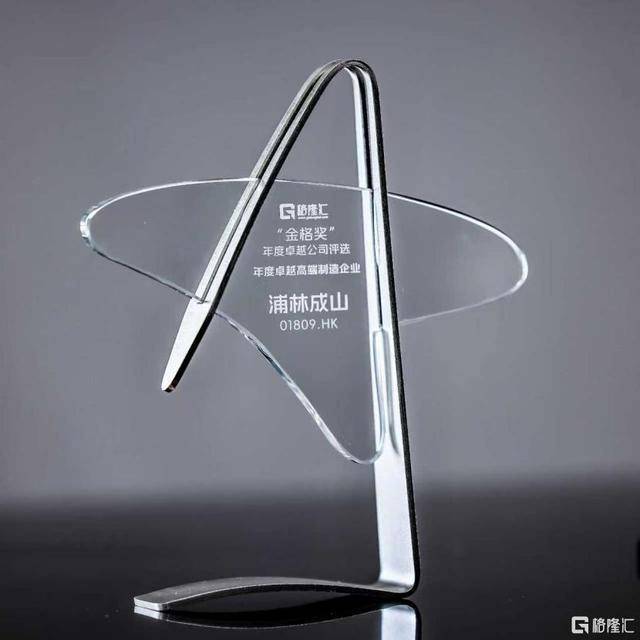
浦林成山获年度卓越高端制造企业,创新与全球化布局驱动价值重估
Sou Hu Cai Jing· 2025-12-31 03:25
Core Viewpoint - The article highlights the recognition of Pulin Chengshan (1809.HK) as an "Outstanding High-end Manufacturing Enterprise" in the 2025 "Golden Grid Award" list, showcasing its transformation capabilities in the tire manufacturing sector and its competitive edge in the global market [1][3]. Group 1: High-end Manufacturing Competitiveness - High-end manufacturing is defined by technological innovation, smart manufacturing, and green manufacturing, which are essential for industry upgrades and sustainability [5]. - Pulin Chengshan has established a global innovation network with R&D centers in various regions, focusing on high-performance and high-value tire products [5]. - The company has developed unique technologies such as Silenteck® for noise reduction and Healteck® for self-healing, addressing specific market needs in both passenger and commercial vehicle segments [6]. Group 2: Smart Manufacturing and Efficiency - The company is advancing automation and digitalization in its factories, leading to improved production efficiency and cost control [6]. - The Malaysian factory serves as a benchmark for smart manufacturing, integrating digital management across the production process [6]. - Ongoing projects, such as the green intelligent factory in Shandong, aim to enhance low-energy production methods and support the development of high-performance, low-carbon tires [7]. Group 3: Green Manufacturing Initiatives - Pulin Chengshan has implemented a comprehensive green manufacturing system that spans the entire product lifecycle, from raw material sourcing to recycling [7]. - The company promotes sustainable material usage and resource efficiency through smart factory management and recycling networks [7]. Group 4: Financial Performance and Market Position - The company has shown steady financial improvement, with a three-year compound annual growth rate (CAGR) of 13.34% in revenue and 68.07% in net profit from 2022 to 2024 [9]. - Despite industry challenges, Pulin Chengshan maintains a strong return on equity (ROE) of 7.64% and return on assets (ROA) of 4.61% in the first half of 2025, outperforming industry averages [9]. - The company's current price-to-earnings (PE) ratio is 4.59 and price-to-book (PB) ratio is 0.67, indicating a low valuation compared to industry peers, suggesting potential for valuation recovery [9]. Group 5: Future Growth Potential - The high-end manufacturing capabilities of Pulin Chengshan are expected to be recognized by the market, driven by the increasing demand for high-performance tires in the electric vehicle sector and the company's global capacity expansion [11]. - The current undervaluation presents a strategic opportunity for long-term investment in the company's growth [11].
高区系统性规模化推进智能工厂培育——流水线上装上“数字手”
Qi Lu Wan Bao· 2025-12-31 02:48
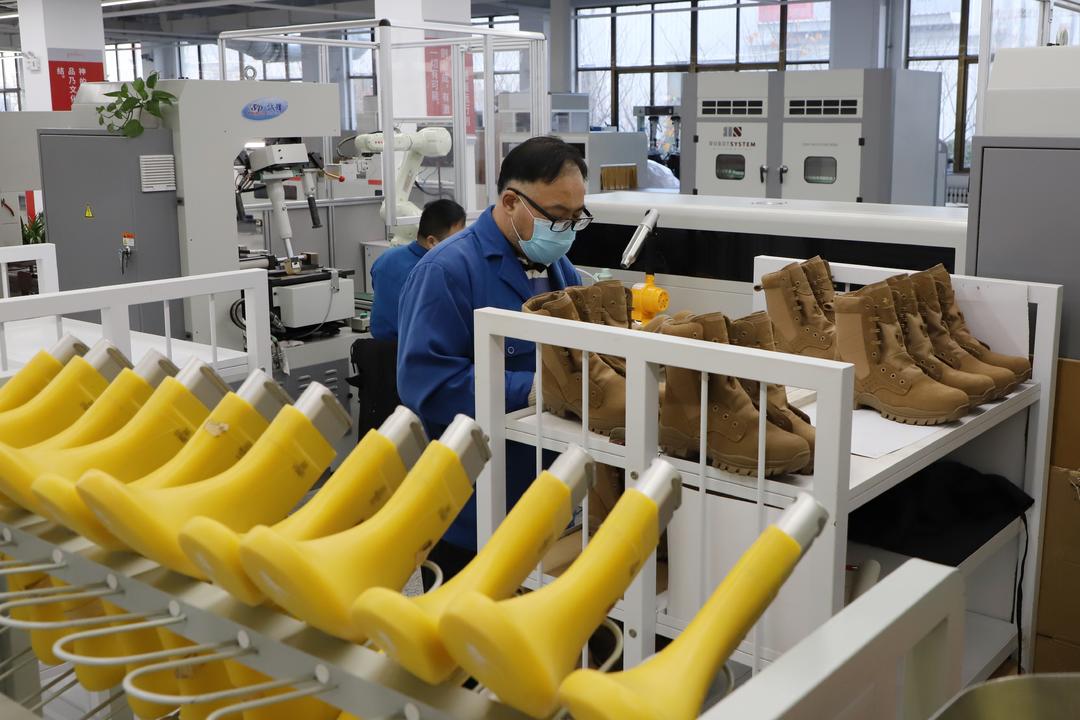
Group 1 - The core viewpoint of the articles highlights the significant advancements in intelligent manufacturing within the region, showcasing companies like Jin Hou Group and Jun Ao Electric as examples of successful digital transformation in the footwear and electrical sectors [1][2][3] - Jin Hou Group's digital smart shoe factory has successfully completed trial production, utilizing advanced robotic systems and international technology to enhance production efficiency, reducing shoe forming time from 20 minutes to 4 minutes and lowering labor costs by over 30% [1] - The integration of intelligent robots with the MES system at Jin Hou Group addresses long-standing issues in order scheduling, task tracking, and data aggregation, achieving a fully traceable production process and ensuring product quality throughout the production cycle [1] Group 2 - Jun Ao Electric has developed its own process management system and integrated it with an ERP system to achieve precise digital management in warehousing, contributing to the overall efficiency of production [2] - The region has seen a systematic and large-scale promotion of intelligent factory cultivation, with several companies recognized for their advancements in smart manufacturing, including Jin Hou Group, Jun Ao Electric, and others [2] - The local government supports these transformations through policies such as technical transformation subsidies and demonstration rewards, fostering an ecosystem that provides comprehensive technical support and resource guarantees for companies undergoing intelligent transformation [3]

威海高新区系统性规模化推进智能工厂培育——流水线上装上数字手
Qi Lu Wan Bao· 2025-12-31 02:10
Group 1 - The core viewpoint of the article highlights the transformation of traditional manufacturing through digitalization and automation, exemplified by the advancements in the shoe manufacturing and electrical industries in Weihai [1][5]. - Jinmon Group's digital intelligent shoe factory has successfully completed trial production, utilizing advanced robotic systems to enhance efficiency and reduce labor costs by over 30% while increasing production efficiency by 30% [1][4]. - The integration of intelligent robots with the MES system addresses long-standing issues in order scheduling, task tracking, and data aggregation, leading to a fully traceable production process and quality assurance [4]. Group 2 - Weihai High-tech Zone is accelerating the resolution of traditional manufacturing bottlenecks through intelligent transformation, with several companies recognized for their advanced manufacturing capabilities [5]. - The region has created a supportive environment for smart manufacturing, establishing four provincial-level excellent intelligent manufacturing scenarios and eight digital workshops [5]. - Policies such as technical transformation subsidies and demonstration rewards are encouraging companies to invest in intelligent upgrades, fostering a comprehensive ecosystem for smart transformation [5].
浦林成山(1809.HK)斩获“年度卓越高端制造企业”,技术创新与全球化布局驱动价值重估
Ge Long Hui· 2025-12-31 01:05
Core Viewpoint - The article highlights the recognition of Pulinsongshan (1809.HK) as an "Outstanding High-end Manufacturing Enterprise" in the 2025 "Golden Grid Award" list, showcasing its transformation and competitiveness in the tire manufacturing industry [1][3]. Group 1: High-end Manufacturing Competitiveness - Pulinsongshan's core competitiveness in high-end manufacturing is driven by technological innovation, smart manufacturing, and green manufacturing [5][7]. - The company has established a global innovation network with R&D centers in various regions, focusing on high-performance and high-value tire products [5]. - Specific technological advancements include unique noise reduction technology (Silenteck®) and self-healing technology (Healteck®) for passenger vehicles, as well as green low rolling resistance technology for commercial vehicles [6]. Group 2: Smart Manufacturing and Efficiency - Pulinsongshan is advancing automation, digitization, and smart manufacturing in its factories, leading to improved production efficiency and cost control [6]. - The Malaysian factory serves as a benchmark for smart manufacturing, integrating digital management and efficient collaboration across production processes [6]. Group 3: Green Manufacturing Initiatives - The company has developed a comprehensive green manufacturing system that spans the entire product lifecycle, including sustainable material use and tire recycling networks [7]. - Smart factories enhance resource utilization through refined management and recycling efforts, aligning with global sustainability trends [7]. Group 4: Financial Performance and Market Position - Pulinsongshan has shown steady financial improvement, with a three-year compound annual growth rate (CAGR) of 13.34% in revenue and 68.07% in net profit from 2022 to 2024 [9]. - The company's return on equity (ROE) and return on assets (ROA) for the first half of 2025 were 7.64% and 4.61%, respectively, both exceeding industry averages [9]. - The current price-to-earnings (PE) ratio is 4.59, and the price-to-book (PB) ratio is 0.67, indicating a low valuation compared to industry peers, suggesting potential for valuation recovery [9]. Group 5: Future Growth Potential - The high-end manufacturing capabilities are expected to enhance market competitiveness and profitability, with a focus on the growing demand for high-performance tires driven by the development of the electric vehicle industry [10]. - The global capacity expansion and technological advancements are anticipated to further solidify Pulinsongshan's market position and valuation recovery [10].