
未来产业

Search documents
中共中央新闻发布会:加快新能源、低空经济等战略性新兴产业集群发展,将催生出数个万亿元级市场
Mei Ri Jing Ji Xin Wen· 2025-10-24 07:58
Core Insights - The Central Committee of the Communist Party of China held a press conference on October 24 to interpret the spirit of the Fourth Plenary Session of the 20th Central Committee, which took place from October 20 to 23, focusing on the strategic tasks for the upcoming 15th Five-Year Plan [1] Economic and Industrial Development - The "Suggestions" emphasize building a modern industrial system and strengthening the foundation of the real economy as the top strategic task, with four key areas of focus: solidifying the foundation, fostering innovation, expanding capacity, and enhancing efficiency [1] - The plan anticipates an additional market space of approximately 10 trillion yuan over the next five years, driven by the enhancement of key industries such as chemicals, machinery, and shipbuilding [1] - The development of emerging pillar industries, including new energy, new materials, aerospace, and low-altitude economy, is expected to create several trillion-yuan markets [2] - The "Suggestions" also highlight the importance of integrating modern service industries with advanced manufacturing and modern agriculture [2] Infrastructure and Investment - The plan calls for a coordinated approach to infrastructure planning, with an emphasis on new infrastructure and a modern comprehensive transportation system [2] - It stresses the need to expand domestic demand, focusing on three key aspects: expanding increment, improving efficiency, and ensuring smooth circulation [2] - The government aims to optimize investment structures, increasing the proportion of investments in public welfare and enhancing the overall effectiveness of government investments [3] Regional Development - The "Suggestions" outline five key tasks for regional development, focusing on optimizing layouts, promoting new urbanization, and coordinating land and sea development [3] Healthcare Initiatives - The health sector aims to increase the average life expectancy of Chinese residents to around 80 years over the next five years, with a focus on preventive care and health education [4] - The healthcare service model will emphasize a comprehensive approach to managing chronic diseases and improving early diagnosis and treatment [5] - Efforts will be made to enhance the functionality and cooperation among various levels of medical institutions, promoting accessible and efficient healthcare services [6]
郑栅洁:未来十年再造一个中国高技术产业,适度超前建设新基建
2 1 Shi Ji Jing Ji Bao Dao· 2025-10-24 05:20
Core Viewpoint - The Fourth Plenary Session of the 20th Central Committee of the Communist Party of China emphasized the importance of building a modern industrial system and strengthening the foundation of the real economy as a strategic task for national development [3]. Group 1: Modern Industrial System - The session highlighted the need to focus on the real economy, advocating for intelligent, green, and integrated development to accelerate the construction of a manufacturing powerhouse, quality powerhouse, aerospace powerhouse, transportation powerhouse, and cyber powerhouse [3]. - The proposal aims to maintain a reasonable proportion of manufacturing and establish a modern industrial system centered on advanced manufacturing [3]. Group 2: Key Tasks - The four key tasks outlined in the proposal are: solid foundation upgrading, innovation nurturing, capacity expansion and quality improvement, and strengthening the foundation and efficiency [4]. Solid Foundation Upgrading - This involves optimizing and upgrading traditional industries, which currently account for about 80% of the value added in manufacturing [4]. - The proposal anticipates a market space of approximately 10 trillion yuan to be created over the next five years, providing significant development momentum and benefits to people's livelihoods [4]. Innovation Nurturing - The focus is on cultivating and expanding emerging and future industries, with the "three new" economy's value added expected to exceed 18% of GDP by 2024 [4]. - Strategic emerging industries such as new energy, new materials, aerospace, and low-altitude economy are to be developed, potentially creating several trillion-yuan markets [4]. - Future industries like quantum technology, biomanufacturing, hydrogen energy, and sixth-generation mobile communication are identified as new growth points for the economy [4]. Capacity Expansion and Quality Improvement - The proposal emphasizes the need for high-quality and efficient development of the service industry, which still has significant room for expansion and improvement [5]. - Actions to enhance the integration of modern services with advanced manufacturing and modern agriculture are proposed to create new economic growth spaces [5]. Strengthening Foundation and Efficiency - The plan includes constructing a modern infrastructure system, leveraging China's existing extensive infrastructure network [5]. - It calls for coordinated planning and moderately advanced construction of new-type infrastructure to enhance connectivity and safety [5].

刚刚,利好引爆!集体飙涨,刷新十年新高!
天天基金网· 2025-10-24 05:20
Market Overview - On October 24, A-shares saw a collective rise in the three major indices, with the Shanghai Composite Index reaching a nearly ten-year high, up 0.42% [3][4]. - The Shenzhen Component Index increased by 1.3%, the ChiNext Index rose by 2.09%, and the STAR Market 50 Index surged by 2.98% [4]. - The total market turnover reached 1.24 trillion yuan, showing a significant increase compared to the previous day, with over 2900 stocks rising [4]. Sector Performance - The technology sector, particularly memory chips, commercial aerospace, satellite internet, and semiconductors, led the gains in the morning session [4][9]. - Conversely, sectors such as ice and snow tourism, coal mining, oil and gas extraction, real estate, liquor, and steel experienced pullbacks [4][5]. Notable Stocks - In the Hong Kong market, the Hang Seng Index rose by 0.59%, with notable gains in semiconductor stocks like Hua Hong Semiconductor, which surged nearly 12% [6][7]. - The A-share electronic sector saw significant increases, with stocks like Purun Co., Kexiang Co., and Shengyi Technology hitting the daily limit of 20% [9][10]. Coal Sector - The coal sector faced a notable decline, with companies like Antai Group and Yunmei Energy hitting the daily limit down, and others like Shaanxi Black Cat and Liaoning Energy experiencing significant drops [14][15]. - Daya Energy, which previously had a strong performance, saw a sharp decline of nearly 8% in early trading [15]. Future Industry Outlook - The National Development and Reform Commission emphasized the importance of nurturing emerging industries and future industries, projecting that the "three new" economy will account for over 18% of GDP by 2024 [11][12]. - Strategic emerging industries such as new energy, new materials, and aerospace are expected to create several trillion-yuan markets, with a focus on advanced technologies like quantum science and bio-manufacturing [12]. - Reports indicate that major suppliers like Samsung and SK Hynix plan to raise prices of DRAM and NAND flash memory by up to 30% by Q4 2025, signaling a shift towards a "super cycle" in the memory chip industry [12].





利好引爆!刚刚 集体飙涨
Zhong Guo Ji Jin Bao· 2025-10-24 04:55
Market Overview - On October 24, A-shares saw a collective rise in the three major indices, with the Shanghai Composite Index reaching a nearly ten-year high, closing up 0.42% [1][2] - The ChiNext Index rose by 2.09%, and the STAR 50 Index increased by 2.98%, indicating strong market performance [1][2] Sector Performance - The technology sector, including memory, commercial aerospace, satellite internet, and semiconductors, experienced significant gains, while sectors like ice and snow tourism, coal mining, oil and gas extraction, real estate, liquor, and steel saw pullbacks [2][4] - The total market turnover reached 1.24 trillion yuan, showing a noticeable increase compared to the previous day, with over 2,900 stocks rising [2] Notable Stocks - In the electronics sector, stocks related to memory, HBM, circuit boards, semiconductors, and advanced packaging surged, with companies like Puzai Co., Kexiang Co., and Shengyi Technology hitting the daily limit of 20% [4][5] - Honghua Semiconductor led the Hang Seng Technology Index with a nearly 12% increase, while other notable gainers included ASMPT and SMIC [3][4] Coal Sector - The coal sector faced a significant pullback, with companies like Antai Group and Yunmei Energy hitting the daily limit down, and others like Shaanxi Black Cat and Liaoning Energy experiencing substantial declines [10][11] Company Highlights - Zhujiang Piano experienced a dramatic trading session, initially hitting the daily limit down before rebounding to close at the daily limit up, marking its third consecutive limit-up day [12] - The company confirmed stable operational conditions and no significant changes in the internal or external business environment, following a notice of abnormal stock trading fluctuations [12] Future Economic Outlook - The National Development and Reform Commission indicated that the "three new" economy's contribution to GDP is expected to exceed 18% in 2024, highlighting the growth potential of emerging industries [7][8] - Strategic emerging industries such as new energy, new materials, and aerospace are anticipated to create several trillion-yuan markets, with significant investments in quantum technology and other high-tech sectors over the next decade [8]


利好引爆,A股集体飙涨
Zheng Quan Shi Bao· 2025-10-24 04:52
Market Overview - On October 24, the A-share market saw all three major indices rise, with the Shanghai Composite Index reaching a nearly ten-year high, closing up 0.42% [1] - The Shenzhen Component Index increased by 1.3%, the ChiNext Index rose by 2.09%, and the STAR 50 Index surged by 2.98% [2] Trading Volume and Stock Performance - The total trading volume across the market reached 1.24 trillion yuan, showing a significant increase compared to the previous day, with over 2,900 stocks rising [2] - The electronic sector experienced a notable surge, particularly in memory, commercial aerospace, satellite internet, and semiconductor stocks, which led the gains [2][4] Sector Performance - The memory sector saw a rise of 6.40%, with HBM up 4.95% and semiconductors up 3.92% [3] - Conversely, sectors such as coal mining, real estate, and tourism experienced declines, with coal stocks notably retreating [9][10] Notable Stocks - Individual stocks like Huahong Semiconductor rose nearly 12%, leading the Hang Seng Technology Index [3] - Stocks such as Puran Co., Kexiang Co., and Shengyi Technology hit the daily limit up of 20% [5][6] Policy and Future Outlook - The National Development and Reform Commission emphasized the importance of nurturing emerging industries, projecting that the "three new" economy will account for over 18% of GDP by 2024 [7] - The recent announcement from major suppliers like Samsung and SK Hynix indicates a potential price increase of up to 30% for DRAM and NAND flash memory by Q4 2025, signaling a shift towards a "super cycle" in the memory chip industry [8] Specific Company Movements - On the same day, Zhujiang Piano experienced a dramatic price movement, initially hitting the limit down before rebounding to a limit up, closing at 6.81 yuan per share [12][17]


利好引爆!刚刚,集体飙涨
Zhong Guo Ji Jin Bao· 2025-10-24 04:45
Market Overview - The A-share market experienced a collective rise on October 24, with the Shanghai Composite Index reaching a nearly ten-year high, closing up 0.42% [2][3] - The Shenzhen Component Index increased by 1.3%, while the ChiNext Index rose by 2.09%, and the STAR 50 Index saw a gain of 2.98% [2][3] Sector Performance - The technology sector, particularly in memory chips, commercial aerospace, satellite internet, and semiconductors, showed significant gains, leading the market [3][4] - The overall market saw a trading volume of 1.24 trillion yuan, with over 2,900 stocks rising [3] Notable Stocks - Honghua Semiconductor surged nearly 12%, leading the Hang Seng Technology Index [4] - Several stocks in the electronics sector, including Puran Co., Kexiang Co., and Shengyi Technology, hit the daily limit of 20% increase [6][7] - The stock of Zhujiang Piano initially dropped to the limit down but then surged to hit the limit up, closing at 6.81 yuan per share [13][18] Coal Sector - The coal sector faced a notable decline, with companies like Antai Group and Yunmei Energy hitting the limit down, while others like Shaanxi Black Cat and Liaoning Energy also saw significant drops [10][11] Future Industry Outlook - The National Development and Reform Commission emphasized the importance of nurturing emerging industries, projecting that the "three new" economy will account for over 18% of GDP by 2024 [8][9] - Strategic emerging industries such as new energy, new materials, and aerospace are expected to create substantial market opportunities in the coming years [9]

利好引爆!刚刚,集体飙涨
中国基金报· 2025-10-24 04:44
【 导读 】 创业板指涨超2%,泛科技板块集体爆发,珠江钢琴走出"地天板" 中国基金报记者 晨曦 大家好!来一起关注上午的市场行情和最新资讯~ 10月24日上午,A股三大指数集体上涨,上证指数刷新近十年新高。截至午间收盘,上证指数涨0.42%,深证成指涨1.3%,创业板指涨 2.09%,科创50指数涨2.98%。 | @manal particle of the server of the state of the state of the state of the service of | | Mine | www | | --- | --- | --- | --- | | 3938.98 | 13195.25 | | 3126.05 | | 上证指数 +0.42% | 深证成指 +1.30% | | 创业板指 +2.09% | | 1442.98 ------ | 3034.95 400 - | 4636.93 **** | 1470.49 - | | 科创50 +2.98% | 上证50 +0.27% | 沪深300 +0.66% | 北证50 +1.04% | 全市场半日成交额达1.24万亿元,较上日 ...

“未来10年将再造一个中国高技术产业”
中国能源报· 2025-10-24 04:18
Core Viewpoint - The article discusses the key points from the press conference held by the Central Committee of the Communist Party of China, focusing on the spirit of the Fourth Plenary Session of the 20th Central Committee, emphasizing the importance of innovation and the development of emerging industries in China. Group 1: Economic Development - In 2024, the value added of China's "three new" economy is expected to exceed 18% of GDP [1] - The proposal for the 15th Five-Year Plan aims to cultivate emerging pillar industries and accelerate the development of strategic emerging industry clusters such as new energy, new materials, aerospace, and low-altitude economy, which could create several trillion-yuan markets [1] - The plan also emphasizes the forward-looking layout of future industries, promoting quantum technology, biomanufacturing, hydrogen energy, nuclear fusion energy, brain-computer interfaces, embodied intelligence, and sixth-generation mobile communication as new economic growth points [1] Group 2: Future Industry Outlook - The emerging industries are expected to gain momentum and potentially recreate a high-tech industry landscape in China over the next decade [1]

未来10年,将再造一个中国高技术产业!
21世纪经济报道· 2025-10-24 04:15
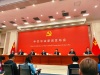
中共中央今天(24日)上午举行新闻发布会,介绍和解读党的二十届四中全会精神。 国家发展改革委党组书记、主任郑栅洁介绍,创新育新,就是要培育壮大新兴产业和未来产 业。2024年,我国"三新"经济增加值占GDP比重超过18%。《中共中央关于制定国民经济和社 会发展第十五个五年规划的建议》提出打造新兴支柱产业,加快新能源、新材料、航空航天、 低空经济等战略性新兴产业集群发展,将催生数个万亿元级甚至更大规模的市场;《建议》还 提出前瞻布局未来产业, 推动量子科技、生物制造、氢能和核聚变能、脑机接口、具身智 能、第六代移动通信等成为新的经济增长点。这些产业蓄势发力,未来10年将再造一个中国高 技术产业。 来源丨央视新闻 编辑丨黎雨桐 一文看懂党的二十届四中全会公报,信息量太大 四中全会重要部署,释放关键信号 SFC 21君荐读 视频编辑丨许婷婷 ...

未来10年将再造一个中国高技术产业
Di Yi Cai Jing· 2025-10-24 02:35
Core Insights - The article emphasizes the strategic layout for future industries, focusing on emerging sectors such as quantum technology, biomanufacturing, hydrogen energy, nuclear fusion energy, brain-computer interfaces, embodied intelligence, and sixth-generation mobile communication as new economic growth points [1] Industry Developments - The National Development and Reform Commission highlights the importance of fostering new and emerging industries, projecting that by 2024, the value added by the "three new" economies will exceed 18% of GDP [1] - The proposal aims to create new pillar industries and accelerate the development of strategic emerging industry clusters, including new energy, new materials, aerospace, and low-altitude economy, which are expected to generate several trillion-yuan markets [1] Future Outlook - The recommendations suggest a forward-looking approach to future industries, indicating that the aforementioned sectors will gain momentum and potentially recreate a high-tech industry landscape in China over the next decade [1]