
全球南方

Search documents
第二届非洲国别研究论坛在扬州大学举办,扬州大学与中国非洲研究院将战略合作
Yang Zi Wan Bao Wang· 2025-10-21 10:22
Core Insights - The "Second Africa Country Research Forum" was held on October 18, focusing on the theme of "Strategic Autonomy and Diversification of Cooperation Partners: The Rise of the Global South and African Countries' Foreign Relations" [2] - The forum gathered experts from nearly 70 universities, research institutions, and practical sectors across China to discuss topics such as African diplomatic policies, China-Africa relations, and regional integration [2] Group 1 - The opening ceremony featured the signing of strategic cooperation framework agreements between Yangzhou University and the China Africa Research Institute, aimed at deepening collaboration and resource integration [3] - The Yangzhou University Africa Research Center launched two academic products: the journal "Red Sea Region Studies" and the blue book "Red Sea Region Development Report," marking significant contributions to the field of African studies in China [3] Group 2 - Keynote speeches included an analysis of the current African situation and China-Africa relations, emphasizing the resilience and potential of the all-weather partnership in the new era [5] - A new expert dialogue segment was introduced, discussing "Africa and China-Africa Cooperation," highlighting the evolving dynamics of international relations [5][6] Group 3 - The sub-forums addressed various topics, including African countries' diplomatic adjustments under strategic autonomy, the new dynamics of South-South cooperation, and the complexities of regional integration and governance [6] - Discussions also focused on the transformation of China-Africa cooperation from traditional pragmatism to deep integration, covering areas such as education, energy transition, and the fusion of language and artificial intelligence [6] Group 4 - The closing session summarized the research outcomes and emphasized the need for expanding the scope of country studies and innovating organizational formats for future forums [8] - The importance of translating research outcomes into practical applications and talent cultivation was highlighted, proposing a "language + profession + region" model for training young researchers in African studies [8]


“单一的西方视角无法真正理解当代中国”|聚焦世界中国学大会
Guo Ji Jin Rong Bao· 2025-10-15 04:20
Core Insights - The second World Chinese Studies Conference opened in Shanghai, emphasizing the significant development of Chinese studies in a global context [1] - Martin Jacques highlighted that understanding China requires moving beyond traditional Western perspectives, as the current dynamics of China are rapidly changing [1] Group 1: Evolution of Chinese Studies - Chinese studies are undergoing a profound transformation, becoming more open and inclusive compared to two decades ago, reflecting China's own development trajectory [3] - The role and importance of Chinese studies have increased as China plays a key role in global economic growth, climate change, global governance, technological innovation, and issues concerning the Global South [4] Group 2: Global South's Role - The Global South, including countries like Chile, Brazil, Malaysia, Nigeria, Pakistan, Kazakhstan, and Saudi Arabia, is emerging as a major growth area for Chinese studies, driven by the need to understand and connect with China [4] Group 3: Understanding China - Jacques pointed out that China's rich history, culture, efficient management systems, and diplomatic policies are still not fully understood globally, and the desire to comprehend China will only intensify in the future [4] - A significant challenge in Chinese studies is the paradigm gap between the West and China, as many Western scholars attempt to understand China through a Western lens, which is deemed outdated [4][5] - To truly understand China, research must start from China's historical context and modernization process, acknowledging its uniqueness and the profound differences between its past and present [4]

出海专班释放积极信号
Jing Ji Ri Bao· 2025-10-11 22:18
Core Viewpoint - The Hong Kong Special Administrative Region (SAR) government has launched a dedicated team to assist mainland enterprises in expanding overseas, addressing various aspects such as legal, tax, and supply chain considerations, thereby enhancing Hong Kong's role as a premier platform for international business [1][2]. Group 1: Overview of the Outbound Initiative - The Hong Kong SAR government officially initiated the "Mainland Enterprises Outbound Task Force" on October 6, with over 100 participants from various sectors including law, finance, and professional associations [1]. - The task force consolidates Hong Kong's external offices, creating a one-stop platform to provide diverse solutions for enterprises looking to expand internationally [2]. Group 2: Investment Trends and Data - From January to May this year, mainland China's non-financial direct investment abroad reached $61.6 billion, a year-on-year increase of 2.3%, with investments in Belt and Road Initiative countries growing by 20.8% to $15.52 billion [2]. - A survey indicated that 85% of mainland enterprises plan to expand into overseas markets, with 28% targeting the Middle East and 27% focusing on South Asia [2]. Group 3: Unique Features of the Task Force - Unlike traditional service providers, the outbound task force actively seeks clients rather than waiting for them to approach, leveraging past experiences in investment promotion [3]. - The task force also aims to enhance the legal environment and business conditions in overseas countries, facilitating partnerships and investments [3]. Group 4: Training and Development - The Hong Kong SAR government has established the Hong Kong International Legal Talent Training Institute to provide high-level training and knowledge sharing for legal professionals, particularly in Belt and Road countries [3].
香港组建出海专班 今年底首次推广
Nan Fang Du Shi Bao· 2025-10-09 23:13
Core Points - The Hong Kong government has launched the "Outbound Support Task Force" to assist mainland enterprises in expanding their international business, as part of the 2025 Policy Address initiative by Chief Executive John Lee [3][4] - The task force aims to provide a comprehensive support platform, including tax, legal, financing, and ESG consulting services, to facilitate the overseas expansion of mainland companies [4][6] - The initiative is seen as a response to the growing need for mainland enterprises to establish strategies, overseas networks, and bases for international operations, particularly in emerging markets [7][10] Group 1 - The Outbound Support Task Force is a key measure to enhance Hong Kong's role as a platform for businesses to "go global" [4][5] - The task force will coordinate resources across various sectors to provide tailored support for enterprises, including tax incentives and carbon accounting services [4][6] - The initiative is expected to help mainland companies leverage Hong Kong's international business environment to navigate challenges in overseas markets [10] Group 2 - The task force plans to discuss strategies and hold promotional activities by the end of the year to raise awareness of its services [5] - Hong Kong's engagement with emerging markets, including recent diplomatic exchanges with countries in the Caribbean and Africa, highlights its commitment to expanding international trade [8] - The introduction of over 100 key enterprises, including major pharmaceutical companies, is projected to bring approximately HKD 60 billion in investments and create around 22,000 jobs [9] Group 3 - The rapid growth of emerging economies in the Global South presents opportunities for mainland enterprises to expand their supply chains and services [7] - The collaboration between Hong Kong and the Greater Bay Area is expected to provide significant growth opportunities, particularly in sectors like AI, biotechnology, and renewable energy [9][11] - The unique institutional advantages of the Greater Bay Area can empower enterprises to steadily expand their operations in both Hong Kong and mainland China [11]

丘应桦:“内地企业出海专班”今日启动 香港多部门携手助力内地企业“走出去”
智通财经网· 2025-10-06 06:46
Core Viewpoint - The launch of the "Outbound Task Force" aims to support mainland enterprises in expanding into international markets, particularly through Hong Kong as a strategic base [1][2] Group 1: Objectives and Structure - The Outbound Task Force is designed to create a one-stop support platform for mainland enterprises, integrating resources across various sectors including law, finance, and accounting [2] - The initiative will be overseen by the Secretary for Commerce and Economic Development, who will coordinate efforts among multiple government departments and agencies [1][2] Group 2: Key Dimensions of Support - Collaboration and Win-Win: The Task Force will bring together various professional organizations to facilitate resource integration and knowledge sharing, enhancing collaborative efforts for outbound enterprises [2] - Network Expansion: The Task Force will leverage government resources to enhance international connections, with plans to establish a new economic office in Kuala Lumpur to tap into emerging markets [2] - Practical Effectiveness: Tailored support services will be provided based on the specific needs of enterprises, covering areas such as taxation, legal advice, financing, ESG compliance, and intellectual property protection [2] Group 3: Strategic Importance - The initiative aligns with national policies encouraging mainland enterprises to go global, aiming to transform their international expansion into new economic momentum for Hong Kong [2]
为什么印尼如此贫穷落后?
虎嗅APP· 2025-10-02 13:41
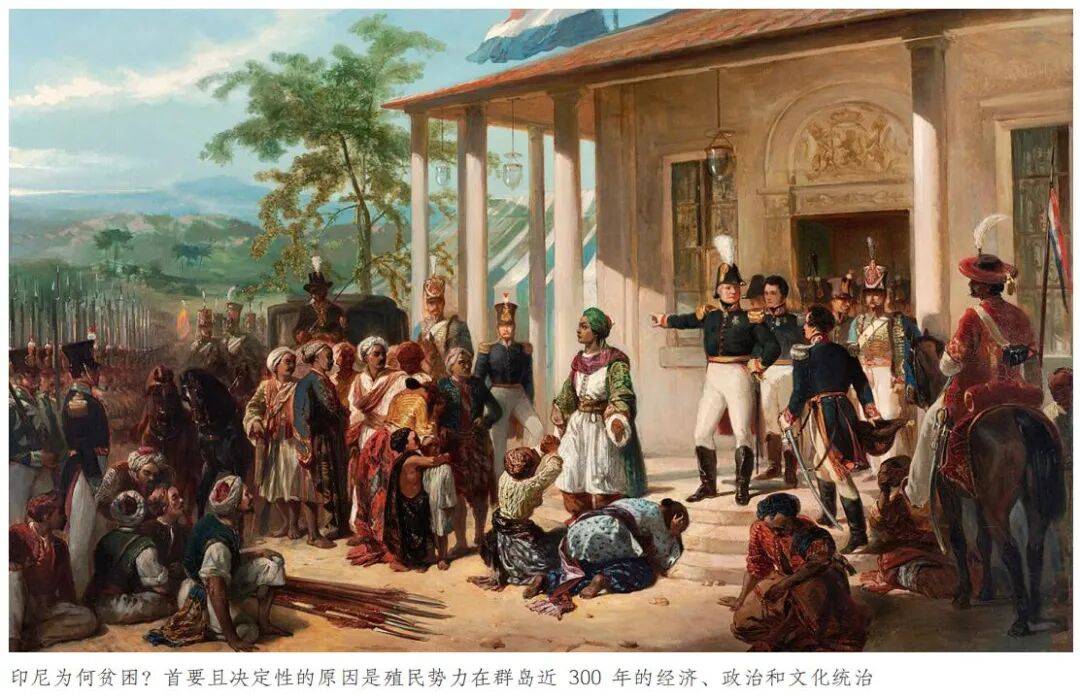
Core Viewpoint - The article discusses the structural poverty in Indonesia, rooted in its colonial history and the ongoing dependency on foreign economies, emphasizing the need for a collective approach among Global South countries to address these challenges [5][12][30]. Group 1: Historical Context and Economic Challenges - Indonesia's poverty is attributed to the structural defects left by Dutch colonial rule, including a lack of industrial foundation, capital outflow, and inadequate education [5][12]. - The colonial legacy resulted in Indonesia having no substantial manufacturing capabilities and a significant debt burden from the outset of its independence [16][18]. - In 2022, Indonesia's GDP per capita was $5,000, compared to $76,000 in the U.S., highlighting the vast economic disparity [8]. Group 2: Dependency and Economic Integration - The article argues that Indonesia's integration into the global economy, particularly under the influence of former colonial powers, has perpetuated its economic dependency [21][22]. - The establishment of the Indonesian Governmental Group (IGGI) and its subsequent transformation into the Consultative Group on Indonesia (CGI) exemplifies Indonesia's reliance on foreign aid and debt management [22][30]. - Despite some industrial growth since the 1970s, Indonesia's economy remains characterized by low productivity and a high percentage of informal labor [23][24]. Group 3: Need for Collective Action - The article posits that Global South countries, including Indonesia, must view themselves as a cohesive economic unit to reduce dependency on the Global North [30][31]. - It suggests that China could play a role in assisting countries like Indonesia in developing specific manufacturing capabilities, which could lead to more significant economic independence [31]. - The necessity for genuine international cooperation to break the cycle of oppression and dependency is emphasized, calling for a transformation within imperialist countries to support this change [32].

新右翼风暴:美社会撕裂与全球回响,传统联盟松动与冲突风险加剧
Sou Hu Cai Jing· 2025-10-01 14:38
Core Insights - The article discusses the emergence of a new wave of right-wing conservatism in the U.S. and its global implications, highlighting a significant decline in public trust and rising economic challenges [1][3]. Economic Conditions - As of April 2025, the U.S. unemployment rate reached 4.5%, the highest in three years, indicating economic distress [1]. - From 2016 to 2025, the actual income of the middle and lower classes in the U.S. grew only by 0.7%, significantly lagging behind other developed economies like South Korea and Hong Kong [5]. Political Landscape - The new right-wing conservatism emphasizes anti-immigration, opposition to globalization, skepticism towards free trade, and a return to nationalism and religious conservatism [7]. - The "Trump 2.0" administration quickly implemented measures such as federal workforce cuts and increased tariffs, altering both domestic and international dynamics [7]. Global Impact - The rise of right-wing movements has led to increased support for far-right parties in Europe, with significant gains for parties like Germany's Alternative for Germany and France's National Rally [7]. - Traditional alliances, such as NATO, are experiencing strain, and international organizations like the WTO and WHO are losing authority [7]. Shifts in Global Cooperation - China has shown resilience amid global turmoil, with trade with "Global South" countries increasing by 8.2% in 2025 [11]. - Countries like Germany and France are reconsidering their strategies, seeking closer ties with China to reduce dependence on the U.S. [13]. Future Governance Trends - The world is transitioning from "ordered multilateralism" to "disordered multipolarity," with the U.S. experiencing a long-term strategic contraction [11]. - Experts predict a new normal characterized by regional competition and the absence of a single dominant power, with China leading efforts to establish new multilateral mechanisms [11].
为什么印尼如此贫穷落后?
Hu Xiu· 2025-10-01 01:42
Group 1 - The conference titled "Global South and Southeast Asia" focuses on economic cooperation among Global South countries, exemplified by the BRICS group, which Indonesia has recently joined, although its cooperation direction remains unclear [2][3] - The essence of the Global South is structural poverty, which is evident in Indonesia and China, both considered poor countries despite their natural resource wealth [4][5] - In 2022, Indonesia's GDP per capita was $5,000, significantly lower than the U.S. at $76,000, highlighting the disparity in wealth and economic development [5][6] Group 2 - The historical context of Indonesia's poverty is rooted in nearly 300 years of colonial rule, which stunted its industrial development and left it with a lack of capital and manufacturing capabilities [8][10] - The legacy of colonialism has resulted in Indonesia being burdened with debt and lacking a modern industrial base, which has perpetuated its economic struggles [12][14] - The nationalization of Dutch enterprises post-independence did not lead to effective management or industrial growth, as the new leadership was often inexperienced or corrupt [16][18] Group 3 - Indonesia's economic strategy has been characterized by reliance on low productivity technologies, with over 90% of workers in small enterprises, and 80% earning below the official minimum wage [21][22] - The country has struggled with a lack of investment in production capabilities, with per capita investment in production materials being significantly lower than in countries like the U.S. and China [23][24] - The need for a balanced approach between the production of goods and the necessary production materials is emphasized, as Indonesia continues to depend on imports for essential production inputs [22][26] Group 4 - The future of Indonesia's economy hinges on its ability to develop specific production capabilities while navigating a global market dominated by imperialist structures [26][27] - Cooperation among Global South countries is increasingly seen as vital for economic planning and reducing dependency on Global North nations [27][28] - The political landscape in Global South countries, particularly regarding who controls economic power, is crucial for achieving meaningful change and cooperation [28]
“为非中携手走在现代化进程的前列指明方向”(大道之行)
Ren Min Ri Bao· 2025-09-30 22:02
Core Points - The article discusses the recent correspondence between South African diplomat Hettie Grobbelaar and Chinese President Xi Jinping, highlighting the strengthening of China-Africa relations and cooperation [1][2] - The "Dar es Salaam Consensus" was established during the 13th China-Africa Think Tank Forum, emphasizing the need for collaboration among Global South countries [2] - Grobbelaar emphasizes the importance of Xi's global initiatives in addressing current global challenges, including peace, development, and governance deficits [3][4] Group 1: China-Africa Relations - Grobbelaar led a letter signed by 63 scholars from 50 African countries to express gratitude to Xi for his contributions to China-Africa cultural exchanges and cooperation [1] - The letter congratulated the successful convening of the 20th Central Committee of the Communist Party of China and expressed hopes for the upcoming China-Africa Cooperation Forum [1] - Xi's response highlighted the shared destiny of China and Africa, reinforcing the commitment to deepen practical cooperation [1][2] Group 2: Global South Cooperation - The "Dar es Salaam Consensus" reflects a unified voice from the Global South, aiming to enhance research and cooperation among developing countries [2] - Grobbelaar noted the increasing frequency of exchanges between African and Chinese scholars, aiming to strengthen the foundation for practical cooperation [2] - The consensus serves as an important intellectual support for building a high-level China-Africa community of shared destiny [2] Group 3: Global Initiatives - Grobbelaar attended a global dialogue meeting where Xi's message on the Global Civilization Initiative was shared, promoting equal dialogue among civilizations [3] - Xi's four global initiatives address pressing global issues, aiming to foster development and security while enhancing global governance [3][4] - The initiatives are seen as a response to the challenges faced by the international community, with African nations eager to collaborate with China [3] Group 4: Modernization and Development - Grobbelaar praised China's development model under the Communist Party, highlighting its focus on high-quality development and the well-being of its people [4] - The upcoming China-Africa Cooperation Forum is expected to further promote equitable and inclusive modernization efforts [4][5] - African countries are increasingly looking to adapt China's modernization experiences to their own contexts, particularly in poverty alleviation [4][5]
新华时评丨联合国大会上的交锋与新声
Xin Hua She· 2025-09-30 14:36
Core Points - The 80th United Nations General Assembly focuses on "Working Together: Promoting Peace, Development, and Human Rights for Eighty Years, Continuing the Past and Opening Up New Chapters" [2] - The assembly reflects a deep global divide, with contrasting worldviews: one clinging to outdated hegemonic logic and the other embracing multilateralism and common development [2][3] - Israeli Prime Minister Netanyahu's speech was met with mass walkouts from representatives of various countries, symbolizing collective resistance and isolation [2] - UN Secretary-General Guterres warned of a "deep global divide" and urged leaders to choose between a world of power or a world governed by law [2][3] Global Dynamics - The root cause of the current crises and divisions stems from certain Western powers attempting to maintain their declining hegemony through destructive means [3] - These powers advocate for a "rules-based international order" while practicing double standards, undermining global cooperation and the authority of the UN [3] - Voices from the Global South are increasingly demanding fairness and justice, actively reshaping the international order rather than being passive recipients [3] Constructive Forces - In this context, China's proposed actions and ideas are seen as valuable, including stronger climate action goals and support for the development of Global South countries [4] - The 80th anniversary of the UN serves as a moment to reflect on history and make crucial choices for the future, emphasizing the need for open cooperation rather than isolationist policies [4] - China advocates for multilateralism and aims to work with other countries towards building a community with a shared future for mankind [4]