多模态

Search documents
QuestMobile2025下半年AI应用交互革新与生态落地报告:头部梯队玩家快速变化,垂直赛道新秀迭出,三层渗透实现集团化复用
QuestMobile· 2025-12-23 02:02
Core Insights - The article discusses the latest developments in the AI application industry, highlighting significant changes in active user rankings and investment trends in the sector [4][10]. Investment Trends - From July to November 2025, the AIGC industry completed 186 financing events, amounting to 33.67 billion yuan, a 20.8% increase compared to the first half of the year [8][10]. - Nearly 50% of the investment events during this period were focused on downstream application layers [8]. AI Model Development - As of November 2025, among eight major manufacturers, the distribution of large models is as follows: single-modal (61.4%), multi-modal (36.7%), and full-modal (1.9%) [8][19]. - Multi-modal interactions have become mainstream, with the combination of multi-modal input leading to single-modal output accounting for 73.3% [8][23]. Application Landscape - Over 200 AI applications were launched from July to November 2025, with plugins making up 81.5% of new applications [5][34]. - Key application areas include AI image processing (24.9%), AI professional consulting (18.5%), and AI efficiency tools (6.8%) [5][36]. Competitive Dynamics - Major internet companies are leveraging multi-modal interactions to enhance user engagement and retention [41]. - Tencent, Baidu, and Alibaba are leading the industry by embedding AI applications into their ecosystems, maximizing user engagement and data utilization [9][55]. User Engagement - The newly launched Ant Financial's "Afu" app and "Lingguang" app achieved significant user engagement, with weekly active users reaching 10.25 million and 2.95 million, respectively [46][49]. - The "Lingguang" app experienced a sevenfold increase in daily active users since its launch [49]. Technological Innovations - The GUI intelligent agent is becoming a mainstream direction for mobile manufacturers, addressing long-tail operational pain points and enhancing user experience [60][67]. - Full-modal models emphasize a native unified architecture, integrating input, alignment, reasoning, and output processes for a more natural user interaction experience [27][29].




争夺“大模型第一股”,智谱向左、MiniMax向右
Tai Mei Ti A P P· 2025-12-23 01:50
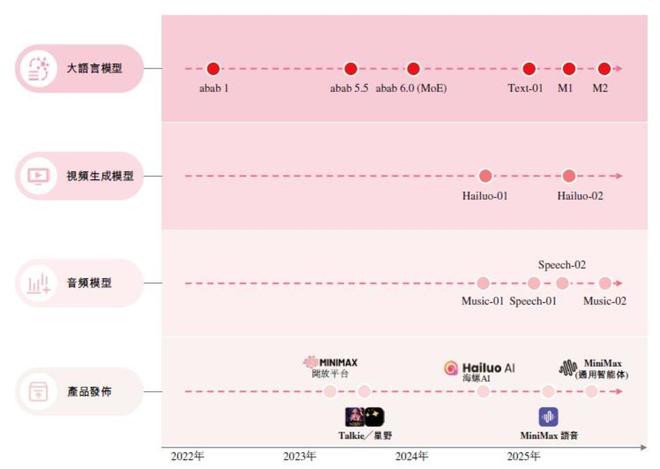
Core Insights - MiniMax, a company in the "big model" sector, has released its prospectus shortly after Zhipu AI, highlighting the financial data and potential risks of leading domestic AI companies [1][2] - MiniMax's revenue over the past three years is $87.42 million (approximately 620 million RMB), with a cumulative loss of $1.32 billion (approximately 929 million RMB), which is higher than Zhipu AI's losses [1][2] - The company emphasizes its multi-modal AI capabilities and a range of consumer-facing products, contrasting with Zhipu AI's focus on B2B clients [1][2] Financial Performance - MiniMax's revenue has shown rapid growth, increasing from $3.46 million in 2023 to $30.52 million in 2024, a year-on-year growth of 782.1%, and further rising to $53.44 million in the first nine months of 2025, a 174.8% increase from the previous year [9][12] - The revenue structure has shifted significantly, with consumer applications contributing 71.4% of total revenue in 2024, up from 21.9% in 2023 [11][12] - Despite revenue growth, MiniMax's net losses have also expanded, from $73.73 million in 2022 to $270 million in 2023, and projected to reach $470 million in 2024 [14][15] Business Model and Strategy - MiniMax adopts a "multi-modal + product-heavy" strategy, developing capabilities across text, voice, image, and video, aiming for a comprehensive AI solution [3][7] - The company has raised over $1.55 billion from prominent investors, allowing it to pursue multiple technology paths simultaneously [3][7] - MiniMax's core growth comes from AI-native applications rather than enterprise services, indicating a more diversified revenue approach compared to Zhipu AI [19][20] Market Position and Competition - MiniMax's user base has expanded significantly, with active users increasing from 3.1 million in 2023 to 19.1 million in 2024, and paid users growing from 120,000 to 650,000 in the same period [12][14] - The company faces competition from specialized players in various fields, such as ChatGPT in text generation and Midjourney in image generation, which increases operational complexity [8][20] - MiniMax's reliance on overseas markets is notable, with over 70% of its revenue coming from international sources, raising potential legal and operational risks [16][17] Comparative Analysis with Zhipu AI - Both MiniMax and Zhipu AI are experiencing rapid revenue growth and high R&D expenditures, but they differ in their monetization strategies, with MiniMax focusing on consumer applications and Zhipu AI on B2B services [18][24] - Zhipu AI's revenue model is more predictable, relying on high-margin enterprise deployments, while MiniMax's approach is riskier but offers higher growth potential [19][24] - The contrasting paths of these companies highlight the diverse strategies within the AI sector, suggesting that multiple business models may coexist in the market [24]
活动报名:25 年一二级市场年终复盘和 26 年展望|42章经
42章经· 2025-12-21 13:32
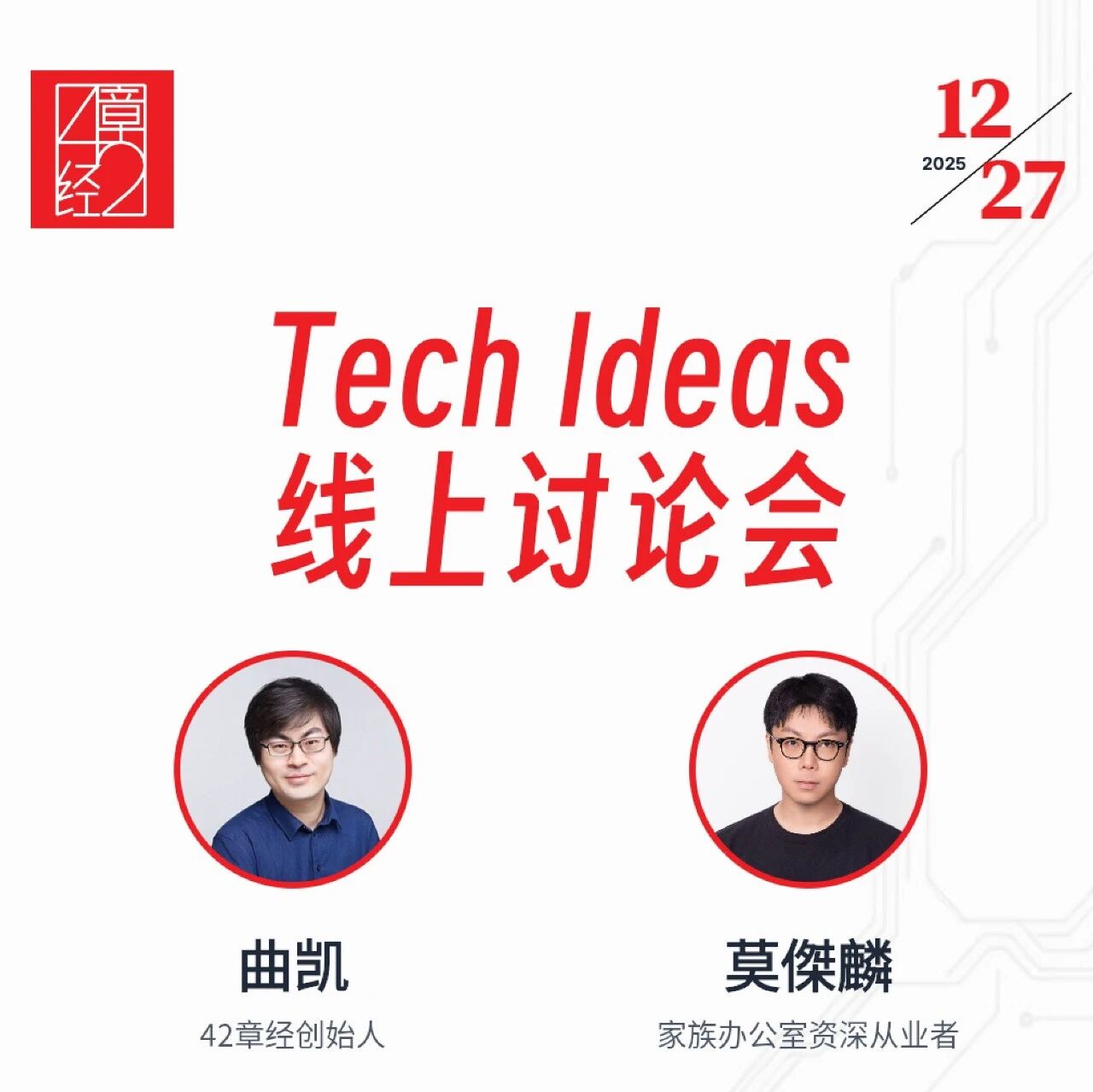
Core Viewpoint - The article discusses the ongoing analysis and outlook of the AI market, focusing on the trends and developments in both primary and secondary markets for the years 2025 and 2026, particularly in relation to AI technologies and their implications [5][6]. Group 1 - The collaboration between industry experts has led to insightful discussions and predictions regarding the AI market, with previous analyses proving accurate [5]. - The article highlights the transition from quarterly reviews to more focused online discussions, termed "Tech Ideas," which involve industry professionals sharing insights on key themes [5][6]. - The final event of the year aims to provide a comprehensive review of the AI market and discuss key terms for the upcoming years, including Agent, multimodal AI, AI hardware, embodiment, autonomous driving, and the potential bubble in large models [6]. Group 2 - The event is scheduled for December 27, 2025, at 11:00 AM Beijing time, with a focus on engaging participants who have relevant backgrounds [7]. - The article emphasizes the importance of networking and exchanging ideas among industry peers during these discussions [8].
日耗50万亿Token,火山引擎的AI消费品战事
3 6 Ke· 2025-12-19 10:55
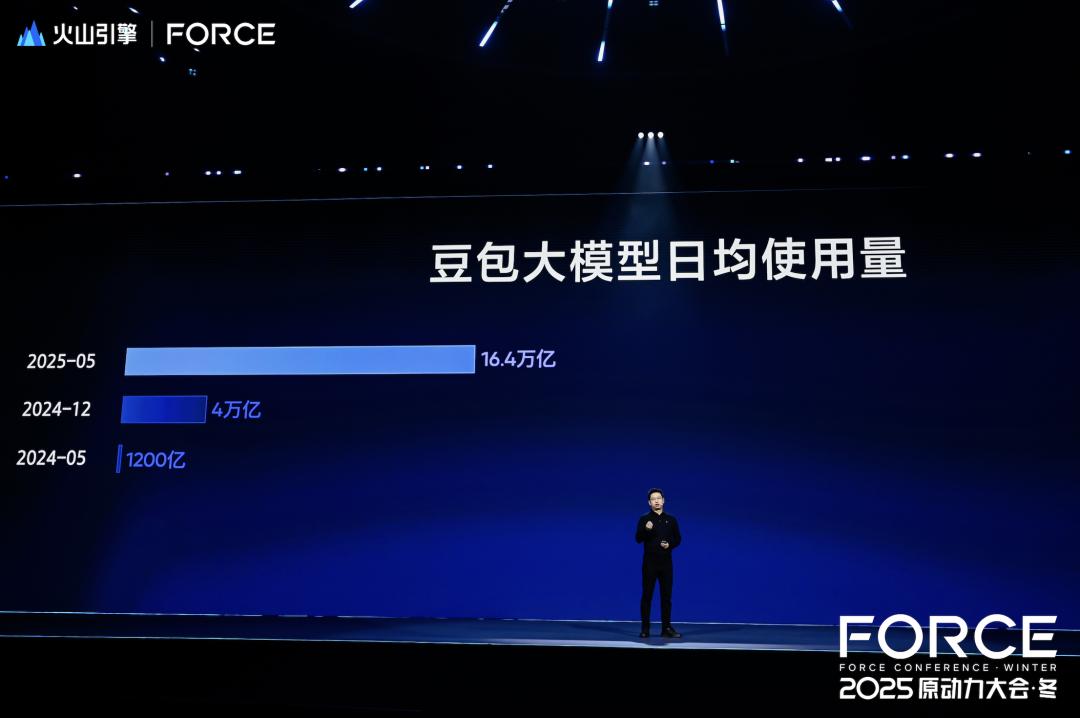
Core Insights - The AI market in China is rapidly evolving, with Huoshan Engine emerging as a leading player, particularly in the model-as-a-service (MaaS) sector, where it holds the largest market share domestically and ranks third globally [2][3] - The daily token usage of the Doubao model has surged to over 50 trillion, marking a tenfold increase compared to the previous year [1][4] - The focus for 2025 in the AI market will be on multimodal capabilities and agents, with Huoshan Engine launching several new products centered around these themes [3][6] Market Position and Growth - Huoshan Engine has established itself as a significant force in the AI sector, with projected revenues exceeding 200 billion in 2024, reflecting a growth rate of over 60% [6][23] - The company aims to simplify model usage by integrating multiple capabilities into a single API, contrasting with competitors who offer separate models for different functions [26][27] Product Innovations - The newly launched Seedance 1.5 pro video generation model emphasizes immediate usability, capable of producing synchronized audio-visual content without extensive post-production [8][15] - The model's advancements include improved lip-sync accuracy and enhanced immersion, making it particularly suitable for diverse content creation [13][21] Competitive Landscape - The AI video model market is characterized by rapid iteration, with companies focusing on producing fully publishable works rather than just raw video segments [7][9] - Huoshan Engine's approach to model training and optimization has led to a tenfold increase in inference speed, significantly reducing costs and enhancing performance [31][30] Future Directions - The company is exploring innovative billing models, such as the "AI Savings Plan," which offers tiered discounts to help businesses reduce costs by up to 47% [32][33] - Huoshan Engine is committed to building a comprehensive AI infrastructure that enables businesses to easily adopt advanced AI capabilities, aiming to make AI assistants as ubiquitous as websites and apps [38][39]
AI 产业速递:从字节原动力大会看国内 AI 应用落地趋势
Changjiang Securities· 2025-12-19 09:27
Investment Rating - The industry investment rating is "Positive" and maintained [6] Core Insights - The report highlights a significant trend in downstream demand for AI applications, driven by the recent launch of the Doubao model 1.8 and the Seedance 1.5 pro video creation model at the Huoshan Engine's Winter Force Conference [2][4] - The Doubao model's daily token usage has surged to over 50 trillion, marking a 471-fold increase since its launch and more than a tenfold increase year-on-year, indicating strong demand across various industries [9] - The introduction of a "savings plan" for models, offering discounts of up to 47%, aligns pricing strategies with customer usage patterns, enhancing affordability and encouraging innovation [9] Summary by Sections Event Description - On December 18, Huoshan Engine held the Winter Force Conference, where the Doubao model 1.8 and Seedance 1.5 pro were officially launched, sparking extensive market discussions [4] Event Commentary - The report emphasizes the explosive growth in the usage of the Doubao model, reflecting genuine customer needs and the model's ability to empower various sectors [9] - The Doubao model 1.8 features enhanced multimodal capabilities, including increased video frame understanding and improved agent functionalities, which are expected to unlock more application scenarios [9] - The conference also introduced several upgraded AI agent products aimed at delivering tangible value to enterprises, such as the AgentKit platform and various specialized agents [9] - The report anticipates a further increase in industry token usage next year, particularly in multimodal applications and edge devices [9]
谷歌挑战英伟达,摩尔线程、沐曦内部人士怎么看?
第一财经· 2025-12-18 14:06
Core Viewpoint - The release of Google's next-generation AI model Gemini 3 series, showcasing the performance and cost advantages of its self-developed TPU, poses a strong challenge to NVIDIA's dominance in the GPU market, leading to a significant market reaction where NVIDIA's market value dropped by over $100 billion [3]. Group 1: Hardware Competition - The core debate centers around the division of labor between general-purpose GPUs and specialized chips like TPUs, rather than a simple replacement relationship [4]. - Google's ability to develop TPUs is attributed to its status as a full-stack integrated company, leveraging its strong infrastructure, foundational models, and cloud services to optimize costs [4]. - The continued advantage of GPUs is attributed to their flexibility, full functionality in a multi-modal era, and the established ecosystem, particularly NVIDIA's CUDA ecosystem, which has created a significant competitive barrier [5]. Group 2: Perspectives on Chip Architecture - The founder of Moex, Sun Guoliang, emphasizes that no chip architecture is inherently superior; the key lies in the application scenarios [6]. - Both GPUs and ASICs like TPUs are expected to coexist due to the diverse and rapidly evolving application scenarios in the industry [6]. - Despite acknowledging the value of general-purpose chips, there is recognition of the potential for specialized chips in specific scenarios, particularly for large cloud service companies once their algorithms stabilize [6]. Group 3: Infrastructure and Performance - In the current AI model competition, the peak computing power of a single card is not the sole determining factor; the ability to construct high-performance networks that connect thousands of cards and deeply integrate with software stacks is crucial [7]. - Moex has multiple production-grade thousand-card clusters operational, indicating a shift from experimental setups to real-world applications supporting training and inference [7]. - The primary challenge in AI infrastructure is to provide a reliable general computing power platform that supports large-scale model training and inference, rather than isolated cards or servers [8].


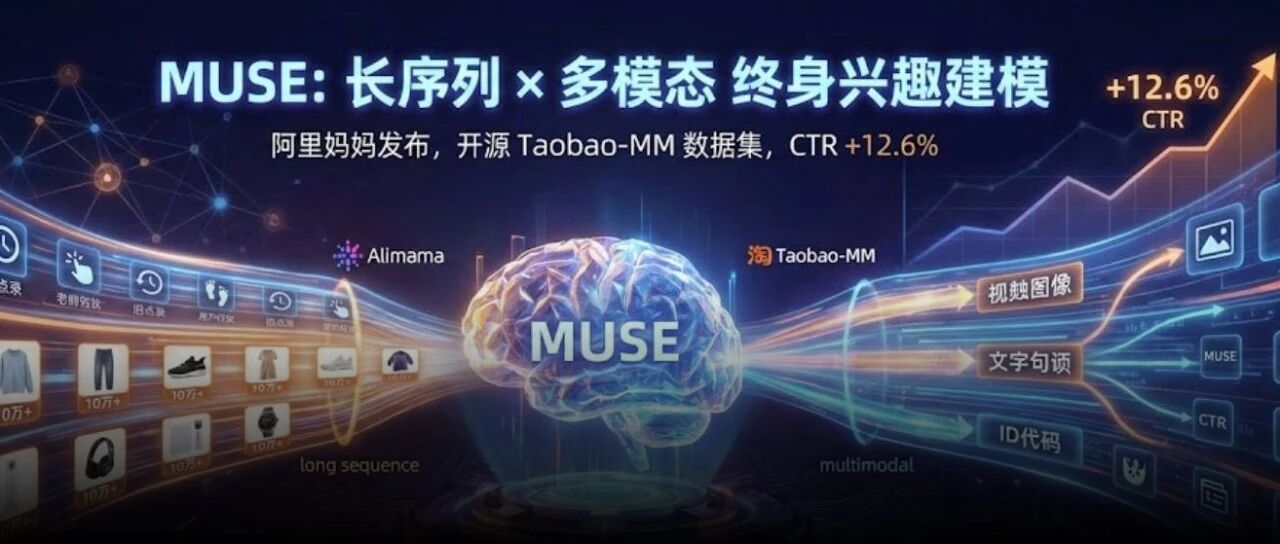
阿里妈妈发布MUSE:用多模态搞定十万级超长行为序列,并开源Taobao-MM数据集
机器之心· 2025-12-16 04:11
Core Insights - The article discusses the limitations of current recommendation systems, which often suffer from "short-term amnesia" due to computational and storage constraints, leading to the neglect of valuable long-tail data [1][3] - MUSE (Multimodal Search-based framework) is introduced as a solution to enhance user interest modeling by leveraging multimodal information, effectively acting as a "digital hippocampus" for recommendation systems [1][4] - The framework has been successfully implemented in Alibaba's advertising system, demonstrating a significant CTR increase of 12.6% [6][36] Summary by Sections Background and Evolution - The evolution of CTR modeling has transitioned from short-term behavior analysis to long-term behavior modeling, but improvements have plateaued as historical behavior length increases [2][3] - Users accumulate extensive behavior sequences, often exceeding one million actions, but current models typically utilize only a few thousand recent actions due to limitations in processing and storage [3][4] MUSE Framework - MUSE focuses on reorganizing user behavior data through multimodal information to improve the quality and usability of lifelong interest modeling [6][20] - The framework consists of two main components: GSU (General Search Unit) for initial retrieval and ESU (Exact Search Unit) for detailed modeling, both enhanced by multimodal embeddings [20][24] Implementation and Results - MUSE has been fully deployed in Alibaba's advertising system, capable of modeling user behavior sequences of up to 100,000 actions, with ongoing improvements to extend this to millions [6][36] - The implementation has shown that using high-quality multimodal embeddings significantly enhances retrieval and modeling accuracy, leading to improved business outcomes [6][36] Engineering Considerations - The design of MUSE allows for controlled latency despite the complexity of handling long sequences and multimodal data, primarily by decoupling the GSU from the main processing path [31][36] - The system's architecture emphasizes efficient data retrieval and processing, minimizing the impact of network and storage delays on overall performance [36][39] Industry Implications - MUSE offers valuable insights for industries involved in advertising, content recommendation, and e-commerce, suggesting a shift towards integrating multimodal embeddings and enhancing user interest modeling [37][39] - The framework encourages a reevaluation of existing systems, advocating for a focus on quality embeddings and efficient data handling to unlock new performance improvements [45][47]
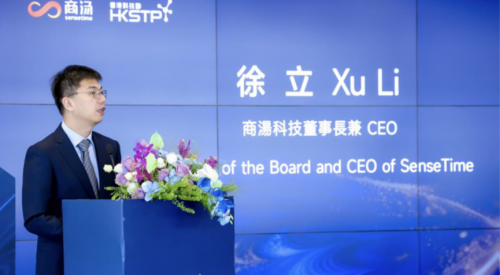
“2025商汤科技AI论坛”:多模态、具身智能与“AIinX”落地加速
Huan Qiu Wang· 2025-12-15 08:16
Core Insights - The "2025 SenseTime AI Forum" held in Hong Kong focuses on the evolution of large models, multimodal integration, embodied intelligence, and AI-driven industrial paradigm shifts [1] - SenseTime's CEO emphasizes the transition of AI from perception to generation and its acceleration towards embodied intelligence and world models [3] - The forum highlights the importance of returning to real-world value creation and original innovation in AI development [3] Group 1: Technological Advancements - SenseTime's co-founder reveals three key breakthroughs in foundational architecture: NEO native multimodal fusion architecture, cross-perspective predictive training paradigm, and SekoTalk efficient inference system [3] - These advancements facilitate the evolution of large models from "AI for X" to "AI in X," laying the groundwork for intelligent agents that can continuously interact with the physical environment [5] Group 2: Business Applications - AI has transitioned from an efficiency tool to a business model transformation engine, with SenseTime serving nearly 500 clients in the Asia-Pacific region over the past six years [7] - The company emphasizes that local deployment is a critical success factor, with 70% of clients maintaining deep cooperation [7] - The integration of multimodal, embodied intelligence, and industry-specific large models is driving AI from laboratories to production lines, airports, homes, and urban governance [7]
商汤科技日日新Seko系列模型与寒武纪完成适配
Xin Lang Cai Jing· 2025-12-15 06:10
Core Viewpoint - SenseTime officially launched Seko 2.0, the industry's first multi-episode generative intelligence agent, leveraging its self-developed Seko series models [1] Group 1: Product Development - The Seko series models have completed adaptation to the domestic AI chip Cambricon, marking a significant advancement in supporting AIGC core scenarios from language to multi-modal capabilities [1] - Following the adaptation, SenseTime and Cambricon will further collaborate on deep optimization across multiple directions [1]

“连姥姥都问我,你知道DeepSeek吗?”
第一财经· 2025-12-12 01:11
Core Viewpoint - The emergence of DeepSeek has significantly impacted MiniMax and other large model companies, prompting introspection on their performance and strategic choices [5][6]. Group 1: Challenges and Reflections - MiniMax's founder, Yan Junjie, faced numerous challenges during the startup phase, including the bankruptcy of Silicon Valley Bank, which affected payroll [3]. - The team recognized that their performance was hindered by a lack of deep thinking and lowered expectations, contrasting with DeepSeek's unique insights and technical accumulation [6][8]. Group 2: Team Morale and Incentives - To boost team morale during tough times, Yan emphasized the importance of encouragement and financial incentives, stating that monetary rewards are effective [7]. - In September, MiniMax initiated a million-dollar stock option incentive program, offering varying amounts based on employee contributions, covering various roles within the company [7]. Group 3: Strategic Direction - MiniMax's approach involves a unique strategy of ToC (Technology of Communication) and international expansion, with their Talkie application gaining significant user traction overseas [8]. - The company experienced a period of indecision regarding whether to prioritize technology or product development, ultimately deciding on a technology-driven approach despite the associated risks [8][9]. Group 4: Market Position and Talent - The gap between domestic large model companies and top international models is narrowing, with Chinese companies achieving this with significantly lower investment [12]. - Yan highlighted the importance of local AI talent, noting that many key contributors to success in companies like DeepSeek and MiniMax are homegrown, often in their first jobs [12]. Group 5: Future Outlook - Yan remains optimistic about the future of AGI, noting that the number of companies in the large model space is decreasing, leading to a more concentrated market [13]. - The AI industry is not merely an extension of the internet; the core product in the large model era is the model itself, with blurred boundaries between roles in product management, development, and algorithms [14].