守正创新

Search documents
守正创新 五粮液以平衡之道铸就全球卓越品质典范
Si Chuan Ri Bao· 2025-10-30 20:20
Core Insights - Wuliangye, a leading Chinese liquor company, recently achieved the highest score in EFQM assessments, earning the EFQM Global Award (7 Diamonds) and a special award for excellence in sustainable development, highlighting its balance between tradition and innovation [11][17]. Group 1: Traditional Craftsmanship - Wuliangye's commitment to traditional brewing techniques is foundational for its high-quality development, reflecting respect for natural laws and the value of time [11][12]. - The company’s traditional brewing process, recognized as a national intangible cultural heritage, involves complex and time-honored methods that ensure the unique flavor and quality of its products [13][14]. Group 2: Innovation and Technology - Wuliangye embraces innovation by integrating modern technology with traditional practices, establishing leading research platforms and utilizing modern microbiological techniques to enhance production [14][15]. - The company has discovered four new yeast strains named after Wuliangye and published a flavor fingerprint map of over 3,000 compounds, revealing the scientific secrets behind its liquor [14]. Group 3: Brand and Product Development - Wuliangye maintains a balance between traditional culture and innovative product development, launching new products like the 29° Wuliangye and cocktails to attract younger consumers [16]. - The company actively promotes its brand globally, showcasing Chinese liquor culture in various countries, thereby enhancing its market presence [16]. Group 4: Sustainable Development - Wuliangye incorporates ESG principles and zero-carbon goals throughout its value chain, focusing on environmental sustainability and resource recycling in its production processes [17][18]. - The company fosters a culture of harmony and cooperation, enhancing the resilience of its supply chain and promoting sustainable practices among suppliers [18]. Group 5: Recognition and Impact - The accolades received by Wuliangye in the EFQM Global Award evaluation underscore its effective balance of tradition and innovation, providing a model for sustainable development in the industry [18].



全球瞭望丨南苏丹媒体:中国式现代化对非洲具有重要启示意义
Xin Hua Wang· 2025-10-26 01:40
Group 1 - The core message emphasizes that Africa can draw significant insights from China's development model, particularly the importance of subjectivity and self-confidence in governance [1][2] - It highlights that China's modernization is a gradual process, built on continuous improvement and learning from experiences, which serves as a reminder for national progress through persistent efforts [1] - The article points out that China has successfully balanced political and economic stability while adapting to technological changes, which is a crucial lesson for African nations [1] Group 2 - The cultural development in China, which integrates Marxism with traditional values, offers a framework for African countries to leverage their own cultural wisdom for modernization [2] - It critiques the tendency to equate tradition with backwardness and Westernization with progress, asserting that true advancement lies in innovation while maintaining core values [2] - The article stresses that development is a long-term endeavor rather than a sprint, urging African nations to adopt a vision that transcends electoral cycles and aid projects [2]
中国新闻社、中国新闻网视频号粉丝双双突破1000万
Zhong Guo Xin Wen Wang· 2025-10-16 13:32
Core Insights - China News Service and China News Network have both surpassed 10 million followers on their video accounts, achieving a growth of over 6 million followers within a year and accumulating over 8 billion views [1][2] - The organizations have adapted to technological advancements from the PC era to mobile internet, evolving from text and image reporting to live broadcasts and short videos, thereby expanding their media landscape [1] - The rise of short videos has significantly transformed the global media landscape and discourse, enhancing the influence of Chinese civilization and promoting cultural exchange [1] Group 1 - The organizations emphasize a "guarding innovation" approach, maintaining professional integrity while innovating in form and technology [2] - They utilize a comprehensive collection network to produce original content quickly during major events, enhancing their news coverage [2] - Popular short videos have resonated with millions, showcasing impactful stories and details that engage audiences [2] Group 2 - China News Service aims to build a "full-media" communication agency, exploring a differentiated integration path [3] - They have established a new media dissemination matrix with over 200 platforms and accounts, reaching a total user base of 660 million across more than 100 countries [3] - The total download of their main website and app exceeds 80 million, with over 130 million followers on their Weibo matrix and over 120 million followers on their video matrix [3]
演员张嘉益人民日报撰文:记录下普通人的努力与真诚
Bei Jing Ri Bao Ke Hu Duan· 2025-10-01 23:21
Core Viewpoint - The articles emphasize the importance of realism in storytelling, particularly in family dramas and comedies, highlighting how everyday life and relatable details can resonate with audiences [1][2][3]. Group 1: Realism in Storytelling - The foundation of comedy is rooted in real-life experiences, showcasing humorous and wise details from daily life [2]. - Good family dramas serve as mirrors reflecting our lives, capturing the chaos of homework help and the dynamics of parent groups [2]. - The essence of storytelling lies in "realistic details," which can make even simple dialogues or actions relatable to the audience [2]. Group 2: Audience Connection - The goal of the productions is to create a "spiritual living room" for viewers, allowing them to relax and reconnect with their families amidst busy lives [2]. - The intention is to present ordinary people's joys and sorrows, transforming them into warm stories that reflect the efforts and sincerity of everyday individuals [3]. Group 3: Creative Responsibility - Actors have a responsibility in realistic creations to help audiences see themselves and recognize various "solutions" to life's challenges [3]. - The principle of "guarding the truth" emphasizes the need for actors to observe and experience life authentically, avoiding superficiality [3]. - Innovation in storytelling should be pursued while maintaining a foundation of realism, allowing for exploration of diverse themes and styles [3].
记录下普通人的努力与真诚(大地风华)
Ren Min Ri Bao· 2025-10-01 22:11
Core Viewpoint - The articles emphasize the importance of realism in storytelling, particularly in family dramas and comedies, highlighting how relatable details from everyday life can resonate with audiences [1][2][3]. Group 1: Themes in Storytelling - The focus on "family group" as a microcosm of society allows for the exploration of everyday issues, fostering communication and understanding among family members [1][2]. - The portrayal of ordinary life, such as homework struggles and generational communication gaps, serves as a comedic reflection of reality, making the content relatable and heartwarming [2][3]. Group 2: Creative Approach - The commitment to "guarding authenticity" while innovating in storytelling is crucial, ensuring that all characters and narratives are grounded in real-life experiences [3]. - The aim is to create a "spiritual living room" for audiences, providing a space to relax and reflect on their own lives and relationships [2][3].
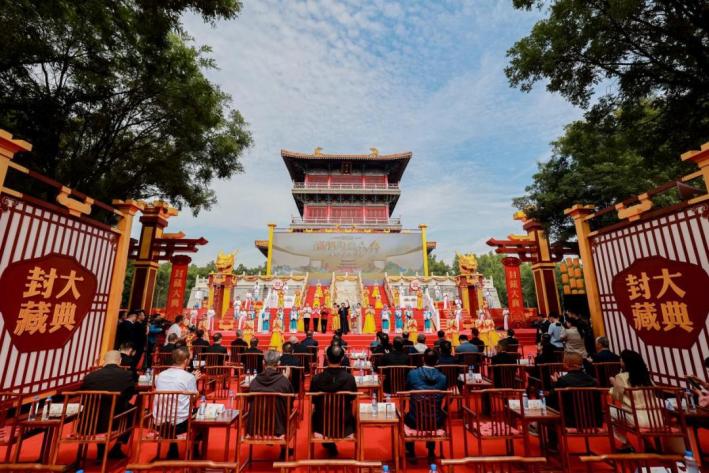
敬天爱人承古韵 守正立新启新程 —2025 汾酒封藏大典在杏花村盛大举行,致敬巴拿马夺金110周年
Zhong Jin Zai Xian· 2025-09-28 03:07
Core Viewpoint - The 2025 Fenjiu Sealing Ceremony emphasizes the themes of "Respect for Heaven, Love for People, Heritage, and Innovation," showcasing the cultural roots of Fenjiu's 6,000-year brewing history and marking the 110th anniversary of its gold medal at the Panama International Exposition [1][8][12] Group 1: Event Overview - The ceremony took place on September 26, 2025, at the Fenjiu Cultural Scenic Area in Shanxi Province, featuring immersive performances and traditional rituals [1] - Notable attendees included leaders from the Shanxi Provincial Cultural Tourism Group, the China Alcoholic Drinks Association, and various literary figures, alongside Fenjiu Group executives and media representatives [3][4] Group 2: Cultural Significance - The Sealing Ceremony has evolved into a significant cultural IP within the industry, reflecting Fenjiu's commitment to innovation while honoring its historical roots [5][6] - The event serves as a platform for showcasing the cultural confidence of Chinese liquor and its high-quality development, with a focus on the themes of "Respect for Heaven, Love for People, Heritage, and Innovation" [8][12] Group 3: Performances and Themes - The ceremony featured various performances that illustrated the themes, including a dance representing the respect for nature, a narrative on the emotional connection to the craft, and a demonstration of traditional brewing techniques [9][10] - The closing performance, "New Glory," symbolized Fenjiu's spirit of innovation and breakthrough while honoring its legacy [10][12]

守正创新提升思政教育质效(深入学习贯彻习近平新时代中国特色社会主义思想)
Ren Min Ri Bao· 2025-09-24 23:22
Core Viewpoint - The fundamental task of education is to cultivate moral integrity and nurture successors for the Party and the nation, with ideological and political education (IPE) being a key course to achieve this goal [1][4][16] Group 1: Importance of IPE - IPE is essential for fostering a generation of socialist builders and successors, and the Party has prioritized its development since the 18th National Congress [1][3] - The political guiding function of IPE is crucial, requiring a balance between theoretical depth and political relevance to effectively engage students [3][4] Group 2: Current Challenges in IPE - There exists a gap between IPE teaching methods and the needs of contemporary youth, with some courses being overly didactic and failing to engage students effectively [2][8] - The need for IPE to adapt to the interests and realities of students is emphasized, advocating for innovative teaching methods that resonate with their experiences [9][10] Group 3: Innovative Approaches in IPE - Zhejiang province has developed a model for IPE that integrates innovation, local collaboration, and practical engagement, utilizing historical and cultural resources to enhance learning [6][7] - Activities like the "Portraits of Martyrs" project allow students to actively participate in IPE, fostering emotional connections and a deeper understanding of historical significance [11][12] Group 4: The Role of Youth in IPE - Youth are seen as a vital force in the dissemination of Party theory, with initiatives encouraging them to become active participants in promoting ideological education [13][14] - The integration of practical experiences with theoretical learning is highlighted as a means to deepen students' understanding and commitment to socialist values [15][16]
当守正遇上创新:“既要又要”的国药企业如何破局?
Mei Ri Jing Ji Xin Wen· 2025-09-24 13:13
Core Insights - The Chinese traditional medicine industry is experiencing significant growth driven by favorable policies and increasing market demand, with the market size expected to reach 1.05 trillion yuan in 2024, a year-on-year increase of 11.6% [1][3] - The industry is facing two major opportunities: policy dividends and market explosion, with a focus on balancing tradition and innovation [3][21] Policy and Market Dynamics - The government has introduced several policies to support the development of the traditional Chinese medicine industry, including the "Opinions on Improving the Quality of Traditional Chinese Medicine" and the "Implementation Plan for the Digital Transformation of the Pharmaceutical Industry" [3][4] - The market demand for traditional Chinese medicine is increasing due to rising health awareness and spending among consumers, particularly in areas such as aging, sub-health management, and chronic disease treatment [3][17] Quality Control and Innovation - Leading companies are enhancing quality control across the entire supply chain, with examples like Tong Ren Tang establishing a traceability system for medicinal materials and Guangzhou Pharmaceutical Group utilizing blockchain technology [4][19] - Companies are focusing on product innovation and adapting traditional formulas to meet contemporary health needs, with a strong emphasis on maintaining quality through traditional methods [6][10] Digital Transformation and E-commerce - The integration of digital technologies is crucial for the pharmaceutical industry, with companies like JD Health playing a significant role in transforming traditional medicine through e-commerce and data analytics [13][14] - The shift towards online platforms is helping traditional medicine brands reach younger consumers and adapt to changing market dynamics [10][13] Global Expansion and Future Directions - The internationalization of traditional Chinese medicine is becoming a key growth area, with products being registered in numerous countries and regions, reflecting a growing global acceptance [15][19] - Companies are focusing on three main strategic directions: deepening research and development, expanding into the "Chinese medicine +" health ecosystem, and accelerating digital integration [15][21]
用党的创新理论改造主观世界和客观世界
Ren Min Ri Bao· 2025-09-24 01:29
Group 1 - The core viewpoint emphasizes the importance of using the Party's innovative theory to transform both the subjective and objective worlds, guided by a scientific worldview and methodology [1][2][22] - The integration of Marxist principles with China's specific realities and traditional culture is highlighted as a means to innovate and develop the Party's theory [2][3] - The commitment to a people-centered approach is underscored, reflecting the Party's fundamental political stance and its dedication to improving the lives of the populace [3][4] Group 2 - The necessity of self-confidence and independence in addressing China's unique challenges is stressed, advocating for a path that is distinctly Chinese [5][6] - The importance of problem-oriented practices is emphasized, with a focus on identifying and solving contemporary issues faced by society [7][8] - A systematic approach to governance and development is advocated, ensuring that various strategies are coordinated and aligned with overarching goals [9][10] Group 3 - The significance of a global perspective is highlighted, with an emphasis on China's role in promoting peace and development on a global scale [10][11] - The need for political capability and leadership skills among Party members is stressed, ensuring alignment with the Party's core values and objectives [11][12] - The adherence to the Party Constitution as a fundamental guideline for governance and action is emphasized, reinforcing the commitment to serving the people [13][14] Group 4 - The importance of a long-term and holistic view in decision-making is highlighted, ensuring that local actions contribute to national goals [14][15] - The necessity for leaders to enhance their capabilities across various domains is emphasized, preparing them to tackle challenges effectively [16][17] - The call for a strong work ethic and integrity among Party members is underscored, promoting a culture of diligence and accountability [17][18] Group 5 - The cultivation of a correct view of achievements is emphasized, focusing on genuine contributions to society rather than personal accolades [21][22] - The relationship between theory and practice is highlighted, advocating for a continuous interaction that drives both personal and societal transformation [22]
婺剧《三打白骨精》何以“破圈”
Ren Min Ri Bao· 2025-09-22 23:19
Core Viewpoint - The performance of the Wuju opera "Three Beats of the White Bone Spirit" has gained significant popularity both in theaters and online, showcasing the potential for traditional Chinese opera to attract younger audiences and adapt to modern preferences [1][2][3] Group 1: Artistic Integrity and Innovation - The production emphasizes the core artistic elements of traditional opera while incorporating innovative features that resonate with contemporary audiences [1][2] - The performance maintains a strong focus on the essence of Wuju opera, showcasing its unique characteristics and craftsmanship in every aspect of the show [1][2] Group 2: Audience Engagement and Market Response - The success of "Three Beats of the White Bone Spirit" is attributed to its active engagement with audience preferences and effective use of multimedia for promotion [2][3] - The production has successfully attracted a new generation of viewers, particularly through visually striking elements and relatable themes [2][3] Group 3: Continuous Improvement and Fresh Creativity - Over its two-year run, the show has consistently introduced new creative elements, such as modern dance styles and popular cultural references, to keep the audience engaged [3] - The integration of innovative features has not only enhanced the live performance experience but also contributed to its online popularity, expanding its influence [3]