
报行合一

Search documents
银保业务“系统接口”将迎新变化!统一标准后或解锁合作新可能
Bei Jing Shang Bao· 2025-12-14 12:18
"以前接口不统一,商业银行和保险公司需要根据每一家机构的单独接口进行开发,工作量大,测试时间长,数据传输也容易出现遗漏或错误。行业标准的 发布不仅降低了系统对接成本,更强化了跨机构风险防控能力。"中国保险行业协会表示。 据了解,当用户在商业银行选择一款保险产品进行投保时,银保通系统负责串联起商业银行的业务系统和保险公司的业务系统,银保通系统会将用户在银行 柜面、手机银行或者自助机具上录入的投保信息,传输到保险公司进行投保审核。保费的缴纳、资金的流转等财务信息也都由其负责在商业银行和保险公司 之间进行传递,另外其会对业务进行风险评估和合规监控。 "该标准通过统一接口规范与'数据字典',解决了此前银保系统接口不统一导致的开发成本高、协同效率低及数据错误风险问题,能显著降低对接成本并提 升数据传输质量。"在众托帮联合创始人兼总经理龙格看来,未来,银保业务将加速实现跨机构高效互联,推动产品创新与风控协同。接口改造通常分阶段 进行,先评估现有系统与标准的差异,再通过API网关或微服务架构逐步适配,并利用灰度发布来降低风险。 技术壁垒的消融,直接为业务模式的进化打开了空间。龙格补充表示,统一接口将解锁跨机构数据共享、产品 ...


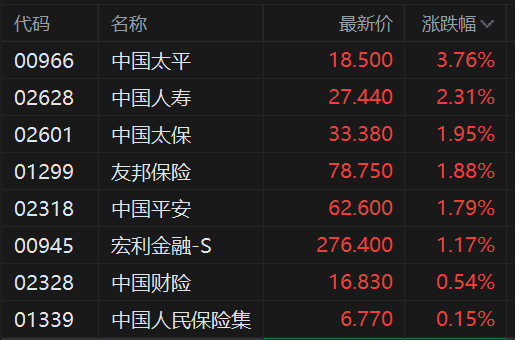
内险股普涨 中国太平涨近4% 中国平安涨近2% 机构看好保险业前景
Ge Long Hui· 2025-12-12 03:47
Core Viewpoint - The Hong Kong insurance sector experienced a collective rise, driven by positive market sentiment and favorable regulatory changes, indicating a strong outlook for the industry in both the short and long term [1] Group 1: Market Performance - On December 12, major Hong Kong insurance stocks saw significant gains, with China Taiping rising nearly 4%, China Life up 2.3%, and China Ping An, China Taibao, and AIA increasing by nearly 2% [1] - The stock prices and their respective changes include: - China Taiping: 18.500, +3.76% - China Life: 27.440, +2.31% - China Taibao: 33.380, +1.95% - AIA: 78.750, +1.88% - China Ping An: 62.600, +1.79% - China Pacific Insurance: 16.830, +0.54% - China People's Insurance: 6.770, +0.15% [2] Group 2: Industry Outlook - Guosheng Securities reported that the insurance industry will benefit from the trend of bank deposits moving to insurance products, with diverse demands in retirement, healthcare, and savings expected to drive industry expansion [1] - The smooth progress of the insurance companies' "opening red" is anticipated to boost the liability performance in 2026 [1] - The adjustment of product reservation interest rates is expected to significantly alleviate the risk of industry interest spread losses, while the "integration of reporting and operations" is promoting a reduction in internal competition and increasing concentration among leading companies [1] Group 3: Regulatory Impact - UBS highlighted that the recent notification from the National Financial Regulatory Administration, which adjusts risk factors for insurance companies, reinforces the policy direction encouraging long-term patient capital, thus enhancing market sentiment [1] - The recent rise in Chinese government bond yields and the steepening yield curve are seen as beneficial for insurance companies in the long run [1] - UBS reiterated its preference for China Ping An as the top choice in the industry, maintaining a "buy" rating with a target price of 70 HKD, citing attractive risk-reward dynamics [1]



光大永明人寿巨亏之后迎来新掌门,精算老将张晨松能否打赢“翻身仗”
Feng Huang Wang Cai Jing· 2025-12-11 10:24
Group 1 - The new chairman of Everbright Sun Life, Zhang Chensong, has been approved by the regulatory authority, marking a significant leadership change in the company [1][4] - Zhang, a seasoned actuary with 26 years of experience, has rapidly ascended from general manager to chairman in just over a year [6][19] - Everbright Sun Life has faced continuous losses since 2022, with a total loss of 35.77 billion yuan from 2022 to 2024, including a record loss of over 1.7 billion yuan in 2024 [8][19] Group 2 - The company achieved a premium income of 19.473 billion yuan in 2023, marking a record high, but has struggled with high surrender rates, which reached 2.813 billion yuan in 2022 and 1.468 billion yuan in 2023 [8][9] - The high surrender rates are attributed to several products with over 50% surrender rates, primarily from the bank insurance channel, which has led to significant premium loss [9][19] - In 2024, the company implemented a "three reductions" strategy to cut costs and improve efficiency, including the closure of multiple branches and a reduction in agents [18] Group 3 - Despite a challenging environment, the company showed signs of recovery in early 2025, reporting a profit of 352 million yuan in Q1, although it faced a loss of 740 million yuan in Q2 [18] - The company's risk assessment rating improved to AA class for two consecutive quarters in 2025, indicating a stabilization in its financial health [18] - Zhang's focus will be on optimizing product structure and reducing reliance on the bank insurance channel to drive sustainable growth [19]

国盛证券:保险业阶段性超额收益显著 积极看好板块配置价值
智通财经网· 2025-12-11 03:44
Group 1 - The insurance industry is expected to benefit from the trend of bank deposits moving to insurance products, with diverse demands in retirement, healthcare, and savings driving industry expansion in the long term [1] - Short-term performance of insurance companies is promising, with a positive outlook for the liability side in 2026 due to successful initial progress in the new year [1] - The reduction in product reservation interest rates significantly alleviates the risk of interest spread losses, while the "reporting and operation integration" promotes industry consolidation and enhances the concentration of leading companies [1] Group 2 - The insurance industry has shown significant phase-specific excess returns, but has underperformed the overall market due to a shift in market style [2] - From early 2025 to the present, the A-share market has rebounded significantly, with the overall A index up by 25.76% and the insurance industry index up by 18.17%, outperforming the CSI 300 by 0.71 percentage points but underperforming the overall A index by 7.59 percentage points [2] - The insurance index outperformed the CSI 300 by 5.64 percentage points in the first half of the year, but has since lagged behind due to a market style shift towards technology and growth sectors [2] Group 3 - There is a significant disparity in individual stock performance among listed insurance companies, with New China Life leading with a 40.73% increase [3] - The differences in stock performance are attributed to investment and performance variations, with New China Life showing the most significant increase in total investment returns [3] - As of Q2 2025, New China Life and Ping An have a higher proportion of stock investments, contributing to their superior net profit growth rates compared to other companies [3] Group 4 - New single premium growth is notable, with New China Life leading significantly, reflecting a shift in residents' financial asset allocation towards non-bank institutions [4] - The total new single premium growth rate for the first three quarters of 2025 shows New China Life at 55.2%, followed by Taikang at 20.5%, and Ping An at 2.3% [4] - The actual trading volume and market capitalization of major insurance companies vary, with Ping An having the largest market cap, while New China Life and China Life have smaller trading volumes, leading to greater price elasticity [4]




中国人寿:总保费突破7000亿元
Ren Min Wang· 2025-12-10 01:01
Core Viewpoint - China Life Insurance Company is enhancing market vitality amid micro and macro challenges, with total premiums expected to exceed RMB 700 billion by November 30, 2025, marking a significant breakthrough in premium scale and solidifying its market leadership [1] Group 1: Social Responsibility - China Life has provided insurance and value-added services to over 600 million customers, with compensation payouts exceeding RMB 160.9 billion in the first half of 2025, including over RMB 34 billion for health insurance [2] - The company has offered risk protection of approximately RMB 2.7 trillion to small and micro enterprises and individual businesses, actively participating in the construction of the third pillar of pension [2] - China Life has launched various health insurance products, including senior bone health insurance and personal long-term disability income loss insurance, addressing real health needs [2] Group 2: Growth Potential - The company has diversified its product offerings, with new single premium contributions from life insurance, annuities, and health insurance reaching 31.95%, 32.47%, and 31.15% respectively in the first three quarters of 2025 [4] - As of September 30, 2025, China Life's total sales force reached 657,000, maintaining the industry's leading position, with a significant improvement in retention rates [4] - New business value grew by 41.8% in the first three quarters of 2025, driven by a multi-faceted channel strategy and reforms [4] Group 3: Long-term Investment Strategy - China Life adheres to asset-liability matching principles, optimizing asset allocation and conducting stable cross-cycle investment [5] - The company has maintained a solid foundation for low-interest environments by increasing its long-term bond investments to RMB 2 trillion [6] - China Life is actively investing in equity markets, increasing its equity investment by over RMB 380 billion by the third quarter of 2025 [6] Group 4: Strategic Focus - The company emphasizes a customer-centric approach, implementing the "333" strategy, focusing on efficiency, long-term vision, asset-liability linkage, and risk management [7]
中金2026年展望 | 保险:再迎黄金时代
中金点睛· 2025-12-08 23:37
Core Viewpoint - The life insurance industry is expected to enter a new growth cycle by 2026, driven by improved liability trends and a return to growth-oriented valuation logic for high-quality companies [2][3][8]. Group 1: Life Insurance Trends - Five key trends in the life insurance industry are anticipated: 1) Continued rapid growth of new business, embracing "deposit migration" and a "new era of health insurance"; 2) Further reduction in the rigid costs of new business, enhancing its value proposition; 3) Diversification in new business product structures, with significant optimization in quality companies; 4) Upward migration of customer tiers, prompting upgrades in operational models and talent; 5) Concentration of competition among companies with strong life insurance operational capabilities [3][8][9]. - The "deposit migration" phenomenon is expected to become more pronounced, with savings-type insurance products gaining traction in a low-interest-rate environment, providing a more attractive yield compared to bank deposits [9][11]. - The health insurance sector is projected to recover, with new business premiums returning to growth by 2026, supported by policy reforms and the removal of operational bottlenecks [11][41]. Group 2: Financial Insurance Insights - The property and casualty insurance sector is expected to see stable growth in auto insurance premiums, with head companies optimizing their business structures to improve underwriting profitability [33][35]. - Non-auto insurance is anticipated to experience moderate growth, with health insurance emerging as a significant growth driver, particularly in light of ongoing regulatory reforms [40][41]. - The industry is positioned to replicate successful overseas expansion strategies seen in Japan's insurance sector during the 1980s, leveraging China's Belt and Road Initiative and the growing overseas presence of Chinese enterprises [44][46]. Group 3: Hong Kong Life Insurance - The life insurance business in Hong Kong is expected to regain investment appeal as foreign attitudes towards Chinese assets shift, coinciding with a new growth phase in the mainland insurance market [4][50]. - The competitive landscape is likely to favor high-quality Hong Kong insurers, as they adapt to the evolving dynamics of the mainland market and capitalize on upward customer migration trends [51].

官宣,中国人保集团副总裁于泽被查
Sou Hu Cai Jing· 2025-12-06 11:31
公开资料显示,于泽出生于1971年10月,毕业于南开大学,获经济学学士学位。毕业后,他便在保险业 深耕,是一名30余年的"老将"。 从工作经历来看,1994年7月至2006年10月,于泽任职于中国人民保险公司,曾任天津分公司车辆保险 事业部常务副总经理;2006年10月至2019年12月,他转战太平财产保险有限公司,曾任天津分公司总经 理、市场总监、助理总经理、副总经理以及总经理等职务。 2019年12月,于泽回归中国人保集团并出任副总裁一职;2021年6月28日,其人保财险总经理任职资格 获原银保监会核准;2023年5月,于泽当选人保财险董事会副董事长。2024年,中国人保年报显示,于 泽税前薪酬为91.28万。 近年来,保险业多名高管因涉嫌严重违纪违法被查 文|《财经》研究员 丁艳 编辑 | 杨芮 12月6日,据中央纪委国家监委网站通报,中国人民保险集团股份有限公司(下称"中国人保集团", 601319.SH,1339.HK)党委委员、副总裁于泽涉嫌严重违纪违法,目前正接受中央纪委国家监委纪律 审查和监察调查。 (图片来源:中央纪委国家监委网站) 12月1日,于泽失联消息在市场发酵后,二级市场反应迅速,中 ...

保险业的“冰河世纪”:低利率压顶,百万代理人迎生存大考
Sou Hu Cai Jing· 2025-12-06 09:22
Group 1: Core Insights - The insurance industry in 2024 is undergoing significant transformation, with a focus on high-quality development and risk management [2] - The publication "Insurance New Era 2024" features 59 articles across seven sections, providing comprehensive insights into the industry's future [1] Group 2: Regulatory and Market Trends - The establishment of the National Financial Regulatory Administration's county-level supervision marks a new phase in regulatory efforts, aiming to enhance the insurance sector's quality [2] - The demand for commercial insurance is rising from individual to societal levels, emphasizing the industry's role in supporting China's modernization [2] Group 3: Low Interest Rates Impact - The persistent low interest rates are reshaping the life insurance sector, leading to a renewed focus on variable income products like participating insurance [3] - Insurers are adjusting their channel strategies, with major companies increasing their investments in bancassurance to adapt to market demands [3] Group 4: Property Insurance Resilience - The property insurance sector is demonstrating resilience in the low interest rate environment, focusing on addressing industry pain points and enhancing compliance awareness [4] - Despite low growth in auto insurance premiums, the overall underwriting profitability remains strong, while non-auto insurance, particularly health insurance, is experiencing double-digit growth [4] Group 5: Channel Upgrades and Cost Efficiency - The "reporting and operation integration" strategy is being implemented in both life and property insurance sectors, leading to a transformation in sales logic and cost structures [5] - Insurers are prioritizing cost reduction and efficiency improvements as part of a fundamental reform in the industry [6] Group 6: Leadership Changes and Industry Dynamics - Major insurance companies are undergoing significant leadership changes, with state-owned enterprises appointing new executives, indicating a shift in development strategies [7] - The trend of "AIA-ization" among smaller firms reflects a broader movement towards innovation and adaptation in the insurance landscape [7] Group 7: Market Trends and Financial Management - The insurance industry is moving towards a more calculated approach to operations, with an emphasis on financial management and accountability [8] - Local state-owned assets are increasingly investing in the insurance sector, while central enterprises are reducing their stakes in financial companies [8]
人保集团副总裁于泽涉嫌严重违纪违法被查
Jing Ji Guan Cha Wang· 2025-12-06 06:45
于泽担任人保财险总裁的4年,正值财险行业深刻变革与转型时期。车险综合改革深化,"报行合一"政策持续推进,推动财险行业尤其是头部公司优化经 营、降本增效,综合成本率得以改善。在2024年第三季度的业绩发布会上,中国人保管理层曾以多个"新高"概括上半年业绩,其中包括集团合并利润创历史 新高、财产险综合成本率达到近10年同期最好水平等。 数据显示,2021年至2024年,人保财险的年度保费收入从约4500亿元增长至约5400亿元,市场份额稳定保持在30%以上,持续领先于主要竞争对手。于泽此 前曾公开谈及对"报行合一"政策的看法,他认为非车险业务长期亏损的根源在于过度差异化定价偏离了保险的大数法则,并表态公司积极支持监管在非车险 领域推行该政策。 然而,严格的费用管控在实践中面临挑战。根据人保财险2024年第三季度偿付能力报告,当季度集团全系统共收到监管罚单49张,罚款总额逾610万元。违 规事由主要集中在未按规定使用经批准或报备的条款费率、给予投保人保险合同约定外利益,以及虚列费用套取资金等方面。这反映出在行业转型与严监管 背景下,大型险企内部治理与合规经营仍面临持续考验。 2025年12月6日,中央纪委国家监委网 ...

大额存单消失记:人身险开门红获最大助攻?
Xin Lang Cai Jing· 2025-12-05 10:14
Core Viewpoint - The disappearance of large-denomination certificates of deposit (CDs) and the significant increase in the minimum purchase threshold for 3-year CDs are expected to benefit the life insurance industry, particularly through the bancassurance channel, as it may attract investors seeking alternatives to low-yielding products [2][26][31] Group 1: Market Changes - The 5-year large-denomination CDs have become unavailable, and some banks have raised the minimum purchase threshold for 3-year CDs from 200,000 to 1,000,000 yuan, with the highest yield only at 1.55% [2][24] - As of September 2023, the balance of large-denomination CDs was 23.5 trillion yuan, with 5.5 trillion yuan issued in the first quarter of 2023 [2][24] - The withdrawal of large-denomination CDs is likely to push significant funds to seek new investment avenues [26] Group 2: Impact on Life Insurance Industry - The life insurance industry is preparing for the 2026 "opening red" period, and the current market conditions may provide a boost to sales through bancassurance channels [26][31] - The recent decline in product pricing rates, with the maximum rate for participating insurance dropping to 1.75% and traditional fixed-income products to 2.0%, indicates a challenging environment for sales [27][28] - The disappearance of large-denomination CDs may reduce competition for life insurance products, allowing the industry to capture a portion of the displaced demand [28][30] Group 3: Bancassurance Channel Advantages - The bancassurance channel is positioned to benefit significantly from the changes in the market, as bank clients who can no longer invest in large-denomination CDs may be easily converted to insurance products [31][33] - Recent data shows that the new business scale of bancassurance has surpassed that of individual insurance, accounting for over 60% of the market share [34] - The growth in bancassurance premiums among major insurers contrasts with a decline in smaller companies, highlighting a K-shaped differentiation in the market [36] Group 4: Long-term Industry Concerns - The banking sector's actions signal a proactive adjustment to a long-term low-interest rate environment, which may have lasting implications for the insurance industry [37][38] - The pressure on larger companies is manageable due to their capital strength, but smaller insurers face significant challenges in maintaining competitiveness and profitability [39][40] - The potential for a wave of failures among smaller insurers could threaten the stability of the industry, with larger firms likely needing to absorb the fallout [41][42]