
数据要素市场化配置改革

Search documents
山东数据局:持续提升数据要素市场化配置改革成效
Zhong Guo Jing Ji Wang· 2025-09-28 07:22
Core Viewpoint - The Shandong Provincial Government is leveraging the "Data Element ×" initiative to enhance the development and utilization of data resources, aiming to create an innovative service system for data elements and improve the effectiveness of market-oriented reforms in data allocation [2]. Group 1: Regulatory Framework - Shandong is accelerating the legislative process for the "Shandong Provincial Data Regulations" and has introduced several management guidelines, including the "Public Data Resource Registration Management Norms" and "Data Trading Norms," establishing 283 data standards to ensure legal and systematic data utilization [2][3]. Group 2: Data Utilization and Infrastructure - The province is focusing on enhancing data production capabilities through integrated digital government reforms, establishing a unified foundational information platform, and creating a comprehensive big data platform system, which has facilitated over 52 billion data sharing instances and opened 48 billion data records [2][3]. - Shandong has developed over 90 high-quality datasets in sectors like industrial manufacturing and transportation, promoting the use of public data through 141 authorized operational scenarios [2][3]. Group 3: Data Circulation and Market Development - The province is promoting data circulation by organizing events like the "Data Market Construction and Supply-Demand Matching" and has launched the "Data Market," resulting in the listing of over 1,900 data products from local data trading companies [3]. Group 4: Industry Empowerment - Shandong is utilizing its geographical advantages and marine resources to develop marine data, accumulating over 50 petabytes of high-quality marine data, which constitutes 25% of the national total, and has established a marine big data trading service platform [3]. - The application of data in marine fisheries and disaster prevention has led to significant improvements, such as a 50% increase in monitoring efficiency and a 19% rise in output per unit sea area [3]. Group 5: Talent Development - The province has implemented measures to accelerate the cultivation of digital talent, including 51 advanced training sessions for over 1,500 high-level digital professionals, and has introduced chief data officer roles in government and chief data engineer roles in enterprises [4]. Group 6: Future Directions - Shandong will continue to focus on market-oriented reforms in data element allocation to stimulate strong data-driven momentum, contributing to the modernization efforts in China [5].

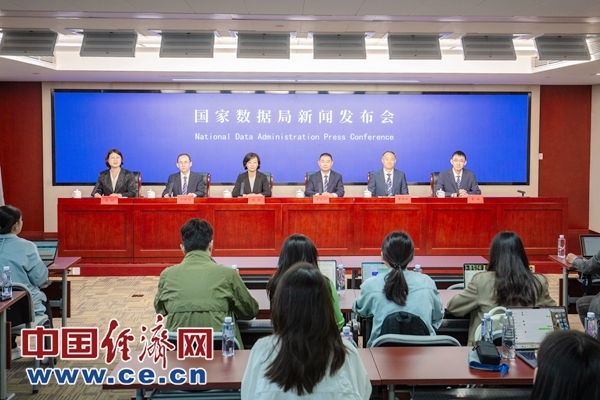
国家数据局党组书记、局长刘烈宏赴河北保定开展调研
Xin Lang Cai Jing· 2025-09-25 12:57
Core Insights - The National Bureau of Statistics is focusing on the development and utilization of data resources, emphasizing the importance of market-oriented reforms in data allocation and the effective application of public data [1] Group 1: Data Resource Development - The National Bureau of Statistics is promoting the market-oriented allocation of data elements and accelerating the authorized operation of public data [1] - Baoding is recognized as a national data labeling base, which has effectively planned and developed the labeling industry, achieving good phased results [1] Group 2: Industry Development - The next step for Baoding is to promote the high-quality development of the data labeling industry, enhancing labeling capabilities to empower the construction of high-quality data sets [1] - The initiative aims to facilitate the deep application of artificial intelligence across various industries, supporting the digital, networked, and intelligent transformation of sectors [1]
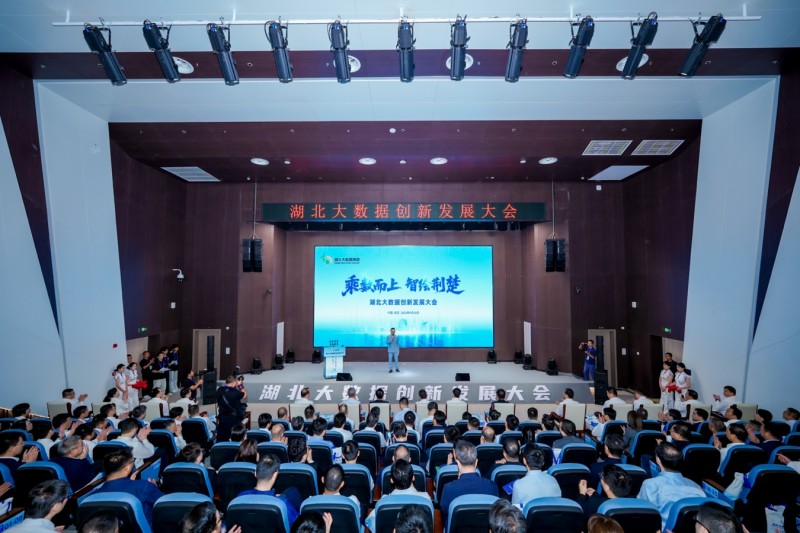
湖北大数据创新发展大会在汉开幕 六大成果集中发布助推产业升级
Cai Fu Zai Xian· 2025-09-22 01:55
Core Viewpoint - The Hubei Big Data Innovation Development Conference highlighted the latest achievements in Hubei's data industry and discussed innovative development paths and frontiers in the data sector [1] Group 1: Hubei Big Data Group's Development - Since its establishment on June 6, 2023, Hubei Big Data Group aims to become a leading provincial data group and comprehensive service provider in the country, rapidly advancing its "Hundred-Day Offensive Action" to build its organizational and business systems [3] - The group has established 11 business entities and is promoting a provincial and municipal integrated service mechanism, positioning itself as a "chain master" enterprise in the provincial data industry [3] - Future plans include expanding services in economic, governance, and livelihood scenarios based on data development trends, enhancing full-stack data service capabilities, and fostering an industrial ecosystem through parks, funds, and academies [3] Group 2: National Data Bureau's Support - The National Data Bureau is committed to implementing the central government's strategic deployment for market-oriented data element allocation reform, focusing on infrastructure improvement and industry cultivation [5] - Hubei is recognized as a strategic support point in central China, having launched the "Five New" digital economy initiative and established the Hubei Big Data Group, achieving significant progress in various data-related areas [5] Group 3: Government's Emphasis on Data Industry - The Hubei provincial government views the data industry as a crucial driver for artificial intelligence development and a key element for nurturing new productive forces [7] - The rapid establishment of organizational structures and talent aggregation by Hubei Big Data Group has led to effective resource integration and a strong start in its development [7] - The government encourages the deep application of big data and AI technologies in Hubei's advantageous industries to unleash the data multiplier effect and foster new growth momentum [7] Group 4: Conference Highlights - The conference featured a keynote report on accelerating data industry aggregation to support the construction of a digital China, along with insights on the transition from digital economy to data industry [9] - Several important functional platforms, including the Hubei Health Medical Big Data Center and the Hubei Enterprise Intelligence Empowerment Platform, were launched during the event [10] - The establishment of the Hubei Big Data Group's Expert Advisory Committee and the Hubei Big Data Academy was announced, along with the initiation of the Hubei Data Industry Fund [10]
2025首届青海数据要素生态大会开幕
Zhong Guo Xin Wen Wang· 2025-09-21 15:03
Core Insights - The first Qinghai Data Element Ecological Conference opened in Xining, focusing on the theme "Data Gathering in Qinghai, Linking the Silk Road" [1] - Experts and industry representatives discussed the market-oriented reform of data elements, development opportunities, and the integration of data into Qinghai's unique industries [1] Group 1: Data Infrastructure Development - Qinghai has established 189,000 standard racks, with a utilization rate exceeding 95%, and a computing power scale of over 17,000 PFLOPS [1] - The province is forming a comprehensive computing power supply system that includes general computing, intelligent computing, and supercomputing [1] - Strategic partnerships have been formed with seven leading internet companies, including Baidu and Alibaba, to enhance the local data infrastructure [1] Group 2: Policy and Economic Integration - The Qinghai Data Element Circulation Service Innovation Center was inaugurated, marking an upgrade in the provincial data element coordination and transaction platform [2] - The region aims to leverage its energy advantages to promote the integration of data with industries such as salt lake chemicals, new energy, ecological tourism, and specialty agriculture [2] - The "Yak Loan" financial cooperation project was signed to enhance financial services in the region, alongside the release of a plan for a trustworthy data space [2]
阳江举行“数据要素×现代农业”决赛,数据驱动开启智慧农业新篇
2 1 Shi Ji Jing Ji Bao Dao· 2025-09-19 04:33
Core Insights - The "Data Element ×" competition in Guangdong aims to explore innovative applications of data elements in modern agriculture, with 19 teams competing in the finals [1] - The event is guided by the Guangdong Provincial Government and involves multiple local agencies, highlighting the importance of data-driven solutions in agriculture [1] Group 1: Competition Overview - The competition features 10 topics focused on enhancing agricultural production intelligence, improving product traceability, and fostering data integration within the industry [1] - A total of 48 project teams participated, with 19 advancing to the finals, showcasing their solutions through an 8-minute presentation and a 6-minute Q&A session [1] Group 2: Project Highlights - The project led by Guangdong Lansheng Marine Technology Co., Ltd. focuses on the application of trusted data in the marine fishery industry chain finance, addressing funding shortages and risk aversion in the sector [2] - The "Yue Shui An · Data Empowering Blue Ocean" project, spearheaded by China Unicom's Yangjiang branch, aims to leverage Yangjiang's marine resources and digital technology to enhance agricultural digital transformation [3] Group 3: Regional Significance - Yangjiang is positioned as a strategic point in Guangdong's coastal economic belt, with significant marine resources and a commitment to digital transformation in agriculture [3] - The competition serves as a catalyst for Yangjiang's ongoing reforms in market-oriented data element allocation, aiming to establish benchmarks for agricultural data applications [3]

数据要素综合试验区建设取得新进展
Ren Min Ri Bao· 2025-09-18 20:39
Core Insights - The National Bureau of Statistics announced significant progress in the construction of data factor comprehensive pilot zones, including innovative reform measures and solutions to data value release issues [1] Group 1: Pilot Zone Developments - The pilot zones are tasked with exploring new paths for market-oriented data factor allocation through bold reforms and trials [1] - Various pilot zones have introduced a series of reform measures, such as the "reform sandbox" in Hangzhou, which aims to stimulate industrial vitality through a data innovation error-tolerant mechanism [1] - Wenzhou has established a three-stage compliance review model to create a safe and predictable data circulation environment, addressing trust issues in data transactions [1] Group 2: Local Innovation and Application - The pilot zones are expected to leverage local demonstration effects to promote "local innovation and national promotion" [1] - Regions are encouraged to explore based on their industrial foundations and geographical advantages, leading to the emergence of typical cases, such as Hunan's efforts in integrating data with cultural and technological sectors to build a world-class audio-visual industry cluster [1] - Henan has explored typical practices in data resource development and utilization in transportation logistics and healthcare [1] Group 3: Future Directions - The next steps involve supporting pilot zones to conduct trials in more fields and enhance local explorations to create more tangible application scenarios [2] - There is an emphasis on mutual learning and addressing pain points to explore pathways for data value release [2]
北交所定期报告20250918:美联储降息25个基点,北证50指数下跌
Soochow Securities· 2025-09-18 13:31
Group 1: Market Overview - The Federal Reserve lowered the federal funds rate by 25 basis points to a target range of 4.00% to 4.25%[8] - On September 18, 2025, the North Exchange 50 Index fell by 1.01%[1] - The A-share index decreased by 1.15%, while the ChiNext Index dropped by 1.64%[12] Group 2: Market Performance - As of September 18, 2025, the North Exchange had 275 constituent stocks with an average market capitalization of 3.326 billion[14] - The trading volume reached 31.874 billion, an increase of 5.426 billion compared to the previous trading day[14] - Among individual stocks, Dezhong Automobile and Sanwei Equipment both rose by 30.00%, while Hongxi Technology fell by 9.75%[15] Group 3: Risk Factors - Risks include individual stock earnings falling short of expectations, intensified industry competition, increased trade friction, and policy outcomes not meeting expectations[2]
数据要素综合试验区落地两月总结:“三个一批”带动地方数字产业先行先试
Zheng Quan Ri Bao Wang· 2025-09-18 12:59
Core Insights - The establishment of data element comprehensive pilot zones aims to explore new paths for market-oriented allocation of data elements through bold reforms and trials [1][2][5] - The pilot zones are expected to generate innovative practices that can be replicated nationwide, enhancing local data industries and promoting economic growth [2][3][4] Group 1: Pilot Zone Development - The pilot zones have introduced a series of innovative reform measures, such as the "reform sandbox" in Hangzhou to stimulate industrial vitality and a three-stage compliance review model in Wenzhou to enhance data circulation trust [1][2] - The pilot zones are focusing on creating replicable experiences, with examples like Hunan leveraging its cultural industry to foster a world-class audio-visual industry cluster [2][3] - The pilot zones are addressing pain points in data value release, with initiatives in Liaoning and Hainan exploring new models for data resource utilization and value extraction [2][4] Group 2: Regional Contributions - Zhejiang is advancing the pilot zone construction through institutional innovation and market cultivation, establishing three major data industry hubs: Hangzhou, Wenzhou, and Ningbo, each focusing on different aspects of data [3][4] - Hainan is promoting the safe and orderly flow of data as part of its free trade port development, with initiatives in international data trade and cross-border services [4][5] - The pilot zones are seen as a significant boost for local data industries, providing a platform for innovation and attracting enterprises and talent [5][6]
国家数据局:在推进数据市场化价值化上探索更多新做法
Bei Ke Cai Jing· 2025-09-18 12:37
Core Points - The National Data Bureau is accelerating the construction of data property rights, market transactions, and security governance to address pain points in the market-oriented allocation of data elements [1][2] - The construction of data element comprehensive pilot zones focuses on three main areas: implementing innovative reform measures, creating replicable experiences, and solving pain points in data value release [1][2] Group 1 - A series of innovative reform measures have been implemented in pilot zones, such as the "reform sandbox" in Hangzhou, which explores a data innovation error tolerance mechanism [1] - The pilot zones are encouraged to explore and promote local innovations nationwide, with examples like Hunan leveraging its cultural industry to create a world-class audio-visual industry cluster [2] - The National Data Bureau emphasizes problem-oriented approaches to enhance data property rights and market transactions, with pilot zones addressing supply and usage challenges [2] Group 2 - Pilot zones are expected to develop more tangible application scenarios by adapting to local conditions and industry foundations [2] - The exploration of new models for releasing data value is exemplified by Liaoning's focus on public data resource development in agriculture [2] - Hainan is building a data-driven digital breeding innovation system, enhancing its reputation as a "Southern Breeding Valley" [2]
“数据要素×”大赛前海决赛:数据与AI共探开放性创新赋能
2 1 Shi Ji Jing Ji Bao Dao· 2025-09-14 08:53
Group 1 - The "Data Element × Open Innovation" competition in Guangdong aims to encourage new models and applications for data development and utilization, providing a practical platform for cross-border data flow and international cooperation in the digital field [2][5] - The competition showcased 35 projects that explored innovations in building industry models, public data utilization, and creating trustworthy data spaces, highlighting the potential of AI in data market applications [1][2] - The event emphasized the importance of collaboration among government, universities, research institutions, and enterprises to unlock the innovative value of data elements [2][5] Group 2 - The Guangdong Provincial Data Element Industry Association is committed to building cross-industry innovation bridges to promote high-quality data application scenarios, enhancing the efficiency and value of data elements across various sectors [2][5] - The competition is part of a broader strategy to position Guangdong as a leader in the market-oriented allocation of data elements, driving high-quality development through data [5][7] - The event also included a specialized policy briefing to help enterprises understand and leverage policy benefits, aiming to reduce R&D costs and support innovation [6][7]