
新材料产业

Search documents
产业观察:【AI产业跟踪】字节开源AI Agent Coze
GUOTAI HAITONG SECURITIES· 2025-08-04 15:13
AI Industry Trends - ByteDance has open-sourced its AI Agent "Coze," which supports commercial use and has over 6,000 stars on GitHub, providing a platform for developing intelligent agents without coding[14] - The "Step 3" model by Jieyue features 321 billion total parameters and 38 billion activated parameters, achieving a 300% inference efficiency compared to DeepSeek-R1, with expected revenue of nearly $1 billion in 2025[11] - Ant Group released the financial reasoning model "Agentar-Fin-R1," which outperforms similar models in multiple financial evaluations and is based on a comprehensive financial dataset[16] AI Applications and Platforms - SenseTime launched the "Wuneng" embodied intelligence platform, featuring a multimodal reasoning model that improves cross-modal reasoning accuracy by 5 times compared to Gemini 2.5 Pro[8] - Huawei introduced the AI-Box platform, designed for lightweight edge deployment, supporting local execution of multimodal large models with low power consumption[9] - Tencent's Tairos platform offers modular services for multimodal perception and planning, focusing on enhancing robotic software capabilities[10] AI Model Developments - Zhiyuan released the GLM-4.5 model, which integrates reasoning, programming, and agent capabilities, achieving top performance in global open-source model benchmarks[17] - JD Cloud announced the open-source enterprise-level intelligent agent "JoyAgent," which supports multi-agent collaboration and has been tested in over 20,000 internal applications[18] - ByteDance and Nanjing University developed the CriticLean framework, improving the accuracy of mathematical formalization from 38% to 84%[19] Market Risks - AI software sales are below expectations, leading to adjustments in capital expenditure plans and slower iteration speeds for core AI products[34]


洪波“甬”起——宁波新材料从“看不见的突破”迈向“看得见的跃升”
Shang Hai Zheng Quan Bao· 2025-07-28 18:58
Core Insights - Ningbo is actively building a new ecosystem in the new materials sector by integrating capital, technology, and industry, aiming for rapid growth and innovation [8][11][14] - The city has established a robust framework for the new materials industry, with significant government support and a focus on high-tech manufacturing [9][21][25] Industry Development - Ningbo's new materials industry is recognized as one of the three major industrial clusters in the "361" modern industrial system, with a focus on chemical new materials, high-end metal alloys, and graphene [9][25] - The city has attracted 25 national-level champion enterprises and 69 specialized "little giant" companies, positioning itself as a leader in the new materials sector [9][25] - In the first half of 2025, the added value of high-tech manufacturing and equipment manufacturing in Ningbo grew by 13.1% and 6.5%, respectively, indicating strong industrial performance [21] Investment and Collaboration - Approximately 30 investors and entrepreneurs participated in a recent event to explore investment opportunities in Ningbo's new materials sector, highlighting the collaboration between government, academia, and industry [8][11] - Investment firms are increasingly interested in Ningbo due to its strong resource integration and project incubation capabilities, which are essential for attracting capital [13][14] - Several investment agreements were signed during the event, indicating a commitment to support local companies in their growth and development [12][14] Innovation and Technology - The Yongjiang Laboratory is a key player in transforming scientific research into commercial applications, focusing on overcoming the "valleys of death" in technology and industry [15][16][17] - The laboratory has introduced 23 research teams from top global institutions, achieving breakthroughs in various fields, including nanomaterials and semiconductor technologies [17][18] - Companies like Tianxuan New Materials have made significant advancements in optical interface materials, breaking foreign monopolies and achieving high production standards [22][23] Future Outlook - The new materials industry in Ningbo is expected to continue its rapid growth, driven by a combination of strong manufacturing capabilities, active investment, and supportive government policies [21][25] - There is a call for further collaboration across the supply chain to enhance the resilience and competitiveness of the industry, particularly in upstream raw materials [26]

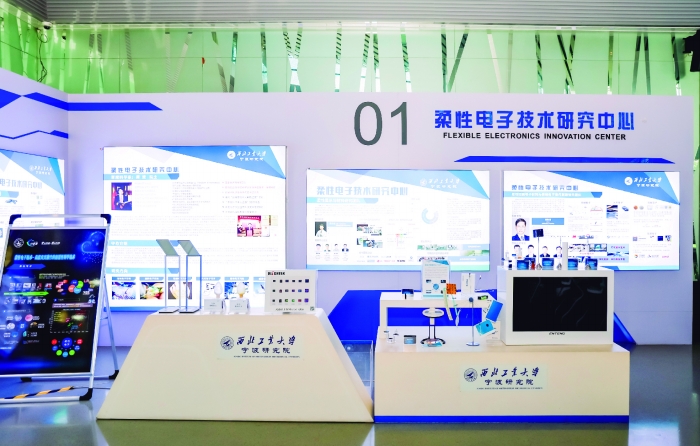
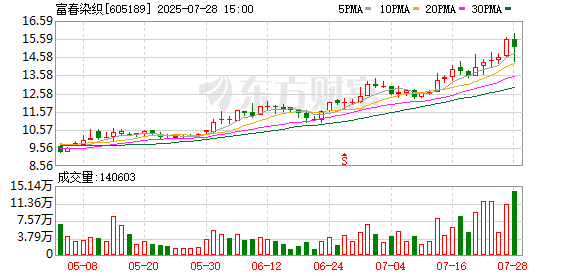
聚焦于PEEK下游应用 富春染织强势进军新材料领域
Zheng Quan Shi Bao Wang· 2025-07-28 08:17
Group 1 - The company is actively responding to the national strategy for new materials by establishing a wholly-owned subsidiary focused on the research and industrialization of PEEK (Polyether Ether Ketone) [2] - PEEK is a high-performance thermoplastic polymer with excellent properties such as high-temperature resistance, mechanical strength, chemical stability, and biocompatibility, making it suitable for demanding applications in industries like aerospace and medical [2] - The company plans to invest an initial capital of 50 million yuan in the new subsidiary, with potential additional funding based on industry development progress [2] Group 2 - The company, founded in 2002, is a leading producer of colored yarns in China, focusing on the research, production, and sales of colored yarns for various textile applications [3] - In the first half of the year, the company experienced a 10% increase in sales volume, with new product orders growing by over 60%, and expects a compound annual growth rate of nearly 20% in recent years [3] - The company is implementing a land exchange plan to allocate 100-150 acres for new project development while maintaining existing production capacity [3] Group 3 - The company is focusing on downstream applications of PEEK, particularly in sectors like semiconductors and medical devices, where domestic alternatives have not yet been realized [4] - The company aims to explore applications in new energy vehicles and low-altitude economy sectors, facing competition from established high-end PEEK manufacturers in Europe and the US [4] - The company is considering equity incentives for its core technical team to enhance collaboration and innovation in the new materials sector [4]

【行业深度】一文洞察2025年中国高性能材料行业发展前景及投资趋势研究报告
Sou Hu Cai Jing· 2025-07-16 02:26
Core Viewpoint - The high-performance materials industry in China is experiencing rapid growth driven by policy support, market demand, and technological innovation, becoming a crucial pillar for economic stability. The industry is expected to continue expanding, with significant market potential in emerging sectors such as new energy and smart manufacturing [2][7]. Industry Overview - The new materials industry in China has developed the most comprehensive and largest material production system globally, covering metals, polymers, ceramics, and other structural and functional materials [2][7]. - The total output value of China's new materials industry is projected to reach 8.48 trillion yuan in 2024, maintaining double-digit growth for 14 consecutive years, with a market size of 8.78 trillion yuan [2][7]. - By 2025, the market size is expected to grow to 9.66 trillion yuan, with an output value of approximately 9.34 trillion yuan [2][7]. Development Environment - High-performance materials are defined as new materials with superior properties or special functions, or traditional materials with significantly improved performance. They are essential for extreme environments and high-end applications, particularly in aerospace, energy, electronics, medical, and defense sectors [4][6]. - The industry is categorized into advanced basic materials, key strategic materials, and cutting-edge new materials [4][6]. Policy Support - The Chinese government has implemented various policies to promote the research and development of high-performance materials, recognizing them as a foundational and strategic industry [6]. - Recent policies include the encouragement of foreign investment in new materials and the prioritization of advanced materials in national development plans [6]. Current Status and Future Trends - The high-performance materials industry in China has evolved from a weak foundation to a robust sector, with expectations for future development focusing on intelligence and sustainability, integrating high technology with emerging industries [7][8]. - The industry is currently in a phase of high-quality development, with ongoing upgrades and innovations expected to enhance its global competitiveness [8].
深圳打造全球新材料产业创新高地
Xin Hua Wang· 2025-07-15 02:02
Core Viewpoint - The event highlighted Shenzhen's strategic focus on developing the high-performance materials industry, emphasizing its role in enhancing the manufacturing sector and seizing future industrial opportunities [1][3]. Group 1: Industry Development - Shenzhen's Industrial and Information Technology Bureau emphasizes the importance of high-performance materials as a key area for consolidating manufacturing advantages and capturing future industrial leadership [1]. - The event showcased Shenzhen's unique advantages in electronic information materials and high-end chemical products, providing forward-looking development suggestions for participating companies [1][2]. Group 2: Infrastructure and Investment - The Shenzhen Chemical Park is being developed with international standards focusing on integrated circuits and new energy materials, offering comprehensive support services for enterprises [2]. - Local leading enterprises shared successful experiences, highlighting the strong support from Shenzhen's innovation ecosystem for technological breakthroughs [2]. Group 3: Collaboration and Networking - The event facilitated discussions among representatives from various companies, exploring opportunities for technological cooperation and investment [2]. - The Secretary-General of the Shenzhen New Materials Industry Association called for global entrepreneurs, scientists, and investors to collaborate with Shenzhen, leveraging the benefits of the Guangdong-Hong Kong-Macao Greater Bay Area [2][3].
商道创投网·会员动态|万斯特·完成3100万元A轮融资
Sou Hu Cai Jing· 2025-07-08 13:16
Core Viewpoint - Wanst's recent A-round financing of 31 million yuan is a significant milestone in the construction materials sector, highlighting its technological innovations and market potential [2][6]. Company Overview - Wanst is headquartered in Nantong, Jiangsu, known as the "hometown of architecture," providing a solid industrial foundation for the company [3]. - The company has production bases across multiple locations in China and a world-class R&D center in Hong Kong [3]. - Wanst focuses on the construction materials sector, utilizing a "Hong Kong R&D + local transformation" model to enhance concrete's compressive strength and significantly reduce carbonation rates [3]. - Additionally, Wanst has developed an AI damage identification platform that accurately analyzes the causes of cracks, offering a one-stop solution for construction [3]. Financing Purpose - The recent financing will primarily be used to strengthen R&D investment, enhance product technology, expand production capacity to meet market demand for high-quality construction materials, and increase brand promotion efforts to explore new market areas [4]. Investment Rationale - The lead investor, Guan Feng Business Investment, highlighted Wanst's significant advantages in technological innovation and market positioning within the construction materials sector [5]. - Wanst's "Hong Kong R&D + local transformation" model has led to technological breakthroughs and product upgrades, providing strong market competitiveness [5]. - The solid background of Wanst's team and the immense market potential make it a worthy long-term investment [5]. Industry Insights - The A-round financing of Wanst represents an important breakthrough in the construction materials sector, supported by recent government policies promoting the development of new materials [6]. - The rapid development of the industry is driven by active responses from industry practitioners to these supportive policies [6]. - Wanst's innovative technology and strong team have attracted capital, setting a benchmark for the industry and reminding fund managers of their responsibility to create greater value for investors [6].
产业观察:【新材料产业周报】京博万吨级生物基橡胶进入产业化,詹鼎材料等多家新材料公司完成融资-20250708
GUOTAI HAITONG SECURITIES· 2025-07-08 11:26
Investment Rating - The report does not explicitly provide an investment rating for the new materials industry Core Insights - The new materials industry is witnessing significant advancements, particularly in biobased rubber and high-end polymer materials, indicating a shift towards sustainable and innovative solutions [1][2] - The financing activities in the semiconductor materials sector highlight the growing demand and investment interest in this area, with key players securing substantial funding to enhance their product offerings [2][3] Summary by Sections Industry Development Dynamics - Shandong Jingbo's biobased rubber project has achieved a major milestone with the establishment of a 10,000 tons/year production line, marking the entry of biobased rubber into large-scale industrialization [1] - Tuokene Technology's COC project has successfully transitioned to the second phase, with total production capacity reaching 10,000 tons/year, indicating robust growth and market demand [2] Investment and Financing Activities - Zhanding Materials, a key supplier in the semiconductor materials supply chain, has completed a financing round of 200 million yuan, attracting notable investment from several prominent firms [2] - Youyan Yijin is seeking strategic investors, with a valuation of 4.994 billion yuan for its 100% equity, indicating strong interest in the integrated circuit materials sector [3]
重庆白涛工业园区:乌江畔崛起千亿级新材料高地
Zhong Guo Hua Gong Bao· 2025-07-07 06:38
Core Insights - The Chongqing Baitao Industrial Park is transforming into a vibrant new materials industry hub, achieving an industrial output value of 119.9 billion yuan in 2024 [1] - The park's development is supported by its clear industrial positioning and continuous clustering of industries, with the materials industry projected to contribute 87.7 billion yuan in 2024 [2] Industry Development - The materials industry is the core pillar of the park, encompassing chemical materials such as polyurethane, polyamide, and metallurgical materials like iron and aluminum alloys [2] - The park is divided into three major areas: Baitao focuses on upgrading chemical new materials, Lingang strengthens consumer goods and logistics, and Qingxi promotes non-ferrous metal industry efficiency [2] Energy Sector - The energy industry is also a key sector, expected to achieve a total output value of 19.5 billion yuan in 2024, with companies converting shale gas into natural gas for power generation [3] Consumer Goods Sector - The consumer goods industry is showing strong growth, with an output value of 11.1 billion yuan in 2024, driven by deep processing clusters in grain and oil [3] Project Implementation - The park has established a service mechanism for key enterprises, visiting nearly 100 companies in the first half of 2025 to address over 30 issues [4] - The park's leadership has conducted 29 investment promotion trips, successfully signing 10 projects in the fine chemical sector [4] Safety and Environmental Protection - Safety and environmental protection are prioritized, with a three-tier safety responsibility system in place and regular safety meetings conducted [5] - The park aims for green and low-carbon transformation, with 12 national-level green factories and 5 municipal-level green factories [6] Future Goals - The park aims to achieve an industrial output value of 140 billion yuan by 2025, with the materials industry expected to exceed 90 billion yuan [6]
从“卖材料”到“卖方案”,连云港新材料产业的“升维”之路
Sou Hu Cai Jing· 2025-07-02 13:15
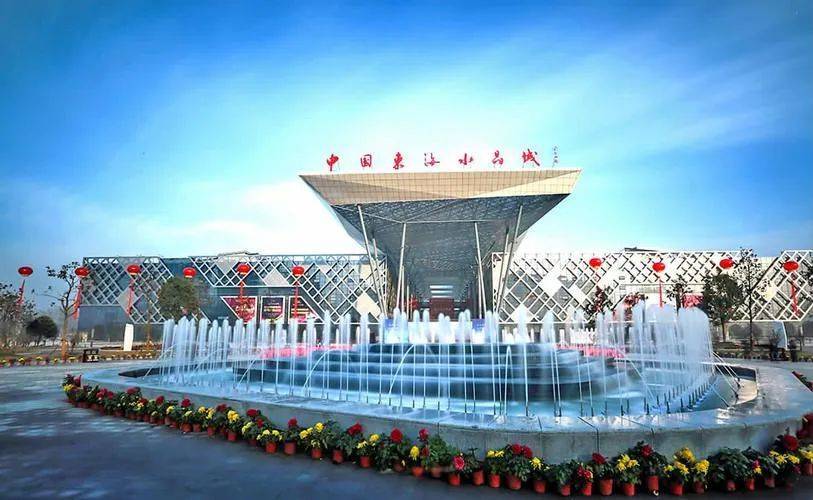
Core Viewpoint - The article highlights the transformation of Lianyungang, particularly Donghai County, from a traditional crystal industry hub to a modern silicon materials industry cluster, emphasizing the strategic importance of silicon in high-tech applications and the region's potential for future growth in new materials [5][17][39]. Group 1: Crystal Industry - Donghai County is recognized as the "World Crystal Capital," with a crystal production capacity projected to reach 450 million pieces and a transaction value exceeding 46 billion yuan in 2024 [6][8]. - The county holds over 300,000 tons of crystal reserves, accounting for more than 70% of the national total [7][10]. - The local crystal industry has evolved into a comprehensive supply chain covering raw material procurement, design, production, marketing, and logistics [8]. Group 2: Silicon Industry - Donghai County has developed a significant silicon industry, with 85% of the national quartz material production enterprises located there, and over 600 silicon industrial companies [12]. - The market shares for high-purity quartz sand, quartz glass products, and fused quartz in China are 90%, 80%, and 70% respectively [12]. - The region's silicon industry has been recognized as a national high-tech industry base and has received various governmental approvals to enhance its development [12][14]. Group 3: New Materials Development - Lianyungang's new materials industry is projected to achieve a production value of 89.1 billion yuan in 2024, establishing itself as a highland for new materials in China [30]. - The city is focusing on creating a comprehensive new materials ecosystem that connects upstream raw materials with downstream applications, enhancing supply chain resilience [34][36]. - The establishment of various public service platforms for carbon fiber and silicon materials indicates a commitment to technological innovation and industry support [32].


产业观察:【新材料产业周报】可乐丽宣布扩产光学用PVA膜,朴烯晶等多家新材料公司完成融资-20250630
GUOTAI HAITONG SECURITIES· 2025-06-30 11:16
Industry Developments - Kolon Industries announced an expansion of its optical PVA film production line in Saijo, Japan, to meet the growing demand for larger polarizer screens, with an expected annual output of 38 million square meters, increasing total capacity from 296 million to 334 million square meters by December 2027[1] - Xinjiang Shuguang Greenhua's 100,000 tons/year BDO and 120,000 tons PBAT project successfully passed acceptance inspection, enhancing the chemical new materials industry base in southern Xinjiang[1] Investment and Financing - Puxin Crystal completed nearly 500 million yuan in B+ round financing, aimed at developing ultra-pure polymer specialty materials, with funds allocated for production line completion and market expansion[1] - Shenzhen Sufang New Energy Technology Co., Ltd. announced the completion of a 10 million yuan angel round financing, focusing on the development of lithium-rich manganese-based cathode materials[2] Market Performance - The Wande New Materials Index (884057.WI) rose by 5.12% during the week of June 23-27, 2025, while the CSI 300 Index increased by 1.95%[3]