
无废城市

Search documents
持续激发绿色消费潜力多部门详解新举措
Xin Lang Cai Jing· 2026-01-06 19:29
Core Viewpoint - The Chinese government has launched a comprehensive initiative to promote green consumption, outlining 20 measures across seven areas to support the transition to a low-carbon economy and enhance consumer spending during the 14th Five-Year Plan period [1][2]. Group 1: Green Consumption Measures - The initiative includes increasing the supply of green agricultural products, with a target of over 88,000 certifications for "three products and one standard" by the end of 2025, and a standardized production area of 20.5 million acres for green food [1]. - The "old-for-new" policy aims to replace 18.3 million vehicles, with nearly 60% being new energy vehicles, and to replace 192 million home appliances, achieving over 90% energy efficiency [2]. - The initiative is expected to generate sales of 3.92 trillion yuan, benefiting approximately 494 million consumers [2]. Group 2: Green Supply Chain and Recycling - The promotion of a green supply chain is highlighted, with a focus on green procurement, products, and packaging, as well as the establishment of a green consumption points system [3]. - The use of environmentally friendly alternatives has increased by 26.31% in the first half of 2025, reflecting progress in reducing single-use plastic products and promoting green dining [3]. - The government plans to support the construction of sorting centers for waste disposal and encourage local governments to provide policy support for these initiatives [5]. Group 3: Waste Management and Standards - The "zero waste city" initiative aims to transform waste materials into valuable resources, with plans to implement this in around 200 cities during the 14th Five-Year Plan [4]. - The government will update national standards and support participation in international standardization activities related to green products and energy efficiency [5]. - Efforts will be made to combat food waste and promote "green dining" services through internet platforms [5].
鼓励推广绿色消费积分,推动绿色循环回收
Xin Lang Cai Jing· 2026-01-06 19:28
记者从发布会上获悉,截至2025年底,我国农产品"三品一标"认证登记总数超过8.8万个,绿色食品原 料标准化生产面积达2.05亿亩。 农业农村部市场与信息化司司长雷刘功说,近年来,绿色优质农产品消费需求快速增长,未来我国将继 续统筹发展科技农业、绿色农业、质量农业、品牌农业,增加绿色优质农产品供给。 落实消费品以旧换新 "把落实大规模消费品以旧换新政策作为推动绿色消费的重要机遇。"商务部副部长盛秋平说。 据介绍,2024至2025年,我国实现汽车以旧换新1830万辆,其中新能源汽车占比近60%。实现家电以旧 换新1.92亿台,其中一级能效(水效)占比达到90%以上。以旧换新政策带动消费品销售额3.92万亿 元,惠及消费者4.94亿人次。 商务部等9部门日前发布关于实施绿色消费推进行动的通知,围绕绿色消费全链条明确七方面20项举 措,对"十五五"时期绿色消费工作作出系统安排。 在国务院新闻办公室1月6日举行的新闻发布会上,相关部门就我国绿色消费成效、下一步重点工作回应 外界关切。 加大绿色农产品供应 丰富民生保障领域优质供给,20项举措第一项就是加大绿色农产品供应。 谈及培育绿色消费的新增长点,盛秋平说,打造绿 ...
惠及4.94亿人次!一组数据看中国绿色消费亮眼成绩单!
Yang Guang Wang· 2026-01-06 14:14
Group 1 - The core viewpoint of the article highlights the significant impact of the "old-for-new" policy in China, which is expected to drive substantial consumer spending and promote green consumption [3][10]. - In 2024 to 2025, China aims to achieve the replacement of 1.83 million vehicles under the "old-for-new" program, with nearly 60% being new energy vehicles [3]. - The "old-for-new" policy is projected to boost sales of consumer goods to 3.92 trillion yuan, benefiting approximately 494 million consumers [3]. Group 2 - The standardization rate of pallets in China has reached 37.8%, with around 50 million reusable pallets in circulation, potentially saving 250 million single-use pallets and protecting 50 million trees from deforestation [6]. - The number of green warehouses in China has reached 1,092, covering an area of approximately 65 million square meters [6]. - The Ministry of Ecology and Environment is advancing the construction of "waste-free cities" in about 200 cities, promoting the recycling and reuse of waste materials to support green consumption [11][12].

持续激发绿色消费潜力 多部门详解新举措
Xin Hua Wang· 2026-01-06 12:45
Core Viewpoint - The Ministry of Commerce and nine other departments have issued a notice to implement a green consumption promotion action plan, outlining 20 measures across seven areas to systematically arrange green consumption work during the 14th Five-Year Plan period [1] Group 1: Green Consumption Initiatives - The promotion of green consumption is a key strategy for achieving green low-carbon development, enhancing consumption, and accelerating the comprehensive green transformation of the economy and society [1] - By the end of 2025, the total number of certifications for agricultural products in China is expected to exceed 88,000, with standardized production areas for green food reaching 20.5 million acres [2] - The "old-for-new" policy for consumer goods is seen as a significant opportunity to promote green consumption, with plans to replace 18.3 million cars and 192 million home appliances by 2025, where nearly 60% of the cars will be new energy vehicles [3] Group 2: Economic Impact and Supply Chain - Green consumption is identified as a critical force for economic structural transformation and the cultivation of new growth points, with significant reductions in logistics costs and carbon emissions through the implementation of green supply chains [4] - The standardization rate of pallets has reached 37.8%, with an estimated saving of 250 million disposable pallets, equivalent to protecting 50 million trees and reducing carbon emissions by over 2 million tons [4] - The use of environmentally friendly alternatives has increased by 26.31% in the first half of 2025, reflecting positive outcomes in reducing single-use plastic products [4] Group 3: Waste Management and Circular Economy - The construction of "waste-free cities" is being promoted, aiming to transform waste materials from a societal burden into urban resources, with plans to support around 200 cities in this initiative during the 14th Five-Year Plan period [5] - Efforts will be made to enhance the construction of sorting centers for waste disposal, encouraging local governments to provide policy support for these developments [5] Group 4: Multi-Stakeholder Participation - Promoting green consumption requires the participation of multiple stakeholders, including government, enterprises, and consumers, to form a collaborative effort [6] - The government plans to update national standards and support domestic participation in international standardization activities in the green sector [6] - There will be a focus on enforcing regulations against violations in the areas of green products, energy efficiency labeling, and food waste [6]
以旧换新惠及4.94亿人次,绿色消费迎来重要机遇
2 1 Shi Ji Jing Ji Bao Dao· 2026-01-06 12:20
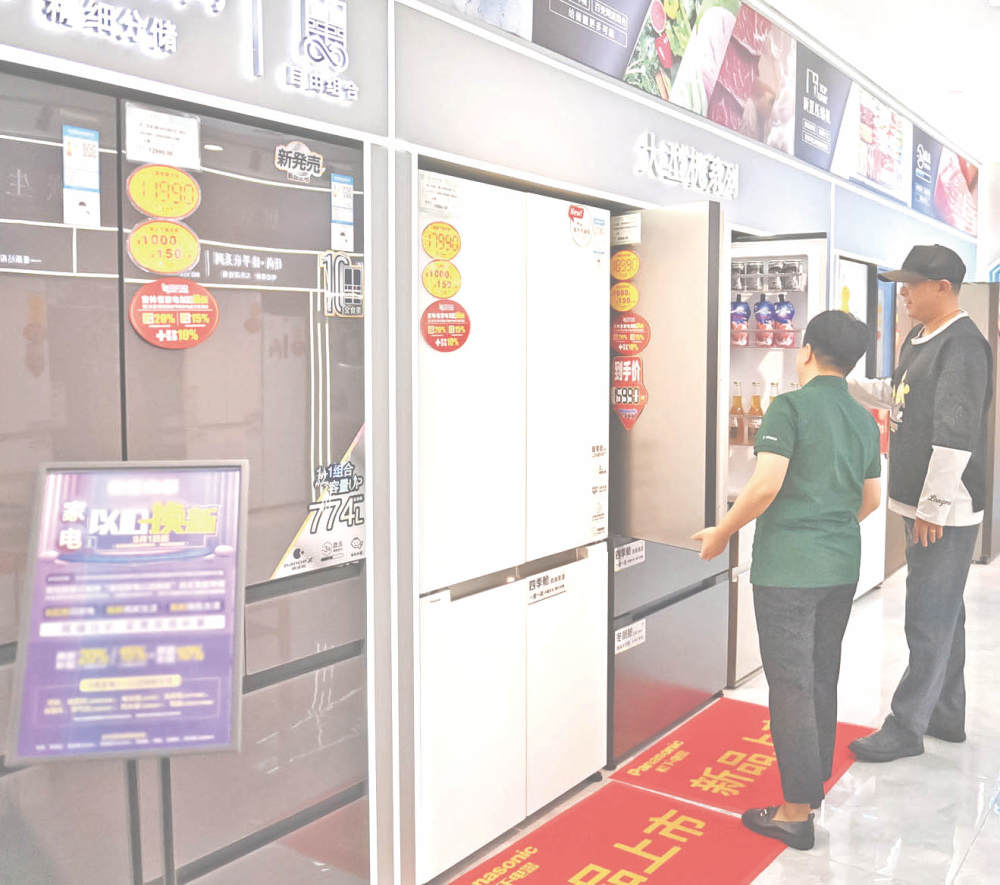
21世纪经济报道记者张旭 北京报道 近日,商务部等9部门联合出台《关于实施绿色消费推进行动的通知》(以下简称《通知》),对"十五 五"时期绿色消费工作作出安排。 1月6日,国务院新闻办举行新闻发布会介绍推进绿色消费有关情况新闻发布会有关情况。商务部副部长盛秋平在发布会表示,2024至2025年, 我国实现汽车以旧换新1830万辆,其中新能源汽车占比近60%。实现家电以旧换新1.92亿台,其中1级能效(水效)占比达到了90%以上,以旧 换新政策带动消费品销售额3.92万亿元,惠及消费者4.94亿人次。 盛秋平介绍,商务部把落实大规模消费品以旧换新政策作为推动绿色消费的重要机遇,在政策设计上对高能效的绿色家电、绿色家居、绿色建 材和新能源汽车等予以补贴,进一步激发绿色消费需求,畅通绿色消费循环。 2024年至2025年,全国报废汽车回收1767.3万辆,年均增速45.8%;二手汽车交易3968.6万辆;规范拆解废旧家电及手机约5300万台,年均增 速约12%。 (资料图) 盛秋平表示,新能源汽车、绿色智能家电等绿色商品消费增长带动绿色消费市场规模稳步扩大,绿色产品供给更加丰富,绿色消费的模式不断 创新,绿色消费的 ...
我国采取多项举措推进绿色消费
Yang Shi Wang· 2026-01-06 12:11
市场监管总局有关负责人介绍,将持续完善相关领域国家标准体系,加强能效水效标识管理,鼓励互联 网平台企业上线"绿色餐饮"服务标识。 农业农村部有关负责人介绍,以绿色、有机、名特优新和地理标志农产品为重点,持续增加绿色优质农 产品供给;以春节选购年货为契机,发布一批"土特产"品牌年货目录,方便消费者选购绿色、特色年货 产品。 央视网消息(新闻联播):国务院新闻办公室今天(1月6日)举行新闻发布会,介绍我国推进绿色消费 有关情况。 商务部有关负责人表示,目前我国已围绕绿色消费全链条明确了七方面20项举措。涵盖家电家装、汽 车、餐饮住宿等多个领域,涉及产品供给、消费模式、循环回收等环节。下一步,将加大绿色产品和服 务消费供给,培育绿色消费的新增长点,进一步推进消费品以旧换新政策。 生态环境部有关负责人表示,将组织试点示范,促进废弃消费品规范回收利用。"十五五"时期,将推动 约200个城市开展"无废城市"建设。 ...
推动绿色消费成为新增长点,九部门联合打造全链条激励体系
Xin Jing Bao· 2026-01-06 12:10
Core Viewpoint - The recent notification from the Ministry of Commerce and nine other departments emphasizes the importance of green consumption as a key driver for low-carbon practices, new consumption momentum, and industrial upgrades [1] Group 1: Green Consumption Initiatives - The Ministry of Commerce is leveraging large-scale consumer goods replacement programs to promote green consumption, with a target of 18.3 million vehicles replaced from 2024 to 2025, nearly 60% of which will be new energy vehicles [2] - The policy is expected to generate sales of 3.92 trillion yuan in consumer goods, benefiting nearly 500 million consumers and effectively promoting the growth of green and smart product consumption [2] - The initiative includes subsidies for high-efficiency green appliances, green home products, and new energy vehicles to stimulate demand and facilitate a circular economy [2] Group 2: Specific Measures for Green Consumption - The notification outlines 20 specific measures across seven major areas to address challenges in green consumption, including inconsistent product standards and inadequate incentive mechanisms [3] - Measures include expanding the supply of green agricultural products and appliances, enhancing service consumption's green content, and establishing a universal green consumption points system [3] - The initiative aims to strengthen recycling systems and reduce single-use plastic products, promoting a more sustainable consumption environment [3] Group 3: Resource Recycling and Utilization - The Ministry of Commerce will support the establishment of high-value recycling projects for renewable resources, focusing on optimizing sorting center construction to improve efficiency and reduce waste [4][5] - Local governments are encouraged to provide policy support for the construction and renovation of sorting centers, enhancing the recycling network's quality [5] Group 4: Standards and Regulations - The State Administration for Market Regulation has published 40 national standards for green product evaluation and 66 standards for energy and water efficiency, supporting the implementation of the consumer goods replacement policy [6] - The administration has also intensified enforcement actions against violations related to energy and water efficiency labeling, ensuring market order and consumer rights [6][7] Group 5: Waste Management and Urban Development - The Ministry of Ecology and Environment is promoting "waste-free city" initiatives, aiming to transform waste into resources and enhance recycling capabilities [8] - As of now, 113 cities have initiated "waste-free" construction, with plans to expand this to around 200 cities during the 14th Five-Year Plan period [9] Group 6: Seasonal Consumption Promotion - The Ministry of Agriculture and Rural Affairs is launching initiatives for the New Year and Spring Festival, including the release of a directory of local specialty products to guide consumers towards green and quality products [10][11] - Activities will include themed consumption events and promoting healthy eating habits, aiming to meet the diverse and high-quality consumption needs of urban and rural residents during the festive season [11]
氪星晚报|国产AI芯片公司太初元碁获评国家高新技术企业;脑机接口“独角兽”强脑科技完成20亿元融资;2026年全国广播电视工作会议:推动微短剧精品化发展
3 6 Ke· 2026-01-06 12:07
Group 1: Company News - WeChat's official statement denies the existence of any new account suspension rules, labeling rumors about "Tencent WeChat new regulations" as false [1] - Taichu Yuanqi, a domestic AI chip company, has been recognized as a national high-tech enterprise by Jiangsu Province [2] - Alibaba's AI model, DAMO PANDA, has been reported to effectively assist in early screening of pancreatic cancer, having analyzed over 180,000 CT scans [3] - Weimob Group has announced a strategic cooperation with Alibaba's Taobao Flash Purchase to enhance local retail digitalization [4] - YHLO has signed a strategic cooperation framework agreement with Brain Machine Starlink to develop brain-computer interface products [5] - T3 Mobility has successfully migrated its entire business to Tencent Cloud, marking the largest and most complex cloud migration in the industry [6] Group 2: Investment and Financing - Qiang Brain Technology, a brain-computer interface "unicorn," has completed approximately 2 billion RMB in financing, making it the second-largest financing in the field after Neuralink [7] Group 3: Product Launches - Qianli Zhijia and Geely jointly launched a new advanced driving assistance brand, G-ASD, at CES 2026 [8] - XGIMI unveiled its AI glasses brand, MemoMind, at CES, with over 1.5 billion RMB invested in R&D since its listing [9] Group 4: Industry Insights - AMD's CEO, Lisa Su, predicts that the AI industry will grow to over 5 billion daily users within five years [10] - The National Data Bureau plans to introduce over 30 national standards in the data field by 2026, focusing on emerging areas [10] - The State Administration of Foreign Exchange aims to optimize trade foreign exchange management and expand high-level cross-border trade pilot programs [10]

“十五五”时期 我国将推动200个左右城市开展“无废城市”建设
Xin Lang Cai Jing· 2026-01-06 11:12
生态环境部还着力推动完善资源回收体系,促进废弃消费品规范回收利用。王志斌介绍,全国地级及以 上城市居民小区基本设立可回收物投放收集的设施,2024年全国新增智能化社区回收设施1.1万余个。 生态环境部会同财政部大力支持规范拆解处理废旧家电,2025年中央财政累计投入50亿元,处理了约1 亿台废旧电器,累计产出超300万吨再生资源,有效促进了资源循环利用和行业绿色低碳发展。 此外,科技创新也极大便利了废弃物资源化利用。他举例说,利用微生物技术,电池废渣可以"变身"为 可以吸附重金属的环保材料,类似这样的"以废治废、点石成金"的研究成果,为废弃物资源化提供了新 的可能。 来源:中国青年报客户端 中国青年报客户端北京1月6日电(中青报·中青网记者 赵丽梅)"废旧物资是消费链的末端,只有打通废 弃物处置堵点,才能畅通绿色消费循环。"今天,在国新办举行的新闻发布会上,生态环境部科技与财 务司司长王志斌介绍,今后,生态环境部将进一步高标准推进"无废城市"建设,畅通废弃物回收再利用 循环,助力绿色消费发展。"十五五"时期,生态环境部将推动200个左右城市开展"无废城市"建设,让 群众能够切身感受建设成果,厚植中国式现代化的 ...
四部门详解,推进绿色消费举措
Zhong Guo Zheng Quan Bao· 2026-01-06 11:03
1月6日,国新办举行新闻发布会,商务部、生态环境部、农业农村部、市场监管总局相关负责人在会上 介绍推进绿色消费有关情况。 要点速览 以旧换新政策带动消费品销售额3.92万亿元,惠及消费者4.94亿人次 推动消费商业设施、节能降碳环保等设备更新纳入大规模设备更新政策支持范围 鼓励地方政府对分拣中心建设改造予以政策保障 完善能效水效标识制度 "十五五"时期将推动200个左右城市开展"无废城市"建设 增加绿色优质农产品供给,实施农业品牌提升行动 商务部:进一步发挥消费品以旧换新政策 对丰富绿色产品供给的拉动作用 商务部副部长盛秋平介绍,2024年-2025年实现汽车以旧换新1830万辆,其中新能源汽车占比近60%。 实现家电以旧换新1.92亿台,其中一级能效(水效)占比达到90%以上,以旧换新政策带动消费品销售额 3.92万亿元,惠及消费者4.94亿人次。 谈及落实绿色消费推进行动,盛秋平表示,商务部将会同国家发展改革委等部门,进一步发挥消费品以 旧换新政策对丰富绿色产品供给的拉动作用,对个人消费者购买1级能效或水效标准的6类家电产品,以 及单价不超过6000元的4类数码和智能产品,符合条件的新能源乘用车、燃油乘用 ...