潮玩经济

Search documents
泡泡玛特上半年营收138.8亿元,净利润47.1亿元
Cai Jing Wang· 2025-08-19 10:06
Core Insights - Pop Mart International Group reported a significant increase in revenue and profit for the first half of 2025, with revenue reaching 13.88 billion RMB, a year-on-year growth of 204.4%, and adjusted net profit of 4.71 billion RMB, up 362.8% [1] Revenue Breakdown - Revenue from China was 8.28 billion RMB, growing by 135.2% year-on-year - Revenue from the Asia-Pacific region was 2.85 billion RMB, with a remarkable growth of 257.8% - Revenue from the Americas reached 2.26 billion RMB, showing an extraordinary increase of 1142.3% - Revenue from Europe and other regions was 480 million RMB, growing by 729.2% [1] IP Revenue Contribution - Revenue from THE MONSTERS, featuring the LABUBU IP, was 4.81 billion RMB, accounting for 34.7% of total revenue - Other IPs such as MOLLY, SKULLPANDA, CRYBABY, and DIMOO each surpassed 1 billion RMB in revenue - A total of 13 artist IPs generated over 100 million RMB, indicating a diverse and healthy IP matrix [1] Product Category Performance - Plush toys generated revenue of 6.14 billion RMB, a staggering growth of 1276.2%, making up 44.2% of total revenue - Figurines achieved revenue of 5.18 billion RMB, with a year-on-year increase of 94.8%, accounting for 37.3% - MEGA products generated 1.01 billion RMB, up 71.8%, representing 7.3% of total revenue - Derivative products and others brought in 1.55 billion RMB, growing by 78.9%, making up 11.2% of total revenue [1] Store Expansion and Membership Growth - As of June 30, 2025, Pop Mart operated 571 stores across 18 countries, with 40 new offline stores and 105 new robot stores added - The number of registered members in mainland China grew from 46.08 million at the end of 2024 to 59.12 million, with an increase of 13.04 million members - Membership sales contributed to 91.2% of total sales, with a member repurchase rate of 50.8% [2]

经济政策一线微观察|潮玩经济热潮涌动 小玩具撬动大市场
Sou Hu Cai Jing· 2025-08-10 15:57
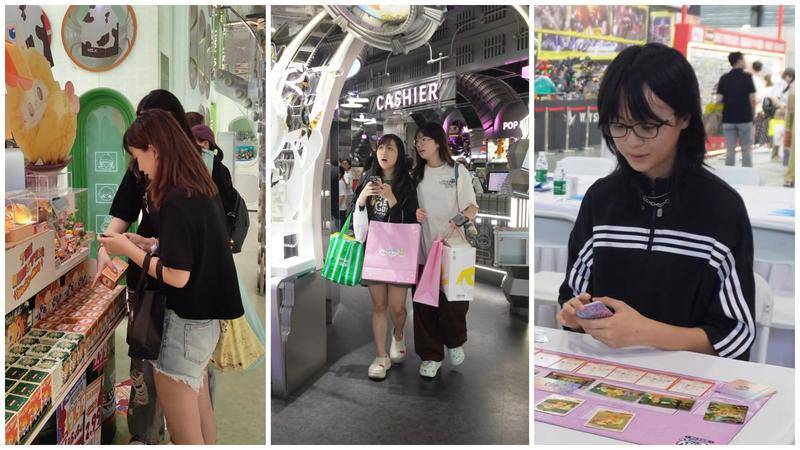
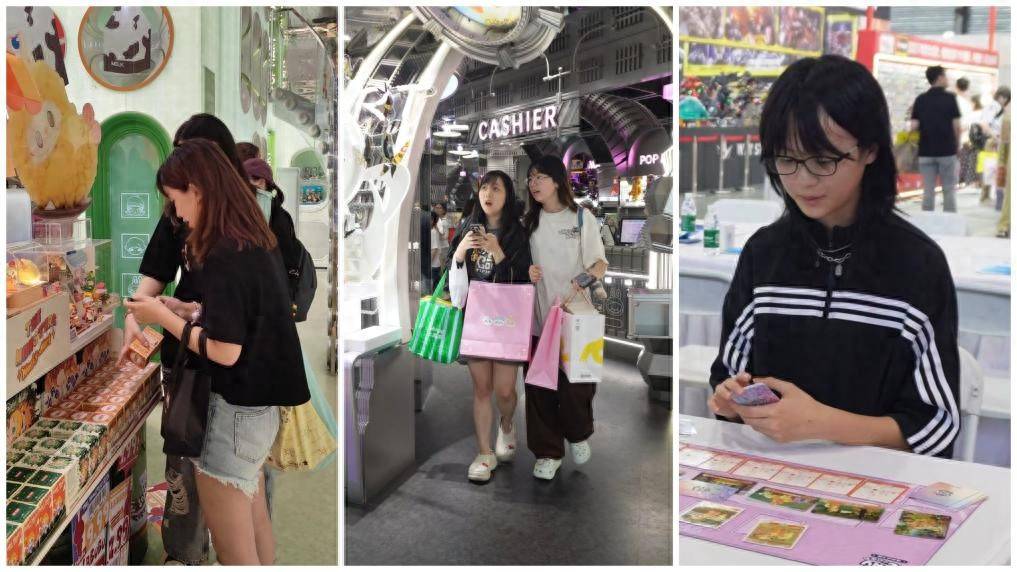
Core Insights - The Chinese潮玩 industry has experienced rapid growth, becoming a new growth point in cultural consumption, driven by the popularity of blind box toys and plush figures that provide emotional value to young consumers [1][3] - A潮玩 store on Nanjing Road in Shanghai has seen significant foot traffic, with a reported revenue of 13.04 billion yuan in 2024, marking a year-on-year increase of 106.9%, indicating a strong consumer interest in original潮流 IPs [3] - The Chinese潮玩 industry is gaining global attention, with a focus on潮流 culture and IP creativity, successfully attracting a fan base both domestically and internationally [3][7] Industry Developments - The Chinese government has initiated measures to further cultivate new growth points in cultural and tourism consumption, emphasizing the development of fashionable domestic潮流 products and brands [7] - Domestic潮玩 companies are continuously innovating their product lines and consumption scenarios to strengthen connections with both domestic and international consumers [7] - The vibrant潮玩 consumption market also faces risks of overheating, prompting industry experts to call for stricter enforcement of regulations and collaborative efforts from families, schools, and platforms to guide rational consumption among minors [11]

经济政策一线微观察丨潮玩经济热潮涌动 小玩具撬动大市场
Sou Hu Cai Jing· 2025-08-10 13:14
Core Insights - The Chinese潮玩 (trendy toy) industry has experienced rapid growth, becoming a new growth point in cultural consumption, driven by the emotional value these toys provide to young consumers [1][3] - A潮玩 store on Nanjing Road in Shanghai reported a revenue of 13.04 billion yuan in 2024, marking a year-on-year increase of 106.9%, indicating a strong consumer interest in original潮流 IPs [3] - The Chinese潮玩 industry is gaining global popularity, leveraging trendy culture and IP creativity to attract consumers both domestically and internationally [3][5] Industry Developments - The Chinese government has initiated measures to cultivate new growth points in cultural and tourism consumption, emphasizing the development of fashionable domestic潮牌 (trendy brands) and潮品 (trendy products) [5] - Domestic潮玩 companies are continuously innovating their product lines and consumption scenarios to strengthen connections with both domestic and international consumers [5] Market Dynamics - The潮玩 consumption market is vibrant, but there are concerns about potential overheating, prompting industry insiders to call for stricter enforcement of regulations and collaborative efforts from families, schools, and platforms to guide rational consumption among minors [11]
潮玩经济热潮涌动 小玩具撬动大市场
Xin Hua She· 2025-08-10 07:58
Group 1 - The Chinese潮玩 industry is experiencing rapid growth and has become a new growth point for cultural consumption, driven by the popularity of blind box toys and other collectibles [1][5] - A潮玩 store on Nanjing Road in Shanghai reported a revenue of 13.04 billion yuan in 2024, reflecting a year-on-year growth of 106.9%, indicating strong consumer interest among young people [1] - The industry is leveraging潮流 culture and IP creativity to attract a global audience, enhancing its market presence [1] Group 2 - The Chinese government has initiated measures to further cultivate new growth points in cultural and tourism consumption, emphasizing the development of fashionable domestic潮牌 and潮品 [5] -潮玩 companies are continuously innovating their product lines and consumption scenarios to strengthen connections with both domestic and international consumers [5] - The vibrant潮玩 consumption market also faces risks of overheating, necessitating collaborative efforts from families, schools, and platforms to guide rational consumption among minors [9]

全国最大玩具出口基地,1.2亿元支持潮玩动漫产业
第一财经· 2025-08-10 06:54
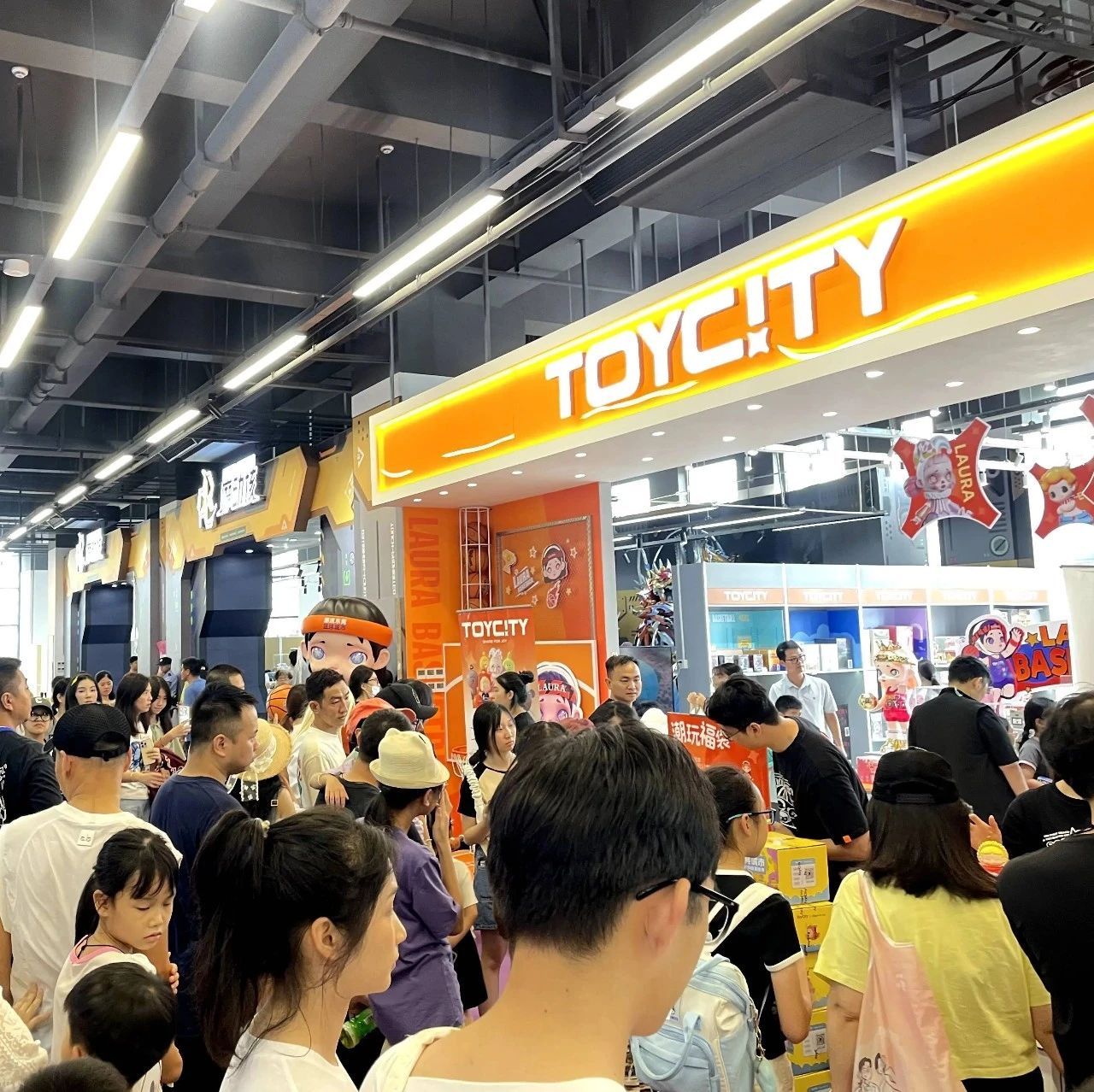
Core Viewpoint - Dongguan's toy industry is transitioning from OEM to ODM and now to OBM, seizing new opportunities in the潮玩 (trendy toys) sector, supported by government initiatives and industry events like the China International Animation and Comic Copyright Protection and Trade Expo [3][4][6]. Group 1: Industry Development - Dongguan was awarded the title of "China's Trendy Toy Capital" in 2023, with 112 large-scale enterprises in the trendy toy sector generating nearly 23.8 billion yuan in revenue, a year-on-year increase of approximately 19% [4]. - The city is home to the largest toy export base in China, producing 25% of global animation derivatives and 85% of the country's trendy toys, with the core area being Shipa Town [4][5]. - The local government plans to allocate 120 million yuan to support the development of the trendy toy and animation industry across four key areas: industrial ecology, market expansion, content creation, and cluster development [3][7]. Group 2: Market Trends and Challenges - The trend of self-owned IP commercialization in the trendy toy sector faces challenges, including the need for a strong fan base and effective market promotion capabilities [8]. - The competition for original IP is intensifying, requiring companies to have robust marketing, channel resources, and capital support for successful IP incubation [8][12]. - Dongguan's toy industry is evolving from OEM to ODM and now to OBM, indicating a shift towards self-owned brands and greater control over product design and pricing [7][12]. Group 3: Government Support and Initiatives - The Dongguan government has integrated the trendy toy economy into its modern industrial system, emphasizing the importance of original design and brand building [6][7]. - A special fund for the trendy toy and animation industry is planned to connect investments across the supply chain and guide financial resources to relevant enterprises [6][7]. - The local government is also providing subsidies for participation in key domestic and international exhibitions and supporting cross-border e-commerce initiatives [7][12]. Group 4: Talent and Infrastructure - Dongguan is enhancing its talent pool by collaborating with educational institutions to train skilled workers in toy design and production [13]. - The city is implementing measures to streamline export processes, reducing customs clearance times and improving efficiency for toy manufacturers [13]. - Companies like Weishi Culture Technology are leveraging these advantages to expand their international sales networks and enhance their global brand presence [13].
全国最大玩具出口基地,1.2亿元支持相关产业集群升级
Di Yi Cai Jing· 2025-08-10 06:08
Core Insights - Dongguan is establishing a special fund for the潮玩 (trendy toys) and animation industry, with a planned investment of 120 million yuan to support development across various sectors [1][8] - The潮玩 industry in Dongguan has seen significant growth, with 112 large-scale enterprises generating nearly 23.8 billion yuan in revenue, marking a year-on-year increase of approximately 19% [2][3] - The city has been recognized as "China's潮玩 Capital," and the潮玩 production cluster in Shipaizhen is a key area, contributing about 10% of the national潮玩 output [3][7] Industry Development - The 15th China International Animation Copyright Protection and Trade Expo showcased over 2,000 animation IPs and 600 key enterprises, highlighting the industry's international engagement [1][2] - Dongguan's潮玩 industry has transitioned from OEM to ODM and is now moving towards OBM, with local companies beginning to develop their own IP products [3][9] - The local government is focusing on enhancing original design capabilities and brand building within the潮玩 and animation sectors [8][9] Economic Impact - The潮玩 industry in Dongguan is supported by a robust supply chain and has a significant export presence, with toy exports reaching 9.97 billion yuan in the first half of the year, a 6.3% increase [2][16] - The local government is implementing measures to facilitate market expansion, including subsidies for participation in domestic and international exhibitions [8][15] - Dongguan's潮玩 production cluster has surpassed a total output value of 10 billion yuan for the first time, indicating a strong economic footprint [7][8] Talent and Innovation - The region is investing in talent development, collaborating with educational institutions to create specialized training programs for toy design [15] - Companies are leveraging innovative practices, such as integrating IP development with product sales, to enhance market competitiveness [9][15] - The local潮玩 industry is characterized by a high degree of clusterization, with a focus on technological innovation and rapid response to global market demands [14][15]
港股异动 | 泡泡玛特(09992)午后涨超3% Labubu席卷中东市场 机构看好公司海外销售快速扩张
智通财经网· 2025-08-04 05:46
Group 1 - The core viewpoint of the article highlights the rapid growth of the Labubu collectible figures from China in the Saudi and Middle Eastern markets, transforming from niche collectibles to commercially valuable cultural symbols [1] - Bubble Mart's stock rose over 3%, reaching 251 HKD with a trading volume of 1.345 billion HKD, indicating strong market interest [1] - The pricing of Labubu figures on Saudi e-commerce platforms ranges from 99 to 399 Saudi Riyals (approximately 26 to 107 USD), showcasing their accessibility and appeal [1] Group 2 - According to DBS Bank's report, Bubble Mart is expected to see revenue and profit growth of over 140% and 180% respectively this year, driven by a diversified product portfolio and innovative business models [1] - Notable intellectual properties like Pokemon and Hello Kitty have achieved cumulative global sales between 50 billion to 150 billion USD, indicating a strong market for collectible figures [1] - The bank anticipates that by 2025, overseas sales will account for over 50% of Bubble Mart's revenue, reflecting its rapid international expansion and multi-channel development [1] - The expected compound annual growth rates for revenue and profit from 2024 to 2026 are projected at 81% and 99% respectively, fueled by the growing influence of pop culture [1]
Labubu爆火背后,东莞玩具厂的“潮流革命”
3 6 Ke· 2025-07-29 11:16
Group 1: Industry Transformation - Dongguan's toy industry has transitioned from a focus on OEM (Original Equipment Manufacturing) to developing original IP (Intellectual Property) products, with original IP production surpassing OEM for the first time in 2023, accounting for 53% of the industry [1][12] - The toy industry in Dongguan generated an industrial output value of 26.217 billion yuan in 2023, with the潮玩 (trendy toys) segment nearing 20 billion yuan, reflecting a year-on-year growth of 20% [12] - The潮玩 export value increased by 78% year-on-year, surpassing traditional categories like electronics and furniture, making it the fastest-growing export category [13] Group 2: Market Expansion and Brand Development - TOY CITY's original IP "耙老师" sold out 500 units on its launch day in Singapore, highlighting the successful market entry strategy of Dongguan companies [1] - Dongguan companies have established distribution networks in over 30 countries, with overseas revenue growing at an annual rate exceeding 50% [1] - The潮玩 economy was officially recognized in Dongguan's government work report in 2022, and in 2023, new measures were introduced to accelerate the development of the潮玩 industry [11][12] Group 3: Technological Advancements and Production Capabilities - Dongguan's toy factories have adopted advanced production technologies, such as AI systems for quality control and robotic arms for precision tasks, significantly improving production efficiency and quality [10][11] - The production process in Dongguan is highly integrated, with over 4,000 supporting enterprises enabling rapid assembly and delivery of潮玩 products [7][8] - The ability to meet high-quality standards, such as producing 5,000 units of the Winter Olympics mascot "冰墩墩" daily, showcases Dongguan's manufacturing capabilities [8] Group 4: Cultural Integration and Global Strategy - Dongguan companies are actively localizing their products for international markets, incorporating local cultural elements into潮玩 designs, which enhances their appeal [14][15] - The strategy of building a community around IP, such as live-streaming production processes on platforms like TikTok, has proven effective in engaging global audiences [15] - Dongguan's潮玩 industry serves as a model for other traditional industries in the region, emphasizing the importance of high value-added products and brand development [16]
“海关大战假布布”屡登热搜的背后
Nan Jing Ri Bao· 2025-07-21 23:53
Core Viewpoint - The article highlights the ongoing battle against counterfeit "LABUBU" products in China, emphasizing the challenges of intellectual property protection in the booming collectible toy market [1][3][5]. Group 1: Customs Actions - Nanjing Lukou Airport Customs recently seized 19,400 suspected counterfeit "LABUBU" toys, which were found to infringe on the copyright of Beijing Pop Mart Cultural and Creative Co., Ltd [1][3]. - Customs across China have been actively targeting counterfeit "LABUBU" products, with significant seizures reported, including 952 toys at Beijing Daxing Airport and 20,599 items at Gongbei Customs [3][4]. - The term "LAFUFU" has emerged to refer to fake "LABUBU" products, highlighting the prevalence of counterfeit goods in the market [4]. Group 2: Market Trends and Challenges - The collectible toy market in China has seen a surge, with exports of dolls and animal toys exceeding 10 billion yuan in the first four months of the year, marking a 9.6% increase [5]. - In the first half of the year, customs authorities seized 11,000 batches and 38.675 million items suspected of infringement, including counterfeit "LABUBU" products [5]. - The rise of counterfeit goods is linked to the increasing demand for limited-edition toys and collectibles among younger consumers, leading to a new wave of smuggling and illegal sales [5][6]. Group 3: Brand and Manufacturer Response - Industry experts suggest that legitimate manufacturers should take proactive measures to enhance supply chain management and optimize production to reduce the market for counterfeit products [7]. - Despite efforts to increase anti-counterfeiting measures, such as adding security features, the demand for "LABUBU" products continues to outpace supply, leading to persistent challenges for the brand [7]. - The company is exploring advanced solutions, such as chip implantation, to improve product verification and combat counterfeiting effectively [7].

广东外贸连续8个季度正增长,“新三样”产品出口增28.8%
第一财经· 2025-07-18 15:32
Core Viewpoint - Guangdong's foreign trade has achieved record growth in the first half of 2025, with a notable increase in the export of "new three samples" products by 28.8% [1][2]. Group 1: Trade Performance - In the first half of 2025, Guangdong's total goods trade import and export reached 4.55 trillion RMB, a year-on-year increase of 4%, surpassing the national growth rate by 1.1% [1]. - The export value was 2.89 trillion RMB, growing by 1.1%, while imports reached 1.66 trillion RMB, increasing by 9.5% [1]. - Guangdong's foreign trade accounted for 20.9% of the national total, contributing 28% to the national foreign trade growth [1]. Group 2: Role of Enterprises - There are 130,000 foreign trade enterprises in Guangdong, an increase of 7.6%, with private enterprises making up 110,000 of these, growing by 8.6% [2]. - The total import and export value of private enterprises reached 2.92 trillion RMB, accounting for 64.2% of the province's total foreign trade [2]. Group 3: Export Product Composition - The export of electromechanical products was 1.96 trillion RMB, a growth of 7.2%, representing 67.8% of the total export value [2]. - High-tech product exports reached 505.43 billion RMB, increasing by 13.3%, with significant growth in machine tools and drones at 18.7% and 29.2%, respectively [2]. Group 4: Import Trends - Guangdong's imports of electromechanical products surged by 19.3% to 1.16 trillion RMB, making up 70.1% of total imports [5][6]. - Key components such as central processing units, aircraft parts, and integrated circuits saw increases of 322.5%, 27.5%, and 14.3%, respectively [5]. Group 5: Industrial Upgrades - The province is focusing on industrial transformation, with significant demand for high-end manufacturing equipment reflected in the import statistics [5][6]. - Imports of aerospace equipment and semiconductor manufacturing equipment grew by 63.8% and 47%, respectively, indicating a shift towards advanced manufacturing capabilities [6].