石油制裁

Search documents
美国对俄挥出制裁“重拳”,油价应声大涨超5%!
Jin Shi Shu Ju· 2025-10-23 13:27
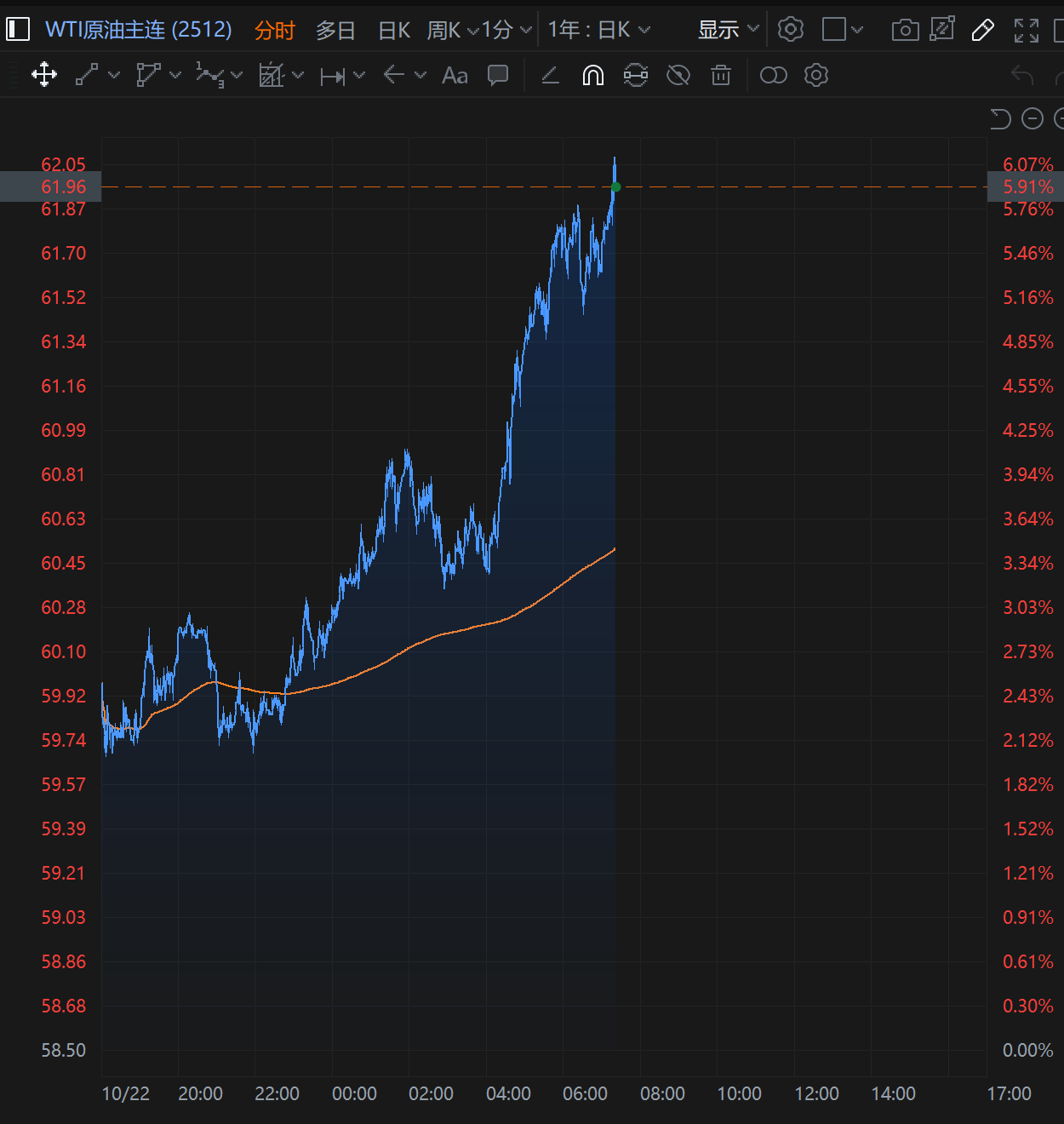
Core Viewpoint - The recent U.S. sanctions against major Russian oil companies have led to a significant increase in international oil prices, raising concerns about the supply from one of the world's top oil producers [1][4]. Group 1: Impact of Sanctions - The U.S. has blacklisted major Russian oil companies, including Rosneft and Lukoil, causing market fears that India, a key buyer, may reduce its purchases from Moscow [4][5]. - The sanctions represent a significant escalation in U.S. pressure on Moscow, potentially leading to major disruptions in Russian oil production and exports [5][6]. - The European Union has also imposed additional sanctions targeting Russian energy infrastructure, including a complete trading ban on Russian oil companies [5][6]. Group 2: Market Dynamics - Despite signs of oversupply in the oil market, the sanctions could have a substantial impact, particularly as India imports over one-third of its oil from Russia [6][7]. - The International Energy Agency (IEA) predicts that global oil supply will exceed demand by nearly 4 million barrels per day next year, indicating a potential buffer against the sanctions [6]. - Recent data shows that Russian oil exports have reached a 29-month high, suggesting that Russia has experience in circumventing sanctions [6][8]. Group 3: Price Movements - Brent crude prices have rebounded from a five-month low, with both WTI and Brent crude experiencing over a 4% increase, marking the largest rise since the Israel-Iran conflict began [1][9]. - The spread between near-term and longer-term Brent futures has narrowed due to concerns about potential oversupply, but recent price movements indicate a tightening market [8][9]. - Analysts expect Brent crude to trade within the range of $60 to $70 per barrel, reflecting a shift in market sentiment from oversupply concerns to potential supply disruptions [9].

国际油价大幅拉升,美油涨超6%
21世纪经济报道· 2025-10-23 12:31
| 美原油主连 | | | | | | --- | --- | --- | --- | --- | | CLOW | | | | | | 昌 62.04 | 62.08 振幅 | 4.17% | 글 29.10万 | | | 59.64 ਵਿੰ | 昨结 | 58.50 | 持仓 39.82万 | | | 3.54 6.05% 开 59.94 | 今结 | | 日增 -26807 | | | 分时 日K 周K 月K | | 五日 | 更多。 | | | 均价:60.88 最新:62.04 3.54 6.05% | | | | | | 62.08 | | 6.12% 卖1 62.05 | 免费领实时行情> | 12 | | | | 买1 62.03 | 19:18 62.07 19:18 62.07 | 19 1 | | | | | 19:18 62.06 | | | | | | 19:18 62.07 | | | 58.50- | | 0.00% 19:18 62.06 | | 2 | | | | | 19:18 62.06 | 1 | | | | | 19:18 62.05 | 4 | | | | | 19 ...
国际油价盘中大涨6%,美欧对俄新制裁震动市场
Feng Huang Wang· 2025-10-23 11:36
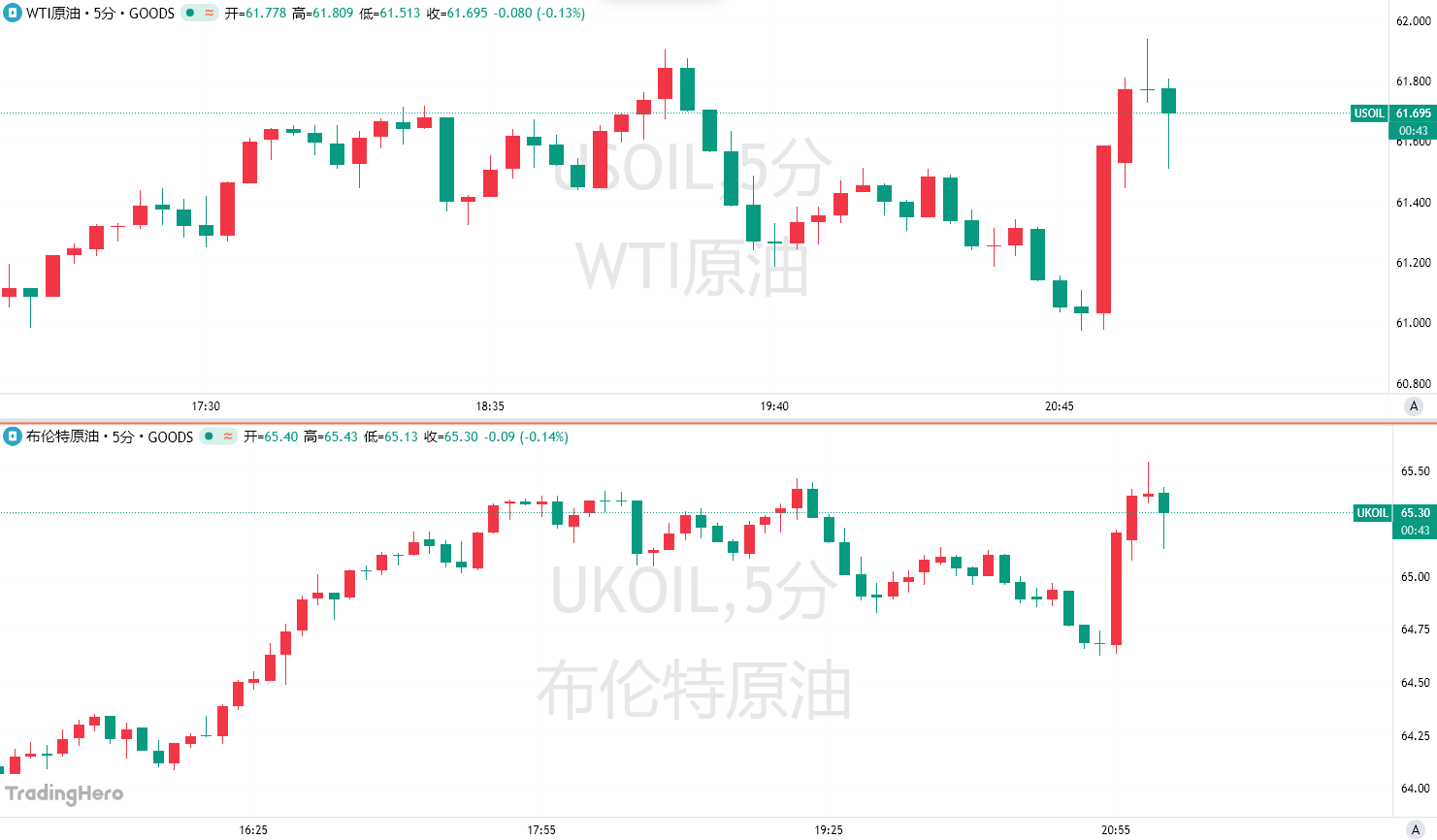
Core Insights - WTI crude oil futures increased by 6%, reaching $62.04 per barrel, while Brent crude oil rose by 5.55% to $66.066 per barrel [1] Group 1: Market Reactions - The surge in oil prices follows the announcement of sanctions by U.S. Treasury Secretary Mnuchin against two major Russian oil companies [1] - President Trump reiterated that India will cease purchasing Russian oil, contributing to market volatility [1]
油价,突然大涨!
Mei Ri Jing Ji Xin Wen· 2025-10-23 10:37
每经编辑|何小桃 北京时间10月23日下午,国际原油价格突然拉升,WTI原油一度涨超5%。截至发稿,WTI原油涨幅收窄至4.99%,报61.42美元/桶;布伦特原油日内涨幅 达4.87%,报65.64美元/桶。 | W | NYMEX WTI原油 | | | | | | | --- | --- | --- | --- | --- | --- | --- | | | CL.NYM | | | | | | | 61.42 | 昨结 58.50 | | 总手 | | | 18.86万 | | +2.92 | 59.94 +4.99% 开盘 | | 现手 | | | 3 | | 最高价 | 61.46 持 仓 | 39.82万 | 外 | 월 | | 8.83万 | | 最低价 | 鲁 合 59.64 | -2.68万 | 内 盘 | | | 10.03万 | | સ્ત્ર B4 | 日K 王日 | 周K | 月K | | 曲ミ | (0) | | 叠加 | | | 均价:60.50 | | | | | 61.46 | | | - - 5.06% | | 61.43 | | | | | | | | 61.42 | ...
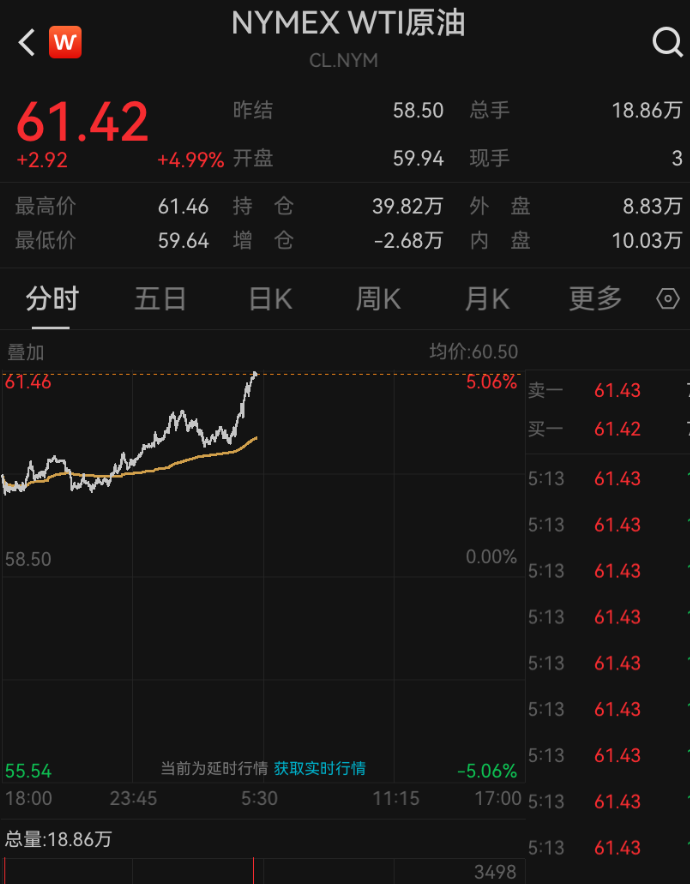
飙涨!特朗普出手:制裁!
中国基金报· 2025-10-23 02:01
【导读】美财政部将制裁俄两大石油公司, 国际油价飙涨 中国基金报记者 李智 美国财政部宣布制裁,国际油价飙涨。 10月22日深夜,国际油价突然大涨, WTI原油期货和 布伦特原油期货均涨超4%。截至收盘, WTI原油期货上涨3.74%, 布伦特原油 期货上涨4.94%。 10月23日开盘,国际油价继续上攻。截至发稿,布油、美油期货涨幅超2%,短期涨幅显著。 ICE布酒 < w B.IPE 3.97 62.59 64.35 昨结 开盘 总手 1.49万 +2.20% 现手 1 +1.38 最高价 持 仓 35.33万 6903 64.44 外 盘 最低价 63.92 博 e 7951 留 0 B 分时 宣昌 日K 周K 月K 更多 0 64.50 5.63% 0.00% 61.06 57.62 -5.63% 10-19 10-21 10-22 10-17 10-23 美财政部将制裁俄两大石油公司 " 现在是停止杀戮并立即停火的时候了。 " 贝森特在声明中表示, " 鉴于普京总统拒绝结束这场毫无意义的战争,财政部正在制裁俄罗 斯最大的两家石油公司,这些公司为克里姆林宫的战争武器提供资金。财政部准备在必要时采取进一 ...

飙涨!特朗普出手:制裁!
Zhong Guo Ji Jin Bao· 2025-10-23 01:48
美财政部将制裁俄两大石油公司 据CCTV国际时讯报道,美国财政部长贝森特10月22日宣布,美国将制裁俄罗斯最大的两家石油企业, 并敦促俄罗斯与乌克兰立即停火。这是美国总统特朗普第二任期内首次对俄罗斯实施新制裁措施。 贝森特在一份声明中说,美国此次制裁针对俄罗斯国有企业俄罗斯石油公司和私有企业卢克石油公司。 声明未明确提及制裁生效日期。据彭博社估算,这两家企业的原油出口量共占俄罗斯原油出口总量近 50%。 美国财政部还宣布制裁这两家公司在俄的一系列子公司,所有由这两家公司直接或间接持有50%或以上 股权的实体将被制裁。 对于制裁,特朗普表示,他希望针对俄罗斯石油企业的制裁"不需要持续太长时间"。 【导读】美财政部将制裁俄两大石油公司,国际油价飙涨 "现在是停止杀戮并立即停火的时候了。"贝森特在声明中表示,"鉴于普京总统拒绝结束这场毫无意义 的战争,财政部正在制裁俄罗斯最大的两家石油公司,这些公司为克里姆林宫的战争武器提供资金。财 政部准备在必要时采取进一步行动,我们鼓励盟友加入我们并遵守这些制裁。" 美国财政部宣布制裁,国际油价飙涨。 10月22日深夜,国际油价突然大涨,WTI原油期货和布伦特原油期货均涨超4% ...
美国对俄两大石油巨头实施制裁,国际油价应声跳涨
Zhi Tong Cai Jing· 2025-10-23 00:13
Group 1 - The U.S. government has imposed sanctions on major Russian oil producers, leading to a significant increase in oil prices, with West Texas Intermediate rising by 2.5% to nearly $60 per barrel and Brent crude settling around $63 per barrel [1] - The sanctions target state-owned Russian oil giants Rosneft PJSC and Lukoil PJSC, which together account for nearly half of Russia's crude oil exports, with an average daily export volume of approximately 2.2 million barrels in the first half of this year [2] - The sanctions come as part of a broader strategy to pressure President Putin to negotiate an end to the war in Ukraine, marking a shift in the U.S. administration's stance [1] Group 2 - The European Union has reached an agreement on a new package of sanctions against Russia, which is expected to be approved soon, targeting 45 entities that assist Russia in evading sanctions, including 12 companies based in mainland China and Hong Kong [2] - The oil and gas sector contributes about one-quarter of the Russian federal budget, highlighting the economic significance of these sanctions [2] - Despite the recent price increase, futures prices may continue to decline for the third consecutive month due to signs of global oversupply [1]
特朗普对印度下“关税通牒”:停购俄油 否则巨额关税不免!
智通财经网· 2025-10-20 03:50
Group 1 - President Trump claims that Indian Prime Minister Modi has promised to stop purchasing Russian oil, warning of "huge" tariffs if this commitment is not fulfilled [1] - The issue of Russian oil purchases has been a core point of contention in the lengthy US-India trade negotiations, with Trump's 50% tariffs on Indian goods partly aimed at countering India's procurement of Russian oil [1] - Following the outbreak of the Russia-Ukraine conflict in 2022, Western countries ceased purchasing Russian oil, leading India to become the largest buyer of discounted Russian oil [1] Group 2 - Indian refining companies have placed oil orders for November shipments, with some expected to arrive in December, indicating that any reduction in oil imports may not be reflected until December or January [2] - Commodity data company Kpler estimates that due to increased Russian oil exports following drone attacks on Russian refineries, India's imports of Russian oil are expected to rise by approximately 20% this month, reaching 1.9 million barrels per day [2]
俄罗斯是在坑中国么?高价把石油卖给我们,实际上中国并不会吃亏
Sou Hu Cai Jing· 2025-10-12 21:23
Core Viewpoint - The article discusses the dynamics of China's oil purchases from Russia, highlighting that despite Western sanctions on Russian oil, China is paying higher prices compared to India, raising questions about the rationale behind these pricing differences [1][3]. Group 1: Reasons for Higher Prices - The first reason for China's higher procurement prices is that the prices set by the U.S. are based on sanctions that do not apply to China, allowing China to operate independently of U.S. pricing [5]. - The second reason is that China has long-term procurement agreements with Russia, which reflect the intrinsic value of the oil, making it unnecessary for China to exploit the situation for lower prices [5]. - The third reason is related to the quality of oil being purchased; China primarily buys ESPO blend light low-sulfur crude oil from Siberia, which has lower refining costs compared to the heavier, high-sulfur Ural crude oil that India purchases, thus justifying the price difference [7]. Group 2: Implications of Oil Purchases - The article suggests that the substantial oil sales from Russia to China are beneficial for both countries, reinforcing their friendship and economic ties [7]. - It also indicates that the perception of Russia taking advantage of China is misguided, as the pricing reflects the quality of the crude oil rather than any exploitative practices [7].
Latest US sanctions on Iranian oil deal blow to China's Sinopec
Reuters· 2025-10-10 12:07
Core Insights - The latest U.S. sanctions on Iranian petroleum exports significantly impact Sinopec, a major Chinese refining company, by targeting a terminal that handles 20% of its crude oil imports [1] Company Impact - Sinopec is affected by the sanctions as they specifically target a terminal crucial for its operations, which processes a substantial portion of its crude oil imports [1] Industry Implications - The sanctions represent a broader strategy by the U.S. to limit Iranian oil exports, which could lead to increased volatility in global oil markets and affect refining companies reliant on Iranian crude [1]