供应中断

Search documents
光大期货能化商品日报-20260327
Guang Da Qi Huo· 2026-03-27 06:03
Report Industry Investment Rating - Not mentioned in the report Core Viewpoints - The report analyzes the market conditions of various energy and chemical products on March 27, 2026, including crude oil, fuel oil, asphalt, polyester, rubber, methanol, polyolefins, and PVC. All products are rated as "oscillating", and the geopolitical situation is the main factor affecting the market [1][3][5][6][7] Summary by Relevant Catalogs Research Views - **Crude Oil**: On Thursday, oil prices moved higher. WTI April contract closed up $4.16 to $94.48 per barrel, a 4.61% increase. Brent May contract closed up $5.79 to $108.01 per barrel, a 5.66% increase. SC2605 closed at 744.6 yuan per barrel, up 16.2 yuan per barrel, a 2.22% increase. Market sentiment towards the geopolitical situation is cautious. The supply disruption in the Strait of Hormuz could lead to a loss of 13 - 14 million barrels of oil per day, but the duration is uncertain [1] - **Fuel Oil**: On Thursday, the main fuel oil contract FU2605 on the Shanghai Futures Exchange closed down 0.18% at 4,393 yuan per ton, and the low - sulfur fuel oil contract LU2605 closed down 1.34% at 5,066 yuan per ton. The fundamentals of both low - sulfur and high - sulfur fuel oil markets remain strong. The short - term crack spreads of high and low - sulfur fuel oil are expected to remain high [3] - **Asphalt**: On Thursday, the main asphalt contract BU2606 on the Shanghai Futures Exchange closed up 4.17% at 4,543 yuan per ton. The expected domestic asphalt production in April 2026 is 1.527 million tons, a decrease of 22.4% month - on - month and 33.3% year - on - year. The short - term asphalt price is expected to remain high [3][5] - **Polyester**: TA605 closed at 6,778 yuan per ton, up 2.82%. EG2605 closed at 5,058 yuan per ton, up 0.44%. PX futures main contract 605 closed at 9,774 yuan per ton, up 2.86%. The short - term polyester price will fluctuate widely following the cost [5] - **Rubber**: On Thursday, the main Shanghai rubber contract RU2605 rose 30 yuan per ton to 16,460 yuan per ton. The spread between natural rubber and synthetic rubber may continue to widen [5][6] - **Methanol**: The inventory has started to decline. The supply from Iranian plants may gradually recover, which may suppress the price increase, but the Iranian situation is unclear [6] - **Polyolefins**: The market is in a de - stocking rhythm, but the short - term geopolitical risk pushes up the cost, compressing the downstream profit margin, and the subsequent demand growth may be hindered [6][7] - **PVC**: The geopolitical situation has a greater impact on the ethylene - based method, while the profit of the calcium carbide - based method has strengthened rapidly. The supply is expected to remain high, and the demand will gradually recover, maintaining a de - stocking rhythm [7] Daily Data Monitoring - The report provides the spot price, futures price, basis, basis rate, and other data of various energy and chemical products on March 26 and 25, 2026, including crude oil, liquefied petroleum gas, asphalt, high - sulfur fuel oil, low - sulfur fuel oil, methanol, urea, linear low - density polyethylene, polypropylene, etc. [8] Market News - Market sentiment towards the geopolitical situation is cautious. The negotiation process between the US and Iran is difficult. If the Strait of Hormuz is blocked for a long time, it may lead to a loss of 13 - 14 million barrels of oil per day. The export volume of Yanbu Port and Fujairah Port has rebounded recently [10] Chart Analysis - **Main Contract Price**: The report shows the historical closing price charts of the main contracts of various energy and chemical products from 2022 to 2026, including crude oil, fuel oil, low - sulfur fuel oil, asphalt, LPG, PTA, ethylene glycol, etc. [12][13][14][15][17][18][21][22][24][26][28] - **Main Contract Basis**: It presents the historical basis charts of the main contracts of various energy and chemical products from 2022 to 2026, such as crude oil, fuel oil, low - sulfur fuel oil, asphalt, ethylene glycol, etc. [30][32][34][36][39][40][41] - **Inter - period Contract Spread**: It shows the historical spread charts of different contracts of various energy and chemical products, including fuel oil, asphalt, PTA, ethylene glycol, PP, LLDPE, natural rubber, etc. [44][46][49][52][53][56][58] - **Inter - variety Spread**: It provides the historical spread and ratio charts between different varieties of energy and chemical products, such as crude oil internal and external markets, fuel oil high - low sulfur, fuel oil/asphalt, BU/SC, ethylene glycol - PTA, PP - LLDPE, natural rubber - 20 - number rubber, etc. [60][62][64][68] - **Production Profit**: It shows the historical production profit and processing fee charts of various energy and chemical products, including LLDPE, PP, PTA, ethylene - based ethylene glycol, etc. [70][72] Team Member Introduction - The report introduces the members of the Everbright Futures energy and chemical research team, including Deputy Director Zhong Meiyan, Research Director Du Bingqin, Analyst Di Yilin, and Analyst Peng Haibo, along with their professional backgrounds, honors, and research areas [75][76][77][78]
聚酯板块周度报告-20260313
中盛期货· 2026-03-13 11:55
1. Report Industry Investment Rating - Not provided in the report 2. Core Viewpoints of the Report - In the short - term, the supply of raw materials is expected to tighten. PX and PTA will operate strongly at a high level. Due to the tightening overseas supply and domestic device load reduction, the fundamentals of ethylene glycol are expected to improve, and it will also operate strongly at a high level. However, the end - users are quite resistant to high - priced raw materials, so the polyester sector needs to guard against negative demand feedback. Crude oil will operate strongly at a high level in the short - term, and attention should be paid to the changes in the Middle East situation as the oil price volatility intensifies [25]. - In the medium - to - long - term, there will be no new capacity put into operation in the first half of the year, and the number of device maintenance plans will increase in the second quarter, so the supply is expected to tighten. A long - position configuration is maintained in the medium - term, and attention should be paid to the implementation of spring device maintenance. The supply - demand situation of ethylene glycol will improve stage - by - stage in the second quarter [26]. 3. Summary According to Relevant Catalogs 3.1 Macro and Crude Oil Important Information - Iran's new supreme leader stated that Iran will not give up revenge and will continue to use the means of blocking the Strait of Hormuz. The US is "not ready" to escort oil tankers through the Strait of Hormuz. Two oil tankers were attacked in Iraqi waters, and all Iraqi oil terminals suspended operations [2]. - TotalEnergies, a French oil giant, announced that due to the conflict between the US, Israel and Iran, oil and gas fields in many Middle - Eastern countries have shut down, and its oil and gas production has decreased by 15% [2]. - The US issued a 30 - day general license for Russia - related affairs, allowing the delivery and sale of Russian crude oil and petroleum products stranded at sea, which alleviated market concerns about supply [2]. - The IEA agreed to release 400 million barrels of oil, with the US releasing 172 million barrels from its strategic petroleum reserve. The release of oil reserves temporarily relieved the pressure, and the most important thing is to restore shipping in the Strait of Hormuz [3]. - As of the week ending March 6, US commercial crude oil inventories increased by 3.8 million barrels, refinery crude oil processing volume increased by 3.28 million barrels per day, refinery capacity utilization increased by 1.6 percentage points to 90.8%, gasoline inventories decreased by 3.7 million barrels, and distillate inventories decreased by 1.3 million barrels [3]. 3.2 Polyester Sector Futures and Spot Price Trends - From March 5 to March 12, 2026, the prices of futures and spot in the polyester sector generally increased. For example, the WTI crude oil continuous futures price increased from $78.88 per barrel to $96.36 per barrel, with a week - on - week increase of 22.16%; the spot price of naphtha increased from $774.38 per ton to $977.25 per ton, with a week - on - week increase of 26.20% [4]. 3.3 PX Situation - Domestic PX supply decreased this week. As of March 12, the domestic PX weekly average capacity utilization rate was 89.26%, a decrease of 1.90 percentage points compared with the previous period; the weekly output was 73.83 tons, a decrease of 2.09% [10]. - Asian PX load decreased this week. As of March 12, the Asian PX weekly average capacity utilization rate was 79.3%, a decrease of 2.13 percentage points compared with the previous period [10]. - Next week, the domestic PX supply is expected to be relatively stable, but the supply is expected to tighten as a 2 - million - ton PX device of Zhejiang Petrochemical has a planned maintenance and Japan announced a reduction in PX long - term contract supply [10]. 3.4 PTA Situation - This week, the domestic PTA supply increased slightly. As of March 12, the domestic PTA weekly capacity utilization rate was 80.05%, an increase of 0.36 percentage points compared with the previous period; the weekly output was 1.5276 million tons, an increase of 6,100 tons [14]. - This week, PTA social inventories continued to accumulate. As of March 13, the available days of PTA inventory in factories were 5.94 days (+0.59 days), the available days of PTA inventory in polyester factories were 9.26 days (+2.89 days), and the PTA social inventory was about 3.8541 million tons (+108,400 tons) [14]. - Next week, the domestic PTA supply will decrease, and the downstream polyester device changes are limited. The demand is relatively stable, and the social inventory may continue to accumulate [14]. 3.5 Ethylene Glycol Situation - This week, the domestic ethylene glycol supply continued to decline. As of March 12, the domestic ethylene glycol weekly average capacity utilization rate was 60.10% (-5.60 percentage points), the capacity utilization rate of integrated devices was 56.85% (-7.42 percentage points), the capacity utilization rate of coal - based ethylene glycol was 65.72% (-2.47 percentage points); the weekly output was 389,400 tons (-36,300 tons) [15]. - This week, the port inventory decreased. As of March 12, the total inventory in East China ports was 927,000 tons, a decrease of 46,000 tons compared with Monday and 39,000 tons compared with last Thursday [15]. - Next week, the domestic supply will decrease, the imported arrivals are still expected to decrease due to transportation, while the demand is relatively stable, and the port may continue to reduce inventory [15]. 3.6 Polyester End Situation - This week, the weekly capacity utilization rate of the polyester end increased by 2.16 percentage points to 83.7% [16]. 3.7 Polyester Inventory Situation - This week, the filament inventory increased, and the short - fiber inventory was relatively stable [19]. 3.8 Terminal Situation - As of March 13, the operating rate of textile looms in Jiangsu and Zhejiang was 51.25% (+8.89 percentage points), the order days of Chinese weaving sample enterprises were 12.48 days (+5.48 days), and the inventory days of grey cloth were 19.71 days (-3.93 days) [23]. 3.9 Strategy Recommendation - Short - term: The supply of raw materials is expected to tighten, and PX and PTA will operate strongly at a high level. Ethylene glycol will also operate strongly at a high level due to improved fundamentals. However, attention should be paid to negative demand feedback. Crude oil will operate strongly at a high level in the short - term, and attention should be paid to the Middle East situation [25]. - Medium - to - long - term: A long - position configuration is maintained in the medium - term, and attention should be paid to the implementation of spring device maintenance. The supply - demand situation of ethylene glycol will improve stage - by - stage in the second quarter [26]. - Next week's focus and risk warnings: Changes in the Middle East situation, the passage status of the Strait of Hormuz, the sentiment of the macro - market, the operation of upstream and downstream devices, and the recovery progress of downstream demand [26]
能源化策略:美伊对峙局?略加强,原油?幅上涨带动油化?成本抬升
Zhong Xin Qi Huo· 2026-01-30 01:23
1. Report Industry Investment Rating The report does not explicitly provide a comprehensive industry - wide investment rating. However, for individual products, the general outlooks are mostly "震荡" (oscillating), which implies a neutral stance in the short - to - medium term for most energy and chemical products. 2. Core Viewpoints - The confrontation between the US and Iran has intensified, driving up Brent crude oil futures prices to $70 per barrel for the first time since September, and SC crude oil futures almost hit the daily limit. This has led to an increase in the cost of oil - based chemical products. Meanwhile, the chemical industry chain is entering the off - season, with开工率 (operating rates) of many downstream sectors such as textile and polyester declining [2]. - The overall view is that the situation in the Middle East, especially the US - Iran relationship, will support crude oil prices, and the chemical industry should be treated with an oscillating mindset [2]. 3. Summary by Product Categories 3.1 Crude Oil - **View**: Supply pressure remains, and geopolitical factors dominate the market rhythm. The situation in Iran is expected to increase supply concerns, and short - term support comes from a weak US dollar and geopolitical uncertainties. The outlook is oscillating as the fundamental supply is in surplus, but geopolitical premiums may fluctuate [8]. 3.2 Asphalt - **View**: Geopolitical premiums and rising spot prices have led to a significant increase in asphalt futures prices. Although the current price is in an over - valued range, the cost of crude oil supports the price. The outlook is oscillating, and the long - term valuation is expected to decline. The inventory accumulation pressure is high due to the off - season demand [9]. 3.3 High - Sulfur Fuel Oil - **View**: Geopolitical premiums support high - sulfur fuel oil. However, the expected increase in heavy - oil supply from Venezuela and the substitution of fuel oil in the Middle East's power - generation sector are long - term negative factors. The outlook is oscillating, with short - term focus on geopolitical trends in the Middle East [9]. 3.4 Low - Sulfur Fuel Oil - **View**: It follows the upward trend of crude oil and oscillates strongly. Although it faces challenges such as a decline in shipping demand and substitution by green energy, its current low valuation may lead it to follow the movement of crude oil. The outlook is oscillating [12]. 3.5 PX - **View**: The valuation of chemical products is relatively high, and the price increase is less than that of crude oil. The short - term supply and demand pattern is prone to inventory accumulation, but the market has expectations for future supply reduction due to maintenance. The outlook is oscillating and slightly strengthening, with short - term price support at around 7,250 yuan/ton for the PX05 contract [13]. 3.6 PTA - **View**: Supply has increased, the supply - demand relationship has weakened, and profits have been compressed. The cost support from rising international oil prices remains, but the high valuation of the chemical industry limits the price increase. The outlook is oscillating and slightly strengthening, with support at around 5,200 yuan/ton for the TA05 contract [13]. 3.7 Pure Benzene - **View**: It oscillates due to the game between expectations and reality. Short - term high inventory may limit the price increase, but the fundamentals are expected to improve in the first quarter. The outlook is oscillating [15]. 3.8 Styrene - **View**: Recent price increases are due to capital behavior and export expectations. The short - term supply is tight, but seasonal inventory accumulation may lead to a profit reduction. The outlook is oscillating, and the reduction amplitude is expected to be limited [18]. 3.9 Ethylene Glycol - **View**: The driving force is general, and it is more affected by the commodity market atmosphere and device disturbances. The short - term supply is increasing, and the price is expected to adjust within a range. The outlook is for short - term price consolidation within the range of [3800 - 4050] yuan/ton for the EG05 contract [19]. 3.10 Short - Fiber - **View**: Spot trading is weak, and the driving force is general. The cost has a certain supporting effect, but the demand is seasonally weak. The outlook is that the price will follow the upstream market, and the processing fee will have stronger support at the lower end [22]. 3.11 Polyester Bottle Chips - **View**: It follows the cost fluctuations, and the support at the lower end of the profit is strengthening. The price is mainly anchored to the cost of upstream raw materials and has no obvious trend. The outlook is that the absolute price will follow the raw material price, the processing fee will have stronger support at the lower end, and attention should be paid to the long - PR and short - TA position [24]. 3.12 Methanol - **View**: There is a long - short game in the coastal area, and it oscillates within a range. The domestic production area is reducing prices to clear inventory, while the consumer market is relatively strong. The coastal market is affected by the low - start of downstream MTO devices and high inventory. The outlook is oscillating, and the short - term trading may be mainly affected by overseas situations [26]. 3.13 Urea - **View**: The pre - holiday factory order collection is smooth, and the price is slightly strengthening. The supply is sufficient, and the demand from the agricultural sector has a certain increase, while the industrial demand is cautious. The outlook is oscillating, and in the short - term, the price may fluctuate slightly and may be slightly strengthening [27]. 3.14 LLDPE - **View**: Supported by raw materials, it follows the upward trend. The increase in oil prices and natural gas prices has a positive impact, but the demand is in the off - season, and the follow - up of spot prices is limited. The outlook is short - term oscillation [32]. 3.15 PP - **View**: It follows the upward trend of oil prices in the short - term. The increase in oil prices and the repair of production profits are positive factors, but the demand is in the off - season, and the trading volume has decreased recently. The outlook is short - term oscillation [33]. 3.16 PL - **View**: The inventory pressure is not large, and it oscillates. The PDH maintenance has a positive impact, but the downstream demand is in the off - season. The outlook is short - term oscillation [34]. 3.17 PVC - **View**: Supported by low valuation, it oscillates. Geopolitical factors and the "export at low prices" strategy provide certain support, but the downstream demand is weakening seasonally. The outlook is oscillating, and the short - term "export at low prices" and low valuation support the market, but the fundamental pressure has not been reversed [37]. 3.18 Caustic Soda - **View**: The electricity price has been slightly reduced, and the cost is decreasing. The high production and weak demand lead to inventory accumulation, and the spot price is under pressure. The outlook is oscillating and slightly weakening, and short positions should stop losses at low prices before the Spring Festival [39]. 4. Variety Data Monitoring 4.1 Energy and Chemical Daily Indicator Monitoring - **Inter - period Spread**: The report provides detailed inter - period spread data for various products such as Brent, Dubai, PX, PTA, etc., showing the changes in different contract spreads [41]. - **Basis and Warehouse Receipts**: It includes basis and warehouse receipt data for multiple products, reflecting the relationship between spot and futures prices and the quantity of warehouse receipts [42]. - **Inter - variety Spread**: The report presents inter - variety spread data, such as the spread between PP and methanol, and between PTA and ethylene glycol, which helps in analyzing the relative price relationships between different products [43]. 4.2 Chemical Basis and Spread Monitoring Although the sub - sections for each product are listed, the specific data and analysis content are not fully filled in the report. 5. Commodity Index - **Comprehensive Index**: The comprehensive index, specialty index, and sector index all show an upward trend. For example, the commodity 20 index increased by + 2.61% to 2995.74, and the energy index rose by + 2.48% to 1195.87 on January 29, 2026 [283][284].
小摩:2026年中国基础材料行业料保持强势 维持中国宏桥“增持”评级并上调目标价至40
Zhi Tong Cai Jing· 2026-01-15 06:24
Industry Outlook - Morgan Stanley projects that the MSCI China Materials Index will outperform the MSCI China Index by 65 percentage points in 2025, driven by supply dynamics [1] - The firm expects continued outperformance in 2026 due to supply disruptions and further M&A activities [1] - The demand growth for basic metals in China is anticipated to slow and stabilize, with copper and aluminum demand growth rates expected to be 2.5% and 1.5% respectively [2] Company Ratings and Forecasts - China Hongqiao's rating is maintained at "Overweight," with the target price raised from HKD 34 to HKD 40, citing its integrated model as a cost advantage [1][3] - Zijin Mining is highlighted as a top pick for 2026 due to its exposure to copper and gold [3] - Jiangxi Copper's rating is upgraded to "Neutral," despite a recent stock price increase of over 40% [3] - Baosteel's rating is downgraded to "Neutral," while Angang Steel's rating is downgraded to "Underweight" due to expected declines in steel profit margins [3] Supply Chain Dynamics - Supply disruptions are ongoing, with South32 scheduled maintenance at the Mozal aluminum smelter in March 2026 and a strike at Capstone Copper's Mantoverde copper-gold mine expected to reduce copper supply by 77,000 tons [1][2] - Zijin Mining has issued a positive profit forecast, expecting a net profit of RMB 51-52 billion for 2025, representing a year-on-year growth of 59-62% [1] M&A Activities - Industry consolidation is advancing, with notable acquisitions such as Luoyang Molybdenum's purchase of Brazilian gold assets and Jiangxi Copper's acquisition of SolGold [1]



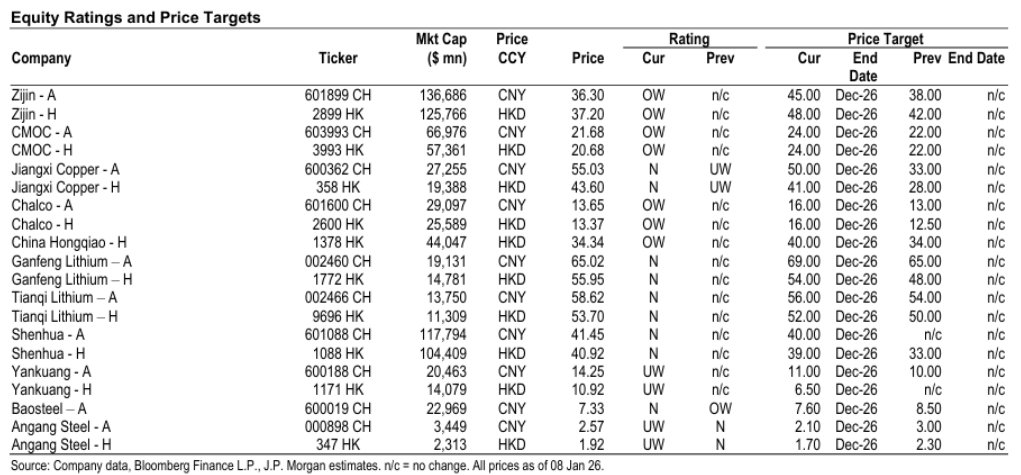
小摩:2026年中国基础材料行业料保持强势 维持中国宏桥(01378)“增持”评级并上调目标价至40港元
智通财经网· 2026-01-15 03:19
Industry Outlook - Morgan Stanley projects that the MSCI China Materials Index will outperform the MSCI China Index by 65 percentage points in 2025, driven by supply dynamics [1] - The index is expected to continue its outperformance in 2026 due to supply disruptions and increased merger activities [1] - The preference order for the Chinese basic materials industry in 2026 is copper/gold, aluminum, lithium, coal, and steel [3] Company Performance - China Hongqiao's rating is maintained at "Overweight," with the target price raised from HKD 34 to HKD 40, citing its integrated model as a cost advantage [1][4] - Zijin Mining is highlighted as a top pick for 2026 due to its exposure to copper and gold [4] - Jiangxi Copper's rating is upgraded to "Neutral," despite a recent stock price increase of over 40% [4] - Baosteel's rating is downgraded to "Neutral," while Angang Steel's rating is downgraded to "Underweight" due to expected declines in steel profit margins [4] Supply Chain Dynamics - Ongoing supply disruptions include maintenance at South32's Mozal aluminum smelter and a strike at Capstone Copper's Mantoverde copper-gold mine, which is expected to reduce copper supply by 77,000 tons [2] - The lithium market is anticipated to tighten due to strong energy storage demand, with more supply expected to come online in the second half of the year [3]
小摩:2026年中国基础材料行业料保持强势 维持中国宏桥“增持”评级并上调目标价至40港元
Zhi Tong Cai Jing· 2026-01-15 03:16
Industry Outlook - Morgan Stanley forecasts that the MSCI China Materials Index will outperform the MSCI China Index by 65 percentage points in 2025, driven by supply dynamics [1] - The index is expected to continue its outperformance in 2026 due to supply disruptions and increased merger activities [1] - The preference order for the Chinese basic materials industry in 2026 is copper/gold, aluminum, lithium, coal, and steel [3] Company Performance - China Hongqiao's rating is maintained at "Overweight," with the target price raised from HKD 34 to HKD 40, citing its integrated model as a cost advantage [1][4] - Zijin Mining is highlighted as a top pick for 2026 due to its exposure to copper/gold [4] - Jiangxi Copper's rating is upgraded to "Neutral," despite a recent stock price increase of over 40% [4] - Baosteel's rating is downgraded to "Neutral," while Angang Steel's rating is downgraded to "Underweight" due to expected declines in steel profit margins [5] Supply Chain Dynamics - Ongoing supply disruptions include maintenance at South32's Mozal aluminum smelter and a strike at Capstone Copper's Mantoverde copper-gold mine, which is expected to reduce copper supply by 77,000 tons [2] - The demand growth for basic metals in China is projected to stabilize, with copper and aluminum demand growth rates expected at 2.5% and 1.5%, respectively [3]

对二甲苯:单边高位震荡市PTA:多PX空PTA MEG:低位反弹,估值下方空间有限
Guo Tai Jun An Qi Huo· 2026-01-13 02:15
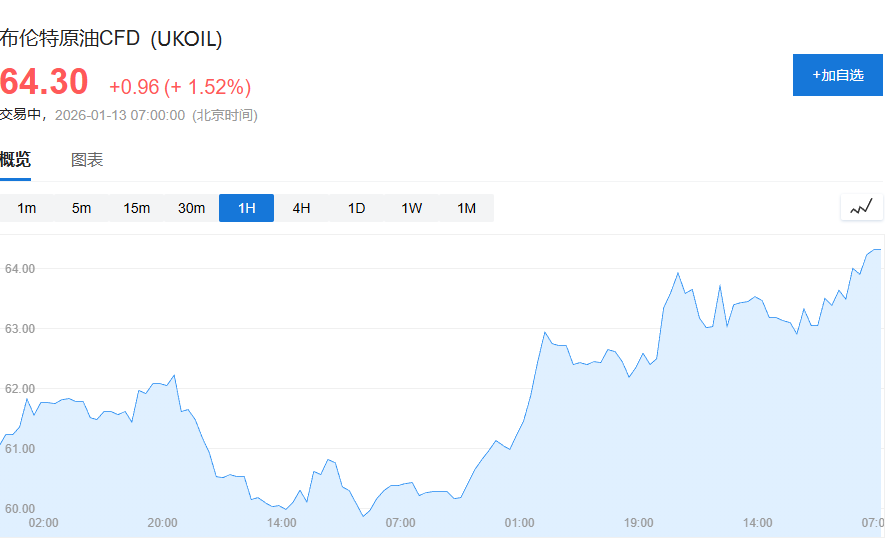
Report Summary 1. Report Industry Investment Ratings - PX: Unilateral high-level volatile market, long PX and short PTA, trend strength 1 [1][7] - PTA: Long PX and short PTA, long SC and short PTA, trend strength 1 [1][8] - MEG: Low-level rebound, limited downside in valuation, short positions to exit, trend strength 1 [1][9] 2. Core Views - PX is expected to be unilaterally strong in the short - term due to cost support from oil prices and increasing market attention, despite increasing supply and decreasing demand [7] - PTA is expected to be unilaterally strong in the short - term as current low inventory and ongoing de - stocking offset the expected future decline in demand [8] - MEG is expected to have a short - term strong rebound as supply pressure eases and there is strong support at the 3600 yuan/ton level [9] 3. Summary by Related Catalogs Market Dynamics - PX: The price of naphtha fell at the end of the session. PX prices rose, with two March Asian spot transactions at 899.5 and 898.5 respectively. The PX valuation was 897 dollars/ton, up 5 dollars from last Friday. Asian PX prices got new support from the rising oil prices on January 12 [3] - Crude oil: On January 12, Asian - session crude oil prices remained at a one - month high due to potential supply disruptions. The front - month ICE Brent contract rose 2.18% to 63.34 dollars/barrel, and the NYMEX front - month contract rose 2.35% to 59.12 dollars/barrel [5] - PTA: The PTA load rose from around 73% to around 78% recently, but is expected to return to around 73% in mid - January due to maintenance plans [6] - MEG: The port inventory of MEG in some main ports in East China was about 80.2 tons, up 7.7 tons from the previous period. The daily shipments from some warehouses were around 6500 - 6600 tons [6][7] - Polyester: The sales of polyester filaments in Jiangsu and Zhejiang were individually strong, with an estimated average sales rate of about 70% by 3:45 pm. The average sales rate of direct - spun polyester staple fibers was 87% by 3:00 pm [7] Fundamental Data - Futures: PX, PTA, and SC futures prices rose, with increases of 0.97%, 0.67%, and 1.11% respectively. MEG futures rose 0.36%, while PF futures fell 0.03% [2] - Spot: PX, PTA, MEG, and naphtha spot prices rose, while Dated Brent crude oil prices fell slightly. The PX - naphtha spread, PTA processing fee, and short - fiber processing fee decreased, while the bottle - chip processing fee increased [2] Views and Suggestions - PX: Unilaterally strong in the short - term. Pay attention to the positive spread arbitrage of monthly spreads, long PX and short PTA. Although supply is increasing and demand is decreasing, cost support and market attention keep it strong [7] - PTA: Unilaterally strong in the short - term. Long PX and short PTA, long SC and short PTA. Future supply and demand are both expected to be weak, but current low inventory supports the price [8] - MEG: Unilaterally strong in the short - term for a rebound. Exit short positions as supply pressure eases and there is valuation support [9]
伊朗风险扭转“石油叙事”,周一“布油看涨期权”成交量创历史新高,交易员紧急寻求“空仓保护”
Hua Er Jie Jian Wen· 2026-01-13 00:18
Core Viewpoint - The oil market is experiencing a dramatic sentiment reversal due to supply disruption concerns stemming from protests in Iran, leading traders to buy call options at unprecedented levels to hedge against price surges, shifting the earlier pessimistic outlook on supply surplus [1]. Group 1: Market Activity - On Monday, the trading volume of Brent crude oil call options reached a historic high, exceeding 556,000 contracts, reflecting heightened market vigilance regarding supply risks from Iran, the fourth-largest oil producer in OPEC [1]. - The implied volatility and call option premiums have continued to rise, reaching their highest levels since June of the previous year, following military actions by the U.S. and Israel against Iran [1]. - Brent crude futures have increased by over 6% since last Wednesday, as short positions betting on supply surplus were forced to cover [1]. Group 2: Trading Strategies - The options trading on Monday was dominated by large-scale spread trades, which provided relatively inexpensive tools for betting on sudden price spikes. Notably, significant trades included spread contracts equivalent to 40 million barrels [5]. - Early signals of large call spread trades were observed before Friday's close, including a spread contract equivalent to 50 million barrels, setting the stage for Monday's explosive trading volume [5]. - These spread strategies allow traders to hedge against a range of potential outcomes, from military escalation to supply disruptions due to protests by Iranian oil workers [5]. Group 3: Market Sentiment - The shift in market sentiment has been abrupt; earlier this month, the outlook was pessimistic due to the recovery prospects of Venezuelan production, which was exacerbating global supply surplus concerns [4]. - The "skew" indicator for Brent crude oil options has shifted in favor of call options since mid-last week, indicating a rare market condition typically seen during geopolitical pressures [6]. - Despite claims from Tehran that protests have been quelled, unrest appears to persist, with reports indicating that U.S. President Trump is considering military action against Iran, adding to the uncertainty in the market [8].
铜、铝、锌、镍、锡、铅,全面大涨
财联社· 2026-01-07 02:48
Group 1 - The prices of major industrial metals tracked by LME, including copper, nickel, and aluminum, have seen significant increases, with LME nickel reaching a 19-month high due to supply concerns [1][3] - LME copper rose by 1.9% to $13,238 per ton, hitting a record high of $13,387.50, with a year-to-date increase of approximately 6.5% [3][4] - Supply concerns are exacerbated by strikes at Capstone Copper's Mantoverde mine in Chile and delays in production at a mine in Ecuador, leading to heightened worries about copper availability [4][5] Group 2 - Analysts from ING noted that Indonesia's plan to cut nickel ore production is effective in boosting prices in the short term, but long-term price sustainability is uncertain due to expected oversupply [3] - UBS analysts highlighted that the uncertainty surrounding tariffs and ongoing supply disruptions are driving speculative trading in copper, with increased demand for copper in energy transition and infrastructure investments [4][5] - Other industrial metals also experienced significant price increases, with LME tin up 4.8%, aluminum up 1.4%, zinc up 1.8%, and lead up 2.6% [4]

委内瑞拉局势搅动市场:黄金领涨贵金属,油价长跌难转,加密货币或迎新波动
Di Yi Cai Jing· 2026-01-05 07:41
Group 1 - Precious metals are leading the market gains, with gold's safe-haven attributes highlighted amid the political turmoil in Venezuela [1][4] - Oil prices in the Asia-Pacific market have turned from a decline to a slight increase, with Brent crude futures rising by 0.3% to $60.92 per barrel and WTI crude futures up by 0.2% to $57.43 per barrel [3] - Analysts expect that even if Venezuela's oil exports are disrupted, it will not have an immediate impact on oil prices due to a globally sufficient oil supply [3][4] Group 2 - The International Energy Agency (IEA) forecasts that global oil supply will exceed demand by 3.8 million barrels per day by 2026, marking a historic oversupply record [3] - Goldman Sachs maintains its price forecast for Brent crude at an average of $56 per barrel and WTI at $52 per barrel for 2026, indicating limited risk from the Venezuelan situation [4][5] - RBC Capital Markets suggests that a complete lifting of sanctions on Venezuela could release hundreds of thousands of barrels per day within 12 months under an orderly transition [5] Group 3 - Gold prices have risen by 1.4% to $4,393.64 per ounce, with silver up by 3.4% to $75.28 per ounce, driven by geopolitical uncertainties [5] - UBS highlights that gold remains an attractive asset and a crucial risk-hedging tool, with expectations of steady demand growth due to declining real interest rates and rising global economic uncertainties [5][6] - UBS has raised its target price for gold to $5,000 per ounce by March 2026, with potential for prices to reach $5,400 per ounce if political or financial risks escalate [6]