
科技成果转化

Search documents
上海未来产业基金“扩容” 强化“投早、投小、投硬”功能
Zhong Guo Xin Wen Wang· 2026-02-04 14:10
Group 1 - The Shanghai Future Industry Fund has increased its scale from 10 billion to 15 billion yuan [1] - By 2025, Shanghai plans to accelerate the investment layout of the Future Industry Fund, with a total of 38 sub-funds and direct investment projects approved, amounting to 3.32 billion yuan [1] - Among the approved projects, 23 sub-funds have a total investment of 2.855 billion yuan, leveraging over 19 billion yuan in additional funding, focusing on cutting-edge technology fields [1] Group 2 - In 2024, Shanghai will launch three major parent funds with a total scale of 100 billion yuan, including integrated circuits, biomedicine, and artificial intelligence [1] - The Shanghai Future Industry Fund has a 15-year cycle and is positioned as a counter-cyclical patient capital aimed at promoting the transformation of technological achievements from 0 to 1 in Shanghai and China [1] - The General Manager of the Future Industry Fund emphasized the need for long-term patient capital and deep understanding of future trends to effectively nurture future industries [2]
代表委员的“笔记本”里藏着什么?丨蹲会新发现
Xin Lang Cai Jing· 2026-02-04 13:20
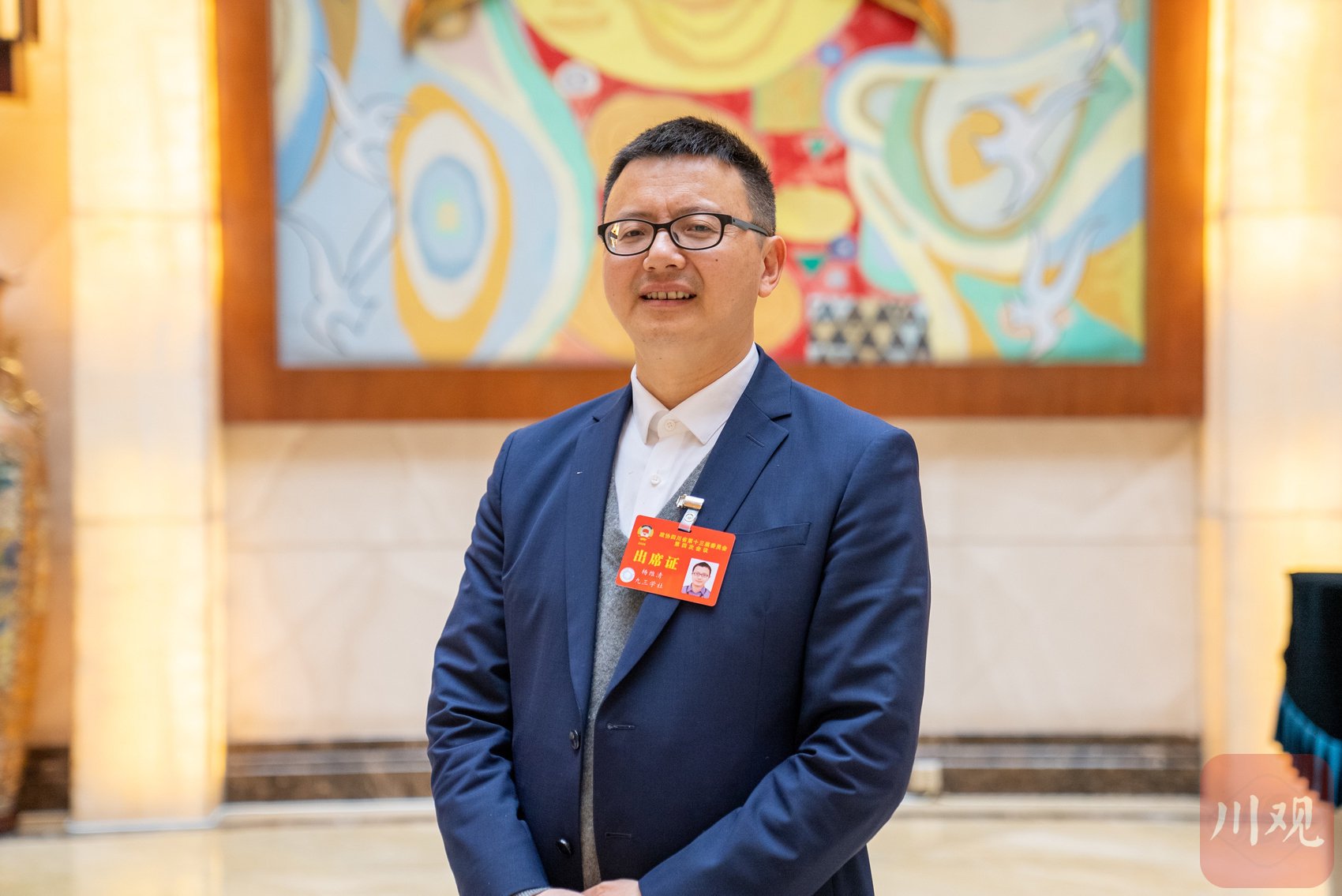
省两会会场,我们总能看到代表委员们或凝神记录,或专注勾画。那厚厚的笔记本里,究竟藏着什么? 在征得同意后,我们轻轻翻开了他们的笔记本,就像打开了一扇观察两会真实、生动细节的窗。这里不仅有一时一事的灵感速记,更藏着他们履职思考最鲜 活的"痕迹"。 "提真问题,真提问题。"省政协委员、西南交通大学教授杨维清的笔记本上,记下了这句话。就在不久前,通过深入雅安经开区20多家新能源企业调研,他 摸清了一个关键症结:我省动力电池和储能电芯产能已跻身全国第三,但研发体系却相对薄弱。 四川在线记者 李欣忆 高杲 范华 郑志浩 曹凘源 陈秋吉 卢春阳 李强 赵明 杨维清。 "宁德时代、比亚迪等在川设立了生产基地,但研发总部仍在省外。这既是发展的机遇,也潜藏着产业布局调整可能带来的风险。"杨维清认为,这是一个真 问题。"但找出问题只是第一步,更重要的是通过分析研判,找到解开问题的'钥匙'。"于是,他这次带来了关于加快推进我省电芯制造研发体系建设的建 议,提出"将中试平台建在产业链上"的对策。 真问题,往往来自一线最直接的叩问。省人大代表、四川西昌电力股份有限公司总经理朱国政的笔记里,一行数字格外醒目:"去年凉山州弃水电量达20亿 ...

东莞全社会研发投入强度超4% 高新技术企业数量超万家 居全省地级市首位
Nan Fang Ri Bao Wang Luo Ban· 2026-02-04 08:26
吉他没有琴弦,却能奏响美妙乐章。只需指尖轻触光带,配合手机APP提示,新手也可弹出心仪曲目。 日前,在央视新闻推出的《东莞造好物·美学奇妙游》现场,主持人撒贝宁忍不住点赞由东莞制造的全 球首款无弦智能吉他。 风靡全球的无弦吉他、双轮足机器人"刑天"、四足机器狗"星仔"……近年来,东莞制造频频出圈,越来 越多的"东莞好物"流向千家万户。这些产品背后,是东莞将科技创新和产业创新深度融合,打造科技成 果转化新高地的久久为功。 技术的持续跃迁,源自企业真金白银的投入。2024年数据显示,生益科技、生益电子、奥海科技、捷邦 科技等企业的研发投入居于上市莞企前列。其中,生益科技以11.56亿元研发投入成为"研发之王",研 发占比达5.67%;奥海科技、生益电子分别投入3.52亿元和2.84亿元;捷邦科技研发人员占比近6%,远 超行业水平。 高强度研发投入 用户输入"是否存在一种导电不导热且密度比铁低的材料",由松山湖材料实验室发布的材料科学AI工具 MatChat AI智能体瞬间就可给出靠谱答案,并提供参考文献。中国科学院物理研究所研究员、博士生导 师刘淼表示:"MatChat AI智能体从28万篇材料科学、物理、化学论 ...
中国人民政治协商会议第十四届广州市委员会常务委员会工作报告
Guang Zhou Ri Bao· 2026-02-04 02:53
Core Viewpoint - The report highlights the achievements and initiatives of the Guangzhou Municipal Committee in 2025, focusing on economic development, innovation, and community engagement as part of the "14th Five-Year Plan" and preparing for the "15th Five-Year Plan" [3][20]. Group 1: Economic Development - The committee emphasized the importance of building a modern industrial system, with suggestions for fostering emerging industries such as AI and robotics, and enhancing the service sector [4][5]. - Significant progress was made in establishing the Guangdong-Hong Kong-Macao Greater Bay Area Life and Health Industry Innovation Zone, showcasing collaboration among various governmental bodies [4]. - The report noted the successful promotion of cross-border logistics and the development of a vibrant water economy, with the Pearl River cruise index ranking first globally for two consecutive years [4]. Group 2: Innovation and Technology - The committee focused on enhancing innovation capabilities, proposing the establishment of a public stem cell resource bank and promoting joint laboratories in the medical field [5]. - Efforts to improve the conversion of innovative results into practical applications were highlighted, including the establishment of a regional technology transfer center [5][6]. Group 3: Business Environment - Recommendations were made to create a market-oriented, law-based, and international business environment, including the introduction of mediation mechanisms and the establishment of a financial legal service center [7]. - The report mentioned the successful implementation of a plan to optimize administrative procedures, significantly reducing the number of regulatory items [7]. Group 4: Urban and Regional Development - The committee advocated for coordinated urban and rural development, proposing initiatives to enhance the quality of life in western districts and promote cultural tourism in northern mountainous areas [8]. - Suggestions included improving land use efficiency and activating idle urban spaces to support rural revitalization [8]. Group 5: Health and Safety - The report emphasized the importance of enhancing healthcare services, with initiatives aimed at improving emergency medical services and establishing a digital health data management system [10][11]. - Proposals were made to strengthen mental health services and support for vulnerable groups, including the elderly and children [11]. Group 6: Cultural Development - The committee underscored the significance of cultural heritage protection and promotion, with initiatives to develop historical sites and enhance cultural tourism [12]. - Efforts to increase cultural influence through various community engagement activities and educational programs were also highlighted [12].
从基层治理到非遗传承,他们这样书写履职“答卷”
Chang Sha Wan Bao· 2026-02-04 00:13
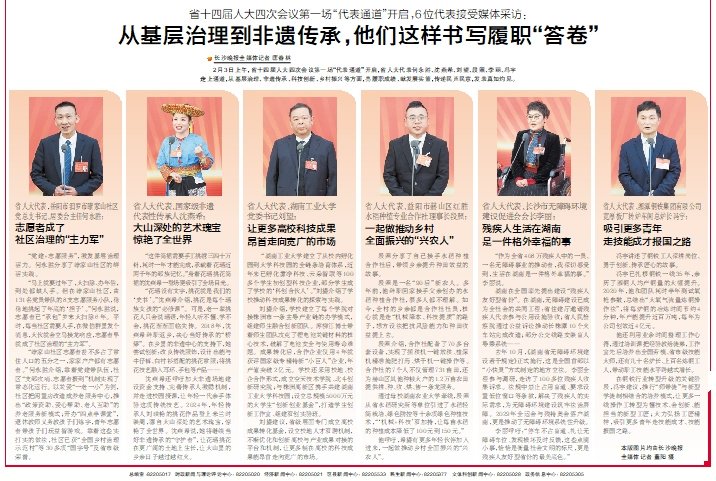
Group 1: Community Governance and Volunteerism - The community of Liaojiashan has effectively utilized volunteers, with 131 party members leading 8 volunteer teams, significantly contributing to community governance and activities such as year-end cleaning [5] - Approximately 20% of the community's permanent residents are volunteers, showcasing a strong culture of volunteerism and community engagement [5] - The community has received over 30 national and provincial honors, including being recognized as a "National Rural Governance Demonstration Village" [5] Group 2: Cultural Heritage and Non-material Cultural Inheritance - The art of embroidery in the Hmong culture, which requires extensive manual labor, is at risk of being lost as younger generations struggle to learn the craft [7] - Efforts to innovate traditional clothing and integrate embroidery techniques into modern products have been initiated to preserve this cultural heritage [7] - The call for increased funding for cultural heritage sites and improved incentive mechanisms for inheritors has been emphasized to ensure the continuation of these traditions [7] Group 3: Technology and Innovation in Education - Hunan University of Technology has established a comprehensive incubation system, resulting in the creation of over 100 student-led tech startups [9] - The university's collaboration with local industries has led to significant advancements in lithium battery technology, with a partner company achieving an annual output value exceeding 200 million yuan [9] - A proposal for a provincial-level fund to support the commercialization of university research outcomes has been made to enhance the connection between academia and industry [9] Group 4: Agricultural Innovation and Rural Revitalization - The rice planting cooperative led by a young entrepreneur has adopted mechanization and technology to improve farming efficiency and reduce costs by 100 to 150 yuan per mu [11] - The cooperative provides comprehensive agricultural services to local farmers, enhancing productivity across 12,000 mu of farmland [11] - There is a call for more young individuals to engage in agriculture and contribute to rural revitalization efforts [11] Group 5: Accessibility and Disability Rights - Hunan has taken the lead in establishing a "disability-friendly province," with initiatives involving disabled representatives in public facility assessments [13] - The implementation of local legislation aimed at improving accessibility for disabled individuals has been highlighted, addressing practical needs such as the prohibition of occupying blind paths [13] - The upcoming 2029 National Games and Special Olympics in Hunan is expected to further enhance the systematic upgrade of accessibility environments [13] Group 6: Skills Development in the Steel Industry - The steel industry has seen significant productivity improvements, with innovative practices leading to an annual increase in production capacity by nearly one million tons [16] - A focus on training and mentoring has resulted in the development of skilled workers, including national role models and skilled masters [16] - Recommendations for combining traditional apprenticeship models with modern training methods have been made to attract youth to skilled trades [16]
锚定未来产业 做好“产业出题、科技答题”大文章
Zheng Quan Ri Bao· 2026-02-03 16:18
其次,科技要答好题,强化创新协同发力。答题的核心是激发创新主体活力,打通科研成果从实验室走向市场的"最后一 公里"。要发挥新型举国体制优势,加大重点领域关键核心技术攻关力度,推动创新资源向企业集聚,让企业既是未来产业的 出题者,也是科技攻关的答题者、创新成果的受益者,培育壮大科技领军企业和专精特新中小企业。同时,搭建产学研协同平 台,完善中试服务网络,降低转化门槛,让经过验证的创新成果快速转化为产业竞争力,让科技答题更具针对性和实效性。 最后,机制要保好驾,健全保障精准发力。要完善政策支持体系,优化财税、科技金融等政策,做好人才的培养、引进、 使用工作,为出题和答题提供坚实支撑。要强化监管引导,既鼓励科技人员敢闯敢试,也防范未来产业发展风险,确保"放得 活、管得好"。要建立科学评价体系,以产业效益、市场认可作为"答题"的评分标准,倒逼科技攻关与产业需求同频共振。 总之,从实验室的"技术星火"到产业化的"燎原之势",从单个领域的突破到全产业链的跃升,唯有坚守需求导向、深耕创 新实践,让产业精准出题不偏航、科技高效答题不缺位、机制全力护航不松懈,才能推动未来产业加速成长,为我国经济高质 量发展筑牢坚实的产业根基。 ...
打通产学研转化快车道 海博思创深度参与国转中心建设
海博思创· 2026-02-03 09:25
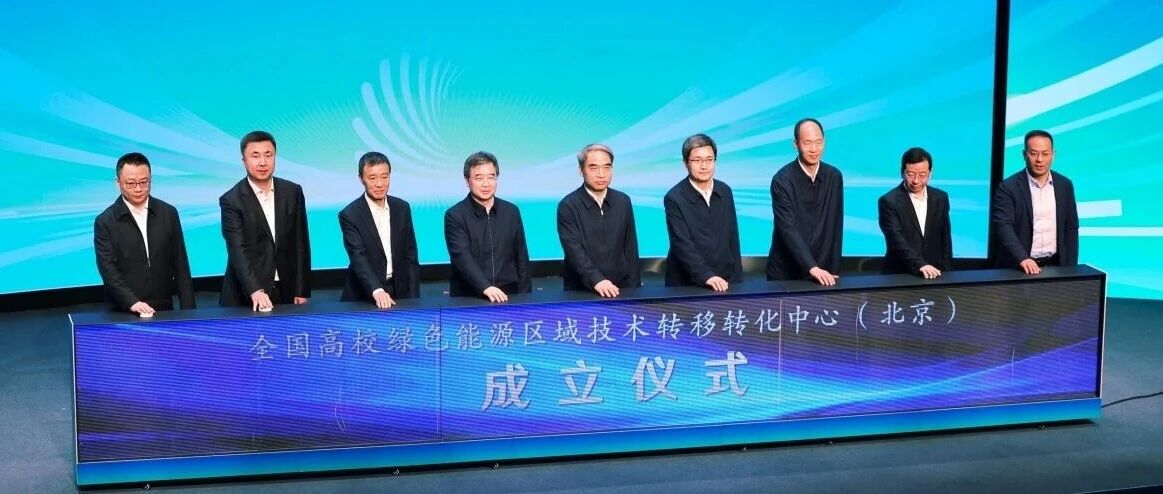
Core Viewpoint - The establishment of the National University Green Energy Regional Technology Transfer Center (Beijing) marks a significant step in promoting the transformation of scientific research achievements into productive forces, with a focus on collaboration among universities, enterprises, and government [1][3]. Group 1: National University Green Energy Regional Technology Transfer Center - The center is the third national-level technology transfer center approved by the Ministry of Education and is the only one in the green energy sector [3]. - It aims to gather resources from leading universities to accelerate the conversion of scientific research results into practical applications [3]. Group 2: Company Involvement and Contributions - Haibo Sichuang, as a representative of new energy storage chain enterprises, has joined the center's council and received a work station license, enhancing collaboration between academia and industry [1][3]. - The company’s CEO, Zhang Jianhui, emphasized the center's role in providing multi-dimensional support to enterprises, addressing challenges in technology incubation and facilitating the transformation of laboratory technologies into practical benefits [4]. Group 3: Future Directions and Collaborations - The company plans to increase R&D investment, focusing on areas such as power electronics, grid technology, and artificial intelligence, while actively participating in the center's technology transfer initiatives [4]. - The collaboration will include joint research centers, talent exchange, and shared platforms to enhance the synergy between scientific research and industrial application [4].
2026全国两会代表委员与中小企业座谈会在京举行
Zhong Guo Jing Ji Wang· 2026-02-03 08:59
针对中小企业家的诉求,行业专家从政策解读、法治保障、市场运作等多维度提供深度解析与专业支 撑。"公平竞争是优化营商环境的核心要义。"工信部原中小企业司副司长王建翔围绕破除隐性壁垒、强 化政府采购支持中小企业发展等政策措施展开深入分析;中国中小商业企业协会科技总监鞠维刚聚焦金 融工具赋能科技成果转化,表示"科技成果不落地转化,便是沉睡的智力财富";最高人民检察院检察听 证员孙莹就涉企刑事案件落实"少捕慎诉慎押"政策提出专业见解,认为"司法温度铸就企业信心,法治 护航方能行稳致远"。 与会代表委员结合自身履职领域作出积极回应与前瞻展望。全国人大代表、北京大学国际关系学院教授 李义虎从宏观战略视角,精准分析中小企业发展面临的机遇与挑战,表示"中小企业是国民经济的毛细 血管,是产业生态的关键一环,其活力直接关系经济大盘稳定"。全国政协委员王汝芳、曲永义分别结 合产业经济观察经验,就科技创新突破、产业升级路径、政策协同落地等提出前瞻性思考。(经济日报 记者敖蓉) 近日,由中国中小商业企业协会主办的"2026全国两会代表委员与中小企业座谈会"在北京举行。多位全 国人大代表、政协委员,以及政策研究、产业经济、法律、金融等领 ...
嘉兴科技成果转化指数何以稳居全省第一梯队
Xin Lang Cai Jing· 2026-02-03 00:13
Group 1 - The core viewpoint of the article highlights that the latest technology achievement transformation index report from Zhejiang Province shows that Hangzhou, Ningbo, and Jiaxing have ranked the top three in the province for 2024, with Jiaxing maintaining a significant lead over the fourth-ranked city [1] - Jiaxing has established a comprehensive mechanism for the entire process of technology achievement transformation, focusing on collaborative innovation between industry, academia, and research [1][2] - The city has recognized 22 municipal-level concept verification centers, with 6 included in the provincial construction list, facilitating the verification and incubation of numerous projects [3] Group 2 - The "4+X" measurement framework introduced in the latest index evaluation focuses on four core dimensions: innovation research and development, achievement output, achievement transaction, and transformation performance, along with several unique indicators [2] - Jiaxing has hosted 14 innovation and entrepreneurship competitions, attracting 301 projects and resulting in 58 projects landing in the city, demonstrating a robust ecosystem for technology transfer [3] - The city has initiated a "Technology Vice President" program, pairing experts with enterprises to enhance the alignment of technical needs and innovation resources [4][5] Group 3 - Jiaxing is advancing a pilot reform for the integrated development of education and technology talent, with over 30 reform tasks underway, including the construction of a "first-use, then-transfer" achievement pool [5][6] - The city has established a mechanism for the entire process of technology achievement cultivation, evaluation, and closed-loop service, contributing to the construction of a highland for technology achievement transformation in the Yangtze River Delta [7] - Jiaxing has focused on enhancing the quality and efficiency of scientific research platforms, promoting the establishment of joint laboratories and research centers with enterprises [7]
民生金租:定制化服务助力新兴产业发展
Jin Rong Jie Zi Xun· 2026-02-02 06:59
Core Viewpoint - The article highlights the successful collaboration between a high-tech company in Inner Mongolia and Minsheng Financial Leasing, which provided tailored financial solutions to support the company's expansion in the new materials sector, addressing both immediate funding needs and long-term growth potential [1][2][3]. Group 1: Company Overview - The high-tech company has invested 6.5 billion yuan in a new materials project, covering an area of 2.46 million square meters and establishing six production lines [1]. - The second phase of the project includes four production lines, with a daily input capacity of 850 tons, significantly enhancing production capacity and competitiveness [1]. - The company has developed a fourth-generation new material using desert sand and limestone, featuring zero formaldehyde and zero radiation, with a temperature stability range of -50℃ to 800℃ and A+ fire resistance [1]. Group 2: Financial Support and Impact - The second phase of the project is expected to generate an annual output value of 1.32 billion yuan and create over 5,000 jobs, facilitating entry into high-end sectors like aerospace and precision processing [2]. - Minsheng Financial Leasing provided a customized equipment financing lease solution of 50 million yuan, leveraging the company's existing equipment and core technology patents without requiring additional fixed asset collateral [2]. - The financing arrangement was completed in under two months, ensuring timely funding for the second phase of the project [2]. Group 3: Market Response and Future Outlook - The company has received significant interest at the Xiamen International Stone Fair, with over 300 inquiries and a 15% immediate cooperation intention from clients, including a large order from a South American distributor [3]. - Minsheng Financial Leasing aims to continue its focus on emerging industries, enhancing financial services through innovative products and efficient service systems to support the growth of the new materials sector and contribute to high-quality economic development [3].