
AI算法

Search documents
这一地首条无线充电公路测试成功,边走边充能带来什么?
Zhong Guo Qi Che Bao Wang· 2025-11-20 03:27
Core Viewpoint - The successful testing of wireless charging for electric vehicles on the A10 highway near Angervilliers, France, presents a promising solution to the "charging anxiety" and "range anxiety" faced by electric vehicle users [2][3]. Group 1: Technology and Implementation - The test road features a complex energy transmission network with approximately 900 high-power induction coils powered by the grid, allowing electric vehicles to charge wirelessly while in motion, even at speeds exceeding 100 km/h [3]. - France plans to deploy dynamic wireless charging lanes on 75% of its highways, potentially allowing electric vehicles to operate with smaller battery packs, thus reducing costs and improving energy efficiency [3][4]. - The dynamic wireless charging technology can significantly benefit commercial vehicles, enabling continuous charging during transit, which enhances operational efficiency and reduces costs [4]. Group 2: Challenges and Limitations - Despite the promising outlook, wireless charging technology faces technical challenges, including lower charging efficiency compared to traditional wired methods, with static wireless charging at around 90% efficiency and dynamic wireless charging at approximately 85% [5]. - High costs associated with wireless charging infrastructure, which can be about twice the cost of traditional charging stations, pose a significant barrier to widespread adoption [5][6]. - The need for effective grid load management and road reconstruction to accommodate wireless charging systems presents additional challenges, including potential disruptions to traffic and high construction costs [6]. Group 3: Future Prospects - The development of metamaterial coil technology and AI algorithms is expected to enhance the efficiency of wireless charging systems, enabling smarter energy distribution and reducing energy waste [7]. - Industry forecasts suggest that high-end vehicles will be the primary adopters of wireless charging technology between 2025 and 2030, with a gradual increase in static wireless charging stations in public areas [8]. - By 2035, wireless charging is anticipated to become a mainstream energy replenishment method, integrating with renewable energy sources to support the goal of "zero-carbon travel" [8][9].


【风口研报】智能终端+AI算法+场景生态,公司三位一体战略深度参与多行业数字化进程,国内市场利润回暖,国际市场更实现爆发式增长
财联社· 2025-11-17 10:27
Group 1 - The article highlights a new materials company that successfully replaced imported products since 2007 and has been expanding against the trend in recent years, overcoming key grades from competitors like Toray. Analysts believe the company's short-term financial pain is over, indicating a performance turning point [1] - The company employs a three-in-one strategy combining smart terminals, AI algorithms, and scenario ecosystems, deeply participating in the digital transformation across multiple industries. While domestic market profits are recovering, the international market is experiencing explosive growth [1]

安徽郎溪探索全域土地监测执法监管新模式
Zhong Guo Zi Ran Zi Yuan Bao· 2025-11-14 02:29
同时,郎溪县按区域优先级实行差异化影像获取,针对城镇开发边界内50平方公里的核心区域按照 每月提取1次、城镇开发边界外的200平方公里其他重点区域按照每两月提取1次的频次,针对其他非重 点区域按照每季度省级下发遥感影像进行结果运用,实现全县大范围动态监测。郎溪县还将获取的影像 通过几何校正、辐射校正及数据融合处理,确保影像数据精度与多波段信息完整性,为执法监测管理提 供有效数据支撑。 此外,郎溪县以"精准锁定违法违规行为、夯实合法性判定依据"为核心,主动掌握区域内土地利用 日常变化,依托提取的分区域变化图斑数据,联动多维度基础数据开展深度叠加核验,生成包含矢量数 据、四至界限、区域位置等基本信息的图斑清单,通过快捷有效的核查指挥和快速反应,为违法图斑的 现场核查和查处整改预留充分处置时间,实现自然资源执法从被动响应核查到主动预警处置的跨越。 今年以来,为主动适应自然资源执法监管工作的新形势、新变化、新要求,安徽省郎溪县全面落 实"早发现、早制止、早查处、早预警"执法机制,探索建立全域土地监测一体化监管体系,切实维护自 然资源管理秩序。 依据高分辨率遥感影像,郎溪县采用"AI算法初筛+人工精准复核"的协同工作模 ...
会展激活流量:成都上演席卷全城的“价值风暴”
Zhong Guo Jing Ji Wang· 2025-11-13 23:36
Core Insights - Chengdu is experiencing a transformation in its exhibition economy, evolving from traditional models to a more integrated approach that drives industry and consumption [1][2] Group 1: Exhibition Industry Evolution - The concept of "exhibition-industry integration" in Chengdu represents a shift from "physical stacking" to "chemical fusion," focusing on creating an innovative ecosystem through the connection of upstream and downstream resources [2] - By 2025, Chengdu is expected to host over 1,000 exhibitions, covering a total area of approximately 13.5 million square meters, showcasing a comprehensive exhibition matrix across various sectors [2] - The total revenue from Chengdu's exhibition industry is projected to reach 153.61 billion yuan in 2024, with direct income of 15.83 billion yuan and an additional 137.78 billion yuan generated through related activities [2] Group 2: Economic Impact and Consumer Engagement - The 112th National Sugar and Wine Fair achieved a total exhibition area of 750,000 square meters, generating 11.45 billion yuan in revenue for the city's service industry, highlighting the event's role as a catalyst for industrial development [3] - Chengdu's exhibitions are evolving from mere showcases to becoming integral parts of the industrial ecosystem, enhancing consumer engagement and driving local economic growth [3][4] - The integration of various sectors during events, such as the Chengdu International Auto Show, has led to significant increases in consumer activity, with total contracts amounting to 5.753 billion yuan and a boost of 2.12 billion yuan to the city's service sector [5] Group 3: Digital Transformation and Sustainability - Chengdu is undergoing a digital transformation in its service offerings, moving from a standardized support system to an ecosystem that actively empowers industrial innovation [6] - The introduction of digital twin exhibition halls and AI algorithms for precise matching between exhibitors and attendees reflects Chengdu's commitment to creating a sustainable and efficient exhibition environment [6] Group 4: Future Directions and Urban Integration - The future of Chengdu's exhibition industry lies in establishing long-term governance mechanisms that align exhibition goals with industrial positioning, thereby making exhibitions a key interface for urban development [7] - The importance of enhancing international participation in Chengdu's exhibitions is emphasized, aiming to attract more international exhibitors and professional buyers to broaden the city's exhibition landscape [7]
HeartBeam(BEAT) - 2025 Q3 - Earnings Call Presentation
2025-11-13 21:30
Company Overview & Strategy - HeartBeam aims to shift cardiac care from hospitals to home, similar to trends seen with glucose, blood pressure, and oxygen monitors[15, 16] - The company's synthesized 12-Lead ECG system, combined with on-demand cardiologist interpretation, is the foundation for a new cardiac care model[21] - HeartBeam is building an ecosystem around its core technology to deepen patient engagement and provide actionable insights for physicians[21, 23] - The company's near-term commercial strategy focuses on creating a new category, market entry through pilot programs, a focused commercial model, and patient retention[30] Regulatory & Clinical Milestones - HeartBeam received foundational FDA clearance for its system for arrhythmia assessment in December 2024[9, 13, 25] - FDA 510(k) clearance for the 12-Lead ECG Synthesis Software for arrhythmia assessment is anticipated in Q4 2025[13, 25, 34] - A pivotal clinical study (VALID-ECG) showed 93.4% overall diagnostic agreement for arrhythmia assessment[25] - New data presented at AHA Scientific Sessions in November 2025 supports HeartBeam's potential for early heart attack detection[27] Financial Performance (Q3 2025) - Total operating expenses were $5290 thousand[31] - Net loss was $5255 thousand, with an Earnings per Share (EPS) of $(0.15)[31] - Net cash used in operating activities was $3160 thousand, an 8% decrease quarter-over-quarter[31, 33] - Cash and cash equivalents and short-term investments totaled $1856 thousand as of September 30, 2025[31]

沪市债券新语丨春秋航空时隔九年重返交易所债券市场 “25春秋K1”发行“紧盯”科技研发
Xin Hua Cai Jing· 2025-11-13 15:28
Core Viewpoint - Spring Airlines successfully launched its first technology innovation corporate bond, "25 Spring Airlines K1," with a scale of 800 million yuan and a coupon rate of 1.98%, attracting significant market interest and exceeding expectations [1][7]. Company Overview - Founded in 2004, Spring Airlines is one of China's first private airlines, listed on the Shanghai Stock Exchange in 2015, focusing on low-cost air travel and catering to price-sensitive travelers [2][6]. - The company operates 251 flight routes, including 192 domestic routes and 55 international routes, with a fleet of 133 Airbus A320 aircraft, making it a leading low-cost carrier in Northeast Asia [6]. Bond Issuance Insights - The bond issuance was driven by the need for capital expenditures and debt optimization, supported by a favorable monetary policy environment and a recent AAA credit rating [7][10]. - The bond's success reflects investor confidence in Spring Airlines as a "safe asset" and the supportive stance of regulatory bodies towards private enterprises [10]. Technology and Innovation Focus - Spring Airlines emphasizes technology innovation as a key differentiator in a competitive airline market, investing significantly in R&D with nearly 600 IT professionals [8][9]. - The company has implemented AI technologies across various operational areas, enhancing efficiency and reducing carbon emissions [9]. Future Business Strategy - The company aims to improve cost control while maintaining safety, with plans to expand international routes and tap into emerging travel markets in China [11]. - Spring Airlines intends to continue utilizing bond financing as a crucial funding source, with expectations of further bond issuances in the coming year [7][10].


算法协商 守护新业态劳动者安全与公平
Zhong Guo Qing Nian Bao· 2025-11-11 20:50
Core Points - The implementation of AI algorithms in logistics platforms is enhancing safety and efficiency for drivers, allowing for automatic identification of hazardous materials and reducing penalties for order cancellations [2][3] - The national trade union is promoting "algorithm negotiation" to protect the rights of gig economy workers, with 14 platforms already participating, covering over 20 million workers [1][2] Group 1: AI Algorithm Implementation - The AI safety monitoring system can detect hazardous materials in real-time, leading to a 30% reduction in daily risk incidents related to dangerous goods transportation [2] - The new algorithm model allows for proactive management of safety issues, shifting from reactive to preventive measures [3] Group 2: Labor Rights and Negotiation - The "2025 Agreement" between delivery platforms and workers addresses labor compensation, rest periods, and safety measures, aiming to improve working conditions [4] - The agreement includes enhancements to the dispatch algorithm to account for dynamic factors like traffic and weather, reducing the likelihood of delivery delays [4] Group 3: Industry Collaboration and Feedback - Companies like Meituan are conducting face-to-face negotiations with delivery workers to gather feedback and improve safety protocols [5] - The introduction of a "no penalty for delays" mechanism is being trialed in over 30 cities, with plans for full implementation by the end of the year [5][6]
移远通信(603236):AIOT景气度提升,盈利能力持续改善
ZHONGTAI SECURITIES· 2025-11-10 13:29
Investment Rating - The report maintains a "Buy" rating for the company [6][11]. Core Views - The company has shown significant improvement in profitability and operational efficiency, with a diversified business matrix that enhances growth resilience [8]. - The revenue for the first three quarters of 2025 reached 17.877 billion, a year-on-year increase of 34.96%, while the net profit attributable to the parent company was 733 million, up 105.65% year-on-year [7]. - The company is positioned as a leader in the global cellular IoT module market, with a strong product matrix and market share [8]. Financial Performance Summary - The company forecasts revenue growth from 13.861 billion in 2023 to 36.375 billion by 2027, with a compound annual growth rate (CAGR) of approximately 22% [6]. - The net profit attributable to the parent company is expected to grow from 91 million in 2023 to 1.511 billion by 2027, reflecting a significant increase in profitability [6]. - The earnings per share (EPS) are projected to rise from 0.34 in 2023 to 5.78 by 2027 [6]. Business Growth Drivers - The automotive and wireless gateway segments are identified as key growth engines, with a complete product ecosystem covering smart cockpits, 4G/5G, and high-precision positioning [8]. - The company has established partnerships with over 60 Tier 1 suppliers and more than 40 vehicle manufacturers, indicating strong market penetration [8]. - The ODM business is also experiencing rapid growth, providing solutions for various industries including payment and smart mobility [8]. Investment Recommendations - The report suggests that the company will continue to benefit from its production layout and operational efficiencies, with adjusted profit forecasts for 2025-2027 [8]. - The expected net profits for 2025, 2026, and 2027 are 949 million, 1.198 billion, and 1.511 billion respectively, with corresponding EPS of 3.63, 4.58, and 5.78 [8].

筑牢安全防线、释放产业效益 5G-A携手AI激活低空经济动能
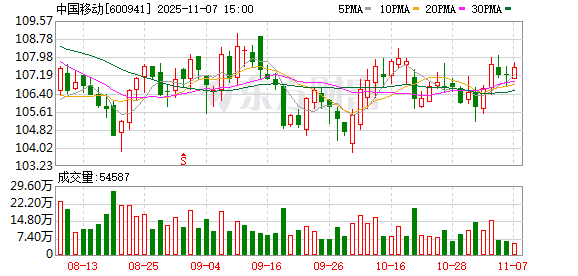
Zheng Quan Shi Bao· 2025-11-09 20:45
Core Insights - The article highlights the rapid development and application of low-altitude economy projects in China, particularly by China Mobile, which is expected to enhance economic growth and efficiency in various sectors such as healthcare and tourism [2][5]. Group 1: Low-altitude Economy Applications - China Mobile's low-altitude economy projects are expanding in grassroots city governance, tourism, and healthcare, with million-level applications expected to be implemented in the coming years [2]. - The integration of 5G and AI technologies is crucial for the success of low-altitude applications, enhancing safety and operational efficiency [2][7]. Group 2: Healthcare Innovations - The Deyang People's Hospital has established a low-altitude medical logistics system using drones, significantly improving the transportation of medical samples and reducing turnaround time from 15 minutes to 8 minutes, a decrease of approximately 46.67% [3][5]. - The hospital plans to introduce medium-sized drones capable of carrying 10 kilograms to further enhance its logistics capabilities [4]. Group 3: Environmental Monitoring - The Qiqu Mountain Scenic Area has implemented a "Forest Protection System" that combines 5G-connected drones and digital twin technology for effective monitoring and management of forest areas [4][7]. - Drones have improved the efficiency of area inspections, reducing the time required from 2 hours to 30 minutes and lowering inspection costs from 400 yuan to 50 yuan [5]. Group 4: Agricultural Advancements - The "Taizi Tea Digital Management Platform" utilizes multi-spectral drones for pest monitoring and growth data collection, resulting in a 7% increase in tea yield and over 25% reduction in labor costs [5][6]. - The platform integrates cloud computing and AI technologies to enhance agricultural management and decision-making [8]. Group 5: Safety and Regulation - The implementation of 5G-A technology is essential for ensuring the safety and regulation of low-altitude flights, allowing for real-time monitoring and data analysis [7][9]. - 5G-A technology enhances the detection capabilities of drones, allowing for accurate differentiation between various flying objects, thus improving safety measures [9].

破480亿的即时物流订单量如何完成?探究“万物到家”背后的“科技范”
Yang Shi Wang· 2025-11-09 03:59
Core Insights - The express delivery industry in China is experiencing a peak season, with daily express delivery volume exceeding 600 million packages [1] - The rise of instant retail, driven by advancements in internet technology and diverse consumer demands, has led to a significant increase in logistics efficiency [1] - The annual order volume for instant logistics in China has surpassed 48 billion orders, with services like same-day and next-day delivery becoming commonplace [1] Group 1: Instant Retail and Logistics - Instant logistics relies on technologies such as drones and optimized algorithms to enhance delivery speed and efficiency [1] - The concept of "flash warehouses" allows for rapid order fulfillment, with workers required to sort and package orders within three minutes [4][6] - Flash warehouses are stocked with a wide variety of products, including daily necessities and seasonal items, reflecting changing consumer preferences [6] Group 2: Delivery Efficiency - The average delivery time for orders from flash warehouses is around 20 to 30 minutes, facilitated by a well-prepared inventory and a sufficient number of delivery personnel [9][12] - An intelligent decision-making platform processes vast amounts of data to optimize order distribution and route planning in real-time [9][23] - The logistics peak season has seen a 20% year-on-year increase in large item transportation, highlighting the growing demand for efficient logistics solutions [11] Group 3: Advanced Warehouse Technologies - Automation in warehouses has significantly improved efficiency, with robots enhancing sorting speed and accuracy [18][21] - The use of digital twin technology allows for real-time monitoring and optimization of warehouse operations, improving overall logistics performance [23] - The integration of AI algorithms enables precise matching of inventory with consumer demand, ensuring timely delivery of both high and low-frequency items [23][24]
