Workflow
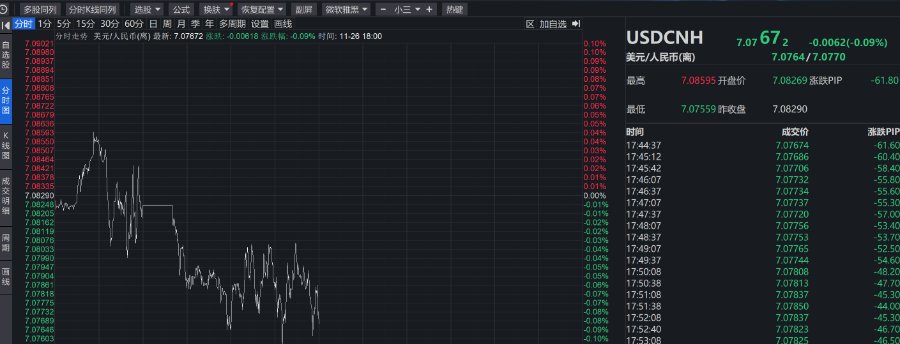
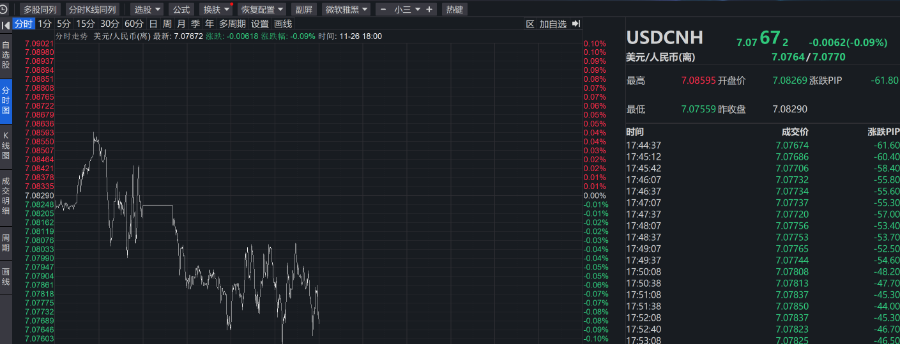
人民币汇率
icon
Search documents
人民币对美元中间价报7.1102 调贬47个基点
Zhong Guo Jing Ji Wang· 2025-10-09 01:33
中国经济网北京10月9日讯 今日,人民币对美元汇率中间价报7.1102,较前一交易日调贬47个基 点。 中国人民银行授权中国外汇交易中心公布,2025年10月9日银行间外汇市场人民币汇率中间价为:1 美元对人民币7.1102元,1欧元对人民币8.2825元,100日元对人民币4.6648元,1港元对人民币0.91377 元,1英镑对人民币9.5477元,1澳大利亚元对人民币4.6927元,1新西兰元对人民币4.1245元,1新加坡 元对人民币5.4972元,1瑞士法郎对人民币8.8887元,1加拿大元对人民币5.1067元,人民币1元对1.1277 澳门元,人民币1元对0.59165马来西亚林吉特,人民币1元对11.4219俄罗斯卢布,人民币1元对2.4079南 非兰特,人民币1元对198.49韩元,人民币1元对0.51559阿联酋迪拉姆,人民币1元对0.52660沙特里亚 尔,人民币1元对47.2464匈牙利福林,人民币1元对0.51373波兰兹罗提,人民币1元对0.9018丹麦克朗, 人民币1元对1.3236瑞典克朗,人民币1元对1.4008挪威克朗,人民币1元对5.85725土耳其里拉,人民币1 元对2 ...
美联储降息25个点!贷款便宜了,积蓄却缩水,普通人仍被割韭菜?
Sou Hu Cai Jing· 2025-10-08 10:38
Group 1 - The Federal Reserve announced a 25 basis point cut in the federal funds rate target range to 4.00%-4.25%, marking the first rate adjustment in nine months and aligning with market expectations [1][2] - The core motivation for the rate cut is the significant cooling of the U.S. job market, with recent employment data showing stagnation and unemployment claims reaching a near four-year high [2][5] - The decision reflects a balancing act between stabilizing employment through accommodative policies while managing inflation, which remains above the 2% target [2][5] Group 2 - The Federal Open Market Committee (FOMC) showed strong unity, with 11 out of 12 members supporting the 25 basis point cut, indicating a more cohesive decision-making process than anticipated [5] - The median rate forecast suggests one more rate cut next year, with some members indicating the possibility of two additional cuts this year, though uncertainty remains [5][7] - The Fed's economic growth outlook has improved slightly, with upward revisions to GDP growth forecasts for 2025, 2026, and 2027, alongside a downward adjustment in unemployment rate expectations [7] Group 3 - The Fed's rate cut creates favorable conditions for the People's Bank of China to implement its own easing measures, such as rate cuts and reserve requirement ratio reductions [9] - Market expectations indicate a potential further reduction of 20-30 basis points in the 5-year LPR, which could lower mortgage rates and stimulate demand in the real estate market [9][10] - The depreciation of the dollar post-rate cut puts upward pressure on the RMB, potentially leading to a short-term appreciation that could lower import costs but also impact export competitiveness [10][11] Group 4 - The narrowing interest rate differential enhances the attractiveness of RMB assets, leading to increased foreign capital inflows into the Chinese market [13] - However, the influx of capital may heighten market volatility and create potential asset bubble risks, necessitating stronger macro-prudential management [13] - Sectors sensitive to interest rates, such as technology and innovative pharmaceuticals, are expected to benefit from the Fed's easing cycle, while traditional industries face increased pressure to adapt [13][15] Group 5 - The Fed's rate cut is expected to provide a relatively loose external environment for the Chinese economy, potentially boosting foreign capital return and market confidence [17] - Long-term challenges include managing imported inflation, currency fluctuations, and the need for industrial transformation [17] - By enhancing industrial upgrades and financial regulation, China aims to convert external opportunities into internal growth drivers, fostering stable development amid global economic adjustments [17]
不确定性增加,人民币或震荡前行
Market Overview - In September 2025, the RMB exchange rate fluctuated within the range of 7.1008 to 7.1476, with the onshore rate between 7.1056 and 7.1476, and the offshore rate between 7.1023 and 7.1452[2][3] - The U.S. Federal Reserve lowered the federal funds rate target range by 25 basis points to 4.00%-4.25% on September 17, 2025, while the European Central Bank and other major economies maintained their rates[2][3] Economic Factors - The unexpected decline in U.S. employment data for August, with only 22,000 jobs added versus an expected 75,000, increased expectations for a Fed rate cut in September[3][5] - The successful hosting of the Shanghai Cooperation Organization summit and the 80th anniversary military parade enhanced China's international standing and asset attractiveness[3][5] Future Outlook - The RMB exchange rate is expected to continue fluctuating in the range of 7.00 to 7.25 in October 2025[1][6] - Factors supporting the RMB include China's economic and military advancements, while external uncertainties and potential domestic economic slowdowns pose risks[7]
主题报告 | 人民币汇率波动与美联储政策预期
Sou Hu Cai Jing· 2025-10-07 13:12
Core Viewpoint - The seminar focused on the fluctuations of the Renminbi (RMB) exchange rate and the expectations of the Federal Reserve's policies, highlighting the interplay between U.S.-China economic relations and currency movements [1][3]. Group 1: RMB Exchange Rate Trends - Since April 2022, the RMB has been under pressure, depreciating from around 6.3 to below 7.3, with a stabilization around 7.3 in the second half of 2023 [4][5]. - The depreciation of the RMB post-2022 is attributed to the divergence in economic cycles and monetary policies between China and the U.S., leading to a negative interest rate differential [5][6]. - The RMB's exchange rate is not significantly deviating from its equilibrium level, with both upward and downward factors present, suggesting a need for a risk-neutral market approach [3][4]. Group 2: Factors Influencing RMB's Strength - The RMB's recent strength against the dollar is driven by the weakening of the "American exceptionalism" narrative, improvements in the Chinese economy, and a thawing in U.S.-China trade relations [3][9]. - Historical context shows that during Trump's first term, tariffs led to a depreciation of the RMB, but the current environment suggests a potential for appreciation due to various factors, including market sentiment and economic recovery [10][12]. - The RMB's appreciation is also supported by the Chinese government's proactive measures to mitigate external shocks and improve economic conditions [19][20]. Group 3: Federal Reserve Policy Outlook - The Federal Reserve is expected to continue with two more rate cuts in 2025, with the nature of these cuts being crucial for the dollar's performance [22][24]. - The Fed's independence is under threat due to political pressures, particularly from the Trump administration, which could impact its policy decisions and market perceptions [25][27]. - The Fed's dual mandate of managing employment and inflation is becoming increasingly complex, with rising inflation and a weakening labor market posing challenges [26][28]. Group 4: Implications for the Dollar and Global Markets - The weakening of the dollar is influenced by Trump's policies, which disrupt traditional economic cycles and could lead to a rebalancing of global assets favoring non-U.S. assets [32][33]. - The current environment suggests that the RMB may benefit from a weaker dollar, especially if U.S.-China trade relations stabilize and economic conditions improve in China [38][39].
美联储降息引发机遇,中国三大领域受益,普通百姓财富迎来新增长
Sou Hu Cai Jing· 2025-10-06 18:38
Group 1 - The Federal Reserve has lowered the benchmark interest rate by 25 basis points, now between 4.00% and 4.25%, indicating a potential for further rate cuts in the future [1] - The reduction in interest rates has led to a shift in capital flows, with foreign investments increasingly directed towards China due to its perceived stability and lower asset prices [3][5] - The Chinese central bank has injected 195 billion yuan into the market to ease short-term liquidity pressures, following a previous reserve requirement cut [6] Group 2 - The exchange rate of the yuan against the dollar has dropped below 7.1, with foreign capital showing increased interest in Chinese government bonds, purchasing an additional 12 billion yuan in September compared to August [5][10] - The 10-year government bond yield rose to 1.78% by the end of September, with foreign investors participating, but expectations of further rate cuts by the Federal Reserve create uncertainty [10] - Companies are advised to manage their debt structures carefully, favoring long-term financing over short-term loans, especially in light of fluctuating exchange rates [12] Group 3 - The current financial environment presents both opportunities and risks, with the potential for capital inflow into the real economy remaining uncertain [14][18] - Market participants are advised to be cautious, avoiding excessive leverage and ensuring adequate emergency funds due to the unpredictable market conditions [12][16]
美联储降息,中国有三重机遇,对老百姓的钱袋子有何影响?
Sou Hu Cai Jing· 2025-10-06 08:01
Core Viewpoint - The Federal Reserve's decision to lower the federal funds rate by 25 basis points to 4.00%-4.25% in September 2025 marks the first rate cut since December 2024, with expectations of two more cuts within the year, totaling a 75 basis point reduction, reshaping global capital flows and diminishing the influence of the dollar tide [1][4]. Group 1: Monetary Policy and Capital Flow - The high-interest era in the U.S. attracted global capital, creating a financial leverage model that maintained U.S. financial resilience but also led to significant market bubbles. The onset of the rate cut cycle is causing a decline in the attractiveness of dollar assets, prompting institutions to liquidate assets to avoid future yield shrinkage, thus redistributing global liquidity [4][6]. - The current complex global geopolitical environment is driving capital towards markets with higher safety margins, with China emerging as a key alternative due to its stable development environment and undervalued asset prices. The "Belt and Road" initiative is guiding foreign investment into the real economy, making it harder for short-term dollar flows to withdraw easily [6][19]. Group 2: Impact on Currency and Asset Pricing - The increase in dollar supply is weakening its exchange rate, with the RMB/USD exchange rate surpassing 7.1 in September 2025 and maintaining at 7.1195 on October 3. This appreciation reduces import costs and enhances the international pricing of domestic assets, with gold prices rising over 40% this year, reflecting a reassessment of dollar credit and increased attractiveness of RMB assets [9][12]. - Foreign capital is accelerating its investment in the Chinese market, despite short-term fluctuations in the bond market. The improvement in the interest rate differential between China and the U.S. is expected to attract more foreign investment in Chinese bonds [10][12]. Group 3: Market Dynamics and Challenges - The A-share and Hong Kong markets are showing upward trends, with a favorable financing environment for quality enterprises, particularly in coastal economic zones and "Belt and Road" regions, creating new wealth opportunities. However, the current monetary circulation shows a high multiplier effect, leading to cash flow challenges for businesses and individuals [12][14]. - Short-term speculative capital may disrupt local markets and inflate asset bubbles, while the real economy still faces financing disparities, particularly for small and medium-sized enterprises. The uncertainty surrounding the Fed's rate cut pace could complicate capital flows further [14][15]. Group 4: Strategic Opportunities and Recommendations - China's monetary policy needs to balance "stabilizing growth" and "preventing risks." The focus should remain on targeted monetary easing without large-scale loosening, with 10-year government bond yields expected to fluctuate between 1.70% and 1.90% [15][17]. - Key indicators to monitor include the Fed's rate cut schedule and domestic monetary policy actions, which will directly influence market expectations. Companies should optimize debt structures and reduce reliance on short-term borrowing, while individuals should manage leverage and prioritize emergency fund reserves [17][20].
人民币为何不升值,美元降息风险加剧,美联储面临最大挑战
Sou Hu Cai Jing· 2025-10-05 17:54
Core Viewpoint - The financial market during the 2025 National Day holiday is unusually calm, resembling a "breath-holding contest" as participants await significant movements in response to the Federal Reserve's interest rate decisions [1][12]. Group 1: Market Reactions - The Federal Reserve's announcement of a 25 basis point interest rate cut has led to a muted response in the currency markets, with the onshore RMB closing around 7.12 and the offshore RMB showing slight fluctuations without major trading activity [3][7]. - Despite expectations of RMB appreciation following the Fed's rate cut, both the USD and RMB are in a state of observation, with market participants hesitant to act and reveal vulnerabilities [5][11]. Group 2: Market Sentiment - Market sentiment is characterized by a high level of caution and mutual distrust among participants, leading to a lack of significant trading activity and a stable exchange rate environment [7][11]. - The current market dynamics reflect a departure from the previously close relationship between the RMB and USD, as the RMB is now influenced by a basket of currencies from developing countries, complicating the expected correlation [9][11]. Group 3: Future Outlook - The consensus among market participants is to maintain stability, with a focus on avoiding drastic fluctuations that could impact export profits and import costs [9][11]. - The future trajectory of the RMB is uncertain, with analysts suggesting that appreciation may only occur when the USD shows significant weakness, indicating a cautious wait-and-see approach [11][12].
降息=美元贬值?错了!你不知道的逆转逻辑,看懂才能保住钱袋子
Sou Hu Cai Jing· 2025-10-03 07:38
Core Insights - The discussion around the Federal Reserve's potential interest rate cuts has intensified, with many investors focusing on the implications for the US dollar's exchange rate. However, the relationship between interest rate cuts and currency depreciation is more complex than it appears [1][3]. Group 1: Nature of Interest Rate Cuts - The simplistic view that "lower rates lead to a weaker dollar" must be abandoned. The impact of Fed rate cuts on the dollar depends on whether the cuts are "preventive" or "recessionary" in nature [3]. - Preventive rate cuts are proactive measures taken to extend economic expansion and manage risks, often leading to increased market confidence and potentially strengthening the dollar [3][4]. - Recessionary rate cuts occur in response to clear signs of economic distress, which can heighten market fears and lead to a flight to safety, often resulting in increased demand for US dollar assets despite the theoretical negative impact on the dollar [4]. Group 2: Global Economic Interconnections - The interconnectedness of the global economy means that fluctuations in major economies can have ripple effects. For instance, the 2008 financial crisis highlighted how US economic issues can impact global markets [6]. - China's economic transitions and policy adjustments also have significant global implications, affecting demand for commodities and influencing international markets [6][8]. - The US dollar's status as the world's reserve currency amplifies the effects of its monetary policy on global financial markets, making it crucial for investors to understand these dynamics [8]. Group 3: Future Market Considerations - Investors should focus on the underlying health of the US economy, analyzing key indicators such as employment, inflation, and consumption to determine the nature of any rate cuts [9]. - Acknowledging the "new normal" for the Chinese yuan, characterized by stability and two-way fluctuations, is essential for understanding its future trajectory in the context of global economic changes [10]. - The interdependence of global economies necessitates a comprehensive perspective and dynamic analytical framework to navigate the complexities of the financial markets [10].
前三季度人民币对美元中间价调升829个基点!专家:四季度走势以稳为主
Sou Hu Cai Jing· 2025-09-30 10:05
Core Viewpoint - The Chinese yuan has appreciated against the US dollar in the first three quarters of the year, influenced by a weakening dollar and internal economic improvements, while the yuan's appreciation is seen as moderate compared to the dollar's decline [1][2]. Group 1: Exchange Rate Trends - The central bank reported that the midpoint exchange rate for the yuan against the dollar is 7.1055, with the yuan appreciating by 829 basis points cumulatively in the first three quarters [1]. - The onshore yuan appreciated approximately 1700 basis points, or about 2.4%, while the offshore yuan appreciated around 2.8% [1]. - The dollar index fell by about 10% in the first three quarters, leading to a general appreciation of non-dollar currencies, including the yuan [1]. Group 2: Economic Analysis - The head of the State Administration of Foreign Exchange noted that the foreign exchange market has become more rational and stable during the 14th Five-Year Plan period, with the yuan's exchange rate showing two-way fluctuations and increased elasticity [2]. - The chief economist at China Bank Securities indicated that the yuan's performance against the dollar has improved this year, contrasting with the pressure experienced during Trump's first term [2]. - Factors influencing the yuan's depreciation are present but vary in their impact over time, suggesting a complex interplay of internal and external factors [2]. Group 3: Future Outlook - Analysts predict that the yuan will remain strong in the short term, with attention on the potential impact of US interest rate cuts on the dollar's performance [2]. - The yuan is expected to maintain a stable trajectory with limited risks of rapid appreciation or significant depreciation, supported by domestic policy measures and external economic conditions [2].
9月30日人民币对美元中间价报7.1055元 上调34个基点
Zhong Guo Xin Wen Wang· 2025-09-30 03:49
Core Point - The central point of the article is the announcement of the Chinese yuan's exchange rate against the US dollar, which has been adjusted to 7.1055 yuan per dollar, reflecting an increase of 34 basis points [1]. Group 1 - The People's Bank of China authorized the China Foreign Exchange Trade System to publish the interbank foreign exchange market's central parity rate for the yuan [1]. - The reported exchange rate of 1 USD to 7.1055 CNY is effective as of September 30, 2025 [1]. - The adjustment of 34 basis points indicates a strengthening of the yuan against the dollar [1].