
云计算

Search documents
数码视讯跌1.09%,成交额1.64亿元,今日主力净流入-1547.04万
Xin Lang Cai Jing· 2026-01-07 07:22
Core Viewpoint - The company, Digital Video Technology Co., Ltd., is focusing on leveraging blockchain technology and cloud computing to enhance its business operations and expand into new markets, particularly in digital content rights management and internet finance. Group 1: Business Operations and Innovations - The subsidiary, Kuai Shiting, is utilizing blockchain technology to empower the industry and expand applications in the metaverse, issuing digital collectibles to provide new rights and copyright proofs for digital content in various fields such as culture, art, and retail [2] - The company has made significant advancements in copyright protection by integrating new technologies, including blockchain for digital rights management, which offers advantages over traditional methods such as timely rights confirmation and clear ownership [3] - The company has developed a cloud video platform that integrates AI technologies for various media applications, enabling comprehensive access and management of resources across different media types [2] Group 2: Financial Performance - For the period from January to September 2025, the company achieved a revenue of 465 million yuan, representing a year-on-year growth of 24.58%, and a net profit attributable to shareholders of 24.62 million yuan, up 10.34% year-on-year [8] - The company has distributed a total of 370 million yuan in dividends since its A-share listing, with cumulative distributions of 42.83 million yuan over the past three years [9] Group 3: Market Position and Shareholder Information - As of September 30, 2025, the company had 81,400 shareholders, an increase of 1.71% from the previous period, with an average of 15,748 shares held per shareholder, a decrease of 1.68% [8] - The top three circulating shareholders include Hong Kong Central Clearing Limited and two ETFs, with notable changes in their holdings compared to the previous period [9]

为水利治理装上了智慧“大脑” 我国数字孪生水利体系框架基本形成
Ke Ji Ri Bao· 2026-01-07 07:13
Group 1 - The digital twin water conservancy system framework in China has been established, achieving significant results in flood and drought disaster prevention, water resource management, and allocation, providing strong technical support for high-quality water conservancy development and national water security [1] - The digital twin water conservancy system consists of digital twin basins, digital twin water networks, and digital twin water conservancy projects, integrating big data, cloud computing, and artificial intelligence with water conservancy operations [1] - The Ministry of Water Resources has implemented a series of documents from multiple levels to systematically promote the construction of the digital twin water conservancy system, with 94 pilot tasks completed and 11 key projects, including the Three Gorges and South-to-North Water Diversion projects, already in practical application [1] Group 2 - The water conservancy department is accelerating the construction of an integrated monitoring and sensing system, covering 34 remote sensing satellites, over 180 rain radar stations, 136,000 ground hydrological stations, and more than 300,000 engineering safety monitoring points [2] - The digital twin technology is primarily applied in flood and drought disaster prevention, with a comprehensive monitoring network enabling real-time monitoring and rolling forecasts, extending flood prediction periods from 3 days to 10 days with a 90% accuracy rate [2] - A multi-level flood risk warning system has been established, resulting in the issuance of 12,400 flood warnings and 1.21 million mountain flood disaster warnings, successfully organizing the evacuation of 15.55 million people [2] Group 3 - The construction of the digital twin water conservancy system enhances the efficiency of water governance, directly benefiting the public by addressing issues of illegal occupation, extraction, and construction in river and lake areas [3] - Modern monitoring technologies such as high-resolution remote sensing satellites and drones support the regulation and normalization of river and lake management, leading to significant improvements in the appearance of water bodies and increasing public satisfaction and safety [3]
科技日报:我国数字孪生水利体系框架基本形成
Shui Li Bu Wang Zhan· 2026-01-07 05:38
Group 1 - The core viewpoint of the article highlights the establishment of a digital twin water conservancy system in China, which has significantly improved water disaster prevention and water resource management, providing strong technical support for high-quality water conservancy development and national water security [1][2]. - The digital twin water conservancy system consists of digital twin basins, digital twin water networks, and digital twin water conservancy projects, integrating big data, cloud computing, and artificial intelligence with water conservancy operations [1]. - The Ministry of Water Resources has implemented a series of documents to systematically promote the construction of the digital twin water conservancy system, with 94 pilot tasks completed and 11 key projects, including the Three Gorges and South-to-North Water Diversion projects, already in practical application [1][2]. Group 2 - A comprehensive monitoring and perception system integrating "sky, land, water, and engineering" is being accelerated, covering 34 remote sensing satellites, over 180 rain radar stations, and more than 136,000 ground hydrological stations [2]. - The application of digital twin technology in water disaster prevention has led to significant improvements in forecasting and warning systems, with a total of 2.72 million flood forecasts issued and the forecast accuracy reaching 90% [2]. - The construction of the digital twin water conservancy system enhances governance efficiency, addressing issues of illegal occupation and construction in river and lake areas, thereby improving the overall condition of water bodies and increasing public satisfaction [3].
中国光大银行“全程通”累计融资超2万亿元 有力支撑国内自主品牌车企发展
Jiang Nan Shi Bao· 2026-01-07 03:08
Core Insights - The collaboration between China Everbright Bank and automotive dealers has significantly improved financing availability, allowing for timely vehicle orders and enhancing sales growth [1][2] - China Everbright Bank has established a comprehensive financial service system covering the entire automotive supply chain, recognized as a leading brand in automotive supply chain finance [1] - The bank has provided over 2 trillion yuan in financing, supporting over 100 automotive enterprises and more than 20,000 dealers, thereby enhancing the resilience and efficiency of the automotive industry [1] Financial Services - The "All-in-One" platform offers a range of financial services, including dealer inventory financing and working capital loans, with a total credit limit exceeding 14 billion yuan for a domestic brand's transition to new energy [2] - The introduction of credit card installment payment products has helped automotive companies expand their market channels and improve sales conversion rates [2] Technological Integration - China Everbright Bank is accelerating the application of advanced technologies such as artificial intelligence, big data, and cloud computing in automotive finance, enhancing the digital integration and risk management capabilities of the "All-in-One" platform [2] - The bank aims to continue optimizing financial resource allocation and strengthen the foundation of automotive supply chain financial services to support the quality and efficiency of Chinese automotive manufacturing [2]

2026年电子行业年度投资策略
2026-01-07 03:05
Summary of Key Points from the Conference Call Industry Overview - The conference call focuses on the **electronic industry** and its investment strategies for 2026, highlighting the growth of major cloud service providers and advancements in semiconductor technology [1][2][3]. Core Insights and Arguments Cloud Service Providers (CSPs) - North America's four major cloud service providers (Microsoft, Google, Amazon, and Meta) are expected to see their capital expenditures reach **$600 billion** in 2026, driven by profit growth and robust revenue increases [1][3][4]. - CSPs are experiencing strong cash flow growth, which supports their ongoing capital investments in AI and related technologies [3][25]. PCB Sector - The PCB sector is deemed to have reasonable valuations, with technological innovations and performance growth driving above-average industry growth. The transition from standard servers to advanced models (GB200/GB300) is expected to continue supporting profit growth through 2026 [1][5][9]. - The PCB industry is projected to see a **180% growth** in global demand by 2025, with new technologies enhancing both usage and value [1][9]. Domestic Semiconductor Developments - Domestic computing chips (e.g., Cambricon, Huawei Ascend, Baidu Kunlun) are gaining traction in cloud scenarios, aligning with domestic AI models. The expansion of storage capacity is a significant catalyst, with DDR4/DDR5/Flash prices rising substantially [1][6]. - The semiconductor equipment market is expected to benefit from increased production rates and demand for advanced process equipment, with domestic companies showing significant revenue and profit growth [3][14]. Storage Market Dynamics - The storage market is entering a "super cycle," driven by AI demand, with DRAM contract prices expected to rise by **50-60%** quarter-over-quarter and Flash prices by **30-40%** [1][7]. - Despite domestic manufacturers expanding production, overseas companies (e.g., SK Hynix, Samsung, Micron) maintain a dominant market position, leading to ongoing price increases and shortages in the short term [7]. AI Hardware and End-User Applications - The AI hardware sector is viewed positively, with significant investment opportunities in computing infrastructure, domestic breakthroughs, and the storage super cycle. Specific segments like edge AI and AI AR glasses are also highlighted as promising [2][8]. - The development of AI products, particularly AI smartphones and AR glasses, is expected to drive growth in the consumer electronics sector, with major companies like Apple planning new product launches [20][21]. Additional Important Insights - Concerns regarding the potential downgrading of specifications for certain products (e.g., Rubin) are deemed unfounded, with expectations for continued high demand and innovation in the PCB sector [10][11]. - The semiconductor equipment market is anticipated to experience significant growth, with domestic companies like North Huachuang and Zhongwei showing strong revenue increases [14][19]. - The overall investment landscape for the electronic industry in 2026 is expected to focus on AI-driven innovations and the expansion of domestic semiconductor capabilities [2][18]. Conclusion - The electronic industry is poised for substantial growth driven by advancements in AI, cloud computing, and semiconductor technologies. Key players in the PCB and semiconductor equipment sectors are expected to benefit significantly from these trends, making them attractive investment opportunities for the coming years [1][3][34].


20天加码逾17亿元!热钱加速流入港股互联网
Mei Ri Jing Ji Xin Wen· 2026-01-07 02:51
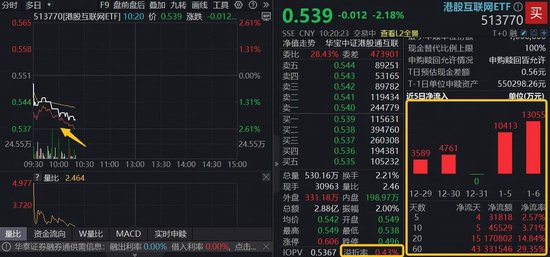
Core Viewpoint - The Hong Kong stock market's AI sector experienced its first pullback of the year, with the Hong Kong Internet ETF (513770) declining over 2%, yet buying interest remained strong as evidenced by a real-time premium rate exceeding 0.4% [1] Group 1: Market Trends - Recent data shows a significant inflow of funds into the Hong Kong Internet sector, with a net inflow of 1.31 billion yuan on a single day and a cumulative net inflow exceeding 1.7 billion yuan over the past 20 days [1] - The expectation of the Federal Reserve lowering interest rates by 2026 has alleviated external liquidity pressures, providing a favorable environment for the valuation recovery of Hong Kong tech stocks [1] Group 2: Investment Opportunities - The Hong Kong Internet ETF (513770) and its connected fund (017125) passively track the CSI Hong Kong Internet Index, heavily investing in leading internet companies such as Alibaba and Tencent, which together account for nearly 30% of the fund [1] - The top ten holdings focus on AI cloud computing, large models, and various AI applications, collectively representing over 78% of the fund, highlighting the significant advantages of leading companies in the sector [1] Group 3: Fund Characteristics - The latest fund size of the Hong Kong Internet ETF (513770) exceeds 13.2 billion yuan, allowing for T+0 trading and not being restricted by QDII quotas, indicating strong liquidity [1]
“美联储今年应降息100个基点”,港股AI迎黄金窗口!港股互联网ETF回调区间溢价狂涌,此前5日狂揽逾3亿元
Xin Lang Cai Jing· 2026-01-07 02:35
Core Viewpoint - The Hong Kong stock market's AI sector experienced its first pullback of the year, with the Hong Kong Internet ETF (513770) declining over 2% despite active buying interest during the dip [1][9]. Group 1: Market Performance - The Hong Kong Internet ETF (513770) opened lower and fell by more than 2%, with a real-time premium rate exceeding 0.4%, indicating active buying during the decline [1]. - The ETF saw a net inflow of 1.31 billion CNY on the latest trading day, accumulating a total net inflow of 3.18 billion CNY over the past five days [9][10]. - Major tech stocks like Meituan-W, Tencent Holdings, Bilibili-W, Kuaishou-W, and Alibaba-W experienced declines of over 1% to 3%, while Xiaomi Group-W showed resilience with gains [3][9]. Group 2: Industry Insights - Citigroup highlighted three key themes for the Chinese internet industry by 2026: growth in recurring revenue from cloud infrastructure and AI models, competition among major internet firms for AI chatbot user traffic, and the deployment of proprietary AI agents by vertical companies to enhance user engagement and monetization [3][9]. - The Hong Kong Internet ETF and its linked funds passively track the CSI Hong Kong Internet Index, heavily weighted towards Alibaba-W and Tencent Holdings, which together account for nearly 30% of the ETF [4][10]. - The top ten holdings of the ETF focus on AI cloud computing and applications, representing over 78% of the portfolio, showcasing the dominance of leading firms in the AI sector [4][10]. Group 3: Economic Context - The Federal Reserve's anticipated interest rate cuts in 2026 are expected to ease external liquidity pressures, providing a favorable environment for the valuation recovery of Hong Kong tech stocks [10]. - Analysts suggest that the combination of AI-driven market dynamics and the potential for capital inflows from both domestic and foreign investors could lead to a bullish sentiment towards leading internet firms in China [10].

智慧赋能流通“大动脉” 透视物流业“含金量”十足数据解锁经济新“动”力
Yang Shi Wang· 2026-01-07 02:31
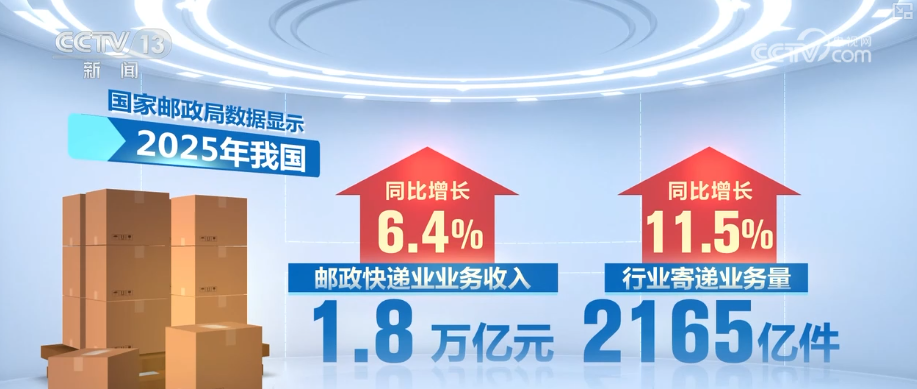
Core Insights - The core viewpoint of the news is that China's postal and express delivery industry has achieved significant growth, with the volume of delivery services surpassing 200 billion pieces and supporting online retail sales exceeding 14 trillion yuan in 2025 [2][10]. Group 1: Industry Growth and Projections - The postal and express delivery industry in China is projected to achieve a business revenue of 1.8 trillion yuan and a delivery volume of 2.165 billion pieces by 2025, representing year-on-year growth of 6.4% and 11.5% respectively [3]. - The industry has seen a substantial increase in service capacity, with annual business revenue rising from 1.1 trillion yuan to 1.8 trillion yuan during the 14th Five-Year Plan period, reflecting an average annual growth rate of over 10% [17][19]. Group 2: Infrastructure and Network Development - China's delivery network has become more comprehensive, with key postal and express delivery hubs established in regions such as the Yangtze River Delta and the Guangdong-Hong Kong-Macao Greater Bay Area [4]. - The rural express delivery service coverage has improved, with a total of 13,000 intermodal postal routes opened and 145,000 cooperative stations built [6]. Group 3: International Logistics and Technology Integration - The international delivery logistics system is rapidly developing, with 374 overseas warehouses established, an increase of 41 from 2024, covering an additional area of 1.22 million square meters [8]. - The industry is adapting to new consumption models such as live-streaming sales and social e-commerce, and is integrating artificial intelligence into postal and express delivery services [12][14]. Group 4: Market Trends and Economic Indicators - The logistics industry in China is experiencing a stable recovery, with the logistics business activity index reaching 52.4% in December 2025, indicating a continuous expansion in logistics demand [23][30]. - The overall logistics demand remains robust, driven by sectors such as energy, manufacturing, and consumer goods, with the new orders index also showing positive growth [25][29].
澜起科技通过港交所聆讯,芯片ETF天弘(159310)、电子ETF(159997)跟踪指数昨日均涨超1.8%
2 1 Shi Ji Jing Ji Bao Dao· 2026-01-07 01:38
Group 1 - The three major indices collectively rose, with the Shanghai Composite Index reaching a ten-year high, and the chip industry index increasing by 2.29% [1] - The chip ETF Tianhong (159310) had a trading volume exceeding 20 million yuan, while the electronic ETF (159997) approached 80 million yuan with a turnover rate of 5.73% [1] - The Tianhong chip ETF tracks the CSI Chip Industry Index, which is expected to see a 37.62% year-on-year growth in net profit attributable to shareholders in the first half of 2025 due to policy support and surging demand [1] Group 2 - Qualcomm launched a new X2 Plus chip aimed at laptops, indicating ongoing innovation in the semiconductor sector [2] - The AI-related industry is expected to maintain a favorable outlook through 2026, with domestic semiconductor opportunities arising from accelerated localization [2] - Global demand for storage chips is projected to outstrip supply in 2026, with DRAM supply expected to grow by 15% to 20%, while demand growth is anticipated to reach 20% to 25% [2]


我国建成世界上规模最大寄递网络
Yang Shi Xin Wen· 2026-01-07 01:05
记者从国家邮政局了解到,"十四五"以来,我国建成世界上规模最大、受益人数最多的寄递网络。邮政 快递业业务收入年均增长10%,人均年快递使用量翻一番。 五年来,我国邮政快递业智能化水平提升,规模以上分拣中心基本实现自动化运营,云计算、大模型在 需求预测、智能仓管、智能调度、路径规划等多个场景加速应用。邮政快递的综合运输组合效率、信息 化组织化程度、服务范围和性价比稳居世界前列。 (文章来源:央视新闻) 国家邮政局数据显示,"十四五"期间我国邮政快递业服务能力不断提升。年业务收入从1.1万亿元提升 至1.8万亿元,年均增长超过10%,增速居现代服务业前列。年快递业务量实现从百亿级到千亿级跃 升,由800多亿件增长到近2000亿件。人均年快递使用量从59件增长到141件。 ...