数字孪生

Search documents
“炸板”!001234,上演“天地板”
中国基金报· 2025-09-22 03:10
9 月 22 日开盘, A 股三大指数集体高开,随后震荡调整,截至发稿,沪指跌 0.15% ,深 成指跌 0.25% ,创业板指跌 0.87% 。 | 上证指数 | 深证成指 | 北证50 | | --- | --- | --- | | 3814.43 | 13038.44 | 1574.56 | | -5.66 -0.15% | -32.42 -0.25% | -3.44 -0.22% | | 科创50 | 创业板指 | 万得全A | | 1367.88 | 3064.22 | 6201.52 | | +5.23 +0.38% | -26.79 -0.87% | -7.85 -0.13% | | 沪深300 | 中证500 | 中证A500 | | 4492.80 | 7160.31 | 5419.31 | | -9.12 -0.20% | -10.04 -0.14% | -13.97 -0.26% | | 中证1000 | 深证100 | 中证红利 | | 7447.95 | 5712.79 | 5436.77 | | +9.76 +0.13% | -23.13 -0.40% | -31.96 -0.58 ...


协同锻造韧性供应链 合力开创全球新格局
Qi Huo Ri Bao Wang· 2025-09-22 00:37
Core Insights - The global supply chain is facing multiple challenges including geopolitical tensions, climate disruptions, and rapid technological changes, making the construction of an "open, inclusive, resilient, and sustainable" supply chain an urgent mission for the industry [2] - China is positioned as a crucial hub in the global supply chain, characterized by deepening international cooperation, advancing green low-carbon practices, and accelerating digital transformation [2][4] - The conference highlighted the importance of digital technology in enhancing service trade and supply chain resilience, with a focus on standardization, digital services, and green initiatives [3] Group 1: Conference Overview - The 2025 Procurement and Supply Management Conference was held on September 15 in Xiamen, gathering over 3,000 guests from various sectors to discuss core issues in supply chain trends, innovations, and international cooperation [1] - The conference featured a keynote address by Chris Wawanda, President of IFPSM, emphasizing the need for resilience in supply chains and the integration of sustainability into decision-making processes [2] Group 2: Key Themes and Initiatives - The conference proposed six core directions for global supply chain development, including building an inclusive global supply chain framework and enhancing digital-driven innovation [5] - The Chinese Ministry of Commerce is actively promoting modern supply chain innovation and high-quality development, with initiatives to cultivate around 100 leading digital supply chain enterprises [4] Group 3: Research and Reports - The conference included the release of four significant research reports, providing systematic guidance for the global supply chain industry, covering trends, practices, and social responsibility [6]
3D打印般精密“生长” 世界第一高坝如何智能建造?
Yang Shi Wang· 2025-09-20 17:12
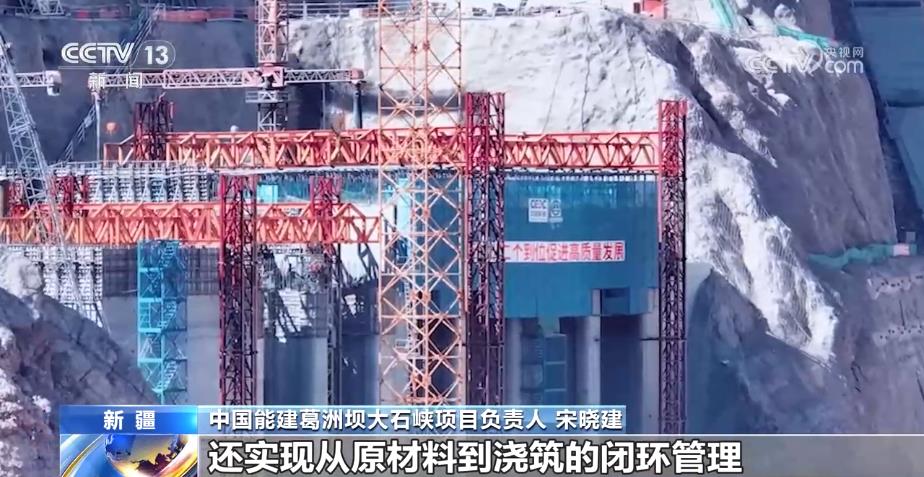
Core Viewpoint - The Dashi Xia Hydropower Hub Project in Xinjiang has officially transitioned from construction to operational preparation, marking a significant milestone in China's major water conservancy projects [1] Group 1: Project Overview - The Dashi Xia Hydropower Hub features a maximum dam height of 247 meters, equivalent to over 80 stories, setting a world record for concrete-faced rockfill dams [2] - The project is located in the Tianshan Wensu Grand Canyon, an area prone to earthquakes, presenting complex geological conditions [2] Group 2: Construction Innovations - The project employs "smart construction" techniques to address challenges such as high seismic intensity and rapid flood discharge [2] - A digital twin smart center allows for real-time monitoring of all construction processes, achieving full visibility and control [3] - The dam incorporates over 9,000 high-strength anti-seismic steel bars and uses a layered construction method to ensure stability and seismic resistance [3] - The innovative "additional quality method" enhances monitoring efficiency, replacing 60% of traditional manual inspections and improving detection efficiency by over 50% [3] Group 3: Technological Integration - Blockchain technology has been introduced for concrete data collection and smart transport management, creating a "concrete ID" system for traceability [5] - The digital twin center integrates cloud computing, AI, virtual simulation, and blockchain, ensuring real-time data transmission from various construction sites [5] - Future capabilities include dynamic flood control simulations and the establishment of a health monitoring network for dam operations [5] Group 4: Environmental Protection Initiatives - The project includes a fish breeding and release station to mitigate ecological impacts, with 92,000 fish released into the Kumalak River [6][7] - A total investment of 65 million yuan has been allocated for ecological protection measures, including the construction of fish passages and breeding stations [7] - To date, 141,000 fish have been artificially bred and released to support local fish populations affected by the dam's construction [7]

3D打印般精密“生长”,世界第一高坝如何智能建造?
Bei Jing Ri Bao Ke Hu Duan· 2025-09-20 11:59
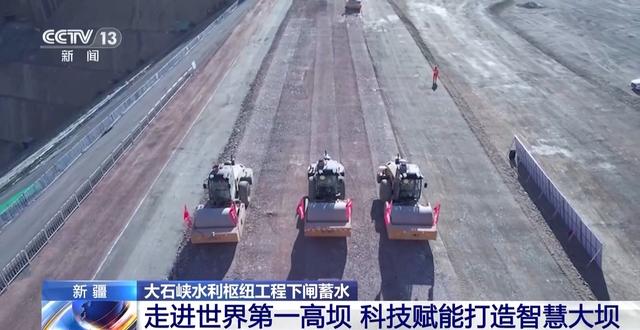
Core Viewpoint - The Xinjiang Dashi Gorge Water Conservancy Hub Project has officially transitioned from construction to operational preparation, marking a significant milestone in China's major water conservancy projects [1] Group 1: Project Overview - The Dashi Gorge Water Conservancy Hub features a maximum dam height of 247 meters, equivalent to over 80 stories, setting a world record for the construction of concrete-faced rockfill dams [1] - The project is located in the seismically active Tianshan Wensu Grand Canyon, presenting complex geological conditions [1] - The hub employs "smart construction" techniques to address challenges such as high seismic intensity and rapid flood discharge [1] Group 2: Construction Techniques - The dam incorporates over 9,000 high-strength anti-seismic steel bars and uses civil geogrids laid in layers every 10 meters to create a stable structure from loose gravel [3] - The construction process utilizes a "layered paving and layered compaction" technique, with autonomous vibrating rollers and smart construction machines working in coordination to ensure the dam's stability and seismic resistance [3] Group 3: Innovative Monitoring and Management - The "additional quality method" serves as a "cardiac monitor" for the dam, using vibration wave data to monitor internal density, replacing 60% of traditional manual inspections and improving detection efficiency by over 50% [5] - Blockchain technology has been introduced for concrete data collection and smart transport management, creating a "concrete ID" system that ensures traceability and quality control from raw materials to pouring [7] Group 4: Digital Twin and Smart Management - The digital twin smart center integrates cloud computing, artificial intelligence, virtual simulation, and blockchain, ensuring real-time data transmission from various construction sites through 360-degree cameras and thousands of sensors [9] - This "smart brain" will enable dynamic flood control and health monitoring of the dam using real-time meteorological and hydrological data [11] Group 5: Environmental Protection Initiatives - The project includes a fish breeding and release station to mitigate the ecological impact of the dam, with facilities for breeding, artificial spawning, and releasing fish [13] - A total of 92,000 fish fry have been released into the Kumalake River to replenish native fish populations affected by the construction [15] - An investment of 65 million yuan has been allocated for various protective measures, including ecological fishways and fish breeding stations, resulting in the release of 141,000 fish to date [17]
围绕“一条链” 盐城变“车城”
Xin Hua Ri Bao· 2025-09-20 00:00
Core Insights - The article highlights the rapid development of the automotive parts industry in Yancheng, particularly focusing on Faurecia (Yancheng) Automotive Parts System Co., Ltd, which produces seat slide rails for one in three cars globally [1][2]. Group 1: Company Overview - Faurecia has a global market share of over 30% in high-strength seat slide rails, with an annual production capacity of 28 million units, supporting over 7 million vehicles [1]. - The company has implemented advanced technologies such as generative AI and digital twin-driven optical inspection to enhance product quality, resulting in quieter and smoother sliding rails [1][2]. Group 2: Operational Efficiency - The factory's automation rate has increased to 80%, leading to a 23% improvement in production efficiency and a 13% reduction in operating costs, with the defect rate significantly lowered to 0.0002% [2]. - From January to August, the company achieved invoiced sales of 1.273 billion yuan and paid 141 million yuan in taxes, with an average tax revenue of over 2 million yuan per mu [2]. Group 3: Industry Development - The establishment of the New Energy Vehicle Industrial Park in Yancheng in 2010 has attracted numerous automotive companies, creating a comprehensive industrial ecosystem with 519 enterprises, including Faurecia [3]. - The industrial park's component manufacturers achieved invoiced sales of 3.41 billion yuan in the first half of the year, reflecting a year-on-year growth of 22% [3].
调研速递|华自科技接受众多投资者调研 聚焦订单、产能与新技术要点
Xin Lang Zheng Quan· 2025-09-19 13:11
Core Viewpoint - The company is focused on accelerating order production and delivery to enhance operational performance and company value, with revenue recognition based on specific accounting policies and contract obligations [1][3]. Group 1: Company Operations and Revenue Recognition - The company's current core task is to expedite order production and delivery, aiming to improve operational performance and company value [1]. - Revenue recognition is based on whether the company undertakes installation duties; for contracts without such obligations, revenue is recognized upon customer acceptance, while for those with installation duties, revenue is recognized based on the progress of contract performance [1][3]. Group 2: Workforce and Production Capacity - The company has seen a significant increase in overall workforce numbers this year to meet production and delivery demands, supported by diverse recruitment channels and internal promotion mechanisms [2]. - Current production capacity is aligned with order fulfillment requirements, ensuring efficient delivery [2]. Group 3: Technology and Order Status - The company is applying liquid cooling technology in ultra-fast charging and energy storage fields, and is developing solid-state battery thermal pressing fixtures, expected to deliver prototypes in Q4 [3]. - The new equipment features enhanced pressure distribution and temperature control, with ongoing technical exchanges for pilot production lines with existing customers [3]. Group 4: Other Business Developments - The company is progressing with its investment in AI hardware sales, targeting image processing and transportation sectors, while also focusing on digital twin and AI applications for various industries [4]. - The company maintains a 5% stake in Nightingale Robotics and is collaborating with local governments on renewable energy projects [4]. Group 5: Financial Performance and Shareholder Information - The company reported improved cash flow from operating activities in the first half of the year, attributed to increased cash receipts from sales and reduced cash payments for goods and services compared to the previous year [5]. - The company plans to disclose its Q3 report by the end of October, summarizing order status in accordance with reporting rules [5].

海博思创亮相2025金砖国家新工业革命伙伴关系论坛
Zheng Quan Ri Bao Wang· 2025-09-19 13:11
Group 1 - The 2025 BRICS New Industrial Revolution Partnership Forum was held in Xiamen, focusing on the theme of "Releasing the Potential of BRICS Cooperation for Inclusive and Sustainable Industrialization" [1] - The forum emphasized key areas such as artificial intelligence, green low-carbon technologies, digital economy, and industrial innovation, aiming to create a high-level communication platform for global stakeholders [1] - Zhang Jianhui, CEO of Beijing Haibo Sichuang Technology Co., Ltd., delivered a speech on "The Application and Practice of Artificial Intelligence Empowering the Development of New Energy Storage Industry," attracting significant industry attention [1] Group 2 - The global new energy storage market has been expanding rapidly, providing strong momentum for the development of the renewable energy sector [2] - The new energy storage industry faces challenges, including the difficulty of scheduling due to the intermittent and unstable nature of renewable energy integration into the grid [2] - There is a need for a digital management system that establishes a full lifecycle closed-loop to maximize customer value and ensure safe, efficient, and sustainable development of storage systems [2] Group 3 - Artificial intelligence is reshaping the technical ecosystem of energy storage systems, becoming a key driver for enhancing system efficiency and reducing operational costs [2] - Collaboration among upstream and downstream enterprises in the energy storage industry is essential for the implementation of AI, big data, and digital twin technologies [2] - Haibo Sichuang aims to deepen resource connection and communication, strengthen collaboration across the industry chain, and contribute to the innovative transformation of energy structures in BRICS countries [2]

德冠新材(001378) - 投资者关系活动记录表
2025-09-19 12:46
Group 1: Investor Relations Activities - The company participated in the "2025 Guangdong Online Investor Reception Day" on September 19, 2025 [2] - Key executives present included Chairman and President Mr. Luo Weiman, CFO Ms. Yang Bing, and several independent directors [2] Group 2: Customer Base and Market Expansion - The company primarily serves well-known clients such as Avery Dennison and Finotex, with plans to expand its customer base through product innovation and enhanced R&D capabilities [2][3] - The company is actively exploring collaborations with universities and research institutions for technology development [2][3] Group 3: R&D and Product Development - R&D investment increased by 13.92% year-on-year in the first half of 2025, focusing on new product development and upgrades [4] - Key projects include the development of the seventh-generation adhesive-free film and graphene transfer film for electronic devices [4] Group 4: Financial Performance - Investment income increased by 363.25% year-on-year, primarily due to cash management strategies involving large deposits and structured savings [6] - Inventory decreased by over 20 million compared to the beginning of the year, with a stock turnover rate of 8.92 times, indicating improved inventory management [7] Group 5: Production and Quality Control - The company has established a comprehensive quality control system and achieved ISO9001 certification, with several products passing international standards [3] - The company operates multiple production lines for functional films and masterbatches, enhancing its manufacturing capabilities [3] Group 6: Market Challenges and Strategic Responses - The company is addressing market challenges by focusing on value management and maintaining a stable dividend policy to enhance investor confidence [8] - Plans to utilize AI technology for optimizing supply chain management and customer service are in place, aiming to improve operational efficiency [8][9]
凡拓数创(301313) - 广州凡拓数字创意科技股份有限公司投资者关系活动记录表
2025-09-19 09:38
Financial Performance - The company achieved a revenue of 319 million CNY in the first half of 2025, representing a year-on-year growth of 53.79% [2] - The net profit attributable to shareholders was -46.86 million CNY, a reduction in loss of 23.15 million CNY compared to the same period last year, marking a year-on-year improvement of 33.07% [2] Strategic Goals - The company aims to achieve profitability by continuing to implement its initial plans, focusing on stable operations and enhancing marketing strategies [2] - Emphasis on project execution, settlement acceptance, and cash flow stability to ensure revenue [2] Cost Management - The company is committed to strict cost control and optimizing internal management to improve operational efficiency [3] - Plans to refine the talent pool and effectively conduct cost reduction and efficiency enhancement initiatives [2] Technology and Innovation - The company is focusing on the AI 3D strategy, maintaining stable investments in new technologies and products [3] - Significant advancements in humanoid robotics, particularly in AI three-dimensional reconstruction, with proprietary technologies such as 3DGS and AR interaction [5] - The self-developed FTE engine enables high-precision environmental perception and dynamic modeling, supporting complex training scenarios for industrial robots [5] Market and Investor Relations - The company is actively managing investor relations and enhancing transparency to protect investor interests [3] - Ongoing communication with regulatory bodies to ensure compliance and promote stable development [3]
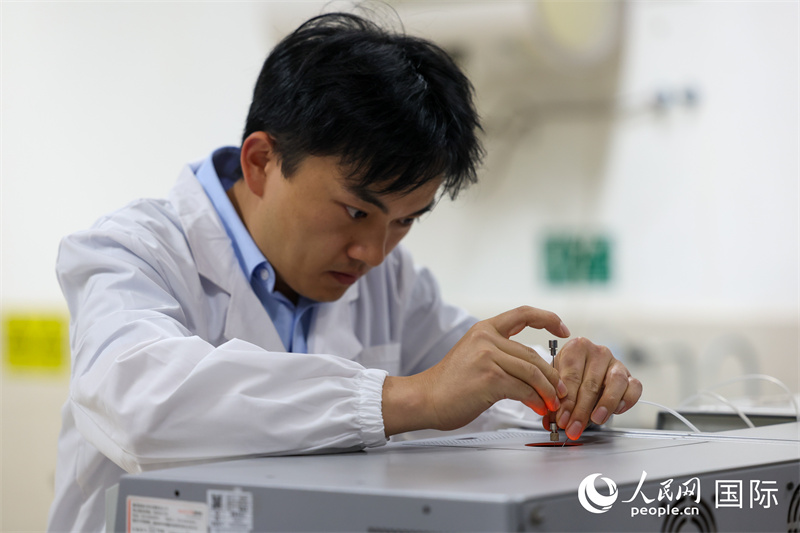
实验室的“智变”:云天化石化这样走向智慧化运营
人民网-国际频道 原创稿· 2025-09-19 09:03
Core Insights - The company is advancing its digital transformation by implementing "digital twin" and "intelligent analysis" technologies, enhancing its laboratory management systems and overall operational efficiency [1][2][4] Group 1: Digital Transformation - The laboratory's digital transformation has led to the establishment of an intelligent laboratory management system that covers the entire lifecycle of laboratory equipment and the full process of data management [1][2] - The company has developed two core platforms: the "Laboratory Equipment Management System" and the "Laboratory Analysis Data Quality Management System," which facilitate automated data collection and analysis [1][2] Group 2: Operational Efficiency - The digitalization of laboratory equipment management has significantly improved operational efficiency, with all processes such as procurement, maintenance, and data recording now conducted online [2] - The implementation of a data quality management system allows for intelligent cross-checking of testing data with various production-related big data, resulting in a substantial reduction in error rates [2] Group 3: Innovation and Value Creation - The digital transformation has catalyzed innovation across the entire value chain, leading to the development of 38 new grades of polypropylene products and nine provincial or higher-level technological innovation achievements [4] - The shift towards digital management has not only enhanced product development but also integrated deeply into various management aspects, thereby increasing the company's core competitiveness and promoting high-quality development [4]