AGI

Search documents
阿里吴泳铭为什么现在站出来造词?
Hu Xiu· 2025-09-24 23:25
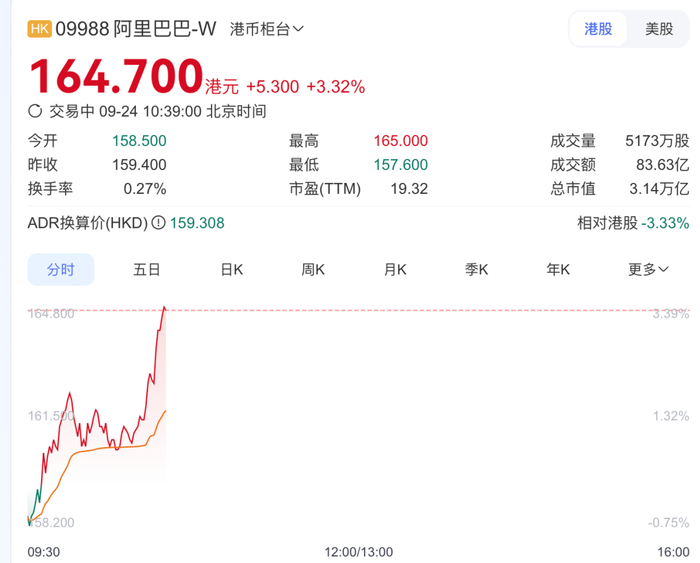
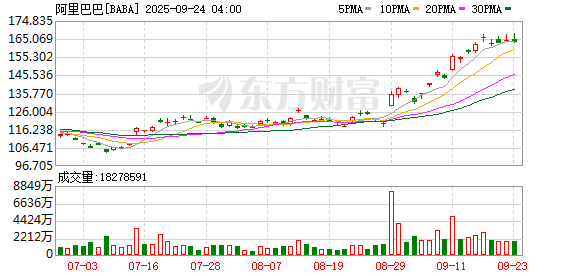
Core Viewpoint - Alibaba's CEO, Wu Yongming, emphasizes that achieving Artificial General Intelligence (AGI) is just the beginning, with the ultimate goal being the development of Artificial Superintelligence (ASI) that can self-iterate and surpass human capabilities [2] Group 1: Market Reaction - Following Wu's announcement, Alibaba's stock price surged by 9% on September 24, reaching a four-year high [5] - The market's positive response indicates strong investor confidence in Alibaba's future prospects in the AI sector [5] Group 2: Business Strategy - Wu highlights that the AI business in China has entered a new phase, characterized by emerging commercial opportunities [6] - The focus is on transforming intelligence into useful products, potentially creating multi-billion dollar companies [6] - Alibaba Cloud aims to capture as many of these emerging companies as possible as potential clients [6] Group 3: Financial Performance - Alibaba Cloud reported a revenue of 33.398 billion yuan for Q2 2025, marking a 26% year-on-year increase, the highest growth rate in three years [8] - AI revenue now constitutes over 20% of Alibaba Cloud's external commercialization income [8] Group 4: Product Development - Wu identifies two key products: 1. Large models as the next-generation operating system, with Tongyi Qianwen open-sourcing over 300 models [11] 2. AI cloud as the next-generation computer [12] - The strategy involves using the free large models to establish market presence and developer ecosystems, followed by monetization through cloud services [13] Group 5: Investment Plans - Alibaba plans to invest 380 billion yuan over the next three years in AI and cloud computing infrastructure, averaging over 10 billion yuan per month [13] - This significant investment underscores the company's commitment to building a robust AI ecosystem [13] Group 6: Competitive Advantage - The company's competitive edge may also stem from Jack Ma's determination and the resulting market confidence [14]
吴妈点悟:AGI并非AI发展终点,而是全新起点
Mei Ri Shang Bao· 2025-09-24 23:17
Core Insights - The core message emphasizes that AGI is not the endpoint of AI development but rather a new starting point, leading towards ASI, which surpasses human intelligence and can self-evolve [1][2]. Group 1: AI Development Stages - The journey to ASI is divided into three stages: from "learning human" to "assisting human," and finally to "surpassing human" [2]. - In the first stage, AI acquires generalized intelligence by learning vast amounts of human knowledge, enabled by the internet's development over the past decades [2]. - The second stage sees AI capable of using tools and connecting with digital tools to perform real-world tasks across various industries, moving beyond mere language interaction [2][3]. Group 2: Future of AI and ASI - In the third stage, AI will achieve "surpassing human" capabilities through continuous interaction with the physical world, allowing it to gather real-time data and optimize its learning processes [3]. - The future models will utilize reinforcement learning and continuous learning mechanisms to self-iterate and enhance their intelligence beyond human capabilities [3]. Group 3: Infrastructure and Investment - Alibaba Cloud is actively pursuing a three-year plan to invest 380 billion in AI infrastructure, with expectations of a tenfold increase in global data center energy consumption by 2032 compared to 2022 [3]. - This substantial investment aims to propel the AI industry forward and prepare for the arrival of the ASI era [3]. Group 4: Technological Advancements - On the first day of the conference, Alibaba Cloud introduced significant updates in large models, achieving breakthroughs in intelligence levels, tool usage, coding capabilities, and multi-modal functions [4]. - The flagship model Qwen3-Max was unveiled, outperforming competitors like GPT-5 and Claude Opus 4, and is expected to achieve further performance enhancements [4][5]. - New models, including Qwen3-Next and Qwen3-Coder, were also launched, showcasing significant improvements in various applications, including visual understanding and speech recognition [4][5].

Eric Schmidt on AI, the Battle with China, and the Future of America
All-In Podcast· 2025-09-24 22:02
[Music] I honestly believe that the AI revolution is underhyped. Now, why is this all important? >> Eric Schmidt is here. He's the former Google executive chairman and CEO. >> These agents are going to be really powerful, and they'll start to work together. We're soon going to be able to have computers running on their own, deciding what they want to do. Now we have the arrival of a new nonhuman intelligence which is likely to have better reasoning skills than humans can have. >> So if you were emperor of t ...

Meta AI 人才动荡,上亿美元为何留不住人?丨晚点聊
晚点LatePost· 2025-09-24 15:18
Core Viewpoint - The article discusses the recent talent shifts within Meta and the implications for its organizational structure and strategy in the AI sector, highlighting the challenges and opportunities faced by the company in the competitive landscape of AI development [4][6][21]. Group 1: Meta's Talent Acquisition and Loss - In June 2025, Meta acquired a 49% stake in Scale AI for $14.3 billion and recruited Alexander Wang, the 28-year-old founder of Scale AI, to lead the newly formed Meta Superintelligence Labs [4]. - Following the acquisition, Meta experienced a wave of talent departures, including long-term employees and new recruits returning to OpenAI, indicating dissatisfaction with the company's environment [4][8]. - The rapid turnover of talent is attributed to an increasingly bureaucratic structure and internal political struggles, which have made the work environment less appealing for top-tier AI talent [8][9]. Group 2: Organizational Structure and Culture - Meta's organizational structure has become more cumbersome, with an increase in VP levels leading to slower decision-making processes, which contrasts with the company's previously agile culture [8][9]. - The lack of clear ownership in model training and the presence of overlapping responsibilities among teams have created inefficiencies and internal competition, hindering productivity [10][11]. - The article suggests that a smaller, more focused team of 150 to 250 individuals would be more effective for achieving breakthroughs in AI models compared to a larger team of 5,000 [9][10]. Group 3: Comparison with Other AI Companies - Other AI companies like OpenAI and Anthropic have a more mission-driven approach, which helps align their teams towards common goals, reducing internal conflicts and enhancing productivity [12][21]. - Google employs a top-down approach with clear authority figures guiding research, which contrasts with Meta's bottom-up culture that can lead to disorganization [10][12]. - The article highlights that while Meta has a strong social network, its organizational inefficiencies may hinder its ability to compete effectively with companies like OpenAI and Anthropic, which are currently attracting top talent [23][24]. Group 4: Future of AI Organizations - The article discusses the potential for new organizational structures in AI startups, emphasizing the importance of decentralization and trust within teams to enhance efficiency [26][27]. - It suggests that AI can significantly improve organizational productivity, allowing for a shift away from traditional hierarchical structures towards more agile, networked teams [26][27]. - The future of talent competition in Silicon Valley is expected to cool down as market expectations are reassessed, impacting the recruitment of top AI talent [34][35].


AI进化速递丨阿里巴巴宣布与英伟达开展Physical AI合作
Di Yi Cai Jing· 2025-09-24 12:55
Group 1 - Alibaba announces collaboration with Nvidia for Physical AI [1] - Alibaba officially launches its largest and most powerful model Qwen3-Max to date [2] - Alibaba's Wu Yongming states that AGI is just the starting point, with the ultimate goal being super artificial intelligence [3] Group 2 - The "Stargate" project will establish five AI data centers in the United States [4] - AMD announces expansion of global AI collaboration with AI startup Cohere [5] - SAP and OpenAI announce partnership to launch a "German version of OpenAI" [6] - Applied Materials collaborates with GlobalFoundries to advance AI and AR photonic technologies [7]
阿里核爆级AI战略十大要点,全球资本燃情丨解构阿里系
2 1 Shi Ji Jing Ji Bao Dao· 2025-09-24 10:41
Core Insights - The company views large models as the next generation operating system, with AI cloud as the next generation computer, indicating a significant shift in technology and infrastructure [1][17] - Alibaba is investing 380 billion yuan in AI infrastructure over three years, with a projected tenfold increase in global data center energy consumption by 2032, preparing for the era of super artificial intelligence (ASI) [1][20] - The release of the Qwen3-Max model, which ranks third globally on the LMArena text leaderboard, signifies Alibaba's advancements in AI capabilities [1][2] Investment and Market Response - Alibaba's stock surged 9.14% on September 24, reaching its highest level since October 2021, with a market capitalization increase of nearly 300 billion yuan in one day [2] - The stock has seen a cumulative increase of over 40% this month and nearly doubled in value year-to-date, reflecting renewed investor confidence in Alibaba's AI transformation [2] AI Development and Strategy - The AI industry is undergoing a rapid transformation, with investments exceeding $400 billion in the past year and projected to surpass $4 trillion over the next five years [4][20] - The evolution of AI is categorized into three stages: emergence of intelligence, autonomous action, and self-iteration, with the current focus on autonomous action [5][9] - The company aims to create an open-source model ecosystem, positioning itself as the "Android system" of the AI era, with over 600 million downloads of its open-source models [6][19] Technological Advancements - The shift from CPU-centric to GPU-centric computing paradigms is revolutionizing data center operations, necessitating massive infrastructure and energy resources [18][19] - The future of AI will involve a multitude of agents working continuously, requiring vast computational resources, with the potential for only a few super cloud computing platforms to exist globally [18][19] Future Outlook - The arrival of ASI is expected to redefine human-AI collaboration, significantly enhancing productivity and creating new demands across various sectors [21][22] - The company emphasizes that the AI revolution is just beginning, with ongoing investments aimed at integrating AI deeply into industries and co-creating future innovations [22]
云栖大会上阿里发布Qwen3-Max,跻身全球前三
Yang Zi Wan Bao Wang· 2025-09-24 08:55
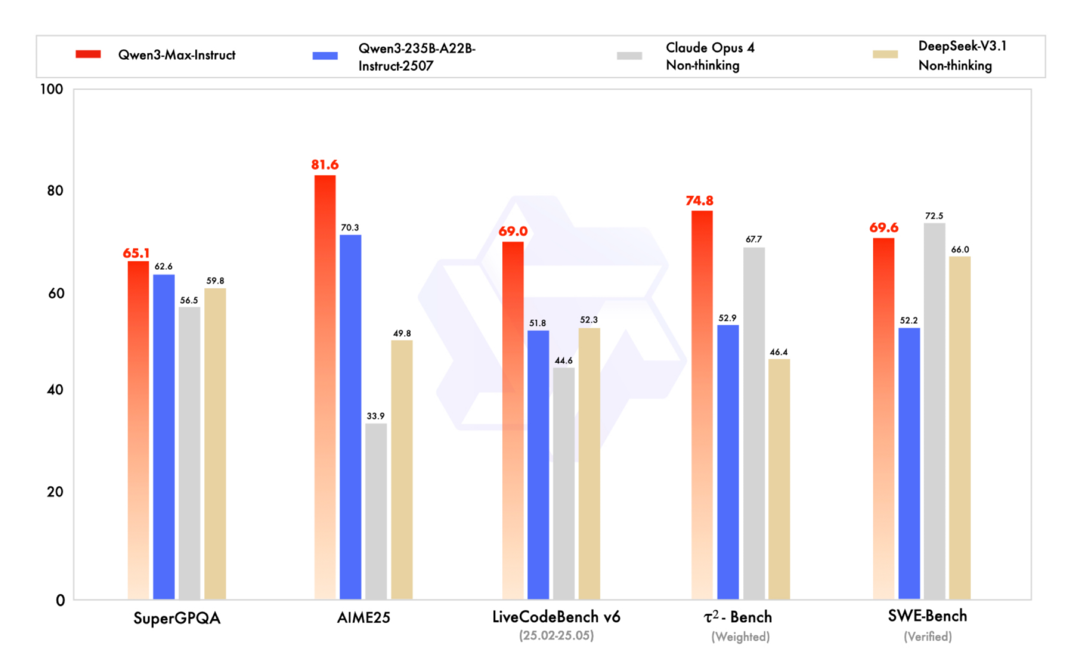
Qwen3-Max的推理增强版本Qwen3-Max-Thinking-Heavy也展现出非凡性能,结合工具调用和并行推理技术,其推理能力创下新高,尤其在聚焦数学推理 的AIME25和HMMT测试中,均达到突破性的满分100分,为国内首次。Qwen3-Max推理模型之所以能够取得优异成绩,原因在于大模型在解数学题时懂 得调动工具,能够写代码做题,同时,增加测试时的计算资源,也让模型表现变得更好。 Qwen3-Max-Instrurct测评分数 9月24日,2025云栖大会开幕,阿里通义旗舰模型Qwen3-Max重磅亮相,性能跻身全球前三。Qwen3-Max包括指令(Instruct)和推理(Thinking)两大版本,其 预览版已在Chatbot Arena排行榜上位列第三,正式版性可望再度实现突破。 Qwen3-Max为通义千问家族中最大、最强的基础模型。该模型预训练数据量达36T tokens,总参数超过万亿,拥有极强的Coding编程能力和Agent工具调用 能力。在大模型用Coding解决真实世界问题的SWE-Bench Verified测试中,Instruct版本斩获69.6分,位列全球第一梯队;在聚 ...
半导体刺激科创50飙升,再创年内新高!什么信号?高手这样看
Mei Ri Jing Ji Xin Wen· 2025-09-24 08:18
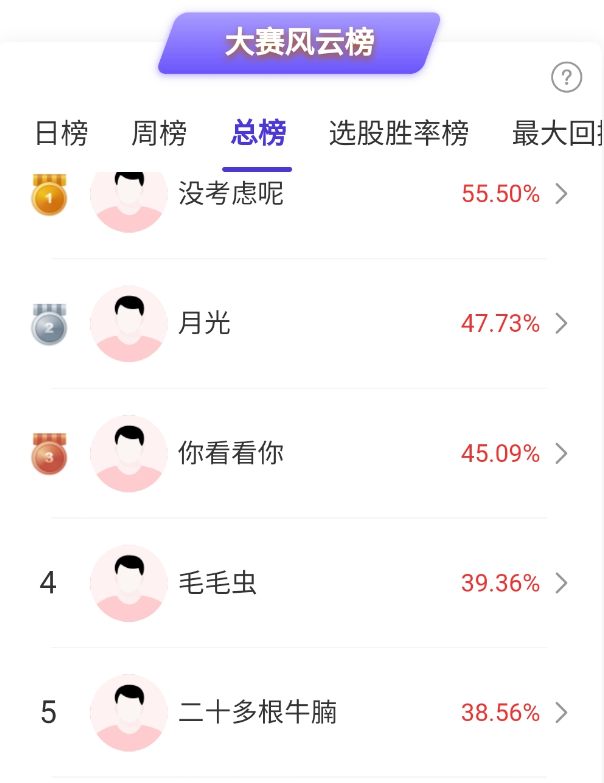
周三,大盘出现强劲反弹,其中科创板和创业板领涨,创业板指涨2.28%,科创50指数涨3.49%。沪深两市成交额达到23268亿元,较周二缩量1676亿元。 盘面上,半导体、芯片、AI应用板块涨幅居前。 消息面上,9月24日,在2025年云栖大会上,阿里巴巴集团董事兼CEO吴泳铭表示,在AGI(通用人工智能)到ASI(超级人工智能)的巨大变革中,大 模型将是下一代的操作系统。AI Cloud是下一代计算机。未来全世界或只会有5-6个超级云计算平台。AGI只是起点,超级人工智能ASI才是终极目标。 在每日经济新闻App举办的掘金大赛中,第74期比赛正在火热进行中,目前选手们踊跃报名入场,多位选手抓住了行情机会。大赛为模拟炒股,模拟资金 50万元。报名时间为9月13日至9月30日,比赛时间为9月15日至9月30日。正收益就获奖,报名就拿福利!周周发奖金,月月有大奖! 目前,A股指数攀升至阶段性高位,大盘震荡加剧,很多股民陷入两难境地。相比股票,期货具有诸多优势,既可做多也可做空、杠杆交易、T+0等,交 易十分灵活。为便于股民了解和学习股指期货和期权,拓宽交易视野,给大家一个"零成本试错、高收获成长"的机会。每日经济 ...
突传重磅!阿里巴巴大爆发
Chang Sha Wan Bao· 2025-09-24 06:52
Core Viewpoint - Alibaba's CEO emphasizes that large models represent the next generation of operating systems and that AI Cloud will be the next computing paradigm, predicting only 5-6 super cloud computing platforms globally in the future [1] Group 1: AI Infrastructure and Investment - Alibaba is actively advancing its AI infrastructure with an investment of 380 billion, planning to increase this investment further [1] - By 2032, the energy consumption of Alibaba Cloud's global data centers is expected to increase tenfold compared to 2022, indicating an exponential rise in computing power investment [1] Group 2: Path to Super Artificial Intelligence (ASI) - The journey towards achieving ASI is divided into three stages: 1. Emergence of intelligence, where AI learns human knowledge to develop generalized intelligence 2. Autonomous action, where AI acquires tool usage and programming skills to assist humans, which is the current industry stage 3. Self-iteration, where AI connects with comprehensive raw data from the physical world for autonomous learning, ultimately surpassing human capabilities [1] Group 3: Market Reaction - Following the announcements made at the Cloud Conference, Alibaba's stock in Hong Kong saw a short-term increase of over 3% [1]