网络安全

Search documents
大港街道开展网络安全宣传活动
Zhen Jiang Ri Bao· 2025-09-21 23:40
Core Viewpoint - The event "Moonlight Mid-Autumn, Safe 'Net' Companion - Building a Fraud-Free Safe Community Together" was organized to enhance community awareness about fraud prevention during the Mid-Autumn Festival [1] Group 1: Event Overview - The event was held at the Zijingyuan Central Park Cultural Corridor, organized by the Economic Development Zone Dagang Street New Era Civilization Practice Center in collaboration with local communities and a home care service center [1] - Various participating units collaborated effectively to provide on-site services, demonstrating community engagement and cooperation [1] Group 2: Fraud Prevention Education - In the science popularization area, local police and cybersecurity instructors introduced common types of fraud that may occur during the Mid-Autumn Festival, including fake e-commerce, false red envelopes, and lottery scams [1] - Residents received anti-fraud manuals to enhance their awareness and understanding of fraud prevention [1] Group 3: Community Engagement Activities - The "Safety Riddle Contest to Win Prizes" in the interactive area attracted many residents, allowing them to engage with practical cybersecurity questions and deepen their understanding through fun competition [1] - The home care service center staff provided free health check-ups, including blood pressure measurements and haircut services, fostering a sense of warmth and care within the community [1]
技术赋能,共筑网络安全防线 ——2025年国家网络安全宣传周网络安全博览会侧记
Ren Min Ri Bao· 2025-09-21 22:00
Group 1 - The event showcased advancements in network security technology, emphasizing a shift from passive defense to intelligent perception and proactive protection [3] - New technologies such as AI algorithms and cloud collaboration were highlighted, particularly in the context of drone detection and control systems [3] - The integration of biometric technologies for secure authentication was demonstrated, with a focus on enhancing user experience through seamless interactions [4] Group 2 - The event featured various interactive experiences aimed at raising public awareness about network security, making it more relatable to everyday life [4] - Companies presented innovative solutions to address real-life security needs, reinforcing the importance of network security for the public [3][4] - The exhibition included demonstrations of AI-based security products and solutions, showcasing the application of AI in safeguarding information security [3]

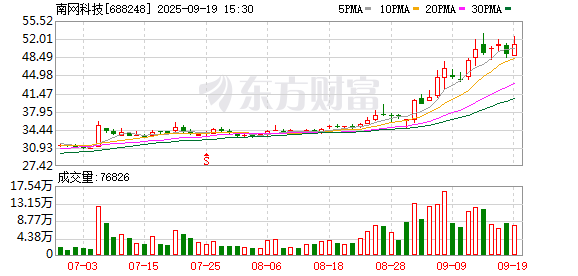
全球科技(计算机)行业周报:英伟达遭反垄断进一步调查,斥资50亿美元入股英特尔-20250921
Huaan Securities· 2025-09-21 08:48
Investment Rating - Industry investment rating: Overweight [1] Core Views - Nvidia is under further investigation for antitrust violations by the State Administration for Market Regulation, leading to a decline in its stock price and raising investor concerns about its risks in the Chinese market [3][12] - Nvidia has invested $5 billion in Intel stock, which has positively impacted Intel's stock price [5][14] - The investigation of Nvidia may create uncertainties in the global semiconductor industry and redefine the rules and landscape of the China-U.S. semiconductor supply chain, potentially accelerating the development of domestic chip companies [5][14] Summary by Sections 1. Computer Industry Views - Nvidia's antitrust violations have prompted further investigation by the State Administration for Market Regulation, causing a drop in its stock price and investor concerns about risks in the Chinese market [3][12] 2. Market Review 2.1 Computer Sector Performance - The computer industry index increased by 1.12%, outperforming the Shanghai Composite Index by 2.43 percentage points and the CSI 300 Index by 1.56 percentage points, while underperforming the ChiNext Index by 1.22 percentage points. Year-to-date, the computer industry index has risen by 26.57% [16][17] 2.2 Computer Stock Performance - Notable performers in the computer sector include Information Development, Tianze Information, and Kaipu Cloud, with recommendations to focus on investment opportunities in financial IT, industrial software, and trusted computing [19] 3. Technology Software Industry News 3.1 Computing Power - Huawei has launched the world's strongest computing power supernodes and clusters, supporting significant advancements in AI development [22] 3.2 Low-altitude Economy - The second International Low-altitude Economy Expo will be held in July 2026, focusing on the high-quality development of the low-altitude economy [23] 3.3 Automotive Intelligence - Hong Kong is accelerating the development of autonomous driving with government support, aiming for commercial operations [24] 3.4 Cybersecurity - New regulations require timely reporting of cybersecurity incidents, emphasizing the need for improved security operations among enterprises [25][27] 3.5 Data Elements - The National Data Bureau is advancing the construction of data element pilot zones to enhance data circulation and value [26] 3.6 Artificial Intelligence - The Zhangjiang AI Innovation Town aims to become a hub for AI innovation, providing various support measures for startups [28]


网络安全彩云行丨普洱思茅:数字技术深植乡村沃土 网络安全守护产业发展
Xin Hua Wang· 2025-09-21 08:07
Core Insights - The article highlights the development of a modern production demonstration garden for highland specialty wild vegetables in Manxieba Village, Puer City, focusing on the integration of digital technology in agriculture [1][2]. Group 1: Digital Agriculture Development - The demonstration garden has transformed traditional wild vegetable cultivation into a smart, large-scale, and standardized operation, featuring seven main varieties such as beetroot and goji leaves [2][7]. - The "Smart Cloud Agriculture" platform has been introduced to enhance the quality and efficiency of wild vegetable production, marking a significant shift towards digital technology in rural agriculture [2][5]. Group 2: Technological Infrastructure - Collaboration between China Unicom Puer Company and the local agricultural bureau has led to the establishment of various monitoring stations, including meteorological and soil moisture monitoring, to collect data on the growth environment and conditions of wild vegetables [5][6]. - The smart system in the demonstration garden utilizes 5G, IoT, big data, and AI sensing technologies to provide real-time data analysis, enabling precise management and reducing operational costs [5][6]. Group 3: Resource Conservation and Market Potential - The demonstration garden also serves as a gene bank, preserving 62 local wild vegetable varieties, which is crucial for promoting large-scale, professional, and standardized production [7]. - The local government aims to leverage the demonstration garden to develop a sustainable wild vegetable industry, creating a unique brand that brings Puer's wild vegetables to households [7].

网络安全宣传周|读懂《个人信息保护法》,给信息安全加道「法律防护墙」
蓝色柳林财税室· 2025-09-21 05:36
Core Viewpoint - The article emphasizes the importance of the Personal Information Protection Law in safeguarding individual data and enhancing information security in the digital age, highlighting the need for legal protection against data misuse and breaches [2][3]. Group 1: Legal Protection of Personal Information - Personal information is defined as any data that can identify a specific individual, including basic identity information, biometric data, and sensitive personal information [2]. - The law covers personal information collected by tax authorities during tax management and service processes [2]. Group 2: Principles of Information Processing - Organizations must adhere to five key principles when handling personal information: legality, necessity, minimal data collection, transparency, and security [3]. - Tax authorities are required to implement high-level security measures to prevent data breaches [3]. Group 3: User Rights - Individuals possess seven essential rights regarding their personal information, including the right to be informed, the right to restrict processing, and the right to request deletion under certain conditions [7]. - Taxpayers can exercise these rights in relation to their tax information, such as requesting copies of tax records [7]. Group 4: Application Scenarios and Compliance - The article discusses the need to combat "big data discrimination," ensuring users have the right to know and refuse algorithm-based pricing [8]. - It also emphasizes the regulation of facial recognition technology, which should only be used for public safety and requires explicit consent for other uses [9][10]. Group 5: Tax Incentives for New Energy Vehicles - New energy vehicles purchased between January 1, 2024, and December 31, 2025, are exempt from vehicle purchase tax, with a maximum exemption of 30,000 yuan per vehicle [19]. - From January 1, 2026, to December 31, 2027, these vehicles will be subject to a 50% reduction in purchase tax, with a maximum reduction of 15,000 yuan per vehicle [19]. Group 6: Exemption from Vehicle and Vessel Tax - Eligible new energy vehicles are fully exempt from vehicle and vessel tax, provided they meet specific criteria [20]. - The criteria include being pure electric commercial vehicles, plug-in hybrid vehicles, or fuel cell commercial vehicles that comply with national standards [21].

核心 IT 外包印度惹祸,捷豹路虎全线停摆:上亿英镑蒸发,3.3万员工“被迫”休假
猿大侠· 2025-09-21 04:11
Core Viewpoint - Jaguar Land Rover (JLR) is facing significant operational disruptions due to a severe cyberattack, leading to production halts and substantial financial losses. The incident has raised concerns about the company's cybersecurity measures and the broader implications for its supply chain and workforce [2][3][15]. Group 1: Impact on Production and Financial Losses - JLR has informed suppliers that production may not resume until at least September 24, with industry insiders warning that disruptions could last until November. Approximately 33,000 employees have been put on leave during this period [2][3]. - The estimated financial impact includes around £1.7 billion worth of cars that cannot be produced, leading to an initial profit loss of approximately £120 million. JLR is losing about £5 million daily due to the production halt [2][3]. Group 2: Supply Chain and Employment Concerns - The disruption affects not only JLR but also its supply chain, which supports over 100,000 jobs in the UK. Many employees are relying on universal credit to sustain themselves during the downtime [3]. - The UK Trades Union Congress has called for government intervention to stabilize employment through a furlough scheme, as some suppliers may face bankruptcy without timely external support [3]. Group 3: Cybersecurity Issues and Criticism - Experts have criticized JLR for inadequate disaster recovery plans, suggesting that the company should have had better isolation and failover strategies in place to prevent such extensive losses [3]. - The cyberattack has been linked to a group claiming responsibility for previous attacks on retailers, indicating a pattern of vulnerabilities in JLR's cybersecurity framework [6][12]. Group 4: Outsourcing and Cybersecurity Risks - The recent cyber incidents affecting JLR, Co-op Group, and Marks & Spencer share a commonality: all three companies have outsourced critical IT and cybersecurity functions to Tata Consultancy Services (TCS) [15][18]. - This outsourcing strategy has raised questions about the effectiveness of their cybersecurity measures, as the reliance on low-cost service providers may have weakened their defenses against cyber threats [20][24]. Group 5: Broader Industry Implications - The cumulative losses from the recent cyber incidents involving JLR and other companies could approach £1 billion, highlighting the financial risks associated with inadequate cybersecurity practices [17]. - The trend of outsourcing critical IT functions to reduce costs is seen as a contributing factor to the increasing vulnerability of large organizations to cyberattacks [20][24].

核心 IT 外包印度惹祸,捷豹路虎全线停摆:上亿英镑蒸发,3.3万员工“被迫”休假
Xin Lang Cai Jing· 2025-09-20 23:35
此次黑客攻击发生在两周多前,导致捷豹路虎关闭了 IT 网络,生产陷入瘫痪。本周二,3.3 万名员工收 到通知:别急着回工厂,生产线还没恢复。 编译 | 核子可乐、Tina 3.3 万名员工被迫放假 一场网络安全事故,让英国车企巨头捷豹路虎陷入停摆泥潭。 捷豹路虎 (JLR) 已告知供应商,在遭受严重网络攻击后,其工厂的生产最早也要到 9 月 24 日才能恢 复,但业内消息人士警告称,生产中断可能会持续到 11 月。 现代汽车工厂的基础设施极其复杂,涉及数千个电子控制单元、多层数字系统和计算机,以及数亿行软 件代码。捷豹路虎解释称因为"调查仍在进行",而全球业务恢复需要分阶段推进,还需要更多时间…… 伯明翰商学院商业经济学教授 David Bailey 指出,此次停产将使该车企的利润遭受沉重打击。他估算, 按工厂平时产量计算,大约价值 17 亿英镑的汽车无法生产,初步将造成约 1.2 亿英镑的利润损失。按 日均测算,捷豹路虎每天大约少赚 500 万英镑。 但这场危机不仅波及车企本身。捷豹路虎的员工在停工期间仍能领到工资,但其供应链支撑着英国超过 10 万个工作岗位,如今不少相关雇员不得不依靠"全民信贷"来维持生 ...

网络安全AI说丨当心这些“量身定做”的精准陷阱
Huan Qiu Wang Zi Xun· 2025-09-20 13:11
Core Insights - Electronic payment has become an indispensable part of daily life, but it has also led to an increase in scams targeting individuals' financial security [2] Group 1: Payment Security - The rise of electronic payment systems has created opportunities for scammers to design tailored traps that threaten financial safety [2] - It is essential to enhance awareness of anti-fraud measures and implement effective strategies to safeguard payment security [2] Group 2: Fraud Prevention Tips - When receiving calls from unknown numbers, individuals should avoid disclosing personal sensitive information [2] - Careful verification is necessary when dealing with communications claiming to be from banks or law enforcement [2] - Personal information should not be carelessly discarded, especially from packaging [3] - On social media, individuals should refrain from sharing personal privacy information [5] - Caution is advised in online dating scenarios, particularly regarding overly perfect personas [5] - During game transactions, individuals should avoid making random transfers or sharing payment passwords [5] - For loan needs, it is recommended to use legitimate platforms for loan applications [7] - Public Wi-Fi should not be used for sensitive operations like online banking transactions [7]

全球顶尖网络安全精英齐聚津门 第三届网络空间安全(天津)论坛将举办
Zhong Guo Xin Wen Wang· 2025-09-20 09:43
Core Viewpoint - The third Cybersecurity (Tianjin) Forum will be held from September 22 to 24, focusing on cutting-edge issues in cybersecurity and proposing a "Tianjin Plan" for collaborative governance in cyberspace [1][2]. Group 1: Forum Overview - The forum aims to enhance Tianjin's influence in the cybersecurity field by optimizing the event structure, which includes a main forum and five thematic sessions [1]. - The theme of the forum is "Building a Shared Cybersecurity Governance Framework," emphasizing collaboration, consultation, and sharing [1]. Group 2: Key Participants and Topics - Notable experts, including academicians, international law enforcement officials, and leaders from major cybersecurity firms, will deliver keynote speeches on key technological innovations in cybersecurity [2]. - Five thematic forums will be held, focusing on areas such as secure development of the information industry, data security, low-altitude security technology innovation, advanced threat defense, and the intersection of AI and cybersecurity [2]. Group 3: Competitions and Talent Development - The third "Tianwang Cup" Cybersecurity Competition will be launched, promoting talent cultivation through practical challenges in areas like product vulnerability detection and AI security [3]. - The competition aims to discover and fix critical vulnerabilities, contributing to the enhancement of national cybersecurity capabilities and the upgrade of core industries [3]. Group 4: Achievements and Future Directions - The forum is recognized as the only international official forum in China dedicated to cybersecurity, integrating various resources in the field [3]. - It has previously launched initiatives like the National Computer Virus Collaborative Analysis Platform and has made significant contributions to policy standards and comprehensive defense capabilities in cybersecurity [3].
国家安全部提醒:非法转播软件“分享影视资源”实为境外反宣电视内容
Xin Lang Cai Jing· 2025-09-20 08:26
Core Viewpoint - The rapid development of internet technology has led to the emergence of various audio and video platforms, but it has also facilitated the spread of illegal activities, particularly through platforms that promote unauthorized broadcasting of foreign anti-government television content [1][8]. Group 1: Illegal Software and Risks - Certain platforms offer illegal broadcasting software disguised as "shared software" or "custom hardware," which poses significant risks to user privacy and data security [3][8]. - Users can easily download illegal broadcasting software by entering a simple four-digit code, which is compatible with most smart TVs and set-top boxes on the market [3][5]. - The software can bypass system security checks and install unauthorized applications or malicious code, threatening personal privacy [3][5]. Group 2: Social Media and Cultural Impact - Some social media platforms have users sharing illegal broadcasting software access codes through live streams and videos, misleadingly promoting it as "film resource sharing" [4][8]. - This behavior can lead to the improper dissemination of harmful cultural content, particularly affecting vulnerable groups like teenagers [4][8]. Group 3: E-commerce and Underground Industry - Certain e-commerce sellers embed illegal broadcasting software into "customized set-top boxes" or USB drives, selling them at prices ranging from tens to hundreds of yuan [5][8]. - These sellers also offer subscription services, creating a complete underground industry that disrupts the normal cultural market order [5][8]. Group 4: Government Response and Public Awareness - The Ministry of State Security emphasizes that illegal broadcasting of foreign anti-government television content violates cybersecurity regulations and poses a dual challenge to national cultural security and citizens' privacy rights [8]. - Citizens are urged to resist illegal broadcasting activities, avoid downloading related software, and enhance their awareness to help purify the online space and maintain national security [8].