
双碳战略

Search documents
临沂(上海)离岸协同创新中心架起沪临创新“双向桥”
Qi Lu Wan Bao Wang· 2025-10-25 11:58
Core Insights - The recent salon event focused on the new energy and new materials industry, highlighting the importance of early-stage financing for technology-driven SMEs and addressing industry resource collaboration challenges [1][2] - The event featured 15 carefully selected B-round companies showcasing their core technological barriers, innovative business models, and long-term development plans, covering key areas such as advanced battery materials, new energy storage systems, and green synthesis processes [1] Group 1 - The event was co-hosted by Yonghua Investment, Shenzhen Securities Information Co., Ltd., and Taihu Club, with participation from nearly 100 investment institutions, CVCs, listed companies, and key representatives from the industry chain [1] - The salon served as a significant platform for deep communication regarding chain enterprises, product matching, and capital connection [1] Group 2 - The event marked the first innovative practice of the "headquarters in Shanghai, industry in Linyi" model, demonstrating the potential for new productive forces through collaborative innovation [2] - The Linyi (Shanghai) Offshore Collaborative Innovation Center is positioned as a strategic hub for Linyi's deep integration into the Yangtze River Delta, leveraging its advantageous location near the financial center of Lujiazui and a cluster of research institutions [2]
悦达投资:第三季度扣非净利润同比增长195.65%
Zhong Zheng Wang· 2025-10-25 07:15
Core Viewpoint - The significant growth in revenue and profit for Yueda Investment in Q3 2025 highlights the successful transformation towards renewable energy, with a focus on wind and solar projects driving substantial financial performance [1][2][3] Financial Performance - In Q3 2025, Yueda Investment achieved operating revenue of 789 million yuan, a year-on-year increase of 22.97% [1] - The company reported a non-GAAP net profit of 14.89 million yuan, up 195.65% year-on-year [1] - For the first three quarters, the company recorded total operating revenue of 2.147 billion yuan, a 16.29% increase, and a net profit attributable to shareholders of 75.55 million yuan, soaring by 200.05% [1] Dividend Distribution - Yueda Investment proposed a profit distribution plan for Q3, with a cash dividend of 0.03 yuan per share, totaling 25.53 million yuan, which represents 33.79% of the net profit for the first three quarters [4] - The company reported an undistributed profit of 4.422 billion yuan as of September 30, 2025, ensuring a solid foundation for cash dividends [4] Renewable Energy Strategy - The substantial increase in non-GAAP net profit is attributed to the scaling of renewable energy contributions, with successful projects in solar, wind, and energy storage [2] - Key projects that have commenced operations include the 150MW fish-solar complementary project and various microgrid projects, contributing to significant economic benefits [2] Operational Efficiency - The company has optimized its business structure by divesting from loss-making segments, leading to a reduction in management costs and improved operational efficiency [3] - Traditional business segments such as textiles and logistics have also shown positive revenue growth, supporting the overall transition to renewable energy [3] New Project Investments - Yueda Investment plans to invest 590 million yuan in two offshore wind projects in collaboration with China Resources Power and Envision Energy, enhancing its renewable energy portfolio [5] - The projects, with total investments of 2.712 billion yuan and 4.378 billion yuan respectively, are expected to yield internal rates of return of 10.2% and 9.79%, with payback periods of 13 years [5] - This investment aligns with national carbon neutrality goals and strengthens the company's existing renewable energy infrastructure [5]

吴庆文会见中煤集团董事长王树东
Su Zhou Ri Bao· 2025-10-25 00:50
Core Viewpoint - The meeting between Wu Qingwen, the Mayor of Suzhou, and Wang Shudong, Chairman of China Coal Energy Group, emphasizes the importance of collaboration in achieving green and low-carbon development goals, leveraging the strengths of both parties for mutual benefits [1] Group 1: Government and Corporate Collaboration - Wu Qingwen expressed gratitude for China Coal Energy Group's support in Suzhou's development and highlighted the city's commitment to green development and low-carbon transformation [1] - The collaboration aims to align with the "dual carbon" strategic goals, enhancing communication and expanding cooperation in clean energy development and energy chemical industries [1] Group 2: China Coal Energy Group's Role - Wang Shudong outlined the company's business layout and its responsibility in ensuring national energy security, emphasizing the importance of technological innovation and green development [1] - The company plans to optimize its "coal-electricity-chemical-new" integrated industrial chain and strengthen strategic alignment with Suzhou to accelerate the implementation of cooperative projects [1]
江苏悦达投资股份有限公司 2025年第三季度报告
Zheng Quan Ri Bao· 2025-10-24 22:57
Core Points - The company has announced its third-quarter financial report for 2025, which reflects its financial status and operational results as of September 30, 2025 [8][13] - The company plans to distribute a cash dividend of 0.03 yuan per share, totaling approximately 25.53 million yuan, which represents 33.79% of the net profit attributable to shareholders for the first three quarters [10][40] - The company is participating in the establishment of two offshore wind power project companies, aiming to capitalize on the "dual carbon" strategy and enhance its position in the renewable energy sector [17][34] Financial Data - The third-quarter report indicates that the company’s net profit from the acquired subsidiary was 35,241.45 yuan, compared to 34,167.66 yuan in the previous period [6] - The total share capital of the company is 850,894,494 shares, with a total undistributed profit of approximately 4.42 billion yuan as of September 30, 2025 [40][41] Investment Activities - The company is investing in two joint ventures for offshore wind projects: - "HuaRun YueHai" with a total investment of approximately 2 billion yuan, where the company holds a 20% stake [17][20] - "HuaRun YueDian" with a total investment of approximately 3.9 billion yuan, where the company holds a 30% stake [17][20] - The total investment for the "HuaRun YueHai" project is estimated at 2.712 billion yuan, with an internal rate of return of 10.2% and a payback period of 13 years [23][29] - The "HuaRun YueDian" project has a total investment of approximately 4.378 billion yuan, with an internal rate of return of 9.79% and a payback period of 13 years [23][32] Corporate Governance - The board of directors and the supervisory board have confirmed the accuracy and completeness of the financial reports and the proposed profit distribution plan [2][15] - The company’s board meeting on October 24, 2025, approved the third-quarter report and the profit distribution plan without requiring shareholder approval [39][42]
以煤为基延链补链强链 广汇能源锚定绿色低碳综合能源服务商
Shang Hai Zheng Quan Bao· 2025-10-24 19:15
Core Viewpoint - The company, Guanghui Energy, is strategically leveraging its coal resources in Xinjiang to enhance its market position while transitioning towards green energy solutions, aligning with national carbon reduction goals [2][7]. Group 1: Coal Resource and Transportation - Guanghui Energy has invested in the Hongnao Railway, a 435-kilometer coal transportation line with an annual capacity exceeding 60 million tons, facilitating coal transport from Xinjiang to eastern China [2][3]. - The company holds significant coal reserves in Xinjiang, totaling 6.597 billion tons, with major mines like Baishihu and Malang contributing to its high-quality coal production [3][4]. - In the first half of 2025, Guanghui Energy's coal sales reached 27.6444 million tons, marking a 75.97% year-on-year increase, driven by the "Xinjiang coal transportation" strategy [4]. Group 2: Coal Chemical Industry Development - Guanghui Energy is focusing on enhancing the value of coal through modern coal chemical processes, aiming to transition from traditional coal sales to more value-added chemical products [5][6]. - The company has developed a project utilizing raw coal gas to produce high-end chemical products like ethylene glycol, showcasing its commitment to maximizing resource utilization [5][6]. Group 3: Green Energy Transition - The company is undergoing a strategic transformation towards green energy, with initiatives in hydrogen production and carbon capture, utilization, and storage (CCUS) [7][8]. - Guanghui Energy's hydrogen project has achieved stable operations, producing hydrogen and reducing carbon emissions significantly, with a total of 780 tons of CO2 emissions reduced through its operations [7]. - The CCUS project captures high-concentration CO2 from coal chemical processes for enhanced oil recovery, demonstrating the company's innovative approach to integrating traditional and green energy solutions [7][8]. Group 4: Natural Gas Operations - Guanghui Energy's natural gas operations, particularly at its offshore base in Jiangsu, support its overall energy strategy, allowing for flexible international trade and enhanced profitability [8]. - The company employs a "2+3" operational model for natural gas, which includes two gas transportation methods and three profit-generating strategies, enabling it to adapt to market changes effectively [8].



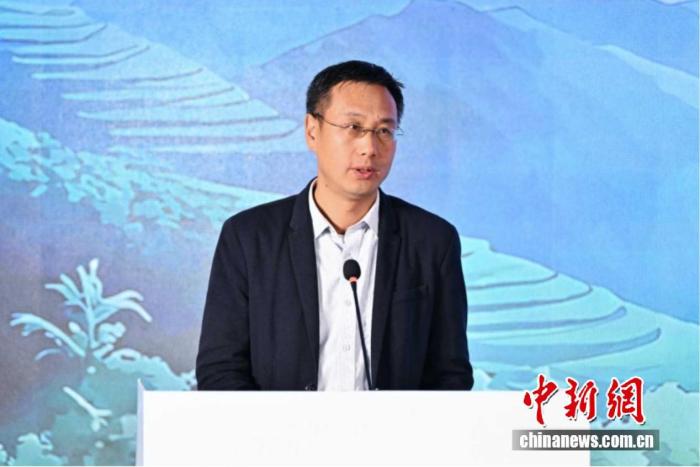
王志高:农村在“双碳”战略中扮演着重要角色
Zhong Guo Xin Wen Wang· 2025-10-24 11:37
Core Viewpoint - The construction of zero-carbon rural areas is essential for China's economic and social development, aligning with the "dual carbon" strategy and promoting national modernization and common prosperity [2]. Group 1: Importance of Rural Areas in Carbon Strategy - Rural areas play a significant role in China's "dual carbon" strategy, with rural carbon emissions accounting for nearly 30% of the national total, and per capita emissions exceeding those of urban residents [2][3]. - Improving the living standards and economic development in rural areas is crucial for promoting energy transition and reducing carbon emissions [2]. Group 2: Opportunities in Rural Development - The process of building zero-carbon rural areas presents numerous opportunities in sectors such as roads, housing, energy storage, microgrids, biomass, and renewable energy [3]. - The potential for investment in rural housing, including the installation of 2 billion kilowatts of photovoltaic systems, is estimated to exceed 4 trillion yuan, transforming rural areas from traditional agricultural producers to significant green electricity producers [3]. Group 3: Systematic Solutions for Zero-Carbon Future - A systematic approach is necessary to achieve the "livable rural zero-carbon future," as fragmented policies can lead to inefficiencies; collaboration across spatial, industrial, energy, and environmental dimensions is essential [3]. - An example of a successful project is the ultra-low energy consumption housing demonstration in Xing Sheng Village, which illustrates the potential for comprehensive planning and energy system integration [3]. Group 4: Enhancing Rural Housing and Energy - The transformation should leverage rural residents' core asset—housing—using energy as a key driver to enhance housing quality [5]. - The integration of photovoltaic systems, energy storage, and heat pumps can improve living conditions while generating stable green electricity income, thereby increasing the value of farmers' assets [5]. Group 5: Challenges and Future Prospects - Despite challenges such as aging population, unclear investment positioning, and cultural transformation, the historical trend towards rural development and energy revolution is unstoppable [5].
悦达投资“牵手”华润电力等公司 参投海上风电项目
Zheng Quan Shi Bao Wang· 2025-10-24 10:52
Core Viewpoint - The company is actively participating in the wind power sector to seize opportunities from the "dual carbon" strategy, establishing joint ventures for offshore wind projects to accelerate its transformation and development [1][2][3] Group 1: Joint Ventures and Investments - The company has formed a joint venture named Huaren Yuehai (Jiangsu) New Energy Co., Ltd. with several partners to invest in a 308MW offshore wind project in Xiangshui, with a registered capital of 100 million yuan, where the company holds a 20% stake [1] - Another joint venture, Huaren Yuedian (Jiangsu) New Energy Co., Ltd., has been established for a 407MW offshore wind project in Sheyang, with a registered capital of 1.3 billion yuan, where the company holds a 30% stake [1] Group 2: Project Financials - The total investment for the Huaren Yuehai project is approximately 2.712 billion yuan, with a unit investment of 8.8 yuan/W, an average on-grid electricity price of 0.391 yuan/kWh, expected annual revenue of about 288 million yuan, and a net profit of approximately 65.08 million yuan [2] - The Huaren Yuedian project has a total investment of about 4.378 billion yuan, with a unit investment of 10.75 yuan/W, similar electricity pricing, expected annual revenue of around 492 million yuan, and a net profit of approximately 103 million yuan [2] Group 3: Company Performance and Strategy - In the first three quarters of the year, the company reported revenues of 2.147 billion yuan, a year-on-year decline of 9.9%, but a net profit of 75.55 million yuan, a year-on-year increase of 200.05% [3] - The company aims to enhance its focus on the "new energy, new materials, and intelligent manufacturing" sectors, aligning with national strategies and local green initiatives, thereby accelerating its strategic transformation and improving its market position [3]
申能集团黄迪南:为全球可持续发展注入中国动能
新浪财经· 2025-10-24 10:09
Core Viewpoint - The 2025 Sustainable Global Leaders Conference emphasizes the importance of ESG (Environmental, Social, and Governance) practices in driving high-quality development and achieving China's dual carbon strategy, with Shanghai positioned as a global center for sustainable development [4][5][6]. Group 1: Conference Overview - The conference took place from October 16 to 18, 2025, in Shanghai, co-hosted by the World Green Design Organization and Sina Group, with support from the Shanghai Huangpu District Government [2]. - The event focused on topics such as creating a sustainable development model in the East and exploring new growth paradigms for Shanghai's five centers [2][4]. Group 2: ESG Commitment - The company has integrated ESG principles throughout its development process, aligning with the new development philosophy to support high-quality growth and the national dual carbon strategy [4][6]. - The company aims to deepen ESG practices, enhance industrial collaboration and innovation, and expand green industry, innovation, and value chains [4][8]. Group 3: Green Development Initiatives - The company is actively developing a green energy landscape, focusing on renewable energy, clean coal power, and emerging power services [6]. - It is working on building a comprehensive natural gas supply chain and advancing hydrogen energy initiatives, while also innovating green financial products to support the real economy [6][7]. Group 4: Social Responsibility and Governance - The company emphasizes a human-centered approach, fostering a harmonious corporate culture and actively engaging in social responsibility initiatives [7]. - It has integrated ESG goals into its decision-making and management processes, enhancing governance structures and performance evaluation mechanisms [7][8]. Group 5: Future Outlook - The company plans to continue its commitment to sustainable development, seeking to strengthen collaboration with government and industry stakeholders to enhance the green economy [8].

新能源轻客出口惊现300辆大单!
第一商用车网· 2025-10-24 07:38
Core Viewpoint - The successful export of 300 new energy logistics vehicles to Germany marks a significant step for Yueda Automotive Manufacturing Company in expanding its overseas business and advancing its new energy strategy [1][3]. Group 1: Export Achievement - The first batch of 300 new energy logistics vehicles was officially dispatched to Germany, with key figures from Yueda Group and the German partner, Tainy Company, present at the ceremony [1][5]. - This export project highlights Yueda Automotive's technological strength and manufacturing capabilities in the new energy sector [3][4]. Group 2: Strategic Goals - Yueda Automotive aims to enhance cooperation with Tainy Company in product optimization and market expansion, focusing on local assembly and localized services in Germany and Europe [3]. - The company is committed to driving innovation and injecting vitality into the new energy commercial vehicle sector, with plans to accelerate its global market presence [4].

首钢园再迎重磅盛会,嘉宾热议ESG实践
Bei Jing Ri Bao Ke Hu Duan· 2025-10-24 05:28
转自:北京日报客户端 10月24日至26日,ESG中国·创新年会(2025)暨首届ESG国际博览会在首钢园举办。在24日上午举办 的主论坛活动上,多位嘉宾围绕ESG(环境、社会、公司治理)领域的热点话题,热议ESG创新实践。 在开幕致辞环节,中国企业改革与发展研究会、国务院国资委原党委委员秘书长彭华岗表示,今年创新 年会的主题是"全链创新领航,绿色变革未来",强调、呼吁ESG从单一企业的内部治理转向覆盖产业链 的全链条、网络化价值创造,通过激发产业链上下游的协同创新,共同塑造一个绿色可持续的ESG生态 系统。 他介绍,本次年会首次增设ESG国际博览会,目前已有70家企业和机构参展。年会议题设置更加全面, 将举办15场平行会议,围绕"中国特色ESG理论创新驱动发展""ESG创新与绿色金融新机遇""数字技术赋 能ESG创新""ESG理念下的人才创新培养与发展"等热点议题展开。年会国际化程度提升,博览会共吸 引18家外资企业和9家国际组织参展,国际化参展主体占比达到37%,凸显中国ESG全球影响力。 他介绍,近年来,首钢将技术创新与产业升级深度融合,推动技术成果转化为现实生产力,攻克多项卡 脖子关键材料,同时践行京 ...