
智能网联汽车

Search documents
2025年中国车载摄像头行业概览:智能驾驶时代下,高精度感知需求推动车载摄像头市场量价齐升
Tou Bao Yan Jiu Yuan· 2025-06-23 12:03
Investment Rating - The report indicates a strong growth potential for the in-vehicle camera industry in China, with an expected market size increase from 28.065 billion yuan to 175.992 billion yuan from 2025 to 2030, reflecting a compound annual growth rate (CAGR) of 44.37% [5][49]. Core Insights - The in-vehicle camera is a core sensor for environmental perception in autonomous driving, providing rich visual information and multi-functional applications, which are essential for the realization of self-driving capabilities [2][11]. - The demand for in-vehicle cameras is expected to grow significantly as the levels of autonomous driving technology advance, with the number of cameras per vehicle increasing from 4-5 for L2 to 15-18 for L4 [3][26]. - The report highlights the high degree of localization in the supply chain for key components such as optical lenses and image sensors, with Chinese manufacturers dominating the market [4][43]. Summary by Sections Market Overview - The in-vehicle camera market in China is projected to grow significantly, driven by advancements in autonomous driving levels and the increasing demand for high-definition and multifunctional modules [5][52]. - The market size is expected to rise from 28.065 billion yuan in 2025 to 175.992 billion yuan by 2030, with a CAGR of 44.37% [5][49]. Industry Chain Analysis - The industry chain consists of upstream component suppliers (optical lenses, CMOS chips), midstream module packaging and system integrators, and downstream vehicle manufacturers [32]. - Chinese manufacturers are highly competitive in the optical lens market, with the top five global suppliers being Chinese companies, indicating a strong domestic supply chain [4][42]. Technological Trends - The report identifies two major technological trends: the increasing resolution of cameras and the integration of ISP chips, which enhance the performance and reduce costs of in-vehicle cameras [53]. - The shift towards multi-sensor fusion systems is expected to drive the market further, as these systems combine the strengths of various sensors to create a more reliable autonomous driving environment [19][24]. Application and Demand - The report notes that the average number of cameras installed in vehicles is increasing, with new models from various manufacturers featuring more than 10 cameras to meet higher driving assistance demands [52][56]. - The demand for in-vehicle cameras is expected to rise across all vehicle price segments, indicating a trend of high-end technology penetrating lower-end markets [56].
中汽股份(301215) - 301215中汽股份投资者关系管理信息20250623
2025-06-23 08:26
Group 1: Regulatory Impact and Business Growth - The recent draft of the mandatory national standard for Automatic Emergency Braking Systems (AEBS) is expected to expand its applicability, which will directly stimulate the demand for testing and certification services from OEMs and parts manufacturers [2][3] - The new AEBS standard will include assessments for recognizing vulnerable road users, such as pedestrians and cyclists, aligning with international regulations [3] Group 2: Company Qualifications and Market Position - The company holds multiple certifications, including CNAS recognition and testing qualifications from various government departments, positioning it as a key player in the automotive testing industry [4] - The company is recognized as a significant testing and validation partner for emerging technologies in intelligent connected vehicles and new energy vehicles [4] Group 3: Business Volume and Future Opportunities - Current business volume is not saturated, with significant growth potential driven by the expanding domestic automotive market and increasing R&D demands from regulatory bodies [5][6] - New testing facilities, such as the wet handling test track, are expected to meet the growing needs of vehicle and tire manufacturers [5][6] Group 4: Competitive Landscape - Main competitors include other domestic third-party automotive testing facilities, such as those in Beijing, Anhui, and Xiangyang [7] Group 5: Shareholder Commitments and Market Management - The controlling shareholder's commitment to inject quality assets within five years post-IPO has not yet been realized, but plans are in place to adhere to this timeline [8] - The company has implemented various measures for market value management, including consistent information disclosure and increasing dividend payouts, which have grown from CNY 30.42 million in 2021 to CNY 101.82 million in 2024 [10]
汽车行业周报:固态电池渐近,欧洲新能源继续强劲-20250623
Guoyuan Securities· 2025-06-23 06:43
Investment Rating - The report maintains a positive outlook on the domestic passenger car market and recommends focusing on emerging technologies such as solid-state batteries [6][4]. Core Insights - The solid-state battery technology is approaching practical application, with major automakers like Nissan and BYD planning to launch vehicles using this technology by 2027 and 2028 respectively [2]. - The European market for new energy vehicles continues to grow significantly, with May sales reaching 330,000 units, a year-on-year increase of 36.2%, driven by incentives in Germany and Southern Europe [3]. - The retail penetration rate of new energy vehicles in China reached 57% during the first half of June, with retail sales of 402,000 units, marking a 38% increase year-on-year [19]. Summary by Sections 1. Market Overview - From June 1 to June 15, 2025, the national retail sales of passenger cars in China were 706,000 units, a 20% increase year-on-year, while wholesale sales were 714,000 units, a 24% increase year-on-year [19][19]. - Cumulatively, retail sales for the year reached 9.522 million units, a 10% increase year-on-year, and wholesale sales reached 11.504 million units, a 12% increase year-on-year [19]. 2. New Energy Vehicle Insights - The retail sales of new energy passenger cars from June 1 to June 15 were 402,000 units, with a year-on-year growth of 38% and a cumulative retail of 4.76 million units for the year, reflecting a 35% increase [19]. - The wholesale of new energy vehicles during the same period was 369,000 units, an 18% increase year-on-year, with a cumulative wholesale of 5.576 million units for the year, showing a 38% increase [19]. 3. Technological Developments - Xiaomi's solid-state battery patent was published, which aims to enhance the performance of solid-state batteries by shortening the ion transport path [2]. - Major automotive companies are advancing towards the implementation of solid-state batteries, indicating a significant shift in battery technology within the industry [2]. 4. Investment Opportunities - The report suggests that investors should pay attention to the development of solid-state batteries and the recovery of the European market, particularly the opportunities for Chinese automotive companies to expand their supply chains into Europe [4].



加速构建人工智能产业生态
Jing Ji Ri Bao· 2025-06-21 21:57
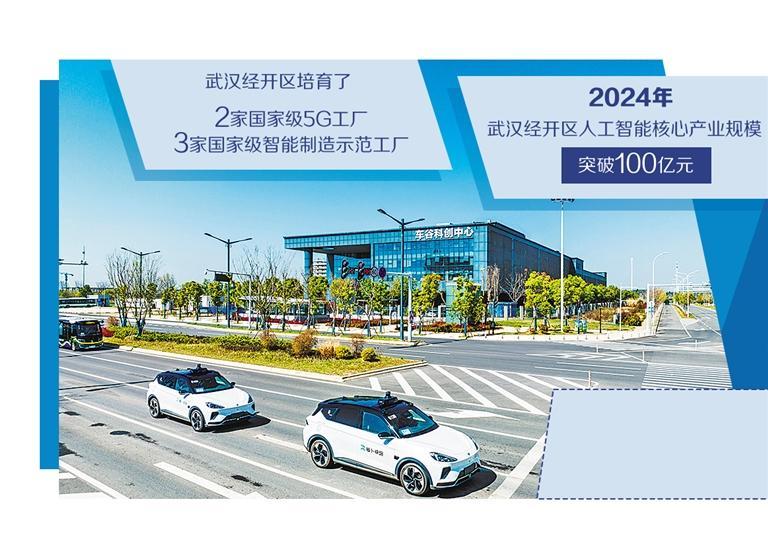
Core Insights - The article highlights the development of the artificial intelligence (AI) industry in Wuhan Economic Development Zone, focusing on smart connected vehicles and the establishment of a comprehensive AI ecosystem [3][4][5]. Group 1: AI Infrastructure and Development - China Electronics Cloud has established the Wuhan Trusted Intelligent Computing Center, with an initial capacity of 100P, which is currently operating at nearly 100% utilization [3]. - The AI core industry in Wuhan Economic Development Zone surpassed 10 billion yuan, accounting for 20% of the city's total, positioning it as a leader in Wuhan's AI sector [3][4]. Group 2: Industry Collaboration and Investment - Major companies like iFlytek have invested 5 billion yuan in the region, establishing multiple AI facilities to enhance collaboration and technology transfer [4]. - Wuhan Economic Development Zone has attracted over 200 AI companies, creating a hub for AI development centered around smart connected vehicles [4]. Group 3: Smart Vehicle Initiatives - Dongfeng Motor has launched the "Tianyuan Intelligent" technology brand, which includes a large model that improves vehicle development efficiency by reducing the new car development cycle by over 35% [5]. - The region has developed 106 kilometers of smart roads integrating 5G, Beidou, and AI technologies, facilitating the deployment of autonomous vehicles [5][6]. Group 4: Future Plans and Goals - The Wuhan Municipal Government has released an action plan for AI development by 2025, aiming to create an AI "special zone" in the Economic Development Zone [6]. - Future initiatives will focus on enhancing the AI ecosystem, particularly in automotive and manufacturing sectors, and addressing key technological challenges [6].


五洲新春: 五洲新春2025年度向特定对象发行A股股票募集资金使用的可行性分析报告
Zheng Quan Zhi Xing· 2025-06-20 08:43
Fundraising Plan - The company plans to raise a total of up to 1 billion yuan through a private placement of A-shares, with the funds primarily allocated to the development and industrialization of core components for humanoid robots and intelligent driving systems [1][8] - The total investment for the project is estimated at 1.3547462 billion yuan, with 1 billion yuan expected to be funded through this fundraising effort [1] Project Necessity and Feasibility - The humanoid robot and intelligent driving core components project is crucial for meeting the growing market demand and capitalizing on the domestic substitution opportunity, as the market for humanoid robots and intelligent vehicles is rapidly expanding [2][3] - The project aims to produce high-end screws and bearings essential for humanoid robots and intelligent vehicles, which are expected to see significant demand growth due to technological advancements [3][4] Market Trends - The global humanoid robot market is projected to reach 1.017 billion USD in 2024 and 15 billion USD by 2030, while the penetration rate of intelligent vehicles in passenger car sales is expected to rise from 18.5% to 57.1% [2] - By 2030, intelligent vehicle sales in China are anticipated to approach 30 million units, with a compound annual growth rate of 10.9% from 2023 to 2030 [2] Policy Support - National and local policies are strongly supporting the development of humanoid robots and intelligent vehicles, providing a favorable environment for the project's implementation [4][5] - Recent government initiatives emphasize the importance of intelligent networked vehicles and the development of related components, aligning with the company's project goals [4] Technical and Operational Strengths - The company possesses strong technical capabilities, being a national high-tech enterprise with established research centers and a dedicated R&D team focused on precision components [5][6] - The production processes for screws and bearings are similar, facilitating the company's expansion into the screw market while leveraging existing manufacturing expertise [5] Customer Base and Market Expansion - The company has a solid customer base, including leading global manufacturers in the industrial and automotive sectors, which will aid in the market penetration of the new products [6][7] - The project is expected to generate significant economic benefits, with ongoing efforts to secure partnerships with key clients in the humanoid robot and automotive industries [6] Financial Impact - The fundraising will enhance the company's financial structure, providing necessary working capital to support business growth and improve overall competitiveness [7][8] - The successful completion of the fundraising will lead to an increase in total assets and net assets, optimizing the company's capital structure and reducing future financing costs [7][8]

光庭信息:签订智能网联汽车数字汽车创新实验室项目投资合作协议
news flash· 2025-06-20 08:16
Core Viewpoint - The company, Guangting Information, has signed an investment cooperation agreement to establish a digital automotive innovation laboratory focused on smart connected vehicles, aiming to enhance product innovation and research efficiency [1] Group 1: Project Details - The project will create a public innovation platform to support research and testing of smart connected vehicle products [1] - The agreement is a framework agreement and does not require approval from the company's board of directors or shareholders [1] Group 2: Objectives and Benefits - The laboratory aims to meet the needs for product research and development as well as talent training in the smart connected vehicle sector [1] - The initiative is expected to improve the company's product innovation capabilities and research efficiency [1]
无人车从北京加速“驶”向全球
Zhong Guo Xin Wen Wang· 2025-06-19 23:50
Core Viewpoint - Beijing is accelerating the development of intelligent connected vehicles, positioning itself as a global leader in the smart electric vehicle industry, focusing on advanced autonomous driving technology and infrastructure development [1][2]. Industry Development - The "14th Five-Year Plan" emphasizes the integration of intelligent connected new energy vehicles into high-tech industry development, aiming to enhance the competitiveness of the automotive sector through innovation and industrialization [1]. - Beijing has implemented intelligent infrastructure across 600 square kilometers, establishing a city-level experimental platform that integrates "vehicle, road, cloud, network, and map" systems to support rapid technological advancements in autonomous driving [1]. Technological Innovation - The city is fostering core technology innovation by building a national innovation center for intelligent connected vehicles, focusing on key technologies such as perception systems, in-vehicle operating systems, high-precision maps, and intelligent cockpits [2]. - A comprehensive security testing capability has been developed at the National Intelligent Connected Vehicle Innovation Center, addressing issues related to high costs and insufficient validation of safety compliance for smart vehicles [3][5]. Safety Measures - To mitigate security risks like network penetration, a defensive research system has been established, utilizing intrusion detection and defense probes in vehicles to monitor and report potential risks in real-time [5]. - The center has created a vehicle network identity authentication security trust system, which has already served over 20 enterprises and demonstration zones, facilitating secure communication and interoperability across brands and cities [5]. Global Expansion - New Stone Technology's unmanned vehicles have been deployed in over 15 countries and more than 250 cities, with a total of over 5,000 units delivered and an accumulated driving distance exceeding 42 million kilometers [5]. - Beijing has hosted the "World Intelligent Connected Vehicle Conference" for seven consecutive years, promoting international collaboration and leading trends in the global intelligent connected vehicle industry [5].
安徽拿下中国第一,背后站着汽车界的“黄埔军校”
3 6 Ke· 2025-06-19 08:33
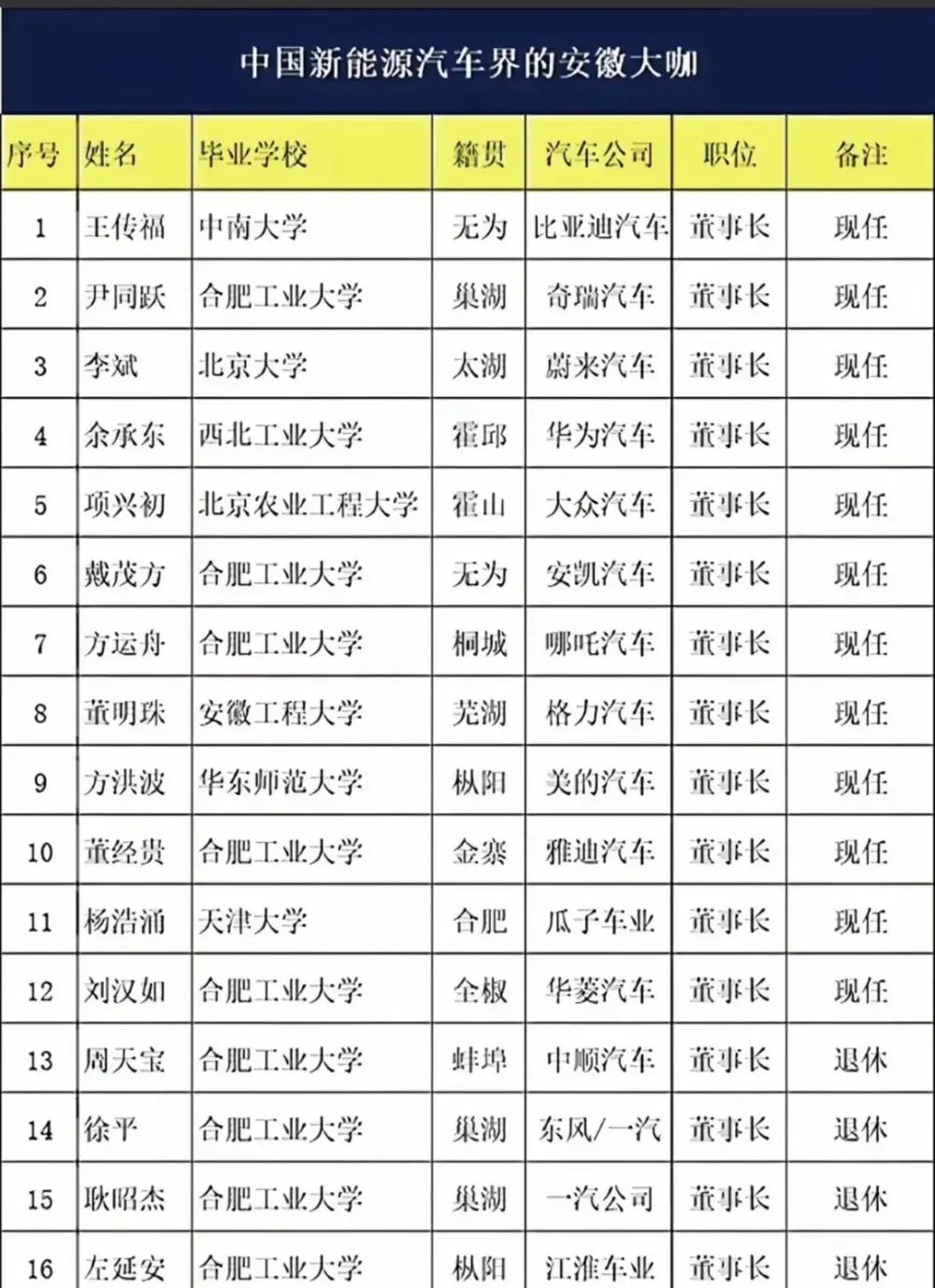
这所大学,又如何改变安徽的汽车产业? 中国汽车行业的"黄埔军校" 在中国汽车行业曾经流传"汽车工业三分天下,合肥工大独占其一"的说法。 安徽省汽车产量,拿下全国第一。 国家统计局的最新数据,今年前4个月,安徽以99.31万辆的累计整车产量,高居全国第一。 安徽汽车产业崛起的一个重要因素,就是有一所被称为中国汽车界"黄埔军校"的大学——#合肥工业大学(合工大)。 合工大,为何被称为中国汽车行业的"黄埔军校"? 这并非夸张,反而说明了合工大为中国汽车业界做出的贡献,也反映出它在汽车行业的地位。 作为国内最早开设汽车专业的高校之一,合工大1958年开设车辆工程专业,到现在60多年的时间里,源源不断地培养了一代又一代的汽车工业 的人才。 | 序号 姓名 | | 毕业学校 | 糖買 | 汽车公司 | 职位 | 备注 | | --- | --- | --- | --- | --- | --- | --- | | 1 | 王传福 | 中南大学 | 无为 | 比亚迪汽车 | 市小长 | 现任 | | 2 | 尹同跃 | 合肥工业大学 | 東湖 | 奇瑞汽车 | 市事长 | 肌任 | | 3 | 李斌 | 北京大学 | 太湖 ...
刷屏!华为最新发声
Zhong Guo Ji Jin Bao· 2025-06-19 01:48
Core Insights - Huawei's Vice Chairman Xu Zhijun emphasized the need for telecom operators to identify growth opportunities and paths tailored to their unique environments and competitive landscapes [1] Group 1: Growth Paths for Telecom Operators - Xu highlighted four key growth paths for telecom operators to overcome growth bottlenecks in a stable development phase [1] - The focus should be on understanding changes in user demand and capturing growth opportunities through network optimization and service enhancement [1] Group 2: High-Value User Segments - The global delivery rider population is projected to grow from 30 million in 2020 to 70 million by 2024, reaching 160 million by 2030, representing 5% of the global workforce [2] - Delivery riders have an average monthly call time (MOU) four times that of regular users, with data consumption twice as high and an average revenue per user (ARPU) 1.6 times greater [2] - The live streaming industry is also experiencing significant growth, with the number of streamers expected to rise from 10 million in 2022 to 50 million by 2024, and 130 million by 2030 [2] Group 3: Video Consumption Potential - Short videos account for approximately 50% of mobile traffic globally, yet there is a gap in the supply and consumption of high-definition (HD) video [3] - Xu proposed a systematic approach to stimulate HD video consumption, noting that 1080P video can increase traffic consumption fivefold compared to 360P [3] - Current HD video consumption in typical Chinese cities is only 22%, indicating significant potential for growth [3] Group 4: Smart Connected Vehicles - By 2025, 30% of passenger cars sold in China are expected to be equipped with 5G connectivity, increasing to 95% by 2030 [4] - The high costs associated with 5G intellectual property rights (IPR) and T-Box are identified as major barriers to adoption [4][5] Group 5: FTTR Technology for Small Businesses - FTTR (Fiber to the Room) technology is projected to reach 75 million users in China by 2025, while only 500,000 users are expected outside China, indicating substantial growth potential [6] - FTTR can address connectivity issues faced by small businesses and individual entrepreneurs, who have a pressing need for high-speed, stable, and low-latency networks [6]
四川汽车制造驶入“快车道”
Si Chuan Ri Bao· 2025-06-18 23:03
Core Insights - The automotive industry in Sichuan is experiencing significant growth, particularly in the commercial vehicle and new energy vehicle segments, with production and sales figures showing substantial year-on-year increases [1][2][3] Group 1: Production and Sales Growth - In the first five months of the year, Sichuan's automotive production reached 420,000 units, a year-on-year increase of 36.4%, with new energy vehicle production soaring by 283.9% to 119,000 units [1][3] - Chengdu Wangpai Commercial Vehicle Co., Ltd. reported that nearly 55% of its commercial vehicle production consists of new energy vehicles, a significant increase from less than 10% two years ago [2][3] - Yibin Kaiyi Automobile Co., Ltd. achieved a production volume of 46,200 units, up 352% year-on-year, and sales of 44,700 units, an increase of 251% [1][3] Group 2: Market Expansion and Strategy - Yibin Kaiyi has expanded its sales market to 54 countries and regions, with an export volume exceeding 10,000 units, marking a 303% year-on-year increase [3] - Sichuan has established a collaborative mechanism around 15 key industrial chains, focusing on strengthening the new energy vehicle and power battery industry chain [3][4] Group 3: Technological Advancements and Future Prospects - Companies like Fulin Precision Co., Ltd. are seeing double-digit growth in production across various segments, including automotive engine parts and new energy vehicle components [4] - Sichuan is actively transforming traditional industries and investing in future industries, with companies like Sichuan Saike Power Technology Co., Ltd. making significant advancements in solid-state battery technology [4][5] - The provincial government is committed to supporting the automotive industry's transformation through funding, policy support, and industrial collaboration [4][5]