跨境支付

Search documents
A股收盘:三大指数集体上涨,全市场超4400只个股上涨
经济观察报· 2025-05-29 07:12
Market Performance - On May 29, A-shares saw a collective increase in the three major indices, with the Shanghai Composite Index rising by 0.7%, the Shenzhen Component Index increasing by 1.24%, and the ChiNext Index up by 1.37% [1] - The North Stock 50 index experienced a significant rise of 2.73% [1] - The total trading volume in the two markets was approximately 11,854.22 billion yuan, an increase of about 1,754.72 billion yuan compared to the previous trading day [1] Stock Movement - Out of 4,472 stocks in the market, 4,472 stocks rose while 831 stocks fell, with 120 stocks hitting the daily limit up and 15 stocks hitting the daily limit down [1] Sector Performance - Leading sectors with notable gains included EDA, cross-border payment, unmanned vehicles, digital currency, financial technology, computer, biopharmaceuticals, chemical pharmaceuticals, complete automobiles, and electronic chemicals [1] - Sectors that experienced declines included gold, sugar substitutes/sweeteners, seasonings, leisure foods, precious metals, beauty care, food and beverages, and banking [1]


财政部今年将在港发行680亿元国债;光大信托原董事长闫桂军受审丨金融早参
Mei Ri Jing Ji Xin Wen· 2025-05-28 22:59
Group 1 - The Ministry of Finance plans to issue 68 billion RMB in government bonds in Hong Kong in 2025, continuing the strategy of RMB internationalization [1] - The issuance of bonds is expected to benefit large banks involved, enhancing their cross-border business activity and increasing the attractiveness of RMB assets [1] - The overall stock market is anticipated to benefit from policy consistency, deepening financial connectivity between mainland China and Hong Kong, and boosting market stability and investor confidence [1] Group 2 - CIPS has signed a memorandum of understanding with the Central Bank of the UAE to enhance cross-border payment efficiency and infrastructure [2] - This collaboration is expected to benefit financial institutions participating in the CIPS system, strengthening their global service capabilities [2] - The capital market is likely to gain stability from improved risk compliance and security, supporting the long-term confidence of investors and capital flow resilience [2] Group 3 - Yunnan Province has increased the credit limit for individual special loans aimed at stabilizing and expanding employment to a maximum of 10 million RMB [3] - This policy is expected to provide a business growth opportunity for local banks and financial institutions, expanding their market share in credit [3] - The overall stock market is projected to be boosted by policy consistency, enhancing economic recovery expectations and investor confidence [3] Group 4 - The China Development Bank has issued over 400 billion RMB in loans to provinces along the Yangtze River Economic Belt in the first four months of the year, focusing on ecological governance and infrastructure [4] - This support is expected to provide business growth for environmental engineering and infrastructure construction companies, particularly those involved in the Yangtze River protection projects [4] - The overall stock market is likely to be strengthened by targeted financial policies, enhancing confidence in the stability of the real economy and injecting long-term development momentum into related sectors [4] Group 5 - The trial of the former chairman of Everbright Trust for corruption and abuse of power is expected to lead to increased internal monitoring demands within the trust industry [5] - The stock market may experience a boost from anti-corruption actions, enhancing regulatory transparency and market stability [5] - However, short-term emotional fluctuations may be a concern for investors as the industry undergoes self-regulation upgrades [5]
打造顺畅粤港澳“一小时生活圈” 银联持续提升支付便利化
经济观察报· 2025-05-26 11:33
Core Viewpoint - The article highlights the increasing popularity of "China Travel" in 2024, with various regions prioritizing inbound tourism as a key task for cultural and tourism development by 2025, supported by initiatives to enhance transportation and payment convenience [1][5]. Group 1: Inbound Tourism Development - Multiple regions are focusing on inbound tourism as a significant aspect of their 2025 cultural and tourism development plans, implementing new measures to facilitate travel [1]. - The China UnionPay is accelerating the construction of a cross-border payment ecosystem to meet the growing demand for cross-border payment services from foreign visitors [1][8]. Group 2: Payment Innovations - The "Jinxiu Action" by China UnionPay has led to innovative payment experiences, allowing foreign tourists to use their home electronic wallets linked to UnionPay cards for seamless transactions across various scenarios [5][3]. - UnionPay is collaborating with commercial banks, acquiring institutions, and merchants in 41 key cities to create an inclusive payment system that supports multiple payment methods [5][8]. Group 3: User Experience - Foreign tourists, such as a Thai traveler, report that using their home wallets linked to UnionPay cards eliminates the need for currency exchange, providing a transparent and convenient payment experience [3]. - The system allows automatic currency conversion, enhancing the payment experience for international users, as demonstrated by a Korean student using Naver Pay linked to UnionPay for daily expenses [5][8]. Group 4: Future Directions - UnionPay aims to promote high-level openness through payment innovations, transitioning from convenience to smarter payment services while expanding its global payment network [8].

市场转向宽幅震荡,等待回调后的布局机会
Haitong Securities International· 2025-05-25 13:03
Market Overview - The market has shifted into a broad consolidation phase, with expectations of a pullback for re-entry opportunities[1] - The Hang Seng Index increased by 1.1%, while the Hang Seng Tech Index decreased by 0.7%[2] - Southbound capital flows reversed from an outflow of HKD 8.7 billion to an inflow of HKD 19 billion this week[2] A-Share Market Dynamics - A-shares showed signs of fatigue, with micro-cap stocks experiencing significant sell-offs, retreating by 8.7% from intraweek highs[3] - The CSRC's relaxation of M&A regulations had limited impact on market activity, leading to increased losses for late entrants[3] U.S. Market Influence - U.S. equities, after a strong rebound, are facing resistance at previous highs, with the Nasdaq and S&P 500 down by 2.5% and 2.6% respectively[4] - The 10-year U.S. Treasury yield rose to 4.5%, while the 30-year yield surpassed 5%[4] Investment Strategy Recommendations - Investors are advised to trim positions during market rebounds, particularly in light of tariff impacts on economic data[5] - Long-term strategies should focus on sectors like internet platforms and AI applications, especially near key index levels of 21,000 for the Hang Seng Index and 3,200 for the Shanghai Composite[5] Risks to Monitor - Potential risks include slower-than-expected implementation of growth stabilization policies and escalating overseas uncertainties[6]
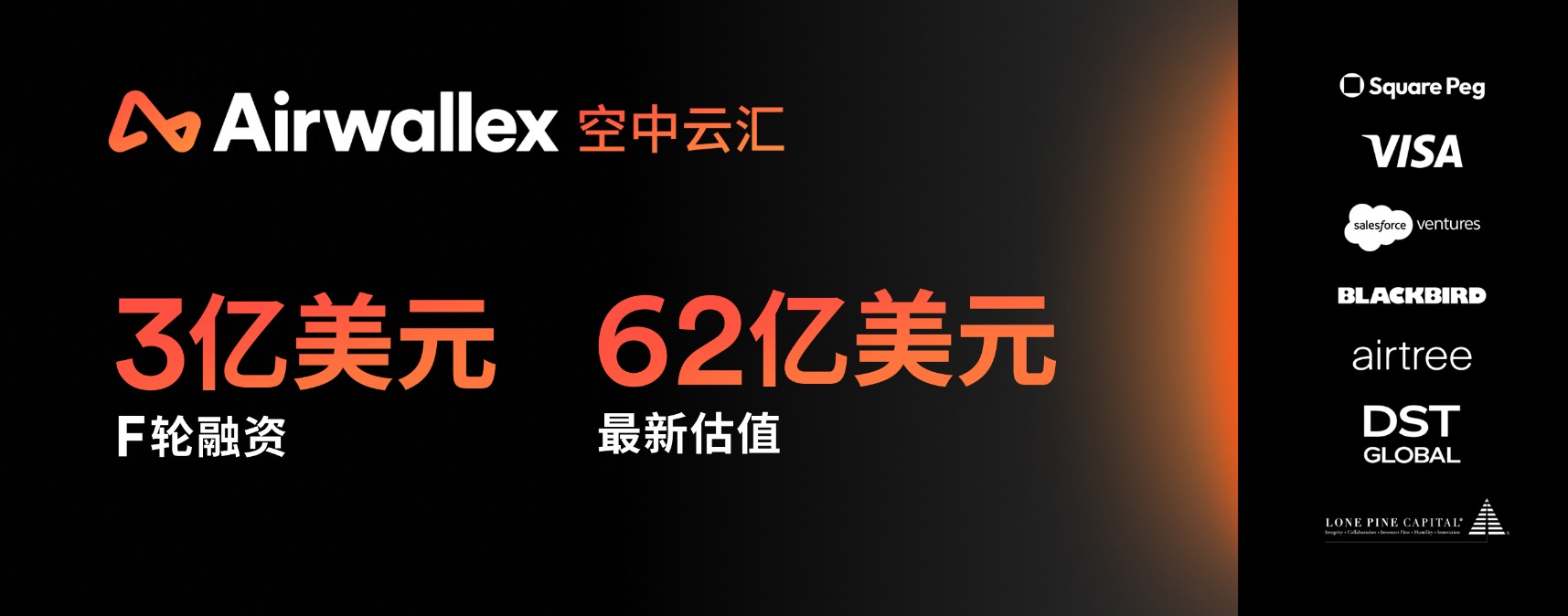
空中云汇完成3亿美元融资 估值达62亿美元
Xin Hua Cai Jing· 2025-05-21 11:56
新华财经上海5月21日电 跨境支付企业Airwallex 空中云汇21日宣布完成3亿美元F轮融资,公司估值达62亿美元。本轮融资包括1.5亿美元二次股份转让。此 轮融资后,空中云汇的融资总额超过12亿美元。公司将借助本轮融资将其全球金融服务基础设施拓展至更多市场,持续优化扩展软件平台,助力企业增长。 在欧洲,空中云汇也新设了巴黎办公室,并在伦敦和阿姆斯特丹开展高级岗位的人才招聘。在中东,空中云汇首次在阿联酋的阿布扎比和迪拜两地招聘员 工,并在以色列继续保持强劲的业务增长态势。 空中云汇凭借与本地清算系统和银行卡组网络的直接集成,以及拥有金融科技领域全面的牌照布局,构建了一套全球金融服务基础设施。这一专有平台让空 中云汇客户获得了独特竞争优势,可以在60多个国家即时生成本地账号,并在150多个国家之间进行资金收付,速度和效率远超传统银行。如今,通过空中 云汇完成的95%的交易能在数小时内或当天到账,其中68%的交易会实时处理。 2025年3月,空中云汇年化收入7.2亿美元,同比增长90%,全球年处理交易金额超过1300亿美元。2024年客户群体增长了50%,目前为全球15万家企业提供 服务。2025年,空中云汇 ...
跨境支付企业Airwallex空中云汇再获融资
Sou Hu Cai Jing· 2025-05-21 11:27
值得一提的是,Airwallex正在寻求在英国和美国获得银行牌照,以扩大业务范围至贷款领域。 据英国《金融时报》报道,Airwallex寻求获得英国银行牌照,是因为该地区对金融科技公司有利的市场 条件,以及英国金融行为监管局的监管能力。 据36Kr旗下媒体"暗涌Waves"报道,Airwallex(空中云汇)近日完成3亿美元F轮融资。投资方包括 Square Peg、DST Global、Blackbird、Airtree、Salesforce Ventures等风投机构,还有多家养老基金,Visa Ventures作为战略投资者参与。本轮融资中1.5亿美元为二次股份转让,投后估值62亿美元,较之2022年 的56亿美元估值有所上升。 在5月初,曾有外媒报道称,澳洲风投公司Blackbird计划向Airwallex投资6000万美元。而从最新的报道 来看,Blackbird的投资计划可能是Airwallex F轮融资中的一环。 据移动支付网了解,截至2024年末,Airwallex已为全球超过15万家企业提供服务,客户数量相比去年增 长50%。2025年3月最新数据显示,Airwallex的年化收入超7.2亿 ...

就在刚刚,融资3亿美元!4个墨尔本大学校友,干出62亿美元独角兽
创业邦· 2025-05-21 10:34
Core Viewpoint - Airwallex, a global payment and financial platform, has successfully raised $300 million in its Series F funding round, increasing its valuation to $6.2 billion, up from $5.6 billion in the previous round, indicating strong investor confidence in the company's unique technology-driven positioning and business model [3][4][5]. Funding and Valuation - Airwallex has completed a total of 11 funding rounds, with notable investors including Sequoia China, Tencent, Alibaba, and Hillhouse Capital [3][4]. - The latest funding round was led by SquarePeg, DST Global, Lone Pine Capital, Blackbird, Airtree, Salesforce Ventures, and included Visa Ventures as a strategic investor [3][4]. - The increase in valuation reflects the growing recognition of the company's innovative approach to cross-border payments and financial services [4]. Business Model and Growth - Airwallex aims to replace traditional banks in the cross-border payment sector for SMEs by offering a comprehensive suite of services that includes global payments, financial management, and embedded financial solutions [5][12]. - The company reported an annual revenue exceeding $720 million as of March 2025, representing a 90% year-over-year growth, with a global transaction volume surpassing $130 billion, a 73% increase [5][12]. - Airwallex's business model focuses on addressing the pain points faced by SMEs in cross-border payments, such as high costs and lengthy transaction times [12][14]. Market Position and Strategy - The company has established a robust business network across the Asia-Pacific, Americas, and EMEA regions, positioning itself strategically in a market with limited competition compared to established players in Europe and North America [10][18]. - Airwallex has obtained payment licenses in over 60 countries and regions, including China, Hong Kong, Singapore, the UK, the EU, the US, and Australia, making it one of the most widely covered cross-border payment platforms globally [19][21]. - The company is actively expanding its services, including the launch of new financial management products and the integration of AI technologies to enhance its offerings [17][22]. Innovation and Technology - Airwallex has developed a machine learning-based risk control model to detect anomalies and fraud, enhancing security for its clients [16]. - The platform boasts a 95% same-day settlement rate and a 68% instant settlement rate, significantly improving transaction efficiency compared to traditional methods [14][16]. - The company is also exploring the application of AI in its products, aiming to launch new AI-driven solutions in the near future [17]. Future Outlook - With the rapid growth of cross-border e-commerce and the increasing demand for efficient payment solutions, Airwallex is well-positioned to capitalize on the expanding market opportunities, particularly in emerging markets [21][22]. - The company anticipates that China's cross-border e-commerce export volume will reach 1.83 trillion yuan in 2024, indicating a significant growth potential for its services in this region [21].

金融开放战略持续推进,数字经济ETF(560800)盘中溢价
Sou Hu Cai Jing· 2025-05-21 05:56
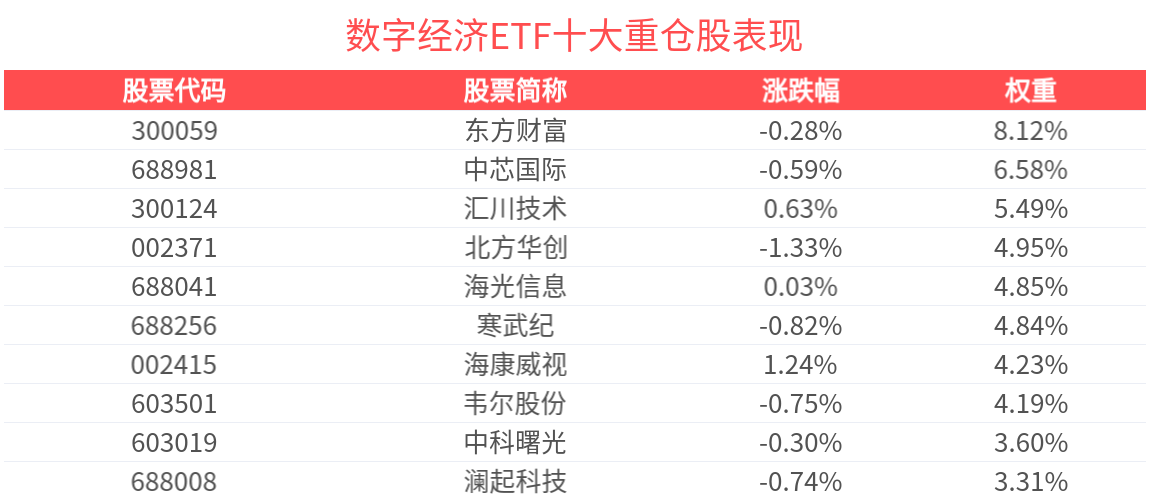
Core Insights - The China Digital Economy Theme Index (931582) experienced a decline of 0.38% as of May 21, 2025, with mixed performance among constituent stocks [1] - The National Bureau of Statistics issued the "Digital China Construction 2025 Action Plan," which emphasizes the need for local implementation [1][2] - The digital economy ETF (560800) closely tracks the China Digital Economy Theme Index and has seen significant growth in scale and shares recently [2][3] Market Performance - Leading stocks included Jingsheng Electronics (600699) up 5.53%, Desay SV (002920) up 3.59%, and Nasda (002180) up 2.16%, while the biggest decliners were Zhaoyi Innovation (603986) down 6.21%, Mingzhi Electric (603728) down 1.87%, and Loongson Technology (688047) down 1.60% [1][6] - The digital economy ETF saw a recent price of 0.76 yuan, with a turnover rate of 0.77% and a transaction volume of 5.8854 million yuan [1] Fund Growth - The digital economy ETF's scale increased by 2.5476 million yuan over the past two weeks, ranking in the top half among comparable funds [2] - In the past week, the ETF's shares grew by 2 million, also placing it in the top half of comparable funds [3] Capital Flow - The latest capital inflow and outflow for the digital economy ETF were balanced, with a total of 26.2393 million yuan raised over the last ten trading days [4] - The top ten weighted stocks in the China Digital Economy Theme Index accounted for 51.5% of the index, with notable companies including Dongfang Caifu (300059) and SMIC (688981) [4][6]






从“全球收款”到“全球经营”:高含金量海外支付牌照成跨境支付机构破局关键
Mei Ri Jing Ji Xin Wen· 2025-05-19 14:31
Core Viewpoint - Domestic cross-border payment institutions are actively seeking to acquire overseas payment licenses to meet the diversified financial service needs of outbound enterprises [1][2][5]. Group 1: Market Demand and Trends - The demand for financial services from outbound enterprises has evolved from merely quick payment collection and currency exchange to a comprehensive suite of services including payment collection, disbursement, currency exchange, and cash management [1][3]. - There is a growing trend among outbound enterprises to localize their operations, which increases the need for local payment solutions and financial services [1][3]. Group 2: Importance of Payment Licenses - Obtaining local payment licenses is crucial for cross-border payment institutions to establish partnerships with local banks and financial institutions for currency exchange and cash management services [1][4]. - High-quality payment licenses are seen as essential for ensuring compliance and long-term operational sustainability in foreign markets [2][4]. Group 3: Service Capabilities Required - Cross-border payment institutions need to develop three key service capabilities: global coverage for payment collection, comprehensive payment services for overseas operations, and a robust ecosystem for financial management and payment solutions [3][4]. - The ability to connect with various local payment methods is critical, especially in regions like Southeast Asia where payment preferences vary significantly [3][4]. Group 4: Acquisition Strategy - Due to the challenges in obtaining high-quality payment licenses, many cross-border payment institutions are considering acquisition as a more efficient strategy to gain access to these licenses [2][5][7]. - The acquisition process still requires compliance with local regulatory standards, emphasizing the importance of a strong risk management framework [8]. Group 5: Case Study of XTransfer - XTransfer recently obtained an Electronic Money Institution (EMI) license from the Dutch Central Bank, allowing it to offer payment and currency exchange services across the European Economic Area [6]. - The EMI license provides a broader scope of services compared to previous licenses, enabling XTransfer to support outbound enterprises with various financial needs in Europe [6][8]. Group 6: Regulatory Challenges - The process of obtaining high-quality payment licenses involves stringent regulatory requirements, including anti-money laundering (AML) and customer identification protocols [8]. - Cross-border payment institutions must demonstrate their commitment to compliance and local market engagement to successfully acquire licenses through both application and acquisition methods [8].
倒计时1天丨2025清华五道口全球金融论坛将于明日盛大开幕!
清华金融评论· 2025-05-16 10:27
Core Viewpoint - The 2025 Tsinghua PBCSF Global Finance Forum will be held in Shenzhen on May 17-18, 2025, focusing on the theme "A Shared Future: Building an Open and Inclusive Economic and Financial System" to create a high-level dialogue platform for global government officials, economists, and financial leaders to gather wisdom and seek new cooperation opportunities [17]. Agenda Summary - The forum will feature keynote speeches and multiple thematic discussions, including: - Keynote speeches on the first day [6][10] - Discussions on the future of the global monetary system, international trade and investment, challenges of global economic fragmentation, and the development of the Guangdong-Hong Kong-Macao Greater Bay Area [6][11] - Sessions on green finance, emerging market debt crises, and global financial stability presented by the IMF [6][12] - The second day will include discussions on China's economic outlook, technological innovation in finance, digital finance in the AI era, and sustainable investing [12][14] - Closed-door sessions focusing on financial security, aging population challenges, inclusive finance, and cross-border payment trends [7][14]