
脑机接口

Search documents
纤维芯片:把大规模集成电路装进“头发丝”
Xin Lang Cai Jing· 2026-01-22 00:44
Core Viewpoint - The research team led by Professor Peng Huisheng from Fudan University has developed a novel "fiber chip" that integrates large-scale circuits into elastic polymer fibers, offering unique advantages for emerging industries such as brain-machine interfaces, electronic textiles, and virtual reality [1][2]. Group 1: Research and Development - The fiber chip represents a significant breakthrough in the field of fiber devices, which has garnered international attention since the team first introduced the concept [2]. - The team has created over 30 types of new fiber devices with functionalities such as power generation, energy storage, and bio-sensing since 2008, with some technologies already in preliminary application [2]. - The integration of different functional fiber devices into a fiber electronic system is essential for large-scale application, similar to the evolution of smartphones and computers [2]. Group 2: Technical Achievements - The fiber chip's electronic components can achieve a density of 100,000 transistors per centimeter, enabling both digital and analog circuit operations [3]. - The fiber chip maintains performance stability even after extensive stress tests, including over a hundred washes and exposure to high temperatures [3]. - The design and fabrication methods of the fiber chip are compatible with existing photolithography processes, potentially easing future industrialization [7]. Group 3: Applications and Future Prospects - In the field of brain-machine interfaces, the fiber chip can integrate sensing, signal processing, and stimulation output functions into a single fiber, providing new tools for neuroscience and neurological disease treatment [7]. - The fiber chip enables the creation of fully flexible electronic textiles without the need for external processors, allowing for dynamic pixel displays within the fabric [7]. - The fiber chip can enhance virtual reality applications by providing flexible and breathable smart tactile gloves that accurately simulate different mechanical sensations [8]. - The research team aims to continue improving device integration density and information processing capabilities while establishing a proprietary intellectual property system for collaboration with industry [8].
未来已来,中国经济如何破浪向“新”
Xin Lang Cai Jing· 2026-01-22 00:44
Economic Overview - In 2025, China's economy demonstrated a solid "stability" and a vigorous "progress," with a focus on nurturing "new" driving forces and showcasing "resilience" [1] - The National Bureau of Statistics reported that China's innovation index entered the global top ten, with R&D expenditure intensity rising to 2.8%, surpassing the OECD average [1] Technological Innovation - Significant breakthroughs in artificial intelligence, quantum technology, and brain-computer interfaces have emerged, reshaping economic development models and driving high-quality growth [1] - The added value of the equipment manufacturing and high-tech manufacturing industries grew by 9.2% and 9.4% respectively, with the high-tech manufacturing sector's contribution reaching a historic high of 17.1% [1] Foreign Trade Dynamics - In the first eleven months of 2025, high-tech product exports maintained rapid growth, with integrated circuit exports exceeding 1.29 trillion yuan, a year-on-year increase of 25.6% [2] - Innovations in artificial intelligence, biomedicine, and industrial robotics are becoming key drivers for foreign trade growth amid global industrial chain restructuring [2] Supply and Demand Synergy - Technological breakthroughs are continuously transforming into market-competitive products and services, injecting new vitality into the supply side while expanding application scenarios on the demand side [2] - Innovations are becoming tangible experiences for the public, with examples such as drones operating in extreme cold and AI models providing services in urban areas [2] Competitive Advantage - The ability to convert innovation momentum into developmental advantages is crucial for maintaining a competitive edge in the international arena [3] - Emphasizing technological innovation as a key variable will enable the economy to explore new opportunities and maintain stability in a changing environment [3]
脑机接口新突破 中文失语患者有望重获“新声”
Ren Min Ri Bao· 2026-01-21 23:47
中科院上海微系统与信息技术研究所供图 中科院上海微系统与信息技术研究所供图 语言脑机接口技术与人工智能和具身智能技术融合。 汉语语句实时解码。 近日,中国科学院上海微系统与信息技术研究所联合相关团队,在语言脑机接口领域取得突破性进展。 研究人员开发出植入式高通量柔性脑机接口系统和汉语言实时神经网络解码算法,并在国际上首次实现 脑机接口实时汉语解码和语句合成。这项研究不仅让中文失语患者有望重新"开口说话",也为脑机接口 在多语言、多场景下的应用打开了新空间。 覆盖全部发音组合,进而实现解码任意汉字和语句。 实现解码任意汉字和语句 语言是人与人之间沟通交流的主要形式。然而,脑卒中、渐冻症、脑外伤等重大脑疾病,常让患者失去 语言表达能力,陷入意识清醒却无法开口的困境。 "中国有近800万因各类脑疾病失去语言能力的患者,汉语解码对他们有着很大的意义和应用价值。"中 国科学院上海微系统与信息技术研究所研究员周志涛说,近年来,国际上的多个顶尖科研团队在脑机接 口英语解码上取得了多项突破性进展,包括英语和西班牙语双语解码,但是使用人数最多、与英语差异 很大的汉语解码研究由于起步较晚而进展相对慢。 周志涛说,团队此次研究的核 ...

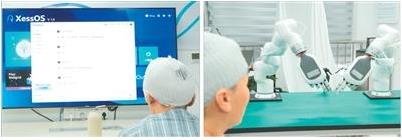
“新字号”强壮记丨脑机接口点亮新医疗——翔宇医疗实现意念控物
He Nan Ri Bao· 2026-01-21 23:37
Core Insights - The article highlights the advancements in brain-computer interface (BCI) technology, particularly in rehabilitation medical devices, as demonstrated by Xiangyu Medical in Anyang, Henan province [1][2]. Company Overview - Xiangyu Medical is a leading enterprise in China's rehabilitation medical device industry, focusing on integrating cutting-edge technologies like BCI into their products [1]. - The company has successfully adapted 27 rehabilitation devices to BCI technology as of December 31, 2025, with a goal to reach nearly 100 devices by the end of 2026 [3]. Technology and Innovation - The BCI technology showcased includes non-invasive methods that convert brain signals into device commands, allowing users to control rehabilitation equipment through thought alone [1][2]. - The company emphasizes the safety and convenience of non-invasive BCI compared to invasive methods, which require surgical implantation and carry higher risks and costs [2]. Industry Context - The domestic BCI industry is experiencing rapid technological advancements and expanding application scenarios, with both invasive and non-invasive approaches being developed [2]. - Xiangyu Medical collaborates with 62 upstream and downstream companies within the rehabilitation equipment industry park in Neihuang County, creating a comprehensive industrial chain that supports research, manufacturing, and service [3]. Future Goals - The company aims to establish a complete brain-controlled rehabilitation ecosystem by integrating mainstream rehabilitation devices with BCI technology over the next five years [3]. - Xiangyu Medical is committed to accelerating the clinical application of BCI products to benefit patients, leveraging its extensive experience in industry-academia-research collaboration [3].

不同类型企业都能享有政策红利
Xin Hua Ri Bao· 2026-01-21 23:23
Group 1 - The core viewpoint of the news is the introduction of eight supportive policies aimed at enhancing enterprise development in Jiangsu Province, combining both existing and new financial support measures [1][2][3] - The manufacturing loan interest subsidy policy has been optimized and expanded, allowing two types of enterprises to directly benefit from interest subsidies, specifically "C manufacturing" enterprises and recognized "little giant" enterprises [1] - The modern service industry loan interest subsidy policy has seen improvements, with a budget of 150 million yuan for 2026, increasing the subsidy rate from 1% to 1.5%, and expanding the eligible sectors to include various service industries [2] Group 2 - Jiangsu has implemented a "fiscal + financial" strategy to address enterprise financing challenges, resulting in significant financial support for sectors such as technology innovation and advanced manufacturing [3] - The province has introduced a comprehensive framework of 20 measures and over 60 policy points to support high-quality economic development, with 4.6 billion yuan allocated for fiscal subsidies [3] - The policies aim to leverage financial resources, with over 600 billion yuan mobilized to support various sectors, including small and micro enterprises [3]
脑机接口点亮新医疗(“新字号”强壮记)
He Nan Ri Bao· 2026-01-21 22:39
Core Insights - The article highlights the advancements in brain-computer interface (BCI) technology, particularly in rehabilitation medical devices, as demonstrated by Xiangyu Medical Equipment Co., Ltd. [1][2] Company Overview - Xiangyu Medical is a leading enterprise in China's rehabilitation medical device industry, focusing on innovative technologies such as brain-computer interfaces [1]. - The company has successfully adapted 27 rehabilitation devices to BCI technology as of December 31, 2025, with a goal to achieve nearly 100 BCI-enabled rehabilitation devices by the end of 2026 [3]. Technology Development - The BCI industry in China is experiencing rapid technological iteration and expanding application scenarios, with both invasive and non-invasive technologies being developed [2]. - Non-invasive BCI technology, which uses devices like EEG caps to collect brain signals, is considered safer and more convenient for large-scale promotion in rehabilitation and health management [2]. Industry Collaboration - Xiangyu Medical collaborates with 62 upstream and downstream companies within the rehabilitation equipment industrial park in Neihuang County, creating a complete industrial chain that includes research, manufacturing, and service [3]. - The company aims to accelerate the transformation of innovative results into clinical applications through collaborative innovation and established market channels [3].
翔宇医疗董事长何永正:以多模态多范式脑机接口产品满足不同市场需求
Zheng Quan Ri Bao Zhi Sheng· 2026-01-21 16:40
脑机接口市场发展情况如何?未来的产业发展方向是什么?翔宇医疗如何紧抓市场机遇?带着这些问 题,《证券日报》记者走进翔宇医疗,与公司董事长何永正展开探讨与交流。 脑机接口赋能主动康复 脑机接口作为康复领域的创新技术,正引领着康复行业从"被动康复"转向"主动康复"。该技术通过实时 捕捉脑电信号并解码,驱动外部设备对大脑进行针对性刺激,形成"感知-响应-强化"的神经发育闭 环,让康复训练更高效、更精准。 本报记者 肖艳青 作为连接大脑与外部设备的颠覆性技术,脑机接口正被全球科技界视为重构人机交互范式的核心方向。 在政策支持、技术突破与资本涌入等多重因素驱动下,脑机接口产业发展提速,应用前景已从医疗康复 延伸至消费电子等多元场景,展现出巨大的市场潜力。 河南翔宇医疗设备股份有限公司(以下简称"翔宇医疗")凭借在康复医疗领域的技术积淀,自2015年起 便开始布局脑机接口及类脑研究。目前该公司率先实现脑机接口技术的临床转化,相关产品已进入国内 超600家三级甲等医院,覆盖神经康复、运动功能重建等核心领域,成为国内脑机接口医疗应用的领军 企业。 "主动康复效果强于被动康复。"何永正表示,"脑机接口技术是一种让大脑持续深度参 ...
“2.8%”折射出新动能培育壮大
Zheng Quan Ri Bao· 2026-01-21 16:13
Core Viewpoint - In 2025, China's economy is expected to exhibit a clear characteristic of "moving towards new directions," with R&D expenditure intensity reaching 2.8%, surpassing the OECD average for the first time, indicating a shift from "quantitative accumulation" to "qualitative leap" in technological innovation [1][2] Group 1: Economic and Innovation Growth - R&D expenditure intensity increased by 0.11 percentage points from the previous year, reflecting a significant investment in innovation [1] - Major breakthroughs in key technologies and deep integration of technological and industrial innovation are evident, particularly in fields like artificial intelligence, quantum technology, and brain-computer interfaces [1] - China's innovation index ranking has entered the global top ten, highlighting its position as a global innovation leader [1] Group 2: Sector-Specific Developments - The "Artificial Intelligence +" sector is projected to drive significant growth in product output, with storage chips and servers expected to increase by 22.8% and 12.6%, respectively [1] - The robotics sector is also set for rapid development, with production of robot reducers, industrial robots, and service robots expected to grow by 63.9%, 28.0%, and 16.1%, respectively [1] Group 3: Policy Support and Future Directions - Systematic policy support, such as the iterative upgrade of R&D expense deductions, is crucial for fostering innovation [2] - Future efforts will focus on large-scale application demonstrations of new technologies and products in manufacturing, as well as strategic major technology projects [2] - There is an emphasis on maintaining stable growth in R&D investment while improving the quality and efficiency of that investment to achieve breakthroughs in key core technologies [2]
Barnes Reports:《2026年全球高端展望:脑机接口市场趋势》报告
欧米伽未来研究所2025· 2026-01-21 14:25
Core Viewpoint - The article discusses the transformative potential of Brain-Computer Interface (BCI) technology, highlighting its rapid market growth and the shift of market focus from the West to the Asia-Pacific region, as detailed in the Barnes Reports' analysis of the BCI market by 2026 [2][3]. Market Overview - BCI technology enables direct communication between the brain and external devices, impacting various sectors from medical rehabilitation to gaming and entertainment [3]. - The global BCI device market is projected to reach $3.468 billion by 2026, with a steep growth trajectory from $1.5 billion in 2020, particularly a 15.4% year-on-year increase from 2025 to 2026 [3]. - By 2032, the market is expected to expand to $8.25 billion, with a compound annual growth rate (CAGR) of 21.2% from 2027 to 2032 [3]. Semiconductor Industry Implications - The BCI market is categorized within the semiconductor industry, indicating a shift in focus towards low-power, high-throughput data processing chips, which are becoming a competitive battleground in the semiconductor sector [4]. Regional Market Dynamics - The Asia-Pacific region is anticipated to dominate the BCI market by 2026, with a projected market size of $1.59 billion, accounting for approximately 52.2% of the global market [5]. - North America is expected to contribute $737 million (24.1%), while Europe will account for $506 million (16.6%) [5]. - China's BCI market is forecasted to reach $1.053 billion (approximately 7.445 billion RMB) by 2026, nearly double that of the U.S. market [6]. Cost Structure Analysis - The BCI industry is characterized by high operational costs, with projected annual salary expenditures of $1.595 billion in 2026, representing nearly 46% of total expenses [8]. - Total operational costs, including R&D, materials, and marketing, are expected to reach $2.6 billion, indicating significant profitability pressures for companies in this sector [8]. Market Drivers and Challenges - Key drivers for BCI market growth include advancements in technology, increased capital investment, and the rising demand for remote healthcare solutions in the post-pandemic era [10]. - Challenges include high development costs, technical limitations in signal acquisition, and ethical concerns regarding data privacy and security [10][11]. Global Economic Insights - The report provides insights into the geopolitical aspects of BCI technology, emphasizing the competitive landscape among major economies [12]. - The methodology used in the report combines historical trends and economic models to ensure data credibility, highlighting the importance of market potential as a reflection of product shipment value [13]. Conclusion - The BCI market is positioned for significant growth, with the potential to reshape the semiconductor industry and healthcare landscape, particularly in the Asia-Pacific region [14].

招商中证全指医疗器械ETF投资价值分析:如何一键布局“脑机接口”赛道
CMS· 2026-01-21 14:00
- The report does not contain any quantitative models or factors related to financial engineering or quantitative analysis[1][3][4]


