
人形机器人商业化

Search documents
世界机器人运动会 | 机器人踢足球,在笨拙中试金
Bei Jing Shang Bao· 2025-08-12 12:22
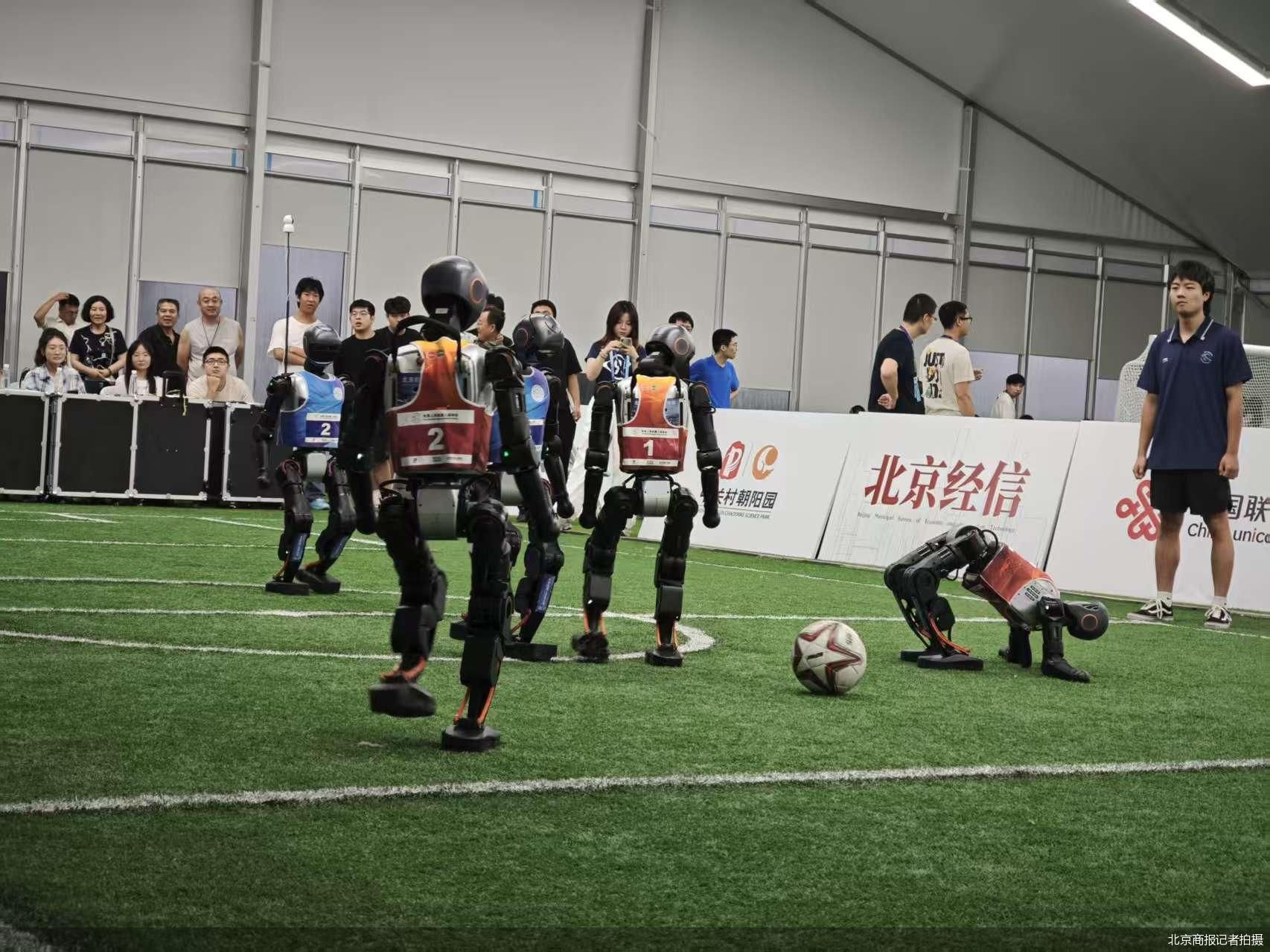
倘若以人类足球比赛的观赏性维度去评价,人形机器人运动会的足球比赛其实并不算特别好看,甚至应该被贴上"笨拙"的标签: 这些钢铁球员在场上的跑动,时常显得步态蹒跚、逻辑僵硬,盘带射门每每跑偏,有时还会因算法局限"认球不认人",上演高速冲撞对手导致被红牌罚下的 戏码;场边,数十台硅基生命的沉重步伐让地板持续震动,充电、维修、传数据的机器人也围在场地四周躺得横七竖八。 世界人形机器人运动会即将于8月14日开幕,作为重要项目之一的足球赛预选赛已先一步于8月11日开赛。参加足球项目的GeoHBots队在比赛中早早陷入了 以少打多的局面。团队成员向北京商报记者解释称,他们的机器人在比赛中吃到红牌被罚出场,原因是算法不会识别对方的机器人而导致的对抗,被裁判视 作背后恶意冲撞,"它只会看场地和球"。 据悉,参加3v3比赛的团队每支有四个机器人可供使用,三名首发一名替补,少打一人的局面无疑让GeoHBots团队非常被动。 加速进化副总裁苏颖曾向北京商报记者透露,本次世界人形机器人运动会足球项目中,几乎全部机器人都是由加速进化提供。在8月12日的比赛现场,公司 售后技术支持负责人吕明介绍称,"今天参加比赛的正是公司的T1型机器人" ...


这次机器人大会,大家都把“想赚钱”写在了明面上
3 6 Ke· 2025-08-12 04:13
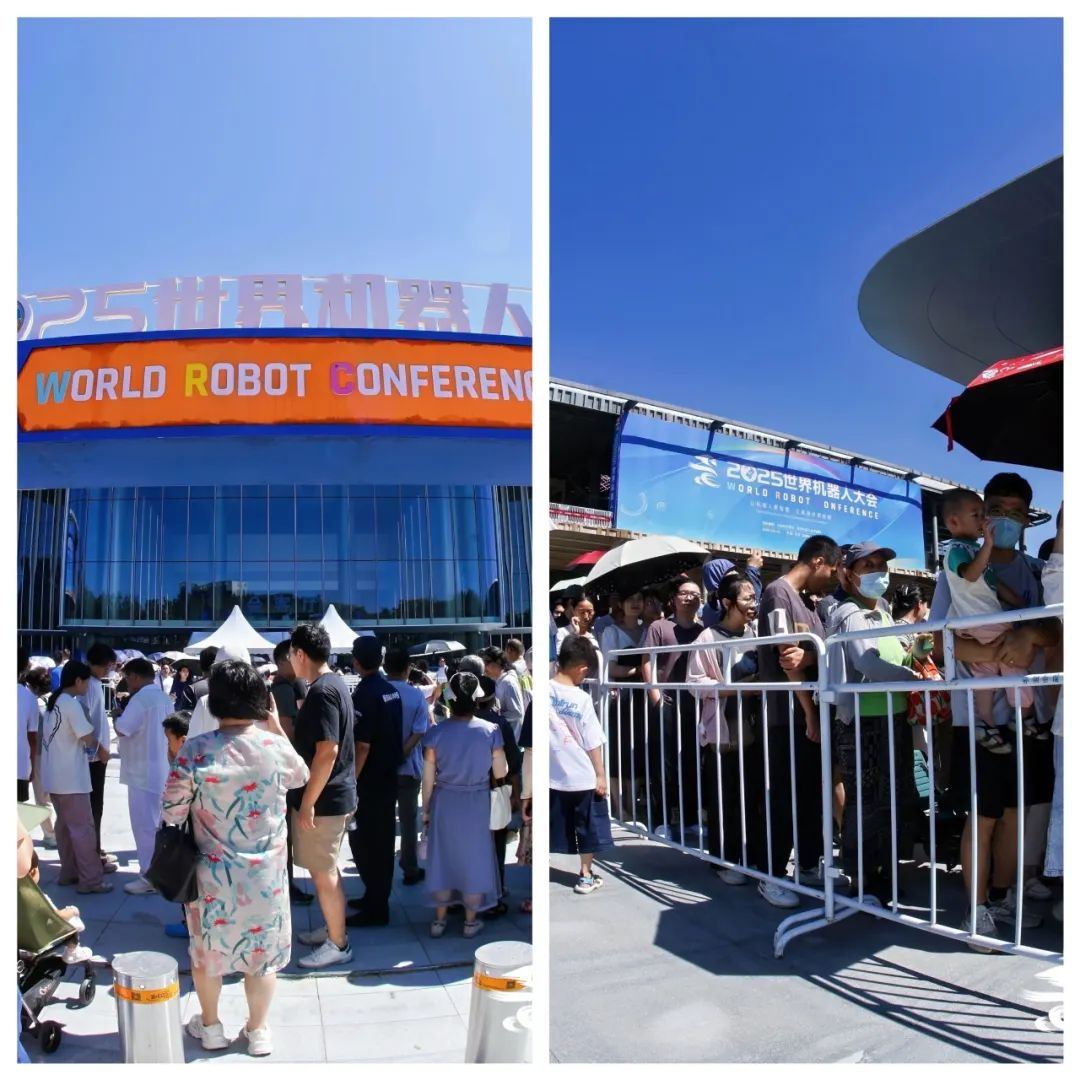
8月8日到11日,一年一度的世界机器人大会在北京举行。 作为长期关注机器人行业的公众号,「有界UnKnown」已经连续四年参与这一盛会,而今年的感受格外不同。 从今年的大会,我们能明显感受到整个机器人行业迸发的蓬勃生机,也能感受到它与我们日常生活的联系正日益紧密。 在世界机器人大会的尾声,我们跟大家聊聊今年的所见所感。完全是主观体验、一家之言,如果有不对的地方,欢迎在评论区拍砖。 一个关键字"多" 和往年世界机器人大会相比,今年最直接的感受就是"多",这个"多"主要指两个方面,一是人多,二是参展企业多。 人多表现在参展观众的热情上。 我们在8月9日中午才姗姗抵达会场。虽然正值午餐时间,但从地铁和各类车辆下来的人依然络绎不绝,会展中心旁的红绿灯路口排起了长队。 到了场馆内部,人流显得更加密集,几乎称得上是摩肩接踵,举步维艰。从直观感受上看,今年的拥挤程度要比去年高出不止一倍。 世界机器人大会的展馆每年都是固定的,除了专业观众的会议区之外,会场设有A、B两个主场馆,以及旁边一个单独的,更加低矮的C场馆。 往年,在A、B场馆的边缘地带还能看到不少几平米的小展位,如今这些展位基本上都消失不见了,取而代之的是普遍十几平 ...
美力科技:8月11日召开董事会会议
Mei Ri Jing Ji Xin Wen· 2025-08-11 12:37
Group 1 - The core viewpoint of the article highlights Meili Technology's announcement regarding its board meeting and the composition of its revenue for 2024, indicating a strong focus on the automotive parts industry [1] - Meili Technology's revenue composition for 2024 shows that the automotive parts industry accounts for 89.19% of its total revenue, while other products and income make up 10.81% [1] - As of the report, Meili Technology has a market capitalization of 5.3 billion yuan [1] Group 2 - The article discusses the evolving perception of humanoid robots, suggesting that they are moving beyond being seen as mere "decorative" items, with significant commercial opportunities emerging [1] - The mention of a major order signifies a potential breakthrough in the commercialization of humanoid robots, indicating that the industry may be entering a pivotal year for growth [1]

川环科技:8月11日召开董事会会议
Mei Ri Jing Ji Xin Wen· 2025-08-11 11:34
Group 1 - The core point of the article is that Chuanhuan Technology (SZ 300547) announced its board meeting to review the 2025 semi-annual report and summary, indicating ongoing corporate governance and financial transparency [1] - For the year 2024, Chuanhuan Technology's revenue composition is entirely from non-tire rubber products, highlighting a focused business strategy [1] - As of the report, Chuanhuan Technology has a market capitalization of 8.6 billion yuan, reflecting its valuation in the market [1] Group 2 - The article discusses the progress of humanoid robots in shedding their "decorative" label, suggesting a shift towards commercialization and potential market growth [1] - A significant order has been mentioned as a breakthrough, indicating that the humanoid robot sector may be entering a new phase of commercial viability [1] - The narrative suggests that the industry is on the brink of a "commercialization year," which could lead to increased investment and development in humanoid robotics [1]

人形机器人行业跟踪报告:2025世界机器人大会在北京亦庄举行
GUOTAI HAITONG SECURITIES· 2025-08-11 05:55
Investment Rating - The report assigns an "Accumulate" rating for the humanoid robot industry [4]. Core Viewpoints - The 2025 World Robot Expo has significantly improved in scale and product quality compared to previous years, marking a critical turning point for the commercialization of the humanoid robot industry [2][4]. - Short-term focus should be on industry sentiment fluctuations driven by events, while long-term attention should be on high-quality companies with certainty in the supply chain, recommending companies such as Xinquan Co., Ningbo Huaxiang, Top Group, Zhaomin Technology, and Junsheng Electronics [4]. Summary by Sections - **Event Overview**: The 2025 World Robot Conference opened in Beijing, featuring over 200 domestic and international robot companies with more than 1,500 exhibits, including over 100 new product launches [2][4]. - **Exhibition Insights**: The number of humanoid robot manufacturers participating reached a record high, showcasing a variety of humanoid robots and robotic dogs, indicating a maturation of the industry [4]. - **Product Pricing**: Many manufacturers began to display product prices ranging from tens of thousands to millions of yuan, reflecting increased confidence in product competitiveness and a response to intensified price competition [4]. - **Price Trends**: The pricing structure shows a clear gradient from industrial to commercial to research modification robots, with examples such as the SA02 robot priced at 38,500 yuan and the Walker S1 at 1 million yuan, indicating a trend towards lower prices as commercialization scales up [4]. - **Company Performance Forecasts**: The report includes performance forecasts and financial valuations for several companies, all rated as "Accumulate," with projected EPS and PE ratios indicating growth potential [5].
订单与产能齐涨!厂商集体跟进,人形机器人加速进化|聚焦2025WRC
Hua Xia Shi Bao· 2025-08-11 05:41
Core Viewpoint - The 2025 World Robot Conference showcased significant advancements in humanoid robots, highlighting their applications across various industries and the increasing commercial orders received by manufacturers [1][2]. Group 1: Industry Developments - The humanoid robot industry is experiencing rapid growth, with manufacturers like UBTECH and Zhiyuan Robotics reporting substantial order volumes and delivery targets for the coming years [4][7]. - Major applications for humanoid robots include industrial manufacturing, commercial services, research, and healthcare, with companies actively pursuing orders in these sectors [7][8]. Group 2: Order and Production Growth - Zhiyuan Robotics secured a multi-million yuan order from Fulian Precision, marking a significant milestone in the commercialization of humanoid robots in the industrial sector [2]. - UBTECH anticipates delivering approximately 500 industrial humanoid robots this year, with projections of over 1,000 units next year and potentially reaching 10,000 units by 2027 [4]. Group 3: Price Reduction and Cost Management - The continuous growth in orders is partly attributed to the decreasing prices of humanoid robots, with several companies launching models priced below 30,000 yuan [5][6]. - Cost reductions are driven by advancements in technology, increased production scale, and a higher domestic production rate of components, which collectively contribute to lower manufacturing costs [6]. Group 4: Commercialization Across Multiple Scenarios - The commercialization of humanoid robots is accelerating, with significant orders reported across various fields, including industrial applications and educational settings [7][8]. - Companies are focusing on deploying humanoid robots in environments with clear tasks and controlled settings, such as pharmacies and retail, to facilitate early-stage technology adoption [8].
大佬集体唱衰?人形机器人商业化真相曝光:中国工厂已悄然变天!
老徐抓AI趋势· 2025-08-09 04:05
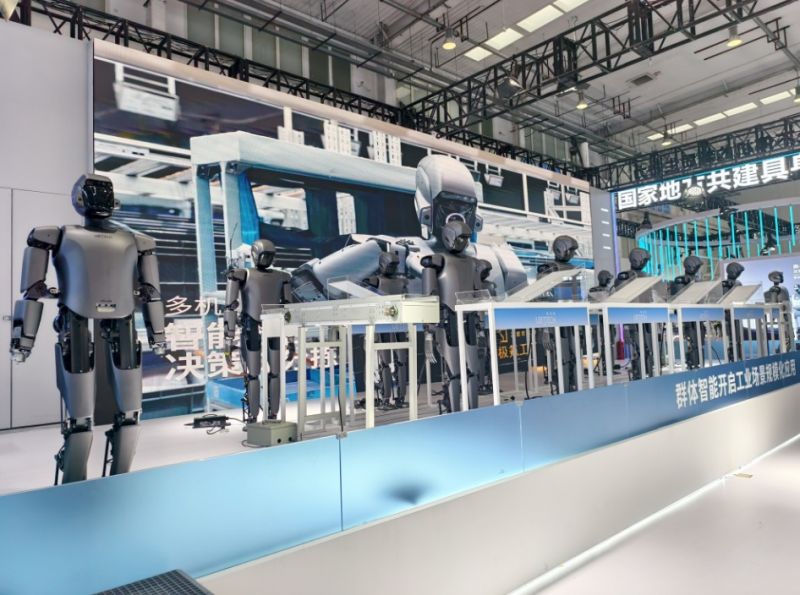
Group 1 - The core viewpoint of the article is that humanoid robots are closer to commercialization than commonly perceived, with potential for small-scale deployment in industrial settings this year and next [6][22]. - The definition of "commercialization" varies; while some expect widespread household adoption in five to ten years, the focus should be on solving specific industrial problems and generating ROI [6][12]. - The article emphasizes that the growth of the robotics industry is gradual, involving incremental solutions before broader applications are realized [6]. Group 2 - Specific examples of current applications of industrial robots include box handling in factories and high-risk tasks in metallurgy, showcasing their ability to replace labor-intensive and dangerous jobs [8][12]. - The criteria for evaluating robots include efficiency, accuracy, safety, and ROI, with data indicating that robots can achieve payback periods of 1-2 years in China and even faster in the U.S. [10][26]. - The article distinguishes between performance-oriented robots and industrial robots, highlighting that the latter are designed for durability and load capacity, making them more suitable for practical applications [14][16]. Group 3 - The article discusses the rationale behind humanoid robots, which is to maximize adaptability to existing human-centric environments and tasks, thus enabling broader applicability and scalability [19][21]. - China's strengths in the robotics sector include robust supply chain capabilities and cost control, positioning it favorably against competitors, particularly in the realm of manufacturing and engineering [21][22]. - The future of humanoid robots is expected to focus on replacing manual labor in logistics and operations, with advancements in tactile sensing and dexterity enhancing their capabilities [22][24]. Group 4 - The price point for humanoid robots is currently around $30,000, with expectations for further reductions as production scales up, driven by China's manufacturing ecosystem [17][26]. - The article concludes that the transition to widespread use of humanoid robots will be marked by gradual advancements in technology and cost, rather than sudden breakthroughs [26].

人形机器人电池的技术、生态与经济账
2 1 Shi Ji Jing Ji Bao Dao· 2025-08-08 05:13
Group 1: Market Overview - The humanoid robot market is expected to reach a scale of 6.339 billion yuan by 2025, with projections indicating exponential growth, potentially reaching 38 billion USD by 2035 [2] - The current growth is driven by the urgent demand for automation and intelligent upgrades in manufacturing and logistics sectors, with significant contributions from household services and healthcare applications, which may account for 45% of the market [2] Group 2: Battery Technology Importance - Batteries are crucial for humanoid robots, serving as their "heart" and determining their economic viability and application boundaries [3] - Major battery manufacturers in China, such as CATL and A123 Systems, are actively incorporating humanoid robots into their strategic planning [3] Group 3: Cost Structure and Demand - The battery cost in humanoid robots is relatively low, estimated at around 0.5% of the total cost for Tesla's Optimus robot, but the demand potential is significant, with an expected need for 12.5 GWh of batteries by 2030 [4][5] - The performance of batteries directly impacts the robots' operational efficiency, including their working hours and maintenance frequency, making long-term economic considerations essential [5] Group 4: Current Limitations and Innovations - Current humanoid robots typically have a battery life of only 3 to 6 hours, which limits their operational capabilities and increases operational costs due to frequent charging [5][6] - Innovations in battery technology, such as solid-state batteries, are being pursued to enhance energy density and extend operational time, with a target of achieving 8 hours of runtime [7][8] Group 5: Performance Requirements - Humanoid robots require batteries that can provide stable power output and high energy density, with current lithium batteries primarily using cylindrical cells with energy densities between 250-300 Wh/kg [6][8] - The need for high power output and energy efficiency is critical, especially for complex movements, necessitating advancements in battery technology to meet these demands [8][9] Group 6: Customization and Industry Collaboration - Companies like A123 Systems are developing customized battery solutions to meet the unique structural needs of humanoid robots, focusing on lightweight materials and hybrid battery architectures [9] - Collaboration with industry partners is emphasized to accelerate the commercialization of humanoid robots and establish industry standards [9]

世界机器人大会|破局千亿市场,北京跑出机器人“第一程”
Bei Jing Shang Bao· 2025-08-07 13:56
Core Viewpoint - Beijing is transitioning from experimental robotics to commercial applications, exemplified by the opening of the world's first humanoid robot 4S store and a robot-themed restaurant, aiming to create a viable business model in the humanoid robot market [1][2][10]. Group 1: Commercialization of Robotics - The robot restaurant "Robot焰究所" aims to operate without human waitstaff, utilizing various robots for customer service and food preparation [1][5]. - The 4S store model focuses on real-time validation of robotic technology in practical scenarios, allowing businesses to test and purchase robots based on their performance [4][5]. - The integration of robots into everyday life is seen as a way to address efficiency and cost issues in industries like food service [5][6]. Group 2: Ecosystem and Policy Support - Beijing's economic development zone has attracted over 300 robotics and smart manufacturing companies, creating a robust ecosystem with a scale exceeding 100 billion [6][8]. - Policies are being implemented to support the robotics industry, including a 250,000 square meter robotics industrial park and a 100 billion fund for core technology development [6][8]. - The city is also organizing events like robot marathons to test capabilities and establish standards for humanoid robots, fostering a collaborative environment for innovation [7][8]. Group 3: Market Potential and Future Outlook - The global humanoid robot market is projected to reach 1.24 million units and 6.339 billion yuan by 2025, with expectations of exceeding 400 billion yuan by 2035 [8][10]. - Beijing's approach serves as a pioneering model for the commercialization of humanoid robots, potentially influencing global trends in the industry [9][10].
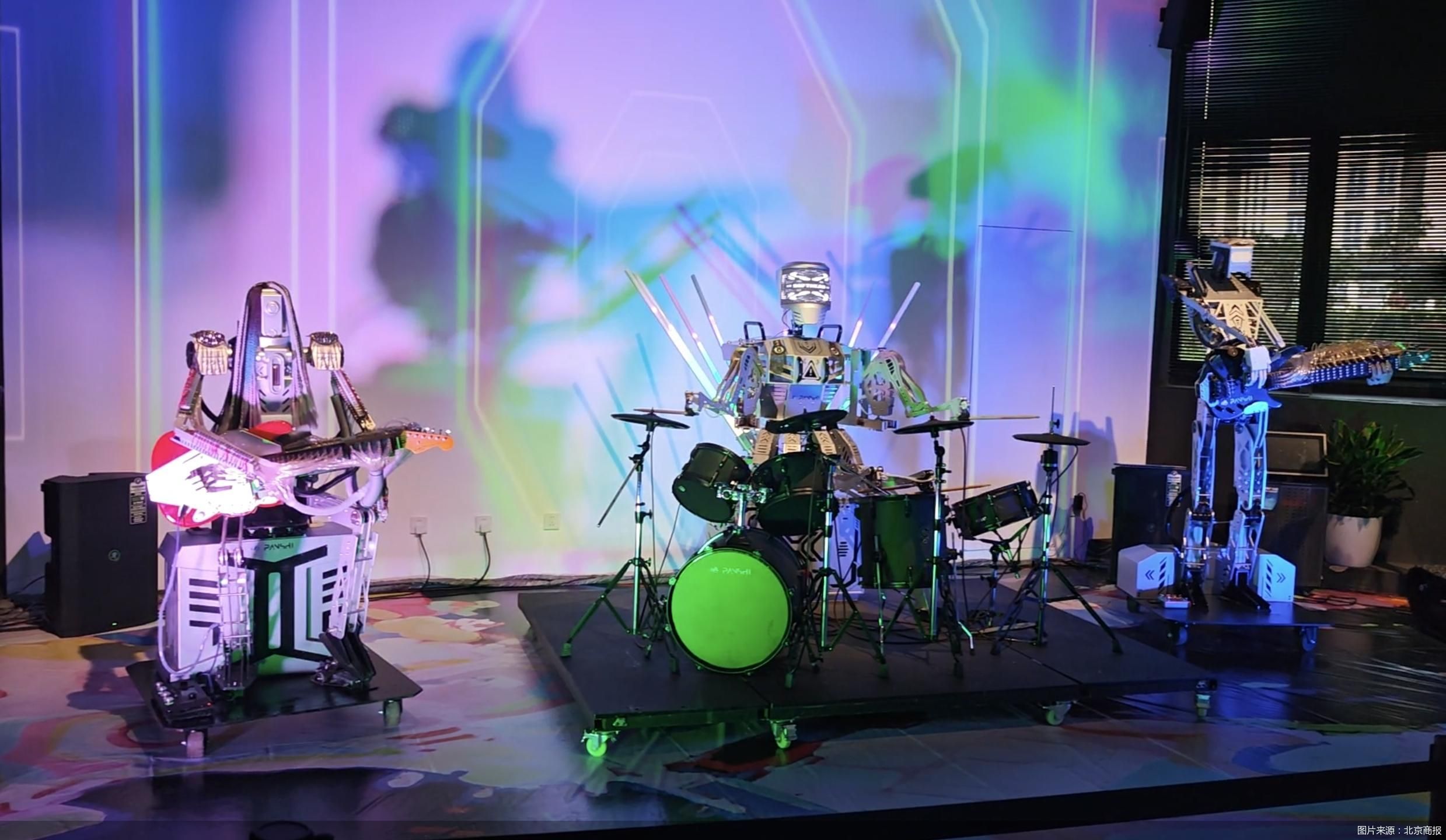
2025世界机器人大会即将启幕 助推行业发展再提速
Zheng Quan Ri Bao· 2025-08-05 16:11
Core Insights - The 2025 World Robot Conference will commence on August 8 in Beijing, focusing on humanoid robot industry and aiming to stimulate market interest [1] - Over 100 new products will be showcased, nearly double the number from last year, with 50 humanoid robot manufacturers participating [1] - The humanoid robot industry is entering a year of mass production in 2025, with domestic companies experiencing high order volumes [1] Industry Developments - The conference will facilitate technology exchanges and industry collaboration, addressing challenges such as precision and cost, which are critical for commercializing humanoid robots [2] - Humanoid robots are at a technological turning point, with significant breakthroughs in core hardware and intelligent software, indicating strong development momentum [2] - The application of humanoid robots is expected to expand from B2B to B2C, particularly in manufacturing and household services, potentially replacing human workers in repetitive tasks [2] Company Activities - Over 100 humanoid robot-related companies have been surveyed since 2025, with 35 companies participating in surveys in July alone, focusing on R&D investments and innovation [3] - Guangdong Lingyi Intelligent Manufacturing Co., Ltd. has formed strategic partnerships with several domestic and international humanoid robot companies and secured hardware orders [3] - Shenzhen Tuobang Co., Ltd. has developed components for humanoid robots, receiving initial bulk orders from major manufacturers [3] - Shenzhen Changying Precision Technology Co., Ltd. has established collaborations with leading humanoid robot brands and is entering mass production with existing orders [3] Strategic Recommendations - Industry players should align with market trends, with core component manufacturers focusing on R&D to overcome technical bottlenecks [4] - Complete system integrators are encouraged to optimize algorithms and reduce costs while exploring diverse application scenarios [4] - Software algorithm companies should enhance AI capabilities and strengthen data security to support commercialization efforts [4]