军国主义

Search documents
日本国内及国际社会持续批评高市早苗一系列错误言行—— “高市早苗错误言行释放军国主义死灰复燃的危险信号”(国际视点)
Ren Min Ri Bao· 2025-12-08 01:11
Core Viewpoint - Japanese Prime Minister Sanae Takaichi's recent remarks regarding Taiwan have sparked significant criticism from various sectors in Japan, highlighting concerns over Japan's military expansion and its implications for diplomatic relations with China and other neighboring countries [1][2][3]. Group 1: Political Reactions - Takaichi's statements about Taiwan potentially posing an existential threat to Japan have been met with demands for retraction from political figures and civil groups, emphasizing the need to avoid further damage to Japan-China relations [2][3]. - Prominent politicians, including members of the Japanese Communist Party, have condemned Takaichi's comments as a violation of Japan's constitution and a dangerous departure from established diplomatic positions [2][3][4]. Group 2: Military Expansion Concerns - Takaichi's administration has been criticized for signaling a shift towards military expansion, including plans to increase defense spending to 2% of GDP and deploy missiles on islands near Taiwan, raising alarms among the public and experts [4][5]. - Public protests have emerged against the government's military buildup, with citizens expressing concerns over the prioritization of military spending over social welfare [4][5]. Group 3: Historical Context and International Relations - Analysts and scholars have pointed out that Takaichi's rhetoric reflects a troubling lack of historical reflection in Japan, potentially undermining post-war international order and threatening regional stability [5][6]. - The international community, including figures from Russia and Germany, has criticized Japan's military rhetoric and actions as a revival of militarism, calling for adherence to international law and historical accountability [5][6][7].
恶意滋扰还反诬中方!国防部:日方若重走军国主义邪路 必将万劫不复
Yang Shi Xin Wen Ke Hu Duan· 2025-12-07 12:36
国防部新闻发言人张晓刚就日炒作我辽宁舰航母编队舰载机雷达照射答记者问。 张晓刚:中国辽宁舰航母编队在宫古海峡以东海域开展远海训练,符合国际法和国际实践。日方却对中 方行动恶意跟监滋扰,多次派飞机冲闯中方划设公布的演训区,事后还反诬中方正常操作,纯属是贼喊 捉贼、倒打一耙。我们对日方寻衅滋事、误导舆论表示强烈不满、坚决反对。 近来,日方在军事安全领域变本加厉地冒进滋事,究竟意欲何为?世人皆知。日方若重走军国主义邪 路,必将坠入万劫不复深渊。我们敦促日方切实认清形势,切实反思纠错,彻底放弃任何不轨图谋,不 要站到中国人民和国际社会对立面越走越远。 记者:据报道,日本防卫省发布消息称,中国辽宁舰航母编队舰载机在冲绳本岛东南公海空域对日航空 自卫队战机实施雷达照射,日方向中方提出强烈抗议。请问发言人有何评论? ...
上海合作组织秘书长接受新华社书面专访
Xin Hua She· 2025-12-06 03:39
Group 1 - The core viewpoint emphasizes the importance of respecting the sovereignty and territorial integrity of nations, as well as the principle of non-interference in internal affairs, which is seen as fundamental for international relations stability [1][2] - The Secretary-General of the Shanghai Cooperation Organization (SCO), Yermekbayev, highlighted the dangers of reviving militarism and the negative impact of recent statements by Japanese Prime Minister Kishi Nobuo regarding Taiwan, which are viewed as interference in China's internal affairs [1] - The SCO member states reaffirmed their commitment to the principles of the UN Charter and the SCO Charter, emphasizing mutual respect for sovereignty and territorial integrity, as well as non-interference in domestic affairs [2] Group 2 - The year marks the 80th anniversary of the victory in the World Anti-Fascist War and the establishment of the United Nations, with SCO leaders stressing the importance of remembering historical lessons to prevent the resurgence of fascism and militarism [1] - The SCO members collectively bear the responsibility to ensure future generations are spared from the tragedies of war, emphasizing the necessity of preserving and objectively presenting the historical truth of World War II victories [1]
国防部:日方若执迷不悟必犯众怒
证券时报· 2025-12-05 08:24
Group 1 - The article discusses Japan's recent defense budget approval, which amounts to 11 trillion yen for the fiscal year 2025, achieving the goal of 2% of GDP ahead of schedule [4] - Japan's actions are seen as a significant departure from its "peace constitution," with increased military spending and arms exports, raising concerns about a resurgence of militarism [4] - The Chinese defense spokesperson emphasizes the need for Japan to adhere to international laws and historical responsibilities regarding its wartime actions, particularly concerning chemical weapons [5] Group 2 - The article highlights Japan's historical use of chemical weapons during the invasion of China, resulting in over 200,000 casualties, and the ongoing environmental and health impacts of abandoned chemical weapons in China [5] - China urges Japan to expedite the disposal of its abandoned chemical weapons in China, framing it as a legal and moral obligation under international treaties [5] - The call for Japan to take responsibility for its past actions is framed as essential for regional peace and stability in the Asia-Pacific [5]

国防部:日方若执迷不悟必犯众怒
Zheng Quan Shi Bao Wang· 2025-12-05 07:23
Core Viewpoint - Japan's government has approved a supplementary budget for the fiscal year 2025, increasing its defense spending to 11 trillion yen, achieving its goal of 2% of GDP ahead of schedule [1] Group 1: Japan's Defense Spending - Japan's defense budget has significantly increased, breaking the constraints of its "peace constitution" [1] - The country is pushing for the export of lethal weapons, including discussions with the Philippines regarding the "03 type medium-range surface-to-air missile" [1] Group 2: International Relations and Obligations - The spokesperson emphasized the need for Japan to adhere to international laws and its obligations as a defeated nation, urging it to stop challenging the post-war international order [1] - There is a warning that if Japan continues its current path, it may face widespread discontent and historical reckoning [1]
狼狈为奸、沆瀣一气,终会自食其果
Zhong Guo Xin Wen Wang· 2025-12-05 06:49
Group 1 - The article highlights the provocative remarks made by Japanese Prime Minister Sanae Takaichi regarding Taiwan, suggesting potential military intervention, which is seen as a blatant interference in China's internal affairs [1] - Japan's deployment of missiles in a sensitive area just 110 kilometers from Taiwan is interpreted as support for pro-independence forces in Taiwan, escalating tensions in the Taiwan Strait [1] - The collaboration between Japanese right-wing factions and pro-independence elements in Taiwan is criticized, indicating a dangerous alliance that threatens regional stability [1] Group 2 - The article condemns the Taiwanese administration under Lai Ching-te for its excessive flattery towards Japan, which is viewed as a betrayal of national dignity given Japan's colonial history in Taiwan [2] - Lai's government has lifted bans on food imports from Japan, including areas affected by the Fukushima disaster, and has encouraged Taiwanese citizens to visit Japan, which is seen as capitulating to Japanese interests [2] - The article asserts that the alliance between Japanese right-wing forces and pro-independence factions in Taiwan is driven by mutual self-interest, with Japan aiming to contain China's rise and Taiwan's pro-independence elements seeking to exploit this for their own benefit [2] Group 3 - The year marks the 80th anniversary of the victory in the Anti-Japanese War and Taiwan's liberation, emphasizing the historical unity of the Chinese people against foreign aggression [3] - The article expresses strong sentiments against external interference in Taiwan's affairs, asserting that the resolution of the Taiwan issue is a matter for the Chinese people alone [3] - It concludes with a warning that any attempts to undermine China's unity or distort history will ultimately lead to negative consequences for those involved [3]
研究所日报-20251205
Yintai Securities· 2025-12-05 05:52
Group 1: International Relations - President Xi Jinping emphasized the importance of mutual understanding and support between China and France, regardless of external changes[2] - French President Macron reaffirmed France's commitment to the one-China policy and the deepening of the comprehensive strategic partnership with China[2] - Both leaders discussed the Ukraine crisis and signed multiple cooperation agreements in nuclear energy, agriculture, education, and environmental protection[2] Group 2: Monetary Policy - The central bank will conduct a 1 trillion yuan reverse repurchase operation for three months, offsetting the amount maturing this month[3] - The central bank's continued reverse repurchase operations since September do not indicate a reduction in liquidity support, as this is just one of the tools used[3] - Current interbank market liquidity remains stable, with no significant fluctuations in funding prices observed[3] Group 3: Stock Market Performance - A-shares showed mixed results, with the Shanghai Composite Index down 0.06% and the Shenzhen Component Index up 0.4%, with total trading volume at 15,489.6 billion yuan, a decrease of 1,210.02 billion yuan from the previous trading day[4] - The ChiNext Index rose by 1.01%, and the Sci-Tech 50 Index increased by 1.36%[4] - Internationally, the Nikkei 225 led gains with a 2.33% increase, followed by Brazil and Russia with gains of 1.67% and 1.49%, respectively[4] Group 4: Bond and Currency Market - The yield on the 10-year government bond is 1.8722%, with a change of +3.02 basis points[5] - The average rates for R001 and R007 were 1.3611% and 1.4852%, respectively[5] - The US dollar index closed at 99.0602, up 0.2%, while the offshore yuan depreciated against the dollar by 130 basis points, with an exchange rate of 7.0713[5]
俄外交部:一些国家高调宣称坚持一个中国原则,却肆无忌惮地加剧台湾海峡的紧张局势,阻碍中国和平统一进程
Xin Lang Cai Jing· 2025-12-05 02:16
Core Viewpoint - The Russian Foreign Ministry spokesperson, Zakharova, criticized Japan's militaristic rhetoric and actions, claiming they exacerbate regional tensions and violate Japan's constitution [1][6]. Group 1: Japan's Militaristic Actions - Zakharova emphasized that Japan's government is straying from its constitutional commitment to pacifism, as outlined in Article 9 of the Japanese Constitution, which states Japan renounces war and does not maintain military forces [1][6]. - The Russian side has repeatedly called on Japan to avoid a return to militarism and adhere to its constitutional principles of peace [1][6]. Group 2: Taiwan Issue - Zakharova pointed out that some countries publicly claim to uphold the One China principle while simultaneously escalating tensions in the Taiwan Strait, thereby obstructing China's peaceful reunification efforts [3][8]. - These countries are accused of supplying weapons to Taiwan and strengthening military and political ties, which fosters separatist sentiments and uses Taiwan as a strategic tool against China [3][8]. - The Russian stance on the Taiwan issue is clear and consistent, recognizing Taiwan as an inseparable part of China and opposing any form of Taiwanese independence [3][8].

国际论坛:日方倒行逆施危及地区和平稳定
Ren Min Ri Bao· 2025-12-05 00:11
Core Viewpoint - The statements made by Japanese Prime Minister Fumio Kishida regarding Taiwan and the so-called "existential crisis" are seen as a dangerous attempt to revive militarism and historical revisionism, which could threaten both Japan's stability and regional peace [1][4]. Group 1: Japan's Military Intentions - Kishida's remarks linking Taiwan issues to Japan's survival indicate a desire for military intervention, undermining regional stability [1][2]. - The rhetoric suggests Japan is seeking to break free from its "peace constitution" constraints and justify collective self-defense, which could escalate tensions in the region [2][3]. Group 2: Historical Context and Legal Obligations - Japan's post-war commitments, including the renunciation of war and military threats, are being challenged by Kishida's government, which risks violating international agreements that restrict Japan's military actions [2][3]. - The historical context of Japan's militarism, including past invasions under the guise of "self-defense," raises concerns about a potential repeat of such actions [4]. Group 3: Regional Security Implications - Japan's actions could disrupt the established post-war international order and exacerbate security dilemmas in East Asia, leading to increased regional conflict [3][4]. - The potential for Japan to reinterpret its self-defense policies poses a significant risk to regional peace and stability, as it may provoke neighboring countries [3][4].
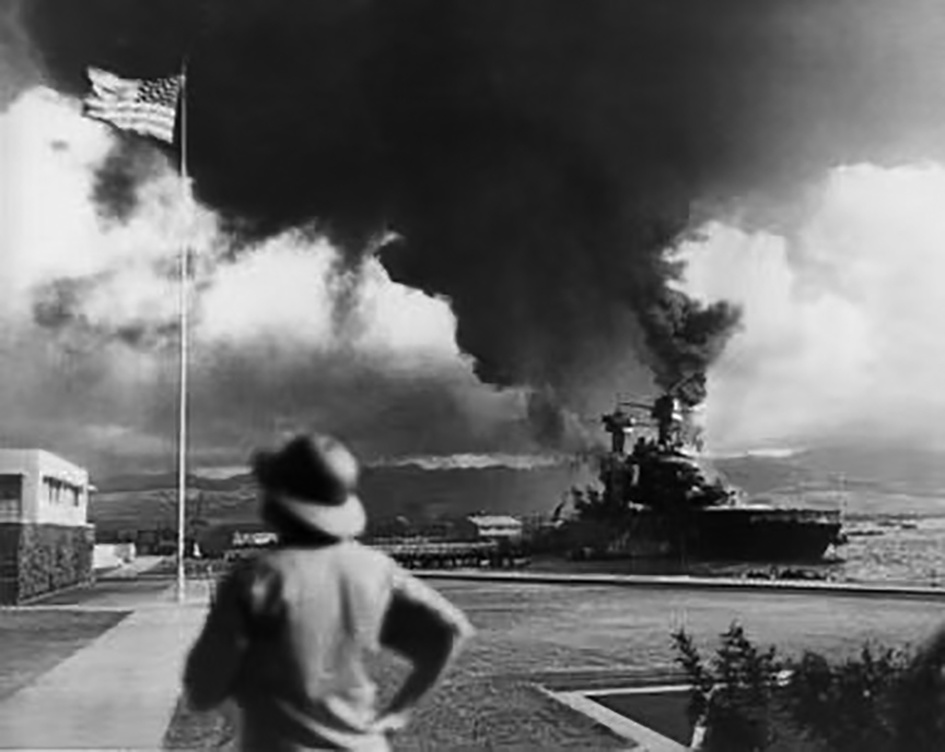
【军国主义警示录·战争罪行】84年前,日本在珍珠港上演“自杀式冲锋”
Huan Qiu Shi Bao· 2025-12-04 22:51
开栏的话: 从日本首相高市早苗近期发表涉台谬论,到修订"安保三文件"蚕食"和平宪法",再到防卫预算突破GDP的2%,日本政府正 以极其危险的方式试图调转船头,驶向历史的暗礁。国际社会必须坚决阻击日本政府公然破坏战后国际秩序、复活军国主义的危险动 向。从本期起,《环球时报》推出"军国主义警示录·战争罪行" 系列报道,通过还原历史真相,揭示日本军国主义给世界带来的深重灾 难。以史为鉴,警示世界。第一期报道聚焦:84年前的12月8日,日本在珍珠港上演了一场"自杀式冲锋"。 1941年7月,美国祭出对日本来说毁灭性的石油禁运制裁,当时日本海军军令部总长永野修身发出绝望的警告:海军的石油储备在和平 时期仅能维持两年,一旦开战则仅够维持一年半;若无石油,庞大的联合舰队将沦为一堆毫无用处的"废铁"。最终日本军部得出结 论:只有南下夺取荷属东印度的石油资源才能维持在中国战场的阵线。 实际上,日本高层最初对于向美国开战并非没有分歧。直到1941年11月初,时任外相东乡茂德还坚持称:"考虑到国民的士气以及日美 在资源上的显著差距,长期与美国作战的前景并不乐观。"主管财政的大藏省大臣贺屋兴宣进一步补充:"一旦日本海军打了败仗,就 ...