
协同创新

Search documents
“十五五”化工新材料积蓄创新新动能
Zhong Guo Hua Gong Bao· 2025-12-05 02:21
Core Insights - The "14th Five-Year Plan" period has seen rapid development in China's chemical new materials industry, with continuous expansion of industry scale and enhancement of technological innovation capabilities. The "15th Five-Year Plan" will focus on three key paths: pursuing high-end development, promoting green intelligence, and facilitating collaboration [1] Pursuing High-End Development - There is a significant imbalance in the development of chemical new materials in China, necessitating enhanced R&D for high-end materials. The self-sufficiency rate for engineering plastics is improving, but high-end products like optical-grade PC and medical polyether ether ketone have a domestic production rate of less than 30% [2] - The electronic chemicals sector faces challenges with insufficient high-end products. While mature processes have achieved domestic production for certain chemicals, the overall domestic production rate for advanced process chemicals remains low, indicating a critical area for future development [2] Promoting Green Intelligence - Green transformation is becoming a global imperative. The engineering plastics industry is encouraged to transition towards a "green circular" model, focusing on bio-based alternatives, recycling, and clean production methods [4] - The synthetic rubber industry is directed towards "green symbiosis" and "intelligent integration," emphasizing the development of bio-based and green materials, as well as the application of artificial intelligence to optimize production processes [4] Facilitating Collaboration - Collaborative innovation is essential for overcoming industry development bottlenecks. The engineering plastics sector is advised to establish a comprehensive collaborative innovation system, integrating various stages from monomer synthesis to application verification [5] - Standardization is highlighted as a crucial support for the electronic chemicals industry, with a need for a complete standard system to enhance consensus between chemical producers and downstream chip manufacturers [6]
“十五五”化工新材料积蓄创新新动能
Zhong Guo Hua Gong Bao· 2025-12-05 02:17
Core Insights - The "14th Five-Year Plan" period has seen rapid development in China's chemical new materials industry, with continuous expansion of industry scale and enhancement of technological innovation capabilities. The "15th Five-Year Plan" aims to further elevate the industry through three key pathways: pursuing high-end development, promoting green intelligence, and fostering collaboration [1] Pursuing High-End Development - The chemical new materials sector faces uneven development, necessitating enhanced R&D for high-end materials. The self-sufficiency rate for engineering plastics is improving, but high-end products like optical-grade polycarbonate and medical polyether ether ketone have a domestic production rate below 30% [2] - In the electronic chemicals field, while some mature products have achieved domestic production, the overall localization rate for advanced process chemicals remains low, indicating a critical area for future domestic substitution [2] - The polyurethane industry is experiencing low profitability, hindering investment in technology upgrades. The focus should be on high-end polyurethane materials for sectors like new energy vehicles and robotics [3] - The synthetic rubber industry is characterized by severe homogenization in common products, with high dependence on imports for high-end specialty rubbers, necessitating technological integration and innovation [3] Promoting Green Intelligence - Green transformation is essential for enhancing core competitiveness. The engineering plastics industry should transition towards "green circular" practices, focusing on bio-based alternatives and recycling [4] - The synthetic rubber sector should develop bio-based and green materials while integrating artificial intelligence to optimize molecular design and reduce R&D cycles [4] - The polyolefin industry is set to combine performance prediction with intelligent production management to create smart manufacturing environments [4] Fostering Collaboration - Collaborative innovation is crucial for overcoming industry bottlenecks. The engineering plastics sector should establish a comprehensive collaborative innovation system, creating platforms for material testing and validation in key applications like new energy vehicles and electronics [5] - Standardization is vital for the electronic chemicals industry, as many products lack comprehensive standards, leading to high verification barriers. A complete standard system is needed to support industry development [6] - The lithium battery industry faces resource supply and environmental challenges, necessitating a diversified supply system and a robust battery recycling framework to enhance sustainability [6]
学习规划建议每日问答|怎样理解完善区域创新体系
Xin Hua She· 2025-12-01 05:36
Core Viewpoint - The article emphasizes the importance of improving the regional innovation system to enhance the overall effectiveness of the national innovation system and promote regional innovation development [1] Group 1: Regional Innovation System - The regional innovation system involves collaboration among various innovation entities such as government, enterprises, universities, and research institutions within a specific geographical area [1] - It is a crucial component of the national innovation system and serves as a foundational support for building a technologically strong nation [1] - Different regions have unique characteristics in their innovation systems due to variations in innovation entities, industrial structures, institutional environments, and historical cultures [1] Group 2: Strengthening Central-Local Collaborative Innovation - The article advocates for enhancing the central-local collaborative innovation framework by improving strategic planning, policy measures, and resource platforms [2] - It encourages local governments to undertake national tasks and explore the elevation of local technology innovation projects to national projects [2] - The aim is to create a unified national innovation strategy while balancing national and regional development needs [2] Group 3: Promoting New Quality Productive Forces - Regions should develop new quality productive forces based on their unique resources, industrial foundations, and research conditions to stimulate economic diversification and innovation [3] - High-level construction of international and regional technology innovation centers is essential to create new growth drivers for high-quality national development [3] - The article calls for a differentiated innovation development path tailored to local advantages, fostering a conducive business environment and innovation ecosystem [3]
多个省份发布“十五五”规划建议 浙江等锚定科创高地建设
Zheng Quan Shi Bao Wang· 2025-11-27 23:03
Core Viewpoint - Various regions in China are releasing their "14th Five-Year Plan" proposals, focusing on high-quality development through differentiated layouts and regional collaboration [1] Group 1: Economic Development Strategies - Economic powerhouses like Zhejiang, Hubei, and Beijing are positioning themselves as innovation hubs by increasing R&D investments and tackling key technologies [1] - Regions such as Chongqing and Inner Mongolia are leveraging their traditional advantages while also planning to excel in emerging industries [1] Group 2: Collaborative Innovation - Urban clusters like the Beijing-Tianjin-Hebei region and the Chengdu-Chongqing economic circle are proposing new strategies to enhance collaborative innovation [1]
100辆轿运车交付江苏 谁家车?
第一商用车网· 2025-11-24 08:10
祥泰之州,聚力启新。11月21日,以 "驰骋山河 共筑华章" 为主题的一汽解放&华阳物流& 江苏海鹏战略签约暨百辆轿运车交付仪式 在江苏泰州圆满举行,为长三角轿运物流产业合规化转型与高质量发展注入强劲动能。 锚定场景需求,共筑协同生态 仪式现场,解放动力营销中心高级主任师陈建华在致辞中表示,作为 "国车长子",解放始终聚焦轿运行业需求迭代,以技术创新打造核 心动力装备,而与江苏海鹏的携手,正是为了实现 "产品性能" 与 "改装适配" 的完美契合,为终端用户提供一体化解决方案。 江苏海鹏特种车辆制作有限公司专机事业部总经理范成龙表示解放悍 V 系列产品的硬核品质与可靠性能,为定制化改装提供了坚实基 础,在此前提下,海鹏精准对接华阳物流商品车运输需求,通过针对性改装实现装载空间与运输安全的最优平衡,让产品更贴合中长途 轿运场景。 长春市华阳储运有限公司车辆运营部部长吴峰则直击行业痛点:"随着新能源乘用车运输订单增多,其比传统燃油车车重更重的特性, 对车辆动力提出更高要求" 他表示,选择解放青汽与海鹏的联合方案,正是看中双方在动力性能与改装适配的双重优势,相信百辆新车 将为企业降本增效提供坚实支撑。 精准破解痛点, ...


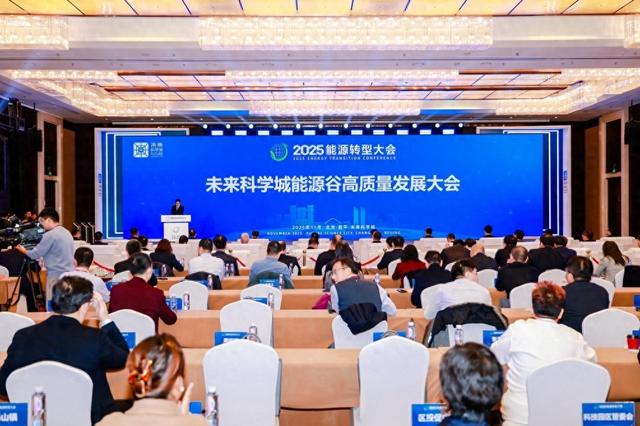
未来科学城能源谷高质量发展大会在北京昌平未来科学城举办
Bei Jing Ri Bao Ke Hu Duan· 2025-11-23 11:05
Core Insights - The 2025 Future Science City Energy Valley High-Quality Development Conference was held in Changping District, Beijing, focusing on the theme of "central-local integration development, deepening collaborative innovation, and promoting the activation and elevation of the Future Science City" [1][3] Group 1: Conference Overview - The conference was organized by the Changping District People's Government and included participation from city-level department leaders, representatives from universities, state-owned enterprises, and high-tech private enterprises, attracting over 400 attendees [3] - The event featured a combination of academic and innovative content, including signing ceremonies for strategic cooperation and project agreements between enterprises and local government [4][18] Group 2: Collaborative Initiatives - The conference emphasized the establishment of collaborative innovation platforms between central enterprises and universities, aiming to facilitate organized technology transfer and deepen the integration of technological and industrial innovation [6] - Notable agreements included partnerships between COFCO Nutrition and Health Research Institute with Beijing University of Chemical Technology, and Beijing New Building Materials Group with Beijing Information Science and Technology University [6] Group 3: Investment and Funding - The Future Science City Advanced Energy Industry Mother Fund was established to promote energy technology innovation and industry aggregation, with government investment leading the initiative [8][9] - The fund aims to create a "financial + industry" integration model, setting a benchmark for green development [9] Group 4: Technological Advancements - The launch of the Future Science City Carbon Monitoring and Management Platform was announced, utilizing Tsinghua University's "electric-carbon coupling" theory and machine learning algorithms to create a precise carbon emission calculation model [11] - This platform aims to support the implementation of carbon emission control tasks and promote regional green and low-carbon development [11] Group 5: Talent Development - The 2025 "Central Enterprise Strong Nation Youth Scientist" initiative was launched to identify and invite 50 young scientists from central enterprises to foster a high-level talent aggregation platform [13][14] - This initiative aims to enhance the integration of innovation chains, industrial chains, financial chains, and talent chains, contributing to the high-quality development of the region [14] Group 6: Research and Innovation Centers - The second phase of the National Electric Power Investment Corporation's research innovation base was inaugurated, focusing on advanced energy technology and serving as a core platform for the integration of large, medium, and small enterprises [16] - The establishment of the Future Science City Central Enterprise Research Institute "Dean Alliance" was also announced, promoting collaborative research and resource sharing among research institutes [18]
诸多完整产业链“世界之最”强底气 如何用好超大规模市场?
Yang Shi Wang· 2025-11-19 08:16
Core Insights - China's modernization is characterized by its unprecedented scale, with over 1.4 billion people, making it the only country with all industrial categories recognized by the United Nations [1] - By 2024, China's manufacturing value added is expected to account for nearly 30% of the global total, maintaining its position as the world's largest manufacturing nation for 15 consecutive years [1] - China leads in the production of over 220 major industrial products, with more than 50% of global output in crude steel, cement, and electrolytic aluminum [1] - The country produces over 80% of the world's photovoltaic components and 70% of wind power equipment, with new energy vehicle production leading globally for 10 years [1] - China's shipbuilding industry ranks first globally in completion volume, new orders, and orders on hand, holding over 50% of the global market share [1] - The renewable energy sector boasts a total installed capacity of 2.16 billion kilowatts, accounting for over 40% of the global total [1] - China has the largest and most complete information and communication network globally, leading in 5G base stations, mobile phone users, and fixed broadband network scale [1] - The number of "lighthouse factories," representing the highest level of smart manufacturing and digitalization, is the highest globally, accounting for over 40% [1] - Industrial robot installations account for over 50% of the global total [1] Industry Development - The super-large market advantage provides continuous support for industrial development, ensuring autonomous and rapid response in production and manufacturing through a complete supply chain system [2] - In Suzhou, a service robot manufacturing company is experiencing a busy logistics scene, with nearly 30,000 service robots produced daily, showcasing the efficiency gained from intelligent supply chain optimization [2] - The local supply chain, with over half of its components sourced within a one-hour transport radius, has achieved near-zero inventory management for frequently used parts [2] - Collaborative innovation among upstream and downstream enterprises in the supply chain enhances technological resource sharing and capability complementarity [3] Market Dynamics - The closed-loop model of "market demand—joint R&D—mass production" significantly shortens the R&D cycle, aligning products more closely with practical application scenarios [4] - The robot and artificial intelligence industry in Suzhou has gathered over 1,600 related enterprises, with service robots accounting for over 60% of national production, and the industry scale expected to exceed 200 billion yuan by 2025 [4] Strategic Insights - Experts emphasize the need to convert the super-large market advantage into a competitive edge for the industrial chain, highlighting the importance of a unified national market to facilitate resource flow [5] - The vast domestic market provides unique opportunities for innovation and growth, particularly in the manufacturing sector, driving it towards higher-end and greener development [5] - Addressing local protectionism and market segmentation is crucial for enabling effective resource allocation across regions [5]
一场秋日的产业对话
Hang Zhou Ri Bao· 2025-11-19 02:22
杭州市生物医药产业近年来实现了跨越式发展,成为全国重要的生物医药创新高地。从2000年到 2024年,总产值从40亿元增长到超1000亿元,现有规上工业企业超300家。然而,随着产业的枝繁叶 茂,推动协同创新,正成为大家共同的期盼。 日前,全市生物医药产业科技创新和产业创新融合对接座谈会举行。记者冒着淅淅沥沥的秋雨赶到 会场,推开门,暖意扑面而来——回字形摆放的会议桌前坐得满满当当,大家翻阅着面前的会议资料, 了解高校、科研院所、医疗机构和企业的情况。 "组织这场活动,就是希望搭建一个平台,让'科研端'的智慧与'产业端'的需求能够直接对话。"主 持人开门见山。 听到高等院校、科研院所代表提到的先进技术,贝达药业股份有限公司副总裁兰宏尤其兴奋。"我 们非常感兴趣!"他说,"作为企业研发人员,我认为企业更擅长临床阶段,比如把有苗头的分子进一步 优化,推进临床开发,而这个苗头分子的出现是我们需要寻找的,非常希望与科技创新界建立合作。" 雨声渐密,市经信局工作人员的笔记本记了满满两页纸,"我们会尽快梳理交流成果,推动各方需 求与资源的精准匹配,让今天的'好想法'变成未来的'好项目'。" 散会时已是黄昏,但参会代表们都 ...
港科大将筹办香港第三家医学院 培养“医生科学家”
2 1 Shi Ji Jing Ji Bao Dao· 2025-11-18 09:10
Core Viewpoint - The Hong Kong government is establishing a third medical school at the Hong Kong University of Science and Technology (HKUST) to address the shortage of local doctors and the challenges posed by an aging population, with the first phase of enrollment set for 2028 [1][2]. Group 1: Medical School Establishment - The new medical school aims to train more local doctors and introduce a model of differentiated development to foster healthy competition among the three medical schools in Hong Kong [1]. - The school will focus on combining medical services and research, aiming to cultivate "physician-scientists" [1]. Group 2: Recruitment and Talent Acquisition - The recruitment of faculty will emphasize global talent acquisition, leveraging HKUST's strengths in life sciences, artificial intelligence, and big data [2]. - The school plans to attract graduates from top global universities, particularly those with degrees in biomedical-related fields [1][2]. Group 3: Funding and Financial Support - HKUST will contribute HKD 2 billion to build a comprehensive medical school building, aligning with the government's matching funding policy [3]. - The Hong Kong government will also allocate resources and operational funding through the University Grants Committee to support the new medical school [3].
上海嘉定“科创集市”启动:深化“科技+金融”融合发展机制
Xin Hua Cai Jing· 2025-11-17 13:29
Core Viewpoint - The "Science and Technology Innovation Market" in Shanghai Jiading District aims to enhance the integration of technology and finance, focusing on the entire lifecycle needs of innovative enterprises and accelerating the transformation of scientific and technological achievements [1] Group 1: Platform Development - The "Science and Technology Innovation Market" will provide support services for the transformation of scientific and technological achievements and key industry development, integrating functions such as achievement display, project roadshows, financing connections, innovation services, and policy guidance [1] - A dual-service platform will be established, combining online and offline resources, including a dedicated section on the Shanghai Trading Group's website and a physical knowledge property protection center [2] Group 2: Mechanism Construction - A "three-dimensional linkage" mechanism will be constructed, coordinating financial, technological, and industrial elements to provide diversified capital support for enterprises [2] - The mechanism will involve collaboration among government departments, financial institutions, and innovative entities to strengthen the "Jiading Science and Technology Innovation Core" [3] Group 3: Financial Engagement - During the launch of the "Science and Technology Innovation Market," six technology achievement transformation projects and investment institutions signed equity investment agreements totaling 325 million yuan [4] - Financial institutions, including Shanghai Bank and Bank of Communications, signed credit agreements amounting to 1.052 billion yuan with technology enterprises [4] Group 4: Collaborative Innovation - Jiading District is building a multi-level innovation platform system, creating a collaborative innovation pattern involving universities, leading enterprises, and innovation carriers [3] - The district is also enhancing the collaborative innovation core circle with neighboring regions and establishing alliances in key industries such as new energy vehicles [3]