
南南合作

Search documents
从“年年买种”到“多赢未来”!中国“自留种”推动南南合作,孕育稻米新未来
Di Yi Cai Jing· 2025-10-29 09:37
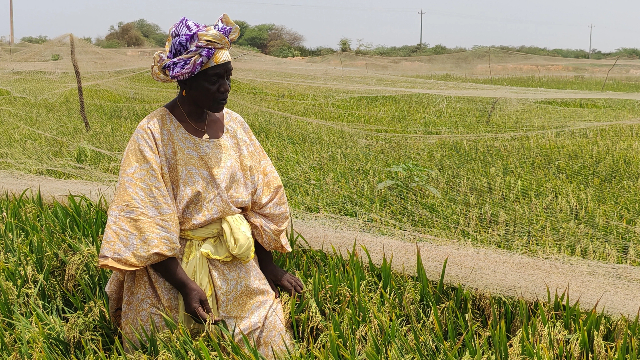
Group 1: Agricultural Innovation in China - China is now the world's largest investor in agricultural research, focusing on innovative solutions to complex global food security issues [1][6] - Innovations in agriculture are not limited to technology but also include business model innovations, policy innovations, and institutional innovations like "South-South cooperation" [3] - Hybrid rice, developed by China, is recognized as a key technology for addressing food shortages in developing countries, but it still requires annual seed purchases due to the inability to retain seeds from hybrid crops [3][4] Group 2: Clonal Reproduction in Rice - The establishment of artificial apomixis systems in rice by Chinese and American scientists has opened the possibility for hybrid rice to produce self-retaining seeds, which could significantly reduce costs for farmers [4][5] - The success of apomictic rice could change the agricultural landscape, particularly in Africa, where rice imports are substantial [5] Group 3: Global Agricultural Collaboration - The International Agricultural Research Consortium (CGIAR) is a key player in global agricultural research, with a vast network of scientists and resources, and is eager to collaborate with China [6] - CGIAR's gene banks are considered invaluable for future agricultural innovation, and the organization sees great potential in partnering with Chinese institutions [6] Group 4: African Agricultural Potential - Africa has the most arable land globally but the lowest yields, leading to significant rice imports, highlighting a paradox of potential and need [7] - The development of African agriculture could reduce dependency on international markets and create a food export capacity, benefiting both Africa and China by providing a more stable and diverse food supply [7]

26国代表齐聚山东潍坊 共话薯业高质量发展与全球粮食安全
Zhong Guo Xin Wen Wang· 2025-10-27 12:10
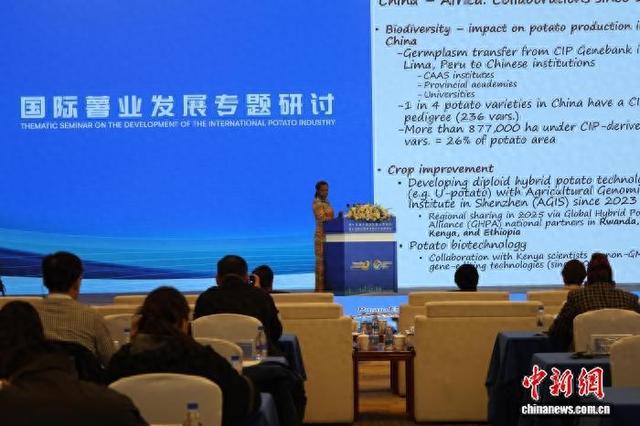
Core Insights - The 15th China International Potato Industry Expo and the 3rd Weifang International Food and Agricultural Products Expo opened in Weifang, attracting 503 exhibitors and 2,623 buyers from 26 countries and 15 provinces in China [1][5] - The potato industry is highlighted as a key pillar for food security and farmer income, with China being one of the richest countries in potato resources [1][3] - The event aims to enhance international cooperation in potato industry through technology sharing and resource integration, promoting deep collaboration with sectors like food, biotechnology, and tourism [1][4] Industry Overview - Shandong province emphasizes the potato industry as a vital part of rural revitalization, with an annual potato production exceeding 7 million tons and processing capacity around 5.5 million tons [2] - Weifang has designated potato cultivation as a potential industry for rural revitalization, with 440,000 acres planted and an annual output of 1.5 million tons, exporting products to 25 countries and regions [2] Technological Innovations - The World Potato Congress chairman acknowledged the contribution of increased potato yields in Asia to poverty reduction and food security, while also addressing challenges in certain regions regarding low yield and productivity [3] - Innovative cultivation methods and practices in water resource management and soil health protection were discussed, promoting global potato industry development through technology sharing [3][4] International Cooperation - Peru's representative highlighted the country's rich potato genetic resources and the potential for agricultural technology collaboration with China, which could enhance living standards and deepen bilateral relations [4] - The International Potato Center's director noted the significance of the 40-year collaboration with China, emphasizing the introduction of over 2,000 potato genetic resources that have contributed to the development of numerous high-quality varieties in China [4] Event Highlights - The expo's theme "Technology Revitalizes Potatoes, Intelligence Leads the Future" aims to create a platform for showcasing, networking, and discussions on potato industry development [4] - The event also included the launch of the Global Agricultural Service Trade Center and the China-ASEAN Specialty Industry Chain Export Platform, along with project signing activities [4]
中非合作共绘发展新图景
Xin Hua She· 2025-10-27 06:42
Core Points - The article highlights the 25th anniversary of the China-Africa Cooperation Forum, emphasizing the evolution of China-Africa relations from a new type of partnership to a comprehensive strategic cooperative partnership and a community of shared future in the new era [1][2] - It outlines the significant infrastructure projects and technological cooperation that have been established in Africa, showcasing the mutual benefits and development opportunities created through these initiatives [2][3] Infrastructure Connectivity - Over the past 25 years, a large number of infrastructure projects have been implemented in Africa, including nearly 100,000 kilometers of new and upgraded roads, over 10,000 kilometers of railways, nearly 1,000 bridges, and almost 100 ports [2] - The construction of a 228-kilometer dual-lane highway in Côte d'Ivoire has significantly improved transportation for local farmers, reducing product transport time to one-third of the previous duration and doubling their income [1][2] Technological Empowerment - Chinese technology, such as the "bacteria grass" technique, has revitalized previously degraded lands in Mauritania, providing sustainable development opportunities for local herders [3] - China has established 24 agricultural technology demonstration centers in Africa, promoting over 300 agricultural technologies that benefit more than 1 million smallholder farmers [3] Knowledge Sharing and Capacity Building - The cooperation has led to the training of over 220,000 individuals in various fields, including vocational education and healthcare, enhancing local skills and knowledge [3][4] - The establishment of the "Luban Workshop" in 15 African countries serves as a model for vocational education cooperation [3] Economic Cooperation and Trade - In 2024, the trade volume between China and Africa reached $295.6 billion, marking a 4.8% year-on-year increase and maintaining China's position as Africa's largest trading partner for 16 consecutive years [5] - China has committed to zero tariffs on 100% of products for 53 African countries, further enhancing economic ties [5] South-South Cooperation - The article emphasizes that many Global South countries are beginning to adopt the China-Africa cooperation model, which is characterized by mutual respect and non-imposition of will [5]
特稿丨中非合作共绘发展新图景
Xin Hua Wang· 2025-10-27 06:11
Core Points - The article highlights the 25th anniversary of the China-Africa Cooperation Forum, emphasizing the evolution of China-Africa relations from a new type of partnership to a comprehensive strategic cooperative partnership and a community of shared future in the new era [1] Group 1: Infrastructure Connectivity - Infrastructure projects have significantly improved transportation in Africa, exemplified by a 228-kilometer dual carriageway in Côte d'Ivoire, which has reduced product transport time to one-third and doubled local farmers' income [2] - Over the past 25 years, China has helped build and upgrade nearly 100,000 kilometers of roads, over 10,000 kilometers of railways, nearly 1,000 bridges, and nearly 100 ports in Africa, enhancing regional integration [2] - Local employment during infrastructure projects is high, with over 90% of workers being local, creating nearly 4,000 jobs and providing skills training [2] Group 2: Technological Empowerment - Chinese technology, such as the "happy grass" for soil restoration, has transformed arid lands in Mauritania, showcasing the impact of technology cooperation on sustainable development [3] - China has established 24 agricultural technology demonstration centers in Africa, promoting over 300 agricultural technologies that benefit more than 1 million smallholder farmers [3][4] - The vocational education initiative, "Luban Workshop," has trained over 220,000 individuals across 15 African countries, enhancing local skills [4] Group 3: Economic Cooperation - In 2024, China-Africa trade reached $295.6 billion, marking a 4.8% increase and maintaining China's position as Africa's largest trading partner for 16 consecutive years [6] - China has committed to zero tariffs on 100% of products for 53 African countries, further solidifying economic ties [6] - Since the 2024 China-Africa Cooperation Forum, new investments from China in Africa have exceeded 13.3 billion yuan, with total financial support surpassing 150 billion yuan [6] Group 4: South-South Cooperation - The China-Africa Cooperation Forum has evolved into a comprehensive platform for multi-faceted cooperation, influencing other global South countries to adopt similar cooperative models [5][6] - The forum emphasizes mutual respect and non-imposition of will, fostering a new model of South-South cooperation that prioritizes mutual benefit and sustainable development [6]
特稿|中非合作共绘发展新图景
Xin Hua She· 2025-10-27 05:03
Core Points - The 25th anniversary of the Forum on China-Africa Cooperation (FOCAC) marks significant advancements in China-Africa relations, evolving from a new type of partnership to a comprehensive strategic cooperative partnership and a community with a shared future in the new era [1] - The cooperation framework has led to numerous practical initiatives, including infrastructure projects, technology transfer, and economic collaboration, which have collectively enhanced development in Africa [1][5] Infrastructure Connectivity - Infrastructure projects have been pivotal in strengthening Africa's development foundation, with China assisting in the construction of nearly 100,000 kilometers of roads, over 10,000 kilometers of railways, and nearly 1,000 bridges [2] - A specific example is a 228-kilometer highway in Côte d'Ivoire, which has significantly reduced transportation time for agricultural products, doubling local farmers' incomes [2] - The employment of local workers in these projects has created nearly 4,000 jobs, enhancing local skills and capabilities [2] Technological Empowerment - Technology cooperation has revitalized agricultural practices in Africa, exemplified by the introduction of Chinese grass technology in Mauritania, which has improved livestock health and local livelihoods [3] - China has established 24 agricultural technology demonstration centers in Africa, promoting over 300 agricultural technologies that benefit more than 1 million smallholder farmers [3][4] - The vocational education initiative, "Luban Workshop," has trained over 220,000 individuals across 15 African countries, enhancing local workforce skills [4] Economic Cooperation - In 2024, China-Africa trade reached $295.6 billion, marking a 4.8% increase and maintaining China's position as Africa's largest trading partner for 16 consecutive years [6] - China has committed to zero tariffs on 100% of products from 53 African countries, further enhancing trade relations [6] - Since the FOCAC Beijing Summit in 2024, Chinese enterprises have invested over 13.3 billion yuan in Africa, with total financial support exceeding 150 billion yuan [6] South-South Cooperation - The FOCAC has evolved into a comprehensive cooperation platform covering various sectors, with a focus on mutual respect and non-imposition of will on African nations [5][6] - The successful model of China-Africa cooperation is being emulated by other global South countries, promoting equitable and mutually beneficial partnerships [6]
专访丨APEC应坚守多边主义引领亚太合作——访联合国前秘书长潘基文
Xin Hua Wang· 2025-10-26 08:21
Core Viewpoint - The article emphasizes the importance of multilateralism in addressing global challenges and promoting economic cooperation in the Asia-Pacific region, as highlighted by former UN Secretary-General Ban Ki-moon during an interview [1][2]. Group 1: Multilateralism and APEC - APEC should lead economic cooperation in the Asia-Pacific by addressing climate change, ensuring supply chain stability, and developing digital standards [1]. - The upcoming APEC informal leaders' meeting in South Korea aims to produce practical outcomes that inject new momentum into global development and cooperation [1]. - APEC has played a significant role in promoting free trade and investment in the region since its establishment in 1989, empowering developing countries and fostering sustainable economic growth [1]. Group 2: Global Governance Initiatives - Ban Ki-moon supports the global governance initiative proposed by President Xi Jinping, which emphasizes fairness, inclusivity, and the importance of cooperation on global issues such as climate change and food security [2]. - The combination of China's cooperation framework with the UN's reform roadmap can effectively mobilize resources and bridge the gap between developed and developing countries, leading to a more just global governance system [2]. - The rise of unilateralism and protectionism threatens international cooperation, and China can play a constructive role in maintaining multilateralism and promoting global governance reform [2]. Group 3: China's Role in Global Issues - China's investments in renewable energy, technological innovation, and public health cooperation enable the provision of global public goods that benefit the masses [3]. - China's leadership in areas such as climate change and global health illustrates the principle that collective efforts are essential to overcoming global challenges [3].
联合国驻华协调员:中国领导力至关重要 中国贡献都不可或缺
Yang Shi Wang· 2025-10-25 07:10
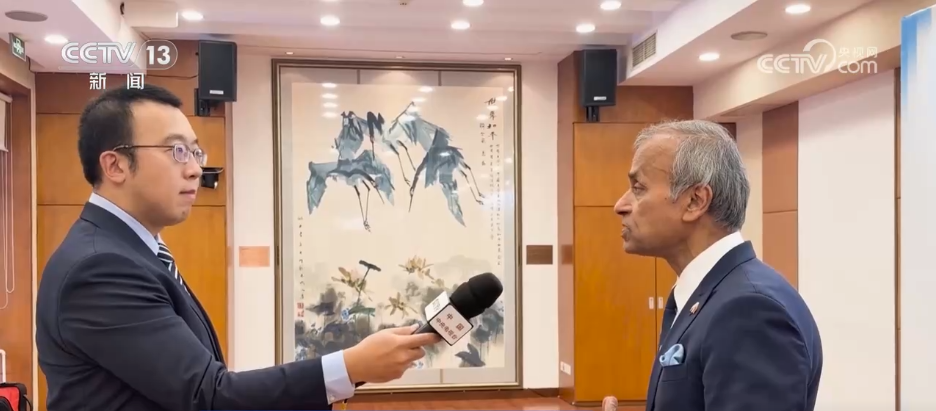
Core Insights - The United Nations Coordinator in China,常启德, praised China's role in the UN and its leadership in reshaping the multilateral system globally [3][4] - He emphasized China's significant contributions through initiatives like the Belt and Road Initiative and the Global Development Initiative, aligning with the spirit of the UN Charter [3][4] Group 1 - China is a crucial member of the UN Security Council and the largest developing country contributor, playing an essential role in the UN system [3] - The UN has achieved unprecedented development in its 80 years, but vulnerabilities in global development are increasingly exposed [4] - China has successfully lifted over 800 million people out of poverty and feeds about one-fifth of the world's population using only 9% of global arable land [4] Group 2 - The UN Coordinator highlighted the importance of China's leadership in the current process of reshaping the multilateral system [4] - China is seen as a bridge for cooperation and coordination, significantly supporting the UN system and strengthening multilateralism [4] - The Coordinator noted that China's contributions are vital across five core areas outlined in the "Future Covenant": global governance, peace and security, sustainable development goals, AI and technology development, and youth development [4]
联合国日:庆祝联合国成立80周年活动在京举行
人民网-国际频道 原创稿· 2025-10-25 02:21
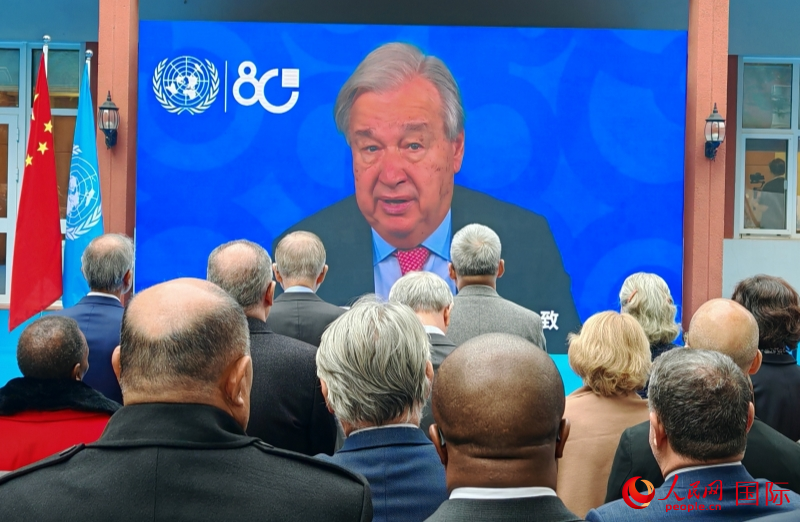
的行动中。 人民网北京10月24日电 (记者李琰)为庆祝联合国成立80周年,联合国驻华系统于24日在北京举办联合国日活动。中国政府代表、驻华使节、联合国 驻华机构代表,以及来自学术界、民间组织、私营部门及国际组织等逾200位嘉宾出席活动。 联合国日定于每年10月24日,旨在纪念《联合国宪章》于1945年正式生效。今年的庆祝活动恰逢联合国成立80周年这一重要历史时刻。联合国秘书长古 特雷斯在视频致辞中回顾了联合国80年来缔造和平、推进人权、应对全球挑战的历程。面对日益升级的各类危机,他强调采取集体行动的紧迫性,"让我们 向世界展示,当'我们联合国人民'选择团结一致时,一切都有可能做到。" 外交部部长助理蔡伟致辞表示,中国将一如既往坚定支持联合国工作,并强调中方始终致力于维护多边主义、促进世界和平、推动可持续发展。他强 调:"中国始终站在历史正确的一边,全力支持联合国事业,积极承担大国责任,坚定不移做世界和平的建设者、全球发展的贡献者、国际秩序的维护者。" 联合国秘书长古特雷斯发来联合国日致辞视频。人民网记者 李琰摄 and and the state of the states and 联合 国并非完 "携 我 ...
聚焦碳金融与绿色创新,多位大咖共探国际变局下全球治理新路径
Xin Lang Cai Jing· 2025-10-24 04:36
Core Insights - The 2025 Sustainable Global Leaders Conference highlighted the transformative changes in global economic governance, emphasizing the significant role of carbon markets and carbon finance, particularly in China [1][2][3]. Group 1: Global Economic Governance - Global economic governance is at a critical "crossroads," necessitating a restructuring of the existing framework due to the misalignment between old systems and current developments [2]. - The share of developing economies in global GDP is projected to rise from 25% in 2000 to 45% by 2024, shifting governance discourse towards a more balanced North-South dynamic [2]. - The deepening of South-South cooperation among developing countries facilitates consensus in sustainable development [2]. Group 2: Carbon Market Development - The global carbon market has seen significant progress, with 38 carbon markets operational, covering 23% of global greenhouse gas emissions [4]. - China's carbon market, initiated in 2021, has expanded to include approximately 3,500 enterprises, with a total quota of 8 billion tons, representing 53.33% of the global carbon market quota [4]. - The release of China's first central-level document on carbon market construction and the announcement of new Nationally Determined Contributions (NDC) goals provide a clear development roadmap for the carbon market [4]. Group 3: Future of Carbon Finance - The growth of the carbon market lays a solid foundation for carbon finance innovation, which still has significant untapped potential [5]. - Establishing differentiated internal motivation mechanisms for high-emission enterprises and linking carbon performance to financing costs for small and medium enterprises is essential [5]. - The integration of AI and big data in carbon finance can enhance efficiency and reduce costs, exemplified by innovative practices that significantly lower resource input for banks [5]. Group 4: Carbon Finance Ecosystem - A comprehensive carbon finance ecosystem requires support from third-party professional institutions, data technology companies, and green finance certification bodies [6]. - The establishment of standards and methods for evaluating green low-carbon performance is crucial for advancing the ecosystem [6]. Group 5: Interaction Between Carbon Finance and Green Innovation - Carbon finance must clarify its value orientation towards "zero carbon" to drive innovation and investment in low-carbon technologies [7]. - The interaction between carbon finance and green technology is vital for overcoming challenges faced by enterprises in pursuing environmental sustainability [8]. Group 6: Future Directions for Carbon Finance - The next decade will focus on the internationalization of carbon finance, with significant potential in developing countries [11]. - Key development priorities include creating a unified core carbon market, enhancing market vitality through financial innovation, and strengthening international cooperation [11]. - New financial tools, such as RWA (Real World Assets), can link carbon assets to the market, providing new financing avenues for low-carbon technologies [12].
赞比亚副总统感谢中方援助受干旱影响民众
Xin Hua Wang· 2025-10-23 01:42
新华社卢萨卡10月22日电(记者彭立军)赞比亚副总统纳卢曼戈日前在卢萨卡表示,感谢中国和联合国 世界粮食计划署(世粮署)向赞比亚受干旱影响地区民众提供粮食援助支持。 中国驻赞比亚大使韩镜表示,该项目由中国、赞比亚和世粮署共同实施,是中国落实全球发展倡议的具 体行动,体现中国在联合国框架内的建设性作用,将进一步加强中赞全面战略合作伙伴关系。 据了解,相关粮食援助项目由中国政府在全球发展和南南合作基金项下向世粮署提供资金支持,用于向 受干旱影响的赞比亚南方省、西方省困难居民提供粮食援助。 中国与世粮署合作向赞比亚提供粮食援助项目交接仪式20日在卢萨卡举行。纳卢曼戈在交接仪式上说, 干旱给赞比亚带来严重和长期影响,此次援助非常及时,展现出中国在帮助发展中国家应对气候变化等 全球挑战时的有力行动。 ...