
数字孪生

Search documents
新春走基层|智能“工友”护航春运——探访济南智慧化火车“车轮医院”
Xin Hua Wang· 2026-02-07 05:15
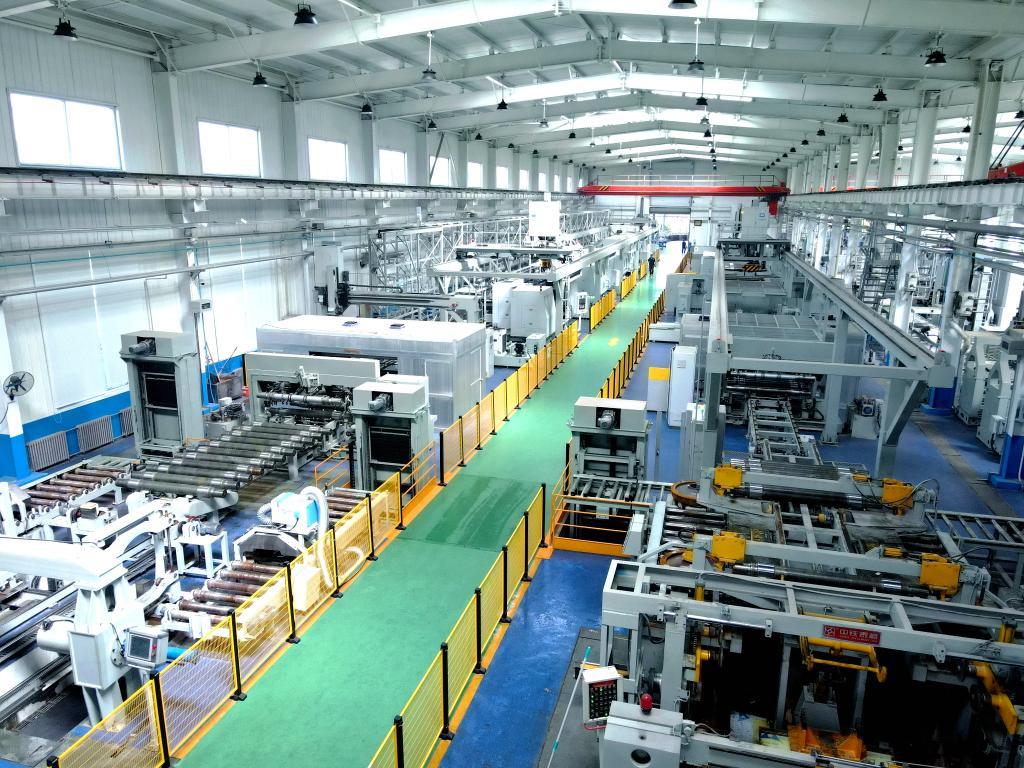
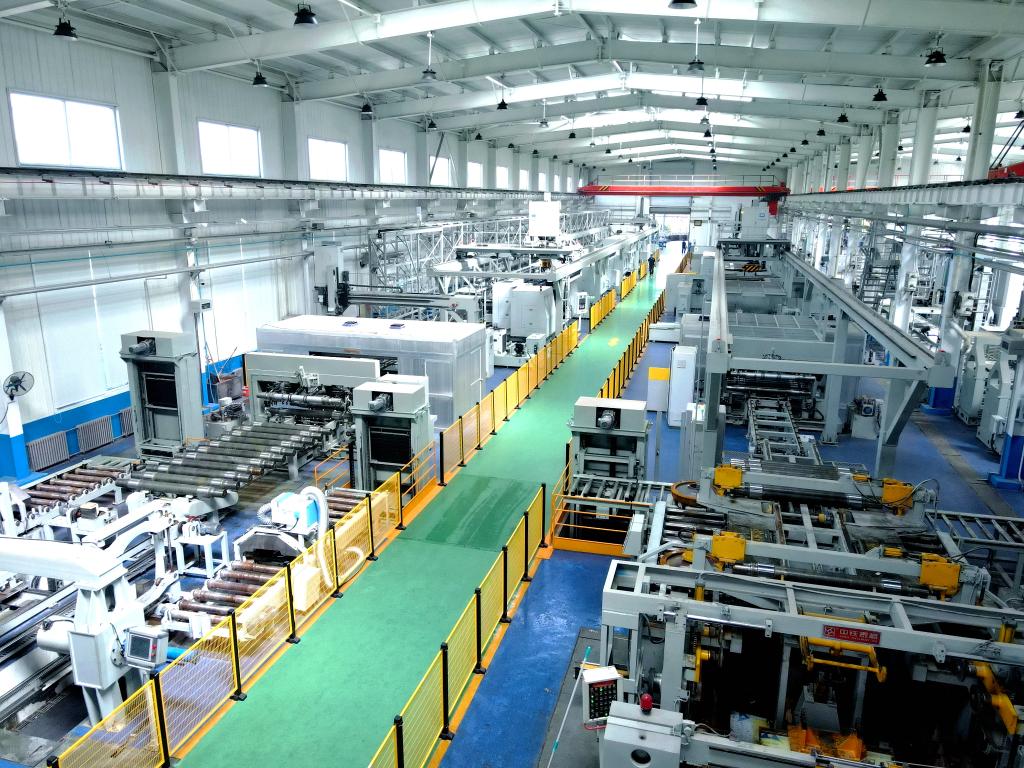
Core Insights - The article highlights the transformation of the Jinan West Vehicle Depot's "wheel hospital" into a smart facility that utilizes advanced technology for the maintenance of train wheels, significantly improving efficiency and reducing labor intensity [1][3]. Group 1: Technological Advancements - The Jinan West Vehicle Depot has implemented a systematic digital transformation in its wheel axle workshop, introducing technologies such as industrial internet, machine vision, and digital twins [3]. - The capacity for wheel disassembly has increased from 45 sets per day to 90 sets, while assembly capacity has risen from 40 sets to 70 sets per day [3]. Group 2: Operational Efficiency - The workshop now employs 68 intelligent devices and 18 unmanned transport vehicles, which work collaboratively to transport wheels and axles for maintenance [1][3]. - The introduction of intelligent rust removal equipment has significantly reduced the physical labor required for workers, transforming a previously labor-intensive task into a more efficient process [3]. Group 3: Workforce Adaptation - Despite the reduction in physical labor, the responsibility of workers has not diminished, as they must monitor and manage the operations of the intelligent systems [4]. - Workers have adapted to new roles, focusing more on data monitoring rather than manual labor, which has changed the nature of their work [2][3].
智能“工友”护航春运——探访济南智慧化火车“车轮医院”
Xin Hua She· 2026-02-07 01:36
Core Viewpoint - The article highlights the transformation of the Jinan West Vehicle Depot's wheel axle workshop into a smart facility, significantly improving efficiency and reducing labor intensity through the adoption of advanced technologies. Group 1: Technological Advancements - The Jinan West Vehicle Depot's wheel axle workshop has undergone a systematic digital transformation, incorporating technologies such as industrial internet, machine vision, and digital twins [4] - After the upgrade, the workshop's wheel pair disassembly capacity increased from 45 pairs per day to 90 pairs, and assembly capacity rose from 40 pairs to 70 pairs per day [4] Group 2: Operational Changes - Previously, the workshop relied heavily on manual labor, with data recorded by hand and material moved manually, leading to a labor-intensive environment [3] - The introduction of 68 intelligent devices and 18 unmanned transport vehicles has streamlined operations, allowing workers to focus more on data monitoring rather than physical labor [6] Group 3: Worker Experience - Workers have reported a significant reduction in labor intensity, with tasks like axle rust removal now automated, leading to a cleaner working environment [6] - Despite the decrease in physical workload, the responsibility of workers remains high, as they must quickly address any operational issues that arise [6][7]

无人化场景无处不在 ——中石化宁波镇海炼化智能化生产线见闻
Jing Ji Ri Bao· 2026-02-06 21:59
Core Insights - The Ministry of Industry and Information Technology recently announced the first batch of 15 leading smart factories in China, with Sinopec's Ningbo Zhenhai Refining & Chemical Company being the only refining enterprise included [1] Group 1: Digital Transformation - Ningbo Zhenhai Refining has leveraged digital technology to drive business transformation and continuously upgrade its smart factory, achieving lean management from engineering construction to production operations [1] - The health management platform allows real-time scoring and automatic alerts for over 800,000 devices, significantly improving the efficiency of equipment management [2][3] - The platform generates health reports that enhance problem diagnosis efficiency and operational rhythm, shifting from reactive to proactive maintenance [3] Group 2: Advanced Monitoring and Automation - The company has implemented a 3D model for pipeline management, enabling precise location tracking of critical valves and reducing the time needed for fault identification [3] - The introduction of flying robots for inspection has replaced manual checks, allowing for 24/7 monitoring of critical areas and rapid detection of gas leaks [6][7] - Automation extends to various operations, including remote monitoring of electrical systems and automated control of processes, reducing reliance on human intervention [8] Group 3: Digital Twin Technology - The establishment of a digital twin factory creates a highly accurate 3D virtual mirror of the real factory, facilitating real-time synchronization of equipment status and production processes [4][5] - This technology allows for simulation and optimization of production parameters, enhancing product quality and execution efficiency [4] Group 4: Logistics and Operational Efficiency - The smart logistics management system has improved product dispatch efficiency by 40%, reducing vehicle waiting time from one day to under one hour [9] - The production command center provides real-time monitoring of operations across a 23.1 square kilometer area, enabling remote control and management of all equipment [9] Group 5: Economic Impact - The implementation of smart factory initiatives has led to an annual increase in efficiency exceeding 200 million yuan, with labor efficiency improving by over 50% [10] - The company aims to further enhance production efficiency and safety through the integration of AI technologies in its operations [10]

无人化场景无处不在
Jing Ji Ri Bao· 2026-02-06 20:35
Core Viewpoint - The article highlights the advancements in digital transformation and automation at Sinopec's Ningbo Zhenhai Refining & Chemical Company, which has been recognized as a leading smart factory in China, showcasing significant improvements in operational efficiency and safety through innovative technologies. Group 1: Digital Transformation - Sinopec's Ningbo Zhenhai Refining is the only refining enterprise included in the first batch of 15 leading smart factories in China [1] - The company has implemented a health management platform that monitors over 800,000 devices, providing real-time diagnostics and alerts for operational risks [2][3] - The digital twin technology creates a virtual mirror of the factory, allowing for real-time synchronization of equipment status and production processes, enhancing product quality and operational efficiency [4][5] Group 2: Automation and Robotics - The use of flying robots for inspection in the ball tank area has replaced manual checks, providing continuous monitoring and rapid detection of gas leaks [6][7] - Automation extends to various operations, including remote monitoring of electrical systems and automated control of processes, reducing the need for human intervention [8] Group 3: Operational Efficiency - The implementation of smart logistics management has improved product dispatch efficiency by 40%, significantly reducing waiting times for trucks from one day to under one hour [9] - The smart factory model has led to an increase in production efficiency, generating over 200 million yuan in annual benefits and improving labor efficiency by more than 50% [10]
国内在建最大低碳商务区建设取得新进展
Qi Lu Wan Bao· 2026-02-06 14:32
Group 1 - The Qingdao Airport Business District is the largest low-carbon business district under construction in China, with underground works completed and above-ground structural work nearing 60% completion [1] - The project covers a total area of 210,000 square meters and a total construction area of 585,700 square meters, with a total investment of 4.657 billion yuan [1] - The business district will integrate high-end facilities including a star-rated hotel, hotel-style apartments, a digital trade building, a zero-carbon innovation park, and an airport exhibition center, promoting the integrated development of "port, industry, and city" [1] Group 2 - The functional layout of the Qingdao Airport Business District is divided into "one port and one area," focusing on aviation-related industries and providing various support services such as enterprise services, financial services, and hotel accommodations [2] - Qingdao is building a modern industrial system aimed at 2030, with the Airport Business District as a key component, alongside other parks focusing on virtual reality and artificial intelligence [2] - The strategy emphasizes high-end manufacturing, marine economy, digital economy, and green energy, promoting industrial clustering, intelligence, and sustainability [2]
大模型来了,为什么端到端的智能工厂还没有
经济观察报· 2026-02-06 14:31
Core Viewpoint - The article discusses the challenges and current state of AI applications in the manufacturing industry, emphasizing the gap between ideal scenarios and reality, and the need for tailored AI strategies to bridge this gap [2][10][21]. AI Application in Manufacturing - AI is seen as crucial for the future of manufacturing, but many companies struggle to implement it effectively, with only about 5% of attempts at systematic AI utilization achieving success by 2025 [2][4]. - Current AI applications in manufacturing are mostly at a "point intelligence" stage, assisting specific processes rather than leading them [4][8]. - In research, AI enhances efficiency but has limited contributions to core innovation, primarily serving as an assistant rather than a creator [4]. - In design, generative AI shows potential but is often limited in complex industrial applications, requiring human intervention for final designs [5][6]. - In production, AI has proven effective in quality inspection and predictive maintenance, with Bosch reporting a 99.8% accuracy in AI-driven quality checks [6][8]. - Sales and service applications of AI have progressed well due to their compatibility with language and knowledge tasks [7]. - Supply chain management shows potential for AI but faces challenges due to data silos and complex procurement rules [7][8]. Challenges in AI Implementation - The complexity of the manufacturing industry, including long production chains and fragmented knowledge, hinders AI integration [11][12]. - AI's interaction with the physical world presents challenges, as current models struggle with physical perception and understanding [10][12]. - High standards in manufacturing demand real-time decision-making and low tolerance for errors, complicating AI deployment [13]. Bridging the Gap - To close the gap between ideal and reality, manufacturing needs to develop industrial models tailored to its specific requirements, incorporating specialized knowledge and ensuring reliability [15][16]. - AI must have comprehensive data acquisition capabilities across the entire manufacturing chain, necessitating the creation of deep digital twin systems [18]. - AI should be capable of high-quality decision-making under complex conditions, requiring continuous learning and adaptation [19]. - Embodied intelligence is essential for AI to effectively interact with the physical manufacturing environment [20]. Strategic Recommendations - Companies should adopt both short-term and long-term AI strategies, starting with targeted applications to build experience and focusing on data asset development for future AI integration [22].

新春走基层丨智能“工友”护航春运——探访济南智慧化火车“车轮医院”
Xin Hua She· 2026-02-06 12:56
Core Viewpoint - The article highlights the advancements in automation and smart technology at the Jinan West Vehicle Depot's "Wheel Hospital," which plays a crucial role in ensuring the safety and efficiency of train operations during the Spring Festival travel rush. Group 1: Automation and Technology - The "Wheel Hospital" is the largest railway freight wheel axle maintenance base in Shandong Province, utilizing advanced automation technologies for efficient operations [1][4] - The facility has implemented 68 intelligent devices and 18 unmanned transport vehicles, significantly enhancing the maintenance process for train wheel axles [1][4] - The introduction of industrial internet, machine vision, and digital twin technologies has doubled the wheel pair disassembly capacity from 45 to 90 pairs per day and increased assembly capacity from 40 to 70 pairs per day [4] Group 2: Workforce Transformation - Workers have transitioned from manual labor-intensive tasks to monitoring and managing automated systems, reducing physical strain while maintaining responsibility for operational safety [5][6] - The use of smart rust removal equipment has transformed the working conditions, allowing workers to operate in a cleaner environment compared to previous manual methods [5] - Workers are now required to respond quickly to any operational issues, ensuring that the automated systems function smoothly during peak travel times [5][6]
Cadence首席执行官加入泛林董事会
半导体芯闻· 2026-02-06 10:12
Group 1 - Lam Research announced the appointment of Dr. Anirudh Devgan to its board of directors, bringing extensive semiconductor ecosystem and technical expertise [1] - Dr. Devgan has been with Cadence Design Systems since 2012, serving in various senior leadership roles, and has been CEO since 2021 [1] - Under Dr. Devgan's leadership, Cadence has been at the forefront of applying artificial intelligence to engineering design and has expanded its business into system analysis and computational life sciences [1] Group 2 - Dr. Devgan is recognized as an authority in the Electronic Design Automation (EDA) field, having pioneered large-scale parallel and distributed architectures [2] - He holds 27 U.S. patents and is a fellow of IEEE and a member of the National Academy of Engineering [2] - Lam Research's board chairman, Abhijit Talwalkar, expressed confidence that Dr. Devgan's broad knowledge of the semiconductor ecosystem will enhance Lam's operations and innovation [2]



京港澳高速(湖北北段)改扩建工程今日零时通车
Chang Jiang Ri Bao· 2026-02-06 09:40
Core Viewpoint - The opening of the upgraded section of the Jinggang'ao Expressway in Hubei is a significant infrastructure development that enhances transportation efficiency and connectivity in the region, contributing to economic growth and urban integration. Group 1: Project Overview - The Jinggang'ao Expressway Hubei North Section, a key project under the national "14th Five-Year Plan," officially opened on February 6, 2023, with a total length of 157.79 kilometers, connecting various districts and cities in Hubei [1][3]. - The project, which began construction in January 2023, was completed 186 days ahead of schedule, with a planned completion date of December 26, 2025 [1]. Group 2: Traffic and Capacity Improvements - Prior to the upgrade, the expressway experienced an average daily traffic volume exceeding 59,000 vehicles, significantly surpassing its four-lane design capacity, leading to frequent congestion [3]. - The upgrade expanded the road from a four-lane to an eight-lane configuration and added three new entry and exit points, improving traffic flow and reducing travel time for freight transport by approximately 30 minutes [3]. Group 3: Economic and Regional Impact - The upgraded expressway is expected to enhance the connectivity of the Wuhan metropolitan area with the Yangtze River Delta and other major economic regions, facilitating economic exchanges and supporting Hubei's high-quality development during the "15th Five-Year Plan" [3]. - The project aims to improve the overall efficiency and resilience of the transportation network, promoting a shift from "transportation integration" to "life integration" and "industry integration" within the Wuhan metropolitan area [3]. Group 4: Technological Innovations - The expressway features a 60-kilometer section with high-performance permeable pavement, which reduces rainwater accumulation and enhances safety by shortening braking distances by over 10 meters during rainy conditions [4]. - Advanced technologies, including a digital twin system, allow for real-time monitoring of traffic conditions, enabling rapid response to incidents such as congestion and accidents [4][6]. Group 5: Environmental and Aesthetic Considerations - The construction utilized innovative prefabrication techniques for the Hanjiang Grand Bridge, minimizing ecological disruption and reducing dust and noise pollution [7]. - The design incorporates aesthetic elements, such as flowerbed-style crash barriers, enhancing the visual appeal of the expressway while promoting local cultural themes at service areas [7].
港股收评:恒指跌1.21%、科指跌1.11%,黄金、加密货币及AI应用股普跌,科网股走势分化,新能源车股普涨
Jin Rong Jie· 2026-02-06 08:28
Market Overview - The Hong Kong stock market experienced a significant decline on February 6, with the Hang Seng Index falling by 1.21% to 26,559.95 points, the Hang Seng Tech Index down 1.11% to 5,346.2 points, and the National Enterprises Index decreasing by 0.68% to 9,031.38 points [1] - Major technology stocks mostly declined, with Alibaba down 2.88%, Tencent down 1.97%, and JD Group down 1.75%. In contrast, NIO saw an increase of nearly 7% [1] Individual Stock Performance - West China Cement (02233) continued to decline, dropping nearly 10%, with a cumulative drop of over 22% for the month. The company announced a $300 million issuance of 10.5% senior notes due in 2029 to manage existing debt [2] - Yujian Xiaomian (02408) rose over 4%, with a year-to-date increase of over 20%, supported by a share buyback announcement [2] - Nobikang (02635) reached a new high, increasing over 9% to 514.5 HKD, driven by its focus on AI technology and significant applications in various sectors [2] - Colorful New Energy (01986) saw its stock rise over 5% after announcing a profit forecast of at least 25 million RMB for the year ending December 31, 2025, a significant improvement from a loss the previous year [3] Institutional Ratings - Morgan Stanley expressed optimism about NetEase (09999), citing its attractive valuation with a current P/E ratio of 13 times, which is a 25% discount compared to its five-year average. The target price is set at 295 HKD [5] - Guohai Securities is optimistic about Leap Motor (09863), projecting revenues of 66.27 billion, 104.12 billion, and 135.41 billion RMB for 2025-2027, with significant profit growth expected [6] - Morgan Stanley also favored Laoputang Gold (06181), extending its valuation period to December 2026 and maintaining a target price of 1,296 HKD, citing potential short-term catalysts [6] Industry Insights - The macro strategy department of Bosera Fund noted that the Hong Kong stock market is currently influenced by liquidity benefits and fundamental uncertainties, with the improvement of price levels in 2026 being a key variable for market direction [8] - The fund manager of the Rongtong CSI Hong Kong Stock Connect Technology Index highlighted the potential for valuation recovery in the Hong Kong tech sector, driven by technological breakthroughs and sustained inflows of southbound capital [9]





