数字孪生技术

Search documents
“智慧兰台”:开启会计档案管理数字化新时代
Xin Hua Ri Bao· 2025-11-13 21:26
Core Viewpoint - The digital transformation of financial management in enterprises is essential for high-quality development, with innovative management of accounting archives being crucial [1] Group 1: Strategic Planning and Implementation - The "Smart Lantai" initiative is guided by strategic leadership and a phased approach, focusing on centralized management of accounting archives and the launch of an electronic accounting archive system [2] - The period from 2023 to 2025 is designated for scaling and innovation, with a focus on centralized management and continuous optimization of business processes [2] - Future plans for 2026 and beyond include the construction of standardized smart archive facilities and the deployment of intelligent devices to enhance quality control and operational standardization [2] Group 2: Intelligent Process Transformation - "Smart Lantai" integrates information technology to transform the entire process of accounting archives, enhancing user experience through smart collection and delivery systems [3] - The intelligent storage and management processes utilize advanced technologies such as AI and robotics to significantly improve efficiency, achieving a threefold increase in operational speed [3] - A digital twin technology-based visualization platform is developed to provide comprehensive management and decision-making support [3] Group 3: Achievements and Industry Benchmarking - Since the implementation of centralized management in 2023, "Smart Lantai" has processed 1.51 million documents, with a peak daily processing capacity of 10,400 documents, and has increased its paperless rate from 60% to 74% [4] - The initiative has led to innovations in management, capability, technology, and user experience, optimizing the operational mechanism of archives [4] - "Smart Lantai" aims to set a benchmark in accounting archive management under the "Digital China" strategy, transitioning from temporary to permanent storage and enhancing the value extraction of data [4]
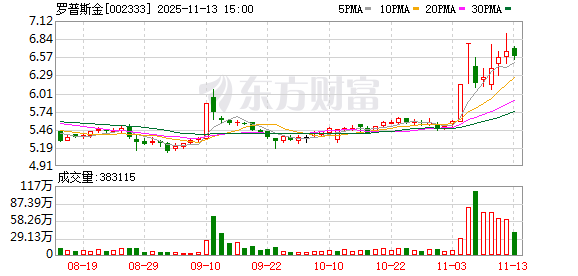
罗普斯金:公司已投资建成基于5G与数字孪生技术的智能工厂
Mei Ri Jing Ji Xin Wen· 2025-11-13 09:27
Group 1 - The company has invested in and established a smart factory based on 5G and digital twin technology [2] - The smart factory achieves digital management across the entire chain of R&D, production, and operation, enabling real-time interaction between operational data and scenario data through a digital twin platform [2] - The company has received multiple honors, including "Advanced Intelligent Factory of Jiangsu Province" and "National Intelligent Manufacturing Demonstration Scenario" [2]


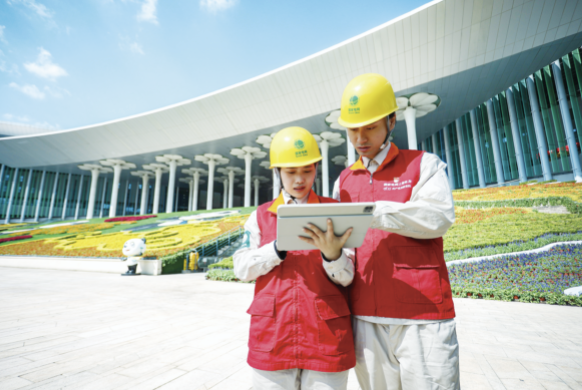
科技赋能保电再升级 绿色能源点亮“四叶草”——国网上海电力全力护航进博会供电安全
Zhong Guo Neng Yuan Wang· 2025-11-11 09:30
Core Points - The eighth China International Import Expo (CIIE) is being held in Shanghai, with the State Grid Shanghai Electric Power Company implementing a comprehensive power supply guarantee system, Smart Power Supply 8.0, based on experiences from previous expos [1][11] - The company has introduced a "four proactive" work model (proactive operation, proactive transformation, proactive repair, proactive service) to enhance power supply security during the event [1][11] Group 1: Power Supply Security Measures - The safety and stability of the Shanghai main power grid are crucial for the expo, with digital inspection technologies being utilized to enhance equipment reliability [2] - The "Tianshu" autonomous inspection robot is deployed to monitor equipment at key substations, capable of performing various detection tasks autonomously [4] - The "Tianqing" high-voltage transmission line robot enhances the grid's ability to respond to diverse risks, significantly improving operational efficiency compared to traditional methods [6] Group 2: Smart Power Supply System - The Smart Power Supply 8.0 system integrates digital operation and maintenance methods, enabling real-time monitoring of equipment status and creating an intelligent closed-loop for data utilization [7][8] - A comprehensive inspection was conducted prior to the expo, covering 2,385 cable inspections and 8,081 kilometers, with 1,520 personnel involved [10] Group 3: Green Energy Initiatives - The expo is being powered entirely by green energy for the third consecutive year, with a total green electricity transaction of approximately 1.3 billion kilowatt-hours [18][20] - The green energy transactions are expected to reduce carbon dioxide emissions by 798,000 tons, showcasing Shanghai's commitment to green and low-carbon development [19] Group 4: Enhanced Monitoring and Support - The company has integrated advanced monitoring systems, including 6,013 data collection points and various detection devices, to ensure real-time health evaluation and fault prediction of power supply equipment [15] - A dedicated team of 2,500 professionals is on standby to monitor critical stations and lines during the expo, ensuring comprehensive power supply support [17]

视频丨快递迎来“小时达”时代!你的“身边仓”接单了
Yang Shi Xin Wen· 2025-11-09 05:53
Core Insights - The express delivery industry in China is experiencing a peak season with daily express volume exceeding 600 million packages, driven by the rise of instant retail due to advancements in internet technology and diverse consumer demands [1][3] - Instant retail, characterized by online ordering and local supply fulfillment, is transforming consumer behavior by enabling immediate access to products, with the market expected to surpass 2 trillion yuan by 2030 [3][4] Group 1: Instant Retail Development - Instant logistics in China has surpassed 48 billion orders annually, with services like same-day and next-day delivery becoming commonplace [1][3] - The new consumption model of instant retail replaces traditional long supply chains with shorter routes, allowing for immediate needs to be met [3][4] Group 2: Operational Efficiency - A "flash warehouse" model is being utilized, where small local warehouses enable rapid order fulfillment, with staff required to process orders within three minutes [4][6] - The efficiency of these warehouses is enhanced by advanced inventory management and a deep understanding of product placement, allowing for quick access to a wide range of items [6][8] Group 3: Technology Integration - The logistics process is supported by an intelligent decision-making platform that optimizes delivery routes and resource allocation in real-time, achieving a "minute-level" shopping experience [16][17] - Automation through robotics has significantly increased sorting efficiency, with robots now handling tasks that previously required extensive human labor, improving sorting speed by over three times [17][20] Group 4: Market Trends - The logistics peak season is also witnessing a surge in large item transportation, with a 20% year-on-year increase in volume, indicating a shift in consumer purchasing behavior [17][18] - The integration of AI algorithms and digital twin technology is enhancing logistics efficiency, allowing for precise matching of products to delivery routes and improving overall service quality [27][28] Group 5: Global Expansion - China's logistics solutions are not only catering to domestic needs but are also being exported globally, with successful implementations in over ten countries, providing tailored logistics services to local e-commerce platforms and manufacturers [31][32]

走进乌镇看科技对话文明 感受数字技术让文化遗产“活”起来神奇时刻
Yang Shi Wang· 2025-11-09 05:47
Core Insights - The 2025 World Internet Conference in Wuzhen established a Digital Heritage Professional Committee and released a collection of digital heritage case studies, showcasing how digital technology can revitalize cultural heritage [1][3] Group 1: Digital Heritage Initiatives - The project integrates digital technology with the "Siku Quanshu" (Complete Library of the Four Treasuries) and the Wenlan Pavilion, representing a new path for the restoration of cultural heritage [3] - The Zhejiang Library has digitized all ancient texts, eliminating the need to view original manuscripts [3] Group 2: Global Perspectives on Cultural Heritage - The innovative "Chinese model" offers significant insights for global cultural heritage preservation, with AI and digital technologies serving as tools for historical preservation and future civilizational dialogue [5] - Global youth leaders from Kyrgyzstan and Bangladesh expressed the importance of using technology to preserve their cultural heritage, highlighting the potential of AI and digital twin technology [7][9]

破480亿的即时物流订单量如何完成?探究“万物到家”背后的“科技范”
Yang Shi Wang· 2025-11-09 03:59
Core Insights - The express delivery industry in China is experiencing a peak season, with daily express delivery volume exceeding 600 million packages [1] - The rise of instant retail, driven by advancements in internet technology and diverse consumer demands, has led to a significant increase in logistics efficiency [1] - The annual order volume for instant logistics in China has surpassed 48 billion orders, with services like same-day and next-day delivery becoming commonplace [1] Group 1: Instant Retail and Logistics - Instant logistics relies on technologies such as drones and optimized algorithms to enhance delivery speed and efficiency [1] - The concept of "flash warehouses" allows for rapid order fulfillment, with workers required to sort and package orders within three minutes [4][6] - Flash warehouses are stocked with a wide variety of products, including daily necessities and seasonal items, reflecting changing consumer preferences [6] Group 2: Delivery Efficiency - The average delivery time for orders from flash warehouses is around 20 to 30 minutes, facilitated by a well-prepared inventory and a sufficient number of delivery personnel [9][12] - An intelligent decision-making platform processes vast amounts of data to optimize order distribution and route planning in real-time [9][23] - The logistics peak season has seen a 20% year-on-year increase in large item transportation, highlighting the growing demand for efficient logistics solutions [11] Group 3: Advanced Warehouse Technologies - Automation in warehouses has significantly improved efficiency, with robots enhancing sorting speed and accuracy [18][21] - The use of digital twin technology allows for real-time monitoring and optimization of warehouse operations, improving overall logistics performance [23] - The integration of AI algorithms enables precise matching of inventory with consumer demand, ensuring timely delivery of both high and low-frequency items [23][24]

前沿技术让十五运会尽显“科技范儿”
Ke Ji Ri Bao· 2025-11-09 01:11
Group 1 - The 15th National Games (referred to as "15th Games") focuses on integrating advanced technologies such as artificial intelligence and new-generation information technology to enhance event organization and spectator experience [1][2] - Over 130 high-tech products have been selected to improve event operations, training, and viewing experiences, emphasizing smart management and immersive spectator engagement [1] - The event features a "Smart Operation Management Cloud Platform" utilizing digital twin technology for real-time monitoring and analysis of venue conditions, ensuring efficient crowd management and communication [1] Group 2 - The 15th Games incorporates a "green" initiative, with over 90% of venues being renovated rather than newly constructed, promoting sustainability and low carbon emissions [2] - The carbon emissions from venue renovations are estimated at approximately 132,500 tons, significantly lower than the typical 30% to 50% emissions seen in large-scale sporting events [2] - The event's torch is sourced from combustible ice at a depth of 1,522 meters in the South China Sea, marking a historic first in deep-sea fire collection for sports [2] Group 3 - The opening ceremony of the 15th Games will take place in Guangzhou, featuring a minimalist stage design without mechanical installations, showcasing a blend of traditional culture and modern technology [3] - Highlights of the ceremony include the use of robotics, virtual reality, and augmented reality to present traditional performances in a contemporary manner, enhancing the cultural experience for spectators [3] - The event aims to create a visual and emotional resonance by combining elements of technology, culture, and sports, reflecting the identity of Guangdong as a "Flower City" [3]
研判2025!中国铝合金汽车零部件行业市场政策、产业链、市场规模、竞争格局及发展趋势分析:市场需求旺盛[图]
Chan Ye Xin Xi Wang· 2025-11-06 01:32
Core Viewpoint - The rapid growth of the new energy vehicle (NEV) market is driving the demand for aluminum alloy components in the automotive industry, leading to significant market expansion in China's aluminum alloy automotive parts sector, projected to reach 697.84 billion yuan in 2024, a year-on-year increase of 22.46% [1][8]. Market Overview - Aluminum alloy automotive parts are defined as components made from aluminum-based alloys, which are processed through various methods to achieve lightweight, high strength, corrosion resistance, and recyclability, contributing to vehicle weight reduction and energy efficiency [2]. - The application of aluminum alloy parts spans the entire vehicle, categorized into powertrain, chassis, body, electronic systems, and decorative components [2]. Market Policies - The Chinese government has implemented various policies to support the development of the automotive parts industry, including initiatives aimed at enhancing manufacturing reliability and promoting high-quality development in the NEV sector [2]. Industry Chain - The aluminum alloy automotive parts industry consists of upstream suppliers of aluminum materials and production equipment, midstream manufacturers of aluminum parts, and downstream automotive manufacturers and aftermarket services [4]. Market Growth - China's automotive market has seen substantial growth, with production and sales reaching 21.05 million and 21.12 million vehicles respectively from January to August 2025, marking a year-on-year increase of 12.7% and 12.6% [6]. Competitive Landscape - The aluminum alloy automotive parts market in China is characterized by a large number of companies, leading to a fragmented market structure. Key players include He Sheng Co., Ltd., Xusheng Group, and Wan Feng Ao Wei, among others [9][10]. - In 2024, Lichung Group led the industry with a revenue of 27.25 billion yuan, followed by Top Group and Minshi Group with revenues of 26.6 billion yuan and 23.15 billion yuan respectively [10]. Company Analysis - Lichung Group specializes in lightweight aluminum alloy products and has a complete industrial chain, with 54.5% of its revenue coming from casting aluminum alloys [11]. - Wan Feng Ao Wei focuses on lightweight metal components, achieving 80.81% of its revenue from automotive lightweight parts, totaling 6.056 billion yuan in the first half of 2025 [11]. Development Trends - The industry is expected to adopt smart factory and digital twin technologies, enhancing production efficiency and quality control. The use of recycled aluminum is anticipated to rise, aligning with sustainability goals and reducing production costs [12].



广钢气体20251031
2025-11-03 02:35
Summary of Guanggang Gas Conference Call Company Overview - Guanggang Gas has successfully reversed a trend of increasing revenue without profit over the past seven quarters, focusing on the electronic bulk gas sector, with revenue from this segment now accounting for 77% of total income [2][4][6]. Key Financial Performance - In Q3 2025, Guanggang Gas reported revenue of 610 million yuan and a net profit of 83 million yuan, representing year-on-year increases of 16% and 83%, respectively [3]. - For the first three quarters of 2025, the company achieved double-digit year-on-year growth in both revenue and net profit, with the electronic bulk gas business's revenue share increasing by 1.4 percentage points [4]. Market Dynamics and Strategy - The company is expanding its market share in the semiconductor and display panel sectors through localization, agile responses, and deep service [2][4]. - Helium prices have rebounded, alleviating marginal pressure, with helium sales volume increasing by 33% year-on-year in the first three quarters of 2025 [7]. - The company is focusing on building a robust helium supply chain to meet the high-quality demands of semiconductor clients [7][12]. Technological Advancements - Guanggang Gas has invested significantly in engineering technology capabilities, launching 30K and 50K ultra-high vacuum refrigeration equipment, with plans to develop 70K and 100K equipment [9][10]. - The company is also advancing digital twin technology to enhance process stability and cost control, with successful deployments in Guangzhou [16][17]. Future Outlook - The new subsidiary, Xintu Fluid, will focus on project delivery and revenue recognition, contributing to the company's performance in 2025 and setting a strong foundation for 2026 [8]. - The company has established three five-year doubling plans, aiming to double its valuation midpoint every five years, with a target of achieving 300 million yuan in revenue per employee by 2028 [19][17]. Competitive Landscape - The competitive landscape is expected to remain stable, with a 1+3 market structure, allowing Guanggang Gas to maintain a high market share due to its historical advantages and strong customer relationships [12][26]. - The company has secured numerous projects in the semiconductor sector, ensuring a steady growth trajectory [25][26]. Operational Efficiency - The overall gross margin for the first three quarters was 26%, with the electronic bulk gas segment achieving a gross margin of 30% [18]. - Cost control measures have led to a 1.5 percentage point decrease in management expenses, contributing to improved profitability [13]. Conclusion - Guanggang Gas is positioned for continued growth, driven by its focus on the electronic bulk gas market, technological advancements, and a robust supply chain strategy, ensuring long-term stability and profitability [27][28].

外国城市代表如何看智慧城市建设?
Di Yi Cai Jing· 2025-10-28 08:29
Core Viewpoint - The construction of a smarter, more inclusive, and efficient urban governance system has become a common challenge for global city managers, driven by increasing urbanization, population growth, resource shortages, extreme climate events, and rising public service demands [1][2]. Group 1: Urban Governance Challenges - Urban governance systems are facing unprecedented challenges due to deepening urbanization and the need for innovative solutions to complex urban issues [1][2]. - The traditional governance models are proving inadequate, necessitating technological innovation and restructuring to enhance urban resilience, service efficiency, and sustainability [2]. Group 2: Smart City Concept - The concept of Smart Cities involves utilizing information and communication technology to integrate various urban management systems, promoting smart urban construction and management, and improving public service levels [3]. - Experts emphasize the importance of digital twin technology in urban governance, which allows for real-time data utilization to enhance city operations and resource management [3][4]. Group 3: Human-Centric Approach - A human-centric approach is essential in Smart City development, where technology serves to improve residents' quality of life and meet their growing needs [9][10]. - Investments in digital infrastructure and literacy are crucial for ensuring equitable access to digital services, thereby avoiding social inequalities [10]. Group 4: International Collaboration - The global progress in Smart City construction highlights the necessity for international collaboration to share successful experiences and lessons learned, fostering a collective technological advancement [12].