科技创新和产业创新深度融合

Search documents
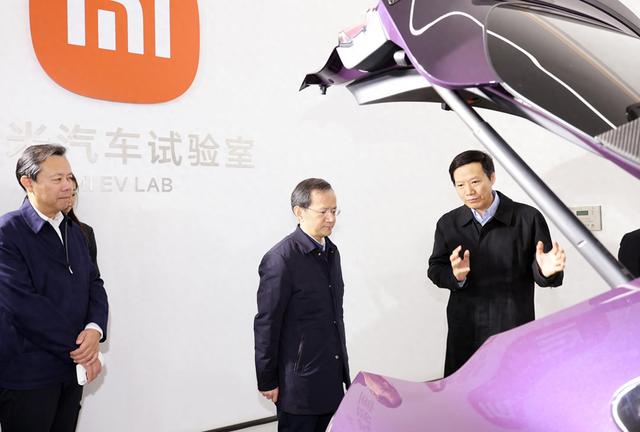
推动科技创新和产业创新深度融合!殷勇围绕贯彻党的二十届四中全会精神到企业走访调研
Bei Jing Ri Bao Ke Hu Duan· 2025-11-19 23:41
Group 1 - The Beijing government emphasizes the importance of high-quality development and the integration of technology and industry innovation to foster a modern industrial system [1][4] - Meituan is recognized as a key platform enterprise in Beijing's service sector, with a focus on expanding new consumption scenarios and enhancing AI applications to improve consumer offerings [1][3] - Xiaomi is highlighted as a leading technology innovation company in Beijing, with a commitment to user-driven innovation and significant contributions to the high-quality development of the new energy vehicle industry [3][4] Group 2 - The government aims to stimulate the vitality of various business entities and support the growth of the private economy to enhance development momentum [4] - There is a focus on creating a world-class business environment and providing efficient services to enterprises, encouraging increased R&D investment and innovation [4] - The government plans to address the practical difficulties faced by private enterprises through targeted support and service mechanisms [4]

钛深科技:以触觉感知世界 掘金电池检测与机器人新蓝海
Zhong Guo Zheng Quan Bao· 2025-11-19 21:32
Core Viewpoint - The article highlights the advancements and strategic direction of Titanium Deep Technology (钛深科技), focusing on its innovative flexible tactile sensing technology and its applications in battery safety and humanoid robotics. Group 1: Technology and Innovation - Titanium Deep Technology's flexible tactile sensor technology, known as "离电触觉传感技术," addresses the limitations of traditional pressure sensors by utilizing a pressure sensing principle that allows for temperature and pressure detection simultaneously [2][3] - The company has developed a comprehensive capability from material formulation to process equipment and solution design, enabling low-cost and large-scale applications without relying on traditional semiconductor processes [2][3] - The technology is positioned as a next-generation sensing core, with characteristics such as high sensitivity, transparency, flexibility, high density, and wide applicability [2] Group 2: Market Applications - The company has successfully implemented its technology in critical power supply systems for large-scale events, providing a safety monitoring system that can detect minute changes in battery conditions, offering early warnings for potential failures [3][4] - Titanium Deep Technology is also exploring applications in humanoid robotics, where its sensors can enhance the precision of robotic interactions with the physical world, addressing the need for tactile feedback in delicate tasks [4][5] Group 3: Competitive Advantage - The company claims to have no direct competitors, as it has transitioned from merely selling detection hardware to becoming a data service provider for battery health management [5] - The cost advantages of flexible sensing technology are particularly significant in large-area and high-density applications, making it a more viable option compared to traditional visual solutions [5] - The company emphasizes a strategy of ensuring independent survival before planning capital market pathways, focusing on scaling production to solidify its market position [5] Group 4: Investment and Collaboration - Recently, A-share listed company Fulaient (福莱蒽特) invested 25 million yuan in Titanium Deep Technology, acquiring a 6.1106% stake, indicating confidence in the potential of flexible sensing technology [5][6] - The collaboration aims to leverage Fulaient's expertise in material synthesis to develop new types of flexible sensing polymer composite materials, enhancing the application of Titanium Deep Technology's sensors in various fields [6]

市十七届人大常委会第二十二次会议召开
Nan Jing Ri Bao· 2025-11-19 01:53
Core Points - The meeting of the Nanjing Municipal People's Congress Standing Committee was held on November 18, where key personnel appointments were discussed [1] - Li Zhongjun was appointed as the Vice Mayor of Nanjing and will act as the Mayor, with strong support from the central and provincial leadership [2][4] - Li Zhongjun emphasized the importance of Nanjing's role in national and provincial development, expressing a commitment to high-quality development and public welfare [3] Personnel Appointments - Li Zhongjun was officially appointed as Vice Mayor and will serve as acting Mayor of Nanjing [4] - Zhang Yun was also appointed as Vice Mayor during the meeting [4] - The meeting included a constitutional oath ceremony for the newly appointed officials [4]
范波在昆山宣讲党的二十届四中全会精神并调研
Su Zhou Ri Bao· 2025-11-19 00:33
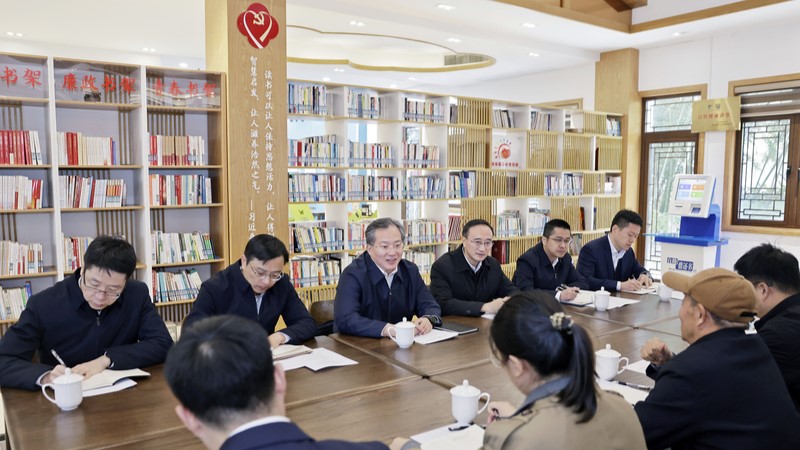
昨天(11月18日),苏州市委书记范波在昆山宣讲党的二十届四中全会精神并调研。他强调,要把学习宣传 贯彻全会精神作为当前和今后一个时期的重大政治任务,深入贯彻落实习近平总书记对江苏、苏州工作重要讲话 重要指示精神,按照省委工作要求,坚持守正创新,不懈努力、接续奋斗,以实绩实效推动全会精神落地生根, 为苏州更好服务全省挑大梁作出更大贡献。 世界500强企业仁宝集团扎根昆山发展近30年。范波了解企业发展历程,询问产业发展建议,勉励企业抢抓人 工智能发展机遇,积极布局新赛道,提升核心竞争力。三一重机是全球挖掘机销冠企业。范波深入企业智能工 厂,询问产品性能、市场拓展等情况,希望加强自主创新,推出更多爆款产品。来到立臻电子公司,范波了解企 业订单变化、数智化转型等情况。得知企业发展势头良好,他十分高兴,鼓励企业再接再厉,乘势而上。范波表 示,全会提出,要"推动科技创新和产业创新深度融合""充分激发各类经营主体活力",这将为企业发展带来新机 遇。要深入开展服务企业专项行动,坚持企业需求导向,积极营造一流营商环境,帮助解决实际问题,助力企业 增订单、拓市场,实现更好发展。 来到金华村,范波察看村容村貌,与基层干部群众一起 ...

广东推动科技创新和产业创新深度融合 建设具有国际竞争力的现代化产业体系
Nan Fang Ri Bao Wang Luo Ban· 2025-11-14 07:56
Group 1: Technological Innovations - A remote "micron-level surgery" was successfully performed simultaneously in Guangzhou and Urumqi using a domestically developed 5G ophthalmic surgical robot, marking a significant advancement in remote high-precision ophthalmic surgery in China [1] - The Guangdong-Hong Kong-Macao Greater Bay Area has established itself as an international technology innovation center, with significant achievements in integrating technological and industrial innovation [1][2] - The "Shenzhen-Hong Kong-Guangzhou" innovation cluster has surpassed the "Tokyo-Yokohama" cluster, ranking first globally in innovation capabilities [2] Group 2: Industrial Strength - Guangdong is the largest industrial province in China, accounting for approximately 1/8 of the national industrial scale, with 15 industries ranked first in the country [3] - The province has nine trillion-yuan industrial clusters, with 40% of its GDP derived from 20 strategic industrial clusters [3] - The first mass production line for flying cars has been established in Guangzhou, marking a global first in the mass production of flying vehicles [3] Group 3: Efficient Transformation Mechanisms - Guangdong's innovation ecosystem is supported by an efficient results transformation mechanism, exemplified by the collaboration between local companies and universities to enhance product testing accuracy [4] - Approximately 90% of research institutions, researchers, and funding for R&D in Guangdong come from enterprises, creating a solid foundation for technological industrialization [5] Group 4: Space and Aerospace Development - The successful launch of the "Guangzhou-made" rocket demonstrates Guangdong's capabilities in the commercial aerospace sector, with plans to reach a scale of 300 billion yuan in related industries by 2026 [6][7] - The establishment of a base in Nansha for rocket assembly and testing aims to enhance production efficiency and attract upstream and downstream enterprises [7] Group 5: Research and Development - A new discovery by researchers in Guangdong regarding the bio-mineralization of rare earth elements in natural plants provides a sustainable path for the utilization of these critical resources [8] - The collaborative environment in Guangzhou allows for rapid prototyping and product development, enhancing the competitiveness of local manufacturing [9] Group 6: Cross-Border Innovation - The Hengqin Guangdong-Macao Deep Cooperation Zone achieved a GDP of 26.313 billion yuan in the first half of the year, showcasing the vitality of the "Macao R&D + Hengqin Transformation" model [10] - The integration of research and transformation in the Greater Bay Area is driving continuous innovation and development [10]
苏州市政府召开创新工作例会
Su Zhou Ri Bao· 2025-11-12 22:39
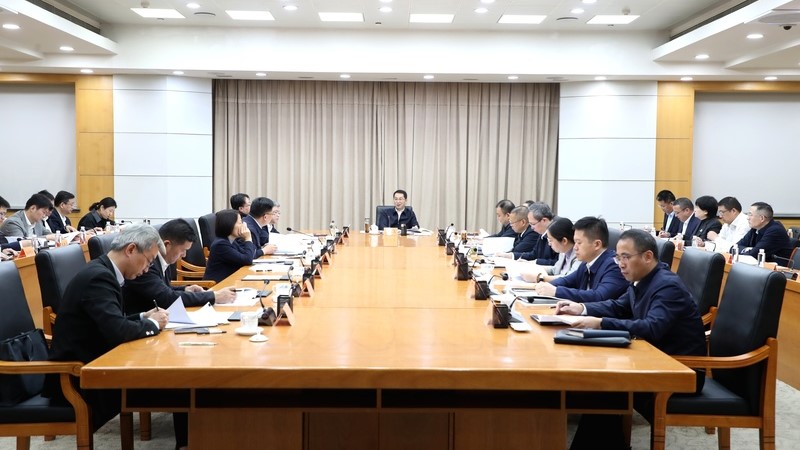
昨天(11月12日),市委副书记、市长吴庆文主持召开创新工作例会,听取全市创新工作情况汇报,研究近 期重点工作,强调要深入学习贯彻党的二十届四中全会精神,加力实施创新驱动发展战略,着力推动科技创新和 产业创新深度融合,不断为发展新质生产力、实现高质量发展注入更强动力。 会议听取了全市科技创新重点指标进展情况和下一步工作打算的汇报。会议指出,要坚持落实好各项惠企政 策,推动企业持续增加研发投入,助力企业提质增效、增强自主创新能力。 会议听取了苏州市独角兽企业培育发展情况的汇报。会议强调,要加强对硬科技、前沿科技赛道企业的走访 调查,精准对接企业需求,落实"一对一"服务,切实提高政策实效性,助推企业增强综合竞争力。 会议听取了支持推动苏州市具身智能机器人综合创新中心发展情况的汇报。会议指出,要夯实发展基础,丰 富完善训练场景等功能,着力打造全国一流的具身智能机器人创新策源地、应用示范高地和供应链中心,助力优 质企业拓展市场;要多措并举策划举办各类展览展示展销活动,千方百计扩大行业影响力;要抓牢产业风口,充 分发挥招商展示窗口作用,推动相关产业集聚,切实赋能具身智能机器人产业高质量发展。 会议听取了《苏州市进一步加 ...
“感知无锡”调研行 | 太湖边的创新哲学
Xin Hua Cai Jing· 2025-11-12 07:13
出土无锡新吴区鸿山邱承墩战国贵族墓的玉飞凤,方寸之间尽显三千多年前先民的极致雕琢,无声诉说 着这座城市"精工造物、开放包容"的创新基因。三千年后,这片土地上的创新浪潮奔涌不息,高潮迭 起:高新技术企业突破7300家,国家专精特新"小巨人"企业数量全省第二,全球灯塔工厂增至4家,营 收超2000亿元产业集群增至7个,未来产业规模迈上千亿元台阶。 无锡的转型轨迹,恰似一部城市的"创新启示录":科创融合不是技术的简单叠加,而是城市文化基因在 现代产业文明中的创造性转化。太湖边上的创新叙事,打开了科技创新和产业创新深度融合的三重叙 事: 工匠精神:从"玉器雕琢"到"科技打磨" 江苏微导纳米科技股份有限公司则在原子级制造赛道加速跑,推出多个以原子层沉积(ALD)技术为核 心的系列产品,且与国内多家厂商建立了深度合作关系,相关产品涵盖了逻辑、存储、先进封装、化合 物半导体等诸多细分应用领域,多项设备关键指标达到国际先进水平。 无锡企业的工匠精神,本质是将传统手工业中"对品质的极致追求"注入现代科技。这种对科技的极致打 磨,托起了无锡的科创能力的不断进化。来自无锡市科技局的数据显示,无锡市2024年科技进步贡献率 达70. ...
创投新风向!衢州产业资本招商大会召开
2 1 Shi Ji Jing Ji Bao Dao· 2025-11-11 12:09
Core Viewpoint - The 2025 Quzhou Industrial Capital Investment Conference and Fluorine-based New Materials Industry High-Quality Development Conference aims to explore new investment opportunities and models in the context of technological transformation, emphasizing the deep integration of five chains for collaborative development [1][2]. Group 1: Industrial Development - Quzhou has achieved systematic restructuring of its industrial, enterprise, and power structures through the deep integration of five chains, transitioning from basic chemicals to new materials and extending from upstream materials to downstream finished products [2]. - The city has introduced 35 projects with investments exceeding 5 billion yuan during the 14th Five-Year Plan, including 15 projects worth over 10 billion yuan [2]. - By the end of this year, the new materials industry is expected to become Quzhou's first trillion-yuan industrial chain, positioning the city as "China's Fluorine Valley" [2]. Group 2: Expert Insights - Jiang Xiaojun highlighted the new requirements for the integration of technology and industry in the 14th Five-Year Plan, emphasizing that enterprises are becoming the main body of innovation in the digital age [2][3]. - Xu Xiaolan pointed out that humanoid robots represent a typical case of the integration of technological and industrial innovation, which will be a key driver for upgrading the manufacturing industry [3]. Group 3: Investment and Capital - Quzhou's industrial fund cluster has expanded from 15 billion yuan to over 100 billion yuan, leveraging nearly 150 billion yuan of social capital [7]. - The city aims to create a favorable business environment to attract more quality capital and facilitate the interaction between industry and capital [8]. - The "China Fluorine Valley" initiative was launched during the conference, marking a new chapter for the high-quality development of the fluorochemical industry [5][6]. Group 4: AI and Material Science - AI is seen as a driving force for the transformation of material science, with discussions indicating that the industry is entering a "no man's land" of research and development [11]. - Experts believe that the integration of AI and materials will accelerate breakthroughs in new materials, particularly in biomedicine and high-performance materials [11]. - The next five years are anticipated to be a pivotal period for "AI for Science," leading to significant advancements in various fields [12]. Group 5: Robotics Industry - The robotics industry is at a critical juncture, with advancements in AI and humanoid robots expected to drive significant growth [17]. - Quzhou is positioned to capitalize on opportunities in the robotics sector, particularly in humanoid and flexible robots [17][18]. - Investment opportunities are emerging in mobile equipment and facilities, especially as new companies integrate AI concepts into their operations [18].
工信部:到2027年底高水平中试平台力量进一步壮大 现代化中试平台体系基本建立
智通财经网· 2025-11-11 06:56
Core Viewpoint - The Ministry of Industry and Information Technology (MIIT) of China has issued a notice to accelerate the systematic layout and high-level construction of manufacturing pilot platforms, emphasizing the importance of these platforms in connecting innovation, technology, and industry chains to support technological and industrial innovation by 2027 [1][3]. Group 1: Overall Requirements - The initiative is guided by Xi Jinping's thoughts and aims to implement the spirit of the 20th National Congress of the Communist Party of China, focusing on new industrialization and adhering to principles such as scientific layout and standard guidance [3]. - By the end of 2027, the goal is to strengthen high-level pilot platforms and establish a modern pilot platform system with a nationwide service network involving multiple participants and fields [3][4]. Group 2: Main Tasks - The strategy includes strengthening, activating, and supplementing pilot platforms, with a focus on public service attributes and systematic development paths [4]. - A tiered approach will be taken to enhance pilot platforms based on strategic positioning, technical advantages, and future potential, progressing from reserve platforms to key cultivation platforms and ultimately to national-level platforms [4][5]. - There will be targeted support for underperforming pilot platforms to enhance their capabilities and competitiveness through various initiatives, including strategic restructuring and resource optimization [5]. - New pilot platforms will be established in key sectors such as artificial intelligence, quantum technology, and clean energy, with a focus on areas critical to future development and industrial safety [5][6]. Group 3: Work Arrangements - Local industrial and information departments are required to mobilize eligible pilot platforms to submit applications by November 28, with a deadline for uploading the summary of reserve platforms by December 15 [7]. - Regular updates on the status of reserve platforms and their activation will be required every June and December [7]. Group 4: Work Requirements - Emphasis is placed on establishing a stable investment mechanism and efficient support systems to enhance the effectiveness of pilot platforms and improve regional and industry capabilities [8]. - The development of pilot platforms should align with existing technological innovation bases and avoid redundant construction and competition [8].
国务院部署加快场景培育和开放,释放哪些信号?
第一财经· 2025-11-11 06:46
Core Viewpoint - The article discusses the recent implementation of the "Implementation Opinions" by the State Council, which aims to accelerate the cultivation and opening of application scenarios to promote large-scale application of new scenarios, thereby enhancing innovation and economic development [3][6]. Group 1: Key Principles and Objectives - The main objective of the "Implementation Opinions" is to leverage China's vast market and rich application scenarios to optimize the development environment for new industries and technologies, acting as a "testing ground" for new products and a "catalyst" for emerging industries [3][5]. - Six key principles are emphasized for the successful implementation of the opinions: innovation-driven, reform-oriented, localized adaptation, safety and order, systematic advancement, and integrated development [5][10]. Group 2: Policy Measures and Opportunities - The National Development and Reform Commission (NDRC) will support the construction of various application scenarios, including comprehensive major scenarios and high-value niche scenarios, to promote project-based and list-based application scenarios [6][9]. - The article highlights the importance of central enterprises in providing key infrastructure and industry data resources, which are crucial for scenario supply and innovation [8][9]. Group 3: Collaboration and Ecosystem Development - The NDRC encourages collaboration between central enterprises and various stakeholders, including private enterprises and research institutions, to co-build industrial ecosystems and enhance the supply of high-value scenarios [9][10]. - The article mentions that the NDRC will work with local governments to promote coordinated reforms related to market access and scenario development, ensuring a supportive institutional environment for cultivating new productive forces [10].