超级智能

Search documents
Meta电话会:"超级智能"到来前,继续激进投资基础设施,即便短期过剩也能解决
Hua Er Jie Jian Wen· 2025-10-30 03:58
Core Insights - Meta reported Q3 revenue of $51.24 billion, a 26% year-over-year increase, but net profit plummeted 83% to $2.71 billion due to a one-time non-cash tax expense of $15.93 billion [1][12] - CEO Mark Zuckerberg emphasized the company's strong core business and plans to significantly increase capital expenditures and total expenses by 2026 to establish a leading AI lab [1][4] - The company aims to build its own infrastructure and partner with third-party cloud service providers to meet increasing AI computing demands [3][4] Financial Performance - Q3 total revenue was $51.2 billion, a 26% increase, with advertising revenue also growing by 26% to $50.1 billion [9][10] - Total expenses for Q3 reached $30.7 billion, a 32% increase year-over-year, driven by legal costs, employee compensation, and infrastructure costs [10][11] - The company’s operating income was $20.5 billion, with an operating margin of 40% [11] User Engagement and Growth - Daily active users across Meta's family of apps exceeded 3.5 billion, with Instagram reaching 3 billion monthly active users [2][9] - Threads recently surpassed 150 million daily active users, showing strong growth potential [2] - Facebook's usage time increased by 5% year-over-year, while Instagram video usage time grew over 30% [5][9] AI Strategy and Investments - Meta is investing heavily in AI, with plans to significantly increase capital expenditures in 2026, targeting $70 billion to $72 billion [3][10] - The company is focused on developing AI-driven advertising tools, which have generated over $60 billion in annualized revenue [6][9] - Meta AI's user base has surpassed 1 billion monthly active users, with significant growth in media generation since the launch of the Vibes tool [6][15] Future Outlook - The company anticipates that its capital expenditures will grow significantly faster than in 2025, primarily due to infrastructure costs [10][11] - Meta is committed to enhancing its recommendation systems and expects to make substantial progress in long-term ranking innovations by 2026 [14][15] - The integration of advanced AI models is expected to drive further improvements in user engagement and advertising effectiveness [29]

李飞飞 vs 施密特:超级智能,3年之内?还是远未开始?
3 6 Ke· 2025-10-30 01:25
Core Insights - The discussion between Eric Schmidt and Fei-Fei Li highlights contrasting views on the timeline and nature of superintelligence, with Schmidt predicting its arrival within three years and Li questioning the feasibility of such advancements [2][4][47]. Group 1: Definition of Superintelligence - Schmidt defines superintelligence as a form of intelligence that surpasses the collective intelligence of all humans, referring to it as "aggregate-level intelligence" [6]. - Li challenges this notion by emphasizing the importance of creativity and the ability to make groundbreaking discoveries, questioning whether AI can achieve the same level of insight as historical figures like Newton or Einstein [8][12]. Group 2: AI's Capabilities - Both experts agree that current AI lacks the ability to make intuitive leaps or "aha" moments, which are essential for groundbreaking discoveries [15][17]. - AI is proficient in processing vast amounts of data but does not possess the capability for continuous reasoning or self-reflection, limiting its potential to innovate [12][15]. Group 3: Economic Implications of AI - The potential benefits of AI may not be evenly distributed, with Schmidt warning that wealth generated from AI advancements could concentrate among a few individuals or companies due to "network effects" [20][22]. - Li concurs that while AI can enhance efficiency, it does not inherently address issues of wealth distribution, emphasizing the need for proactive investment in talent and technology [22][27]. Group 4: Human Role in an AI-Driven Future - Schmidt envisions a collaborative future where humans and AI work together, suggesting that human creativity and curiosity will remain irreplaceable [31][32]. - Li stresses the importance of maintaining human agency and dignity, arguing that decisions should ultimately rest with humans, regardless of AI's capabilities [34][36]. Group 5: Future of AI Integration - Li is actively working on projects that integrate AI into real-world applications, such as creating interactive 3D environments for education and training [40][43]. - Both experts foresee a future where AI evolves from being a mere responder to becoming a builder and potentially a re-organizer of the physical world [45][46].
超级智能降临时间表公布:AI“边抢工作边创造机会”
Di Yi Cai Jing· 2025-10-29 13:51
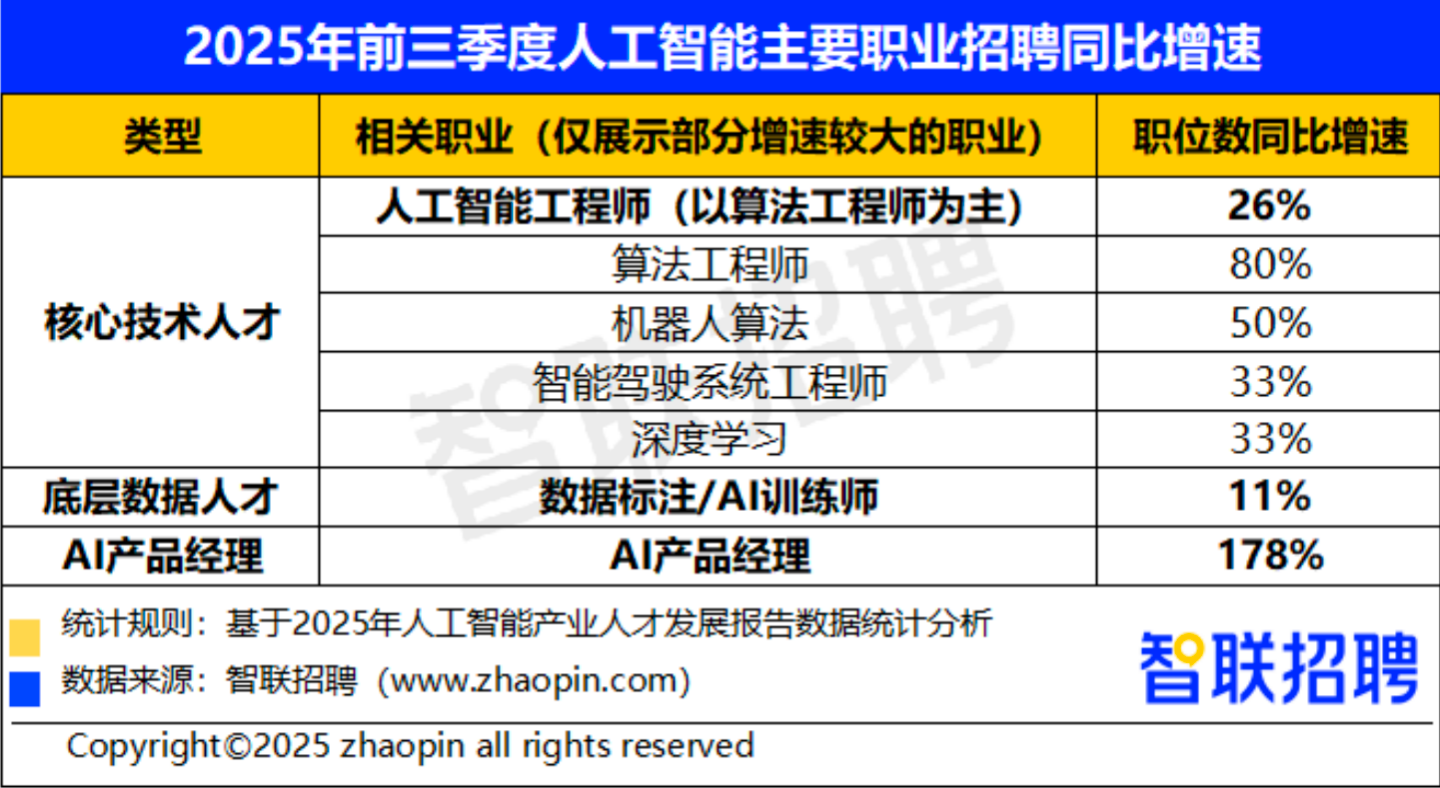
Group 1 - The simultaneous effects of job creation and replacement due to AI are becoming evident, with significant automation expected in the coming years, potentially leading to large-scale unemployment [1][9] - Experts warn that AI is showing a trend of "replacement" rather than "enhancement" of labor, posing risks particularly to developing countries that rely on labor advantages [1][2] - The rapid development and iteration of AI technology are driving the partial replacement of human labor, with significant advancements expected in AI capabilities by 2024 [3][4] Group 2 - The total addressable market (TAM) for AI agents is estimated at approximately 3.61 trillion yuan, with IT and finance sectors identified as key areas for breakthroughs [4] - AI agents are rapidly becoming a priority for companies, with mentions in earnings calls increasing tenfold since 2023, indicating a shift in corporate focus towards AI integration [4] - The job market for AI-related positions is experiencing growth, with a notable increase in recruitment and job seekers in the AI sector, reflecting a dual increase in supply and demand [10] Group 3 - The early stages of AI and agent technology are characterized by limited public awareness and adoption, with a significant portion of interest coming from technical professionals and enterprise users [6][7] - Challenges remain in the large-scale implementation of AI agents, particularly in complex enterprise environments where customization and security are critical [7] - The AI talent market is facing a shortage, with high demand for skilled professionals in technical, data, and product roles, as companies seek to integrate AI into their operations [9][10]

OpenAI最新发声!距离超级智能“可能不到十年”
第一财经· 2025-10-29 06:15
Core Insights - OpenAI has completed a capital restructuring, establishing a structure where a non-profit organization holds its for-profit business [2][6] - The restructuring aims to enhance OpenAI's operational efficiency and align its goals with long-term AI research objectives [4][6] Group 1: AI Research Goals - OpenAI has set a timeline for its internal research objectives, aiming to achieve a fully autonomous AI researcher by March 2028 [4] - The next immediate goal is to develop an AI research intern by September 2026, which is expected to significantly enhance the quality of models and accelerate researchers' work [4] - OpenAI believes that the development of superintelligent systems could occur within the next ten years, driven by advancements in deep learning [4] Group 2: Infrastructure Investments - OpenAI has disclosed its infrastructure investment, amounting to approximately $1.4 trillion, with a total commitment exceeding 30 gigawatts (GW) for infrastructure development [4] - A long-term goal includes establishing a factory capable of generating 1 GW of computing power weekly, with plans to reduce the cost per GW to around $20 billion over a five-year lifecycle [4] Group 3: Future Model Developments - OpenAI anticipates rapid advancements in its next-generation models within the coming months, although specific details about GPT-6 have not been disclosed [5] - The company aims to update its models more frequently to reflect ongoing developments and improvements in AI capabilities [5] Group 4: Organizational Structure and Financials - Following the restructuring, the non-profit organization is now called OpenAI Foundation, which holds approximately $130 billion in equity of its for-profit arm [6] - The for-profit entity is now designated as OpenAI Group PBC, a public benefit corporation, with Microsoft valuing its investment in OpenAI Group PBC at approximately $135 billion, representing a 27% stake [6] - OpenAI Foundation's first major commitment is a $25 billion investment in AI-assisted disease treatment research [6]

OpenAI最新发声!距离超级智能“可能不到十年”
Di Yi Cai Jing· 2025-10-29 05:43
Core Insights - OpenAI aims to achieve fully autonomous AI researchers by March 2028, with significant advancements expected in AI capabilities within the next decade [1][3] - The organization has completed a capital restructuring, establishing a non-profit foundation that holds a significant stake in its for-profit entity [4] - OpenAI plans to invest $25 billion in AI-assisted disease treatment research as part of its commitment to becoming the largest non-profit organization in history [5] Group 1: Research Goals and Timeline - OpenAI has set a timeline for its internal research objectives, targeting the completion of AI research interns by September 2026, which will enhance model quality and accelerate research efforts [1] - The organization believes that the development of superintelligent systems could occur within the next ten years, driven by advancements in deep learning [1] Group 2: Infrastructure and Investment - OpenAI has disclosed its infrastructure investment, amounting to approximately $1.4 trillion, with a total commitment exceeding 30 gigawatts (GW) for infrastructure development [1] - A long-term goal includes establishing a factory capable of generating 1 GW of computing power weekly, with plans to reduce the cost per GW to around $20 billion over five years [2] Group 3: Future Models and Innovations - OpenAI anticipates rapid advancements in its next-generation models in the coming months, although specific details about GPT-6 have not been disclosed [3] - The organization is focused on integrating various components to achieve impressive results, with expectations for significant AI capability leaps within a year [3] Group 4: Organizational Structure and Support - Following the restructuring, the non-profit entity is now known as OpenAI Foundation, which holds approximately $130 billion in equity of its for-profit arm, OpenAI Group PBC [4] - Microsoft supports the restructuring, with its investment in OpenAI Group PBC currently valued at around $135 billion, representing a 27% stake post-dilution [4]

OpenAI奥特曼:2026年AI将胜任研究助理 2028年前进化为合格研究员
Huan Qiu Wang Zi Xun· 2025-10-29 03:56
Core Insights - OpenAI's CEO Sam Altman revealed the company's latest technology roadmap, indicating that their deep learning systems are advancing at an "exponential speed" and are expected to handle tasks equivalent to an "intern research assistant" by September 2026, and evolve into a "qualified AI researcher" capable of independent interdisciplinary research by 2028 [1][3] Group 1 - The next-generation model prototype, internally codenamed "Omega-3," demonstrates significant breakthroughs in mathematical reasoning, cross-modal understanding, and autonomous experimental design [3] - Altman emphasized that AI is evolving from a mere tool to an independent researcher capable of formulating hypotheses, designing experiments, and validating results [3] - OpenAI's Chief Scientist Jakub Pachocki described this AI researcher as a system capable of autonomously completing large research projects [3] Group 2 - Pachocki stated that deep learning systems may achieve superintelligence within the next ten years, defining superintelligence as systems that outperform humans in numerous critical operations [3]

OpenAI公布超级智能路线图:模型明年有望重大飞跃,2028年实现全自动AI研究员,基建投资承诺1.4万亿
美股IPO· 2025-10-29 01:11
Core Insights - OpenAI has set two key milestones: achieving AI research interns by September 2026 and fully autonomous AI researchers by March 2028, with the expectation that scientific research will be fully automated by 2028 [1][3][6] - The company has committed to building over 30 GW of infrastructure, corresponding to an investment of approximately $1.4 trillion, which is seen as just the starting point for future expansions [1][9][10] - OpenAI is transitioning from an AI assistant to a platform service provider, aiming for external developers to create more value on its platform than the company itself [3][11] Infrastructure Expansion - OpenAI plans to invest approximately $1.4 trillion in infrastructure, with a goal of creating 1 GW of computing power weekly [9][10] - The company is collaborating with major partners in the chip, data center, energy, and manufacturing sectors, including AMD, Google, and Microsoft [9][10] - The aim is to reduce the cost of each GW to about $20 billion over a five-year lifecycle, requiring significant innovation and collaboration [10] Research and Development - OpenAI is optimistic about achieving significant advancements in model capabilities by September 2026, with expectations of major progress in the coming months and years [4][5][6] - The company is focusing on scaling deep learning training and believes that the timeline to achieve superintelligence may be less than ten years [5][6] - A structured five-layer safety framework has been proposed to address safety concerns as AI capabilities advance [7] Organizational Structure - OpenAI has restructured its organization, with a non-profit foundation at the top controlling the public benefit corporation, OpenAI Group, which holds about 26% of the shares initially [14] - The foundation aims to maximize societal welfare through AI, with initial focuses on using AI to help cure diseases and building resilience against AI-related risks [14][15] Product Strategy - OpenAI is evolving its product strategy from AI assistants to an "AI cloud" platform where others can build applications and services [11][12] - The company emphasizes user freedom and privacy, aiming to provide users with significant control and customization capabilities [11][12] - A hierarchical architecture is being developed, with a focus on hardware, model training, and an ecosystem for applications and services [12][13]
扎克伯格“火线换将”!Meta元宇宙大神临危受命
Sou Hu Cai Jing· 2025-10-28 07:45
Core Insights - Meta is undergoing a significant leadership change in its AI division, appointing Vishal Shah as the new VP of AI Products, following the recent layoff of 600 employees in the AI team [1][5][12] - The urgency of this change is highlighted by the poor performance of Meta's newly launched AI video application, Vibes, which struggled against OpenAI's Sora [1][7][10] - Shah's primary mission is to bridge the gap between technology and application, ensuring that Meta's AI capabilities translate into user value [1][4][10] Leadership Changes - Vishal Shah, a veteran with a decade of experience at Meta, previously led Instagram and was instrumental in its growth to over one billion users [3][4] - Shah will report directly to Nat Friedman, who oversees the AI product team, and will focus on product management and integration strategy [3][4] - The restructuring reflects a shift in Meta's strategy, emphasizing the need to become an AI company rather than just having an AI team [10][12] Product Focus - Shah's role will involve integrating Meta's AI technologies into various applications and hardware, including smart glasses, which are crucial to Meta's "super intelligence" strategy [4][10] - The AI team will focus on flagship products like Meta AI, while application teams for Instagram and WhatsApp will create their own AI experiences based on foundational models [4][10] - The rushed launch of Vibes was a response to competition from OpenAI's Sora, leading to a partnership with Midjourney to enhance Vibes' capabilities [7][8] Strategic Shift - Meta's recent internal turmoil and the shift in focus from the metaverse to AI indicate a strategic pivot in response to market challenges and technological hurdles [12][13] - Despite the shift, Meta's CTO emphasized that the metaverse remains a strategic priority for the company [12][13] - The overarching goal is to develop an AI model that surpasses human intelligence, providing personalized services to billions of users [13]

芯原股份20251027
2025-10-27 15:22
Summary of Conference Call Notes Company Overview - **Company**: 新元股份 (Xinyuan Co., Ltd.) - **Industry**: Semiconductor and AI Chip Design Key Financial Performance - **Q3 2025 Revenue**: 12.81 billion CNY, a historical high, with a quarter-on-quarter increase of 119.26% and a year-on-year increase of 78.38% [2][5] - **Total Revenue for First Three Quarters**: 22.55 billion CNY, indicating strong growth momentum [2] - **New Orders**: 15.93 billion CNY in Q3 2025, a year-on-year increase of 145.8%, with AI computing-related orders accounting for approximately 65% [4] Order Backlog and Business Model - **Order Backlog**: 32.86 billion CNY at the end of Q3, maintaining high levels for eight consecutive quarters [2][4] - **Business Model**: Focus on semiconductor IP licensing and custom chip design services, helping clients reduce R&D and operational costs [6] - **Revenue Composition**: One-stop chip customization services account for nearly 90% of the backlog, with system manufacturers contributing 83.52% of orders [4][6] Profitability and Margins - **Gross Margins**: - IP licensing service gross margin: 90% - One-stop chip customization service gross margin: approximately 20% - Overall gross margin: 34% [2][11] - **R&D Investment**: Despite a decrease in R&D investment ratio by 9.41 percentage points, the company maintains high profitability due to the high gross margin of its IP business [11] Technological Advancements - **Core Processor IP**: Six categories of core processors, with GPU, NPU, and VPU contributing 70% of revenue [8] - **Process Node Contribution**: - 28nm and below contribute 94% of revenue - 14nm and below contribute 81% of revenue [8] - **Data Processing Revenue**: Increased to 33.14% of total revenue, with a year-on-year growth of 10.36 percentage points [9] Market Trends and Future Outlook - **AI Chip Market**: Expected to see over 70% of chips related to AI by 2035, with significant growth in edge computing [3][17] - **Product Development**: 112 self-developed projects have achieved mass production, with 47 projects in the NRE stage, indicating ongoing revenue growth potential [9] Global Presence and Workforce - **Employee Composition**: Over 2000 employees globally, with 89% in R&D and 88% holding master's degrees or higher [7] - **Sales Distribution**: 32% of sales from overseas markets, 68% from domestic markets [7] Competitive Landscape - **AI NPU Performance**: The new Xiaomi 3nm chip features a GAA architecture with AI NPU performance reaching 40 TOPS, surpassing Microsoft's AI PC standards [12] Additional Insights - **R&D Focus**: Continuous high investment in R&D to build competitive barriers and ensure long-term growth [10] - **Employee Development**: Emphasis on comprehensive talent recruitment and training, with a focus on skills relevant to AI and new technologies [32]

GPT-5.1曝光挽差评?救场背后,OpenAI 员工痛批Meta系的人正在“搞垮”公司!
AI前线· 2025-10-27 07:29
Core Insights - The article discusses the emergence of a new model, GPT-5.1 mini, which has been mentioned in OpenAI's GitHub repository, indicating ongoing developments in their AI models [2][3] - There are mixed reviews regarding the performance of GPT-5 mini, with some users reporting it underperforms compared to previous versions like GPT-4.1 [6][7][8] - Concerns are raised about OpenAI's shift towards prioritizing user engagement metrics, drawing parallels to Meta's strategies, which has led to internal dissatisfaction among employees [15][16][19] Model Development - GPT-5.1 mini is believed to be a lightweight version of GPT-5, designed for lower latency and cost while maintaining similar instruction tracking and safety features [6] - Developers have noted that GPT-5 mini has been tested and reportedly performs better than the current GPT-5 mini in certain tasks [4] - Despite its intended advantages, users have criticized GPT-5 mini for its speed and overall performance, with some stating it is slower and less effective than GPT-4.1 [7][8] User Feedback - Users have expressed disappointment with GPT-5 mini, citing issues such as slow response times and inadequate reasoning capabilities [8][9][13] - Some developers have found GPT-5 mini effective for specific tasks, but overall sentiment leans towards dissatisfaction compared to earlier models [8][14] - The article highlights a divide in user experiences, with some praising the model's performance in coding tasks while others find it lacking [13][14] Company Culture and Strategy - OpenAI employees are increasingly concerned about the company's direction, particularly with the influx of former Meta employees and the potential shift towards a more commercialized approach [16][19] - There is a growing anxiety among staff regarding the emphasis on user engagement metrics as key performance indicators, which some believe detracts from product quality [15][19][23] - The article notes that OpenAI's leadership has attempted to reassure employees about maintaining a focus on quality, despite the push for growth and user engagement [20][21][23]