食品安全

Search documents
抽检五个,两个不合格!桃李面包因菌落总数超标道歉
Guo Ji Jin Rong Bao· 2025-07-30 15:10
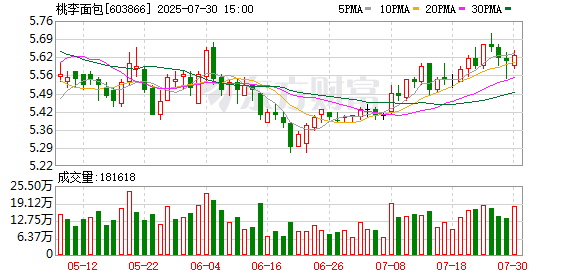
Core Viewpoint - The well-known bread brand, Taoli, has once again been found to have non-compliant products, leading to an apology to consumers and a recall of the affected batch [2][7]. Group 1: Product Quality Issues - Taoli's Taian factory produced a batch of "Chunru Sliced Bread" that failed a national quality inspection, with a total of 498 bags produced, of which 21 were sold online, including 16 that were tested [2][5]. - The inspection revealed that the total bacterial count exceeded the national food safety standards, with two out of five samples failing the test [4][5]. - The specific bacterial counts were recorded as <10 CFU/g, 40 CFU/g, <10 CFU/g, 1.7×10 CFU/g, and 1.1×10 CFU/g, with the maximum acceptable limit being 10 CFU/g [5][6]. Group 2: Company Response and Actions - Following the notification of the non-compliance, Taoli's Taian factory conducted an immediate investigation and implemented corrective measures, including recalling the affected batch and enhancing quality control during the delivery process [7]. - The company has increased the frequency of third-party inspections, with 46 batches of similar products tested since the incident, all passing the inspections [7]. Group 3: Historical Context and Financial Performance - This is not the first food safety issue for Taoli, as previous incidents include a case in 2022 where a batch of pure cake was found to contain foreign matter [11][12]. - Financially, Taoli has faced significant pressure, with a reported revenue of 6.087 billion yuan in 2024, a year-on-year decline of 9.93%, and a net profit of 522 million yuan, also down 9.05% [13]. - The company's performance has continued to decline into 2025, with a first-quarter revenue drop of 14.2% and a profit decrease of 27%, attributed to poor sales in key markets [13].


美团浣熊食堂:绝不自营,绝不与商家竞争
Jing Ji Guan Cha Wang· 2025-07-30 12:03
Core Insights - The article discusses the launch and performance of the "Raccoon Canteen" brand by Meituan, highlighting its focus on food safety and transparency in the restaurant industry [2] Group 1: Brand Performance - Since the official launch of the "Raccoon Canteen" brand on July 1, 2024, keyword search volume has increased by over 40 times compared to June [2] - Overall exposure for Raccoon Canteen merchants has risen by 164%, and order volume has increased by 60% [2] Group 2: Strategic Goals - Meituan aims to invigorate the restaurant sector by enhancing food safety transparency through initiatives like live streaming of kitchens and food safety diaries [2] - The company emphasizes its role as a supportive platform for merchants, ensuring that investments in food safety yield returns in terms of increased orders [2] Group 3: Future Investments - Meituan plans to invest 100 billion yuan in the restaurant industry over the next three years, focusing on hardware subsidies and traffic support [2] - The company aims to expand the "Bright Kitchen" live streaming initiative to 200,000 stores nationwide within the year [2]

一酒企在啤酒中添加类似“伟哥”物质
盐财经· 2025-07-30 11:09
Core Viewpoint - The article highlights significant food safety violations in China, focusing on two major cases involving illegal additives in food products and the regulatory actions taken against the responsible companies [2][3]. Group 1: Case Summaries - The Chongqing Muni Brolang Brewery was found to have illegally added "O-Propyl Vardenafil," a substance similar to the prescription drug Viagra, to its beer, leading to health complaints from consumers. The company sold 67 boxes of the contaminated beer and faced a fine of 150,000 yuan [2]. - In the Beijing Haidian case, a product sold through live streaming, "Light Qu Xian Magic Taro Herbal Vegetable Tablets," was found to contain the banned diuretic "Bumetanide." The product was sold through 15 live streaming channels and involved a criminal network that included 40 suspects, with the total amount involved exceeding 50 million yuan [3]. Group 2: Regulatory Actions - In the first half of the year, the market regulatory system conducted 2.639 million food safety inspections, resulting in 69,000 batches of non-compliant products being removed from the market. A total of 181,000 food safety violations were investigated, leading to fines totaling 740 million yuan and 653 cases being referred to judicial authorities [4].
麻六记两批次产品受细菌污染被召回!当地市场监管局介入调查
Nan Fang Du Shi Bao· 2025-07-30 08:52
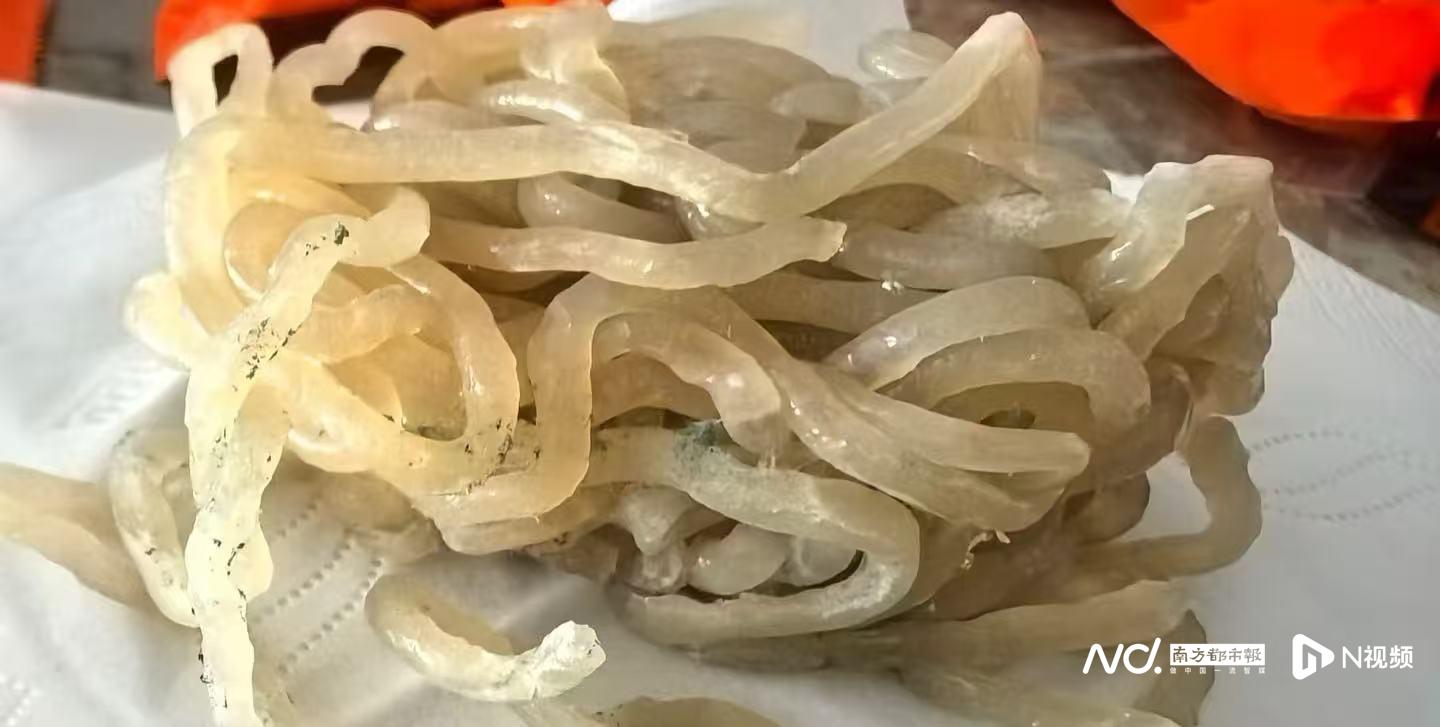
近日,麻六记酸辣粉部分产品受环境细菌污染出现发霉、遭会员制超市Costco(即"开市客")所有门店下架引发较大关注。7月27日,麻六记酸辣粉代工商 四川白家阿宽食品产业股份有限公司(下称"阿宽食品")最先发布道歉声明,7月28日下午,麻六记也道歉了。两家公司均承认,麻六记酸辣粉两批次产品 存在问题,已全面下架,启动召回。 阿宽食品注册地为成都龙泉驿区,7月30日,成都龙泉驿区市场监督管理局告诉南都湾财社记者,市场监督局已经知悉此事,目前已经介入调查,尚未有初 步的调查情况可披露。麻六记关联公司北京食通达科技发展有限公司注册地在北京密云区,南都湾财社记者向北京市密云区市场监督管理局了解情况,相关 工作人员表示,需要进一步了解情况。 南都湾财社此前曾报道,深圳、上海、宁波等地的消费者陆续在社交平台发帖投诉,在开市客买到了发霉的麻六记酸辣粉。多位消费者向南都湾财社记者表 示此事属实,且线下门店已经退款,进一步的补偿赔偿还在商讨。根据消费者提供的图片,麻六记酸辣粉的粉饼疑均似有霉斑的不明物质,有消费者称闻起 来"有一股刺鼻的味道"。 7月25日,开市客方面向南都湾财社记者确认,开市客上海、深圳、苏州、杭州六地7家门店 ...
在啤酒添加“伟哥类似物”酒企,子公司近日刚注销
Zhong Guo Xin Wen Wang· 2025-07-30 06:33
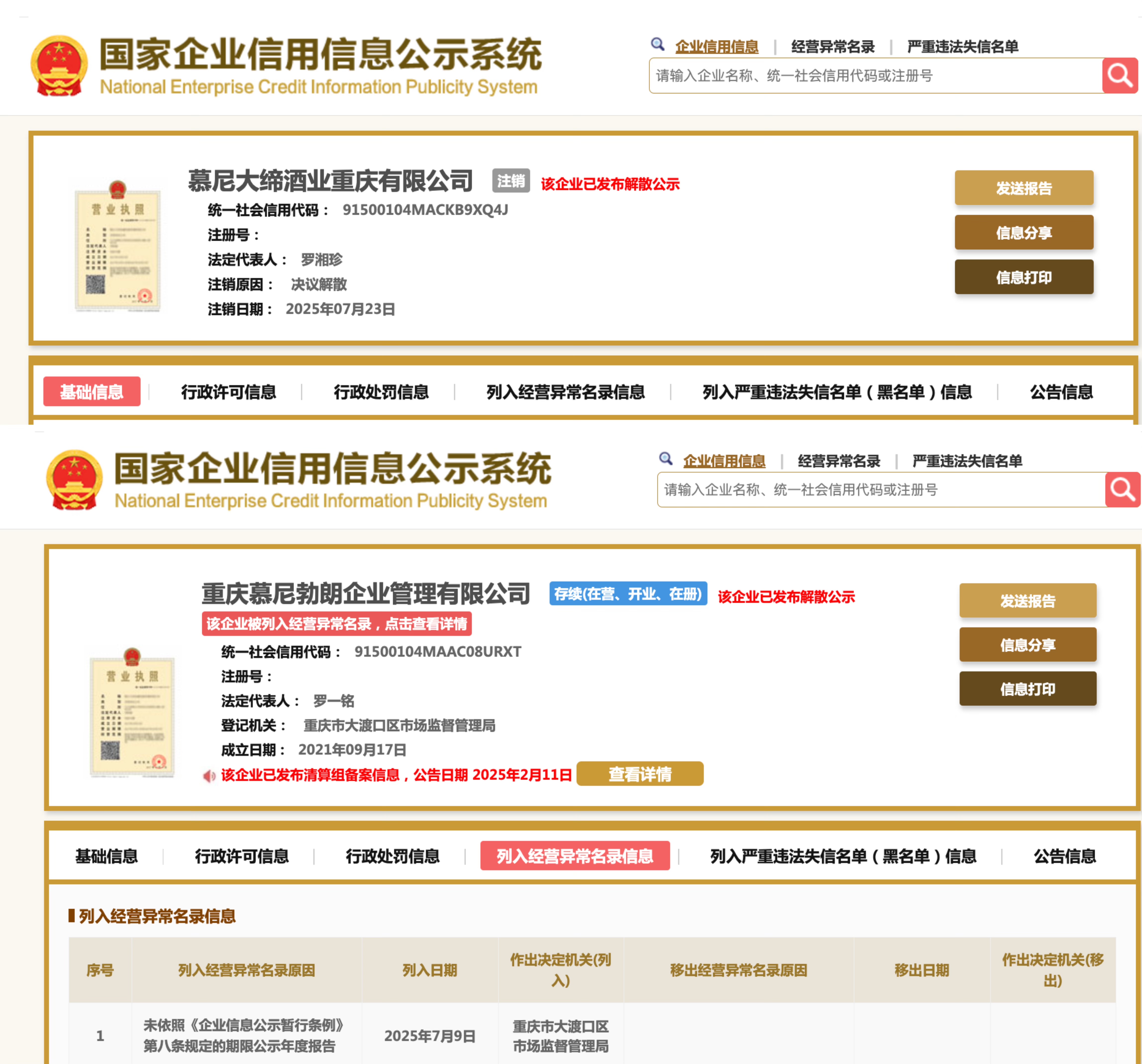
Group 1 - The core issue involves a food safety violation by Chongqing Munibro Wine Industry Co., Ltd., which illegally added a harmful substance, "O-Propyl Vardenafil," to its beer product [1] - The company sold 67 boxes of the contaminated beer, "Muni Emperor Gold Peptide Original Beer," leading to consumer complaints of discomfort after consumption [1] - The regulatory authority imposed a fine of 150,000 RMB and confiscated the illegal products, while also referring the case for potential criminal prosecution [1] Group 2 - Chongqing Munibro Wine Industry Co., Ltd. was established in May 2020 with a registered capital of 10 million RMB, and its legal representative is Luo Xiangzhen [1] - The company has invested in two other firms: Chongqing Muni Diti Wine Industry Co., Ltd. (70% stake) and Chongqing Munibro Enterprise Management Co., Ltd. (50% stake) [1] - Chongqing Muni Diti Wine Industry Co., Ltd. was recently dissolved as of July 23, 2023, due to a resolution for dissolution [9]
酒企在啤酒中添加类似“伟哥”物质,被追究刑事责任
Qi Lu Wan Bao· 2025-07-30 03:49
Core Viewpoint - The market regulatory authorities have intensified their enforcement actions against food safety violations, resulting in significant penalties and legal actions against non-compliant companies [1] Group 1: Regulatory Actions - In the first half of the year, the regulatory system handled 181,000 food safety violation cases, imposing fines and confiscations totaling 740 million yuan [1] - The authorities have reported five typical cases of food safety violations, highlighting the ongoing commitment to consumer protection [1] Group 2: Case Summaries - **Case 1: Guangdong Zhanjiang "Water Shrimp" Incident** Four companies were found to have illegally added excessive phosphates to frozen shrimp products, resulting in fines totaling 7.4943 million yuan and the revocation of their food production licenses for five years [2] - **Case 2: Beijing Haidian "Toxic Candy" Incident** A product sold through live streaming was found to contain a banned diuretic, leading to the arrest of over 40 suspects and the closure of 15 live streaming channels, with the case involving over 50 million yuan [3] - **Case 3: Chongqing Munibro Beer Incident** A beer product was found to contain a harmful substance similar to a prescription drug, resulting in a fine of 150,000 yuan and the referral of the case to criminal authorities [4] - **Case 4: Zhejiang Shaoxing Sifang Food Co. Incident** The company was found to be producing vinegar that did not meet safety standards, with over 900 boxes of problematic vinegar seized and the case referred to criminal authorities [5] - **Case 5: Fujian Shishi Restaurant Incident** A restaurant was found to have illegally used borax in food products, leading to an investigation and referral to criminal authorities [7] Group 3: Industry Implications - The reported cases indicate a lack of legal awareness and responsibility among some food producers, emphasizing the need for stricter compliance with food safety regulations [6] - The market regulatory authorities are committed to enhancing enforcement measures, including joint law enforcement and credit penalties, to ensure food safety and protect consumers [6]

一批次醇熟切片面包抽检不合格,桃李面包致歉
Cai Jing Wang· 2025-07-30 03:28
Core Viewpoint - Recently, Taoli Bread (603866) issued an apology on its official website regarding non-compliance of its products during a sampling inspection by the State Administration for Market Regulation [1] Summary by Relevant Sections Product Quality Issue - The non-compliant product was the "Chunru Sliced Bread" produced at the Taian factory, with the production batch number 20240425SD1, produced on April 25, 2024, and with a shelf life until May 1, 2024 [1] - A total of 498 bags were produced in this batch, with 21 bags sold online, including 16 bags that were sampled for inspection [1] - The non-compliance was due to total bacterial count exceeding acceptable limits [1] Remedial Actions Taken - The company promptly cooperated with regulatory authorities to conduct inspections and investigations at the Taian factory [1] - A recall and compensation process was initiated for the affected batch of products [1] - Enhanced control measures were implemented for the logistics and delivery of online sales to prevent quality issues due to improper storage and transportation [1] - The frequency of third-party testing has been increased, with 46 batches of similar products sent for testing, all of which have passed [1] Commitment to Food Safety - The company acknowledges the importance of food safety to consumers and expresses deep apologies to its customers for the incident [1] - A commitment to reflect deeply on the situation and to strengthen production and logistics details has been made, ensuring that food safety is prioritized in future operations [1]
市场监管总局公布5起食品安全典型案例
Zhong Guo Jing Ji Wang· 2025-07-30 03:22
Core Viewpoint - The market regulatory authority reported that in the first half of the year, a total of 181,000 food safety violations were investigated, resulting in fines and confiscations amounting to 740 million yuan, with 653 cases referred to judicial authorities [1] Group 1: Case Summaries - Case 1: In March 2025, four frozen shrimp companies in Zhanjiang, Guangdong, were found to have illegally added phosphates to increase weight, leading to fines totaling 7.4943 million yuan and revocation of their food production licenses for five years [2] - Case 2: In September 2024, a series of complaints in Haidian, Beijing, revealed that a product sold through live streaming contained a banned diuretic, leading to the arrest of over 40 suspects and a case amount exceeding 50 million yuan [3] - Case 3: In September 2024, a consumer complaint in Chongqing led to the discovery of a beer containing a harmful substance similar to a prescription drug, resulting in a fine of 150,000 yuan and referral of the case for criminal prosecution [4] - Case 4: In March 2025, a company in Shaoxing, Zhejiang, was found to be producing vinegar that did not meet safety standards, with over 900 boxes of problematic vinegar confiscated and the case referred to law enforcement [5] - Case 5: In May 2025, a restaurant in Shishi, Fujian, was found to have illegally used borax in food products, leading to an investigation and referral for criminal responsibility [6] Group 2: Regulatory Insights - The regulatory authority emphasized the need for strict enforcement of food safety laws, highlighting the lack of legal awareness among some producers and the serious consequences of violating food safety regulations [6]
啤酒中加类似“伟哥”物质、水饺中使用硼砂……五起食品安全案例公布
Yang Shi Xin Wen· 2025-07-29 23:14
Core Viewpoint - The market regulatory authorities have intensified their enforcement actions against food safety violations, revealing significant illegal activities in the food industry and emphasizing the importance of compliance and consumer safety [1]. Summary by Relevant Sections Enforcement Actions - In the first half of the year, the regulatory system handled 181,000 food safety violation cases, imposing fines and confiscations totaling 740 million yuan, and referred 653 cases to judicial authorities [1]. Case Summaries - **Case 1: Guangdong Zhanjiang "Water Shrimp" Incident** - Four frozen shrimp companies were found to have illegally added excessive phosphates and falsely labeled their products as "zero additives," resulting in fines totaling 7.4943 million yuan and the revocation of their food production licenses for five years [2]. - **Case 2: Beijing Haidian "Toxic Candy" Incident** - A product sold through live streaming was found to contain a banned diuretic, leading to a criminal investigation that resulted in the arrest of over 40 suspects and the closure of 15 live streaming channels, with the case involving over 50 million yuan [3]. - **Case 3: Chongqing Munibro Brewery Illegal Additives** - A beer was found to contain a substance similar to a prescription drug, leading to a fine of 150,000 yuan and the referral of the case to criminal authorities [4]. - **Case 4: Zhejiang Shaoxing Sifang Food Co. Vinegar Incident** - The company was found to be using acetic acid to produce counterfeit vinegar, with over 900 boxes of non-compliant products seized, and the case has been referred to criminal authorities [5]. - **Case 5: Fujian Shishi Restaurant Borax Use** - A restaurant was found to have illegally used borax in food products, leading to an investigation and referral to criminal authorities [6]. Regulatory Emphasis - The regulatory body highlighted the need for food producers to adhere to legal standards and emphasized that violations will result in severe penalties, urging societal participation in monitoring food safety [1][6].
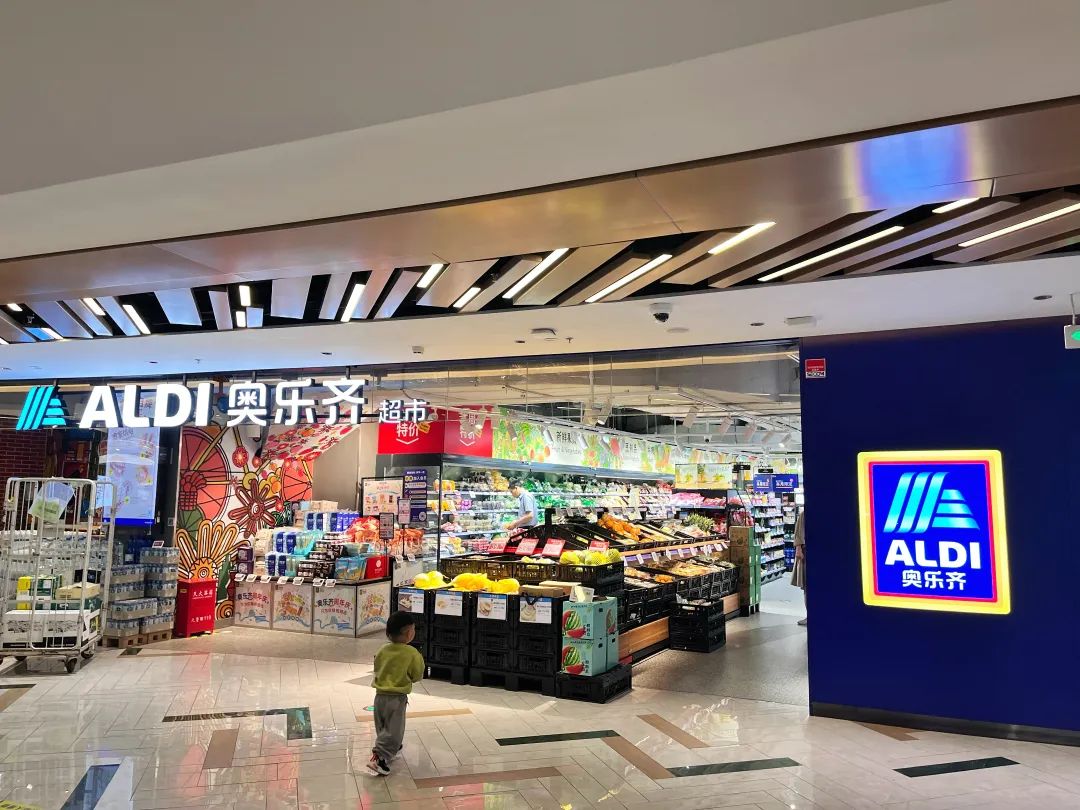
蛋挞现虫、水果腐烂,奥乐齐V3会员维权遭店长"手撕协议"
Guo Ji Jin Rong Bao· 2025-07-29 22:49
Core Viewpoint - The article highlights a serious food safety issue faced by a consumer at Aldi, where spoiled fruits and a contaminated egg tart were purchased, leading to a problematic complaint process with the store management [1][2][4][10]. Group 1: Consumer Experience - A consumer named Wang Zheng reported purchasing rotten fruits and an egg tart with a worm from Aldi, which prompted her to seek a refund [4][8]. - Wang Zheng, a V3 member of Aldi, had previously tolerated issues with delivered produce but reached her limit with this incident [4][10]. - The initial response from the store manager was dismissive, offering a small compensation that Wang Zheng rejected, insisting on legal compensation under the Food Safety Law [9][10]. Group 2: Company Response - Aldi acknowledged the unpleasant interaction between staff and the consumer and expressed regret for the experience [2][11]. - Following the incident, Aldi took steps to address the issue, including staff reprimands and engaging a pest control company for immediate action [11]. - The company has been proactive in ensuring food safety by conducting regular pest control services [11]. Group 3: Legal Context - Legal experts confirmed that Wang Zheng's case falls under Article 148 of the Food Safety Law, which allows consumers to seek compensation for purchasing unsafe food [12]. - The article mentions that complaints against Aldi regarding food quality are not isolated, with numerous reports of spoiled or contaminated products [14]. Group 4: Company Performance - Aldi has seen significant growth in China, with sales reaching 2 billion yuan in 2024, doubling from the previous year, and improving its ranking in the Top 100 supermarkets [17]. - The average sales per store in 2024 were reported to be over 36.36 million yuan, indicating strong performance despite the recent issues [18].