多边主义

Search documents
APEC会议“非正式”,却为何如此重要
Zhong Guo Xin Wen Wang· 2025-10-29 04:28
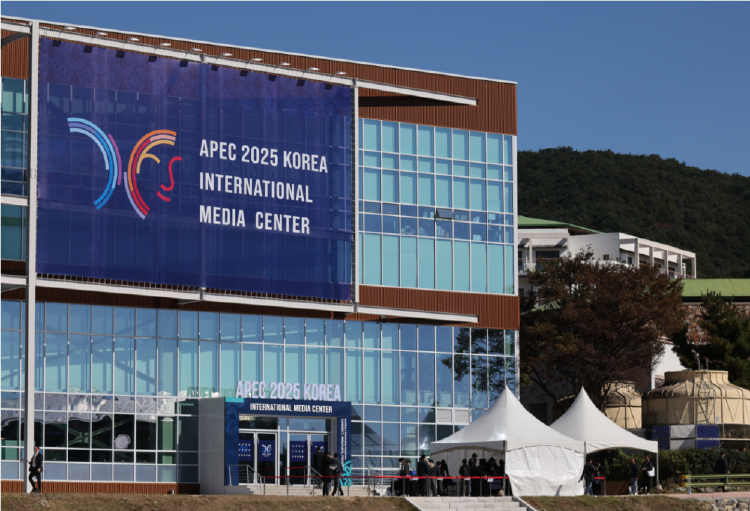
Group 1 - The APEC informal leaders' meeting will take place from October 31 to November 1 in Gyeongju, South Korea, attracting global attention due to the current economic challenges and the significance of APEC as a major economic cooperation mechanism in the Asia-Pacific region [1][2][6] - APEC, established in 1989, has evolved into the highest-level economic cooperation mechanism in the Asia-Pacific, comprising 21 major economies, including China, the US, Japan, and Australia [3][6] - The meeting aims to address global challenges such as unilateralism and protectionism, with a focus on promoting cooperation for mutual benefit and sustainable development [7][9] Group 2 - The theme of the meeting is "Building a Sustainable Tomorrow - Connectivity, Innovation, Prosperity," with discussions on AI regulation and demographic changes [7] - China is expected to play a significant role, with President Xi Jinping delivering a key speech and engaging in bilateral meetings, emphasizing China's commitment to regional cooperation and economic growth [9][11] - Gyeongju, chosen as the meeting venue, is a city rich in history and culture, which South Korea aims to leverage to enhance its diplomatic and economic influence [10][11]

APEC会议“非正式” 却为何如此重要?
Zhong Guo Xin Wen Wang· 2025-10-29 03:07
Group 1 - The APEC informal leaders' meeting will take place in Gyeongju, South Korea, from October 31 to November 1, highlighting the significance of APEC as a key economic cooperation mechanism in the Asia-Pacific region amid global economic challenges [1][2] - APEC, established in 1989, aims to support sustainable economic growth and prosperity in the Asia-Pacific, promoting free trade, investment, and regional economic integration [2][3] - APEC has made significant progress in facilitating trade and investment liberalization over the past 30 years, with the region accounting for one-third of the world's population and over 60% of global economic output [3] Group 2 - The meeting's theme is "Building a Sustainable Tomorrow—Connecting, Innovating, and Prosperity," focusing on discussions around AI regulation and demographic changes, with an emphasis on multilateralism and regional cooperation [4] - China's role is particularly noteworthy, as President Xi Jinping is expected to deliver a significant speech, emphasizing China's commitment to regional cooperation and economic growth [4][5] - The meeting will also serve as a platform for leaders to interact and strengthen cooperation, providing insights into the direction of international relations [6] Group 3 - Gyeongju was chosen as the meeting location due to its historical significance and potential to enhance South Korea's diplomatic, economic, and cultural influence [7] - The meeting will showcase South Korea's development and culture, with events planned to highlight the integration of history and modernity [7] - China is set to host APEC in 2026, marking its third time as host, with intentions to strengthen communication and cooperation among member economies [8]
APEC会议“非正式”,却为何如此重要?
Zhong Guo Xin Wen Wang· 2025-10-29 02:35
Core Points - The APEC informal leaders' meeting is scheduled to take place from October 31 to November 1 in Gyeongju, South Korea, and is considered highly significant despite its informal nature [1][3][6] - APEC is the most important economic cooperation mechanism in the Asia-Pacific region, comprising 21 major economies, and plays a crucial role in promoting regional trade and investment [4][6][9] - The meeting's theme is "Building a Sustainable Tomorrow - Connectivity, Innovation, Prosperity," focusing on issues like AI regulation and demographic changes [7][9] Group 1: Importance of APEC - APEC has evolved over 30 years into the highest-level and most influential economic cooperation mechanism in the Asia-Pacific region, accounting for over 60% of global economic output and nearly half of global trade [6][9] - The organization aims to support sustainable economic growth and prosperity in the Asia-Pacific, advocating for free and open trade and investment [4][6] Group 2: Global Attention - The meeting is expected to address rising unilateralism and protectionism, with a focus on enhancing cooperation for mutual benefit and common development [7][9] - China's role is particularly noteworthy, as President Xi Jinping is set to deliver a significant speech, emphasizing China's commitment to regional cooperation and economic growth [9][11] Group 3: Venue and Cultural Significance - Gyeongju, chosen for its historical significance and cultural heritage, is seen as a platform for South Korea to enhance its diplomatic and economic influence [10][11] - The meeting will also showcase cultural events, including an exhibition of ancient crowns from the Silla Dynasty, highlighting the blend of history and modernity [11][13]
多国媒体: “中国—东盟经济关系向前迈出重要一步”
Zhong Guo Jing Ji Wang· 2025-10-29 02:09
Core Points - The signing of the China-ASEAN Free Trade Area 3.0 upgrade protocol in Kuala Lumpur marks a significant step forward in economic relations between China and ASEAN, reflecting a mutual commitment to deepen cooperation and promote regional prosperity [1][2]. Group 1: Economic Cooperation - The upgraded protocol expands trade fields between ASEAN countries and China, the world's largest economy, enhancing economic ties [3][5]. - The new agreement includes emerging areas such as digital and green economies, supply chain resilience, competition and consumer protection, and support for small and medium-sized enterprises [5][6]. - The upgraded protocol is expected to facilitate market access in agriculture, digital economy, and pharmaceuticals, benefiting enterprises from both sides [6]. Group 2: Regional Integration - The agreement aims to promote regional economic integration and strengthen international trade, as highlighted by various ASEAN media [5][7]. - Leaders emphasized the importance of furthering ASEAN-China relations and advancing broader economic integration to maintain economic growth momentum in the Asia-Pacific region [7]. Group 3: Opportunities for Member States - The Philippines expressed hope that the upgraded trade cooperation would help mitigate regional economic uncertainties and modernize trade practices [10]. - The upgrade is seen as a commitment to sustainable and inclusive growth, providing new economic opportunities for member states [10].

1.0版→3.0版 中国和东盟经贸合作领域不断拓宽、层次不断加深
Yang Shi Wang· 2025-10-29 01:57
Core Points - The signing of the China-ASEAN Free Trade Area 3.0 upgrade protocol on October 28 in Kuala Lumpur marks a significant step in enhancing trade relations between China and ASEAN [1][3] - The protocol covers nine major areas, introducing five new sectors: digital economy, green economy, supply chain connectivity, competition and consumer protection, and support for small and medium enterprises [3][9] - The agreement aims to promote inclusive regional economic development, ensuring that businesses and people in both China and ASEAN benefit from economic growth [3][5] Group 1 - The protocol reflects a commitment to multilateralism and free trade, demonstrating a united front against unilateralism and protectionism [5] - It signifies a deeper level of cooperation in trade, moving beyond traditional trade and investment liberalization to include emerging sectors [9] - The trade volume between China and ASEAN reached $982.3 billion in 2024, a 17-fold increase since the establishment of the China-ASEAN Free Trade Area in 2002 [7] Group 2 - The protocol is expected to enhance the quality and upgrade of economic cooperation between China and ASEAN, contributing to the construction of a high-standard free trade network [11] - The implementation of the protocol will facilitate advancements in areas such as digital trade and cross-border payments, linking the two regions more closely [9] - Agricultural imports from ASEAN to China increased by 15.3% in the first three quarters of this year, with a notable 37.8% growth in fruits entering China via the China-Laos Railway [7]
“双赢”!中国东盟自贸区升级
Huan Qiu Shi Bao· 2025-10-28 23:04
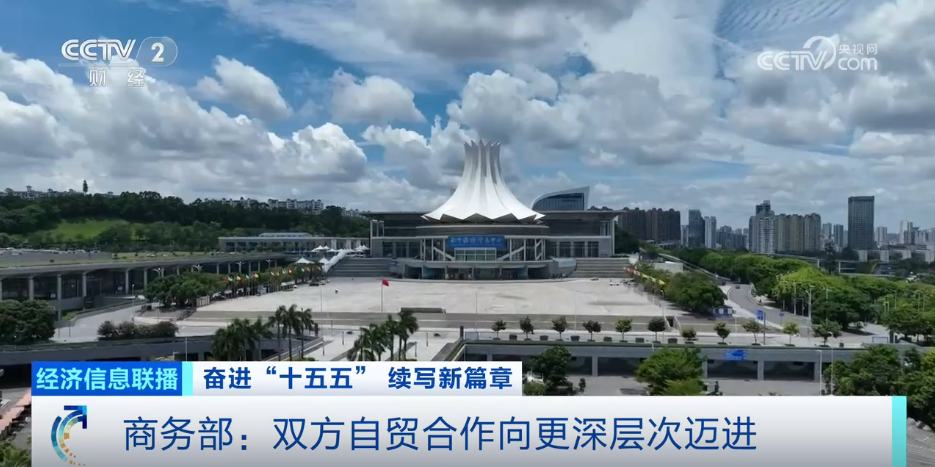
Core Points - The signing of the China-ASEAN Free Trade Area 3.0 upgrade protocol marks a significant enhancement in economic cooperation between China and ASEAN, reflecting a commitment to multilateralism and free trade [1][2][6] - The protocol includes nine new areas of cooperation, such as digital economy, green economy, and supply chain connectivity, indicating a shift from traditional trade focus to a more institutionalized cooperation model [3][4][7] Group 1: Economic Impact - The China-ASEAN Free Trade Area has seen a 17-fold increase in trade volume since its inception in 2002, with a projected trade volume of $982.3 billion in 2024 [2][4] - In the first nine months of this year, bilateral trade reached $776.7 billion, a year-on-year increase of 9.6%, highlighting the growing integration of manufacturing supply chains [4][6] Group 2: Strategic Significance - The upgrade is viewed as a strategic victory for China, enhancing its influence in the region and providing opportunities for ASEAN countries to strengthen their economic resilience [1][8] - The protocol is expected to create new opportunities for micro, small, and medium enterprises in the region, fostering economic integration and stability [6][9] Group 3: Future Prospects - The implementation details of the protocol are expected to be finalized in the coming months, with member countries likely to approve it by 2026 [9] - The upgrade signifies a transition to high-quality cooperation, focusing on advanced technology and deeper industrial integration, which is anticipated to enhance productivity levels [9][10]
中国—东盟自贸区3.0版为区域开放合作注入更强劲动能(和音)
Ren Min Ri Bao· 2025-10-28 22:56
Core Points - The signing of the China-ASEAN Free Trade Area 3.0 upgrade protocol on October 28 in Kuala Lumpur marks a significant milestone in open cooperation between China and ASEAN, injecting strong momentum into the construction of an open world economy [1] - The upgrade is a key outcome of the consensus reached during the 30th anniversary summit of China-ASEAN dialogue relations and aligns with the goals of expanding high-level opening-up as outlined in the 20th National Congress of the Communist Party of China [1] - The China-ASEAN Free Trade Area has evolved since its establishment in 2010, continuously adapting to regional integration and enhancing trade cooperation across various sectors [1] Economic Cooperation - The construction of the China-ASEAN Free Trade Area 3.0 is an effective way to build a super-large market and a community with a shared future, with trade value expected to approach $1 trillion in 2024 and cumulative bilateral investment exceeding $450 billion as of July this year [2] - The upgrade will promote the development of emerging industries such as digital and green sectors, enhance standards and regulatory alignment, and facilitate infrastructure and supply chain connectivity [2] - The agreement reflects a strong commitment to multilateralism and free trade, providing certainty in the face of rising protectionism and geopolitical tensions [2] Future Outlook - By early 2025, China is expected to have signed 23 free trade agreements with 30 countries and regions, expanding its space for mutual benefit and cooperation [3] - China aims to continue being a "stabilizing anchor" and "driving force" for the world economy through open cooperation and mutual benefit [3] - The ongoing trend of economic globalization is seen as an unstoppable historical tide, with China committed to sharing opportunities and achieving win-win outcomes through inclusive economic globalization [3]
从“心”出发,共创中韩关系美好未来(大使随笔)
Ren Min Ri Bao· 2025-10-28 22:56
Group 1 - The visit of President Xi Jinping to South Korea from October 30 to November 1 is expected to play a crucial role in the development of the China-South Korea strategic partnership and contribute to stability and prosperity in the Asia-Pacific region [1][4] - China and South Korea have a long history of friendly exchanges and their interests are closely linked, making it essential to strengthen cooperation in the current complex international environment [1][2] - The two countries should enhance mutual understanding and trust, adapting to the changing international landscape while maintaining the original intentions of their diplomatic relations established in 1992 [1][2] Group 2 - China is South Korea's largest trading partner, while South Korea has become China's second-largest trading partner, indicating a deep economic integration and a shift towards closer horizontal cooperation in various industries [2] - Both countries are encouraged to collaborate in emerging fields such as artificial intelligence, green technology, high-end manufacturing, and biomedicine to achieve higher levels of mutual benefit [2] - There is a strong public sentiment in both countries favoring improved relations, with increased people-to-people exchanges anticipated due to upcoming visa facilitation measures [2] Group 3 - Despite some differences, the fundamental driving force behind China-South Korea relations is their shared interests, and both countries should resist external influences while promoting mutual respect for core interests [3] - The upcoming APEC meeting, hosted by South Korea, is seen as an opportunity for both nations to strengthen their cooperation and promote a message of openness and collaboration [3] - China's commitment to high-quality development and modernization is expected to provide more opportunities for both China and South Korea, contributing to regional prosperity [3]
汇聚团结力量,完善全球治理——中外嘉宾蓝厅论坛共商落实全球治理倡议
Xin Hua She· 2025-10-28 12:43
Core Points - The Blue Hall Forum held on October 27 in Beijing gathered over 300 high-level representatives and experts to discuss global governance initiatives and their implementation [1][2] - The global governance initiative proposed by President Xi Jinping has received support from over 140 countries and international organizations within two months, indicating its alignment with global needs [1][2] - The forum emphasized the necessity for reform in the global governance system to reflect the rising influence of Global South countries and to address issues of representation, authority, and effectiveness [1][2] Group 1 - The global governance initiative emphasizes principles such as sovereign equality, international rule of law, and multilateralism, which resonate with the UN Charter's goals [2] - The initiative aims to enhance people's well-being as a fundamental objective of international actions, reflecting China's development practices and responding to urgent global needs [2] - The initiative is seen as a response to current global challenges, including conflicts, trade issues, climate change, and technological advancements, providing both ideological guidance and action-oriented solutions [2][3] Group 2 - The initiative is linked with the Global Development Initiative, Global Security Initiative, and Global Civilization Initiative, collectively providing stability and certainty in a turbulent world [2][3] - The Asian Infrastructure Investment Bank (AIIB), initiated by China and supported by 57 countries, is highlighted as a model of international multilateral cooperation, now with 110 member countries and maintaining a AAA credit rating [4] - The forum underscored the importance of diverse international actors in achieving collective efforts in global governance [4]
第八届进博会各项筹备工作已基本就绪
Yang Shi Wang· 2025-10-28 12:41
Core Points - The 8th China International Import Expo (CIIE) will be held from November 5 to 10, with participation from 155 countries, regions, and international organizations [1] - A total of 4,108 foreign enterprises will exhibit, with the overall exhibition area exceeding 430,000 square meters, marking a new record in scale [1] - The event will showcase 461 new products, technologies, and services, along with over 80 supporting activities such as trade negotiations and investment promotion [1] - The Hongqiao International Economic Forum will focus on four global initiatives, addressing key topics like trade security, multilateralism, and the Global South, and will release the "World Open Report 2025" and the latest World Openness Index [1]