
降本增效

Search documents
交付量同比增长40.8%,蔚来Q3亏损大幅收窄
Ju Chao Zi Xun· 2025-11-26 03:47
Core Insights - NIO Inc. reported significant growth in vehicle deliveries and revenue for Q3 2025, with improvements in gross margin and a substantial reduction in operating and net losses [2][3][4] Delivery Performance - In Q3 2025, NIO delivered 87,071 vehicles, a 40.8% increase from 61,855 vehicles in Q3 2024 and a 20.8% increase from 72,056 vehicles in Q2 2025 [2] - The delivery structure showed a multi-brand synergy, with NIO brand delivering 36,928 vehicles, the Ladao brand delivering 37,656 vehicles, and the Firefly brand delivering 12,487 vehicles [2] - Cumulative deliveries reached 913,182 vehicles as of October 31, 2025, with a total of 241,618 vehicles delivered in 2025 [2] Revenue Growth - Total revenue for Q3 2025 was RMB 217.939 billion (approximately USD 30.614 billion), representing a 16.7% year-over-year increase and a 14.7% quarter-over-quarter increase [3] - Vehicle sales accounted for RMB 192.023 billion (approximately USD 26.973 billion), with a year-over-year growth of 15% and a quarter-over-quarter growth of 19% [3] - Other sales revenue reached RMB 25.916 billion (approximately USD 3.64 billion), up 31.2% year-over-year, driven by increased used car sales and service revenues [3] Profitability Improvement - Gross margin for Q3 2025 was 13.9%, up 320 basis points from 10.7% in Q3 2024 and 390 basis points from 10% in Q2 2025 [3] - Automotive gross margin increased to 14.7%, reflecting a year-over-year increase of 160 basis points and a quarter-over-quarter increase of 440 basis points [3] - Gross profit reached RMB 30.246 billion (approximately USD 4.249 billion), a 50.7% year-over-year increase and a 59.4% quarter-over-quarter increase [3] Loss Reduction - Operating loss for Q3 2025 was RMB 35.215 billion (approximately USD 4.947 billion), a decrease of 32.8% year-over-year and 28.3% quarter-over-quarter [4] - Adjusted operating loss was RMB 27.761 billion (approximately USD 3.9 billion), down 39.5% year-over-year and 31.3% quarter-over-quarter [4] - Net loss was RMB 34.805 billion (approximately USD 4.889 billion), a 31.2% decrease year-over-year and a 30.3% decrease quarter-over-quarter [4] Cash Flow and Outlook - As of September 30, 2025, NIO had cash and cash equivalents totaling RMB 367 billion (approximately USD 51 billion), providing a solid financial foundation for ongoing operations [5] - The company achieved positive operating cash flow in the quarter, maintaining a positive cash flow after capital expenditures [5] - For Q4 2025, management expects vehicle deliveries between 120,000 and 125,000, representing a year-over-year growth of approximately 65.1% to 72.0% [5] - Total revenue is projected to be between RMB 327.58 billion (approximately USD 46.02 billion) and RMB 340.39 billion (approximately USD 47.81 billion), indicating a year-over-year growth of approximately 66.3% to 72.8% [5]


山东能源齐翔腾达:打好降本“金算盘” 激活增效“新动能”
Zhong Guo Hua Gong Bao· 2025-11-26 02:12
如今,齐翔腾达每月取样频次优化17698次,压减率达21.38%,超额完成既定目标。 齐翔腾达各单位围绕经营目标任务,聚焦关键节能设备,强化设备管理、深挖节能潜力,大力开展降本 增效系列活动,鼓励职工立足岗位出主意、想办法、搞创新,推动节能降耗工作落地见效。 "脱氢装置再生器汽化器在运行过程中,蒸汽消耗量较大,如果替换成新型式疏水器,每月可以节省不 少费用。"化工三厂张客滨在工艺技术例会上提出自己的想法。经过查阅相关技术资料、多次研究讨 论,疏水器更新计划落地实施,实现每月节约蒸汽成本8.3万元,为公司持续推进降本增效、夯实盈利 基础提供了有力支撑。 "我们将继续深化经济运行指标分析,进一步深挖装置潜能,推进节能降耗措施的贯彻执行,降低能源 消耗和运行成本,提升经济效益。"齐翔腾达化工三厂副厂长张东说。 严控支出勒紧"钱袋子" 今年以来,齐翔腾达强化成本模块化管理,实时监控生产经营各环节消耗数据,逐项对标成本构成,减 少非必要开支、优化资源配置,为公司长期高质量发展积蓄动能。 分析检验环节是成本管控的关键点。自6月开始,齐翔腾达开展分析检验频次优化专项行动,减少重复 性指标检测项目、降低长期稳定性指标检验频次 ...

斩获“品牌价值引领奖”!重汽黄河H7以全能实力赢得市场与行业双认可
第一商用车网· 2025-11-25 12:44
Core Viewpoint - The "2025 Annual Heavy Truck Brand Value Award" was won by China National Heavy Duty Truck Group's Huanghe H7, recognized for its fuel efficiency, reliability, and overall performance in the heavy truck industry [10][13]. Design and Efficiency - The Huanghe H7 features a revolutionary "Yufeng" aesthetic design, achieving a drag coefficient of less than 0.36, which significantly reduces fuel consumption during high-speed operations, providing tangible operational benefits to users [3]. - The vehicle is equipped with a customized high-efficiency engine and an AMT transmission, forming a seamless S powertrain that optimizes power and transmission efficiency, resulting in a fuel consumption reduction of 8-12% compared to the industry average [5]. Reliability and Performance - Reliability is a core aspect for heavy trucks, and the Huanghe H7 has undergone rigorous testing across various conditions, redefining reliability standards in the industry [6]. - The truck's core components are selected based on global top standards, featuring a 600L ultra-high-strength steel frame that enhances structural strength by 20% compared to traditional frames, ensuring durability in complex road conditions [6]. - The vehicle has achieved an IP67 waterproof rating for key assemblies, maintaining performance even in harsh environments like heavy rain and mud [6]. Testing and Maintenance - The Huanghe H7 has been validated through extreme environmental testing, with key components undergoing over 10 million kilometers of durability testing, achieving a B10 lifespan of 1.8 million kilometers [8]. - It includes an onboard intelligent system that monitors vehicle health in real-time, allowing for proactive maintenance and minimizing unplanned downtime, thus maximizing value for users [8]. Industry Impact - The award for Huanghe H7 reflects market recognition of its comprehensive capabilities and affirms the brand value of China National Heavy Duty Truck Group, positioning it as a leader in driving high-quality development in the heavy truck industry [13].

中科电气(300035):出货维持高增 价格调整影响盈利
Xin Lang Cai Jing· 2025-11-25 12:32
Core Insights - The company reported a revenue of 2.291 billion yuan for Q3 2025, reflecting a year-on-year increase of 41.44% and a quarter-on-quarter increase of 13.71% [1] - The net profit attributable to shareholders was 129 million yuan, showing a year-on-year growth of 13.25% but a quarter-on-quarter decline of 6.06% [1] - The company’s gross margin for Q3 2025 was 14%, with pressures on margins due to price adjustments of core products [2] Financial Performance - Revenue for Q3 2025 reached 2.291 billion yuan, up 41.44% year-on-year and 13.71% quarter-on-quarter [1] - Net profit attributable to shareholders was 129 million yuan, increasing by 13.25% year-on-year but decreasing by 6.06% quarter-on-quarter [1] - Non-recurring net profit also stood at 129 million yuan, with a year-on-year increase of 10.09% and a quarter-on-quarter decrease of 17.32% [1] Profitability and Cost Management - The profit growth rate significantly outpaced revenue growth, indicating improved scale efficiency and product structure optimization [2] - The company achieved a total expense ratio of 6.8%, with substantial improvements in sales, management, R&D, and financial expense ratios [2] - The main profit contribution is expected from the negative electrode business, while the magnetic and electrical equipment business remains marginally profitable [2] Future Outlook - The company anticipates strong production and demand in Q4 2025 and 2026, with continued improvements in profitability driven by new product iterations and cost reduction expectations [2] - The company is actively developing new products, including hard carbon, silicon-carbon, and lithium metal, with a positive mid-term outlook [2] - The forecast for net profit attributable to shareholders in 2026 is projected to reach 850 million yuan [2]

朗科科技:截至2025年前三季度,公司实现营业收入7.95亿元,同比上升35.19%
Zheng Quan Ri Bao· 2025-11-25 11:40
Core Viewpoint - Langke Technology is actively pursuing project collaborations and order opportunities, with a focus on enhancing profitability and shareholder value [2] Financial Performance - For the first three quarters of 2025, the company achieved operating revenue of 795 million yuan, representing a year-on-year increase of 35.19% [2] Strategic Initiatives - The company is implementing cost reduction and efficiency enhancement measures, as well as optimizing sales strategies to further improve profitability [2]


大连重工(002204) - 002204大连重工投资者关系管理信息20251125
2025-11-25 11:14
Group 1: Business Performance Overview - The company achieved an overall order performance of approximately 15.9 billion yuan in the first three quarters of 2025, a year-on-year increase of about 4% [2] - New orders in the export sector reached approximately 600 million USD, reflecting a year-on-year growth of about 40% due to sustained demand in overseas markets such as mining and ports [2] - As of the end of Q3 2025, the company had an order backlog of approximately 36.1 billion yuan, with various segments contributing different proportions [3] Group 2: Revenue and Profitability - The company reported a sales revenue of 10.979 billion yuan in the first three quarters of 2025, representing a year-on-year increase of 8.11% [4] - The total profit amounted to 571 million yuan, with a year-on-year growth of 26.11%, and net profit attributable to shareholders was 490 million yuan, up by 23.97% [4] - Revenue breakdown by segment includes: - Material handling equipment: 3.020 billion yuan (27.51% of total revenue, gross margin 22.70%) - New energy equipment: 3.076 billion yuan (28.01%, gross margin 7.03%) - Metallurgical equipment: 2.379 billion yuan (21.66%, gross margin 17.27%) - Core components: 1.464 billion yuan (13.34%, gross margin 27.87%) - Engineering projects: 628 million yuan (5.72%, gross margin 29.19%) - Other products: 412 million yuan (3.76%, gross margin 42.83%) [4][5] Group 3: Market Outlook and Competitive Position - The wind power sector is expected to see new installations exceeding 110 GW in 2025, with potential annual growth of 100 GW, indicating a large market space [3] - The material handling equipment segment is positioned at the industry forefront, benefiting from high demand in global shipping, shipbuilding, and logistics [3] - The metallurgical equipment segment maintains a strong market share despite challenges in the steel industry, with stable future market expectations [3] Group 4: Strategic Goals and Initiatives - The company aims to achieve high-quality development through a five-year plan focusing on "intelligent, green, high-end, international, and service-oriented" strategies [5] - Key drivers for performance growth include management reforms to enhance operational efficiency and strategic initiatives aligned with national policies like "Made in China 2025" [6] - The company plans to maintain overseas business at over 20% of total revenue, focusing on international markets in sectors like bulk material handling and metallurgy [8] Group 5: Future Investments and Capacity Expansion - Recent investments in wind power components and marine crankshafts are expected to enhance production capacity and market position [10] - Specific projects include: - Large-scale wind turbine gearbox production, with an expected output of 1,570 units in 2025 [10] - Expansion of marine crankshaft production capacity, projected to generate an additional 30 million yuan in annual sales upon completion [10] Group 6: Financial Management and Risk Control - The company anticipates a stable gross margin of 15%-20% in the future, supported by ongoing cost reduction and efficiency improvement initiatives [11] - Non-recurring gains primarily stem from the reversal of impairment provisions for receivables, with a focus on risk management and recovery strategies [12]

国统股份:公司将积极优化在手订单生产调配
Zheng Quan Ri Bao· 2025-11-25 11:13
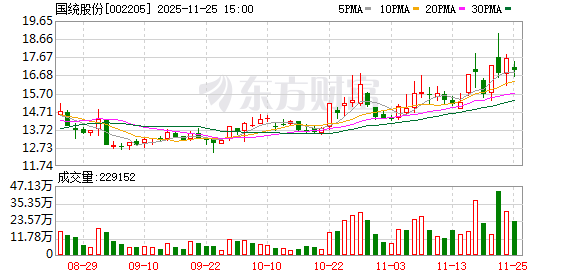
证券日报网讯国统股份11月25日在互动平台回答投资者提问时表示,公司将积极优化在手订单生产调 配,专人专项跟进验收结算,加快应收账款回收,提升资金周转效率;深化降本增效与精益管理,通过 集中采购、流程优化降低生产成本,严格管控费用支出;紧密跟踪国家水网建设相关重大项目,积极参 与招投标,争取取得订单。公司始终高度重视投资者权益,将持续聚焦主营业务提升核心竞争力,及时 履行信息披露义务,相关业绩进展请关注公司定期报告。 (文章来源:证券日报) ...

维他奶国际公布中期业绩:收入32.27亿港元 拟派中期股息每股4港仙
Zheng Quan Ri Bao Wang· 2025-11-25 11:02
Core Viewpoint - Vitasoy International Group Limited reported a revenue decline of 6% to HKD 3.227 billion for the first half of the fiscal year 2025/2026, primarily due to weak market conditions in mainland China, while net profit attributable to shareholders increased by 1% to HKD 172 million [1][2] Group 1: Financial Performance - The gross profit margin and operating profit margin for the group were 51.1% and 7.6%, respectively [1] - The mainland business maintained an operating profit margin of 11% during the mid-term financial period despite a decline in sales [2] - The company plans to distribute an interim dividend of HKD 0.04 per share on December 23 [1] Group 2: Market Strategy - The management emphasized the importance of enhancing commercial execution and product innovation to adapt to the rapidly changing external macro and competitive environment [1][3] - Vitasoy launched new products such as Vitasoy Duck Shit Lemon Tea, which contributed to an increase in market share in the ready-to-drink tea category [1][2] - The company is focusing on expanding its presence in the breakfast scene through a marketing campaign that integrates various media platforms to resonate emotionally with consumers [2] Group 3: Operational Adjustments - The company is implementing a multi-faceted strategy to address the revenue decline, including improving operational execution, launching innovative products, and adopting competitive pricing strategies [3] - Vitasoy is actively enhancing its sales team resources to ensure accelerated growth in core regions, particularly in southern China and Southeast Asia [3] - The company has been pursuing cost optimization measures, such as optimizing effective outlets and reducing unnecessary promotional expenditures [3]

中科电气(300035):中科电气2025三季报分析:出货维持高增,价格调整影响盈利
Changjiang Securities· 2025-11-25 10:43
Investment Rating - The investment rating for the company is "Buy" and is maintained [6]. Core Insights - The company reported a revenue of 2.291 billion yuan for Q3 2025, representing a year-on-year increase of 41.44% and a quarter-on-quarter increase of 13.71% [2][4]. - The net profit attributable to shareholders was 129 million yuan, showing a year-on-year growth of 13.25% but a quarter-on-quarter decline of 6.06% [2][4]. - The company's gross margin for Q3 2025 was 14%, which faced pressure due to price adjustments of core products [11]. - The company has shown significant improvement in its expense ratios, with total period expense ratio at 6.8%, indicating effective cost control measures [11]. - The company is expected to maintain strong production levels in Q4 2025 and 2026, benefiting from new product iterations and cost reduction expectations [11]. Financial Performance - The company achieved a revenue of 2.291 billion yuan in Q3 2025, with a gross profit margin of 14% [2][4]. - The net profit attributable to the parent company was 129 million yuan, with a non-recurring net profit also at 129 million yuan [2][4]. - The company reported a significant improvement in its expense ratios, with sales, management, R&D, and financial expense ratios at 1.09%, 1.75%, 2.16%, and 1.80% respectively [11].
投资者提问:贵公司会加大对电力设备、新能源材料的研发投入吗?贵公司如何做大...
Xin Lang Cai Jing· 2025-11-25 04:31
Core Viewpoint - The company is focused on developing a dual main business model in the electric power and new energy materials sectors, emphasizing comprehensive services in the power distribution field and lithium battery precursor materials in the new energy materials sector [1] Group 1: Electric Power Sector - The company acts as a comprehensive service provider in the power distribution sector, offering design consulting, engineering services, equipment supply, and operation maintenance tailored to the specific needs of various industry clients [1] - The company is committed to exploring and implementing cost reduction and efficiency enhancement measures to improve competitiveness in the electric power sector [1] Group 2: New Energy Materials Sector - The company's subsidiary, Hunan Yacheng, focuses on the research, production, and sales of lithium battery precursor materials [1] - The company plans to actively monitor and invest in upstream raw material resources to lower production costs and enhance competitiveness in the new energy materials sector [1]
