
未来产业

Search documents
上海,出资凶猛
投资界· 2025-08-15 07:05
Core Viewpoint - Shanghai Future Industry Fund is actively investing in multiple sub-funds to support cutting-edge technologies and future industries, aiming to create a significant impact on the market and foster innovation [4][5][7]. Investment Activities - Shanghai Future Industry Fund plans to invest in six sub-funds, including Shanghai Puqing Bencao Venture Capital and Shanghai Bilingxing Phase IV Venture Capital [4]. - In just four months, the fund has invested in eight sub-funds, focusing on areas such as brain science, synthetic biology, and hard technology [5]. - The fund has a total scale of 10 billion yuan, with 80% allocated to sub-funds and 20% to direct investments, potentially leveraging a total of 30-40 billion yuan in funding [8]. Strategic Focus - The fund emphasizes support for young innovators in sectors like future information, future energy, future health, future space, future manufacturing, and future materials [8]. - Specific areas of interest include intelligent science, large models, quantum computing, embodied intelligence, and silicon photonics within the future information industry [8]. Regulatory Environment - The fund has broken registration location restrictions, allowing investments in sub-funds registered outside Shanghai, aligning with national policy encouraging the removal of such limitations [9]. Broader Investment Landscape - Shanghai is recognized as a highly active city in venture capital, with significant initiatives like the launch of a 20 billion yuan AI seed fund and the selection of sub-funds for three major leading industries [11][13]. - The AI industry in Pudong has grown to over 160 billion yuan, accounting for approximately 40% of the city's total, with a strong focus on foundational research and innovation [12].

刚刚,上海未来产业基金又出资了
Sou Hu Cai Jing· 2025-08-15 06:35
Group 1 - Shanghai Future Industry Fund has been established with a total scale of 10 billion yuan, focusing on disruptive innovation and early-stage investments in cutting-edge technologies [3][4] - The fund aims to invest 80% in sub-funds and 20% in direct investment projects, potentially leveraging a total of 30 to 40 billion yuan in funding [3][4] - The fund supports young entrepreneurs in various fields, including future information, future energy, future health, future space, future manufacturing, and future materials [3][4] Group 2 - In just four months, the Shanghai Future Industry Fund has invested in eight sub-funds, actively engaging in brain science, synthetic biology, and hard technology [2][3] - The fund has broken the registration location restrictions, allowing investments in sub-funds registered outside Shanghai, aligning with national policy guidance [4][6] - Shanghai is recognized as one of the most active cities in venture capital, with significant investments in key industries such as integrated circuits, biomedicine, and artificial intelligence [7][8] Group 3 - The Pudong Artificial Intelligence Seed Fund has been launched with a total scale of 2 billion yuan, aiming to support early-stage teams and foster an innovative entrepreneurial environment [7][8] - Shanghai's AI industry has surpassed 160 billion yuan, accounting for approximately 40% of the city's total, with over 200 companies in related fields [8][9] - Various funds have been established in Shanghai, including a 30 billion yuan AI CVC fund and two 50 billion yuan funds for industrial transformation and state-owned enterprise mergers [8][9]
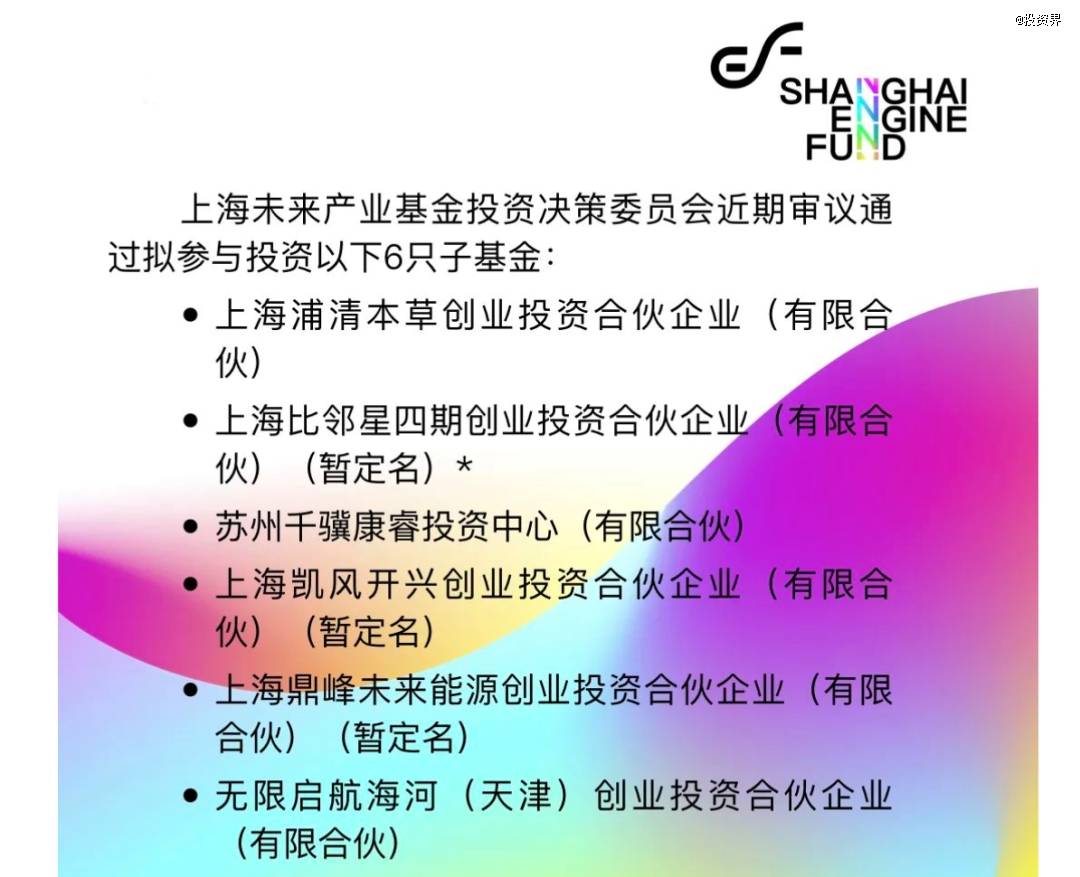
上海母基金又出资了,四个月决策12支子基金
母基金研究中心· 2025-08-15 06:28
Core Viewpoint - Shanghai's Future Industry Fund is actively investing in multiple sub-funds, demonstrating a commitment to support cutting-edge industries and providing much-needed capital in a challenging fundraising environment [2][3][4]. Group 1: Investment Activities - On August 14, Shanghai Future Industry Fund announced plans to invest in six sub-funds, including those focused on traditional Chinese medicine and future energy [2]. - The fund has already made decisions on 12 sub-funds this year, covering areas such as brain science and synthetic biology, showcasing its efficiency and responsiveness in the current market [2][3]. - The fund's total scale is 100 billion yuan, fully funded by the Shanghai municipal government, with a long-term investment horizon of 15 years, which can be extended by three years [3]. Group 2: Strategic Focus - The Future Industry Fund emphasizes a "early, small, and hard technology" investment strategy, focusing on six future industries: health, information, energy, space, materials, and manufacturing [3]. - Within the future information industry, the fund prioritizes five key areas: scientific intelligence, large models, quantum computing, embodied intelligence, and silicon photonics [3]. Group 3: Market Impact - The active investment from Shanghai's mother fund is seen as a positive signal for the industry, providing essential liquidity and boosting confidence in the market during a period of fundraising difficulties [2][3]. - Shanghai has established itself as a leading region for mother funds, with over 40 mother funds and a significant amount of assets under management, ranking among the top five in the country [9]. Group 4: Policy Support - The Shanghai municipal government has implemented various supportive policies to enhance the venture capital and private equity landscape, including measures to facilitate fundraising, investment, management, and exit processes [9][10]. - Recent initiatives include the establishment of equity investment clusters and the introduction of substantial government-led funds to support strategic industries [10][11]. Group 5: Future Outlook - The ongoing efforts to optimize the investment ecosystem in Shanghai are expected to attract more venture capital firms and enhance the city's position as a hub for innovation and investment [8][12]. - The establishment of large-scale S funds and the promotion of long-term capital strategies are anticipated to further solidify Shanghai's leadership in the mother fund sector [12].

A股总市值破100万亿,两融时隔十年重返2万亿,沪指创近三年新高
Sou Hu Cai Jing· 2025-08-15 00:13
Group 1 - The capital market is undergoing profound changes, with various forces collaborating to build a stable and positive market ecosystem [1] - Regulatory authorities have systematically introduced a package of measures to stabilize the market, effectively countering unexpected external shocks and enhancing market resilience [1][3] - The total market value of A-shares has steadily increased, surpassing 100 trillion yuan by the end of June, indicating a significant rise in market activity [3] Group 2 - The new "National Nine Articles" and the "1+N" policy system for the capital market are being effectively implemented, focusing on enhancing the internal stability of the market [3] - Institutional funds, including social security, insurance, and annuities, have cumulatively net purchased over 200 billion yuan in A-shares, contributing to a virtuous cycle in the market [3] - The cash dividend total for A-share listed companies in 2024 is projected to reach 2.4 trillion yuan, a 9% increase from 2023, reflecting a growing internal drive for dividends among companies [4] Group 3 - The financing channels for technology innovation enterprises are continuously expanding, with the introduction of new listing standards for unprofitable companies on the Sci-Tech Innovation Board and the Growth Enterprise Market [4] - The merger and acquisition market is becoming increasingly active, with regulatory support for companies to engage in strategic mergers and acquisitions in emerging industries [4] - The technology innovation bond market has rapidly expanded, with 684 bonds issued, totaling 880.6 billion yuan, aimed at attracting funds to key areas of technology innovation [4]

“十五五”规划系列报告(五):从新兴支柱产业看“十五五”
Minsheng Securities· 2025-08-14 06:23
Group 1: Policy Direction - The political bureau meetings from April to July shifted focus towards cultivating "internationally competitive" emerging pillar industries, aligning with the dual core demands of the "14th Five-Year Plan" for technological self-reliance and global economic engagement[3] - Emerging pillar industries are expected to play a crucial role in addressing both domestic challenges and international competition, becoming a significant focus in the "15th Five-Year Plan"[3] - The "14th Five-Year Plan" established a precedent for strategic emerging industries, emphasizing the need to bridge gaps in key sectors while fostering new industries[4] Group 2: Historical Context and Trends - Historical analysis from the "12th" to "15th Five-Year Plans" reveals two key trends: continuous investment in critical areas to reduce gaps and proactive positioning in emerging industries to lead global technological innovation[12] - The "14th Five-Year Plan" continued this trend by deploying strategic emerging industries and future industries, focusing on both "bridging gaps" and "nurturing new growth"[15] - Key strategic emerging industries identified include biomedicine, new generation information technology, and advanced structural materials, which are crucial for enhancing global competitiveness[15] Group 3: Future Industry Focus - The "15th Five-Year Plan" is anticipated to expand the scope of strategic emerging industries to include deep-sea space development and intelligent connected vehicles, with a significant increase in exploration of future industries[24] - Key areas of focus for the "15th Five-Year Plan" include intelligent robotics, marine economy, deep-sea technology, low-altitude economy, intelligent connected vehicles, brain-like intelligence, 6G, quantum information, hydrogen energy, and gene technology[27][30] - The development of these industries is expected to enhance production efficiency, resource security, and technological advancement across various sectors[27][30] Group 4: Risks and Considerations - Potential risks include inaccuracies or incompleteness in data and information statistics, which may affect the understanding of industry deployment and development during the "15th Five-Year Plan" period[31] - There is a risk that the actual deployment of emerging pillar industries may not align with current expectations, as future policy directions could evolve beyond existing discussions[31] - The pace of deployment for emerging pillar industries during the "15th Five-Year Plan" may fall short of expectations, despite the rising necessity for accelerated development[31]
第三届中国上市公司产业发展论坛盛大启幕 聚焦未来产业与国有资本
Huan Qiu Lao Hu Cai Jing· 2025-08-14 01:49
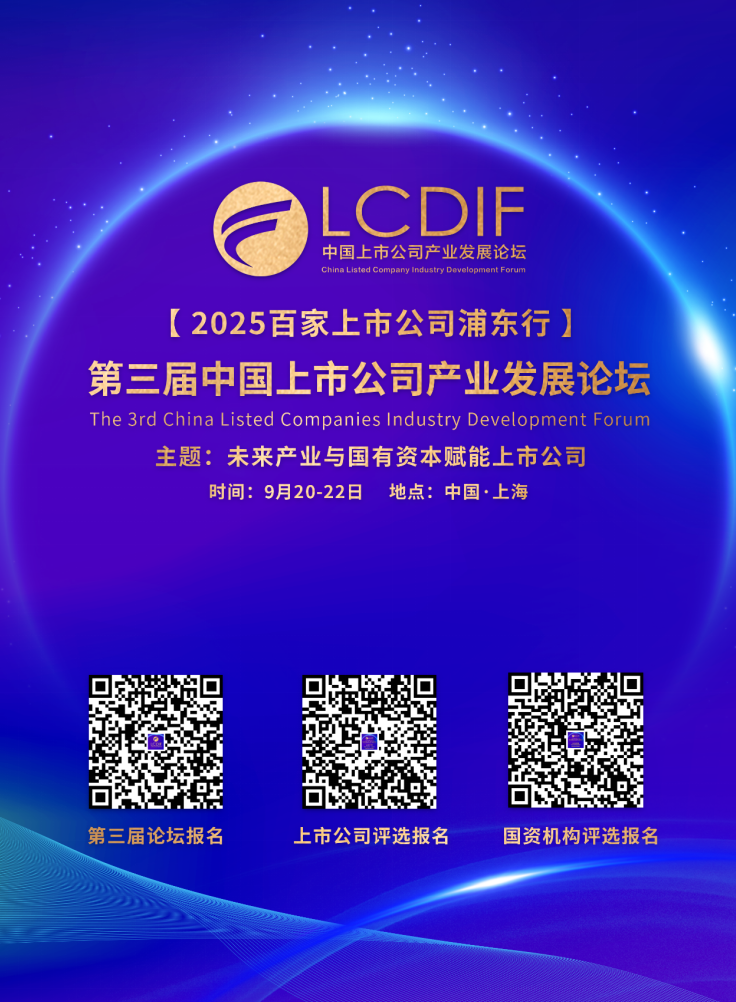
Group 1 - The core theme of the third China Listed Companies Industry Development Forum is "Future Industries and State Capital Empowering Listed Companies," focusing on the integration of cutting-edge technology and listed companies to promote industrial upgrading and innovation development [1][5] - The forum will take place from September 20-22, 2025, in Shanghai, and aims to gather hundreds of listed companies and state-owned investment institutions, making it the largest industry summit for listed companies to date [1][4] - The forum will feature various activities, including a closed-door meeting for company chairpersons, an opening conference, parallel forums hosted by six major brokerages, and the release of two major awards: Future Industry Star Listed Companies and Best State-owned Capital Institutions [4][8] Group 2 - The forum emphasizes the importance of nurturing emerging and future industries, as highlighted in recent government work reports, which call for the development of plans for future industries and the establishment of pilot zones [5] - Leading companies are expected to leverage capital market advantages to increase R&D investments, with examples including iFlytek focusing on cognitive models and WuXi AppTec expanding its synthetic biology platform [5] - The Future Industry Star Listed Companies award will recognize companies based on technological innovation, industry impact, and growth potential, linking them with resources from funds, state capital, and research [5][6] Group 3 - Six major brokerages will host specialized forums to analyze the future industry development paths for listed companies, addressing challenges and opportunities in the current capital market environment [7] - The forums will cover topics such as state capital empowerment, future technology innovation, industry chain collaboration, market value management, and the integration of artificial intelligence [7] - A series of activities will focus on the strategic opportunities presented by the Pudong area, including a closed-door meeting and a forum on industrial development, aimed at facilitating precise connections between enterprises, government, and capital [8]
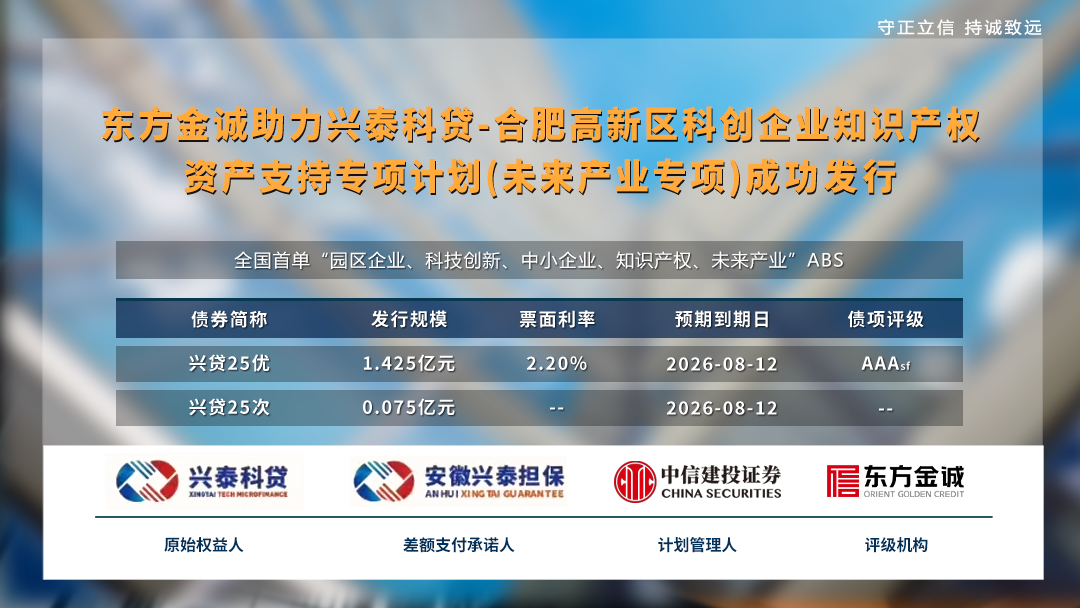
东方金诚助力兴泰科贷-合肥高新区科创企业知识产权资产支持专项计划(未来产业专项)成功发行
Xin Lang Cai Jing· 2025-08-13 08:40
作为评级行业国有力量代表,东方金诚以发挥国有机构在评级行业引领作用为使命,在项目承做过程中考虑发行人业务运营、区域经济环境、风险管理、 财务状况等因素进行综合分析,为债市参与各方的信用风险管理需求提供了规范、专业的服务。 | 东方金诚助力兴泰科贷-合肥高新区科创企业知识产权 资产支持专项计划(未来产业专项)成功发行 | | | | 守正立信 持诚致远 | | --- | --- | --- | --- | --- | | 全国首单"园区企业、科技创新、中小企业、知识产权、未来产业" ABS | | | | | | 债券简称 | 发行规模 | 票面利率 | 预期到期日 | 债项评级 | | 兴贷25优 | 1.425亿元 | 2.20% | 2026-08-12 | AAst | | 兴贷25次 | 0.075亿元 | i | 2026-08-12 | | | 1三 乐 后 前 广 | | | | | | 原始权益人 | 差额支付承诺人 | | 计划管理人 | 评级机构 | 本期专项计划入池资产汇聚了19家科创企业的131项知识产权,覆盖量子科技、人工智能、生物医药等重点产业领域;其中5家为科大硅谷片区企业,融 ...
20项创新举措!江苏推进工信领域数据知识产权试点
Jiang Nan Shi Bao· 2025-08-12 14:42
Core Viewpoint - The implementation plan aims to establish a data intellectual property registration and protection system in Jiangsu Province by June 2026, focusing on enhancing registration, service ecosystem, and utilization efficiency [1][2] Group 1: Registration System Improvement - The plan includes deepening the cautious review of data intellectual property registration and revising the relevant guidelines to encourage more enterprises to register [1] - New policies will be introduced to promote registration and utilization, along with case studies and guidance to help enterprises understand the registration process [1] Group 2: Service Ecosystem Development - The initiative aims to cultivate specialized service institutions for data intellectual property and establish standards for registration review, rights protection, and licensing transactions [1] - The plan includes the creation of model contracts for data intellectual property licensing and the development of a multi-faceted protection system involving judicial, arbitration, and mediation [1] Group 3: Utilization Efficiency Enhancement - The plan encourages exploration of various utilization scenarios such as licensing transactions, credit financing, and data asset incorporation into financial statements [2] - It aims to create an integrated industrial chain around data intellectual property, supporting the digital transformation of traditional industries and the growth of data-driven emerging industries [2] - The initiative seeks to enhance data rights protection, stimulate high-quality data supply, and promote efficient data circulation and application, contributing to the modernization of the industrial system in Jiangsu [2]
浙江省科创母基金(二期)招GP
FOFWEEKLY· 2025-08-12 10:19
Core Viewpoint - The Zhejiang Provincial Science and Technology Innovation Fund (Phase II) aims to enhance the development of new productive forces and support early-stage technology innovation enterprises through a structured investment approach involving sub-funds and direct investments [1][2]. Group 1: Fund Structure and Management - The total scale of the Zhejiang Provincial Science and Technology Innovation Fund (Phase II) is 3 billion yuan (approximately 30.02 billion yuan), managed by Zhejiang Jintou Shengling Private Equity Fund Management Co., Ltd. [1] - The fund operates on a "sub-fund + direct investment" model, with 80% allocated to sub-funds and 20% to direct investments [1]. Group 2: Investment Focus Areas - The fund primarily targets three major technology innovation areas: artificial intelligence, life health, and new materials and new energy, along with 15 strategic fields and the "9+6" future industries [2]. - The 15 strategic fields include cloud computing, microelectronics, intelligent computing, big data, advanced medical devices, and more [2]. - The "9+6" future industries encompass future networks, metaverse, bionic robots, hydrogen energy, quantum information, and others [2]. Group 3: Sub-Fund Requirements - Sub-funds must be registered within Zhejiang Province, with a target subscription scale of no less than 100 million yuan and no more than 1.5 billion yuan [2]. - The Zhejiang Provincial Science and Technology Innovation Fund will invest no more than 200 million yuan in a single sub-fund, with a maximum investment ratio of 40% of the sub-fund's target subscription scale [2]. Group 4: Investment Standards - During the investment period, at least 70% of the sub-fund's investment must go to companies in the "Internet+", life health, new materials, and future industries, with at least 35% in companies meeting specific criteria [3]. - Eligible companies must be within five years of establishment, have fewer than 300 employees, and meet certain financial thresholds [3]. - The sub-fund should focus on specific industries and investment chains, prioritizing investments in artificial intelligence, life health, new materials, new energy, and future space sectors [3].

在推动科技创新和产业创新融合上打头阵
Xin Hua Ri Bao· 2025-08-11 23:13
Core Insights - Jiangsu province is expected to play a leading role in China's modernization through its strong industrial foundation, rich educational resources, favorable business environment, and large market scale [1] Group 1: Technology Integration and Collaboration - The need for a systemic reconstruction from "dispersed operations" to "collaborative breakthroughs" is emphasized, particularly in the integrated circuit industry, which requires multi-disciplinary and multi-regional cooperation [2] - Jiangsu's integrated circuit industry has formed a complete industrial chain, but still faces technological shortcomings in key areas due to a lack of synergy among universities, research institutes, and enterprises [2] - A "whole province, one chessboard" innovation governance system is proposed to address resource dispersion, including a provincial-level innovation coordination mechanism and the establishment of "carrier-level" innovation communities [2] Group 2: Technology Commercialization - Jiangsu faces three major bottlenecks in technology commercialization: reluctance to transfer, inability to transfer, and fear of transfer, which hinder the conversion of scientific achievements into industrial applications [3] - Reforming evaluation mechanisms to incentivize technology transfer and establishing pilot projects to assess the contribution of technology commercialization are recommended [3] - The construction of pilot testing platforms tailored to specific industries and regions is essential to facilitate the transition from laboratory results to market-ready products [3] Group 3: Development of Emerging Industries - The development of strategic emerging industries is crucial for Jiangsu to transition from "follower" to "leader" in the global market, focusing on digital technology, green transformation, and cross-industry innovation [4] - Jiangsu's new energy sector is already significant, but further investments in energy storage and smart grid technologies are necessary to maintain competitive advantages [4] - A four-pronged approach involving tackling key technologies, strengthening industrial chains, fostering innovation ecosystems, and enhancing global cooperation is proposed to drive high-quality development in emerging industries [5]