
生成式人工智能

Search documents
高质量3DGS表示!𝒳-Scene:新颖的大规模驾驶场景生成框架~
自动驾驶之心· 2025-06-19 10:47
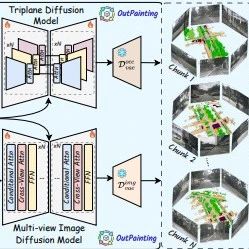
以下文章来源于3D视觉之心 ,作者3D视觉之心 3D视觉之心 . 3D视觉与SLAM、点云相关内容分享 点击下方 卡片 ,关注" 3D视觉之心 "公众号 第一时间获取 3D视觉干货 >> 点击进入→ 具身智能之心 技术交流群 更多干货,欢迎加入国内首个具身智能全栈学习社区 : 具身智能之心知识星球 (戳我) , 这里包含所有你想要的。 大规模场景生成的挑战 近年来,生成式人工智能的进步对自动驾驶产生了深远影响,其中扩散模型成为数据合成和驾驶仿真的关键工具。 一些方法将扩散模型作为数据生成机器,用于生成高保真的驾驶视频或多模态的合成数据,以增强感知任务,并生 成如车辆插队等关键但罕见的情况,从而丰富规划数据。除此之外,还有一些方法将扩散模型作为世界模型,用于 预测未来的驾驶状态,从而实现端到端的规划和闭环仿真。这些研究主要强调通过时间递归生成长期视频,鼓励扩 散模型输出时序一致的视频序列,以服务于后续任务。 然而,具备空间扩展能力的大规模场景生成仍是一个新兴但尚未被充分研究的方向,其目标是构建可用于任意驾驶 仿真的广阔而沉浸式的三维环境。一些开创性工作已经探索了大规模的三维驾驶场景生成。例如,有的方法利用扩 散 ...

苹果高管:AI将改变芯片设计
半导体芯闻· 2025-06-19 10:32
Core Viewpoint - Apple aims to leverage generative artificial intelligence to accelerate the design of its custom chips, as stated by its top hardware technology executive [1][2]. Group 1: Chip Design and Technology - Apple has learned the importance of using advanced tools for chip design, including the latest electronic design automation (EDA) software from leading companies like Cadence Design Systems and Synopsys [1][2]. - Generative AI technology has the potential to significantly enhance productivity by completing more design work in a shorter time frame [2]. Group 2: Strategic Decisions - The transition of Mac computers from Intel chips to Apple’s own silicon was a significant gamble for the company, undertaken without a backup plan, demonstrating a bold approach to innovation [2].


苹果高管称其计划利用AI设计芯片
news flash· 2025-06-19 08:48
Core Insights - The company aims to leverage generative artificial intelligence to accelerate the design of its core custom chips for devices [1] Summary by Category - **Company Strategy** - The company is focusing on utilizing generative AI technology to enhance the efficiency of its chip design process [1]
苹果拟借助生成式AI技术加速定制芯片设计流程
Huan Qiu Wang· 2025-06-19 06:53
Core Insights - Apple is considering the use of generative artificial intelligence technology to accelerate its custom chip design process [1][4] - The company has gained significant experience in chip design since the launch of the A4 chip in 2010, which is now widely used across various devices including Mac desktops and Vision Pro headsets [4] - Apple emphasizes the importance of using advanced tools in chip design, particularly the latest design software from Electronic Design Automation (EDA) firms [4] - Major EDA companies like Cadence Design Systems and Synopsys are integrating AI capabilities into their products, which could enhance design efficiency [4] - Apple made a decisive move in 2020 to transition its Mac product line from Intel chips to its own Apple Silicon without any backup plans, showcasing its commitment to innovation [4]
活动 | 福布斯中国与渣打「优先私人理财」共同推出第二届“创新无界”商业创意大赛
Sou Hu Cai Jing· 2025-06-18 12:12
继2024年首届"创新无界"商业案例大赛开展以来,福布斯中国与渣打中国联合为年轻一代持续倾注优质资源,不仅突破了传统商赛的固有框架,更实现了 金融机构实战经验与知名媒体深度洞察的无缝对接。 2025 渣打「优先私人理财」联合福布斯中国全新升级打造创新无界商业创意大赛,诚邀「优先私人理财」客户16至22岁的杰出子女参与。本次大赛聚焦 "AI 人工智能",旨在鼓励参赛者拥抱 AI 技术,借助其浪潮策划独特商业创意。 以创意之名,破圈而上:改变世界的起点,立足于无界的创新。 升级赛事亮点抢先看 梦幻跨界合作:福布斯中国携手渣打「优先私人理财」,强强联合、焕新升级赛事,为选手带来更广阔的商业视野。 2 优质创投资源:福布斯中国创投社交圈梦幻联动,行业资深导师全赛程深入辅导,助力优化商业计划,为参赛选手保驾护航。 5 官方认证:所有参赛者可获得福布斯中国及渣打「优先私人理财」官方参赛及获奖证书。 6 面试机会:决赛冠军组有机会获得一次国际知名媒体福布斯中国总部(上海)商业运营的面试选拔机会。 *最终结果将依据候选人综合表现及福布斯中国综合评定为准,非渣打中国决定 2025赛事安排及招募说明 报名阶段 即日起至2025年 ...

高盛:智能体AI将重塑软件业格局 2030年市场规模激增超20%
智通财经网· 2025-06-18 09:33
Group 1 - Goldman Sachs reports that the next phase of generative AI, termed "Agentic AI," will significantly transform the enterprise software ecosystem [1][2] - Over the next three years, Agentic AI is expected to unlock productivity gains at the application layer, with the global software market projected to expand by at least 20% by 2030 [2][3] - The customer service software market could see growth rates between 20% to 45%, driven by the integration of traditional SaaS and AI agents [2][3] Group 2 - SaaS companies are anticipated to capture a substantial share of the new Agentic AI market, but their innovation pace is critical, and the transition may not be linear [3][4] - By 2030, Agentic AI is expected to account for over 60% of the total software market, potentially becoming the new user interface for knowledge workers [3][4] - Existing SaaS leaders are showing signs of enhancing execution capabilities, indicating a clear strategic market awareness [3][4] Group 3 - The technological architecture for generative AI applications will require a new tech stack, leading to significant changes in existing architectures [4] - The rise of AI platform layers and the improvement of key middleware will be crucial for the development of AI-native applications [4] - SaaS companies must adapt to emerging AI standards and adjust their architectures to successfully integrate into the generative AI enterprise application ecosystem [4][5] Group 4 - Despite current limitations in SaaS giants' transitions due to generative AI technology maturity, these factors are expected to translate into sustained growth momentum after 2027 [5] - Investors are advised to focus on companies such as Microsoft, Google, Salesforce, ServiceNow, HubSpot, Adobe, and several private firms as potential investment opportunities [5]
万字解读AMD的CDNA 4 架构
半导体行业观察· 2025-06-18 01:26
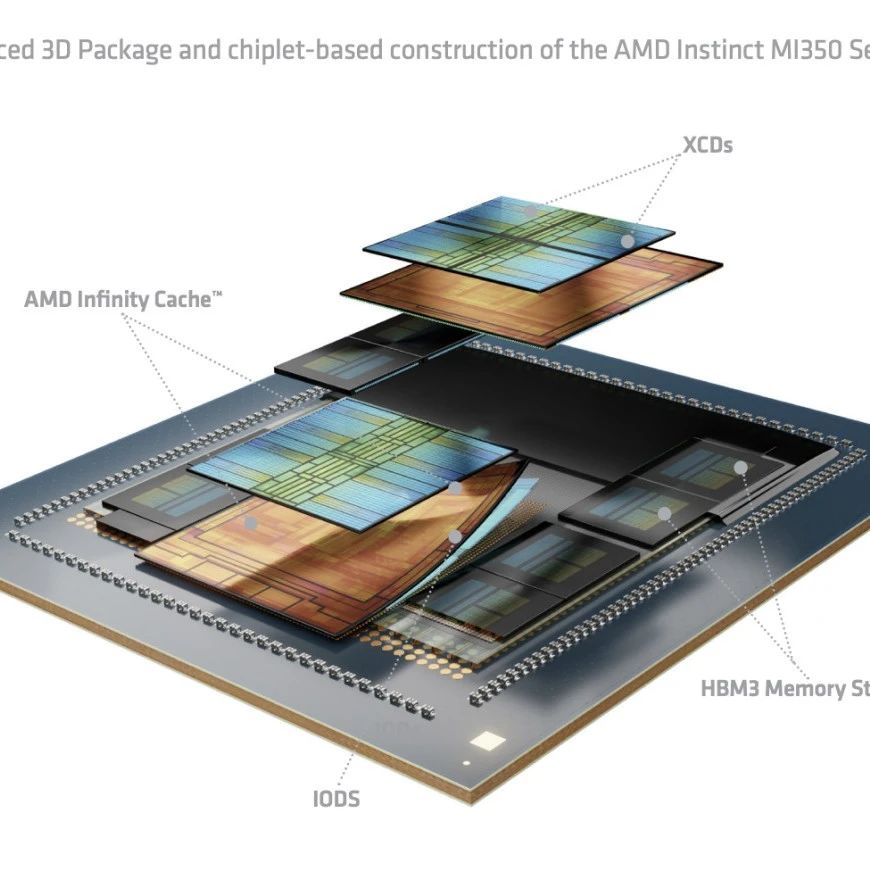
Core Viewpoint - AMD's CDNA 4 architecture represents a moderate update over CDNA 3, focusing on enhancing matrix multiplication performance for low-precision data types, which are crucial for machine learning workloads [2][26]. Architecture Overview - CDNA 4 maintains a similar system-level architecture to CDNA 3, utilizing a large chiplet setup with eight compute dies (XCD) and a memory-side cache of 256 MB [4][20]. - The architecture employs AMD's Infinity Fabric technology for consistent memory access across multiple chips [4]. Performance Comparison - The MI355X GPU, based on CDNA 4, features a clock speed of 2.4 GHz and 256 cores, compared to MI300X's 304 cores at 2.1 GHz, indicating a slight reduction in core count but improved clock speed [5]. - MI355X offers 288 GB of HBM3E memory with a bandwidth of 8 TB/s, surpassing Nvidia's B200, which has a maximum capacity of 180 GB and bandwidth of 7.7 TB/s [25]. Matrix and Vector Throughput - CDNA 4 has rebalanced execution units to focus on low-precision matrix multiplication, doubling matrix throughput per compute unit (CU) in many cases [6][39]. - The architecture supports new low-precision data formats, significantly enhancing AI performance, with matrix core improvements leading to nearly four times the computational throughput for low-precision formats [46][47]. Local Data Sharing (LDS) Enhancements - CDNA 4 increases the Local Data Share (LDS) capacity to 160 KB and doubles the read bandwidth to 256 bytes per clock, improving data locality for matrix multiplication routines [14][48]. - The architecture introduces new instructions for reading transposed LDS, optimizing memory access patterns for matrix operations [18]. Memory Hierarchy and Cache - The memory hierarchy includes a shared 4 MB L2 cache and a 32 KB L1 vector cache per CU, with enhancements for caching non-coherent data from DRAM [49][50]. - The Infinity Cache remains at 256 MB, providing high bandwidth and supporting the increased memory demands of modern AI workloads [53]. Chiplet Architecture - The CDNA 4 architecture continues to leverage a chiplet-based design, allowing for independent evolution of each chiplet for improved performance and manufacturability [35][36]. - Each XCD contains 36 compute units, organized into arrays, with a focus on maximizing yield and operational frequency [39]. System Communication and Expansion - The architecture includes eight AMD Infinity Fabric links, with improved speeds of up to 38.4 Gbps, enhancing communication bandwidth within server nodes [63]. - The design supports both direct compatibility with previous generations and progressive improvements for high-performance systems [62]. Conclusion - AMD's CDNA 4 architecture builds on the success of CDNA 3, focusing on optimizing performance for machine learning workloads while maintaining a competitive edge against Nvidia [26][27].


国际油价,暴涨!
Zhong Guo Ji Jin Bao· 2025-06-18 00:27
Economic Data Impact - US retail sales in May recorded the largest decline since the beginning of the year, indicating a slowdown in consumer spending, particularly in the automotive sector. Retail sales fell by 0.9% month-over-month, while core retail sales decreased by 0.3% [5] - The Federal Reserve is expected to maintain interest rates in its upcoming meeting, with market predictions indicating two potential rate cuts of 25 basis points each starting as early as September [5] Energy Sector Response - International oil prices surged due to escalating tensions in the Middle East and the EU's proposal to ban imports of Russian oil and gas by the end of 2027. WTI crude oil rose by $3.07 (4.28%) to $74.84 per barrel, while Brent crude increased by $3.22 (4.4%) to $76.45 per barrel [10][9] - Energy stocks experienced a broad increase, with Occidental Petroleum, ExxonMobil, Chevron, ConocoPhillips, and Schlumberger all showing gains [10][11] Airline Industry Developments - Indian Airlines canceled at least five international flights due to technical issues, affecting Boeing aircraft. This led to a decline in airline stocks, with American Airlines dropping over 3% and United Airlines falling more than 6% [7][8] Technology Sector Trends - Major technology stocks experienced declines, with Tesla dropping nearly 4%, Apple down over 1%, and Amazon falling by 0.59%. The overall trend indicates a challenging environment for large tech companies [12] - Amazon's CEO indicated that the adoption of generative AI tools will lead to a reduction in the workforce over the next few years, as fewer employees will be needed for certain tasks [13]

6月18日电,亚马逊称,在未来几年,预计生成式人工智能和智能代理的推广将减少公司的整体公司员工人数。
news flash· 2025-06-17 17:31
Core Insights - Amazon anticipates that the adoption of generative artificial intelligence and intelligent agents will lead to a reduction in the overall workforce in the coming years [1] Group 1 - The company expects a significant impact on employee numbers due to advancements in technology [1]

亚马逊(AMZN.O):在未来几年,我们预计生成式人工智能和智能代理的推广将减少我们的整体公司员工人数。
news flash· 2025-06-17 17:29
Core Insights - The company anticipates that the adoption of generative artificial intelligence and intelligent agents will lead to a reduction in overall employee numbers in the coming years [1] Group 1 - The implementation of generative AI and intelligent agents is expected to significantly impact workforce size [1]