ESG

Search documents
牛津大学终身教授傅晓岚:于交汇之处创新,构建“无人掉队的未来”
Xin Lang Cai Jing· 2025-12-15 02:57
新浪财经ESG评级中心提供包括资讯、报告、培训、咨询等在内的14项ESG服务,助力上市公司传播ESG理念,提升ESG可持续发 展表现。点击查看【 ESG评级中心服务手册】 在科技迅猛发展、创新浪潮席卷全球的今天,有一位学者以深邃的思想与温暖的情怀,架起了学术与社会、理论与实践、当下与未来的桥梁。 她是在牛津大学深耕科研、在联合国贡献智慧、在创业路上践行使命的傅晓岚教授。她以"感谢"二字回应辉煌成就,展现出谦逊与担当并重的 精神境界。从突破无形资产估值难题,到创办社会企业推动成果落地;从倡导"没有人掉队"的科技未来,到提出"创新发生在交汇处"的深刻洞 见,傅晓岚向胡润百富讲述了她对科学、社会与青年的细腻洞见,分享她源自责任与热爱的不竭动力。 傅晓岚教授 英国社会科学学院院士,牛津大学社会科学领域首位大陆华人终身教授,牛津大学技术与管理发展研究中心创始主任,中国科学院、中国社会 科学院、剑桥大学高级客座研究员。 2015年,被联合国秘书长潘基文亲自聘请为"联合国可持续发展技术促进机制十人顾问小组"成员,是全球学界唯一代表。2018年由联合国秘书 长亲自聘任为联合国"技术银行"理事会理事。2025年担任联合国经济与 ...


上海高金执行院长程仕军:我们正站在一个由科技重构未来的关键节点
Xin Lang Cai Jing· 2025-12-15 02:51
Group 1 - The core viewpoint of the news is the emphasis on the integration of technology and finance to create a more resilient and efficient sustainable development paradigm, moving away from traditional pollution-first approaches [2][5] - The "2025 China Sustainable Investment Development Forum" was held on December 12, organized by Shanghai Jiao Tong University and aimed at promoting sustainable investment practices [1][4] - The forum is part of a continuous effort by the Shanghai Advanced Institute of Finance to explore sustainable investment, having been held for three consecutive years [1][4] Group 2 - The Sina Finance ESG Rating Center is the first Chinese platform dedicated to ESG information and ratings, promoting sustainable development and responsible investment [3][7] - The center aims to establish ESG evaluation standards suitable for China's characteristics and enhance corporate ratings, thereby advancing the ESG investment landscape in China [3][7] - Sina Finance has launched multiple ESG innovation indices to provide investors with more options regarding corporate ESG performance [3][7]
“科技+品质” 双轮驱动 惠达卫浴交出ESG硬核答卷
Huan Qiu Wang· 2025-12-15 02:43
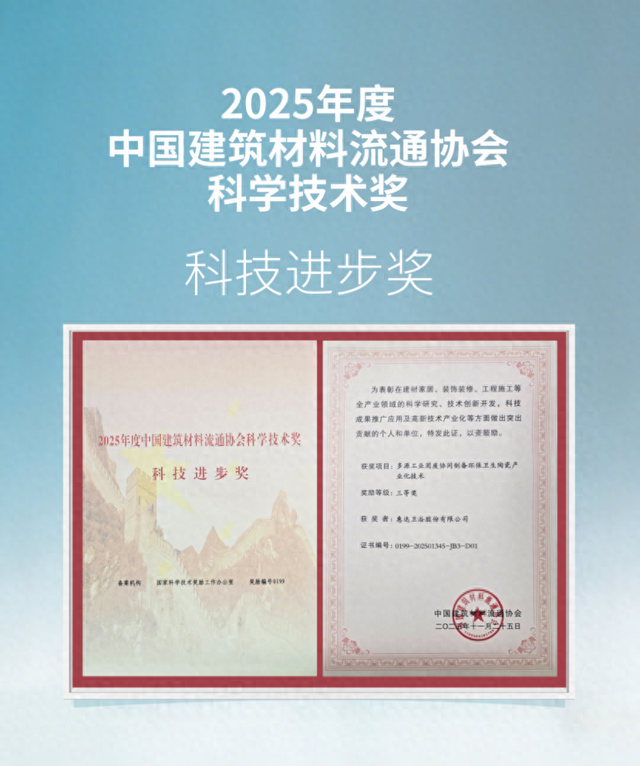
Core Insights - The company Huida has won the Science and Technology Progress Award from the China Building Materials Circulation Association for 2025, thanks to its integration of ESG principles into green technology [1] Group 1: ESG Integration - ESG has become a new standard for evaluating corporate excellence, focusing on environmental, social, and governance aspects [3] - Huida is leveraging advanced technology to address environmental challenges, particularly in waste management, and is committed to user health and industry standards [4] Group 2: Technological Advancements - Huida has developed an "internationally leading" solid waste resource recycling technology, significantly improving production efficiency and sustainability [4] - The company has introduced a unique process combining "classified recycling + non-flocculating" treatment, enhancing the stability of recycled materials and increasing product quality [4] Group 3: Environmental Impact - From June 2023 to December 2024, Huida produced 347.67 million eco-friendly ceramics and managed to recycle significant amounts of waste, including 6,082 tons of waste porcelain and 11,033 tons of waste mud [6] - The company's green manufacturing practices are yielding tangible economic benefits, demonstrating that environmental responsibility can lead to substantial value creation [6] Group 4: Global Reach - Huida's advanced technology has positioned it to successfully market its products in over 100 countries and regions, emphasizing the importance of "technology + quality" in its global strategy [8] - The company aims to continue enhancing its product offerings through technological innovation and a commitment to sustainability [8]

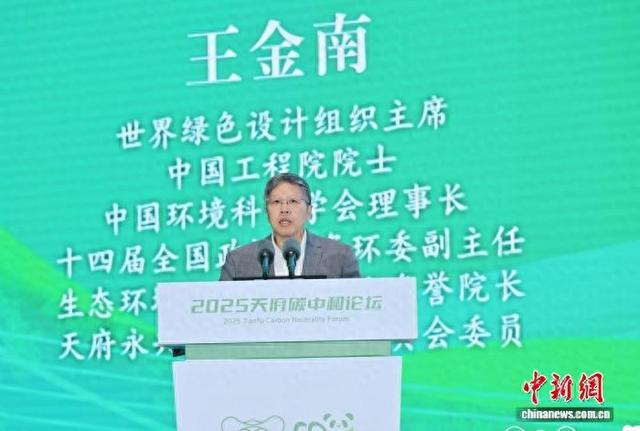
中国工程院院士王金南呼吁加快建立绿色设计制度
Xin Lang Cai Jing· 2025-12-15 02:40
Core Viewpoint - The 2025 Tianfu Carbon Neutral Forum emphasizes the need for establishing a green design system to promote green and low-carbon transformation, as highlighted by Wang Jinnan, an academician of the Chinese Academy of Engineering [1][6]. Group 1: Green Design Concept - Green design is viewed as a series of innovative activities and institutional arrangements aimed at minimizing ecological impact and health risks throughout the entire lifecycle of products [3][7]. - The goal of green design is to achieve sustainable green low-carbon development and harmonious coexistence between humans and nature [3][7]. Group 2: Areas of Focus - The green design framework has expanded from traditional product dimensions to four major areas: decision management, industry sectors, specific products, and infrastructure [3][7]. - Decision management in green design is already well-represented in China's development strategies and plans [7]. Group 3: Initiatives by World Green Design Organization - As the president of the World Green Design Organization (WGDO), Wang Jinnan outlined initiatives to establish international standards for green design, promote education and talent development, and support the creation of world green design capitals [3][7]. - The WGDO, established in September 2013 in Brussels, aims to facilitate cooperation in green design technologies, materials, capital, and talent, creating a global dialogue platform for green development [4][7]. Group 4: ESG Rating Center - The Sina Finance ESG Rating Center offers 14 ESG services, including information, reports, training, and consulting, to help listed companies communicate ESG concepts and enhance their sustainable development performance [1][5]. - The center aims to promote sustainable development and responsible investment, while also facilitating the establishment of ESG evaluation standards in China [5][8].
大摩:网络安全仍具潜在的投资机会,予Okta、Palo Alto Networks等多股“增持”评级
Ge Long Hui· 2025-12-15 02:39
Core Insights - Morgan Stanley's analysis indicates that perpetual funds, which select companies and assets based on Environmental, Social, and Governance (ESG) criteria, have lower allocations in the cybersecurity sector compared to the MSCI All Country World Index. This gap is even larger when compared to core AI-related companies, suggesting significant investment opportunities in cybersecurity [1] Group 1: Market Trends - The growth momentum of AI and cybersecurity is expected to provide long-term growth catalysts for cybersecurity companies, highlighting their investment value [1] - The total addressable market for cybersecurity is projected to grow from approximately $270 billion to $377 billion by 2028, representing a compound annual growth rate (CAGR) of about 12% over three years [1] - Cloud security is identified as the fastest-growing area within cybersecurity [1] Group 2: Company Ratings - Analysts have assigned "overweight" ratings to several companies in the cybersecurity sector, including Netskope, Okta, Palo Alto Networks, Varonis Systems, and Zscaler [1] - Among cyber insurance companies, preference is given to Beazley, which is headquartered in London [1]




复旦微电盘中快速拉升,人工智能AIETF(515070)震荡走强
Mei Ri Jing Ji Xin Wen· 2025-12-15 02:15
今日A股低开后震荡走强,人工智能龙头股复旦微电盘中快速拉升,大涨超5%,消息方面,"2025中国 AI赛道与ESG可持续发展大会"召开,复旦微电凭借其在环境、社会及治理维度和在投资者关系管理方 面的突出表现,成功摘得"2025年度上市公司ESG价值传递奖"及"2025年度上市公司卓越投关建设奖"。 人工智能AIETF(515070)盘中下跌0.2%,持仓股三七互娱、新易盛、中科星图、寒武纪等个股表现较 好。 人工智能AIETF(515070)跟踪CS人工智能主题指数(930713),成分股选取为人工智能提供技术、 基础资源以及应用端个股,聚集人工智能产业链上中游,俗称"机器人"大脑"缔造者",万物互联"地 基"。权重股包括中际旭创、新易盛、寒武纪-U、科大讯飞、豪威集团、海康威视、澜起科技、金山办 公、紫光股份等国内科技龙头。 (文章来源:每日经济新闻) 中信建投证券认为,从9月初至12月初,AH两地市场经历了较长时间的调整,投资者情绪趋于谨慎,而 近期,多项关键事件与数据相继公布,整体基调符合或略好于市场预期。我们认为牛市底层逻辑仍在, 主要由结构性行情和资本市场改革政策推动。目前市场已经基本完成调整,叠加 ...

世界经济论坛发布全球绿色经济报告
Xin Lang Cai Jing· 2025-12-15 01:49
Core Insights - The report by the World Economic Forum highlights that the green economy has reached a multi-trillion dollar market size and is expected to continue its rapid growth, becoming a key driver of global economic expansion [1][6]. Market Size and Growth - The global green economy is projected to exceed $5 trillion in market size by 2024 and is expected to grow to over $7 trillion by 2030, making it one of the most dynamic growth sectors, second only to the technology industry [2][7]. - The emissions reduction sector, which includes renewable energy, energy infrastructure, storage, electric vehicles, and carbon capture technologies, has a market size of $4.6 trillion [2][7]. - The adaptation and resilience sector, which encompasses water management, climate-resilient infrastructure, and agricultural technologies, is estimated at $1.1 trillion but is considered significantly underestimated [2][7]. Investment and Opportunities - The report emphasizes the importance of green revenue flowing into businesses and markets, suggesting that this metric better reflects market size and opportunities from the perspectives of companies and investors [3][8]. - As technology costs decline and industrial policies accelerate capital allocation, the green economy is becoming industrialized and scalable, presenting significant opportunities for both businesses and governments [3][8]. China's Role in Green Economy - China is identified as a major driver of global green economy expansion, leading in investment, innovation, and deployment across nearly all key dimensions [4][9]. - China's clean energy investment is projected to rise from $372 billion in 2019 to $659 billion in 2024, with a compound annual growth rate of 12%, significantly outpacing Europe [4][9]. - The country has seen a fourfold increase in solar power capacity and a doubling of wind power capacity since 2020, contributing over 60% of the global new installations in these sectors [4][9]. - By 2025, China's carbon emissions are expected to decline for the first time while economic activity continues to grow, reflecting the impact of two decades of strategic industrial policies [4][9].
如何应对东道国气候风险,筑牢海外投资安全网?
Zhong Guo Huan Jing Bao· 2025-12-14 23:33
Core Viewpoint - China's outbound direct investment (ODI) is expanding significantly, with 52,000 overseas enterprises established in 190 countries by the end of 2024, including 19,000 in Belt and Road Initiative countries. However, climate risks in host countries are increasingly impacting the safety of these investments, as global temperatures have risen approximately 1.55°C above pre-industrial levels, surpassing the 1.5°C target set by the Paris Agreement, highlighting the urgent need for climate risk management [1]. Group 1: Climate Risks Faced by Chinese Outbound Investment - Chinese outbound investment enterprises face three main climate risk impacts: physical risks that increase operational costs and weaken investment willingness, regulatory challenges from stricter environmental regulations, and limitations imposed by the rising demand for green products and stricter ESG standards [2][3][4]. - Physical risks from climate change lead to higher operational costs due to increased disaster preparedness investments and disruptions in supply chains, which can reduce production efficiency and product delivery [2]. - Stricter environmental regulations in developed economies impose higher compliance costs and technological upgrade pressures on Chinese enterprises, while many developing economies lack the capacity to adapt to climate change, increasing potential investment risks [2][3]. Group 2: Recommendations for Enhancing Investment Quality and Resilience - To effectively address climate risks in host countries and enhance the quality and resilience of China's outbound direct investment, it is recommended to strengthen corporate climate risk management capabilities and stabilize investment willingness [4][5]. - Companies should integrate climate risk assessments into their investment decision-making processes and develop emergency response plans for extreme weather events to mitigate risks from the outset [5]. - Promoting supply chain resilience through diversified and alternative supply networks, as well as leveraging digital supply chain management technologies, is essential to ensure operational continuity [5]. - Enhancing employee health and efficiency management by implementing protective measures against high temperatures and providing climate adaptation skills training can help mitigate the impact of climate disasters on labor productivity [5]. Group 3: Policy Coordination and Financial Support - Strengthening international policy coordination and cooperation mechanisms is crucial for optimizing the cross-border investment environment, including establishing regular dialogues on ecological and environmental policies with developed economies [6][7]. - Developing targeted fiscal and tax support policies for investments in disaster protection, energy-saving equipment, and low-carbon technology can guide enterprises towards a green transition [8]. - Enhancing ESG management capabilities among enterprises and aligning with international ESG disclosure standards will improve transparency and build trust with international investors [8].
银行绿色金融债呈现“三升”:规模翻倍、主体多元、成本优化
Zhong Guo Zheng Quan Bao· 2025-12-14 20:19
Core Insights - The issuance of green financial bonds in the banking sector has significantly increased in 2023, with a total issuance exceeding 530 billion yuan, marking a year-on-year increase of over 186% [1][5][6] Group 1: Issuance Scale and Growth - As of December 14, 2023, the banking industry has issued 68 green financial bonds, with a total scale surpassing 530 billion yuan, which is an increase of 333.6 billion yuan compared to the previous year [1] - The issuance from state-owned banks has been substantial, with the six major state-owned banks collectively issuing 206 billion yuan in green financial bonds, approximately three times the total issuance of the previous year [3][4] Group 2: Participation of Different Banking Institutions - Regional small and medium-sized banks have accelerated their participation, with the number of green financial bonds issued increasing from 22 to 30 compared to the same period last year [1][2] - Notably, since November, eight regional banks have issued a total of 172 billion yuan in green financial bonds, indicating a rapid increase in issuance activity [2] Group 3: Policy and Market Drivers - The rapid development of green financial bonds is closely linked to the deepening of ESG practices in the banking sector, supported by policy guidance and market demand [5][6] - Recent policies have emphasized the importance of increasing green credit and developing green financial products, which has facilitated the growth of green bond issuance [5][6] Group 4: Cost and Efficiency Improvements - The average issuance interest rate for green financial bonds has decreased from 1.96% in 2024 to 1.75% in 2023, enhancing the cost-effectiveness of financing for green projects [4] - The introduction of floating rate green bonds has allowed banks to better adapt to market interest rate fluctuations, improving the resilience of the bond market [4]



东方财富证券:A股上市公司环境、社会和公司治理(ESG)实践深度研究
Sou Hu Cai Jing· 2025-12-14 07:14
Core Insights - The report by Dongfang Caifu Securities highlights the significant progress made by A-share listed companies in Environmental, Social, and Governance (ESG) practices, while also identifying ongoing challenges in their development [1][3]. Policy Landscape - A multi-layered policy framework for ESG has been established in China, with a focus on mandatory disclosure of sustainability reports for certain listed companies starting in 2026 [1][15]. - International standards such as ISSB and GRI are becoming benchmarks for cross-border disclosures, with various markets enhancing their disclosure requirements [1][21]. Value Creation - There is a notable positive correlation between ESG performance and corporate profitability, with governance dimensions having the most significant impact on profitability metrics like ROA and ROE [1][33]. - High ESG-rated companies tend to enjoy lower financing costs and greater consumer preference for green products [1][3]. ESG Management Practices - 9.31% of listed companies have fully articulated their ESG strategies, with a tiered structure from basic to excellent levels of maturity, particularly among financial institutions and state-owned enterprises [2]. - 34.84% of companies have established ESG management frameworks, with larger firms showing higher rates of implementation [2]. Information Disclosure - The disclosure rate of ESG information has reached 45.85%, positively correlated with company market capitalization, although only 9.46% of reports have undergone third-party verification [2][3]. - Companies are increasingly using various channels, such as official websites and ESG press releases, to communicate their sustainability values [2]. Sector-Specific Practices - ESG practices are deepening across supply chains, human resources, and product services, with many industries implementing supplier ESG assessment mechanisms [2]. - The concept of Diversity, Equity, and Inclusion (DE&I) is gaining traction, although the representation of female employees remains below the national average [2]. Sustainable Finance - The ESG bond market is steadily growing, with green bonds as a core component, and the scale of ESG public funds and bank wealth management products is gradually recovering [3]. Future Directions - A-share listed companies are transitioning from compliance-driven ESG responses to value creation, but there is still significant room for improvement in disclosure quality, strategic implementation, and issue depth [3].