
绿色金融债券

Search documents
建设银行:2025年营收超7400亿元 净息差降幅同比收窄2个基点
Zhong Guo Zheng Quan Bao· 2026-03-27 11:49
Core Insights - China Construction Bank (CCB) reported a total asset of 45.63 trillion yuan by the end of 2025, marking a year-on-year growth of 12.47% [1] - The bank's net profit reached 339.79 billion yuan, reflecting a 1.04% increase compared to the previous year [1] - CCB's non-performing loan ratio stood at 1.31% with a provision coverage ratio of 233.15% [1] Financial Performance - CCB's operating income for 2025 was 740.87 billion yuan, showing a year-on-year growth of 1.69% [1] - The net interest margin was 1.34%, down by 17 basis points year-on-year, but the decline rate narrowed by 2 basis points [1] - The bank's core tier-one capital net amount reached 3.46 trillion yuan, up 9.46% year-on-year [1] Asset and Liability Management - CCB's total loans reached 26.93 trillion yuan, with a year-on-year growth of 7.53% [2] - The bank's bond investments amounted to 12.43 trillion yuan, increasing by 20.51% year-on-year [2] - Total deposits grew to 30.84 trillion yuan, reflecting a 7.39% increase, with a current deposit ratio exceeding 40% [2] Sector-Specific Developments - CCB's technology finance loans reached 5.25 trillion yuan, growing by 18.91% year-on-year [3] - Green loans totaled 6 trillion yuan, with a year-on-year increase of 20.54% [3] - Inclusive finance loans for small and micro enterprises reached 3.83 trillion yuan, up 12.37% year-on-year [3] Digital and Pension Finance - The bank's digital finance initiatives led to 546 million users, with 30.05 million active digital yuan wallets [3] - The asset management scale of the second pillar of pension finance reached 723.335 billion yuan, reflecting a 15.36% year-on-year growth [3]

CCB(00939) - 2025 Q4 - Earnings Call Transcript
2026-03-27 10:32
Financial Data and Key Indicators Changes - In 2025, the company reported a net profit increase of 1.04% to RMB 339 billion, with operating income rising by 1.69% quarter-on-quarter [5][6] - The net interest margin (NIM) stood at 1.34%, return on assets (ROA) at 0.79%, return on equity (ROE) at 10.04%, and capital adequacy ratio at 19.69% [5][6] - The non-performing loan (NPL) ratio was reported at 1.31%, with a provision coverage ratio of 233.15% [6][7] Business Line Data and Key Indicators Changes - Total assets increased by 12% to RMB 45.363 trillion, while gross loans to customers rose by 7.47% to RMB 27.77 trillion [7] - Financial investments grew by 12.9% to RMB 12.9 trillion, and deposits increased by 7% [7] - Technology finance loans exceeded RMB 5 trillion, with green finance loans reaching RMB 6 trillion, marking a 20.54% increase [9][10] Market Data and Key Indicators Changes - The company reported a significant increase in loans to key sectors, with double-digit growth in technology, green finance, and inclusive finance [9][42] - Loans in key regions such as Beijing, Tianjin, Hebei, and the Greater Bay Area maintained steady growth, outperforming the bank-wide average [11][43] - The retail finance sector showed strong competitiveness, with domestic loans exceeding RMB 9 trillion, accounting for 32% of total loans [43] Company Strategy and Development Direction - The company aims to support the national strategy and enhance its role as a leading financial institution in China, focusing on the Five Priorities of finance business [18][19] - Plans for 2026 include expanding financial services for infrastructure projects and enhancing financial services based on local conditions [19][20] - The company is committed to high-quality development, integrating commercial and retail banking, and enhancing customer service capabilities [20][21] Management's Comments on Operating Environment and Future Outlook - Management expressed confidence in maintaining steady growth and improving asset quality, emphasizing the importance of risk management [72][73] - The company plans to adapt to macroeconomic changes and enhance its risk control measures, particularly in retail loans [72][73] - The outlook for NIM in 2026 is cautiously optimistic, with expectations of a slower decline due to improved asset-liability management [49][54] Other Important Information - The company dispatched a total dividend of RMB 106 billion, with an interim dividend of RMB 1.858 per 10 shares and a final dividend of RMB 2 per 10 shares [8] - The company has made significant advancements in digital finance, with mobile banking users reaching 546 million and digital economy loans growing by 18.7% to RMB 891 billion [10] Q&A Session All Questions and Answers Question: What are the core drivers behind the good performance in 2025? - Management attributed the success to stable NIM structure, comprehensive services, cost management, and enhanced risk management capabilities [26][27][30][31] Question: What is the new arrangement in terms of regional disbursement and sectors for 2026? - The company plans to support modern industrial clusters, enhance competitiveness in the real estate sector, and focus on consumer financing [40][45][46] Question: Can you introduce the NIM influences in terms of supply and demand sides? - The NIM narrowed by two basis points in 2025, influenced by savings deposit repricing and proactive management strategies [49][50][54] Question: What are the key initiatives that CCB has with respect to AI technology? - The company is implementing AI across all business segments, enhancing computational power, and improving service efficiency through smart applications [76][80]
CCB(00939) - 2025 Q4 - Earnings Call Transcript
2026-03-27 10:30
Financial Data and Key Indicators Changes - In 2025, the company reported a net profit increase of 1.04% to CNY 339 billion, with operating income rising by 1.69% quarter-on-quarter [4][23] - Profit before provision increased by 1.7% year-on-year, with a net interest margin (NIM) of 1.34%, return on assets (ROA) at 0.79%, and return on equity (ROE) at 10.04% [4][24] - The capital adequacy ratio stood at 19.69%, cost-to-income ratio at 29.44%, and non-performing loan (NPL) ratio at 1.31%, reflecting strong risk control [4][12] Business Line Data and Key Indicators Changes - Total assets increased by 12% to CNY 45.363 trillion, with gross loans to customers rising by 7.47% to CNY 27.77 trillion [5] - Financial investments grew by 12.9% to CNY 12.9 trillion, while deposits increased by 7% [5] - Technology finance loans exceeded CNY 5 trillion, green finance reached CNY 6 trillion, and inclusive finance loans totaled CNY 3.83 trillion [7][39] Market Data and Key Indicators Changes - The company reported strong growth in key regions such as Beijing-Tianjin-Hebei, Yangtze River Delta, and Greater Bay Area, with domestic loans exceeding CNY 9 trillion [9][40] - The retail finance sector showed competitiveness, with personal consumption loans growing by 29.41% [8][40] - The international business loan balance reached CNY 1.5 trillion, with cross-border RMB settlement at CNY 6.5 trillion [10] Company Strategy and Development Direction - The company aims to support national strategies and enhance its role as a leading financial institution, focusing on the Five Priorities of finance business [16][17] - Plans for 2026 include expanding financial services for infrastructure projects and enhancing county-level financial services [17][18] - The company is committed to high-quality development, integrating commercial and retail banking, and enhancing customer service capabilities [19][33] Management's Comments on Operating Environment and Future Outlook - Management highlighted a stable and positive recovery trend in profit growth, attributing success to optimized asset quality and diversified income structure [23][24] - The outlook for 2026 includes a focus on supporting modern industrial clusters and responding to domestic demand [41][42] - Management emphasized the importance of risk management, particularly in retail loans, to maintain quality business [64][65] Other Important Information - The provision coverage ratio is 233.15%, indicating strong risk management capabilities [5][29] - The company has developed 12 enterprise-level models across ecosystems to enhance customer service and operational efficiency [11] - AI technology is being integrated across various business segments to improve service quality and operational efficiency [66][67] Q&A Session Summary Question: What are the core drivers behind the good performance in 2025? - Management attributed the performance to stabilized NIM structure, diversified income sources, and effective cost management [24][25] Question: Can you introduce the NIM influences in terms of supply and demand sides? - The CFO explained that NIM narrowed to 1.34% due to changes in savings deposits and proactive management strategies [44][46] Question: What measures have you adopted in terms of risk management? - Management emphasized a focus on high-quality development and effective risk control measures to maintain a low NPL ratio [62][63]
每日债市速递 | 本周央行公开市场将有2776亿元逆回购到期
Wind万得· 2026-03-08 22:50
Group 1: Open Market Operations - The central bank conducted a 448 billion yuan 7-day reverse repurchase operation on March 6, with a fixed rate of 1.40%, resulting in a net withdrawal of 2,242 billion yuan for the day, and a total net withdrawal of 13,634 billion yuan for the week [1][3]. Group 2: Funding Conditions - The interbank market remains loose, with the weighted average interest rate of DR001 rising nearly 5 basis points to around 1.32%. Overnight quotes on the anonymous click system (X-repo) also increased to 1.3%, although the supply of funds remains ample [3]. Group 3: Interbank Certificates of Deposit - The latest transaction for one-year interbank certificates of deposit among major banks is around 1.557%, unchanged from the previous day [7]. Group 4: Bond Market Overview - The yields on major interbank bonds showed slight differentiation, with long-term bonds being relatively weak. Specific yield changes include a decrease of 0.60% for 14-year government bonds and an increase of 0.90% for 7-year bonds [9]. Group 5: National Development and Reform Commission Initiatives - The National Development and Reform Commission plans to implement several strategic projects during the 14th Five-Year Plan period, including major energy and transportation infrastructure investments exceeding 1 trillion yuan [13]. Group 6: Monetary Policy Tools - The central bank will flexibly and efficiently utilize various monetary policy tools, including reserve requirement ratio cuts and interest rate reductions, to guide and regulate interest rates and promote low financing costs [13]. Group 7: Fiscal Policy Highlights - The Ministry of Finance announced record-high fiscal expenditures exceeding 30 trillion yuan, with new government bond issuance reaching 11.89 trillion yuan, marking the largest effort in recent years [14]. Group 8: Capital Market Development - The China Securities Regulatory Commission aims to enhance the stability of the capital market and improve the mechanisms for cross-cycle and counter-cyclical adjustments, supporting innovative enterprises in the capital market [14].


能源早新闻丨低成本制备成功!我国团队用核“边角料”破解关键技术难题
中国能源报· 2026-03-08 22:33
Group 1: National Development and Investment - The National Development and Reform Commission plans to implement a series of major energy projects exceeding one trillion yuan during the 14th Five-Year Plan period, including hydropower and offshore wind energy projects [2] - The Ministry of Human Resources and Social Security aims to conduct over 10 million subsidized vocational skills training sessions this year, focusing on low-altitude economy, new energy vehicles, and artificial intelligence [2] Group 2: Green Finance and Infrastructure - The China Development Bank issued 12 billion yuan in green financial bonds to support green upgrades in infrastructure, with a subscription rate of 3.01 times, and aims to save 25.47 million tons of standard coal annually [3] - The funds raised will be used for green low-carbon transformation and resource recycling industries [3] Group 3: Technological Innovations - A research team from Peking University developed a new composite catalyst using uranium waste to efficiently synthesize ammonia under mild conditions, published in Nature Communications [4] - A new flexible thermoelectric material with record-breaking performance was developed, enabling self-powered wearable devices [5] - A new generation of deep-water multifunctional marine engineering vessel was launched, designed for deep-sea development with advanced equipment [5] Group 4: International Developments - The EU established a binding target to reduce greenhouse gas emissions by 90% by 2040 compared to 1990 levels, enhancing regulatory support for climate neutrality by 2050 [7] - Kuwait's national oil company announced production cuts due to geopolitical tensions affecting oil transport safety [7] Group 5: Corporate News - Daqin Railway reported a 1.37% year-on-year increase in cargo transportation volume for February, with a total of 28.04 million tons transported [9]
2025年我国发行各类绿色债券10778.8亿元
Xin Hua Wang· 2026-02-20 05:19
Group 1 - In 2025, China issued a total of 1,077.88 billion yuan in various green bonds, with a year-end custody amount reaching 2,415.48 billion yuan [1] - The structure of the green bond market remained stable, with green financial bonds increasing by 129.1% year-on-year and green corporate credit bonds growing by 15.9% [1] - The secondary market for green bonds in China saw cumulative transactions of nearly 1.2 trillion yuan in 2025, representing a year-on-year growth of 78.8%, with an average turnover rate of 57.1% [1] Group 2 - The green bond index in China operated steadily in 2025, with an annual cumulative growth of 1.7% and a maximum drawdown of 0.4%, which is 1.3 percentage points lower than the maximum drawdown of the comprehensive bond index during the same period [1] - By the end of 2025, the number of sample bonds in the green bond index reached 615, an increase of 17.6% year-on-year [1] - The sample bonds covered 255 issuers, with the financial sector having the highest proportion at 43.9%, followed by the industrial and public utility sectors [1]
如皋农商银行引金融“活水” 润绿色产业
Xin Hua Ri Bao· 2026-01-29 21:43
Core Viewpoint - Rugao Rural Commercial Bank is leveraging the opportunity of Rugao City being approved as a "Jiangsu Province Green Finance Innovation Reform Pilot Zone," positioning green finance as a core engine for high-quality development [1] Group 1: Institutional Initiatives - The bank has strategically planned at the board level by approving the "Green Finance Development Strategy," integrating green and sustainable practices into its development DNA [1] - The management has set hard indicators for green credit and established a dedicated Green Finance Center under the Inclusive Finance Department to promote green business [1] - The bank ensures precise resource allocation to green low-carbon sectors through differentiated credit policies and annual environmental information disclosure [1] Group 2: Product Innovation - The bank has launched a range of specialized green credit products tailored to Rugao's characteristics as an agricultural city, manufacturing hub, and water transport nexus [1] - Key products include "Environmental Loans," "Pollution Rights Mortgage Loans," "Green Energy Loans" for photovoltaic construction, "Smart Manufacturing Loans," and "Agricultural Supply Chain Loans" to support green agriculture [1] - As of November 2025, the balance of green loans reached 1.439 billion yuan, reflecting an approximate 20% increase since the beginning of the year [1] Group 3: Market Expansion - On December 11, 2025, the bank successfully issued 500 million yuan in green financial bonds with a three-year term and a coupon rate of 1.95%, with funds directed towards water environment governance and rural living environment improvement projects [1] - It is estimated that these projects will annually clear over 80,000 tons of waste and complete 200,000 cubic meters of river dredging, achieving significant environmental benefits [1] Group 4: Future Outlook - Moving forward, Rugao Rural Commercial Bank aims to deepen its green finance service system, focusing on key areas such as green manufacturing, green transportation, and beautiful rural development [2]
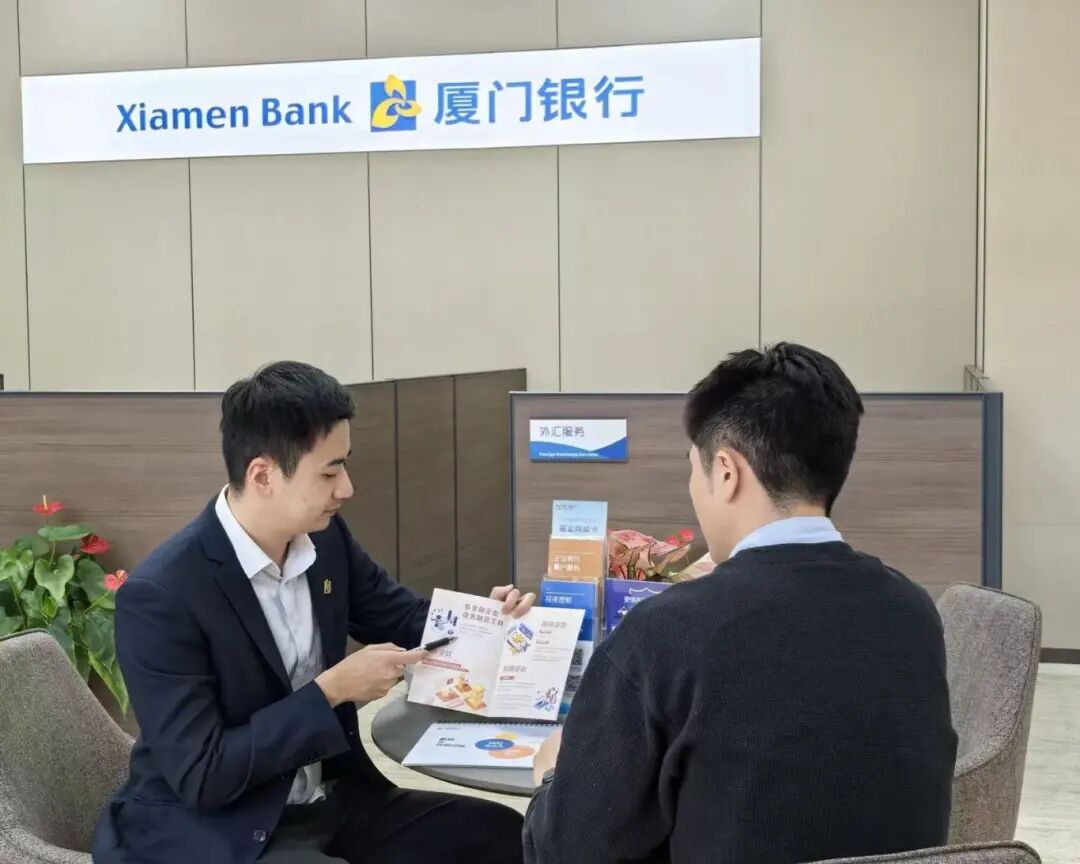
厦门银行打造债券服务矩阵 助实体经济高质量发展
Jin Rong Jie· 2026-01-24 03:34
Group 1 - Xiamen Bank is the first local bank in Fujian Province to have independent lead underwriting qualifications, actively seizing opportunities in the bond market expansion and upgrading [2] - The bank has established a professional, diversified, and efficient bond business service system, providing tailored bond financing solutions for enterprises, effectively broadening financing channels and optimizing debt structures [2] - By the end of 2025, Xiamen Bank has served clients including state-owned enterprises, private enterprises, and equity investment institutions, with a cumulative bond issuance scale exceeding 100 billion yuan [3] Group 2 - Xiamen Bank has positioned bond underwriting as a key strategy to support the regional real economy, enhancing direct financing channels for enterprises [3] - The bank has actively promoted several "firsts" in the bond market, including leading the first long-term technology innovation bond for private enterprises in Fujian Province [3] - The bank has also participated in underwriting the first green perpetual medium-term notes in Fujian Province for 2025, contributing to the development of a modern industrial system [3] Group 3 - Xiamen Bank has focused on supporting private enterprises, providing professional and efficient bond underwriting and issuance support to over ten private companies [4] - The bank has innovated financing support models for private enterprises by creating Credit Risk Mitigation Warrants (CRMW), effectively reducing investor credit risk concerns [4] - This initiative has helped private enterprises, especially technology-driven companies, overcome financing bottlenecks and improve the regional direct financing ecosystem [4] Group 4 - Xiamen Bank has issued special financial bonds to broaden funding sources and provide targeted support to key industries, helping enterprises reduce financing costs [5] - In 2025, the bank successfully issued 3 billion yuan in green financial bonds for infrastructure upgrades and clean energy industries, and 1 billion yuan in technology innovation financial bonds for strategic emerging industries [5] - These measures not only lower financing costs for related enterprises but also demonstrate the bank's commitment to the real economy and national strategic orientation [5]
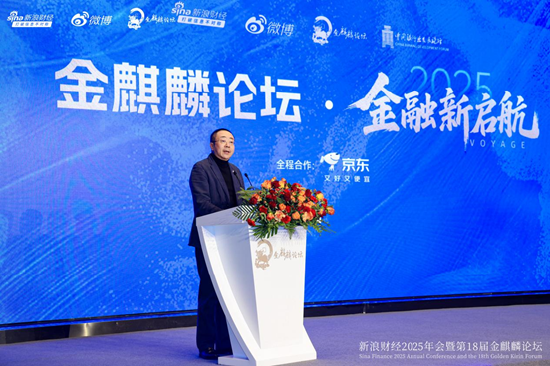
杨居庄:以科技绿色普惠养老数字金融 赋能经济高质量发展
Xin Lang Cai Jing· 2026-01-15 09:50
Core Viewpoint - The 18th Golden Unicorn Forum emphasizes the role of finance in supporting high-quality economic development during the "14th Five-Year Plan" and outlines the strategic focus areas for the "15th Five-Year Plan" [1][10]. Group 1: Company Overview - Bohai Bank, established in December 2005 in Tianjin, is the only national joint-stock commercial bank founded with foreign investment participation since the revision of the Commercial Banking Law in 2003 [3][12]. - As of June 2025, the total assets of Bohai Bank reached 1.82 trillion yuan, with a network covering 25 provinces, municipalities, and special administrative regions in China [3][12]. Group 2: Financial Performance - During the "14th Five-Year Plan" period, Bohai Bank achieved a successful conclusion with both revenue and profit growth [3][12]. - The bank's international ratings have remained stable and positive, reflecting its solid performance amid challenging macroeconomic conditions [3][12]. Group 3: Strategic Focus Areas - The bank's core strategies for the "15th Five-Year Plan" include advancing technology finance, green finance, inclusive finance, pension finance, and digital finance [4][13]. - In technology finance, Bohai Bank aims to support the entire lifecycle of technology enterprises, focusing on key innovation regions such as Beijing-Tianjin-Hebei, the Yangtze River Delta, and the Guangdong-Hong Kong-Macau Greater Bay Area [4][13][14]. Group 4: Green Finance Initiatives - As of December 2025, the balance of green loans reached 59.335 billion yuan, an increase of 15.95 billion yuan, with a growth rate of 36.77% [6][15]. - The bank successfully issued 5 billion yuan in green financial bonds with a low coupon rate of 1.89%, directing all funds to green low-carbon projects [6][15]. Group 5: Inclusive Finance Efforts - Bohai Bank focuses on addressing financing challenges for small and micro enterprises through supply chain finance, achieving significant efficiency in service delivery [7][15][16]. - The bank's efforts have resulted in a high customer acquisition ratio, with a 1:10 ratio of core enterprises to chain enterprises, and over 90% of new inclusive customers being driven by core enterprises [7][16]. Group 6: Pension Finance Development - The bank is actively building a pension finance ecosystem, offering dedicated savings, investment, and insurance products tailored for the elderly [8][16]. - Bohai Bank has issued the first batch of pension-themed bonds in the country, with funds allocated for health and elderly care projects [8][16]. Group 7: Digital Finance Advancements - The bank has made significant strides in digital finance, launching a new comprehensive fund management system and a data lake warehouse system [8][17]. - Bohai Bank's innovative risk control report project has been recognized at the national level, utilizing AI and machine learning for enhanced risk assessment [8][17]. Group 8: Overall Business Growth - The bank has achieved a historic breakthrough in bond underwriting, surpassing 200 billion yuan in bond financing tools for the first time, marking a 32% year-on-year increase [8][17]. - This growth reflects the bank's commitment to accurately allocate financial resources to key sectors such as technology innovation, green low-carbon initiatives, and small and micro enterprises [8][17].
节能改造催生新机遇
Jing Ji Ri Bao· 2026-01-08 21:45
Group 1: New Energy System and Investment Opportunities - The construction of a new energy system is a core engine for the "dual carbon" transition and a focus for capital market layout, emphasizing the importance of clean energy sources like solar, wind, and hydrogen, as well as supporting sectors such as new energy storage and smart grids [1] - The "dual carbon" goals present systemic opportunities primarily along two main lines: the first being the clean energy revolution, which has moved from demonstration to large-scale application, and the second being the empowerment of industrial transformation through energy-saving renovations and innovations in the new energy vehicle supply chain [1] - The carbon management and circular economy sectors are emerging as significant growth areas, with the national carbon market expanding and carbon pricing mechanisms maturing, leading to increased demand for carbon asset management, carbon capture, utilization, and storage (CCUS), and resource recycling [1] Group 2: Structural Opportunities in Traditional Industries - The resonance between green transformation and "anti-involution" policies is creating structural opportunities for traditional high-energy-consuming industries, such as coal and steel, which can achieve green transformation through technological upgrades [2] - The continuous improvement of the green finance system provides capital support for industrial transformation, with the 2025 version of the Green Finance Support Project Directory standardizing definitions for green projects, guiding funds towards low-carbon sectors [2] - Capital markets should collaborate across standards, products, and partnerships to seize opportunities, including establishing mandatory environmental information disclosure frameworks and developing green equity financing and innovative transition bonds [2] Group 3: Role of Financial Institutions in Green Transition - Securities firms are encouraged to evolve from traditional financial intermediaries to "enablers" and "catalysts" for green transformation, creating a comprehensive service system covering the entire lifecycle of green projects [3] - Three main pathways for securities firms include acting as a "capital engine" by expanding green bond underwriting and establishing green industry funds, creating an "innovation hub" by enhancing carbon market research and developing ESG indices, and forming an "intellectual hub" by assembling specialized research teams to develop ESG rating models [3]