
数智化转型

Search documents
信息化补强、数字化赋能、智能化发展 “数智中国石油”建设驶入快车道
Jing Ji Wang· 2025-07-25 09:56
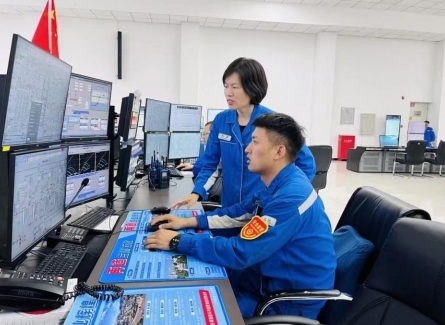
Core Viewpoint - China National Petroleum Corporation (CNPC) is undergoing a significant digital and intelligent transformation to enhance production efficiency, optimize operations, and innovate business models, aiming for high-quality development in the energy sector [1][2]. Group 1: Digital Transformation Initiatives - CNPC has launched the "Smart China National Petroleum" initiative as part of its strategic measures to drive governance, production, management, and technological innovation through digitalization [1][2]. - The company has established a comprehensive digital governance framework, including the formation of various leadership groups to oversee digital transformation efforts [2]. - A data governance campaign has been initiated to address issues related to data fragmentation and quality, accelerating the information enhancement project [2]. Group 2: Operational Efficiency Improvements - CNPC has optimized 13,000 processes into 923 standardized units, reducing data coding volume by over 35%, which has led to significant improvements in operational management [4]. - The company has achieved a 90% automation rate for financial vouchers and a 70% automation rate for report generation across 145 domestic units [5]. - The implementation of smart operations systems has enhanced decision-making capabilities and emergency response coordination across the entire production chain [4]. Group 3: Technological Advancements - CNPC is developing a comprehensive digital ecosystem that includes a financial shared service system and a cloud platform for shale oil, enhancing operational efficiency and data utilization [6][8]. - The company has successfully deployed 58 digital employees using RPA technology, saving over 1,400 hours of work monthly, equivalent to adding eight management personnel without increasing labor costs [8]. - The development of the Kunlun large model has significantly improved efficiency in seismic interpretation and reduced project cycles by over 20% [9]. Group 4: Smart Energy Solutions - CNPC's smart oil fields have integrated over 15 petabytes of exploration and production data, achieving a 90% real-time data entry rate and enhancing operational efficiency by 20% [11]. - The smart gas sales system has connected 940,000 devices and optimized gas supply plans, contributing to the formation of an "Internet + Energy + Life" ecosystem [11]. - The company has established a comprehensive energy station management system that monitors over 20,000 gas stations and 60,000 charging piles, enhancing service delivery and customer engagement [11]. Group 5: Industry Leadership and Recognition - CNPC has been recognized as a pilot enterprise for digital transformation by the State-owned Assets Supervision and Administration Commission, showcasing its leadership in the energy sector [12]. - The company has developed advanced software for seismic data processing, which is now one of the three major mainstream exploration software globally, demonstrating its technological prowess [12].


居然智家全面铺开智能导购:居然设计家赋能行业数智化变革
Zhong Zheng Wang· 2025-07-25 08:54
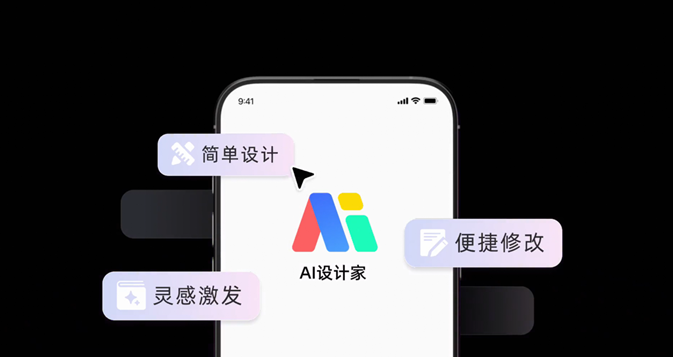
Core Viewpoint - The article discusses the strategic upgrade of居然智家 (Juran Smart Home) and its implementation of digital transformation in the home decoration and furniture industry, particularly through the introduction of smart sales tools and data integration [1][8]. Group 1: Smart Sales Tools - The smart sales tool, known as intelligent guide, has been successfully implemented across multiple stores nationwide, marking a significant transition from concept to practical application [3][4]. - This tool utilizes 3D modeling technology to create a virtual space where products can be visualized in consumers' homes, enhancing the shopping experience and reducing return rates [4][6]. - The application of 3D product models significantly lowers the costs associated with physical displays, allowing for "zero display sales" and improving conversion rates through data-driven customer analysis [4][6]. Group 2: Data Integration and Ecosystem - The ongoing "data integration" initiative aims to connect design solutions with the intelligent guide, enabling seamless transitions from online design to physical products in stores [6][7]. - The introduction of the "order grabbing square" feature will facilitate precise matching between consumer needs and merchant services, addressing the challenges of finding reliable service providers in the home decoration sector [7][8]. - This digital platform is expected to enhance service efficiency in the home decoration industry by creating a closed-loop system for design solutions, product data, and service demands [7][9]. Group 3: Long-term Transformation - The digital transformation of居然智家 is a systematic ecological reconstruction that emphasizes a user-centered approach, integrating digital capabilities across design, sales, and service [8][9]. - The company's efforts in digitalization not only improve operational efficiency but also reshape the value distribution within the industry, benefiting consumers and merchants alike [8][9]. - The transition from "居然之家" to "居然智家" signifies the company's commitment to redefining the future of home retail through digital transformation [8].

华为中国政企用户峰会2025:公布两大计划确保企业数智化转型获得全面支持
Huan Qiu Wang· 2025-07-25 08:33
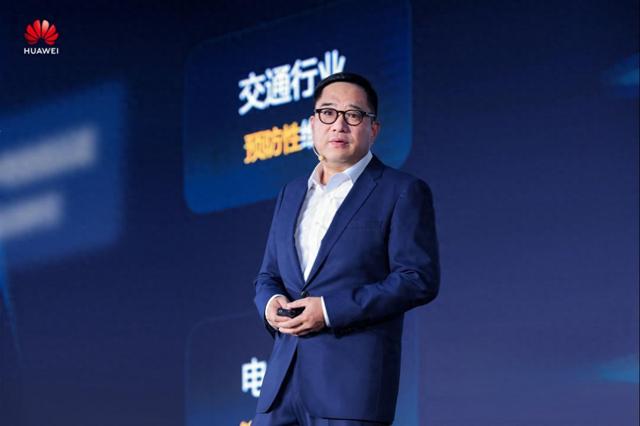
Core Insights - The conference focused on the theme of "Listening, Practicing, Serving Industry Digitalization, Co-creating a New Era of AI" and highlighted the rapid development of AI technology driving the digital transformation across various industries [1][3] - Huawei's commitment to customer-centric service and the introduction of initiatives like the "Excellence Escort Plan" and "Star Lighting Plan" aim to provide customized, high-quality services to support digital transformation [3][5] - The impact of AI on industries is significant, with IDC predicting that AI will generate a global economic impact of $22.3 trillion by 2030, accounting for 3.7% of the global GDP [5] Group 1 - Huawei's global technology services president emphasized the rapid iteration and innovation of industry scenario-based solutions due to AI advancements, which accelerates digital transformation [1][3] - The company aims to enhance service capabilities through "AI for Service" and promote the application of new AI technologies with "Service for AI" [1] - The financial sector, represented by the Bank of Communications, shared its digital transformation practices, showcasing the use of AI to improve operational efficiency [5][6] Group 2 - Huawei's network assurance and operation services department highlighted the need for comprehensive solutions to address the increasing complexity of ICT infrastructure [6] - The company is committed to collaborating with partners to create scenario-based solutions that address customer challenges and generate new value [6][7] - The importance of talent development in the digital transformation process was emphasized, with Huawei planning to work closely with enterprises to cultivate AI talent [6][7]
国网东台市供电公司:精耕细作强管理 数智赋能提质效
Zhong Guo Neng Yuan Wang· 2025-07-25 04:34
该公司督导组成员严格对照《国家电网有限公司实物库存管理规范》,运用ERP系统数据穿透核查、 WMS仓储管理系统联动分析等技术手段,对基层供电所物资"一本账"管理进行深度诊断。通过实物盘 点,精准核验库存物资账、卡、物的一致性,同时聚焦出入库"五关"(计划关、验收关、入库关、领用 关、出库关)流程管控、应急物资"定置化"存放等核心环节,利用双系统数据交叉校验,全方位排查管 理漏洞。针对发现的物资摆放不规范、系统审批流转滞后等问题,现场启用"问题库+整改清单"双轨制 管理,通过"手把手"教学指导仓储人员完成系统流程优化及数据更正,确保问题整改到位。 此次专项督导创新构建"查改训"一体化工作模式,将现场检查、即时整改与实操培训有机融合。围绕物 资全流程管控、主数据标准化治理等内容,开展'沉浸式'教学,系统讲解操作规范与管理要点。 此外,通过"面对面"座谈交流,深度收集基层供电所在系统操作、流程优化等方面的10条需求建议,仓 储人员系统操作合格率提升至98.6%,实物管理系统数据及时率、准确率均达100%,为后续完善物资管 理机制提供精准靶向参考。 为全面贯彻国家电网物资全寿命周期管理要求,推动基层物资管理精益化、数 ...
调研|锚定世界一流能源公司,中国石油推动数智化升级
Xin Lang Cai Jing· 2025-07-25 00:14
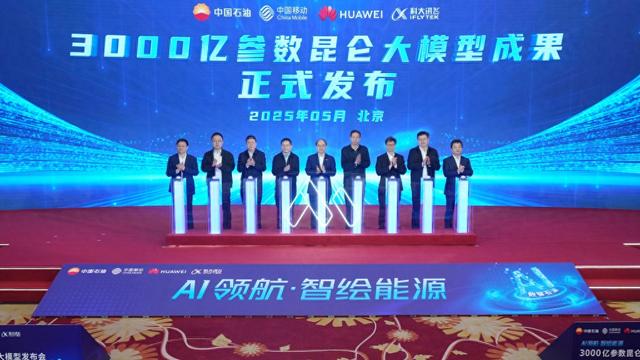
Core Insights - The importance of data is increasingly recognized as the "oil" of the new era, with China National Petroleum Corporation (CNPC) launching a 300 billion parameter Kunlun large model, marking a significant advancement in the energy and chemical sector [1][3] - The Kunlun model has demonstrated substantial efficiency improvements, such as increasing seismic interpretation efficiency by 9 times and reducing exploration project cycles by over 20% [1] - CNPC is focusing on digitalization and intelligence as core strategies to build a world-class energy company, implementing a comprehensive plan for "Smart China National Petroleum" [1][4] Group 1: Digital Transformation in Oilfields - The Tarim Oilfield, China's largest ultra-deep oil and gas production base, has initiated a digital transformation pilot project in collaboration with Kunlun Smart, enhancing operational efficiency and decision-making capabilities [4][5] - The digital transformation at Tarim Oilfield integrates 25 production-related systems, significantly improving production assistance and emergency response efficiency [5][6] - The establishment of a standardization system and methodology during the digital transformation serves as a model for other oilfields, with real-time data integration achieving a 90% data entry rate [6] Group 2: Overcoming Data Silos - The complexity of refining processes necessitates overcoming data silos for successful digital transformation, which is being addressed through innovative technologies such as industrial internet and artificial intelligence [9][12] - CNPC has developed a unified data governance system to eliminate data silos, enabling seamless data flow across different systems and enhancing operational efficiency [12] Group 3: Innovations in Exploration and Development - The Kunlun large model has improved the accuracy of subsurface structure identification by at least 10 percentage points compared to traditional methods, covering over 100 scenarios in exploration and refining [13][15] - CNPC has developed proprietary industrial software, such as GeoEast and HiSim, to support exploration and production, filling gaps in domestic capabilities previously dominated by foreign technologies [15][17] Group 4: Talent Development and Future Strategies - CNPC is focusing on cultivating "smart talent" that combines technical and business expertise to adapt to the evolving demands of the industry [21] - The company is implementing AI-driven tools to facilitate data access and enhance operational efficiency, exemplified by the "Smart Inquiry" platform that provides quick data responses [21][22]
广发证券(000776) - 2025年7月24日投资者关系活动记录表
2025-07-24 11:28
Group 1: Business Strategy and Development - The company focuses on integrating into national development, serving the real economy, and maintaining high-quality development, emphasizing core competitiveness in various business sectors [2] - Key strategies include deepening business transformation, optimizing business structure, and accelerating digital transformation to enhance operational efficiency [2] - The company maintains a leading position in several core business areas, including research, asset management, and wealth management [2] Group 2: Wealth Management Business - The company adheres to its primary responsibilities, aligning with high-quality development and focusing on high-quality client groups and efficient online operations [3] - It promotes a series of reforms in wealth management to enhance organizational capabilities, resource allocation, and talent support [3] - The company is committed to a buyer-oriented advisory model, ensuring alignment with investor interests while maintaining compliance [3] Group 3: Investment Banking Business - The company emphasizes financial services for the real economy, prioritizing functionality and adhering to national strategies and regulatory requirements [4] - It focuses on resource accumulation, client development, and professional capability building in key sectors, particularly in the Greater Bay Area [4] - The company is enhancing its integrated domestic and international operations and strengthening group business collaboration to improve comprehensive financial service capabilities [4] Group 4: Investment Management Business - The investment management segment includes asset management, public fund management, and private fund management, leveraging resources to create a diverse product supply system [5] - The company aims to enhance its active management capabilities and product innovation, resulting in growth in asset management scale [5] - As of March 2025, the public fund management scale of Guangfa Fund and E Fund ranks third and first in the industry, respectively, excluding money market funds [5]

当卤味遇上AI,绝味掀起一场关于增长的数智变革
Zhong Guo Jin Rong Xin Xi Wang· 2025-07-24 08:06
Core Insights - The core strategy of Juewei Foods focuses on "serving users, co-creating with partners, and empowering the ecosystem" through deep integration of AI and business [1][3][13] - Juewei has evolved from a small shop in Changsha to over 10,000 stores with annual sales exceeding 10 billion yuan, launching the Juewei 2.0 digital future strategy at its 20th anniversary [3][10] - The company emphasizes a consumer-centric approach, exemplified by its "listening to feedback" culture, which has successfully engaged younger consumers [8][9] AI Integration and Innovation - Juewei appointed China's first Chief Digital Growth Officer to lead its AI-driven growth strategy, highlighting the importance of technology in enhancing consumer experience [3][4] - The company has developed various AI applications, including the AI ordering assistant "Xiao Huoya" and the AI membership system, to improve operational efficiency and customer engagement [10][11] - Juewei's AI strategy is built on four core predictions about AI's future impact on business, emphasizing the need for deep integration of technology and operations [9][10] Operational Efficiency - The introduction of the AI store manager "Juezhi" has significantly improved store operations, providing real-time support and knowledge to staff, resulting in a 39% increase in operational efficiency [11][12] - The AI system allows for direct communication of strategies from headquarters to store employees, reducing information loss and enhancing execution accuracy [12] Collaborative Ecosystem - Juewei's AI strategy includes collaboration with partners like Tencent to create an open AI innovation platform, the AIPC plan, aimed at providing digital solutions for the retail industry [13][14][16] - The company believes that the true value of AI lies in its practical application and continuous improvement through user feedback, fostering a collaborative environment for industry-wide growth [16]


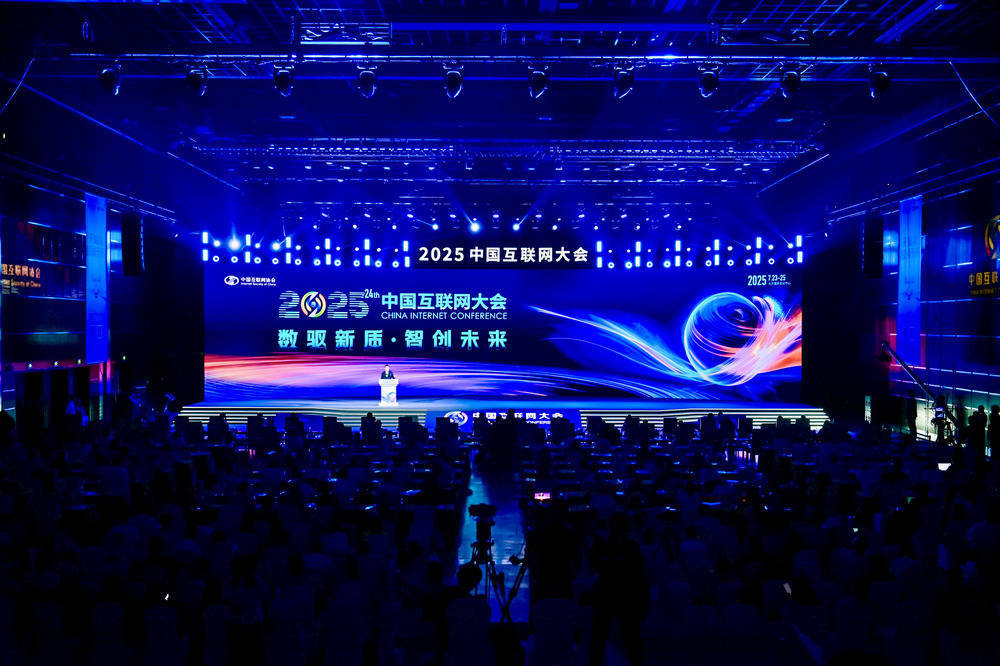
数智未来已来!2025中国互联网大会北京盛启
Sou Hu Cai Jing· 2025-07-24 04:07
Core Insights - The 24th China Internet Conference, themed "Driving New Quality with Data, Creating the Future with Intelligence," commenced in Beijing, gathering industry leaders to discuss the future direction of the internet industry [1] - The conference highlighted the critical period of digital and intelligent transformation in the internet sector, emphasizing the need for technological innovation to drive industrial upgrades [1][3] Group 1: Keynotes and Presentations - Zhang Yunming, Vice Minister of the Ministry of Industry and Information Technology, delivered a keynote speech analyzing the opportunities and challenges facing the internet industry [1] - Wu Hequan, former Vice President of the Chinese Academy of Engineering, discussed the pivotal role of intelligent agents in reshaping the underlying logic of research, production, and daily life, positioning them as key drivers for the future of the internet [3] Group 2: Industry Voices - Executives from major telecommunications companies shared insights on their innovations: - Tang Ke from China Telecom discussed cloud-network integration and intelligent innovation [3] - Cheng Jianjun from China Mobile focused on how digital intelligence empowers industrial development [3] - Hao Liqian from China Unicom explored future trends in the integration of digital and physical realms [3] - Other industry leaders, including executives from Pinduoduo, Shanghai HiSilicon, and Qihoo 360, provided unique perspectives on topics such as new productivity activation, audio-video innovation standards, and cybersecurity in the digital intelligence era [3] Group 3: High-Level Discussions - A high-profile dialogue featured industry giants like Wu Hequan, Zhou Hongyi from 360 Group, and others discussing the future trajectory of China's internet development, collectively envisioning a blueprint for the industry [3]
赛意信息张成康:深化全栈自主体系
Zhong Guo Zheng Quan Bao· 2025-07-23 21:00
Group 1 - Saiyi Information has laid the foundation for its global R&D center, which will focus on attracting top global talent and accelerating the transformation of technological achievements [1][2] - The global R&D center will serve as a core base for Saiyi Information in the Guangdong-Hong Kong-Macao Greater Bay Area, emphasizing industrial AI, industrial internet platform development, and core industrial software product research [2][3] - The center will occupy 11.72 acres with a total investment of 330 million yuan and a construction period of 30 months [1] Group 2 - The establishment of the global R&D center is seen as a new milestone for Saiyi Information, aligning with its strategy to globalize its business and services while attracting international talent [2][3] - The industrial software market is expected to experience new growth opportunities, supported by national policies encouraging investment in industrial software [2][3] - Saiyi Information aims to enhance its full-stack autonomous system, providing comprehensive intelligent upgrade solutions for enterprises, thereby supporting the high-end, intelligent, and sustainable development of Chinese manufacturing [4]
邹平市培育出9项全球或全国冠军产品
Qi Lu Wan Bao Wang· 2025-07-23 14:46
Core Viewpoint - The city of Zouping has successfully cultivated 4 global "champion products" and 5 national "champion products" across various industries, significantly enhancing its industrial economy and reinforcing its brand as an "industrial strong city" [1] Group 1: Technology and Innovation - Zouping prioritizes technological innovation in its industrial development, focusing on transforming traditional industries, breaking through in emerging industries, and enhancing specialty industries [2] - The traditional industry is transitioning to "smart manufacturing," with significant improvements in energy and water efficiency, achieving a 40% and 20% reduction respectively [2] - In the emerging industry, Zouping has established a high-end aluminum and equipment manufacturing cluster, with the aluminum sector generating over 270 billion yuan in revenue and high-end aluminum products accounting for 77% of the market [3] Group 2: Industrial Ecosystem and Support - Zouping is enhancing its business environment by focusing on four areas: carriers, elements, platforms, and services, to create a favorable ecosystem for industrial development [4] - The city has expanded its economic development zone from 8.2 square kilometers to 15 square kilometers, providing ample space for project implementation [4] - Zouping has a robust energy supply capacity, with nearly 9 million kilowatts of electricity and 15 billion cubic meters of gas available to meet industrial needs [4] Group 3: Financial and Talent Support - The city is actively securing industrial land and plans to build or renovate 250,000 square meters of standard factories this year, aiming to reduce land costs by 50% [5] - Zouping has established a talent fund of 1 billion yuan and a 10 billion yuan entrepreneurship fund to attract high-level talent [5] - The city has seen a significant increase in technology-based small and medium-sized enterprises, with 285 new companies established, doubling the total since 2021 [6] Group 4: High-Quality Development and Market Expansion - Zouping aims to deepen its integration into the "5210N" modern industrial cluster, focusing on enhancing the "champion products" brand and promoting the development of advantageous industries [7] - The city plans to support "champion product" companies in refining their core technologies and expanding their product offerings to increase market share [7] - Zouping is committed to developing its industrial clusters, particularly in high-end aluminum, smart textiles, and food processing, with projected revenues of 1.5 billion yuan and 300 billion yuan respectively by the end of the 14th Five-Year Plan [8] Group 5: Industrial Growth and Project Development - Zouping is focused on achieving its annual investment goals and has initiated 110 key projects, aiming for 100% completion of planned investments this year [9] - The city is actively supporting over 491 industrial enterprises to help them secure orders and expand their markets, with a target of reaching an industrial output value of 280 billion yuan [9]