上海‘五个中心’建设

Search documents
共同祝愿伟大祖国繁荣昌盛 上海明天更加美好 全市人民马年吉祥 上海市各界人士春节团拜会举行
Jie Fang Ri Bao· 2026-02-14 01:20
Core Viewpoint - The Shanghai Spring Festival gathering highlighted the city's achievements and aspirations for the future, emphasizing the importance of unity and progress in the context of the "14th Five-Year Plan" and the upcoming "15th Five-Year Plan" [1][2]. Group 1: Economic Development - In 2025, significant economic progress was noted, with internal demand being effectively boosted and foreign trade maintaining resilience [2]. - Key indicators such as financial market transaction volume, port cargo trade volume, and container throughput have reached new heights [2]. - The World Bank rated Shanghai's business environment as the best globally across 22 indicators, showcasing high-level reform and opening-up efforts [2]. Group 2: Social Progress - The city has made strides in public welfare projects, completing the "toilet revolution" and building numerous parks ahead of schedule [2]. - Issues related to property management, elderly care, and childcare are being addressed more rapidly, leading to increased public safety and satisfaction over 13 consecutive years [2]. Group 3: Cultural Significance - The year symbolizes the start of the "15th Five-Year Plan," with the horse representing strength and progress in traditional Chinese culture, encouraging a spirit of perseverance and advancement [3].
科创与金融双向赋能,推动上海“五个中心”联动跃升
Di Yi Cai Jing· 2026-02-09 07:30
Group 1 - Shanghai is in a critical period for building a world-class socialist modern international metropolis, focusing on the integration of global technology innovation and international financial centers as key engines for development [1] - The construction of the "Five Centers" (international economy, finance, trade, shipping, and technology innovation) is essential for enhancing the city's global competitiveness and systemic efficiency [1] - By 2026, Shanghai aims to address deep-seated obstacles in the integration of technology and finance, promoting a new pattern of "technology-led, finance-enabled, industry-supported, and system-guaranteed" development [1] Group 2 - Since the 13th and 14th Five-Year Plans, Shanghai has achieved significant milestones in the construction of the "Five Centers," with its international financial center ranking among the top globally in terms of market transaction volume and financing scale [2] - The global technology innovation center has shown notable capabilities, with a preliminary cluster of large scientific facilities and rapid development in integrated circuits, biomedicine, and artificial intelligence [2] - However, there remains a significant gap in the deep integration and mutual empowerment of technology and finance compared to leading global city clusters like New York-Boston and the San Francisco Bay Area [2] Group 3 - The financial support for technology innovation lacks "risk adaptability," with a mismatch between the indirect financing system and the high-risk, long-cycle nature of technology innovation [2] - The value transformation chain from technology to finance is not smooth, with insufficient breakthroughs in foundational technologies like blockchain and quantum computing, limiting the fundamental reshaping of financial services [3] - The institutional ecosystem for collaborative development between technology and finance is not robust, requiring innovation in cross-departmental collaboration and regulatory frameworks [3] Group 4 - To enhance capital support for the entire lifecycle of technology innovation, a "patient capital" cultivation system should be established, optimizing government fund operations and encouraging long-term investments [4] - The development of multi-tiered capital markets should be deepened, with continuous optimization of listing standards and trading mechanisms to support key technology enterprises [4] - Innovative financial products like intellectual property securitization and technology notes should be developed to broaden financing channels for technology companies [4] Group 5 - The establishment of a financial technology innovation hub focusing on cutting-edge fields such as blockchain and AI is essential, along with the creation of national-level financial technology laboratories [6] - Data as a key production factor should be effectively circulated and applied in compliance with regulations to enhance financial service innovation and risk management capabilities [6] - The integration of technology into financial operations should be promoted, utilizing regulatory technology to improve monitoring and risk management in cross-border financial activities [6] Group 6 - A supportive institutional environment for mutual empowerment between technology and finance should be optimized, with enhanced cross-departmental collaboration and regulatory innovation [7] - The knowledge property operation and protection system should be improved, with a focus on developing comprehensive services for intellectual property transactions [7] - High-end composite talent should be attracted and incentivized, with mechanisms in place to support professionals who understand both technology and finance [7] Group 7 - The facilitation of cross-border channels for technology and finance should be prioritized, exploring the relaxation of restrictions on foreign financial institutions and simplifying cross-border funding procedures [8] - Global cooperation in innovation and finance should be strengthened, encouraging foreign R&D centers to connect with local financial systems [8] - Hosting influential technology finance summits and participating in the formulation of international rules are essential for integrating into global networks [8] Group 8 - The construction of the "Five Centers" has entered a new phase of "system integration, functional superposition, and fusion development," emphasizing the need for both sectors to pursue excellence in their respective fields while innovating at the intersection [9] - A dual approach is required, focusing on financial supply-side structural reforms to meet technology innovation needs while leveraging cutting-edge technology to reshape financial competitiveness [9] - Shanghai aims to establish a unique "technology-finance-industry" cycle model that will enhance the overall capabilities of its international economic, trade, and shipping centers [9]
苏州“十五五”规划建议:加快推进沪苏同城化发展
Jin Rong Jie· 2026-01-21 13:23
Core Viewpoint - The article emphasizes the acceleration of the integration of Suzhou and Shanghai, highlighting the importance of Suzhou's role in supporting Shanghai's leadership and its involvement in the development of Shanghai's "five centers" and metropolitan area [1] Group 1: Economic Development - The proposal includes enhancing cooperation in technology innovation platforms and sharing innovation resources to strengthen the international competitiveness of the Shanghai-Suzhou technology innovation cluster [1] - The initiative aims to collaboratively develop world-class high-end industrial clusters in integrated circuits, artificial intelligence, biomedicine, automotive, and large aircraft [1] Group 2: Infrastructure and Services - The plan promotes the improvement and expansion of the Hongqiao International Open Hub and actively connects with the Shanghai Eastern Hub International Business Cooperation Zone [1] - It emphasizes the need for strengthening interconnectivity of transportation infrastructure, co-building public services, and jointly managing ecological environments [1] Group 3: Policy and Mechanism - The proposal calls for the enhancement of the institutional mechanisms for urban integration development [1]
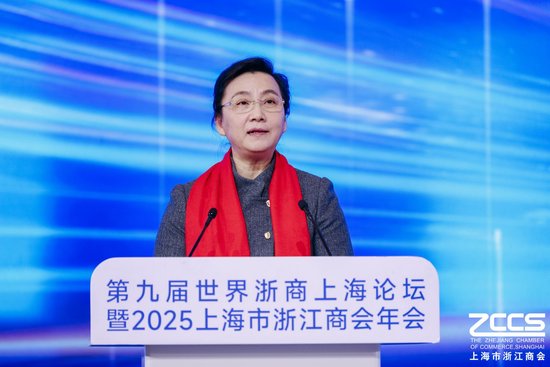
王文序:浙江省委、省政府将一如既往关注浙商、呵护浙商、服务浙商、成就浙商,为浙商的成长和发展保驾护航
Xin Lang Cai Jing· 2026-01-18 11:14
Core Viewpoint - The Ninth World Zhejiang Business Forum and the 2025 Shanghai Zhejiang Chamber of Commerce Annual Meeting highlighted the contributions of Zhejiang entrepreneurs to national strategies and regional development, emphasizing their role in high-quality development and common prosperity [3][7]. Group 1: Contributions and Responsibilities - Zhejiang Provincial Committee member Wang Wenxu praised the Zhejiang business community for their patriotism and sense of mission, particularly in supporting the Yangtze River Delta integration and Shanghai's development [3][7]. - The forum recognized the Zhejiang Chamber of Commerce as a model for external provincial chambers, demonstrating responsibility in serving the overall situation, empowering development, coordinating resources, and maintaining vibrant self-construction [3][7]. Group 2: Future Aspirations - Wang encouraged Zhejiang entrepreneurs in Shanghai to integrate their business growth and personal development into the national development framework, aspiring to be exemplary followers of the Party [3][7]. - The call for innovation was emphasized, urging entrepreneurs to seize opportunities in the new wave of global technological and industrial transformation, aiming to be practical contributors to the integration of technological and industrial innovation [3][7]. - The importance of lawful and responsible business practices was highlighted, with a focus on compliance as a lifeline for high-quality development, promoting the idea of being practitioners of the "two healths" [3][7]. - The forum also stressed the role of private enterprises in promoting common prosperity, advocating for a balance between righteousness and profit, and positioning themselves as contributors to wealth generation [3][7].


面向“十五五”:上海“五个中心”建设迎来全面发力期
Xin Hua She· 2025-12-08 09:20
Core Viewpoint - The construction of Shanghai as an international economic, financial, trade, shipping, and technological innovation center is a significant mission assigned by the central government and a key focus of Shanghai's 14th Five-Year Plan [1] Group 1: Economic Performance - In the first three quarters of this year, Shanghai's GDP exceeded 4 trillion yuan, with a year-on-year growth of 5.5% [2] - From January to October, the transaction volume of Shanghai's financial market surpassed 32 trillion yuan, marking an 11.6% year-on-year increase, with nearly 1,800 licensed financial institutions [2] - The total import and export volume reached 3.7 trillion yuan from January to October, with over 1,000 multinational company regional headquarters recognized [2] - By November, Shanghai's port container throughput exceeded 50 million standard containers, and the airport passenger throughput surpassed 100 million [2] - The number of national key laboratories in Shanghai increased to 86, and the Shanghai-Suzhou innovation cluster ranked 6th in the "Global Best Technology Clusters" [2] Group 2: Strategic Development - The 14th Five-Year Plan emphasizes building a modern industrial system and high-level technological self-reliance, which closely relates to the construction of Shanghai's five centers [3] - The development of a modern industrial system requires precise financial services, with Shanghai Pudong Development Bank focusing on technology finance, supply chain finance, and inclusive finance to support the real economy [3] - Shanghai's manufacturing value added accounts for over 20% of the regional GDP, which is a strategic advantage for building an international financial center [3] Group 3: Innovation and Transformation - The international shipping sector is undergoing three structural transformations, including digital transformation, green low-carbon transition, and enhanced supply chain resilience, creating new opportunities for Shanghai's shipping center [3] - Shanghai's container throughput remains the highest globally, and there is a push to accelerate digital transformation and establish a "Shipping Technology Silicon Valley" to attract global experts [3] Group 4: Systematic Approach - The construction of the five centers requires a long-term effort, emphasizing the need to strengthen overall, platform, amplification, and radiation effects [3] - There is a call for integrated planning of offshore financial and trade services, the establishment of market-oriented platforms, and innovative reforms to enhance Shanghai's service capabilities regionally and nationally [3]
专家建言“五个中心”建设 避免“过度金融化”“去制造业化”
Jie Fang Ri Bao· 2025-12-08 01:40
Core Insights - Shanghai's urban economic scale has reached 5 trillion yuan, ranking fifth globally, prompting discussions on the development of the "Five Centers" during the 14th Five-Year Plan period [1] Group 1: Development Challenges and Opportunities - The construction of the "Five Centers" in Shanghai has a solid foundation but faces new challenges, including enhancing the capabilities of each center and ensuring their collaborative support [1] - Experts emphasize the need for Shanghai to avoid "over-financialization" and "de-manufacturing," advocating for a modern industrial system centered on technological innovation and the real economy [1] Group 2: Strategic Enhancements - The Shanghai Development and Reform Commission highlights the importance of reinforcing the "Four Effects" to accelerate the construction of the "Five Centers," which include overall, platform, amplification, and radiation effects [2] - The focus is on systematic planning, market-oriented platform development, innovative reforms, and integrating the "Five Centers" with national strategies like the Yangtze River Delta integration [2] Group 3: Practical Cases - A total of 15 typical practice cases for the "Five Centers" construction were announced, showcasing initiatives such as the pilot for segmented production of biological products and the establishment of an international reinsurance registration and trading center [3] - These cases illustrate the phased achievements in Shanghai's "Five Centers" construction, highlighting efforts in areas like artificial intelligence, offshore trade finance, and green shipping insurance [3]
打造新时代国际开放枢纽门户新标杆 陈吉宁龚正专题调研上海东方枢纽国际商务合作区建设情况
Jie Fang Ri Bao· 2025-11-20 09:13
Core Insights - The construction of the Shanghai Eastern Hub International Business Cooperation Zone is a significant initiative aimed at enhancing international business exchanges and is aligned with the strategic goals set by the 20th National Congress of the Communist Party of China [1][2] Group 1: Strategic Importance - The Shanghai Eastern Hub is designated as a key mission by the central government, focusing on facilitating international business interactions and integrating various regulatory frameworks [1] - The initiative is part of a broader strategy to expand high-level opening-up and enhance the open economy in Shanghai, serving as a model for international business cooperation [2] Group 2: Development Goals - The zone aims to create a new platform for international business exchanges, improve resource allocation, and enhance service capabilities, thereby promoting the integration of the Yangtze River Delta region [1][2] - The project emphasizes the importance of a market-oriented, legal, and international business environment to attract global resources and high-end business activities [2] Group 3: Operational Progress - The Shanghai Eastern Hub is currently in the final stages of acceptance for its initial operational area, with a focus on ensuring smooth and orderly progress in all aspects of construction and operation [3] - The construction of the Shanghai East Station, a critical component of the hub, is progressing well, with the underground structure completed and above-ground works underway [4]
链接全球,浦东迈向“要素-产业-生态”良性循环
2 1 Shi Ji Jing Ji Bao Dao· 2025-11-05 13:58
Core Insights - The article highlights the rapid economic growth of Pudong, Shanghai, with its GDP increasing from 6 billion in 1990 to nearly 1.8 trillion by 2024, showcasing its transformation into a modern city and a hub for innovation and investment [1] - Pudong is positioned as a key player in global economic governance, focusing on supply chain management and fostering international collaboration through initiatives like the Hongqiao International Economic Forum [1] Group 1: Innovation and Economic Development - Pudong's development is driven by innovation, promoting sustainable industrial growth through institutional openness, which attracts multinational companies and high-level innovators [2] - The region's focus on "self-innovation + institutional openness" has created an environment conducive to attracting global resources and enhancing its role as a critical hub in the dual circulation of domestic and international markets [2][8] Group 2: Five Centers Strategy - The "Five Centers" strategy has evolved from a single economic center to a comprehensive framework that includes economic, financial, trade, shipping, and technology innovation centers, facilitating a transition from domestic to international services [3] - Each center has distinct roles: the economic center serves as a comprehensive carrier, the financial center provides funding support, the trade center connects domestic and international markets, the shipping center builds a global logistics hub, and the technology innovation center drives core advancements [3][4] Group 3: Sectoral Strengths and Innovations - The financial center, located in Lujiazui, hosts a significant portion of foreign financial institutions, while the trade center in Waigaoqiao is a benchmark for bonded zones and new international trade models [4] - The technology innovation center in Zhangjiang Science City leads in key industries such as integrated circuits, biomedicine, and artificial intelligence, contributing significantly to national innovation outputs [5][6] Group 4: Ecosystem and Spatial Development - Pudong's development is characterized by a well-structured ecosystem that integrates elements, industries, and ecological cycles, supported by strategic spatial planning [7] - The region aims to create a virtuous cycle of resources and industries, with customized spaces for future industries like "China Chip" and "Innovative Medicine," enhancing the quality of physical spaces for high-level industry clusters [7] Group 5: Global Connectivity and Future Outlook - Pudong serves as a frontier for China's engagement with the global economy, leveraging its dual-city dynamics of Lujiazui and Zhangjiang, along with the Waigaoqiao trade hub, to enhance its international influence [8] - The ongoing emphasis on institutional and technological innovation positions Pudong as a model for China's modernization efforts, reinforcing its role in the "Five Centers" framework and contributing to high-quality national development [8]
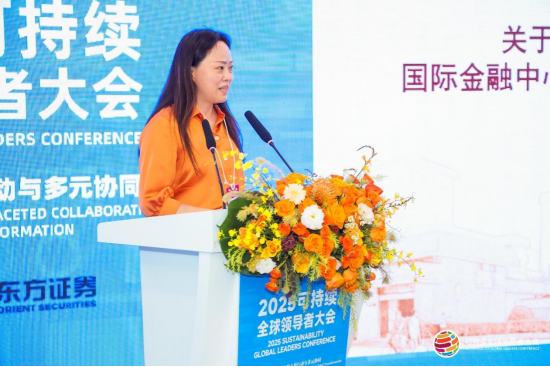
上海财经大学刘莉亚:以科创金融破局与人才战略,赋能上海“五个中心”高质量建设
Xin Lang Cai Jing· 2025-10-17 11:18
Core Insights - The 2025 Sustainable Global Leaders Conference will be held from October 16 to 18 in Shanghai, focusing on sustainable development and collaboration in the context of global change [1] - The conference is co-hosted by the World Green Design Organization and Sina Group, with support from the Shanghai Huangpu District Government [1] Group 1: Conference Themes - The conference will feature discussions on creating a sustainable development model in the East, decoding the sustainable drivers of Shanghai's industrial upgrade, and exploring new growth paradigms for Shanghai's five centers [1] Group 2: Financial and Innovation Insights - Liu Liya, Vice President of Shanghai University of Finance and Economics, emphasized the importance of Shanghai as an international financial center, supported by the Central Financial Committee's recent initiatives [3] - The Shanghai-Suzhou urban agglomeration ranks 6th globally in the WIPO Innovation Index, while the Shenzhen-Hong Kong-Guangzhou area ranks first, indicating a competitive landscape for innovation [3] - Liu highlighted that Shanghai's hard-tech unicorns are valued at only one-fourth of similar companies in San Francisco, indicating a need for better support for innovation-driven enterprises [3] Group 3: Recommendations for Financial Mechanisms - Liu suggested designing financial mechanisms that align with the lifecycle of innovation enterprises, promoting a win-win scenario for innovators and investors [4] - The promotion of Corporate Venture Capital (CVC) models is recommended to integrate core business with innovation investments [4] - There is a call for increased talent recruitment to energize the construction of Shanghai's five centers [4]
瑞安集团罗康瑞:四策助力上海“五个中心”建设
Zhong Guo Jing Ying Bao· 2025-10-14 11:27
Core Insights - The 37th Shanghai International Entrepreneurs Consultation Conference was held with the theme "Open, Innovative, Inclusive - Shanghai Development Strategy Towards 2030," attracting 46 multinational companies from 15 countries [3] Group 1: Strategic Recommendations - Shanghai should enhance its professional service capabilities to strengthen global resource allocation, aiming to establish itself as an international legal and professional services center, as well as a hub for the Yangtze River Delta international supply chain [3] - The city is encouraged to promote a closely interactive international financial dual center with Hong Kong, supporting financing for viable Belt and Road Initiative projects and allowing their listing on the Shanghai Stock Exchange [3] Group 2: Development of Business Districts - There is a need to elevate the capabilities of the Hongqiao International Central Business District, positioning it as the "first station" for Yangtze River Delta enterprises going global and a world-class showcase platform [3] - Recommendations include enhancing ASEAN routes to solidify and deepen economic and trade exchanges [3] Group 3: Talent Attraction - Shanghai should adopt a more open approach to attract global talent, particularly as top Chinese scientists, professors, and professionals are returning amid significant international changes [3] - The city is advised to leverage its vast domestic market and provide diverse application scenarios to create vibrant communities that attract a diverse range of talents [3]