供应链多元化布局

Search documents
上不了岸的日本车
汽车商业评论· 2026-03-19 23:07
Core Viewpoint - The ongoing crisis in the Middle East is significantly impacting the Japanese automotive industry, leading to production cuts and potential reevaluation of market strategies by major manufacturers [3][6][16]. Group 1: Production Cuts and Market Impact - Toyota plans to reduce production by approximately 20,000 vehicles for the Middle East market by the end of March 2026, with a total reduction expected to reach about 40,000 vehicles by the end of April [3]. - Nissan will cut production by about 1,200 vehicles at its Fukuoka plant, which produces models for the Middle East, due to shipping difficulties caused by the regional conflict [3][10]. - The crisis may force companies to reassess or abandon expansion plans in the Middle East, which has become a crucial growth market for Japanese automakers [5][16]. Group 2: Strategic Importance of the Middle East - The Middle East has emerged as an essential growth area for Japanese car manufacturers, with projected sales exceeding 870,000 units by 2025, capturing about 30% of the market share in the region [8]. - Japan's automotive exports to the Middle East are expected to reach 2.45 trillion yen by 2025, accounting for half of Japan's total exports to the region [8]. - Toyota is anticipated to be the largest beneficiary, with expected sales nearing 520,000 units in 2025, while Nissan's exports are projected to grow by 24% to 77,784 units [10][11]. Group 3: Supply Chain Challenges - The crisis is causing significant disruptions in the supply chain, particularly affecting the import of raw materials, as Japan relies on the Middle East for 90% of its crude oil [18]. - The blockage of the Strait of Hormuz has led to shipping delays, with many vessels becoming "floating warehouses," impacting the delivery of new vehicles and dealer inventories [15][19]. - The reduction in ethylene production due to raw material shortages is expected to create a domino effect, leading to shortages of essential components like synthetic rubber for tires, which are critical for vehicle production [21][26]. Group 4: Shipping and Logistics Adjustments - Major Japanese shipping companies have halted operations through the Strait of Hormuz and are considering alternative routes, although these may significantly increase shipping costs [29][33]. - The potential for rerouting through the Red Sea is complicated by security concerns, as there have been threats from regional conflicts that could jeopardize shipping safety [34].



国泰海通|轻工:出口链行业专题二:行业比较与竞争要素挖掘
国泰海通证券研究· 2026-02-10 14:02
Core Insights - The source of company growth lies in the alignment between industry characteristics and its own competitive strengths [1] Group 1: Investment Recommendations - Excess profits of leading companies in the export chain often stem from precise segmentation within the industry, cost control know-how, and differentiated product and channel operation capabilities [2] - In growth sectors, leading companies in niche markets can more easily differentiate themselves, forming alpha. For example, in niche markets like artificial turf and pulp molding, despite high industry growth rates, the limited market capacity and few new entrants allow leading companies to achieve cost advantages, with market shares often exceeding 20% and maintaining high profitability (net profit margin of 15%-20%, ROE over 20%) [2] - In mature sectors, alpha is difficult to manifest on the cost side; excess capabilities come from branding, product innovation, and channel strategies. In industries with single-digit growth, domestic companies find it challenging to differentiate on costs and must focus on product and channel innovation [2] Group 2: Trends in Procurement and Supply Chain - There is a clear trend towards domestic procurement in the U.S., with Home Depot sourcing over 50% of its products domestically, and Lowe's sourcing 60% domestically and nearly 20% from China. Both companies are advancing supply chain diversification and adopting mixed pricing strategies [3] - Since 2020, companies in the light industry supply chain have begun exploring production capacity layouts outside Southeast Asia to better avoid geopolitical conflicts, achieve agile supply chain responses, and maintain customer relationships, with North America (U.S. and Mexico) being the primary choice [3] - The introduction of reciprocal tariffs in the U.S. by 2025, with Southeast Asia generally facing a tax rate around 20%, will further accelerate the transfer of production capacity from Southeast Asia [3]

23.14亿诉讼迅速和解 欣旺达动力将向威睿电动赔偿6.08亿
Jing Ji Guan Cha Wang· 2026-02-06 13:30
Group 1 - Xiwanda Power Technology Co., Ltd. and its parent company Xiwanda Electronics Co., Ltd. reached a settlement with Geely's Weirui Electric Vehicle Technology Co., Ltd. regarding a contractual dispute, requiring Xiwanda Power to pay 608 million yuan over five years [2] - The settlement includes a provision for cost-sharing in the event of future recalls, with ownership of processed battery packs remaining with Xiwanda Power [2] - Xiwanda expects the impact of this event on its net profit attributable to shareholders in 2025 to be between 500 million and 800 million yuan, considering warranty provisions and other factors [2] Group 2 - In late 2024, some Zeekr 001 WE86 vehicle owners reported issues with charging efficiency and battery capacity degradation, with market speculation pointing to Xiwanda as the supplier of the affected battery cells [3] - To address public concerns, Zeekr initiated a "Winter Care Activity" to replace battery packs for affected models at a cost of approximately 149,000 yuan per vehicle [3] - Weirui filed a lawsuit seeking 2.314 billion yuan in damages, which is 1.5 times Xiwanda's projected net profit for 2024, potentially impacting cash flow and the company's listing process [3] Group 3 - The incident has prompted the industry to reflect on quality control systems, with some leading automakers adopting blockchain technology to trace the entire lifecycle of battery cells [4] - Supply chain diversification has become a trend, with Zeekr accelerating the introduction of alternative suppliers like CATL to mitigate risks [4]


PTA 等待中线布局机会
Qi Huo Ri Bao· 2026-02-04 03:23
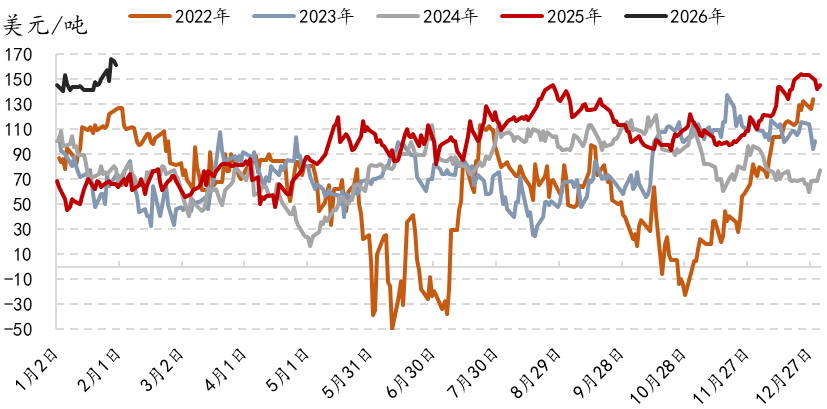
Core Viewpoint - The chemical industry is expected to see an improvement in supply-demand structure and competitive landscape by 2026, leading to a valuation recovery in the sector. Market sentiment is shifting towards undervalued chemical equity assets, positively impacting commodity markets and driving up chemical futures prices [1]. Supply Side - As of January 30, domestic PX operating rates are at a historical high of 89.2%, with a weak maintenance schedule compared to previous years, and overseas plants planning to increase output, indicating a generally ample supply [1]. - The PX-MX price spread has strengthened, reaching a five-year high, driven by high profits encouraging factories to source MX for PX production [1]. - PTA processing fees averaged 359.7 RMB/ton in January, a year-on-year increase of 22.1%, with processing fees recovering to a six-month high due to PX price increases lagging behind PTA [3]. Demand Side - As of January 30, terminal operating rates have declined, with the comprehensive operating rate for Jiangsu and Zhejiang weaving machines at 34.0%, and the overall demand is expected to weaken as factories begin early holidays, averaging 30-40 days off [4]. - The polyester sector is facing a reduction in operating rates, with approximately 17.4% of national capacity planned for maintenance in January-February, leading to increased pressure on inventory levels post-holiday [6]. - Despite a decline in textile exports, there is resilience in some Southeast Asian orders, but overall domestic demand remains weak, with limited replenishment expected post-holiday [8][9]. Market Outlook - The PTA spot basis is expected to weaken due to reduced polyester production and declining terminal demand, leading to inventory accumulation pressures in the first quarter [9]. - The market anticipates that PTA futures prices will fluctuate, with mid-term investors advised to wait for a pullback to the 5000-5100 RMB/ton support area before entering long positions [9].