信贷衰退

Search documents
百利好晚盘分析:市场押注衰退 黄金疯狂上涨
Sou Hu Cai Jing· 2025-10-17 09:57
Gold Market - Investors are flocking to gold as a safe haven due to escalating tariff issues and the U.S. government shutdown, with interest rate cut expectations driving gold prices up [1] - The recent credit crisis among U.S. regional banks has rekindled fears reminiscent of the 2023 Silicon Valley Bank collapse, leading to increased market bets on credit recession [1] - Macro data indicates a weakening economic outlook, heightening recession risks, suggesting that the Federal Reserve's potential rate cut at the end of October is a response to financial system stress rather than a sign of economic soft landing [1] - Credit recession is anticipated to trigger economic downturns, potentially leading to a financial crisis, which has contributed to rising gold prices [1] - Technically, gold prices are showing strong upward momentum, with support at $4,300 and resistance at $4,420 [1] Oil Market - U.S. crude oil inventories rose by 3.524 million barrels last week, significantly exceeding market expectations of a 288,000 barrel increase, indicating weak consumption in the U.S. oil market [2] - Oil prices are expected to test year-to-date lows due to the ongoing stalemate in the Russia-Ukraine conflict and the impact of tariff wars [3] - Technically, oil prices are on a downward trend, with support at $55.20 and resistance at $57.70 [3] Dollar Index - The recent failures of two U.S. regional banks have heightened market fears, leading to significant sell-offs and a continued decline in the dollar [4] - The eurozone is expected to experience a slow economic recovery, supported by loose monetary policy and gradual fiscal measures, with potential for euro appreciation [4] - Technically, the dollar index has broken below 98.50, with support at 97.70 and resistance at 98.30 [4] Nasdaq Index - The Nasdaq index is experiencing accelerated declines, with a high probability of breaking below the 24,000 mark [6] - Technically, the index is trading below the 120-day moving average, indicating a continuation of the downward trend, with support at 23,800 and resistance at 24,500 [6] Copper Market - Copper prices are consolidating within the range of $4.75 to $5.11, with a downward trend continuing [7] - Technically, the market is operating below the 60/120-day moving averages, with support at $4.77 and resistance at $4.95 [7]


黄金的“疯狂上涨”,预示着“更大的事情”正在发生
Hu Xiu· 2025-10-17 05:54
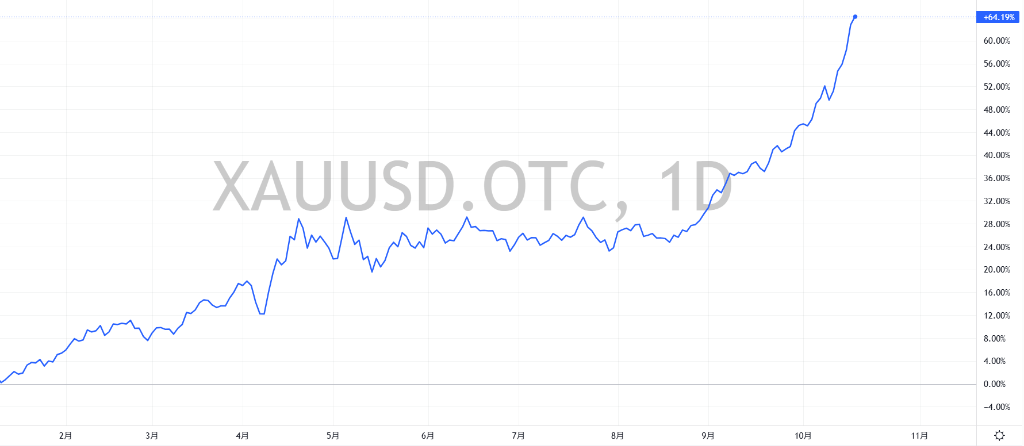
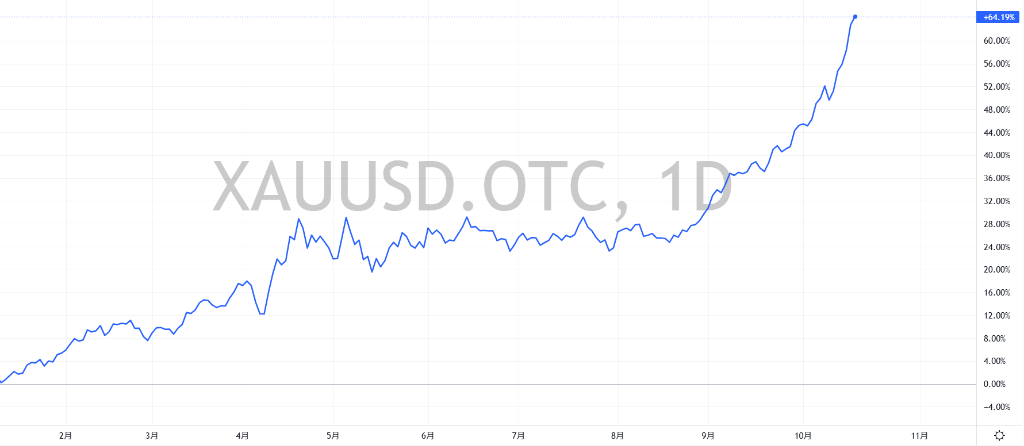
Group 1 - The core point of the article is that the historic rise in gold prices indicates fundamental changes beyond mere inflation or deflation are brewing [1] - As of October 16, gold prices have reached a historic high, surpassing $4,300 for the first time, with a year-to-date increase of over 60% [2][3] - Simon White, a Bloomberg macro strategist, emphasizes that gold serves as a hedge not only against currency devaluation but also against the entire financial system, including severe credit recessions and large-scale fiscal deficit monetization [4][5] Group 2 - The misconception that gold is merely an inflation hedge is addressed, with historical data showing that gold performs well in both low and high inflation environments [7][8] - The current market is facing risks of a significant credit recession, as indicated by Russell Napier from Orlock Advisors, who links rising gold prices to an impending credit crisis [14][15] - The rising government debt and fiscal deficits are major sources of market anxiety, with concerns that large-scale fiscal deficits will eventually be monetized, further driving demand for gold [24][26] Group 3 - The article discusses the implications of potential inflationary or deflationary shocks, stating that gold will be sought after regardless of the economic scenario [31][32] - In a credit recession, non-government debt will be severely impacted, but government debt will also face challenges, leading to the inevitable monetization of sovereign debt [33]
黄金“疯狂上涨”,预示“更大事情”正在发生
华尔街见闻· 2025-10-17 04:15
Core Viewpoint - The historic rise in gold prices indicates fundamental changes beyond mere inflation or deflation concerns [1] Group 1: Gold Price Movement - On October 16, gold prices continued to rise, reaching a historic high of over $4,300 for the first time, and nearly $4,380 on October 17 [2] - Gold has increased by 64% year-to-date as of October 17 [3] Group 2: Gold as a Hedge - Simon White, a Bloomberg macro strategist, emphasizes that gold serves not only as an inflation hedge but also as a safeguard against systemic financial risks, including severe credit recessions and large-scale fiscal deficits [3][4] - The demand for gold is expected to remain high regardless of whether the market faces inflationary or deflationary pressures [5] Group 3: Misconceptions about Gold - The common misconception is that gold is merely an inflation hedge; however, historical data shows that gold performs well in both low and high inflation environments [6] - Gold's returns do not solely correlate with rising inflation rates, as evidenced by its performance during the severe deflation of the 1930s [7][8] Group 4: Credit Market Risks - Analysts warn of an impending credit crisis, with rising credit spreads indicating increased borrowing costs and risks in the private market [11][14] - Recent events, such as the bankruptcy of First Brands and rising credit spreads, suggest a tightening credit environment [18] Group 5: Government Debt Concerns - Governments are facing unprecedented fiscal deficits, raising concerns about the potential for these deficits to be monetized, which could erode the real value of fiat currencies [23][24] - The market's diminishing confidence in government debt is reflected in rising term premiums, which have driven up yields in major developed markets [26] Group 6: Future Implications for Gold - Regardless of whether future shocks are inflationary or deflationary, gold is expected to be in high demand [30] - In a scenario of debt monetization, while nominal values of government debt may be preserved, their real value could be destroyed, benefiting gold as a non-financial asset [31][32][33]

黄金的“疯狂上涨”预示着“更大的事情”正在发生
美股IPO· 2025-10-17 02:08
Core Viewpoint - Gold serves as a hedge not only against currency devaluation but also against the entire financial system, including severe credit recessions and large-scale fiscal deficit monetization [1][4][5] Group 1: Gold's Performance and Demand - Gold prices have reached a historic high, surpassing $4,300 for the first time, with a year-to-date increase of over 60% [2][3] - The demand for gold is expected to remain high regardless of whether the market faces inflationary or deflationary shocks [6][11] Group 2: Misconceptions about Gold - The market often misunderstands gold as merely an inflation hedge; however, historical data shows that gold performs well in both low and high inflation scenarios [7][8] - Gold's returns do not solely correlate with rising inflation rates, as evidenced by its performance during the severe deflation of the 1930s [8] Group 3: Credit Market Risks - There is a significant risk of a major credit recession, with analysts suggesting that rising gold prices indicate an impending credit crisis [12][17] - The cost of borrowing in the private market has increased, indicating higher risks associated with lending [14][16] Group 4: Government Debt Concerns - Governments are facing unprecedented fiscal deficits, raising concerns about their ability to manage debt without resorting to currency printing [18][19] - The expectation that large fiscal deficits will eventually be monetized contributes to the rising demand for gold, as this action erodes the real value of fiat currency [19][20] Group 5: Future Implications for Gold - Regardless of whether the future economic shocks are inflationary or deflationary, gold is positioned to be a favored asset [23] - In the event of a credit crisis, the demand for high-quality collateral will increase, making gold a viable hedge against the potential devaluation of government debt [23][25]

黄金的“疯狂上涨”预示着“更大的事情”正在发生
Hua Er Jie Jian Wen· 2025-10-17 01:22
Core Insights - The historic rise in gold prices indicates fundamental changes beyond inflation or deflation are brewing [1][3] - Gold has surged over 60% since the beginning of the year, reaching a record high of over $4,300 [1][2] Group 1: Gold as a Hedge - Gold is not only a tool for hedging against currency devaluation but also serves as a hedge against the entire financial system, including severe credit recessions and large-scale fiscal deficits [3] - The misconception that gold is merely an inflation hedge is challenged by historical data showing its strong performance during both low and high inflation periods [4][8] Group 2: Credit Market Risks - Analysts warn of an impending credit crisis, with rising credit spreads indicating increased borrowing costs and risks in the private market [9][12] - The recent bankruptcy of a heavily indebted company and rising credit spreads suggest a tightening credit environment [12] Group 3: Government Debt Concerns - Governments are facing unprecedented fiscal deficits, raising concerns about the potential monetization of these debts, which could erode the real value of fiat currencies [13] - The market's diminishing confidence in government debt is reflected in rising term premiums, contributing to increased yields in major developed markets [13][17] Group 4: Future Implications for Gold - Regardless of whether future shocks are inflationary or deflationary, gold is expected to be in high demand as a quality collateral asset [17][19] - In a scenario of debt monetization, while nominal values of government debt may be preserved, their real value could be destroyed, further enhancing gold's appeal as a stable asset [18][19]