
医疗卫生

Search documents
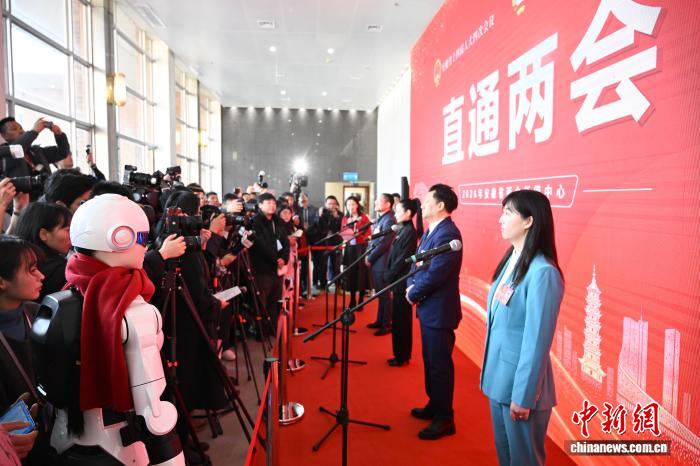
2026年安徽省两会首场“直通两会”聚焦这四件事
Zhong Guo Xin Wen Wang· 2026-02-04 23:46
Group 1: Key Focus Areas from Anhui Provincial Political Consultative Conference - The first "Direct to Two Sessions" event highlighted four key areas: technological innovation, ecological protection, cultural heritage, and healthcare [1] - The Anhui Provincial Political Consultative Conference aims to enhance collaboration in technological innovation and establish a strategic technology attack system [3] Group 2: Development of Hefei Binhu Science City - Hefei Binhu Science City covers an area of 491 square kilometers and is a key development area in the Yangtze River Delta [2] - The city aims to attract high-level talent and establish a one-stop service center for overseas talent [3] Group 3: Ecological Compensation Mechanism - The proposal to deepen the horizontal ecological compensation mechanism along the Yangtze River includes exploring market-based approaches such as water rights trading [4][6] - A comprehensive compensation model involving multiple stakeholders is suggested to enhance ecological protection [6] Group 4: Cultural Development of Huangmei Opera - The Huangmei Opera is focusing on innovation and market-driven development to attract younger audiences [7] - A four-part talent cultivation mechanism is proposed to address the shortage of young talent in Huangmei Opera [9] Group 5: Regional Healthcare Development - The First Affiliated Hospital of Anhui Medical University has made significant advancements in liver transplantation and is ranked in the top 1% globally in clinical medicine [10] - The hospital has established a network of 80 cooperative medical institutions to enhance regional healthcare capabilities [10]

百姓的事就是我们的事
Xin Lang Cai Jing· 2026-01-29 16:41
Education Reform - The focus is on promoting balanced development of educational resources, particularly in rural areas, to improve the quality of education for rural students [1][3] - Suggestions include planning and allocating educational resources effectively, improving conditions for boarding schools, and promoting equitable development in compulsory education [1][3] - Encouragement for schools to adopt unique educational programs and optimize resource distribution to enhance urban-rural educational collaboration [1][3] Healthcare - Recommendations include integrating mental health education for minors into regular school curricula and establishing a collaborative mental health protection system involving families, schools, and society [5][9] - Proposals to enhance the long-term care insurance system and promote diverse nursing services, including the establishment of public nursing hospitals [7] - Suggestions for building a modern infectious disease monitoring and early warning platform, improving public health infrastructure, and enhancing the management of chronic diseases [8][9] Social Welfare - Emphasis on improving support policies for childbirth and parenting to address challenges posed by an aging population and declining birth rates [12] - Recommendations to enhance the quality of life for the elderly and reduce family burdens, including the establishment of comprehensive support policies covering all stages from childbirth to elder care [12] - Suggestions to increase the value-added of agricultural products to boost farmers' incomes and ensure food supply stability [13] Infrastructure - Proposals for the construction of key highways to promote regional development and improve urban infrastructure, including road lighting and urban renewal projects [14][15] - Recommendations to enhance rural infrastructure, including road networks and water management systems, to improve living conditions in rural areas [16] Tourism Innovation - Suggestions to develop a comprehensive space tourism destination in Wenchang, integrating space education and tourism experiences [17] - Recommendations to establish North Port Island as a model for coastal tourism and promote low-impact ecological tourism [18] - Proposals to enhance tourism elements along key highways to expand tourism opportunities across the region [19]
三友化工:公司有机硅产品下游产品可广泛应用于航空航天、机器人制造等领域
Zheng Quan Shi Bao Wang· 2026-01-06 08:29
Core Viewpoint - The company, Sanyou Chemical, has a diverse range of silicone products that are widely applicable across various industries, indicating strong market potential and versatility in its product offerings [1] Group 1: Product Offerings - The company's silicone products include dimethylsiloxane mixed rings, room temperature adhesives, and high-temperature adhesives, showcasing a broad product portfolio [1] - These products are utilized in numerous downstream applications, highlighting their importance in multiple sectors [1] Group 2: Industry Applications - The applications of the company's silicone products span across aerospace, robotics manufacturing, healthcare, construction, daily chemicals, and new energy sectors, reflecting the extensive reach and demand for these materials [1]

西宁提前下达2026年社保专项资金27.7亿元
Xin Lang Cai Jing· 2025-12-25 19:23
Group 1 - The core viewpoint of the articles highlights the proactive measures taken by Xining's Finance Bureau to allocate a total of 27.7 billion yuan in various social security special funds for 2026, aimed at ensuring the effective implementation of welfare policies [1][2] Group 2 - A total of 2.6 billion yuan in employment subsidy funds has been allocated to enhance public employment services and support key groups such as flexible employment individuals, college graduates, and migrant workers [1] - 5.4 billion yuan has been designated for medical and health special funds to support the development of public hospitals and improve grassroots medical service capabilities [1] - 10.2 billion yuan has been allocated for social assistance and special group support, focusing on the needs of vulnerable populations, including low-income individuals and disabled children [2] - 9.5 billion yuan has been set aside for social welfare and child subsidies, aimed at optimizing services for the elderly and children, including the development of inclusive childcare services [2]
2030年基层AI辅诊基本全覆盖
Bei Jing Shang Bao· 2025-11-04 16:13
Core Viewpoint - The National Health Commission and other departments have released an implementation opinion to promote and standardize the application of "Artificial Intelligence + Healthcare," with specific development goals set for 2027 and 2030 [1][2] Group 1: Development Goals - By 2030, intelligent auxiliary applications for grassroots diagnosis and treatment are expected to achieve basic coverage, enhancing the efficiency of clinical diagnosis and addressing healthcare resource shortages [1][2] - By 2027, a number of high-quality data sets and trusted data spaces in the healthcare sector will be established, along with the development of specialized clinical models and intelligent applications [1] Group 2: Key Application Areas - The opinion outlines 24 key applications across eight areas: grassroots application, clinical diagnosis, patient services, traditional Chinese medicine, public health, scientific research and education, industry governance, and health industry [2] - AI technology will be prioritized for grassroots medical institutions, focusing on common and frequently occurring diseases, providing intelligent services such as diagnostic assistance and prescription review [2] Group 3: Infrastructure and Support - To solidify the application foundation, five areas of focus will be implemented: strengthening infrastructure, enriching medical data supply, optimizing AI computing power and algorithms, enhancing pilot base construction, and supporting technology talent and standards [2] - The establishment of intelligent auxiliary applications in grassroots healthcare is expected to improve the capabilities of general practitioners in diagnosis and treatment [2]
事关“人工智能+医疗卫生”应用发展,五部门出台意见
Zhong Guo Xin Wen Wang· 2025-11-04 05:17
Core Viewpoint - The implementation of artificial intelligence in the healthcare sector is being promoted through a set of guidelines issued by five government departments, aiming to enhance service capabilities, optimize resource allocation, and meet the growing health service demands of the public [1][2]. Group 1: Implementation Goals - By 2027, a series of high-quality datasets and trusted data spaces will be established in the healthcare sector, with widespread application of intelligent decision-making and patient services in medical institutions [2]. - By 2030, intelligent assistance applications in primary care will achieve full coverage, and AI applications in medical imaging and clinical decision-making will be commonly implemented in hospitals above the secondary level [2]. Group 2: Key Application Areas - **AI + Primary Care**: Focus on enhancing intelligent applications in county-level medical communities, improving diagnostic services, and managing chronic diseases [3][4]. - **AI + Clinical Diagnosis**: Promotion of intelligent diagnostic services in medical imaging and specialized clinical decision support for complex diseases [4][5]. - **AI + Patient Services**: Optimization of patient service processes, including intelligent appointment scheduling and follow-up services [5][6]. - **AI + Traditional Chinese Medicine**: Development of intelligent applications in TCM diagnosis and management, including the establishment of knowledge bases for clinical practices [6][7]. - **AI + Public Health**: Strengthening infectious disease monitoring and emergency management through AI applications [7][8]. - **AI + Research and Education**: Enhancing medical research efficiency and expanding health education services through intelligent applications [8][9]. Group 3: Infrastructure and Data Support - Emphasis on building a national health information platform to ensure comprehensive data connectivity across all healthcare institutions [12]. - Encouragement of data sharing and collaboration among healthcare sectors to optimize data collection and utilization [12][13]. Group 4: Regulatory and Safety Measures - Establishment of a comprehensive governance mechanism for AI applications in healthcare, including regulatory standards and safety protocols [14][15]. - Implementation of dynamic monitoring and evaluation systems to ensure the safety and efficacy of AI technologies in medical settings [15][16].
李强会见比尔·盖茨,拟在全球健康领域全链条开展更多合作项目
GLP1减重宝典· 2025-09-25 03:35
Core Viewpoint - The article discusses the importance of collaboration between China and the Gates Foundation in global health initiatives, emphasizing China's achievements in health and development, and the need for joint efforts to address global challenges [4][5]. Group 1: China’s Health Achievements - China has established the world's largest disease control and medical service systems, showcasing significant progress in health and wellness [4]. - The country is actively participating in global development cooperation, aiming to enhance health outcomes in developing nations through partnerships [4]. Group 2: Collaboration with the Gates Foundation - The Chinese government expresses a desire to strengthen cooperation with the Gates Foundation, particularly in global health projects that benefit developing countries [4]. - The Gates Foundation acknowledges China's advancements in technology, healthcare, and poverty alleviation, and is eager to enhance its relationship with China to tackle global challenges [5]. Group 3: Global Governance and Stability - The article highlights the importance of stable Sino-American relations for global prosperity, suggesting that both nations should work together to improve global governance and address emerging challenges [4]. - The Gates Foundation is willing to facilitate deeper communication and cooperation between the U.S. and China to achieve practical outcomes in global health and development [5].

李强会见比尔·盖茨
财联社· 2025-09-25 01:19
Core Viewpoints - The meeting between Chinese Premier Li Qiang and Bill Gates emphasizes the importance of global health cooperation and the potential for enhanced collaboration between China and the Gates Foundation in addressing health challenges, particularly in developing countries [1][2] Group 1: Achievements and Cooperation - China has made significant advancements in health and development, establishing the world's largest disease control and medical service systems [1] - The Gates Foundation recognizes China's achievements in technology innovation, healthcare, and poverty alleviation, expressing a desire to strengthen relations and collaborate on global health initiatives [2] Group 2: Global Challenges and Relations - Both parties acknowledge the necessity for China and the U.S. to work together to address global challenges and improve global governance, which benefits not only the two nations but also the world [1] - The Gates Foundation is committed to facilitating communication and cooperation between the U.S. and China to tackle global issues effectively [2]

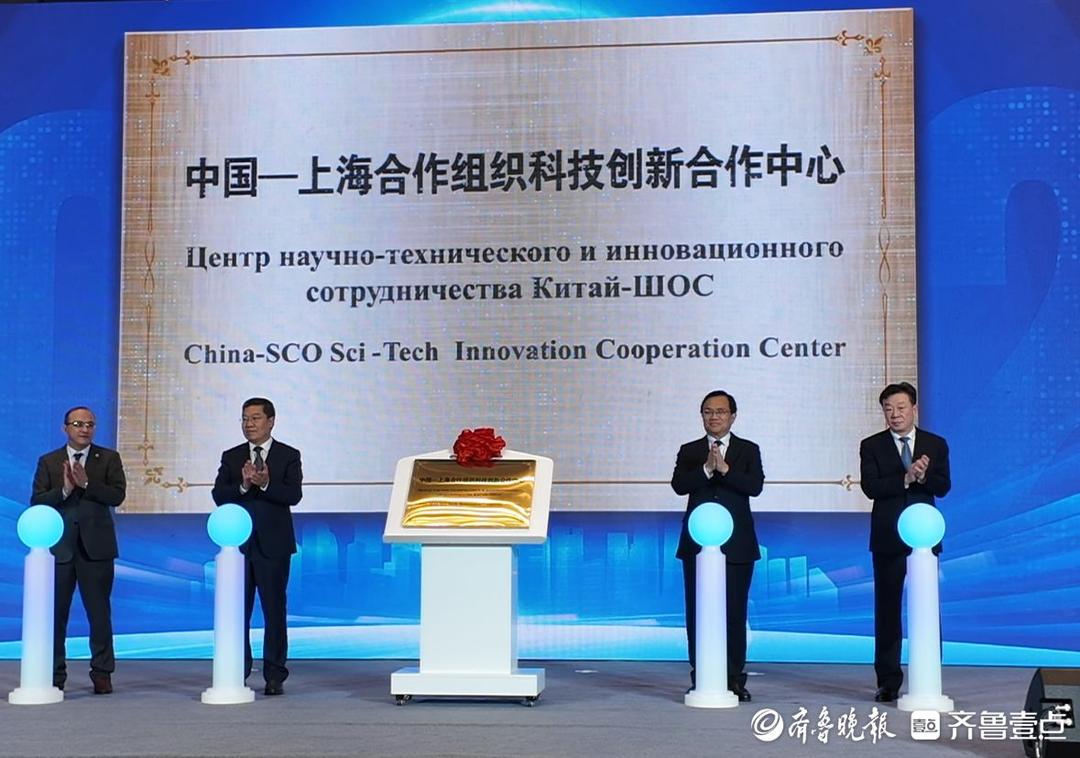
中国—上海合作组织科技创新合作中心在青岛挂牌启动
Qi Lu Wan Bao Wang· 2025-09-04 05:46
Core Points - The China-Shanghai Cooperation Organization (SCO) Technology Innovation Cooperation Center was established in Qingdao, Shandong Province, on September 4, aiming to promote international technological cooperation and innovation [1][3][5] - The center will focus on various fields including biomedicine, high-end equipment, and modern efficient agriculture, with 10 key international cooperation projects initiated [3][5] - The center aims to create an open and mutually beneficial international innovation cooperation ecosystem, enhancing regional collaborative innovation and providing new momentum for the economic and social development of member countries [5][6] Summary by Categories Establishment and Purpose - The SCO Technology Innovation Cooperation Center is established to facilitate academic exchanges in the humanities and promote joint project selection [1][5] - It will encourage cross-border technology transfer and establish an international think tank for member countries to support international technological cooperation [5] Key Activities and Focus Areas - The center will host various events such as the China-SCO Technology Innovation Cooperation Conference, youth innovation and entrepreneurship competitions, and technology achievement exhibitions [5] - It will prioritize joint innovation in fields like artificial intelligence, digital economy, healthcare, modern agriculture, and climate change, promoting bilateral and multilateral joint research and development [5] Future Development - Qingdao aims to enhance the center's role in deepening technological exchanges and cooperation with SCO member countries and globally, striving to make it a high-level platform for international innovation [6]
中国—上海合作组织科技创新合作中心在青岛挂牌成立
Yang Shi Xin Wen· 2025-09-04 01:09
Core Points - The China-Shanghai Cooperation Organization (SCO) Technology Innovation Cooperation Center was established in Qingdao, Shandong on the morning of the 4th, with 10 key international cooperation projects targeting SCO member countries launched simultaneously [1] - The center aims to promote regional collaborative innovation and build an open, inclusive, and mutually beneficial international innovation cooperation ecosystem, injecting new momentum into the economic and social development of member countries [1] Summary by Categories International Cooperation Projects - The launched projects cover various fields including biomedicine, high-end equipment, and modern efficient agriculture [1] - The center will focus on priority areas such as artificial intelligence, digital economy, healthcare, modern agriculture, and climate change, promoting joint innovation through bilateral and multilateral research and development [1] Innovation and Academic Exchange - The center will facilitate cultural and academic exchanges in the innovation field, actively hosting events like the China-SCO Technology Innovation Cooperation Conference, Youth Innovation and Entrepreneurship Competition, and technology achievement exhibitions [1] Technology Transfer and Support - The center encourages cross-border technology transfer and aims to establish an international technology transfer platform, enhancing services related to technology transfer management and intellectual property [1] - An international think tank for SCO member countries will be established, forming a think tank alliance to deepen exchanges on technology innovation policies and practical experiences, providing intellectual support for international technological cooperation [1]