
全球流动性扩张

Search documents
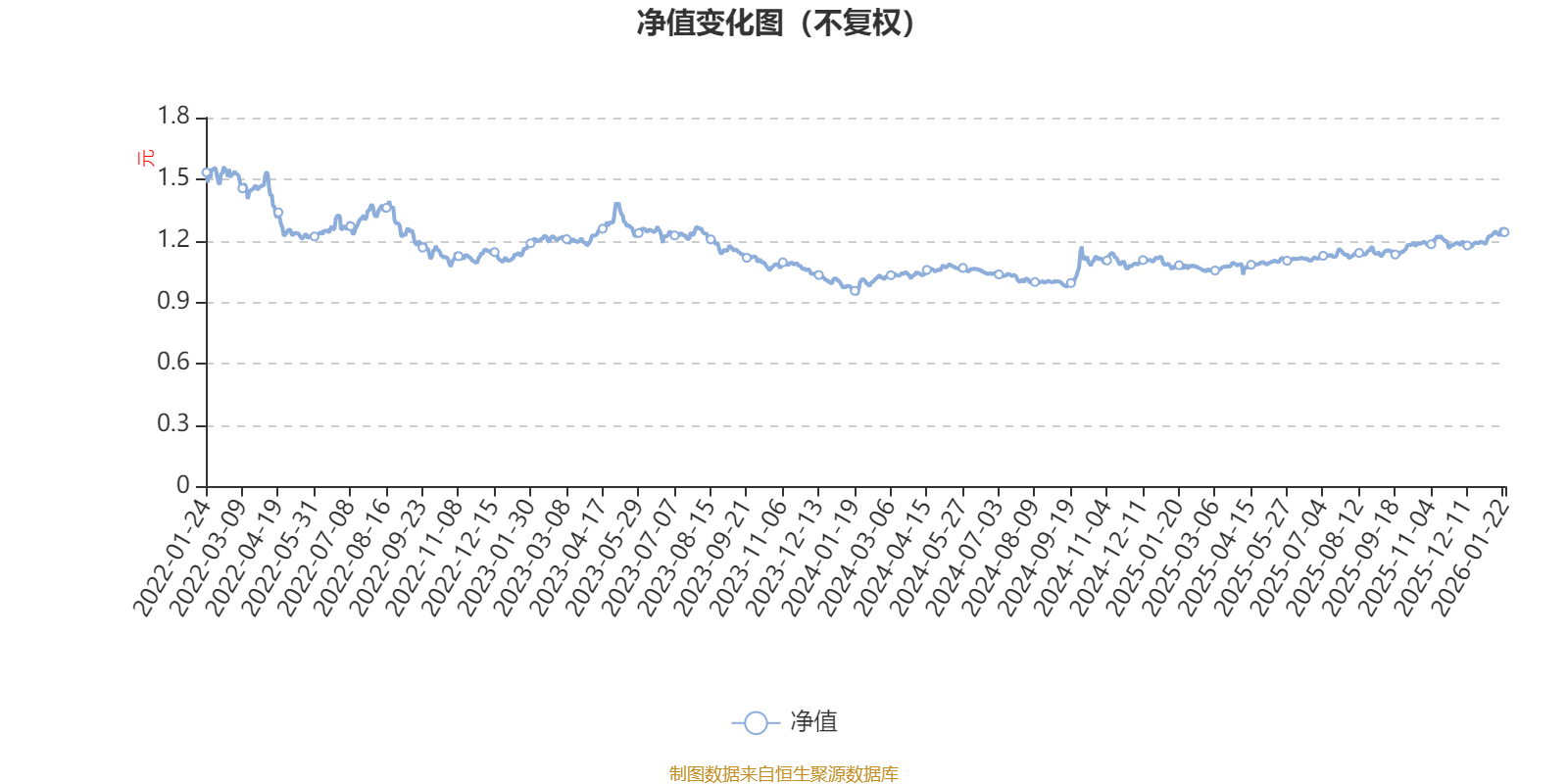
招商国企改革主题混合:2025年第四季度利润386.01万元 净值增长率2.42%
Sou Hu Cai Jing· 2026-01-23 13:57
Core Viewpoint - The AI Fund, focusing on state-owned enterprise reform, reported a profit of 3.86 million yuan for Q4 2025, with a net asset value growth rate of 2.42% and a total fund size of 142 million yuan as of the end of Q4 2025 [4][17]. Fund Performance - As of January 22, the fund's unit net value was 1.241 yuan, with a one-year cumulative net value growth rate of 15.98%, ranking it 557 out of 613 comparable funds [4][5]. - The fund's performance over the last three months showed a growth rate of 4.90%, ranking 456 out of 621, and over the last six months, it was 6.80%, ranking 556 out of 621 [5]. Investment Strategy - The fund manager indicated a focus on sectors such as exports, chemicals, non-ferrous metals, and finance, benefiting from overseas demand expansion and lower domestic factor prices [4]. - Future investment strategies will continue to monitor trends in exports and global liquidity expansion, as well as potential changes in consumption and real estate sectors [4]. Risk and Return Metrics - The fund's three-year Sharpe ratio was 0.4125, ranking 321 out of 526 comparable funds [10]. - The maximum drawdown over the last three years was 32.11%, with the highest quarterly drawdown recorded at 24.98% in Q1 2020, ranking 186 out of 526 [12]. Portfolio Composition - The average stock position over the last three years was 89.82%, compared to a peer average of 85.83%, with a peak of 94.15% in mid-2024 and a low of 73.51% in Q3 2023 [15]. - The top ten holdings of the fund include Yili Industrial, Changjiang Power, China Pacific Insurance, and Zijin Mining, among others [20].

现货黄金突破4040美元/盎司 万国黄金集团涨超5%
Zhi Tong Cai Jing· 2025-11-11 13:41
Core Viewpoint - The recent share purchase by the founder and chairman of the company reflects strong confidence in the company's future and growth potential, alongside a commitment to its long-term success [1]. Company Summary - The founder, Gao Mingqing, acquired a total of 1.01 million shares at an average price of HKD 29.3408 per share, amounting to nearly HKD 30 million [1]. - Following this acquisition, the total shares held by Gao's investment company, Jiesheng Investment Co., reached 283 million, representing approximately 25.57% of the total issued share capital [1]. Industry Summary - On November 10, spot gold prices surpassed USD 4,040 per ounce, with an intraday increase of over 1% [1]. - According to CITIC Securities, gold is expected to benefit from global liquidity expansion and heightened preference due to de-globalization risks in the long term [1]. - Recent fluctuations in gold prices have been primarily driven by U.S.-China trade relations and interest rate cut expectations [1]. - Looking ahead to next year, various factors are likely to continue driving gold prices upward, with both structural and cyclical opportunities expected to resonate [1].
黄金早参 | 美政府停摆破记录,避险情绪升温,金价震荡走强
Sou Hu Cai Jing· 2025-11-06 01:29
Core Viewpoint - The U.S. government shutdown has reached a record 36 days, leading to increased risk aversion and a rise in gold prices, with COMEX gold futures up 0.75% to $3990.40 per ounce [1] Economic Impact - The Congressional Budget Office warns that if the shutdown continues for six weeks, economic losses could reach $11 billion, and the annual growth rate of U.S. GDP in Q4 is expected to decline by 1 to 2 percentage points [1] Gold Market Analysis - Historical patterns indicate that gold prices are closely linked to geopolitical and economic conditions, with upward pressure typically arising from geopolitical turmoil and weak U.S. economic performance [1] - Current downward risks for gold prices include a recovering U.S. economy, a hawkish Federal Reserve, strong fiscal discipline, easing geopolitical tensions, and global central banks selling gold, none of which are currently significant [1] - Long-term, gold is expected to benefit from the expansion of global liquidity and increased preference due to risks associated with de-globalization [1] - Recent volatility in gold prices has been primarily driven by U.S.-China trade relations and interest rate cut expectations, with multiple factors likely to continue influencing upward trends in gold prices next year [1]
黄金市场在交易什么?
Ge Long Hui· 2025-11-06 00:38
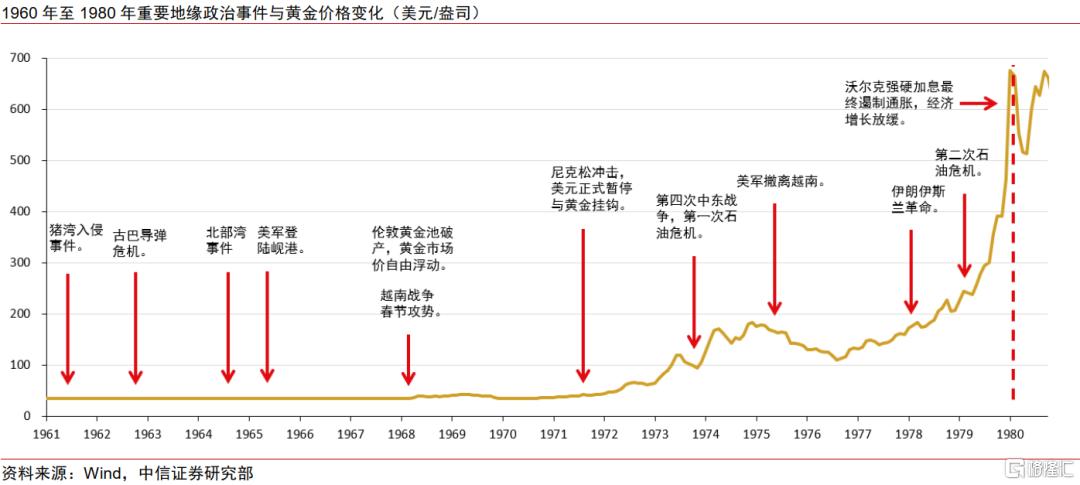
Core Insights - The long-term price trend of gold is highly correlated with geopolitical and economic conditions, with upward movements typically driven by geopolitical turmoil and weak U.S. economic performance [1][2] - Current risks for gold price declines are not significant, including factors such as a recovering U.S. economy, hawkish Federal Reserve policies, strong fiscal discipline, easing geopolitical tensions, and global central banks selling gold [1][8][10][12][13] - In the long run, gold is expected to benefit from the expansion of global liquidity and increased preference due to de-globalization risks [1][16] Historical Context - Since 1971, gold price trends can be divided into three phases: the 1960s-70s characterized by U.S. struggles during the Vietnam War and economic issues leading to stagflation; the 1980s-90s marked by U.S. economic growth and a decline in gold prices; and the 21st century where geopolitical and financial crises have accelerated gold's price detachment from the dollar [2] Current Market Dynamics - Recent fluctuations in gold prices were primarily driven by U.S.-China trade relations and expectations of interest rate cuts, with significant price movements observed from late August to mid-October [20][23] - The stability of U.S.-China trade relations and the Federal Reserve's monetary policy are expected to be key factors influencing gold prices in the near term, with a general upward trend anticipated [23] Long-term Outlook - Long-term factors supporting gold prices include liquidity expansion from credit monetary systems and a rising preference for gold among global central banks and investors [16] - The complex global monetary system may see gold, along with other precious metals and cryptocurrencies, playing increasingly important roles, potentially leading to long-term price increases [16]
中信证券:展望明年 多种因素仍然很可能主导金价上行
Sou Hu Cai Jing· 2025-11-06 00:26
Core Insights - The long-term price trend of gold is highly correlated with geopolitical and economic conditions [1] - The upward drivers of gold prices typically stem from geopolitical turmoil and weak performance of the U.S. economy [1] - Current downward risks are categorized into five types, which are not significantly present at the moment [1] Summary by Categories Price Drivers - Geopolitical chaos and weak U.S. economic performance are primary drivers for rising gold prices [1] - Recent fluctuations in gold prices are mainly influenced by U.S.-China trade relations and interest rate cut expectations [1] Downward Risks - The five categories of downward risks include: 1. Improvement in the U.S. economy 2. A hawkish shift from the Federal Reserve 3. Strong fiscal discipline in the U.S. 4. Easing geopolitical tensions 5. Global central banks selling gold - Currently, these risks are not significant [1] Long-term Outlook - In the long run, gold is expected to benefit from the expansion of global liquidity and increased preference due to risks associated with de-globalization [1] - Multiple factors are likely to dominate the upward trend of gold prices in the coming year [1]

中信证券: 展望明年多种因素仍然很可能主导金价上行
Sou Hu Cai Jing· 2025-11-06 00:21
Core Insights - The long-term price trend of gold is highly correlated with geopolitical and economic conditions [1] - The upward drivers of gold prices typically stem from geopolitical turmoil and weak performance of the US economy, while the downward risks can be categorized into five types [1] - Currently, the identified downward risks are not significant, suggesting a favorable outlook for gold prices [1] Summary by Categories Price Drivers - Geopolitical chaos and weak US economic performance are primary drivers for rising gold prices [1] - Recent fluctuations in gold prices have been primarily influenced by US-China trade relations and interest rate cut expectations [1] Downward Risks - The five categories of downward risks include: improvement in the US economy, a hawkish shift from the Federal Reserve, strong fiscal discipline in the US, easing geopolitical tensions, and global central banks selling gold [1] - At present, these risks are not pronounced, indicating a stable environment for gold prices [1] Long-term Outlook - In the long run, gold is expected to benefit from the expansion of global liquidity and increased preference due to risks associated with de-globalization [1] - Multiple factors are likely to continue driving gold prices upward in the coming year [1]