全球经济政策不确定性

Search documents
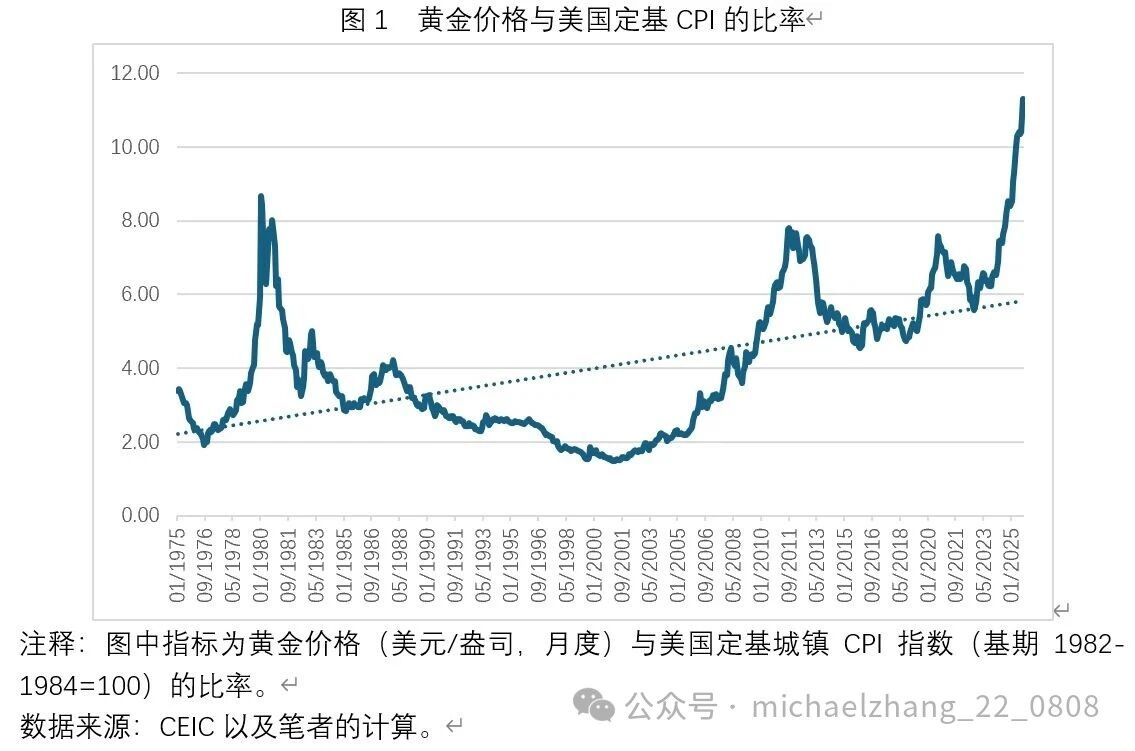
美方通告全球,中方大幅抛售美债,特朗普终于动手,美联储将换人
Sou Hu Cai Jing· 2026-01-14 11:19
Core Insights - The global financial market is experiencing significant turbulence due to two major developments: China's holdings of U.S. Treasury bonds falling below $700 billion, resulting in China losing its position as the second-largest holder, and the U.S. Department of Justice initiating a criminal investigation into Federal Reserve Chairman Jerome Powell, with Trump suggesting a leadership change at the Fed soon [1][4]. Group 1: China's Treasury Holdings - As of October 2025, China's holdings of U.S. Treasury bonds decreased to $688.7 billion, a year-on-year decline of 9.4%, overtaken by the UK with $877.9 billion in holdings [3]. - This reduction is part of China's ongoing strategy to optimize its foreign exchange reserves, having reduced its holdings for four consecutive years since falling below $1 trillion in 2022, with a notable sale of $25.7 billion in July 2025 [3]. - Concurrently, the People's Bank of China has increased its gold reserves for 12 consecutive months, reaching 7.409 million ounces by October 2025, as part of a "de-dollarization" strategy to mitigate risks associated with a single currency [3]. Group 2: U.S. Federal Reserve Dynamics - A political storm has erupted within the Federal Reserve, with Powell confirming a grand jury subpoena related to a renovation project, which he claims is a political pretext for pressure to lower interest rates as demanded by Trump [4]. - The budget for the renovation project has escalated from $1.9 billion to $2.5 billion, raising concerns, but Powell insists that interest rate decisions are based on inflation and employment data rather than political directives [4]. - Trump's dissatisfaction with Powell has been evident, with public criticisms regarding interest rate policies, and he has hinted at potential candidates for the next Fed chair, including Kevin Walsh and Kevin Hassett, who align with Trump's desire for lower interest rates [4]. Group 3: Market Reactions and Implications - The unfolding events have led to market reactions, including a slight weakening of the dollar index, a 5 basis point increase in 10-year Treasury yields, and international gold prices surpassing $2,100 per ounce [6]. - Internal divisions within the Trump administration have emerged, with Treasury Secretary Mnuchin warning that the investigation could disrupt markets, while several Republican lawmakers have stated they will not support a new chair nomination until the investigation concludes [6]. - Powell's term as a Fed governor extends until 2028, and if he refuses to resign, Trump may face a challenging situation of replacing the chair without changing the board, potentially intensifying policy conflicts [6]. Group 4: Global Economic Policy Uncertainty - The dual developments highlight a surge in uncertainty regarding global economic policies, with China's reduction of Treasury holdings being a rational choice for financial security rather than an act of confrontation, while Trump's interference with the Fed raises concerns about the independence of central banks [8]. - The ability of the Fed to maintain policy neutrality is deemed more critical than who succeeds Powell; if monetary policy becomes a political tool, risk-averse sentiment in the market is likely to increase [8]. - Upcoming announcements regarding potential Fed chair candidates around January 21, the progression of Powell's investigation, and adjustments in China's foreign exchange reserves will be key variables influencing the global financial landscape [8].

2026年全球黄金价格走势展望
Sou Hu Cai Jing· 2025-12-18 08:13
Core Viewpoint - The article analyzes the historical trends of gold prices and their future outlook, emphasizing the relationship between gold prices, inflation, economic risks, and the U.S. dollar index. Group 1: Historical Trends and Inflation - Gold prices have historically been viewed as a hedge against inflation, with a long-term average ratio of gold prices to the U.S. CPI index at 3.2 times, currently rising to around 6 times since 2022 [2] - Since 2010, the ratio of gold prices to the U.S. CPI index has remained above historical averages for 15 years, indicating a potential for price correction as the deviation from the mean is similar to the historical peak in the early 1980s [2] Group 2: Relationship with Risk Assets - Traditionally, gold prices are expected to have a negative correlation with mainstream risk assets, but both the S&P 500 index and gold prices have shown significant increases since Q4 2022, raising questions about future divergence [4] - The S&P 500 index has doubled during this period, while gold's increase has outpaced that of the S&P 500, suggesting a unique market condition where both assets rise amid heightened global economic and political risks [4] Group 3: Interest Rates and Gold Prices - Theoretically, gold prices should have a negative correlation with interest rates; however, recent years have shown a lack of significant correlation, with gold prices remaining stable despite rising long-term U.S. Treasury yields [7][8] - From late 2020 to mid-2023, despite a rise in 10-year U.S. Treasury yields from 0.5% to over 4%, gold prices exhibited a consolidating trend, indicating that long-term interest rates may not be a primary factor influencing gold prices in the near future [8] Group 4: Economic and Geopolitical Risks - Gold prices are positively correlated with global economic policy uncertainty, particularly evident after significant policy changes, such as the tariffs introduced by the Trump administration, which led to a peak in the uncertainty index [11] - Despite a decrease in the global economic policy uncertainty index and geopolitical risk index, gold prices have remained high, suggesting potential for a significant correction if these conditions stabilize further [11] Group 5: Impact of the U.S. Dollar - Gold prices are primarily traded in U.S. dollars, leading to an expected negative correlation with the dollar index; however, this correlation has varied over time [14] - In 2025, the dollar index depreciated by 10%, yet gold prices remained resilient, indicating that factors beyond the dollar's strength may be influencing gold prices [14] Group 6: Future Outlook - The future trajectory of gold prices in 2026 will largely depend on global economic policy uncertainty and the dollar index, with predictions suggesting a potential decline of 10-20% if conditions remain stable [16] - If unexpected geopolitical conflicts arise or if the U.S. government reintroduces protectionist policies, significant adjustments in gold prices may not occur as anticipated [16]

张明:2026年全球黄金价格走势展望
Di Yi Cai Jing· 2025-12-18 06:06
Core Viewpoint - There is a possibility of a significant adjustment in global gold prices in the first half of 2026, potentially declining by 10% to 20% [1] Group 1: Historical Price Trends - From December 30, 2024, to December 10, 2025, the LBMA gold price in the UK rose from $2,609.10 per ounce to $4,200.15 per ounce, marking a 61% increase, making it the best-performing asset class globally in 2025 [1] - Gold prices reached a historic high of $4,294.35 per ounce on October 20, 2025, before experiencing an 8% decline to $3,948.50 per ounce on October 28, 2025, and then fluctuating between $4,000 and $4,200 [1] Group 2: Inflation and Gold Prices - Historically, gold prices have been viewed as a hedge against inflation, with a long-term average ratio of gold prices to the U.S. CPI index at 3.2 times [2] - Currently, this ratio is close to 6 times, indicating a significant deviation from historical averages, which raises the probability of a price correction in the future [2] Group 3: Correlation with Risk Assets - Traditionally, gold prices are expected to have a negative correlation with mainstream risk assets, but both the S&P 500 index and gold prices have shown significant increases since Q4 2022 [4] - The future relationship between gold and equities remains uncertain, raising questions about which asset may adjust first if a divergence occurs [4] Group 4: Interest Rates and Gold Prices - The theoretical relationship suggests that gold prices should negatively correlate with interest rates; however, recent years have shown a lack of significant correlation [7] - For instance, despite a rise in U.S. 10-year Treasury yields from 0.5% to over 4% between late 2020 and mid-2023, gold prices remained relatively stable [7] Group 5: Economic and Geopolitical Risks - Gold prices are positively correlated with global economic policy uncertainty, particularly following significant policy changes, such as the introduction of "reciprocal tariffs" by the Trump administration [10] - Despite a decrease in the global economic policy uncertainty index and geopolitical risk index, gold prices have remained high, suggesting potential for a significant correction if conditions do not worsen [11] Group 6: Dollar Influence on Gold Prices - Gold prices are primarily traded in U.S. dollars, leading to a historical negative correlation with the dollar index; however, this relationship has varied over time [13] - In 2025, despite a 10% depreciation of the dollar index, gold prices surged by 60%, indicating that dollar fluctuations are not the primary driver of gold price changes [13] Group 7: Future Predictions - The baseline prediction suggests that the probability of significant escalation in trade tensions before the 2026 U.S. midterm elections is low, which may lead to a stable dollar index between 95 and 100 [17] - If these conditions hold, a significant adjustment in gold prices may occur in the first half of 2026, unless unexpected geopolitical conflicts arise or trade policies are reintroduced [17]
白银突破62美元又创新高,年内大涨近120%
Xin Lang Cai Jing· 2025-12-11 12:02
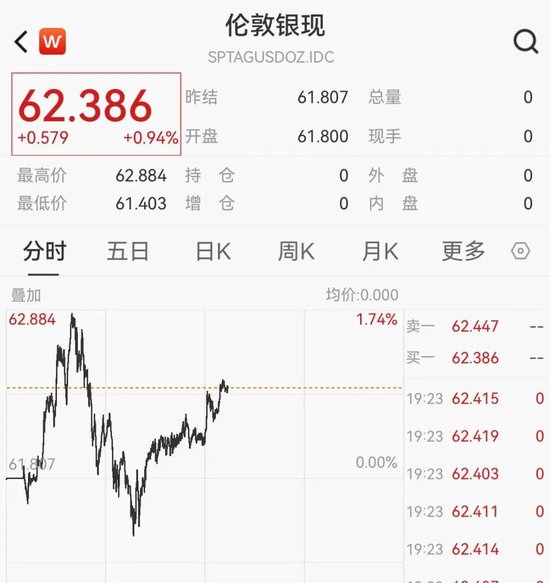
Core Viewpoint - Silver has emerged as a leading investment asset in 2023, with a year-to-date increase of nearly 120%, particularly accelerating in the second half of the year [1][10]. Price Movements - As of December 11, 2023, the spot silver price surpassed $62 per ounce, reaching a high of $62.884 per ounce, marking a new historical peak [1][10]. - COMEX silver also broke through $63 per ounce, hitting a peak of $63.25 per ounce, while the Shanghai Futures Exchange silver contract reached a high of 14,655 yuan per kilogram, with an increase of over 5% [1][10]. - The silver price has shown a significant upward trend, with a cumulative increase of nearly 120% for the year [4][14]. Market Drivers - The Federal Reserve's decision to lower the benchmark interest rate by 25 basis points to a range of 3.50%-3.75% has been a key factor in supporting silver prices, marking the third rate cut of the year and a total reduction of 75 basis points [4][13]. - Silver's price sensitivity to the dollar and its dual role as both a financial and industrial asset have attracted significant investment, particularly in sectors like AI servers, photovoltaics, and electric vehicles [5][15]. - The decline in global silver inventories, coupled with the Fed's rate cuts and silver's designation as a critical mineral in the U.S., has further bolstered silver prices [5][13]. Future Outlook - The Silver Institute predicts a structural supply deficit of approximately 95 million ounces in the global silver market by 2025, continuing a trend of supply shortages for the fifth consecutive year [7][16]. - Demand from the photovoltaic industry is expected to be a long-term support factor, with the International Energy Agency forecasting an increase in solar capacity that could raise silver demand by nearly 150 million ounces annually by 2030 [7][16]. - Analysts suggest that while silver may experience short-term volatility due to high sensitivity to market news, the overall trend remains bullish due to low inventories and resilient industrial demand [7][16].