
再生资源回收

Search documents
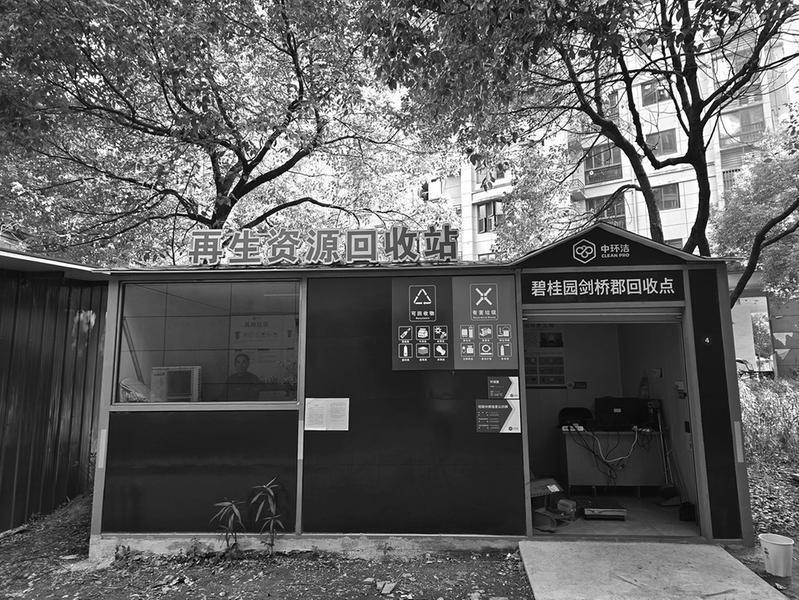
宣城“小蓝屋” 便民又环保
Xin Lang Cai Jing· 2026-01-16 17:04
Group 1 - The core idea of the article is the establishment of a recycling system in Xuancheng, which includes the creation of "Little Blue Houses" for convenient waste collection and recycling [3][4]. - The "Little Blue House" in the community serves as a local recycling station where residents can drop off recyclable materials like cardboard and books, enhancing convenience and promoting recycling [3]. - Xuancheng has built 52 recycling stations and integrated waste sorting with recycling networks, aiming to improve the overall waste management system [4]. Group 2 - Xuancheng has completed the construction of 1,346 waste collection pavilions and 52 recycling stations, with 12 routes for kitchen waste collection and 215 vehicles for waste transport [4]. - The city has established 8 waste treatment facilities with a daily processing capacity of 2,556 tons, achieving a "zero landfill" and "full incineration" status for household waste [4]. - The local environmental management authority emphasizes the need to enhance residents' awareness of waste sorting to further improve the effectiveness of the recycling system [5].

浙富控股股价涨5.01%,南方基金旗下1只基金位居十大流通股东,持有3789.98万股浮盈赚取833.8万元
Xin Lang Cai Jing· 2026-01-08 02:24
Group 1 - Zhejiang Fu Holdings Co., Ltd. has seen its stock price increase by 5.01% to 4.61 CNY per share, with a total market capitalization of 24.061 billion CNY as of January 8 [1] - The company has experienced a cumulative increase of 5.78% over the past four days, with a trading volume of 337 million CNY and a turnover rate of 1.52% [1] - The main business revenue composition of Zhejiang Fu Holdings includes 93.96% from hazardous waste disposal and resource recycling, 5.78% from clean energy equipment, 0.22% from other sources, and 0.05% from oil extraction [1] Group 2 - Southern Fund's Southern CSI 500 ETF (510500) is among the top ten circulating shareholders of Zhejiang Fu Holdings, having reduced its holdings by 775,700 shares in the third quarter [2] - The current holding of Southern CSI 500 ETF is approximately 37.8998 million shares, representing 0.77% of the circulating shares, with an estimated floating profit of about 8.338 million CNY today [2] - Over the four-day increase, the floating profit for Southern CSI 500 ETF has reached approximately 9.096 million CNY [2] Group 3 - The fund manager of Southern CSI 500 ETF is Luo Wenjie, who has a total tenure of 12 years and 265 days, with the fund's total asset size at 170.251 billion CNY [3] - During his tenure, the best fund return achieved was 156.65%, while the worst return was -47.6% [3]

多部门围绕绿色消费全链条明确20项举措 持续提高消费“含绿量”
Ren Min Ri Bao· 2026-01-07 01:04
Core Viewpoint - The Ministry of Commerce and nine other departments have jointly issued a notice to implement green consumption initiatives during the 14th Five-Year Plan period, aiming to promote green and low-carbon practices across various sectors for high-quality economic and social development [1] Group 1: Optimizing the Green Consumption Environment - The promotion of green consumption aligns with the trend of consumption upgrading and aims to cultivate new growth points in consumption [2] - The market for green products, such as electric vehicles and smart home appliances, is steadily expanding, with a richer supply of green products and continuous innovation in consumption models [2] - The notice outlines 20 measures across seven areas to enhance green consumption, including increasing the supply of green agricultural products and promoting green services [2][3] Group 2: Driving Green Supply and Demand Transformation - The government is focusing on key areas of green consumption, using policies like subsidies for high-efficiency green appliances and vehicles to stimulate demand [4] - From 2024 to 2025, approximately 17.67 million scrapped vehicles are expected to be recycled, with an annual growth rate of 45.8% [4] - The standardization rate of pallets has reached 37.8%, with an estimated saving of 250 million disposable pallets, equivalent to protecting 50 million trees and reducing carbon emissions by over 2 million tons [4] Group 3: Building a Strong Recycling System - The Ministry of Commerce supports the construction of intelligent and specialized sorting centers for recycling, encouraging local governments to provide policy support [5] - The focus is on guiding more recycled resources to upgraded sorting centers to promote high-quality development in the recycling industry [5] Group 4: Collaborative Efforts for Green Consumption - Promoting green consumption requires the participation of multiple stakeholders, including government, enterprises, and consumers [6] - The Ministry of Agriculture and Rural Affairs is working to increase the supply of high-quality green agricultural products and enhance brand recognition [7] - The Ministry of Ecology and Environment aims to transform waste materials into valuable resources through initiatives like "zero waste cities" [7] - The State Administration for Market Regulation is advancing green consumption efforts by updating national standards and enhancing enforcement against violations in green product labeling [7]
如何提高消费“含绿量”?多部门解读
Zheng Quan Shi Bao· 2026-01-06 11:49
Core Viewpoint - The Ministry of Commerce and nine other departments have jointly issued a notice to implement green consumption promotion actions, proposing 20 specific measures across various sectors, including agricultural products, home appliances, and hospitality, while also clarifying financial support policies to optimize the green consumption environment [1]. Group 1: Green Consumption Policies - The promotion of green consumption is a key measure for implementing low-carbon development, enhancing consumption, and accelerating the green transformation of the economy and society [2]. - The Ministry of Commerce has identified the old-for-new policy as a significant driver for green consumption, providing subsidies for high-efficiency green appliances, home furnishings, and new energy vehicles [2]. - The target for 2024-2025 includes replacing 18.3 million cars, with nearly 60% being new energy vehicles, and achieving 192 million old appliances replaced, contributing to a sales increase of 3.92 trillion yuan and benefiting 494 million consumers [2]. Group 2: Green Supply Chain and Recycling - The Ministry of Commerce is promoting green supply chain construction, improving recycling systems, and fostering green circulation enterprises to enhance green consumption [3]. - The notice emphasizes the need to enrich the supply of quality green products, including green agricultural products and energy-efficient appliances, to support consumer choices [4]. - The market regulatory authority has issued nearly 40,000 effective certification certificates for 122 types of products, indicating low resource consumption and pollution, thus enhancing market efficiency [4]. Group 3: Future Initiatives - The market regulatory authority plans to accelerate the update of national standards and support participation in international standardization activities in the green sector [5]. - Efforts will be made to strengthen the enforcement of laws against violations in green product labeling and food waste [5]. - The construction of a high-value recycling system for renewable resources is deemed essential for promoting green consumption and enhancing resource recycling levels [6]. Group 4: Resource Recovery and Utilization - The Ministry of Commerce has outlined 11 tasks to improve the recycling system for old appliances and furniture, designating 32 pilot cities and 78 enterprises to establish a comprehensive recycling network [6]. - The focus will be on supporting the construction of sorting centers to improve efficiency and reduce waste in the recycling process [7]. - The goal is to achieve a total recycling volume of approximately 380 million tons by 2025, contributing to the development of a green circular economy [6].
如何提高消费“含绿量”?多部门解读
证券时报· 2026-01-06 11:47
Core Viewpoint - The article discusses the implementation of green consumption initiatives by the Ministry of Commerce and nine other departments, highlighting 20 specific measures across various sectors to promote sustainable consumption and support policies [1][4]. Group 1: Green Consumption Policies - The initiative aims to enhance the green consumption incentive mechanism, focusing on areas such as agricultural products, home appliances, and hospitality [1]. - The "old-for-new" policy is emphasized as a key strategy to increase green consumption, with targets set for replacing 18.3 million cars, of which nearly 60% will be new energy vehicles, and 192 million home appliances, with 90% being of the highest energy efficiency [4][5]. Group 2: Market Development and Support - The article notes that the green consumption initiative is aligned with the trend of consumption upgrades and aims to create new growth points in the economy, contributing to carbon reduction and high-quality development during the 14th Five-Year Plan period [4]. - The Ministry of Commerce has collaborated with other departments to provide subsidies for high-efficiency green appliances and vehicles, stimulating demand and facilitating a circular economy [4]. Group 3: Quality Assurance and Certification - The article highlights the importance of quality certification in promoting green products, with nearly 40,000 effective certification certificates issued for 122 types of consumer-related products, ensuring lower resource consumption and pollution [7]. - China has become the world's third-largest organic consumption market, with over 32,000 certification certificates issued for organic products, supporting agricultural green development and enhancing the quality of life for consumers [6][7]. Group 4: Future Directions - Future efforts will focus on updating national standards, enhancing energy and water efficiency labeling systems, and promoting green dining services to reduce food waste [8]. - The establishment of a high-value recycling system for renewable resources is deemed essential for promoting sustainable consumption and improving resource utilization [10][11].
通鼎互联信息股份有限公司关于股东减持股份触及 1%及5%整数倍暨披露简式权益变动报告书的提示性公告
Shang Hai Zheng Quan Bao· 2025-12-23 12:34
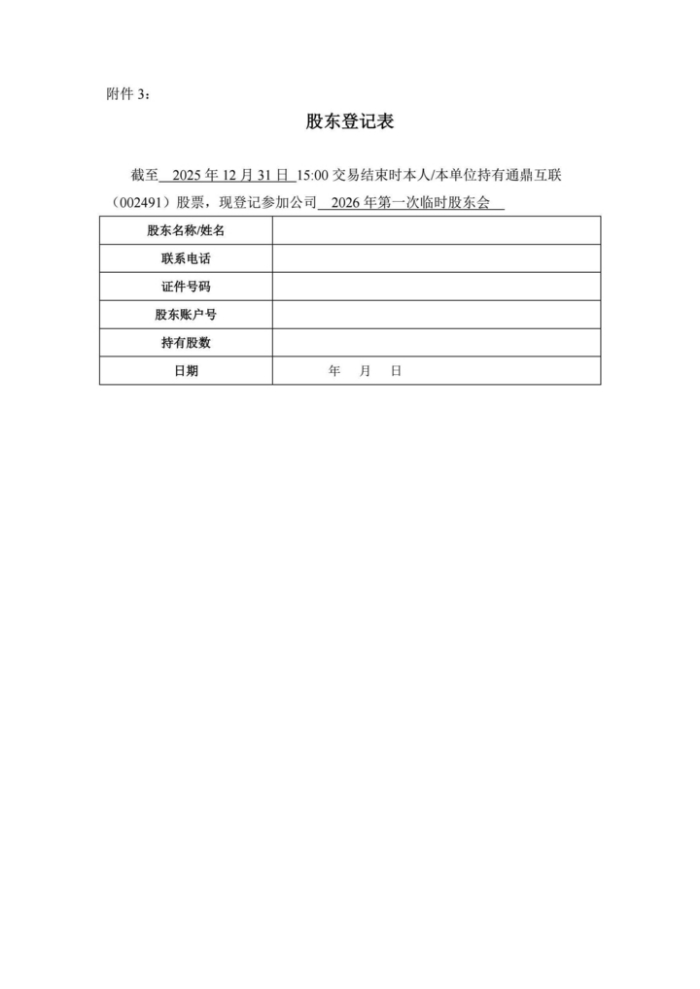
Group 1 - The company received a notification from its shareholder, Dongwu Venture Capital Co., Ltd., regarding a reduction in shareholding that fell below 5% [9][10] - After the reduction, the shareholder's stake decreased from 5.4817% to 4.999998%, and it no longer qualifies as a major shareholder [9][10] - This change in shareholding will not affect the company's controlling shareholder or its governance structure [9] Group 2 - The company held its 14th meeting of the 6th Board of Directors on December 19, 2025, where several proposals were approved [12][13] - The board approved the establishment of a joint venture company, Jiangsu Dingchun Technology Co., Ltd., with a registered capital of 10 million RMB, where the company will hold 45% of the shares [20] - The board also approved an increase in the company's business scope to include recycling of renewable resources and related activities [40] Group 3 - The company plans to hold its first extraordinary shareholders' meeting of 2026 on January 7, 2026, to discuss the approved proposals [44][46] - The meeting will allow for both on-site and online voting, ensuring participation from all shareholders [46][50] - The company will provide a platform for shareholders to vote online, with specific instructions for participation [54]

钻进废品回收行里的年轻人
36氪· 2025-12-16 00:12
Core Insights - The article highlights the increasing interest of young people in the waste recycling industry, driven by low entry barriers and the potential for profit, as well as the influence of AI in suggesting business opportunities [4][5][6] - The recycling sector is experiencing significant growth, with China's recycling value projected to reach 1.75 trillion yuan in 2024, marking a 28.3% year-on-year increase [6] - Young entrepreneurs are leveraging social media and technology to innovate within the traditional recycling industry, creating new business models and enhancing customer engagement [39][41] Group 1: Industry Growth and Trends - The recycling industry is becoming a new economic growth point amidst stagnation in other sectors, with substantial policy support and capital inflow [6] - Social media platforms are seeing a surge in interest around waste recycling, with content targeting younger demographics, including high school students and recent graduates [7][8] - The traditional recycling industry is evolving, with younger individuals entering the field and bringing new skills and ideas, such as using AI and social media for business [8][39] Group 2: Entrepreneurial Experiences - Young entrepreneurs like Xiaoyan and Wang Ziye are transitioning from traditional jobs to waste recycling, motivated by the desire for independence and financial stability [10][16] - Xiaoyan's initial struggles included finding customers and managing operational challenges, reflecting the difficulties faced by newcomers in the industry [26][35] - Wang Ziye's journey illustrates the challenges of physical labor in recycling, as well as the need for strategic decision-making regarding the types of materials to collect [28][36] Group 3: Challenges and Market Dynamics - New entrants in the recycling industry face competition and the need to develop expertise in material valuation and customer relations [30][31] - The market is characterized by price volatility, particularly for metals, which can significantly impact profitability for recycling businesses [36][37] - The presence of established players and the complexity of customer interactions can create barriers for young entrepreneurs trying to establish themselves [34][35] Group 4: Innovation and Future Outlook - Young recyclers are exploring innovative approaches, such as community engagement and digital marketing, to differentiate their businesses [39][46] - The potential for collaboration and partnerships within the recycling ecosystem is highlighted, as entrepreneurs seek to expand their operations and customer base [46][49] - The article suggests that the future of the recycling industry may involve a shift towards more integrated and technology-driven models, as younger generations bring fresh perspectives [45][50]
哈尔滨绿洁报废机动车拆解有限公司成立 注册资本50万人民币
Sou Hu Cai Jing· 2025-10-15 23:46
Core Viewpoint - The establishment of Harbin Green Clean Scrap Vehicle Dismantling Co., Ltd. indicates a growing focus on the recycling and dismantling of vehicles, particularly in the context of environmental sustainability and the circular economy [1] Company Overview - Harbin Green Clean Scrap Vehicle Dismantling Co., Ltd. has been registered with a capital of 500,000 RMB [1] - The legal representative of the company is Sun Yuguang [1] Business Scope - The company operates in various sectors including: - Second-hand vehicle trading market - Sales of new energy vehicles and batteries - Mechanical equipment sales and rental - Recycling of used power batteries from new energy vehicles [1] - Additional services include: - Agricultural machinery recycling and dismantling - Technical services and consulting - Vehicle assessment and evaluation [1] Licensing and Regulatory Compliance - The company is authorized to engage in: - Dismantling and recycling of scrap vehicles - Road freight transportation (excluding hazardous goods) [1] - Operations are subject to approval from relevant authorities, ensuring compliance with regulatory requirements [1]
腾远钴业股价涨5.04%,银华基金旗下1只基金重仓,持有29.38万股浮盈赚取112.84万元
Xin Lang Cai Jing· 2025-10-09 05:22
Core Insights - Tengyuan Cobalt's stock price increased by 5.04% on October 9, reaching 79.96 CNY per share, with a trading volume of 1.05 billion CNY and a turnover rate of 4.63%, resulting in a total market capitalization of 23.566 billion CNY. The stock has risen for three consecutive days, accumulating a total increase of 13.94% during this period [1] Company Overview - Tengyuan Cobalt Industry Co., Ltd. is located in Ganzhou, Jiangxi Province, and was established on March 26, 2004. The company went public on March 17, 2022. Its main business includes the production and sales of hazardous chemicals, fertilizers, non-ferrous metal smelting, basic chemical raw materials manufacturing, recycling of used power batteries for electric vehicles, and the production and sales of various building materials [1] - The revenue composition of Tengyuan Cobalt is as follows: cobalt products account for 47.56%, copper products for 44.39%, and other products for 8.05% [1] Fund Holdings - Silver Hua Fund has a significant holding in Tengyuan Cobalt, specifically through the Silver Hua Growth Mixed Fund (161838), which increased its holdings by 24,000 shares in the second quarter, bringing the total to 293,800 shares, representing 5.87% of the fund's net value. The estimated floating profit today is approximately 1.1284 million CNY, with a total floating profit of 2.7357 million CNY during the three-day increase [2] - The Silver Hua Growth Mixed Fund (161838) was established on August 7, 2020, with a current scale of 266 million CNY. Year-to-date returns are 27.73%, ranking 3,773 out of 8,238 in its category, while the one-year return is 27.67%, ranking 3,337 out of 8,082. Since its inception, the fund has experienced a loss of 17.27% [2] Fund Management - The fund managers of Silver Hua Growth Mixed Fund are Liu Hui and Wang Ligang. Liu Hui has a tenure of 8 years and 211 days, managing assets totaling 3.159 billion CNY, with the best fund return during his tenure being 136.39% and the worst being -17.27% [3] - Wang Ligang has a tenure of 5 years and 285 days, managing assets totaling 3.281 billion CNY, with the best fund return during his tenure being 34.87% and the worst also being -17.27% [3]
全国政协十四届常委会第十三次会议举行全体会议 围绕“制定国民经济和社会发展‘十五五’规划”进行大会发言王沪宁出席
Xin Hua Wang· 2025-08-26 08:01
Group 1 - The meeting of the 14th National Committee of the Chinese People's Political Consultative Conference focused on the formulation of the 14th Five-Year Plan for national economic and social development [1] - Wang Guosheng suggested prioritizing the development of new quality productivity and expanding domestic demand as a strategic basis for planning [2] - Miao Wei emphasized the deep integration of the digital economy with the real economy and accelerating the process of industrial intelligence [2] Group 2 - Ma Jiantang proposed multiple measures to enhance consumer capacity, boost consumption willingness, expand consumption scenarios, and increase consumption supply to cultivate a complete domestic demand system [2] - Wang Zhigang recommended enhancing original and disruptive technological innovation capabilities to provide strong momentum for the development of new quality productivity [2] - Chen Qun suggested optimizing and dynamically adjusting the structure of education at all levels to better meet the needs of economic and social development [2] Group 3 - Kong Lingzhi advocated for driving agricultural production factor restructuring and deep industrial transformation through technological innovation, promoting comprehensive rural revitalization [2] - Xie Ru proposed deepening the "Ten Thousand Enterprises Prosperity in Ten Thousand Villages" initiative to enable private enterprises to play a greater role in promoting urban-rural circulation and common prosperity [2] - Li Qun recommended further exploring and utilizing historical facts, archaeological artifacts, and cultural relics of various ethnic groups to strengthen the study of the Chinese national community [2] Group 4 - Chen Yan emphasized adhering to a people-centered creative orientation to enhance the subjectivity of Chinese culture and promote artistic creation to new heights [2] - Lin Yifu suggested constructing a support system for high-quality population development to inject sustainable momentum into Chinese-style modernization [2] - Li Wenzhang proposed improving the social governance system and ensuring social stability and order through effective community service [2] Group 5 - Wang Jinnan advocated for high-level protection to support high-quality development and the construction of a beautiful China in harmony with nature [2] - Qian Zhiming suggested improving the recycling system and market for renewable resources to enhance China's energy and resource security [2] - Zhang Baiqing recommended increasing efforts in "going out" and "bringing in" to create a new pattern of coordinated development between independent innovation and open innovation [2]