
加税

Search documents
纽约市长不但免费之说食言,还要加税
Sou Hu Cai Jing· 2026-02-20 22:50
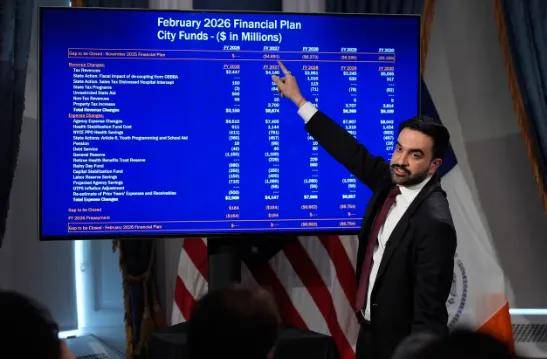
Group 1 - New York City Mayor Mamdani has not fulfilled his promise of free public transportation, and instead, prices have increased while service quality has declined [1] - The new budget proposal of $127 billion includes a projected 9.5% increase in property taxes over the next two years to cover a $5.4 billion budget deficit, affecting over 3 million homeowners and more than 100,000 commercial property owners [3] - The budget also suggests using nearly $1 billion in reserve funds and extracting $229 million from the city's retiree health benefits fund, indicating a desperate attempt to manage immediate financial challenges [3] Group 2 - The last significant property tax increase occurred in 2003 following the 9/11 economic downturn, and the current proposal may lead to higher living costs for renters unless rent increases are frozen, which could face legal challenges [4] - The state government has announced $1.5 billion in aid over the next two years to help stabilize the city's finances, while the mayor has called for additional taxes on the wealthy to alleviate the fiscal crisis [4] - The use of reserve funds, referred to as the "rainy day fund," is controversial among city council leaders, who argue that it is unacceptable to tap into these funds during a cost-of-living crisis [5]

腾讯大跌6%,游戏要加税这个事是不是真的?
Xin Lang Cai Jing· 2026-02-03 03:19
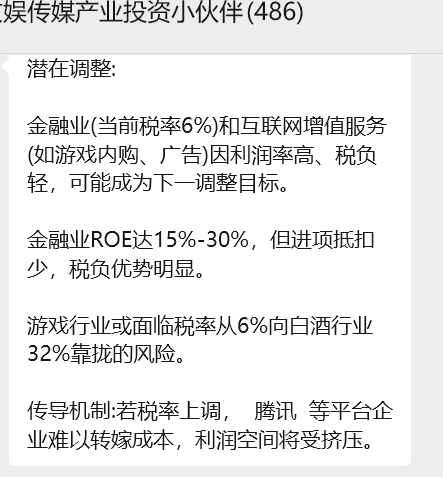
Group 1 - The core rumor about a tax increase from 6% to 32% for the gaming industry is deemed unreliable, as the actual tax rates for major companies range from 15% to 25% [3][10] - The recent decline in Tencent's stock price, dropping 6% to 560, is attributed to market reactions to the tax rumors and other factors, leading to significant selling pressure from large investors [2][8] - The comparison of the gaming tax situation to the recent increase in value-added tax for telecommunications companies has contributed to market fears, although the gaming tax structure is more complex [3][10] Group 2 - The issuance of red envelopes by Yuanbao has been criticized in the tech community, with concerns that it disrupts users and questions Yuanbao's technical capabilities, but this should not justify a drop of over 5% in stock price [5][11] - There are concerns regarding capital expenditures, particularly in AI, with rumors suggesting a significant downward revision of revenue expectations for HWJ by 50-100%, indicating potential reductions in AI spending by major domestic companies [6][12]

重大!英国未来增税260亿英镑!秋季预算案新增豪宅税,电动汽车消费税!
Sou Hu Cai Jing· 2025-11-26 22:14
Core Viewpoint - The Autumn Budget has generated unprecedented attention due to speculation about potential tax increases, including a "mansion tax" and "rental tax," aimed at addressing a significant fiscal deficit [4][6][7]. Group 1: Budget Overview - The budget is expected to raise £26 billion in taxes by the fiscal year 2029-30, with various tax measures introduced [10]. - The budget process was marked by a leak from the Office for Budget Responsibility (OBR), causing temporary fluctuations in the financial markets [8][7]. Group 2: Economic Predictions - OBR forecasts an inflation rate of 3.5% for this year, slightly above the previous estimate of 3.2%, with a drop to 0.4% expected next year [13]. - GDP growth is projected at 1.5% for 2025, with subsequent years showing growth rates of 1.4% in 2026, 1.6% in 2027, and 1.5% in 2028 and 2029 [13]. Group 3: Tax Measures - A new "mansion tax" will be levied on high-value properties, expected to raise over £400 million by 2031, affecting less than 1% of properties valued over £2 million [26]. - The introduction of an electric vehicle consumption tax will charge 3 pence per mile for pure electric vehicles and 1.5 pence for plug-in hybrids, aimed at doubling road maintenance funding [30]. - Remote gambling tax rates will increase from 21% to 40%, and online betting tax rates will rise from 15% to 25%, projected to generate over £1 billion annually by 2031 [32]. Group 4: Public Services and Welfare - The government will allocate £500 million for secondary school libraries and £18 million for upgrading playgrounds across England [18]. - A new "youth guarantee" program will be funded with £820 million over three years to support apprenticeships for those under 25 [20]. - The government plans to restore face-to-face assessments for disability benefits and reform the universal credit system to help 15,000 people return to work [20]. Group 5: Real Estate Market Insights - An international buyer purchased a £25 million penthouse in Knightsbridge, indicating a growing demand for luxury properties in prime locations [38][40]. - The London rental market is showing signs of recovery, with a 13% increase in searches for rental villas and a 4% increase for apartments over the past two years [42].
英国财政大臣讲话增加了央行意外降息的可能性
Xin Hua Cai Jing· 2025-11-04 13:26
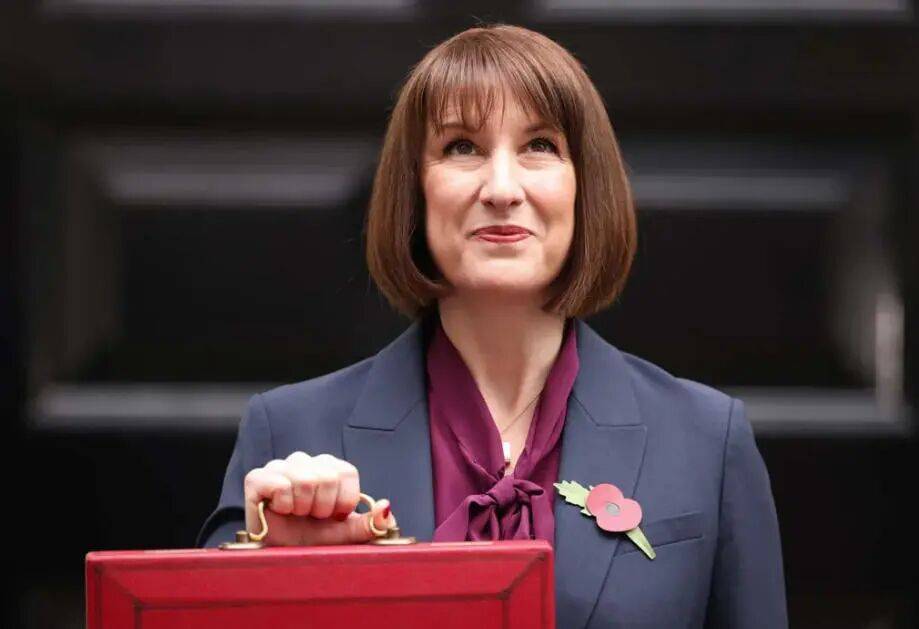
Core Viewpoint - The Bank of England is expected to maintain the interest rate at 4.0% in the upcoming decision, but recent comments from Chancellor Reeves have increased the likelihood of an unexpected rate cut [1] Group 1: Interest Rate Expectations - The probability of a rate cut this week has risen to nearly 35%, up from 30% earlier in the week, according to LSEG data [1] - Analysts suggest that recent data indicates easing inflationary pressures, contributing to the increased expectations for a rate cut [1] Group 2: Fiscal Measures and Tax Implications - Chancellor Reeves stated that measures in the budget will reduce both debt and inflation, which raises the possibility of increased income tax [1] - The market's anticipation of potential further tax increases by Reeves has also influenced the outlook for a rate cut this week [1]
美国为什么快要顶不住了?因为美国再也出不了一个罗斯福了,美国现在最大的问题是缺钱,入不敷出,欠了一堆债
Sou Hu Cai Jing· 2025-11-01 15:52
Core Insights - The article highlights the growing financial crisis in the U.S., with record national debt and increasing fiscal deficits, leading to a situation where each American carries approximately $110,000 in debt [1][3] - It discusses the disparity between the financial struggles of the nation and the wealth accumulation of major financial institutions and wealthy families, indicating a tight bond between politics and capital [3][5] - The article critiques the political landscape, where tax reforms aimed at the wealthy are consistently blocked, resulting in a growing budget deficit and wealth inequality [5][7] Financial Situation - The U.S. Treasury reported that interest payments for 2024 will exceed $870 billion, marking a historical high and surpassing military spending [3] - The wealth distribution is stark, with the top 10% of households holding nearly 70% of the wealth, while the bottom half collectively holds less than 3% [7] Political Dynamics - The 2024 presidential election campaign is projected to exceed $16 billion, primarily funded by large corporations and wealthy individuals, influencing political decisions [3][5] - Media narratives often support the wealthy, promoting the idea that protecting the rich is synonymous with protecting jobs, which misleads the public [5][7] Social Implications - The article notes a significant increase in homelessness, with over 75,000 homeless individuals in Los Angeles alone, highlighting the failure to address basic social needs [7] - It draws a parallel to historical figures like Franklin D. Roosevelt, suggesting that current politicians lack the courage to implement necessary reforms to address wealth inequality and social welfare [9][11]


财政大臣拟推预算降通胀 为英国央行降息铺路
Xin Hua Cai Jing· 2025-10-22 00:57
Core Viewpoint - The UK Chancellor of the Exchequer, Reeves, is committed to controlling inflation and alleviating the cost of living through measures in the upcoming budget, aiming to create room for further interest rate cuts by the Bank of England [1] Group 1: Budget Measures - Reeves plans to implement targeted price measures in the budget to reduce household bills and overall inflation [1] - The Treasury is considering lowering electricity costs as part of the strategy to help decrease inflation [1] Group 2: Economic Context - Reeves attributes part of the fiscal gap to economic losses from Brexit and anticipates that the Office for Budget Responsibility will revise down productivity growth forecasts [1] - A significant tax increase is being prepared for the budget scheduled for November 26 [1] Group 3: Policy Review - Reeves will meet with cabinet ministers to review decisions in their respective policy areas that may contribute to inflation or rising costs [1]
英国经济二季度增速放缓至0.3% 财政大臣里夫斯面临严峻预算抉择
智通财经网· 2025-09-30 12:13
Economic Performance - The UK economy showed strong performance at the beginning of 2025, but growth slowed in the second quarter, with GDP growth at 0.3% year-on-year compared to 0.7% in the first quarter [1] - The overall economic growth for 2024 remains unchanged at 1.1%, while the GDP growth for the year ending June 2025 was revised up from 1.2% to 1.4% [1] G7 Economic Ranking - In the first half of 2025, the UK had the fastest economic growth among G7 countries, driven partly by one-off factors such as a surge in exports before US tariffs took effect [2] - The Bank of England forecasts a moderate economic growth of 1.25% for the entire year of 2025 [2] Consumer and Business Sentiment - The economic outlook for the second half of the year is expected to be more challenging, with predicted growth of only 0.2% due to slowing wage growth and rising inflation [2] - Household savings rate increased slightly from 10.5% in Q1 to 10.7% in Q2, indicating consumer concerns about the future [2] Taxation Expectations - Economists anticipate that Chancellor Rachel Reeves will need to raise hundreds of billions of pounds in taxes in the upcoming budget to meet deficit reduction goals [3] - The Office for Budget Responsibility (OBR) may adopt a more pessimistic view on future productivity and economic growth [3] Current Account Deficit - The UK's current account deficit reached £28.939 billion (approximately $38.9 billion) in Q2 2025, the highest level in two years, with the deficit as a percentage of GDP rising from 2.8% in Q1 to 3.8% [5] - The increase in the deficit is primarily attributed to higher dividend payments to foreign investors [6]
降息与加税担忧加剧市场压力 英镑对欧元跌至三个月低点
news flash· 2025-07-14 11:22
Core Viewpoint - The British pound has fallen to a three-month low against the euro due to increasing market concerns over potential interest rate cuts and tax hikes in the UK [1] Group 1: Economic Indicators - Market fears are growing that the Bank of England may accelerate interest rate cuts, particularly if the labor market weakens significantly [1] - Recent data showed weak economic growth in the UK for May, raising the likelihood of a rate cut in August [1] Group 2: Fiscal Policy Concerns - There is an increasing risk of tax increases in the autumn as the government seeks to address fiscal shortfalls [1] - The upcoming employment data release is deemed crucial in determining the trajectory of monetary policy [1]